Native Ads, Push Ads, TikTok Ads
8 minOctober 4, 2026

Our tools monitor millions of native, push, pop, and TikTok advertising campaigns.
Get StartedOut-of-home planning has modern tools, but it’s still operating with a 1990s mindset: start with a map, circle the “good” intersections, and hope the right people happen to walk or drive by. Even as AI, mobile data and programmatic platforms reshape the channel, many brands are still treating OOH as a location buy first and a marketing strategy second.
You can see this legacy thinking in how briefs are written. The conversation often jumps straight to “high-traffic freeway boards,” “Times Square coverage,” or “near our top retail accounts.” Audience, intent, and creative role come later—if at all. Traditional OOH workflows were built around what inventory was available, not what the customer actually needed to see in that moment. As a result, OOH plans end up optimized for gross impressions and CPMs, not for contribution to business outcomes.
This is precisely the gap newer intelligence platforms are trying to close. CHICOOH+’s planning system, for example, flips the order of operations by ingesting the campaign brief—target audience, behavior, communication objectives, brand history, and urban constraints—before it ever recommends a single board. As OOH Today explains, the platform cross‑references those inputs with a proprietary geographic database to interpret city dynamics and organize “large volumes of information in a more strategic, contextualized manner that aligns with the real dynamics of the streets.” In other words, it starts with context and people, not just a pin on a map.
Digital out-of-home has only partially escaped this silo. Programmatic pipes now let buyers transact DOOH in the same DSPs as display and CTV, but too many teams still treat it as a sidecar awareness play rather than a connected, full‑funnel lever. Yet DOOH can be activated with the same rigor as digital: you can use environmental signals, mobile movement data, and third‑party measurement to reach defined audience segments at specific times and then feed exposed devices into retargeting and attribution models. As the Clearcode team notes, DOOH can and should be run inside your existing programmatic stack so its impact shows up across the customer journey instead of being measured “in a silo.”
Meanwhile, buyers cling to “location, location, location” even as evidence mounts that not all impressions are created equal. A restaurant ad shown at home in the morning is fundamentally different from the same ad served two blocks from the location at noon. Place‑based networks are built precisely around this behavior: people move through predictable environments, and those environments signal intent. As one analysis in OOH Today puts it, proximity—the “last 500 feet”—is becoming one of OOH’s most underrated strategic advantages because context and distance to action can change the value of an impression far more than sheer volume.
Advertisers themselves are demanding this shift. Under pressure to prove ROI and reduce waste, they want to know which audiences move through which environments, why those screens matter, and how exposure connects to measurable outcomes. Platforms like JOLT’s Spark Intelligence explicitly challenge the location‑first model by using behavioral, purchase, and movement data to identify where a brand’s target audience is most concentrated, then recommending the specific screens that will reach them. As Marketing Dive describes, the highest‑traffic placement is often not the highest‑value one; audience composition, context, and proximity to moments of intent are better predictors of performance.
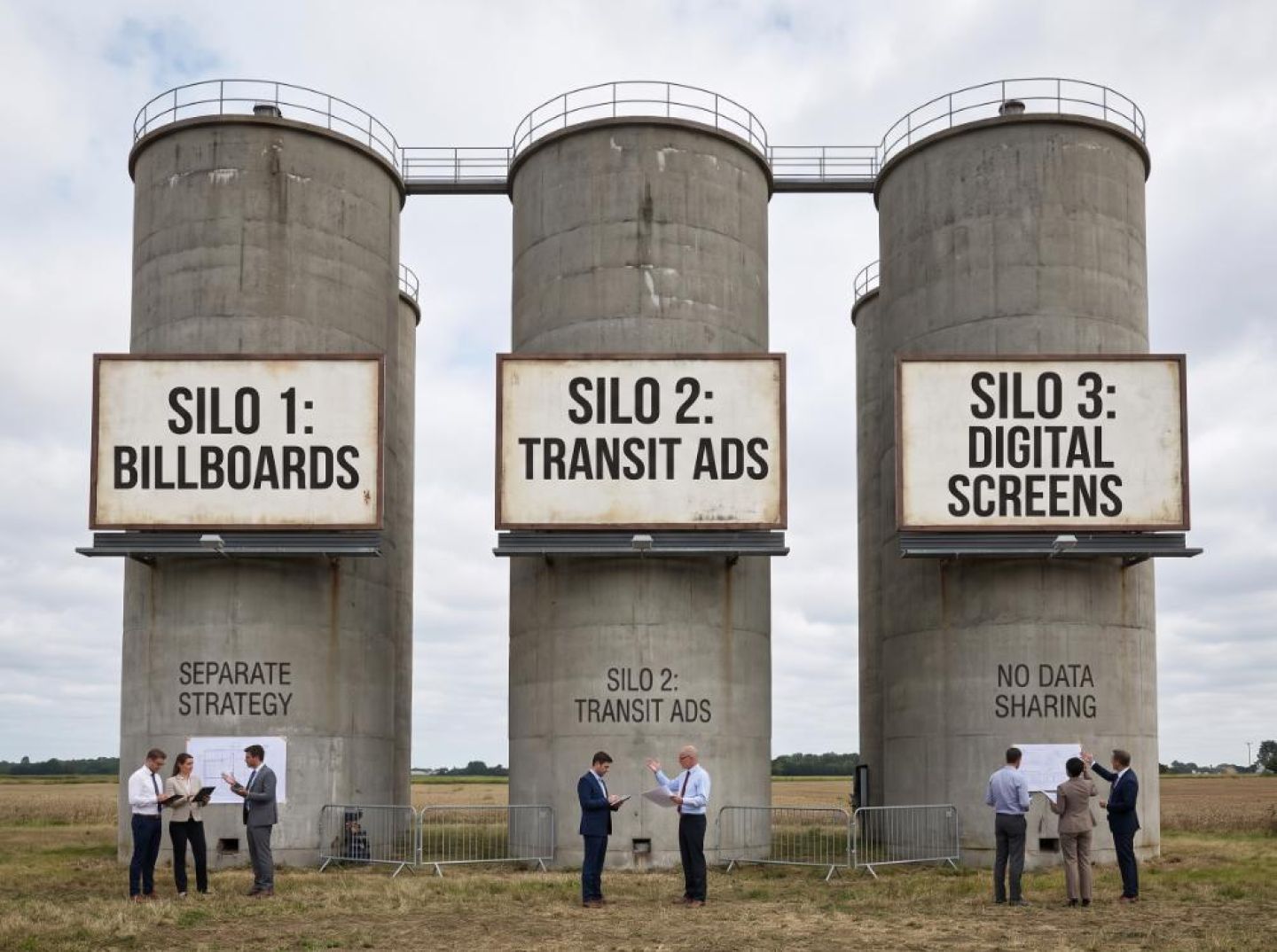
And yet, even as intelligence platforms emerge, OOH is still frequently planned as a disconnected line item while digital teams optimize native, push, and social in isolation. That’s the core problem: OOH planning isn’t just location‑led, it’s channel‑siloed. Tools like AdQuick’s AI‑driven planning and optimization engine show that OOH can operate with the same data density and performance mindset as other channels, analyzing trillions of unit combinations and integrating consumer, demographic, and behavioral inputs. But until planners stop treating outdoor as a standalone awareness buy and start viewing it as another programmable touchpoint in a unified system, they’ll continue to underuse one of the most context‑rich, intent‑proximate media channels available.
Most OOH teams are trying to solve modern problems with yesterday’s instruments: traffic counts, basic demographics, and “good corner” instincts. Meanwhile, your digital teams are sitting on a lab full of precision tools. This is where “borrowing brains” from native, push, and TikTok ad intelligence fundamentally changes what OOH can be.
Instead of asking “Where are the billboards?” you can ask, “What does digital already know about who we’re trying to reach, what gets them to act, and when they’re most primed to notice us?”
Digital platforms have spent years turning vague personas into living, breathing behavior profiles. TikTok, for example, continuously optimizes campaigns using high‑quality signals like pixel events, CRM data, and lifecycle stages fed in through integrations such as the native TikTok–HubSpot connection that lets marketers sync purchase behavior and lead quality directly into campaign optimization logic, as described in the.
That is far more precise than assuming “young professionals” drive past a certain freeway exit.
When you tap into what your TikTok, native, and push channels already know, you can:
Those insights map beautifully onto modern DOOH planning. Audience‑intelligence platforms are already moving away from “location as proxy for people” and toward “people first, locations second,” using behavioral, purchase, and movement data to identify pockets of high‑value audiences and then recommending the specific screens that reach them, as outlined in Marketing Dive’s discussion of how smarter DOOH campaigns are being built.
In practice, this means your OOH plan stops being a static map of high‑traffic areas and becomes a translation of digital audience truth into the physical world.
The riskiest part of OOH has always been creative. You lock in a big idea, commit to print or digital files, and hope it lands.
Digital doesn’t operate on hope. Native, push, and TikTok campaigns generate a constant feed of performance intelligence: thumbnails that spike attention, hooks that hold people for three seconds, headlines that drive swipes, and formats that reliably produce leads or sales.
On TikTok alone, sophisticated teams already build a “creative supply” that mixes brand assets and creator content so they can test formats and messages at scale, then shift spend toward what actually performs, as the HubSpot TikTok guide emphasizes. Those learnings shouldn’t die inside the app.
If a certain phrase outperforms in push notifications, that’s a clue about what makes people curious in a crowded notification tray—a cognitively similar environment to a busy street. If an angle or visual cue drives watch‑time in feed, it’s a strong candidate for a DOOH animation, because it has already proven it can interrupt habitual scrolling.
By treating digital creative testing as a wind tunnel for OOH concepts, you dramatically reduce the odds of putting a weak idea on a very expensive canvas.
Even the smartest placement and best creative are wasted if your OOH message lives in isolation. The real power comes when out‑of‑home is the opening move in a multi‑touch journey.
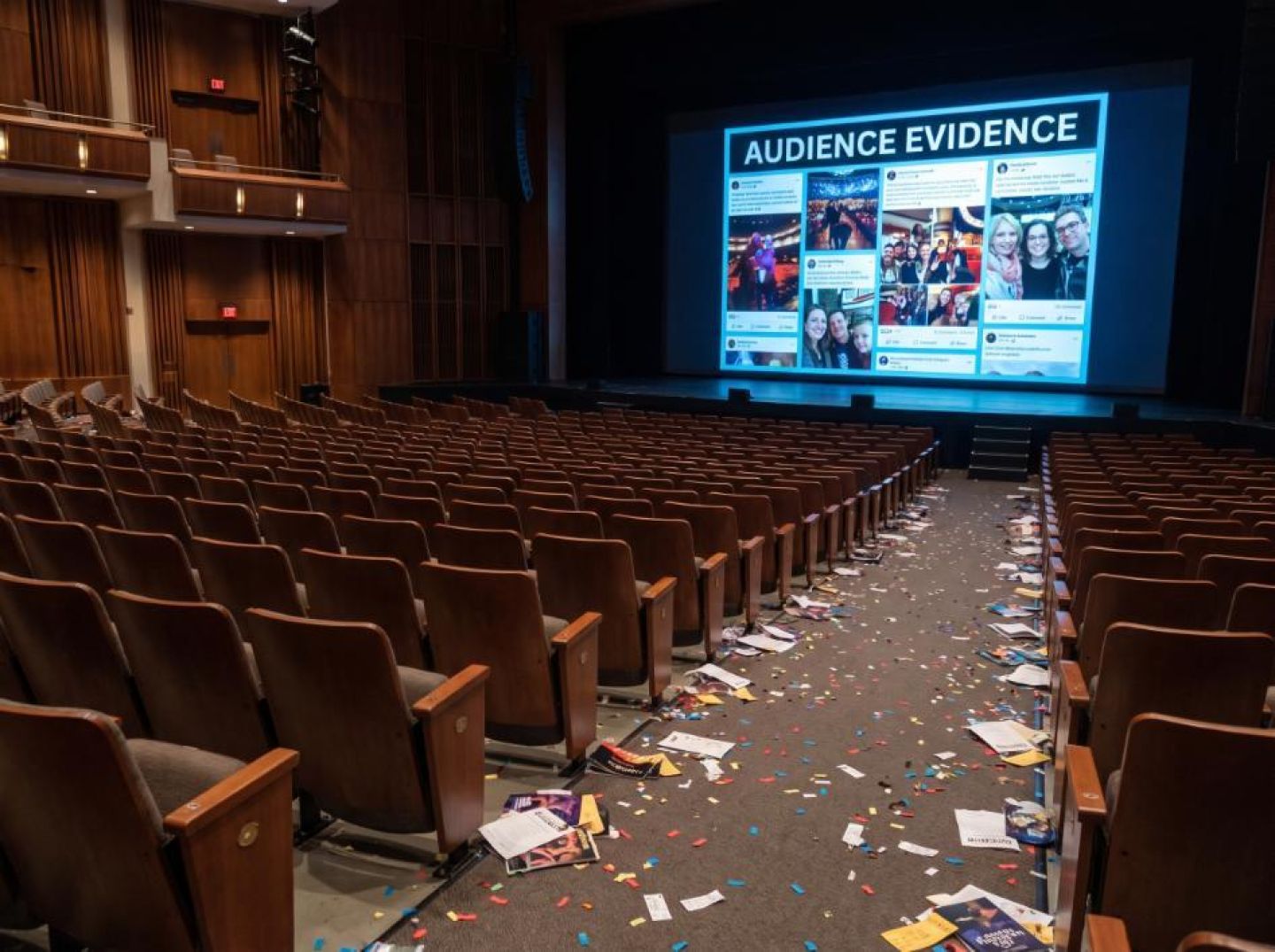
One outdoor encounter can become a memory trace that gets reinforced across channels. A commuter might see a distinctive visual or tagline on a roadside screen, then encounter the same idea in their feed or inside a store—and feel instant familiarity because the OOH impression came first. This compounding effect has been described as the “OOH Echo Effect,” where consistent creative elements and cues carry across billboards, social media, and physical locations so that a single exposure seeds recognition everywhere else the brand shows up, as outlined by.
Digital ad intelligence is what makes that echo deliberate instead of accidental. When you know which creatives and offers your audiences are already seeing in TikTok, native feeds, and push, you can:
This is especially powerful as platforms themselves start extending social creative into physical environments. TikTok’s expanding “Out of Phone” program pipes creator content into DOOH screens in gyms, taxis, and retail spaces, creating a direct bridge between in‑feed videos and real‑world impressions that marketers can sponsor and extend, as covered by Social Media Examiner’s overview of TikTok’s program. That kind of integration only works if the OOH and in‑feed strategies are reading from the same intelligence playbook.
OOH has long suffered from a measurement handicap: you know where the board is and roughly how many people pass it, but not much about what those people do next. DOOH and data partnerships have started to close that gap, using ticketing, sensors, mobile location, and third‑party measurement to infer who’s exposed and when, as outlined in Clearcode’s explanation of DOOH targeting and analytics. Still, it’s rarely as tight or as fast as digital.
Borrowing digital ad intelligence doesn’t magically make OOH one‑to‑one, but it does create powerful feedback loops:
In other words, you stop planning OOH in a silo and start treating it as one more intelligent signal in a living, multi‑channel system.
The real opportunity isn’t just to overlay digital data on top of maps. It’s to let native, push, and TikTok ad intelligence redefine what questions you ask of OOH in the first place
If Section 2 was about “borrowing brains,” this is where you start mining them.
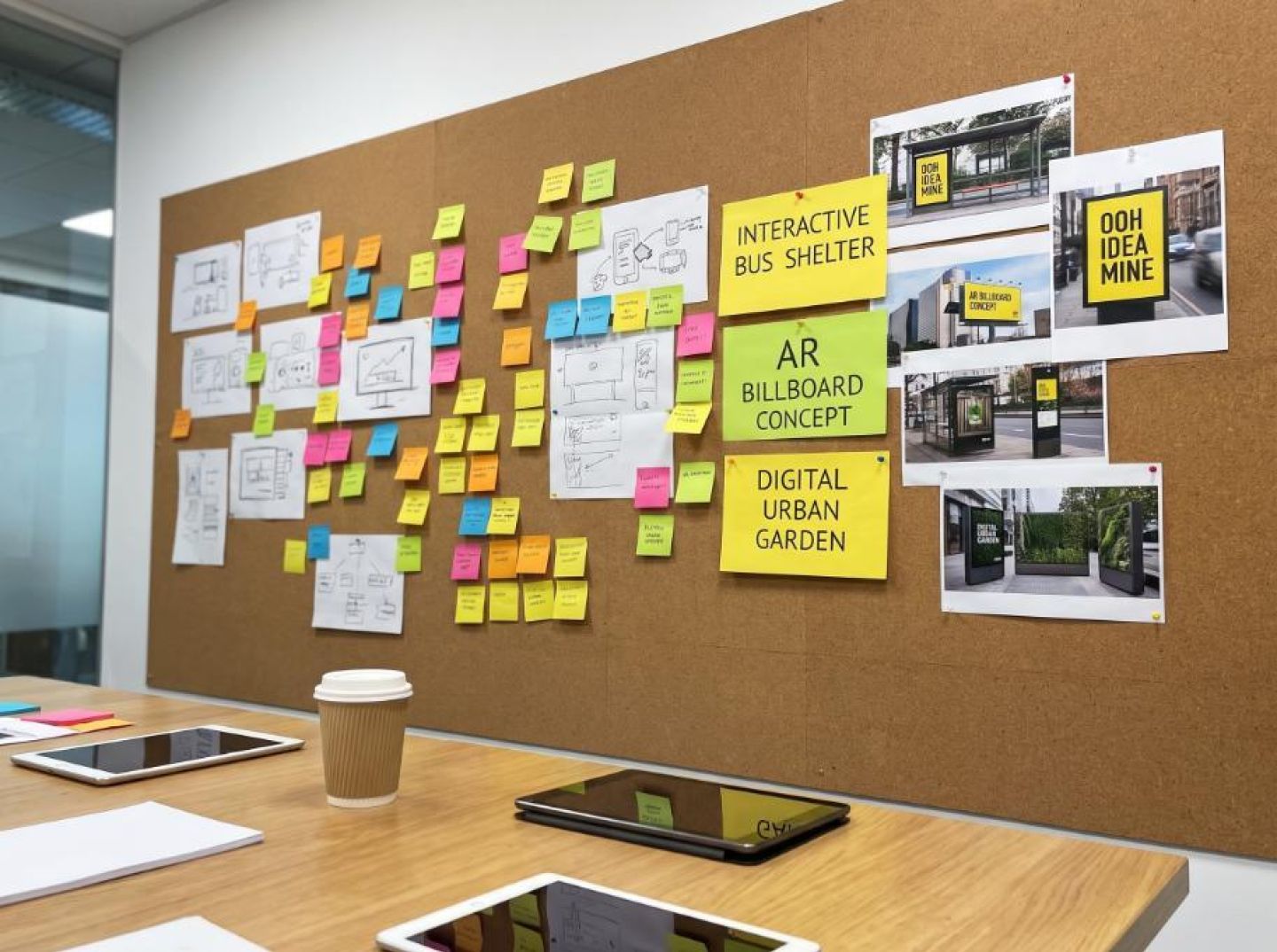
Native, push, pops, and TikTok are relentlessly optimized attention machines. Every impression is a live experiment in what people notice, scroll past, tap, or share. Instead of treating that as a separate universe, you can turn it into an idea mine for the OOH creative that most brands still develop in a vacuum.
Think of each digital format as a different type of drill.
Native ads live or die on whether a single line earns a click in a crowded feed. That makes them perfect for pressure‑testing OOH ideas.
Pull the top‑performing native headlines and thumbnails from your content discovery or social feeds. What words consistently get people to lean in? Is it “how‑to” utility, fear of missing out, a bold outcome, or a surprising twist?
Those patterns should directly shape your billboard copy. That doesn’t mean pasting a 60‑character headline onto a 48‑sheet, but it does mean:
Because native performance is so tightly measurable, it’s a real‑time lab for testing which core messages deserve the most expensive media you buy.
Push notifications and pop ads are brutal teachers. You get a tiny canvas, one moment, and a user who didn’t ask to see you. If your message isn’t instantly clear, you lose.
Review the push and pop variants with the highest open or click‑through rates. Notice what consistently works:
Those rules map almost perfectly to OOH, especially for directional or promo‑driven placements. A high‑performing push line can often become a headline with minimal editing. And because DOOH can be tied to time‑of‑day or environmental data, you can literally port over the logic you already apply in push—only showing certain creative during commuting windows or in proximity to stores, just as DOOH platforms now enable with time‑of‑day and environmental triggers.
This is compression training: if a message can work inside a tiny, interruptive push, it’s probably strong enough to anchor a six‑second roadside read.
TikTok is the opposite constraint: infinite scroll and full‑screen motion. But it’s still a goldmine for OOH because it tells you what ideas people care enough about to watch, replay, and share.
First, use your TikTok analytics and creative reports—ideally flowing into your CRM through integrations like the native TikTok connection described by HubSpot—to identify your true “hit” assets:
Treat those clips like storyboards. Your OOH creative can:
This is where the “OOH Echo Effect” becomes intentional. When a commuter encounters a distinctive OOH visual that matches what they’ve seen in their feed, they’re more likely to recognize and search for it later, creating the kind of repeated, cross‑channel memory triggers described as the echo effect of outdoor campaigns.
TikTok’s own move to bring creator content to real‑world screens through its Out of Phone program is essentially this concept at scale: treating social‑native creative not as an afterthought, but as source code for DOOH.
The key is to stop ideating OOH from a blank slide. Let digital intelligence narrow the field:
Once those insights are in hand, you can bring them into OOH planning tools that already treat the channel as a data‑driven, performance medium, not a guessing game—platforms that, as AdQuick describes, use AI and real‑time feedback to connect OOH with the same optimization mindset you apply everywhere else.
You’re not just buying locations anymore. You’re syndicating your smartest digital ideas into the physical world, and designing your billboards, transit wraps, and DOOH loops with proof baked in from day one.
Most OOH plans still start with a map and a hunch: “High traffic equals good.” Digital doesn’t work that way anymore—and your billboards shouldn’t either.
Your native, push, and TikTok campaigns are already swimming in hard evidence about who responds, what they care about, and when they are most likely to act. When you pull those targeting signals out of the platforms and into your OOH planning, you move from location guesswork to audience proof.
Start with the audiences your digital platforms actually know. TikTok, for example, uses pixels, conversion APIs, and CRM integrations to optimize against “genuinely qualified leads,” not just views or clicks, as the HubSpot marketing team explains. Those same signals—purchase behavior, lifecycle stage, content affinities—tell you who your real converters are and what moments they’re in when they respond. Instead of saying, “We want adults 25–54 in this ZIP code,” you can say, “We want heavy takeaway food orderers, lapsed subscribers, or high-intent travelers,” then ask: where does that audience physically cluster in the real world?
That’s exactly the shift emerging in smarter DOOH planning. Rather than treating a busy intersection as a proxy for “everyone,” tools like JOLT’s Spark Intelligence start with behavioral, purchase, and movement data to identify where specific audience segments are most concentrated, then map those segments to screens and environments, as Marketing Dive describes. The highest-traffic location is often not the highest-value one; audience composition, context, and proximity to action matter more than a raw impression count.
Your digital campaigns already surface those nuances:
Crucially, you can align those digital segments with real-world context and “last 500 feet” intent. As one DOOH analysis notes, a restaurant ad seen at home at 9 a.m. is a different impression from the same message viewed at noon, two blocks from the restaurant; proximity to the moment of action radically changes the value of the exposure, as OOH Today points out. Your digital performance data can tell you when users typically convert—lunchtime, commute hours, payday windows—and you can weight OOH placements toward environments and dayparts where that intent is naturally higher.
The feedback loop doesn’t stop at planning. When OOH exposure triggers search, site visits, and social engagement, it creates what one practitioner calls the “OOH Echo Effect”—a single outdoor encounter that continues across digital and real-world touchpoints, reinforcing recognition and nudging consumers further along the journey, as MyHoardings describes. By tagging and segmenting those downstream interactions inside your CRM and ad platforms, you generate new audience definitions that can be pushed back into your next wave of placements, on both screens and streets.
If TikTok can sync lifecycle and deal-stage data from HubSpot to continually refine who it targets, as HubSpot’s coverage of the TikTok integration explains, your OOH should be riding that same current. The job is no longer to stare at a map and guess where “the demo” might be. It’s to let the same behavioral, purchase, and intent signals that power your most efficient native, push, and TikTok campaigns dictate which physical environments, which screens, and which moments deserve your next billboard.
Most brands still treat OOH as a one-way blast: launch a flight, hope it “builds awareness,” and maybe match a lift curve later. If you stop there, you’re wasting the single most expensive A/B test in your entire media mix.
The real unlock is to treat every billboard, transit poster, or place-based screen as a structured experiment whose results feed straight back into your native, push, and TikTok programs. Instead of OOH being the last stop in the plan, it becomes a live testbed that continuously improves your digital.
Before you buy a single board, define what you’re testing for digital:
That clarity lets you design OOH creative in clean variants—Headline A vs. Headline B, colorway X vs. Y—rotated by location, audience cluster, or time of day. Because DOOH can be swapped quickly and targeted by screen, this kind of structured testing is now practical at scale, especially in networks that already think audience-first, as platforms like JOLT’s Spark Intelligence use movement and behavioral data to pick screens based on who actually passes them, not just raw traffic volume, as Marketing Dive’s coverage explains.
A single outdoor exposure rarely lives in isolation. A commuter sees your message in the morning, then later encounters your brand in a feed, a search result, or an app. That continuing presence is what one analysis called the “OOH Echo Effect”: a memory cue that makes later digital impressions feel more familiar and more clickable.
You can turn that echo into measurable feedback:
Because place-based OOH shows up in environments that already prime digital action—waiting rooms, retail, workplaces, transit hubs—those echoes often convert into real behavior, a dynamic that recent analysis of OOH’s role in driving digital action highlights as core to why marketers are investing more in the channel.
Once you know which messages and visual cues survive the constraints of a three-second glance at 40 miles per hour, you have unusually strong creative signals for digital.
On native and push:
On TikTok:
The key is to treat every channel as both a laboratory and a distribution engine. OOH tests which ideas can cut through in the hardest possible conditions. Native, push, and TikTok then take those proven ideas, personalize them, and scale them, while their performance data in turn refines the next round of OOH creative and placements. Over time, that feedback loop compounds: each flight of outdoor makes your digital smarter, and each wave of digital intelligence makes your next billboard far less of a guess.
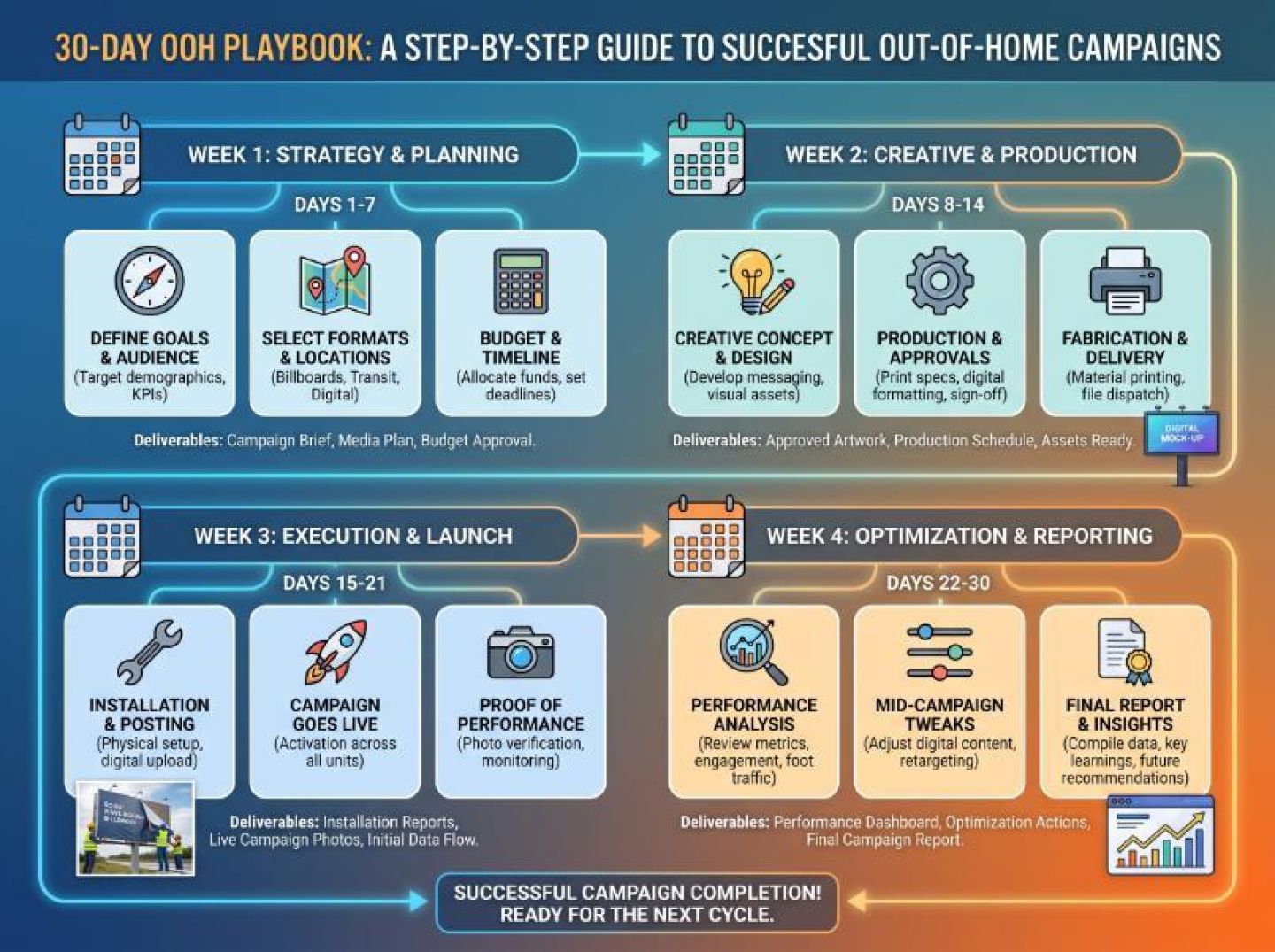
Week 1: Pick your spying stack and wire in the data
Before you touch a single billboard map, you need a simple, repeatable way to “listen in” on what’s working in native, push, and TikTok.
2. Define a minimum viable intelligence schema.
You’re not building a data warehouse; you’re creating a spreadsheet you’ll actually use. For every digital ad group, capture:
3. Assign owners.
Make one media manager responsible for extracting and updating this sheet weekly. Make one strategist responsible for translating it into OOH hypotheses. Keep it light: one 45-minute working session per week.
Week 2: Translate digital winners into OOH hypotheses
Now you turn raw digital evidence into testable OOH ideas.
From these, extract 3–5 patterns such as: “Urgent, time-bound offers convert weekend traffic,” or “How-to framing outperforms clever slogans with mid-funnel audiences.”
2. Match signals to environments, not just cities.
Modern DOOH planning is shifting from “high-traffic junctions” to “high-value audience environments.” Audience-led tools like Spark Intelligence were built to find the screens where your specific targets actually cluster, rather than assuming volume equals value, as explained in.
Use whatever planning stack you have—publisher tools, third-party data, or mobile movement insights—to answer:
3. Write 3–4 clear OOH test briefs.
Each brief should specify:
Week 3: Launch a pilot and wire the feedback loop
You’re ready to put a small but tightly designed test into market.
2. Mirror and tag your “echo” paths.
Treat every OOH impression as the first note in an echo that continues online. The “OOH Echo Effect” describes how a single outdoor encounter primes people to recognize and respond to later digital touches, especially when creative and message are consistent across channels, as outlined in.
3. Set up a 30-minute weekly “intel review.”
During the campaign, your cross-channel team should:
Week 4: Codify playbooks and scale what works
By now, you’re not guessing; you have a baseline of evidence.
2. Bake spying into your normal planning cycle.
Make digital ad intelligence a standing input in every OOH brief: no more “location first, audience later.” Over time, your team will move from manually copying insights into spreadsheets to integrating API feeds and AI summaries, but the core behavior stays the same: spy, translate, test, feed back.
In 30 days, you won’t have solved attribution forever—but you will have a functioning loop where native, push, and TikTok stop living in isolation and start pulling their weight for every billboard you buy.
Receive top converting landing pages in your inbox every week from us.
Most Read
Discover how OOH teams can use Native, Push, and TikTok ad intelligence to move beyond location-first planning and build smarter, audience-driven campaigns. This guide shows how to translate digital creative, targeting, and performance signals into OOH ideas, test them in the physical world, and feed the results back into digital campaigns.
David Kim
7 minOct 4, 2026
Must Read
Learn how to bridge the gap between brand buzz and backend profits by turning high-impact campaigns into scalable, measurable performance funnels. This guide shows how to translate hero concepts into performance narratives, reverse-engineer competitors, and identify creative patterns that can scale across channels.
Elena Morales
7 minOct 3, 2026
Guide
Discover how performance marketers can turn award-worthy creative into scalable Native, Push, and Pop campaigns by separating creative fame from measurable performance. This guide shows how to use Anstrex, AI-driven testing, and modular funnel frameworks to reverse-engineer proven creative structures and scale the ones that actually convert.
Priya Kapoor
7 minOct 3, 2026