10 minSeptember 22, 2026

Our tools monitor millions of native, push, pop, and TikTok advertising campaigns.
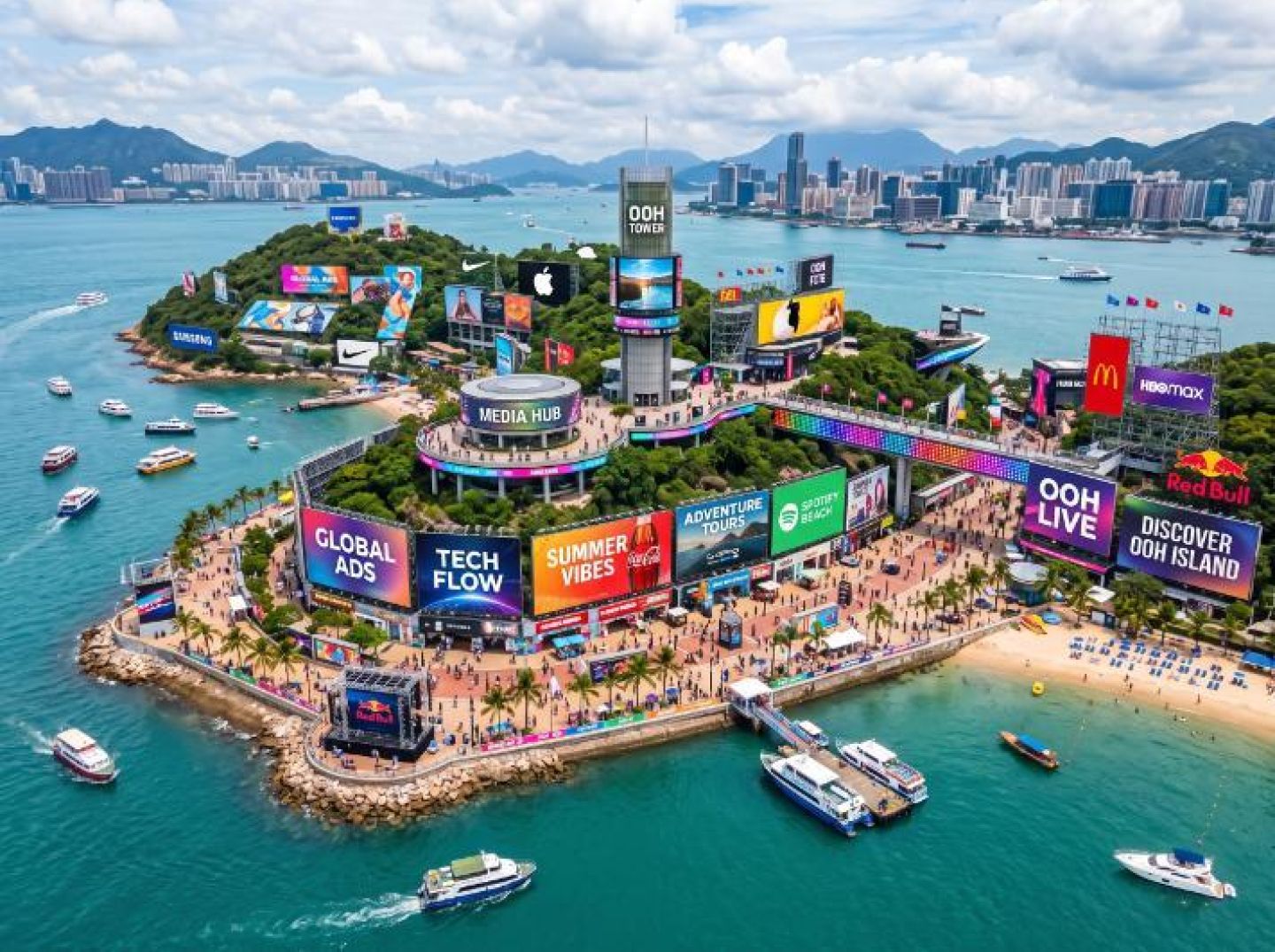
Get StartedMarketing teams still talk about “the OOH buy” as if it’s a lonely chunk of boards on the side of the highway—separate from data, separate from digital, and certainly separate from anything that looks like performance media. That mental model is exactly why so many out-of-home roles still read like they were copy‑pasted from a 2009 media plan.
In those legacy job descriptions, OOH is defined by formats and logistics: negotiate static billboards, manage print deadlines, traffic vinyl, confirm ride sheets. The skills required are framed as vendor management and real‑estate know‑how, not systems thinking or data fluency. You could swap “OOH manager” with “print buyer” in half of these postings and barely notice the difference.
The problem is that the channel those roles were written for no longer exists.
OOH has been steadily absorbing the logic of AdTech. Digital out‑of‑home is, as one overview put it, essentially “OOH powered up with AdTech” — screens that can be bought programmatically, optimized with audience and traffic data, and triggered by real‑time signals like weather or time of day, all while staying immune to ad blockers and skips, as this breakdown of DOOH’s evolution explains. That’s not a nice‑to‑have add‑on to old OOH; it’s a structural shift in how the medium works.
At the same time, the boundary of what even “counts” as OOH has blown wide open. When retailers stitch together loyalty data, mobile technology, digital screens, and physical locations, the line between retail media and OOH begins to blur; the aisles become avenues, the end cap becomes premium inventory, and the store itself turns into a media property, as one analysis of Walmart’s media ambitions vividly argues. That’s not billboard management. That’s spatial media architecture.
Meanwhile, mobile and event‑based formats are rewriting what “placement” even means. Operators who’ve run thousands of digital mobile billboard campaigns note that mobility “changes the rules,” shifting the strategy from owning a fixed location to actively bringing messages to concentrations of people around conventions, festivals, sporting events, and political rallies, as one large mobile fleet operator has documented. That’s closer to dynamic audience routing than it is to classic site selection.
Add in the “OOH echo effect,” where a single roadside or in‑store exposure primes search behavior, increases recognition of later digital ads, and carries through to in‑store encounters, effectively turning one impression into a chain of cross‑channel touchpoints, as a recent exploration of this echo effect describes. OOH isn’t an island at all; it’s the physical spine of an integrated journey.
Yet the way we hire for OOH still assumes it lives in a silo. Job specs rarely mention log‑level data, cross‑device measurement, or identity resolution—even though DOOH now borrows the same targeting and attribution playbook as online display, according to detailed explanations of DOOH’s AdTech stack. They talk about locking in boards months in advance, while modern campaigns are expected to spin up quickly and respond to moving audiences.
The gulf shows up on the execution side too. Marketers already broadly accept that OOH works; what holds it back in omnichannel plans is operational friction—manual planning, slow buying cycles, and measurement that lags behind digital, as a Cannes Lions case study from AdQuick’s team underscores. Yet very few OOH job descriptions are written to hunt for people who can remove that friction: people fluent in APIs, clean rooms, audience planning tools, and incrementality testing.
In other words, the market has quietly moved to a world where:
But the roles tasked with running this ecosystem are still framed as if their mandate is counting boards and policing production specs. Until organizations rewrite those job descriptions around systems, signals, and integration—not just surfaces—they’ll keep hiring for an isolated billboard era that no longer exists, while the most interesting work in the medium quietly migrates to teams that already think like digital.
Digital ad “spies” aren’t sci‑fi. They’re just the reality of how modern marketers quietly watch what wins on screens, then smuggle those insights into the physical world.
For two decades, OOH practitioners were expected to be part traffic planner, part logistics coordinator, and only occasionally a creative partner. Meanwhile, performance marketers were running hundreds of A/B tests a week in social, search, and display. That asymmetry is over. The same AdTech stack that made digital so ruthlessly accountable is now turning your programmatic dashboards into de facto creative directors for billboards, transit wraps, and in‑store screens.
This is what happens when digital out‑of‑home is treated as “OOH powered up with AdTech” — geofencing, tracking, real‑time triggers, and attribution — rather than as static posters in nicer frames, as one overview of digital out‑of‑home explains. Once OOH inventory is wired into the same demand‑side platforms that buy online impressions, every display impression becomes a data point. You can see which messages hook commuters versus shoppers, which visuals work in sunshine versus rain, which offers spike store visits within a half‑mile radius. That feedback loop is the “spy network.”
But the real unlock isn’t just better targeting. It’s creative arbitrage.
Digital teams are already sitting on an enormous corpus of proven winners: the hundreds of social headlines that beat their challengers, the banner layouts that drove the cheapest conversions, the video hooks that kept people from skipping at the five‑second mark. When those results are pumped into a DOOH or retail‑media network, your OOH lead is no longer guessing what might work on that 14' × 48' canvas. They’re cherry‑picking from a library of concepts that have survived real‑world combat.
That’s exactly how modern OOH platforms are starting to behave. Machine‑modeled “demand intelligence” tools like the hellOOH system don’t just map inventory; they look across campaign histories to see which creative approaches have historically unlocked demand for specific categories, locations, and audiences. Networks like Trillboards are explicitly positioning this kind of intelligence layer as their edge — a way to see the market earlier and act on it faster than competitors who still rely on human gut checks and quarterly recaps.
On the ground, that turns OOH specialists into translators of digital signals. A creative that over‑indexes with urban, value‑seeking shoppers in paid social might become the basis for a high‑rotation DOOH slot inside grocery aisles, where the “store becomes a media property” and “the end cap becomes premium inventory,” as one exploration of retail‑media‑as‑OOH puts it. If performance drops, you swap in the next digital winner programmatically; there is no six‑week waiting period and no reprint penalty.
This is also how the so‑called “OOH Echo Effect” stops being a happy accident and starts becoming a designed system. A strong outdoor encounter has always had the power to seed later digital behavior — a commuter sees a board, remembers the idea, and later searches for the brand, creating an echo across channels, as the concept of the OOH Echo Effect describes. When you’re spying on which creatives are driving those searches, social shares, and store visits, you can deliberately brief new OOH executions to amplify the same visual triggers, taglines, and formats that already proved they echo well.
The more digital agents mediate our feeds, inboxes, and recommendations, the more irreplaceable unmediated physical presence becomes. As one Cannes case study notes, out‑of‑home is now one of the few channels that still reaches people “directly, without algorithmic filtering,” making it a kind of cultural infrastructure that can be previewed and amplified across social and press. Digital ad spies make sure the creative that earns that rare, unfiltered attention is not a shot in the dark but the best‑performing idea your data has already surfaced.
In this world, the “OOH buyer” can’t just be a spreadsheet jockey. They’re operating at the intersection of machine‑learned demand signals, programmatic pipes, and human‑level craft. Their job is to let the spies do the surveillance — then turn that surveillance into physical stories that people actually notice, remember, and carry with them into every other channel they touch.
If the “OOH echo effect” is how a single billboard encounter keeps reverberating through the rest of the journey, the next evolution is turning that echo into source code—treating out-of-home as a live performance feedback loop instead of a static media line item.
The loop starts in the wild, not in a dashboard. A commuter glimpses a bold, strange message on a digital truck outside a stadium, snaps a photo, and posts it. A Cannes delegate sees a cryptic phrase on a waterfront banner, texts a friend, and then notices the same phrase mirrored in their Instagram feed. These aren’t soft, unmeasurable “brand moments” anymore—they’re behavioral signals that can be captured, interpreted, and reinvested into the next wave of creative and placements.
When practitioners talk about the OOH echo effect, they usually mean that first billboard making later display ads and social posts more recognizable. But if you invert the framing, OOH itself becomes the listening post. Every search uptick after a roadside domination, every social share of a mobile truck at a festival, every spike in branded QR code scans off a transit shelter is an input back into the system. The echo isn’t just outbound repetition; it’s also inbound telemetry.
Digital ad spies supercharge that telemetry. When a line, offer, or visual system starts quietly dominating click‑through and conversion in your performance accounts, you can push that “winning seed” into the physical world as a hypothesis. Then OOH returns its own verdict in the form of real-world behavior: which copy gets photographed, which visual is easier to recall in brand lift studies, which route or venue produces disproportionate downstream search and sales. Over time, the gap between “digital winner” and “OOH winner” narrows, because both sides are training on each other’s results.
That loop is getting tighter because the pipes have finally caught up. Digital out‑of‑home isn’t just a screen bolted to a wall; it’s OOH “powered up with AdTech”. Programmatic pipes, geofencing, audience modeling, and real‑time triggers allow you to treat a street‑level canvas like a high‑intent inventory source. Weather shifts, event schedules, and mobility data can all trigger creative swaps, but the more interesting play is using post‑exposure actions to decide what earns more physical reach tomorrow. If creative A drives higher lift in store visits among exposed devices, the system can algorithmically bias toward that asset during similar conditions and locations.
Mobile OOH is where this becomes unmistakably performance‑like. Operators running thousands of digital truck campaigns have learned that mobility “changes the rules”: you’re no longer stuck with “whoever happens to pass this board.” You can steer trucks into convention centers at peak ingress, orbit a competitor’s store on launch day, or flood a specific neighborhood during a playoff run. Each route is effectively a targetable cohort, and every change in routing is a test.
Once GPS‑traced vehicles, mobile location graphs, and commerce data are stitched together, the old complaint that “OOH can’t close the loop” starts to look dated. A recent full‑funnel campaign with the San Jose Earthquakes showed how a single LED truck, run on precisely logged routes, could be linked to “actual, verified, traceable ticket purchases”, not just modeled impressions. That’s not a vanity case study; it’s a blueprint. The truck is both a moving billboard and a moving experiment, and each iteration of route, timing, and creative informs the next deployment.
You can see the same feedback mechanics at tentpole events, where concentration is extreme and response is immediate. When a brand brought its “infrastructure for culture” message to Cannes, street‑level placements around the Croisette produced organic amplification almost instantly—attendees sharing photos, industry press coverage, inbound partner interest. The team wasn’t just counting eyeballs; they were watching which headlines got quoted, which images showed up most in user photos, and how fast those cues propagated through LinkedIn and industry Slack channels. Those learnings can be rolled back into the next festival activation, the next B2B nurture sequence, even the next product storyline.
All of this reframes OOH from “top‑of‑funnel wallpaper” to a live instrument in a performance orchestra. You still get the unskippable, algorithm‑proof reach that makes digital out‑of‑home so valuable in a world of AI‑mediated feeds, but now every board, screen, and truck is wired to tell you something about what people actually do after they see it. The marketers who treat that environment as a performance feedback loop—constantly reading the echoes, updating the source code, and redeploying into the street—are the ones quietly turning billboards into one of the most responsive channels in the modern media mix.
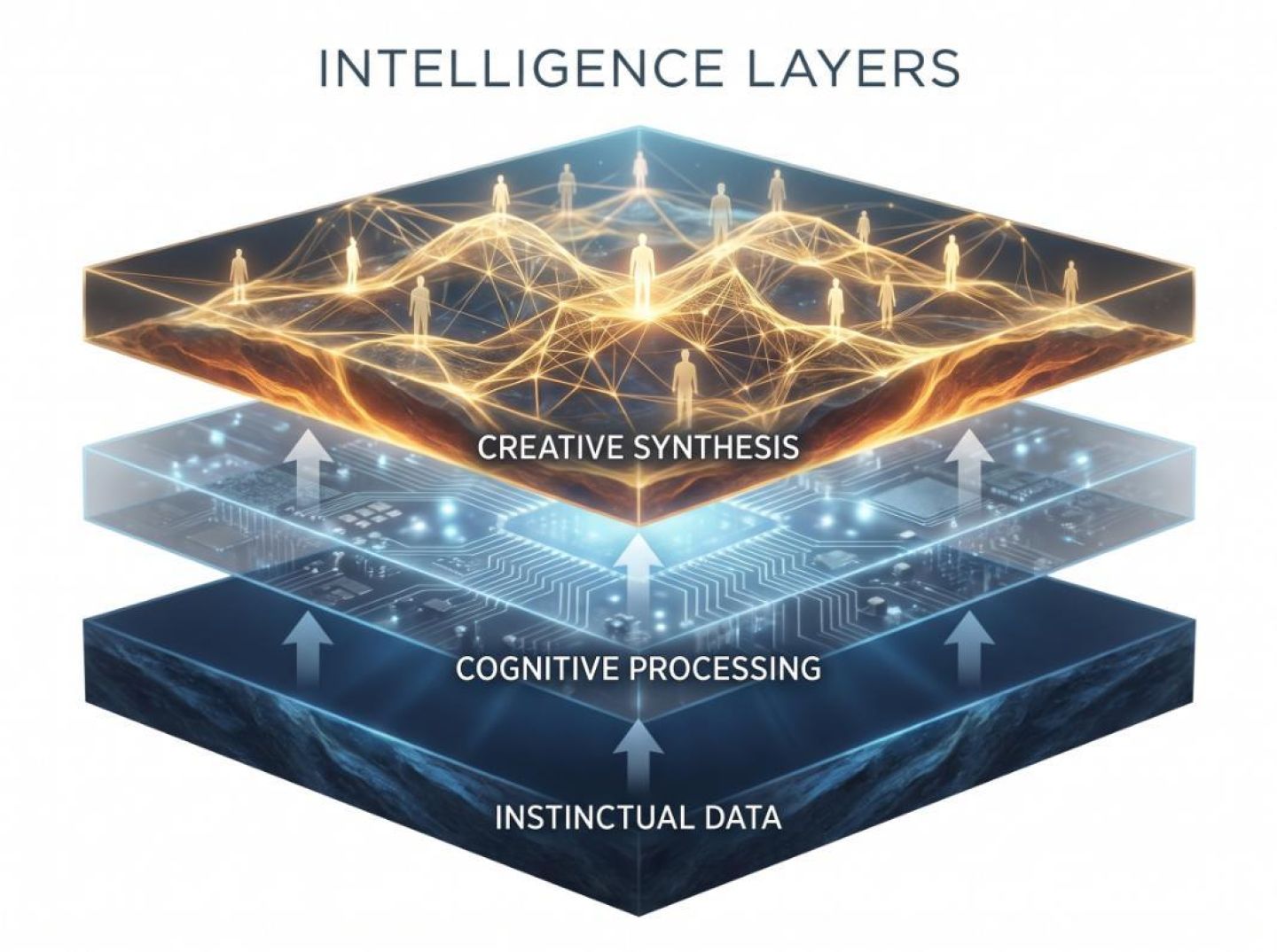
If inventory intelligence is about knowing which screen to light up and when, the next frontier is knowing exactly what to put on that screen. Creative itself is about to get an intelligence layer, and it won’t be built from quarterly brand trackers or awards-show reels. It will be built from the same “ad spy” muscle that already powers ruthless optimization in paid social and programmatic display.
Digital buyers have spent a decade quietly watching each other’s feed ads, scraping every variable—headline length, color, CTA, offer structure—and using that to drive constant iteration. OOH has mostly sat outside this arms race because it was slow and manual: one file trafficked, one location, four to twelve weeks locked in. As digital out-of-home evolved into what one AdTech firm describes as OOH “powered up with geofencing, tracking, retargeting, and personalization,” the bottleneck shifted. The constraint is no longer whether you can swap creative; it’s whether you know what to swap it to.
That’s where intelligence layers move from buying decisions into creative decisions. Machine-modeled demand systems like the hellOOH platform already ingest campaign history, category dynamics, and win rates across networks to surface where demand is heating up. The same underlying signals—vertical, context, audience flow, temporal patterns—can be used to predict not just “place your ad here,” but “this type of message, structure, and visual grammar is likely to outperform here, right now.”
In other words, the next “ad spy” doesn’t just tell you which competitor went heavy on digital spectaculars around an event; it reverse-engineers the creative DNA that’s driving the OOH echo effect. When a single outdoor encounter creates a memory trace that gets picked up again in search, social, and retail, that echo is powered by specific creative choices: the simplicity of the line, the distinctiveness of the mnemonic, the way the visual system travels from a 14' x 48' board to a mobile feed. As one practitioner of the “OOH echo effect” argues, a campaign’s power lies in making the outdoor moment so recognizable that later digital exposures feel like continuity, not coincidence, turning the billboard into the first node of “a connected communication ecosystem” that keeps repeating across channels (source).
Now imagine you’re not guessing which executions will generate that echo. Instead, your OOH platform is quietly watching thousands of live campaigns and building a library of pattern-based truths: which product categories can support copy-heavy creative at highway speeds; which color palettes and layout structures get photographed and shared at festivals; which offers break through in transit environments versus point-of-sale. Early experiments at major events have already shown how agile creative can turn physical media into cultural infrastructure. One Cannes activation used programmatic tools to get high-impact placements in front of a tightly concentrated industry audience, then rode the wave as attendees amplified the creative organically, turning the boards into part of the broader festival conversation and a catalyst for new business opportunities, as one case study details.
The next step is systematizing that kind of lift. Instead of waiting to see whether a clever line gets picked up on Instagram, intelligence layers will cluster creative attributes—tone, visual density, presence of social handles or QR, degree of contextualization—and correlate them with downstream behaviors: search spikes around the tagline, photo shares from that specific location, repeat visitation within a geofenced zone. DOOH’s ability to adapt by “time of day, weather, and audience demographics” already makes it a natural lab for this kind of rapid creative recombination, as one overview of digital OOH notes; intelligence layers simply make the lab self-learning.
This also forces the industry to stop “selling billboards” and start selling creative outcomes. Brand leaders do not wake up hoping to buy GRPs; they wake up wanting to “gain market share, launch a new product, create momentum and outperform the competition,” as one OOH publisher bluntly reminds the industry while arguing that boards and impressions are “still just tools” in service of bigger goals (source). Once your creative stack is wired into an intelligence layer, you can finally speak that language with evidence: this family of concepts is statistically more likely to drive branded search, store visits, or trials when deployed in this context, at this cadence, in this format.
The uncomfortable implication for traditional creative workflows is that taste loses its monopoly. Intelligence layers will not replace creative direction, but they will constrain the sandbox. Briefs will start with what the market has already proven about echo-friendly structures (“we know two-word imperatives travel better than punny headlines in this category”), then invite teams to push within those rails. Digital ad spies made performance marketers dangerous because they could learn from every other advertiser’s experiments; the same thing is about to happen on the side of the highway, on the subway platform, and on the festival promenade. The only question is whether your creative is being spied on—and improved upon—or whether you’re still flying blind while everyone else trains their models on the billboards you thought were just static.
For performance marketers, mobile billboards are the closest thing OOH has to an “out-of-feed” performance placement — a movable, high-impact surface that behaves more like paid social than a highway sign.
Traditional roadside units win by owning a single vantage point. Mobile billboards flip that logic. As one fleet operator put it after running more than 2,500 campaigns, mobility “changes the rules of outdoor advertising” by taking the message directly to the audience, not waiting for the audience to pass a fixed board on their commute, event route, or shopping trip, a pattern detailed in an analysis of mobile billboard advertising. That simple inversion makes mobile trucks feel instantly familiar to performance teams raised on geo-targeted, flighted media. You’re not “in Atlanta”; you’re at State Farm Arena from 5–9 p.m., then shadowing bar districts until midnight, then sleeping.
Because these units can be routed like campaigns, not like construction projects, they slide neatly into the same kind of audience planning logic you already use in Meta, TikTok, or programmatic. You plan for high-intent contexts — conventions, premieres, store openings, protests, playoff games — and then saturate them. The same study of those 2,500+ campaigns found that event-based deployments consistently delivered the strongest visibility, because the trucks lived where “large groups of highly engaged consumers gather,” a dynamic that makes mobile OOH feel less like “billboards” and more like a roaming event sponsorship you can turn on and off with a media insertion.
The real unlock, though, is how mobile billboards plug into the attribution and optimization muscles performance marketers already trust. Once OOH goes digital, it inherits the AdTech toolkit — geofencing, audience modeling, and behavioral measurement — that already underpins online campaigns. As one overview of digital out-of-home put it, DOOH combines the traditional impact of outdoor with “geofencing, tracking, retargeting, personalization, attribution, and measurement,” while remaining immune to skips and ad blockers. A digital truck is effectively a DOOH screen on wheels, which means you can wrap it in mobile-location panels, retarget exposed devices later in social, and build incrementality studies that look a lot like the lift tests you already run on paid channels.
That’s where the “ad spy” mindset kicks in. Performance teams already monitor competitor creative in social libraries and programmatic exchanges. Mobile OOH just extends that behavior into the street: you can watch which brands are circling the same conferences, which messages keep reappearing outside the same chains, which retailers are turning their parking lots into second-party data engines. The line between retail media and OOH is already blurring as loyalty data, in-store screens, and physical locations fuse into what one commentator described as stores becoming “media properties” in their own right, arguing that the real business was always connecting brands with consumers “in physical space,” whether that’s a freeway board or an in-aisle screen inside a grocery store. A truck circling that same parking lot is no longer just OOH; it’s a competitive signal in the broader commerce media stack.
Crucially, mobile billboards amplify the OOH echo effect instead of fighting it. A single encounter with a distinctive outdoor ad often becomes a memory cue that surfaces later when the consumer searches, scrolls, or walks into a store, creating what one breakdown described as the OOH Echo Effect. When your “billboard” can trail people through their day — past their rideshare pick-up, into the fan zone, along the walk to the arena, then back through the nightlife corridor — you’re not buying impressions so much as planting a storyline that keeps reappearing across channels. Add simple bridges like short URLs, QR codes, or distinctive, searchable taglines, and the truck becomes the first touch of a multi-step funnel that your pixels and ad servers can see, attribute, and ultimately optimize against.
In other words, mobile billboards let performance marketers treat the street the way they already treat the feed: as a dynamic, testable surface where creative, context, and pathing are variables you can iterate on. The screen might have wheels instead of a scroll bar, but from a performance mindset, it’s just another high-intent placement waiting to be spied on, benchmarked, and turned into the next source of unfair advantage.
Receive top converting landing pages in your inbox every week from us.
Most Read
Discover how digital ad intelligence is reshaping OOH by connecting proven digital creative, audience signals, and performance data with physical media. This guide explores how ad-spy insights, mobile billboards, and intelligence layers can turn OOH into a measurable, iterative performance channel.
David Kim
7 minSep 22, 2026
Featured
AI-driven ad intelligence is changing how brands evaluate creative, shifting the focus from individual creative leaders to scalable, data-driven systems. This guide explores how competitive ad intelligence, automated testing, and large-scale advertiser data can help teams generate, evaluate, and optimize creative faster.
Samantha Reed
7 minSep 21, 2026
Quick Read
OOH is increasingly becoming a measurable performance channel, but many industry roles are still built around selling inventory rather than outcomes. This guide explores how OOH careers can evolve toward performance marketing through attribution, ad intelligence, funnel design, landing-page data, and measurable campaign optimization.
David Kim
7 minSep 20, 2026