10 minJuly 28, 2026

Our tools monitor millions of native, push, pop, and TikTok advertising campaigns.
Get StartedEvery June, the advertising industry descends on the French Riviera to toast the most daring, boundary-pushing creative work of the year. But beneath the rosé-fueled celebrations and glittering award ceremonies lies an uncomfortable truth: the brands bankrolling all that creativity still can't reliably tell you whether it actually works.
The numbers are stark. A landmark study by the World Federation of Advertisers and Cannes Lions, covering 86 brand owners across 26 sectors and $141 billion in annual global ad spend, reveals that just three in ten multinational marketers say their teams consistently work to deliver creative excellence. More than half acknowledge they value it in theory, but admit that prioritization remains inconsistent across their organizations. Creative excellence doesn't even crack the top three priorities for many CMOs — and some brands confess they're still trying to define what the term even means.
The barriers are familiar but no less damaging for their predictability. Short-termism plagues 68% of respondents, risk aversion hampers 45%, and more than a third say they simply can't secure sufficient investment for creative development. While 63% of multinationals say they're developing new processes to improve creative output, fewer than half have embedded creative excellence into their global marketing capabilities programs. The gap between aspiration and execution is wide enough to sail a yacht through — fitting, given the setting.
So what about AI? Wasn't it supposed to solve everything? At this year's festival, the technology was inescapable yet curiously underwhelming. As Oliver global CEO Angela Tangas told Marketing Dive, "Everyone's in an arms race to try and demonstrate some form of value when it comes to utilization of AI. At the moment, all that value is focused on efficiency gains as opposed to focusing on true business impact." That distinction — efficiency versus effectiveness — has become the festival's quiet fault line. Marketers are deploying AI to produce more content faster and cheaper, but they're not yet using it to understand which creative actually moves the needle.
Recent studies by Forrester and WPP-owned measurement firm Gain Theory reinforce the point: brand marketers remain unsure how best to measure creative effectiveness, even as media ROI metrics are well-established. The promise of contextual analysis tools — AI that could identify not just the right content to run ads against but the optimal creative to serve from a roster of options — remains tantalizing but largely theoretical. As AdExchanger noted, creative budgets are still constrained enough that spending on such analysis may not even be in the cards to begin with.
The irony is almost too on-the-nose. Cannes Lions exists to celebrate creativity as the industry's highest calling, yet the very clients who fund the work — 15,000 of whom reportedly made the pilgrimage this year — operate in organizations that systematically deprioritize it. They hand out Lions for campaigns that make juries weep, then return to boardrooms where the CFO wants to know what the TikTok spend delivered last quarter.
This isn't a new tension, but it's reaching a breaking point. When the industry's most prestigious creative festival coincides with research showing that the majority of the world's largest advertisers can't consistently pursue creative excellence, something fundamental is misaligned. The celebration on the Croisette grows more lavish each year, but the measurement frameworks that would justify all that creative ambition remain stubbornly underdeveloped — leaving CMOs to defend budgets with instinct where they need proof.
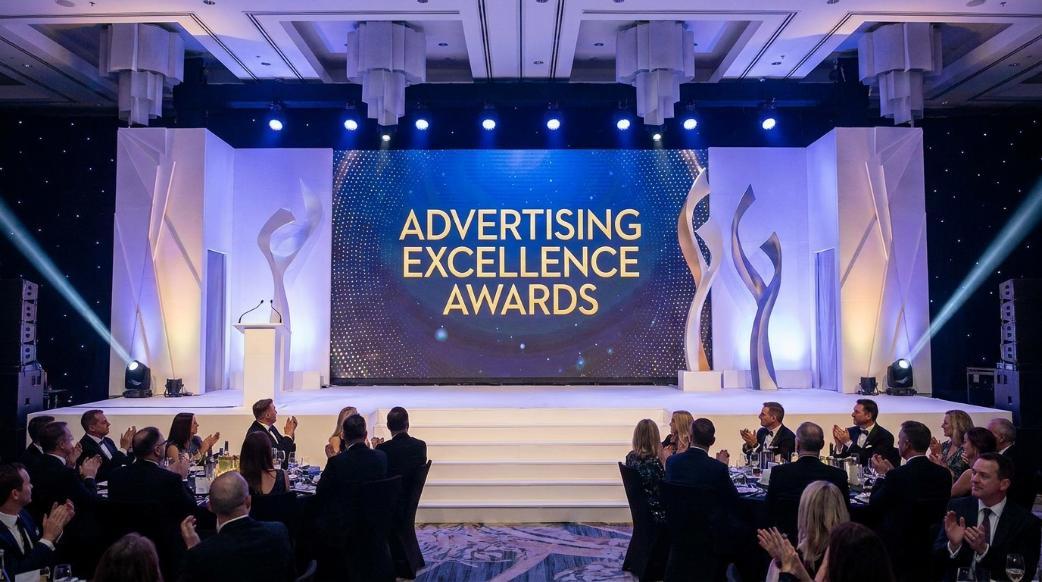
Walk the Croisette during Cannes Lions week and you might forget you're at an advertising festival at all. The 2026 edition cemented a transformation that's been building for years: the event has become a sprawling convergence of tech platforms, streaming giants, celebrity appearances, and creator economy networking — with the actual advertising almost functioning as set dressing for a much larger production.
The star power alone tells the story. This year's guest list read less like an agency conference and more like a premiere afterparty, with Keke Palmer, Priyanka Chopra Jonas, Jerry Bruckheimer, Stella McCartney, Seth Meyers, and Oprah Winfrey all making appearances. As communications consultant Jane Austin observed, the festival has undergone a kind of "Hollywoodification," with The Hollywood Reporter itself declaring that Cannes Lions now feels more like Hollywood than the actual Cannes Film Festival. Paris Hilton, a regular at both events, offered a telling comparison: "I used to come to the Cannes Film festival, but I actually love Cannes Lions way better." It's the kind of endorsement that flatters agency egos while raising a pointed question about what the festival is actually for.
Then there's the tech takeover. With every major platform staking out beach cabanas and branded lounges, OpenAI made its Cannes debut this year, joining Apple, Netflix, and a parade of media giants who now outgun traditional agencies and holding companies in terms of sheer presence. The festival infrastructure itself reflects the shift — creator passes didn't even grant access to the invite-only beach spaces where major media players conducted business, as AdExchanger noted, leaving many independent creators wandering the periphery without clear paths to the dealmaking they came for.
Even the information layer of the festival got the tech treatment. ADWEEK partnered with Code and Theory and ElevenLabs to launch ai.rwaves, an AI-powered radio station broadcasting continuous coverage of the festival — a fitting symbol of an event where the medium has thoroughly consumed the message. Powered by Stagwell's AI operating system, the station offered algorithmically curated news segments, shortlist announcements, and social chatter analysis, all delivered without a single human voice. It was content about content about content, the kind of recursive loop that makes you wonder when anyone has time to evaluate the actual advertising.
Austin put the tension bluntly: "advertising has become a bit of a side show at Cannes Lions," with agencies "massively outgunned by the tech and media giants." She suggested that declining entries might be partially explained by the festival's drift away from the industry that created it. The numbers bear that out: entries fell 25% compared to 2025, even as the proportion of AI-assisted work doubled from 20% to 40%, according to figures shared at the festival's press conference for Creative Data and Media Lions winners.
The irony is rich. At the very moment Cannes Lions commands more cultural cachet than ever — attracting A-list talent, billion-dollar tech companies, and global media attention — the core constituency it was built to serve is shrinking in relative stature. The festival has become a mirror for the industry's larger identity crisis: enormous budgets, dazzling production values, celebrity endorsements at every turn, and a nagging inability to answer the one question that should matter most.
While Cannes Lions attendees were debating the merits of AI-enhanced storytelling and clinking glasses at yacht parties, the brands actually footing the bill for the advertising industry were running campaigns that looked almost nothing like the work celebrated on stage. The disconnect between what wins awards and what fills media plans has never been more visible — or more instructive.
Consider what was happening inside the apps and platforms consumers actually use during festival week. Instacart unveiled its Immersive Feed, a TikTok-style short-form vertical video experience embedded directly in its grocery delivery app, with brands like Hellmann's, Kettle & Fire, and Siete Foods piloting five-to-thirty-second recipe and product recommendation clips designed to drive immediate transactions. These aren't the cinematic, emotionally resonant brand films that earn Grand Prix trophies. They're shoppable vertical videos — built for thumbs, not juries — optimized to close the gap between discovery and checkout in a single scroll. Instacart's general manager of advertising, Ali Miller, framed the company's ambitions in explicitly full-funnel terms, describing a new Ads Studio where brands could collaborate on campaigns supported by first-party data and activated throughout the year, bringing retail media closer to the kind of creative work typically reserved for agency partners.
This is the quiet revolution happening beneath the festival's glittering surface: retail media networks — once dismissed as unglamorous sponsored search placements — are aggressively expanding into video, branded entertainment, and upper-funnel storytelling, but always tethered to commerce data and measurable outcomes. It's creativity in service of conversion, not creativity for creativity's sake.
Meanwhile, the broader advertiser community was still grappling with a fundamental question that no amount of Cannes programming could answer: does any of this creative work actually perform? As AdExchanger noted in its post-festival roundup, CMOs remain unable to reliably prove that their creative drives results, with research from Forrester and WPP-owned Gain Theory suggesting that brand marketers still lack confidence in measuring creative effectiveness — even as media ROI metrics have become well-established. The implication is damning: the industry has built sophisticated machinery for optimizing where ads appear but remains largely in the dark about whether what those ads say and show actually matters.
This measurement void shapes what top spenders actually run at scale. When you can't prove that a beautifully crafted sixty-second brand anthem outperforms a templated product carousel, the templated carousel wins — not because it's better, but because its cost is lower and its performance signal is clearer. Marketers are more likely to invest in AI for efficiency than for measuring effectiveness, according to the same Forrester research, which means the tools being deployed at scale are designed to produce more creative variants faster, not necessarily better ones.
The result is a festival that celebrates the exception while the rule plays out on millions of screens elsewhere. The brands spending the most money during Cannes week weren't chasing Lions — they were chasing last-click attribution, return on ad spend targets, and incrementality models. They were A/B testing thumbnail images, rotating headline copy through dynamic creative optimization platforms, and measuring lift in fourteen-day purchase windows. It's not glamorous, and it would never make a sizzle reel. But it's what $141 billion in annual global ad spend actually looks like when nobody's watching from the Croisette.
The advertising industry has long operated with a quiet, uncomfortable truth lurking beneath its glitziest celebrations: the work that wins trophies and the work that drives business results inhabit fundamentally different worlds. This isn't cynicism — it's increasingly well-documented, and the data emerging around Cannes Lions 2026 makes the schism harder than ever to ignore.
Start with the clients themselves. A joint study by the World Federation of Advertisers and Cannes Lions found that just three in ten multinational marketers say their teams consistently work to deliver creative excellence. More than half acknowledge they value it in theory, but prioritization remains "inconsistent across teams." The barriers are familiar and structural: short-termism plagues 68% of respondents, risk aversion hampers 45%, and more than a third cite difficulty securing sufficient investment for creative development. These aren't small-brand problems. The survey covered 86 brand owners across 26 sectors representing $141 billion in annual global ad spend. If the world's largest advertisers can't even agree on a definition of creative excellence — let alone fund it — what exactly is the Palais celebrating?
The answer, increasingly, is aspiration untethered from execution. Universe one is the award show: emotionally resonant films, conceptually daring stunts, culturally provocative brand manifestos. Universe two is the media plan: performance-optimized creative variants, dynamically assembled display units, shoppable social posts engineered for click-through rates. The people commissioning the work in universe two are often the same CMOs clapping for the work in universe one, but the budgets tell the real story.
This tension surfaced repeatedly at the festival itself. As Angela Tangas, global CEO of Oliver, observed during the event, "everyone's in an arms race to try and demonstrate some form of value when it comes to utilization of AI," but "all that value is focused on efficiency gains as opposed to focusing on true business impact." Efficiency, in this context, means producing more creative variants faster and cheaper — not producing better creative. The optimization loop rewards volume and speed, not the kind of craft that earns a Lion.
Meanwhile, research from Forrester and Gain Theory cited by AdExchanger suggests that brand marketers remain fundamentally unsure how to measure creative effectiveness, even as metrics for media ROI are well-established. Marketers are more likely to invest in AI for efficiency than for understanding which creative actually outperforms — a prioritization that practically guarantees the two universes will continue drifting apart. Creative budgets remain depressed enough that even spending on contextual analysis tools, which could begin bridging the gap, may not be financially viable for many teams.
The result is a self-reinforcing cycle. Award juries reward novelty, emotional depth, and cultural commentary. Procurement teams reward cost-per-acquisition, return on ad spend, and production efficiency. Agencies, caught between these gravitational forces, increasingly build separate teams for each universe — a "craft" team for pitches and awards, and a "performance" team for everything else. The two rarely interact, and neither is incentivized to learn from the other.
This isn't to say award-winning work can't convert, or that performance-driven creative can't be beautiful. But the industry's incentive structures actively discourage overlap. Until measurement catches up — until brands can credibly prove that the emotionally ambitious campaign also drove the quarterly number — the Croisette will keep celebrating one kind of advertising while the rest of the industry quietly runs another.
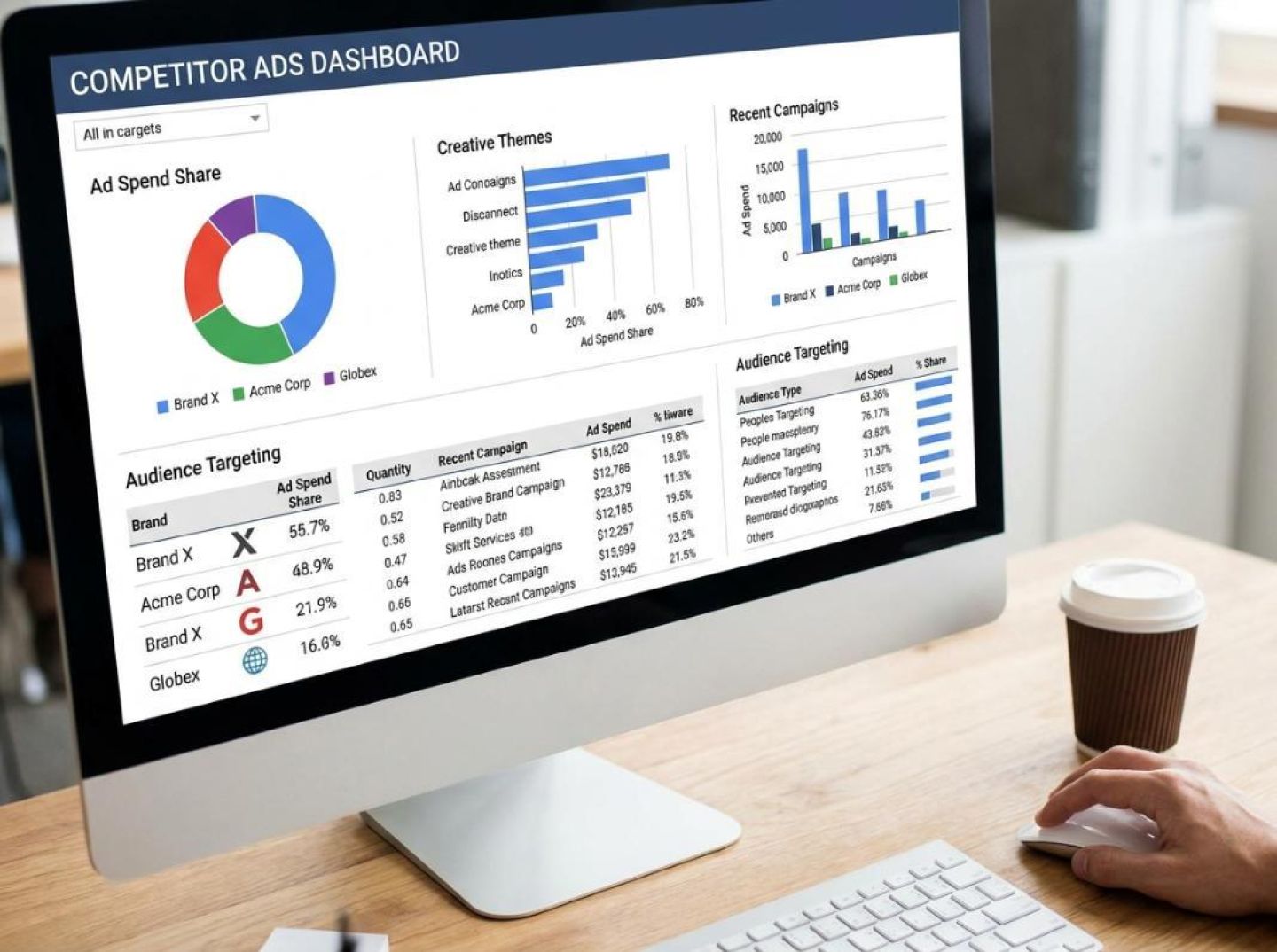
While the Cannes Lions stage rewards conceptual brilliance and emotional storytelling, a parallel universe of advertising intelligence has been quietly maturing — one that doesn't care about craft, narrative arcs, or jury sentiment. It cares about what's actually running, where it's running, and whether it's working. The tools powering this universe — ad spy platforms, competitive intelligence dashboards, and creative analytics engines — represent something close to the philosophical opposite of an awards show. And for marketers tasked with generating revenue rather than accolades, they may be far more instructive.
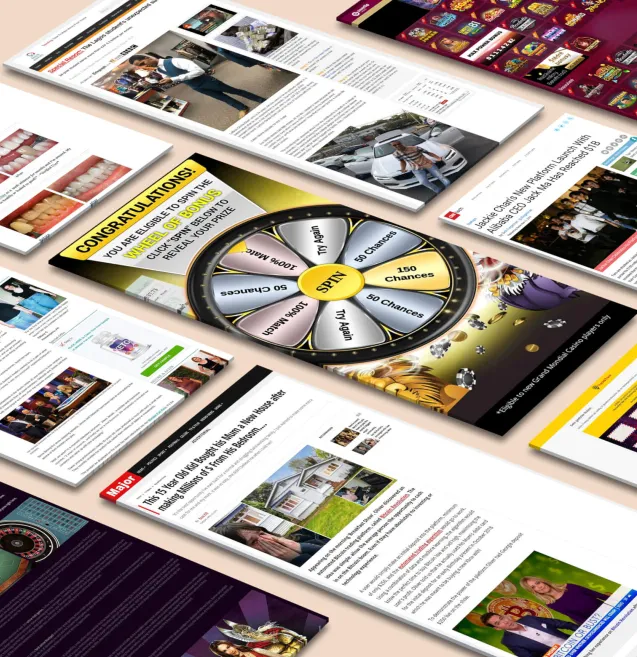
The core value proposition of ad intelligence is radical transparency. Platforms like AdSpy, Minea, BigSpy, and Meta's own Ad Library let anyone see the live creative output of virtually any brand running paid social. You can filter by engagement, duration, geography, and format. You can see which ads a competitor launched three days ago and which ones they've been running unchanged for six months — a strong signal that the creative is converting. None of this information is available from a Cannes shortlist. Awards shows tell you what a jury of peers found impressive in a controlled presentation environment; spy tools tell you what the market actually responded to with wallets and clicks.
This distinction matters more than ever because, as AdExchanger reported, CMOs are still struggling to prove that their creative actually works. Research from Forrester and WPP-owned Gain Theory cited in that same coverage found that brand marketers remain unsure how best to measure creative effectiveness, even as media ROI metrics have become well established. Ad intelligence tools don't fully solve that measurement gap, but they offer something awards shows never will: a real-time competitive benchmark grounded in observable market behavior rather than subjective evaluation.
The tension is compounded by where AI investment is actually flowing. Rather than pouring resources into understanding which creative approaches drive business outcomes, marketers are overwhelmingly directing AI spending toward efficiency initiatives — faster production, cheaper iteration, streamlined workflows. As Angela Tangas, global CEO of Oliver, put it at this year's festival, "All that value is focused on efficiency gains as opposed to focusing on true business impact." Ad spy tools sit in an interesting middle ground here: they're efficiency tools insofar as they compress competitive research timelines, but they also surface effectiveness signals by revealing which creatives have genuine longevity in the market.
What spy tools teach you that Cannes can't is fundamentally about pattern recognition at scale. Browse the top-performing ads in any vertical — supplements, fintech, DTC fashion — and you'll notice a striking consistency. The hooks are blunt. The visuals prioritize clarity over artistry. Text overlays dominate. Calls to action appear within the first three seconds. User-generated content formats outperform studio-polished work by wide margins. These patterns don't emerge from creative briefs designed to impress juries; they emerge from relentless multivariate testing against actual consumer behavior.
None of this means that Cannes-worthy creativity is without value — brand building, cultural relevance, and emotional resonance are real strategic assets. But for the vast majority of advertising spend happening on platforms like Meta, TikTok, and Google, the feedback loop that matters isn't a gold Lion. It's a cost-per-acquisition number that holds at scale. Ad intelligence tools provide the map to that territory. Awards shows, for all their glamour, are still mostly offering postcards from somewhere else entirely.
Receive top converting landing pages in your inbox every week from us.
Recently Updated
Discover how TikTok, YouTube, and LinkedIn are turning creator content into performance marketing opportunities, and why brands should look beyond influencer fit and engagement metrics. Learn how to evaluate creator campaigns using earnings per click (EPC), marketing efficiency ratio (MER), and arbitrage margins to identify profitable creative, improve campaign decisions, and scale what works.
Dan Smith
7 minOct 16, 2026
Featured
Discover how performance marketers can turn the post-holiday advertising period, known as Q5, into an opportunity for lower-cost testing and smarter campaign optimization. Learn how to use Anstrex ad spy data to identify winning creatives, analyze competitor funnels, launch original landing pages, and turn Q5 insights into scalable Q1 campaigns.
Elena Morales
7 minOct 14, 2026
In-Depth
Explore what Pure Leaf’s “Break Conference” reveals about the gap between polished brand marketing and measurable performance. This guide breaks down how Native, Push, TikTok, and affiliate-style funnels use creative testing, clear offers, first-party data, and hard performance metrics to turn cultural moments into revenue.
Rachel Thompson
7 minOct 1, 2026