10 minSeptember 8, 2026

Our spy tools monitor millions of native ads from over 60+ countries and thousands of publishers.
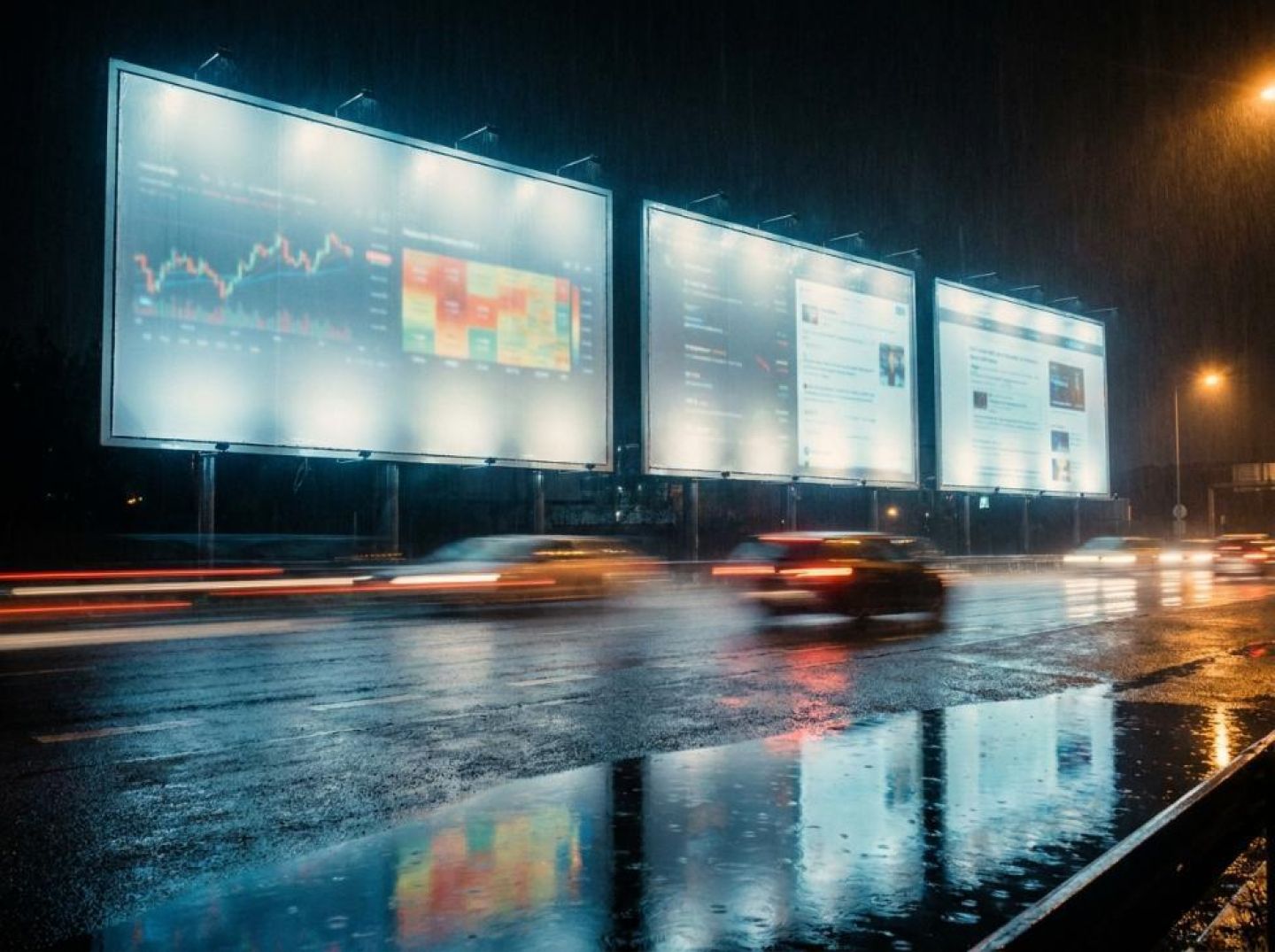
Get StartedIf you’ve spent years selling billboards, mapping routes, or hanging vinyl in the rain at 2 a.m., you’re sitting on one of the most undervalued assets in advertising: you understand, instinctively, what actually steals attention in the wild.
You know which board on the bypass gets glanced at even when traffic is flying at 70 mph. You’ve watched how a simple, high-contrast creative outperforms the über-clever art direction nobody can read from a moving car. You’ve seen a freshly lit digital spectacular turn a dead corner into a landmark. That lived, visceral sense of “what people notice when they’re not trying to notice ads” is precisely what powers the highest-ROI digital and native campaigns on the internet.
Meanwhile, the job boards are filling up with more of the same. Week after week, listings for roles like Sales Manager – Outdoor Advertising, National Account Executive, and LED Video Screen Service & Installation Tech appear in the OOH classifieds. As one recurring round-up of “11 OOH Employment Opportunities” makes clear, the openings cluster around the same familiar buckets: local billboard sales, ops and real estate, printing and installs, a few graphic design and brand roles, and the occasional “free agent” trying to stay visible between gigs.
These are solid jobs. Some are great careers. But they’re all built on the assumption that your value begins and ends with physical inventory: locations, structures, trucks, screens, and the muscle to keep them running.
The market has quietly moved the goalposts.
The brands spending the most—and the ad buyers they trust—are shifting budget toward channels where they can see, in real time, which creative, which placement, and which funnel sequence actually moves revenue. They’re obsessed with attention, but they want it quantified. They’re less impressed by a beautiful board in a prime spot and more impressed by a system that predicts, “If we put this message in this environment for this audience, here’s the lift in leads, sales, or subscriptions we can expect.”
That’s where your OOH instincts become a superpower.
Think about the core of what you already do in those classic OOH roles:
Those are not “old media” skills. They are the raw inputs of modern ad intelligence.
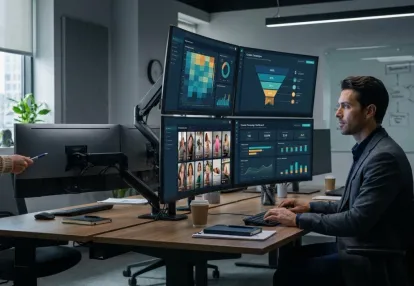
The emerging, high-ROI roles in performance marketing are built around tools that do, in the browser, what you’ve been doing from the catwalk and the driver’s seat: watching where attention actually goes, then using that insight to make smarter bets. Platforms like Anstrex let marketers spy on thousands of live campaigns, see which creatives are scaling, and reverse-engineer winning funnels across native and display. On paper, that sounds like a data analyst’s job. In practice, it’s a pattern-recognition job—and OOH veterans live and breathe patterns of human attention.
If you can look at a street and know, without a spreadsheet, where a board will pull the eye, you can learn to look at a competitive ad library and know, without guesswork, which creative will pull the click.
This article is your bridge between those worlds. You’ll see how to translate what you already know from billboards, street furniture, transit, and spectaculars into concrete, marketable skills inside ad intelligence platforms—so you can move from selling square feet of space to selling proven, data-backed attention.
Scroll through a recent page of out-of-home classifieds and a pattern jumps out immediately: the ceiling on most roles has nothing to do with your talent, and everything to do with how the industry has chosen to box you in.
Job lists like “NYC | Business Development Representative,” “Miami – Ad Sales Account Executive,” “Dallas | Sales Representative,” and “Los Angeles – National Account Executive” are all grouped under a single banner: Sales. In one of the recurring roundups of “10 OOH Employment Opportunities,” the categories are brutally simple: Sales on top, then Real Estate, Operations, Creative, Administrative, Printing, and Services, followed by a small “Free Agents” section for people looking for anything that will pay the bills, as one listing of career opportunities in out-of-home makes painfully clear.
If you’ve spent years in this world, you’ve probably felt that structure in your bones. You are either:
Or you’re on the hardware and logistics side: Sign Installer, LED Video Screen Tech, Operations Director. One employment listings page even splits out “Sign Installer” and “LED Video Screen Service & Installation Tech” in the same breath as “Graphic Designer/Brand Marketing Specialist – OOH.”
Notice what’s missing: there is almost no language about strategy, performance, or intelligence.
You’re “Business Development Representative (Media Sales),” not revenue strategist. You’re “National Account Executive,” not audience analyst. You’re “Director of Operations,” not measurement lead or attribution architect. The work you do absolutely influences performance, but the titles and comp structures keep you fixed in a world where your value is framed as units sold, boards installed, or routes serviced.
That’s the hidden ceiling.
OOH companies reinforce it in how they describe themselves. Liquid Outdoor Media, for example, positions itself as “a leading outdoor advertising company with a national portfolio of digital and static out-of-home media assets,” listing digital interactive kiosks, large format spectaculars, traditional billboards, digital billboards, wallscapes, and experiential activations across lifestyle centers, as shown in their Business Development Representative description. The role you’re asked to play in that ecosystem is clear: drive “proactive outreach” to advertisers and agencies, thrive in a “fast-paced, competitive team-oriented environment,” and build “lasting client relationships.”
All of that is real work. It’s also deliberately narrow.
Nowhere in those postings does it say:
“You will turn real-world media performance into structured intelligence,”
or
“You will translate physical placements into digital-quality insights that brands can optimize against.”
Instead, the intelligence you bring to the table is treated as soft skill, not job description.
You already know which boards consistently overdeliver on phone calls, QR scans, foot traffic, or “my client won’t give this location up even when the budget gets slashed” loyalty. You know which creative directions die on the bypass and which ones punch way above their CPM. But in the classifieds, that knowledge is invisible. It’s folded into a generic expectation that a “high-energy self-starter” will “hit quota” and “build relationships,” as repeated across multiple.
This is not about your capabilities; it’s about the frame the market has put around them.
Classifieds bundle you into categories the industry already knows how to price: sales, ops, install, creative execution. Those categories are built for an era when OOH was sold as static inventory, not as a data-rich, optimizable channel brands can benchmark against their search, social, and programmatic buys.
So you look around and conclude, “The only way up is a bigger territory, a bigger title, maybe national instead of local.” That’s the ceiling doing its job. It keeps you trading time and hustle for commission, instead of trading your pattern recognition and market intelligence for leverage.
The irony is that the exact experience those listings flatten—years of watching what actually moves people in the real world—is the raw material that modern, high-ROI ad intelligence roles are desperate for.
The problem is not that you’re “just” in sales or operations. The problem is that the industry has not yet labeled what you really do in a way that lines up with how the digital side of advertising talks about value: attribution, lift, optimization, audience quality, ROI.
This article is about stepping outside that classifieds frame, naming what you actually know, and then translating it into roles that sit much closer to where the money and decision-making power have already moved.
The titles in the classifieds sound small, but the muscles you’re using every day are exactly the ones elite media buyers get paid a premium for.
Look at a “Sales Manager – Outdoor Advertising” role in Southern Illinois or a “Local Media Sales Executive” slot in Denver. On paper, these are local gigs focused on inventory, relationships, and quota. But read between the lines of those responsibilities: lead, coach, and manage a sales team; develop and execute sales strategies; grow revenue and market share; identify new business opportunities; build and maintain relationships with key accounts. Strip out the geography and you’ve basically described what a profitable, data‑driven media buyer does—just in a different channel.
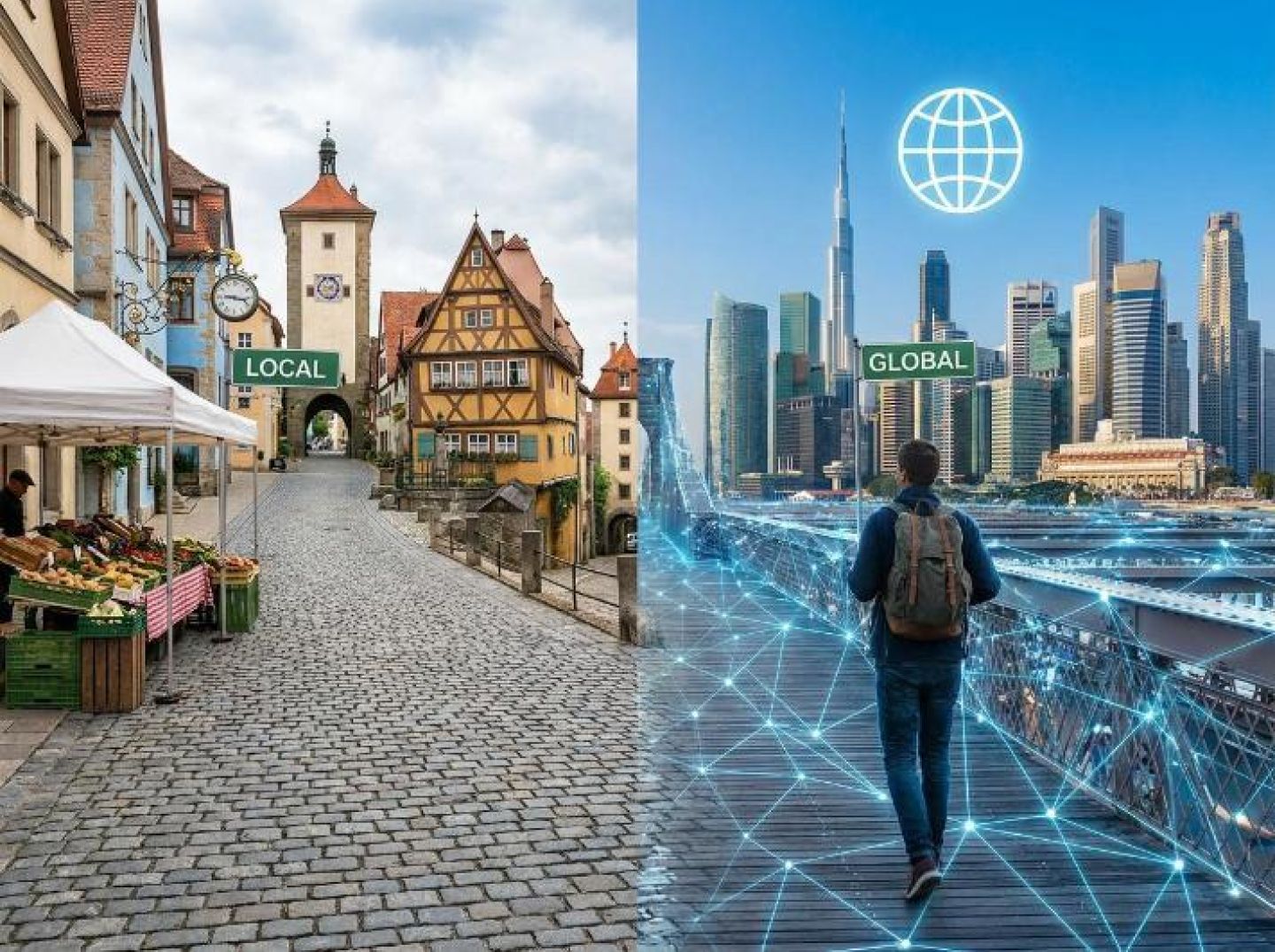
The biggest difference between a “Denver — Local Media Sales Executive” and a global native media buyer is not intelligence; it’s the surface area of the playground. Instead of a few dozen faces on your route, you have thousands of placements across Taboola, Outbrain, TikTok Spark Ads, or Google Performance Max. Instead of one metro, you’re testing U.S., UK, DACH, LATAM, or APAC. The underlying skill, though, is identical: put the right message in front of the right person, at the right moment, at a cost that leaves room for profit.
In OOH, you’ve learned to make judgment calls under constraints. You can’t A/B test 50 versions of a board in a week. You have to obsess over traffic patterns, viewing angles, seasons, and the brutal reality that most people are barely paying attention. So you ask sharper questions: Who actually sees this? At what speed? In what mood? That discipline is gold in native and performance media.
Online, you finally get what OOH denies you: immediate feedback loops and granular attribution. The instinct you’ve built from knowing which bypass board “mysteriously” fills up first each renewal cycle becomes far more powerful when you’re staring at live dashboards instead of gut feel. Click‑through rates, conversion rates, and return on ad spend are just more precise versions of the mental math you already do when you choose between a high‑impression but cluttered interchange and a slightly lower‑traffic board that actually lands.
The constraints you’ve lived under also make you unusually efficient. Local sellers are often asked to do it all—prospecting, proposal building, basic creative direction, sometimes even chasing proofs of performance. That full‑stack hustle is exactly what early‑stage performance teams look for when they hire someone to both run traffic and talk to clients. When a listing calls for a Sales Manager who can “develop and execute sales strategies to grow revenue and market share” for a regional plant of faces and digitals, it’s not a stretch to translate that into designing and scaling a portfolio of high‑ROI campaigns in multiple markets, as similar employment listings quietly imply.
Your advantage over a typical junior media buyer is that you already think in cohorts and environments, not just in clicks. You know a sports radio sponsorship pulls a different crowd than a static on the commuter rail, even at the same CPM. Online, that same thinking lets you exploit the differences between a content‑recommendation widget on a finance site, a clickbaity mobile news app, and long‑form health content. Where a spreadsheet‑native buyer sees “placements,” you see contexts and human behavior.
There’s also a mindset shift you’ve already made without realizing it: you’ve been selling outcomes, not rectangles. Those “Account Executive – Billboard Ad Sales” roles aren’t really about filling panels; they’re about helping the car dealer or hospital hit a number. The strongest OOH sellers quietly run experiments—change the creative, flip the rotation, tweak the flighting—and then tell a story about why the phones rang more in March than February. Performance media just quantifies that instinct at a higher resolution, letting you prove, in hard numbers, which creative and audience mix unlocked the lift.
So when you picture a “global native media buyer,” don’t imagine someone fundamentally different from the rep who built a book of business off a string of 14’x48s and a few digitals. Picture the same operator with more knobs to turn, more data to learn from, and a much bigger canvas than the inventory list in an OOH classifieds email. The leap isn’t from small to big—it’s from opaque to measurable. And everything you’ve done in local OOH makes that leap shorter than you think.
Picture one of those lifestyle-center digital totems you sold to a cosmetics brand last quarter.
Maybe it was a 10-second loop in a high-end open-air mall, sandwiched between a luxury jeweler and a café with $7 lattes. On the surface, you “sold a digital spot.” Underneath, you quietly ran a full media strategy exercise that looks a lot more like what a high-ROI native ad buyer does inside a performance agency or analytics platform.
Think through what you actually did:
Now translate that into a browser-based, data-heavy world.
A top-tier native media buyer does three things repeatedly: finds high-intent audiences, matches creative and context to that intent, and scales only what actually performs. In your cosmetics example, you:
Those are the same muscles a performance marketer uses when they buy traffic from a premium publisher, tweak a thumbnail and headline combo, and then shift budget toward the placements that generate the lowest cost per lead.
If you look at the job description for a “Sales Manager – Outdoor Advertising” in Southern Illinois, the responsibilities are coded in sales language: “develop and execute sales strategies,” “grow revenue and market share,” “build and maintain relationships with local businesses” as listed. Read it like a media buyer and you see: audience development, channel strategy, and account-level optimization. You’ve effectively been acting as a localized CMO for every cosmetics client on your roster—advising on where to show up, how often, and with what message.
That’s exactly why your cosmetics case study is more than a “nice local win.” It is a blueprint for a portfolio piece that speaks the language of ad intelligence:
When you start talking about that cosmetics placement in these terms, you’re no longer “the rep who sold the digital panel.” You’re doing what the better out-of-home firms quietly promise when they talk about “strategic, creative, and results-driven campaigns” in their employment listings: using inventory as a laboratory for learning which messages move which people, in which environments.
The leap from billboards to browsers isn’t mystical. In that cosmetics example, you already made it—you just ran the experiment on a 14-foot screen instead of inside an analytics dashboard.
In a native ad spy tool like Anstrex, this is where your OOH instincts finally get something concrete to chew on.
You’ve selected the “beauty / skincare” vertical, filtered for, say, “United States + Mobile.” What you’re really looking at now is the browser-based equivalent of that open-air lifestyle center you’ve sold a hundred times over—only this time you can see every screen, every creative, every message rotation, and how long each one has been “paying rent” in the auction.
Start with what you already know: environments.
On the street, you instinctively match a cosmetics brand to the right physical context—premium lifestyle center vs. highway poster vs. wildposting wall. Inside Anstrex, you’re doing the same thing with traffic sources and placements. A skincare offer running aggressively on a high-volume native network is just the digital cousin of a brand that buys your prime digital spectaculars month after month. As software-led networks like Trillboards have shown by wiring their screens into a smarter “intelligence layer,” the edge goes to whoever can connect inventory, audience, and demand signals faster than the next rep.
Click into a winning beauty creative and pause before you get dazzled by the colors.
Ask yourself the same questions you’d use in a client needs analysis:
In OOH, you’re trained to strip an idea down until it works in three seconds on a six‑sheet. That discipline is gold in an ad intelligence role. As you scroll through top-performing skincare ads in Anstrex, you’ll start spotting the familiar patterns: a tight benefit (“clearer skin in 7 days”), a specific avatar (busy moms, men over 40, Gen Z with acne anxiety), and a visual hook that would work just as well on a digital kiosk in a mall as it does in a 300×250 rectangle on a news site.
Now click through to the landing page.
This is the piece most OOH folks underestimate—and where you can leapfrog junior media buyers fast. A landing page is just a longer-format version of the story you’ve been trying to tell in three lines of copy and one hero image. Where a local beauty boutique might ask you for “awareness” on a lifestyle-center screen, the performance marketer behind this Anstrex landing page is being judged on one brutal metric: did the user buy, book, or opt in?
Your job, as an ad intelligence analyst, is not to be a designer. It’s to reverse-engineer why this page is out‑competing hundreds of similar offers.
Walk it like you’d walk a site tour:
Because tools like hellOOH are already structuring OOH campaign history into “predictive demand signals,” you’re not walking into this cold. You’ve seen which beauty advertisers renew their digital spectaculars, how often they rotate creative, which seasonal pushes actually move. When you spot those same logos and offers inside Anstrex, you can connect the dots between offline dominance and online aggression. That’s the spine of an ad intelligence narrative a media buyer will pay for: “Here’s how Brand X behaves when they’re serious about owning a category.”
This is also where your career value starts to compound.
Look back at a Business Development Representative role for a company like Liquid Outdoor Media. On paper, it’s classic OOH sales: digital kiosks, spectaculars, lifestyle centers, lots of outbound. But imagine walking into that kind of job—or out of it and into an ad network—with a spreadsheet built from your Anstrex research: 50+ beauty and skincare advertisers, their dominant hooks, landing-page structures, seasonal pushes, and which ones map cleanly to the kinds of environments you know how to sell.
Instead of saying, “We’ve got great screens in high‑end malls,” you’re now saying, “I’ve mapped the top 30 direct‑response skincare funnels running on mobile in the U.S. Here’s how your current message and offer stack up, and here’s the exact creative spine we should test first on our inventory.”
That shift—from pitching inventory to diagnosing funnels—is the mindset upgraded OOH talent need if they want to move into high‑ROI ad intelligence roles. Anstrex is just the microscope; your years of outdoor pattern recognition are what turn raw creative and landing-page data into insight a performance marketer, network, or platform will actually pay for.
The native ad spy dashboard is now your digital streetscape. Your next job is to figure out which “storefronts” actually pull foot traffic—and why.
In Anstrex, those beauty and skincare results are ranked by how long campaigns have been running, how many publishers they’re on, and how much spend they’re likely pushing. That’s your equivalent of knowing which boards get renewed quarter after quarter. You’re not guessing at what’s “pretty”; you’re sorting by survival. The creatives that have been buying impressions for 90, 120, 180 days are the digital version of that one digital spectacular you keep seeing on the highway because it pencils out every time.
Click into one of those winning campaigns and you’ll see the native equivalent of location reports: publisher list, widget placements, device-level performance. That’s where your OOH pattern recognition kicks in. A seasoned sales manager who’s had to “develop and execute sales strategies to grow revenue and market share” across a mixed plant, as described in one of the Sales Manager – Outdoor Advertising roles, already knows the game: some units are there for prestige, some for frequency, some purely for cost-efficiency. Native works the same way. Certain publishers deliver scale, others deliver buyers with wallets out. Your job in an ad intelligence role is to map which placements consistently host the breakout skincare offers and which ones quietly eat budget.
Then you start drilling into the actual creative angles. In performance-native, “beauty / skincare” is practically a museum of before/after promises, fear-of-aging hooks, and transformation narratives. As you scroll, you’ll see a parade of thumbnails: half-face before and after shots, hands with age spots versus airbrushed smooth, crow’s feet disappearing under soft light. You’ve seen this movie—these are the same emotional levers that make a wrinkle-cream board work on a six-lane arterial. Only now you can quantify them.
Open the top-spending creatives and tag what you see:
This is where your OOH copy instincts become a superpower. You’ve spent years squeezing a value prop into eight words readable at 65 miles an hour. The same economy applies to native thumbnails and headlines. An ad buyer wants to know which three or four phrases are doing the heavy lifting. Your background in crafting clean, concise slab-copy for billboards translates directly into spotting which “age-defying” variant will likely survive a ruthless A/B test.
Look at how often “age” and “years” appear in top creatives. Is it “erase 10 years,” “reverse signs of aging,” or “stop premature aging”? Track how frequently you see “dermatologist” versus “celebrity doctor.” Treat it like a creative census. In OOH, a savvy account executive learns which categories—auto, QSR, healthcare—renew season after season, a pattern that shows up repeatedly in classified listings for sales talent, because those verticals pay the bills. In native, your “bill-payers” are specific angles and phrases that keep resurfacing across top spenders and long-running campaigns.
The placements view deepens the story. You’ll notice certain publishers where before/after-heavy creatives dominate the leaderboard, and others where softer “self-care” imagery does better. Just like you’d differentiate between a conservative commuter board and an edgy downtown mural, you can flag where hard “age-defying” promises are tolerated and where they’re toned down. That kind of nuance is exactly what a local media sales executive or national account lead learns selling different formats and environments, a skill set that shows up across multiple.
Document everything. In an ad intelligence role, your value is not “I like this creative,” it’s “here are the five dominant angles driving spend in skincare right now, here’s where they’re running, and here’s how aggressively they lean into before/after and age-defying claims.” That’s the bridge from billboards to browsers: turning what used to be gut feel into a repeatable system that media buyers can bank real money on.
Receive top converting landing pages in your inbox every week from us.
Recently Updated
Discover how TikTok, YouTube, and LinkedIn are turning creator content into performance marketing opportunities, and why brands should look beyond influencer fit and engagement metrics. Learn how to evaluate creator campaigns using earnings per click (EPC), marketing efficiency ratio (MER), and arbitrage margins to identify profitable creative, improve campaign decisions, and scale what works.
Dan Smith
7 minOct 16, 2026
Featured
Discover how performance marketers can turn the post-holiday advertising period, known as Q5, into an opportunity for lower-cost testing and smarter campaign optimization. Learn how to use Anstrex ad spy data to identify winning creatives, analyze competitor funnels, launch original landing pages, and turn Q5 insights into scalable Q1 campaigns.
Elena Morales
7 minOct 14, 2026
In-Depth
Explore what Pure Leaf’s “Break Conference” reveals about the gap between polished brand marketing and measurable performance. This guide breaks down how Native, Push, TikTok, and affiliate-style funnels use creative testing, clear offers, first-party data, and hard performance metrics to turn cultural moments into revenue.
Rachel Thompson
7 minOct 1, 2026