12 minSeptember 4, 2026

Our spy tools monitor millions of native ads from over 60+ countries and thousands of publishers.
Get StartedMarketing is quietly undergoing the same shift software went through a decade ago: from a patchwork of tools and channels to a single operating system. The critical change isn’t just more AI in ad platforms; it’s that creators themselves are becoming the user interface of this new “marketing OS.”
Look at how quickly the infrastructure around creators is maturing. TikTok’s new Symphony Agent isn’t just a gimmicky AI assistant. It sits across its creative suite to generate video from prompts, draft campaign briefs, and, crucially, match brands with creators at scale, effectively turning TikTok into a full-stack creative and media environment where the “front end” is creator content rather than banner ads or brand-owned pages, as VideoWeek reported. In parallel, StackAdapt’s Ivy has evolved into Studio, a full-screen conversational workspace that lets marketers plan, launch, and analyse campaigns via a single AI interface, and even spin up video and CTV assets through an AI Video Builder inside the same environment, according to VideoWeek’s coverage. Put those two moves together and you can see the OS metaphor: Symphony on the “distribution” side, Studio on the “planning” side, both treating creators and creator-style content as the native format of the system.
This is not a niche add-on; it is where budgets are heading. US influencer marketing spend is on track to grow another 15.7% this year and hit $13.7 billion by 2027, according to eMarketer data cited by AdExchanger. That capital is pulling the rest of the stack into alignment. Major holdcos are no longer experimenting at the edges; they’re acquiring the infrastructure outright. Havas has bought creator-focused shop Contexta and others like Wilderness in recent years, while Accenture Song picked up creator agency Whalar, signalling that creator programs are no longer “social side projects” but core to multi-million-dollar media strategies, as.
At the same time, platforms that once sat far from “influence culture” are racing to reorient around creators. LinkedIn, long a résumé warehouse, is rolling out a full suite of creator monetization products — a dealmaking marketplace, subscriptions, and even paid “experiences” like advice sessions — as it leans into a creator economy model patterned after YouTube and TikTok, according to reporting on its roadmap. X is making a similar pivot with Creator Connect, using sibling company xAI’s technology to algorithmically surface creators for brands and invite them into campaigns, with its global content partnerships lead calling 2026 the platform’s “creator era,” as recapped in VideoWeek’s Cannes roundup. In both cases, the default interaction model between brand and audience is no longer ads placed next to content; it is content made by creators, with the brand embedded.
The most forward-looking brands are treating creators not just as media units, but as live, adaptable interfaces for the organization. Starbucks’ Green Apron Creators program is a clear example. The company is piloting a custom Creator Network built into TikTok’s Content Suite, designed specifically to brief baristas, route compensation, and fold employee-generated clips into paid campaigns, as Marketing Dive noted. Starbucks employees already post at three times the rate of peers at similar chains, and the company is now formalizing those “frontline creators” as an always-on layer of discovery, storytelling, and feedback. In OS terms, this is the UI: employee-creators are how customers “experience” the brand in social feeds, and the Creator Network is the control panel behind that interface.
As this OS solidifies, the creative logic changes, too. Data may decide where to place content, but creators are increasingly deciding what that content should be. The olive oil brand Kosterina found that prescriptive briefs produced lifeless posts — technically on-message but obviously inauthentic — and shifted to looser guidance when it saw that engagement tanked whenever the influencer’s voice was constrained, a shift its CEO described in an interview covered by AdExchanger. Creator agencies have drawn the same conclusion: if the creator’s style and judgment don’t drive the work, the audience treats it like any other ad and scrolls past.
Put all of this together and the pattern is clear. The “marketing OS” is no longer defined by your martech stack, your DSP, or your CMS. It’s defined by the network of creators — employees, partners, executives, niche experts — who act as the interactive layer between your brand and the market. AI tools, planning workspaces, and marketplaces are converging to serve that layer. The brands that win the next decade won’t just be the ones that buy creator media efficiently; they’ll be the ones that design their entire go-to-market around creators as the primary interface.
Most LinkedIn and TikTok “growth playbooks” are written for creators trying to build an audience, not operators trying to arbitrage attention into revenue.
They obsess over hooks, posting cadence, and personal branding. Useful, but incomplete. If you’re trying to treat creators as the front end of a “marketing OS,” you don’t just need reach; you need predictable, repeatable mispricings in attention, intent, and inventory. That’s what arbitrage is. And most channel how‑tos don’t get you there.
On TikTok, for example, the advice stack is still dominated by “post 3–5 times a day,” “use trending sounds,” and “grab attention in the first 3 seconds.” Meanwhile, TikTok is quietly rebuilding the entire funnel inside the app. Native tools now stretch from AI‑generated creative to search control to in‑feed checkout, so discovery can move straight into purchase without ever leaving the platform, as Social Media Examiner explains. That’s not a “how to go viral” problem; that’s a media and margin problem.
Similarly, premium placements like Logo Takeover, TopReach, and sequential formats that deliver multiple exposures within a 15‑minute window are turning TikTok into something that behaves more like a mobile TV network than a social feed. These units marry high production value with platform‑native storytelling and can dominate a cultural moment in a single buy, creating genuine efficiency gains for brands that know how to wield them, as Neil Patel’s breakdown of TikTok’s premium push makes clear. Yet most TikTok education still treats ads as repurposed UGC and ignores how these new slots can be priced, tested, and cycled like inventory in an arbitrage model.
LinkedIn has a parallel blind spot. The dominant discourse is about “thought leadership,” long‑form posts, and carousels that rack up impressions. But impressions aren’t an asset class until you can map them to downstream profit. The arbitrage opportunity on LinkedIn is usually not “write better posts”; it’s “identify underpriced reach into specific buying committees, then pipe that attention into higher‑margin products, offers, or sales motions.” Creator how‑tos rarely touch that. They optimize for creator P&L (followers, sponsorships, speaking gigs), not for the company balance sheet.
This mismatch gets worse as creators move inside brands. Starbucks, for instance, is piloting a custom Creator Network on TikTok that lets it brief and compensate employee‑creators through revenue sharing, scaling what started as organic employee‑generated content into a structured program, as Marketing Dive reported. That’s not just “let baristas post fun videos.” It’s a prototype of an internal creator supply chain. But if your only operating manual is “be authentic and post consistently,” you have no framework for deciding which creators, formats, and narratives are actually generating incremental margin versus vanity engagement.
The result: brands over‑index on surface‑level tactics and under‑invest in system design. They follow TikTok “best practices” without questioning whether the objective is brand lift, direct commerce, or category domination in a specific search pattern. They chase LinkedIn virality without instrumenting how that visibility flows into pipeline, pricing power, or category narrative.
Meanwhile, sophisticated players are already thinking in arbitrage terms. Creator‑led campaigns have shown they can unlock spontaneous, net‑new demand—42% of influencer‑inspired purchases happen without prior intent—which is why creator programs are increasingly evaluated against retail media benchmarks like sales lift and ROAS, as Adweek notes in its analysis of creators as a marketing OS. When you measure at that level, “post more” is no longer a strategy. You need to know where attention is mispriced relative to its ability to drive profitable action.
This is the core problem: the mainstream LinkedIn and TikTok playbooks teach you how to be visible inside each siloed channel. Arbitrage requires something else entirely—cross‑channel visibility into how creators, formats, and placements move money. To build that, you need a spy stack, not a posting schedule.
Spy stacks are built, not bought. The blueprint isn’t “install a tool”; it’s deciding, in advance, what signal you’re going to extract from each channel and how you’ll use it to move money.
For TikTok, LinkedIn, and arbitrage channels, that means three layers of tracking:
On TikTok, your spy stack’s job is to separate what’s viral from what’s bankable.
At the creative layer, track:
At the commerce layer, TikTok is now measurable enough to treat like performance media. Your spy stack should monitor:
Finally, at the price layer, log:
On LinkedIn, the spy stack is less about entertainment mechanics and more about offer and angle.
Track, at the creative layer:
On the commerce and price side, log:
Arbitrage doesn’t work without forward‑looking signal. This is where you connect your spy stack to predictive tools.
The blueprint, in practice: TikTok tells you which stories and aesthetics manufacture demand; LinkedIn tells you which offers and narratives turn that demand into pipeline;
Discovery starts with a simple question: whose behavior do you need to spy on, and what do you want to copy, counter, or co‑opt?
On TikTok and LinkedIn, that means turning vague “social listening” into a defined discovery layer: a living map of creators, hashtags, formats, and buying moments that your marketing OS can exploit.
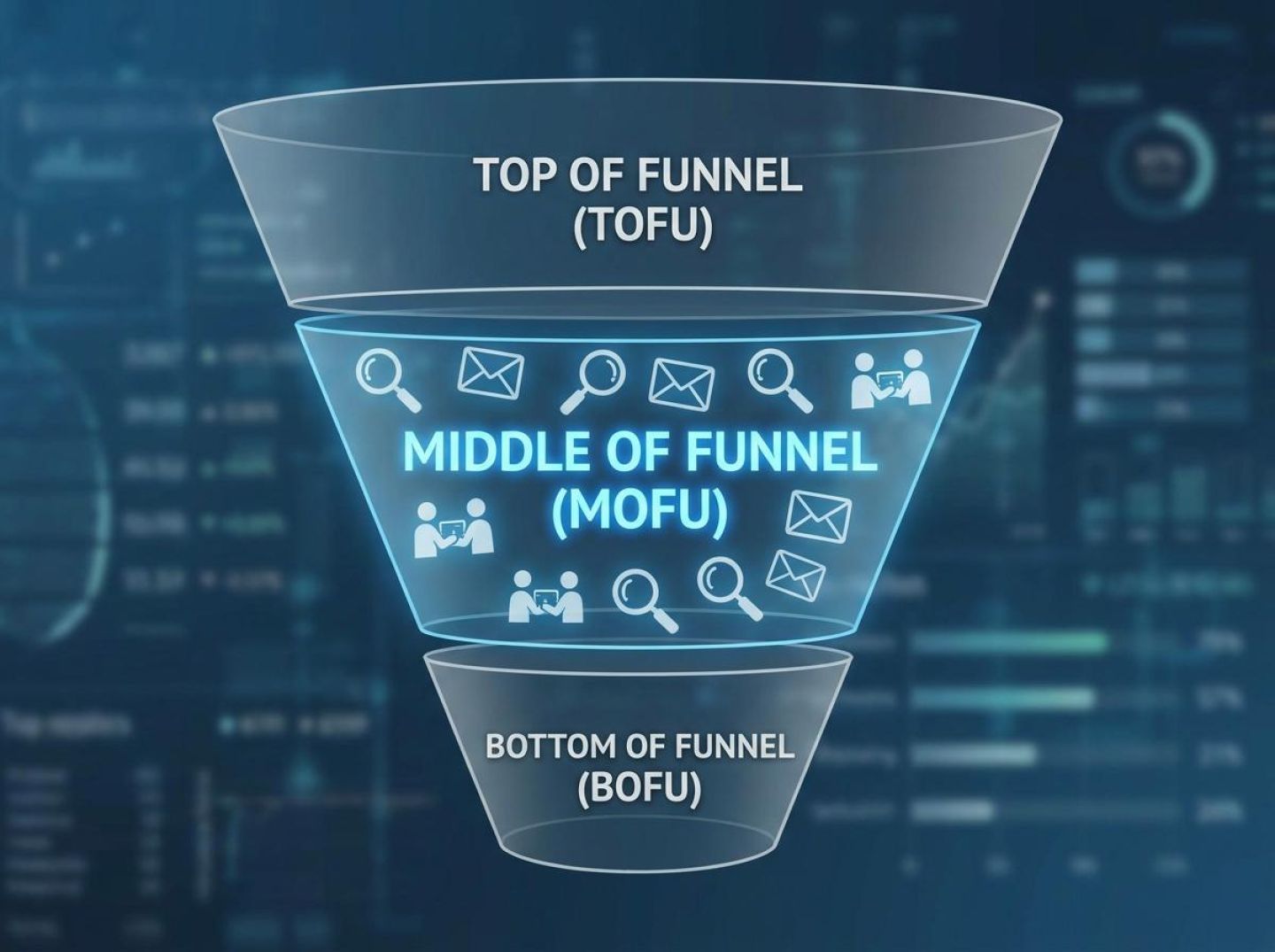
TikTok is no longer just top‑of‑funnel entertainment; it’s quietly rebuilding the entire funnel inside one app, from discovery to checkout, with tools like Symphony AI for creative and native commerce features that drive search, traffic, and direct purchase in a single flow, as Social Media Examiner explains. Your discovery layer has to mirror that reality.
At a minimum, you should be tracking:
The operational rule: anything that repeatedly pushes viewers to search, click, or cart gets promoted from “interesting” to “instrumented.” Those creators, hashtags, and formats become first‑class inputs to your marketing OS.
Where TikTok gives you raw, emotional demand, LinkedIn gives you structured, declared intent. That’s why brands are starting to treat creators as a core channel that plugs cleanly into their broader ecosystem, not a side tactic, as Marketing Dive’s Cannes recap notes.
Your LinkedIn discovery layer should track:
The real arbitrage isn’t “what’s trending on TikTok?” or “who’s big on LinkedIn?” in isolation. It’s: which creators, hashtags, and ideas jump between the two with minimal translation and still move money.
Your discovery layer should explicitly track:
Once those patterns are visible, your spy stack stops being a vanity dashboard. It becomes the discovery engine of your marketing OS: constantly scanning TikTok and LinkedIn for creator‑led behaviors that you can productize, fund, and scale before everyone else notices.
If the discovery layer tells you who and what to watch, the classification layer tells you why it works—in a way your whole “marketing OS” can actually compute.
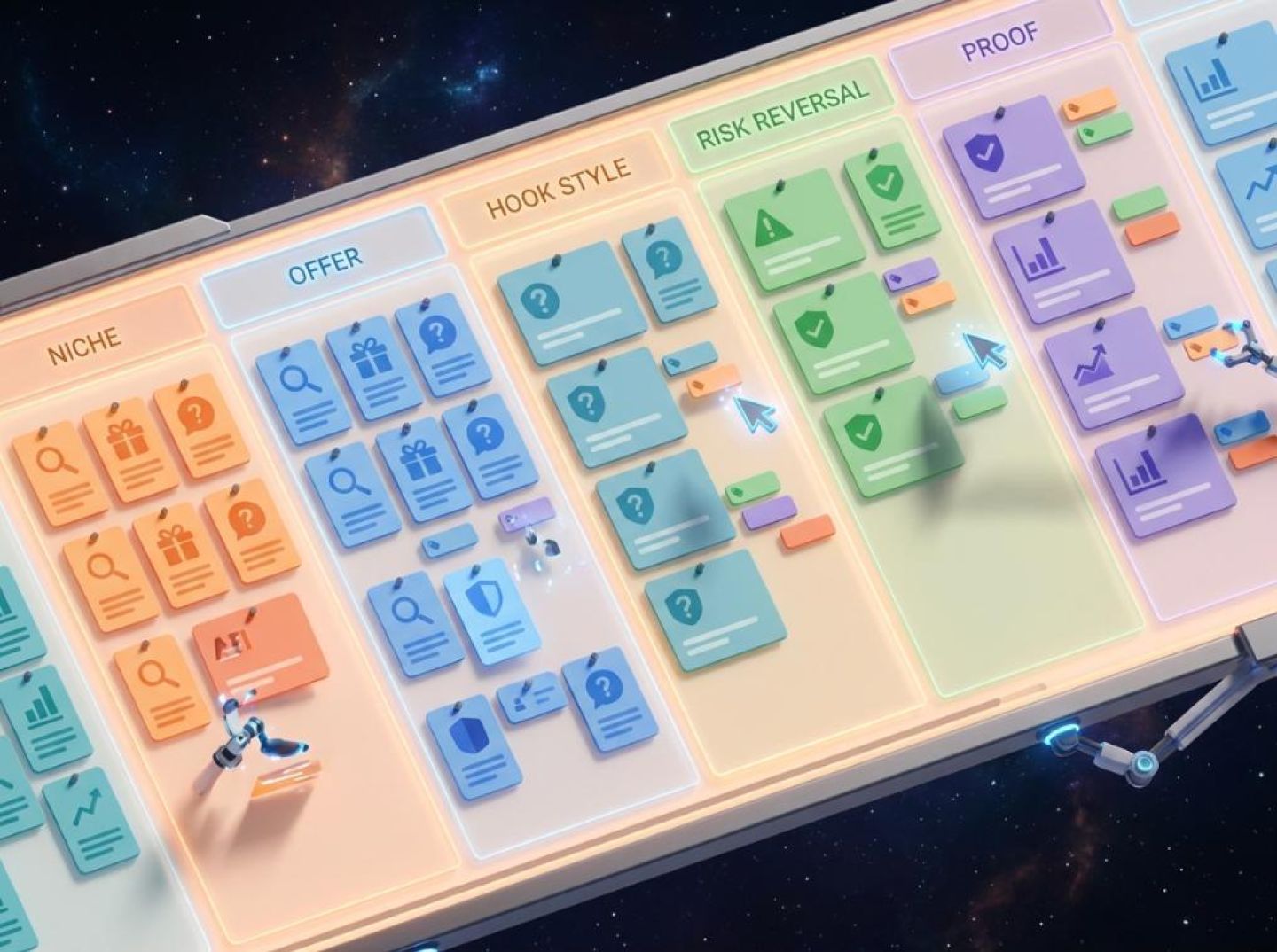
This is where you stop treating viral posts as magic tricks and start treating them as labeled data. Every TikTok, LinkedIn post, and creator integration gets tagged across five dimensions:
Once those tags are consistent, you can point AI at the firehose and get strategy, not just dashboards.
“Marketing” and “B2B SaaS” are not niches. “VP RevOps at $20–100M ARR SaaS” is.
On TikTok, niche is often community-first: gym girlies, side‑hustle dads, Notion aesthetes. On LinkedIn, niche is job‑to‑be‑done and seniority: “Heads of Talent in healthcare” or “founders at seed–Series B.”
Your classification layer should tag:
When Cannes panels talk about “different creators for every part of the business,” they’re implicitly describing a niche matrix that lets Expedia or Starbucks pair specific creators to highly defined audience slices, as Expedia’s marketing lead noted at Cannes. Your OS just makes that matrix explicit and queryable.
You don’t just log “this TikTok sold something.” You tag what kind of offer is in play, because different formats win on different channels and at different price bands.
At minimum, classify:
LinkedIn’s own shift toward creator commerce—rolling out a marketplace for sponsored content, subscriptions, and paid “experiences” like advice sessions, as reported around its upcoming creator tools—is essentially a big bet that B2B “offer type” will diversify fast. If you’re not tagging which offers convert from which creators, you’ll have no idea where to push budget as that ecosystem matures.
Hooks are not vibes; they’re patterns. In your stack, every creative gets tagged with an archetype, so your “creative DNA” layer can correlate hook patterns to watch‑time and conversion:
Common archetypes to encode:
Creator‑first campaigns that start with the person’s natural storytelling style instead of a rigid platform formula are already delivering longer viewing duration and higher active attention, according to analysis of creator performance. When you classify content based on the narrative move—not just the format length—you can systematically discover which hooks travel best from TikTok to LinkedIn, and which die when you cross channels.
Most marketers only tag the offer, not the guarantee framework around it. That’s a miss.
On TikTok Shop or Amazon, risk reversal often hides in the mechanics: free returns, “buy now, pay later,” one‑tap checkout. On LinkedIn, it’s softer but just as real: “DM me ‘PLAYBOOK’ and I’ll send it free,” or “If this doesn’t work in 30 days, I’ll personally fix it.”
Tag each creative with the primary risk‑reversal device:
Employee‑generated content programs are a live example: Starbucks’ Green Apron Creators and its new TikTok Creator Network pilot lean on baristas’ everyday clips to make the brand feel human and safe, something their marketing team is intentionally scaling via TikTok’s Content Suite, as their joint Cannes announcement detailed. In your schema, those posts should be explicitly tagged as “brand‑halo + employee social proof” risk‑reversal units, not just “nice videos from staff.”
Commerce responsiveness isn’t just “had proof / had no proof.” The type of proof radically changes who buys and how fast.
Tag every asset by its dominant proof style:
The single biggest unlock in creator commerce is that a trusted creator is the proof object. Nearly half of influencer‑inspired purchases happen spontaneously, with social platforms turning that inspiration into immediate checkout, as recent commerce outcomes data shows. If you don’t tag those as “creator‑proxy proof” and separate them from traditional testimonial formats, your attribution will understate how much of the lift is coming from the relationship rather than the script.
Once these five dimensions are baked into your classification layer, TikTok and LinkedIn stop being two noisy feeds and start looking like a shared, structured dataset. From there, your marketing OS can do the one thing humans can’t at scale: learn which combinations of niche, offer, hook, risk reversal, and proof consistently turn creator attention into money—and then replicate those combinations on demand.
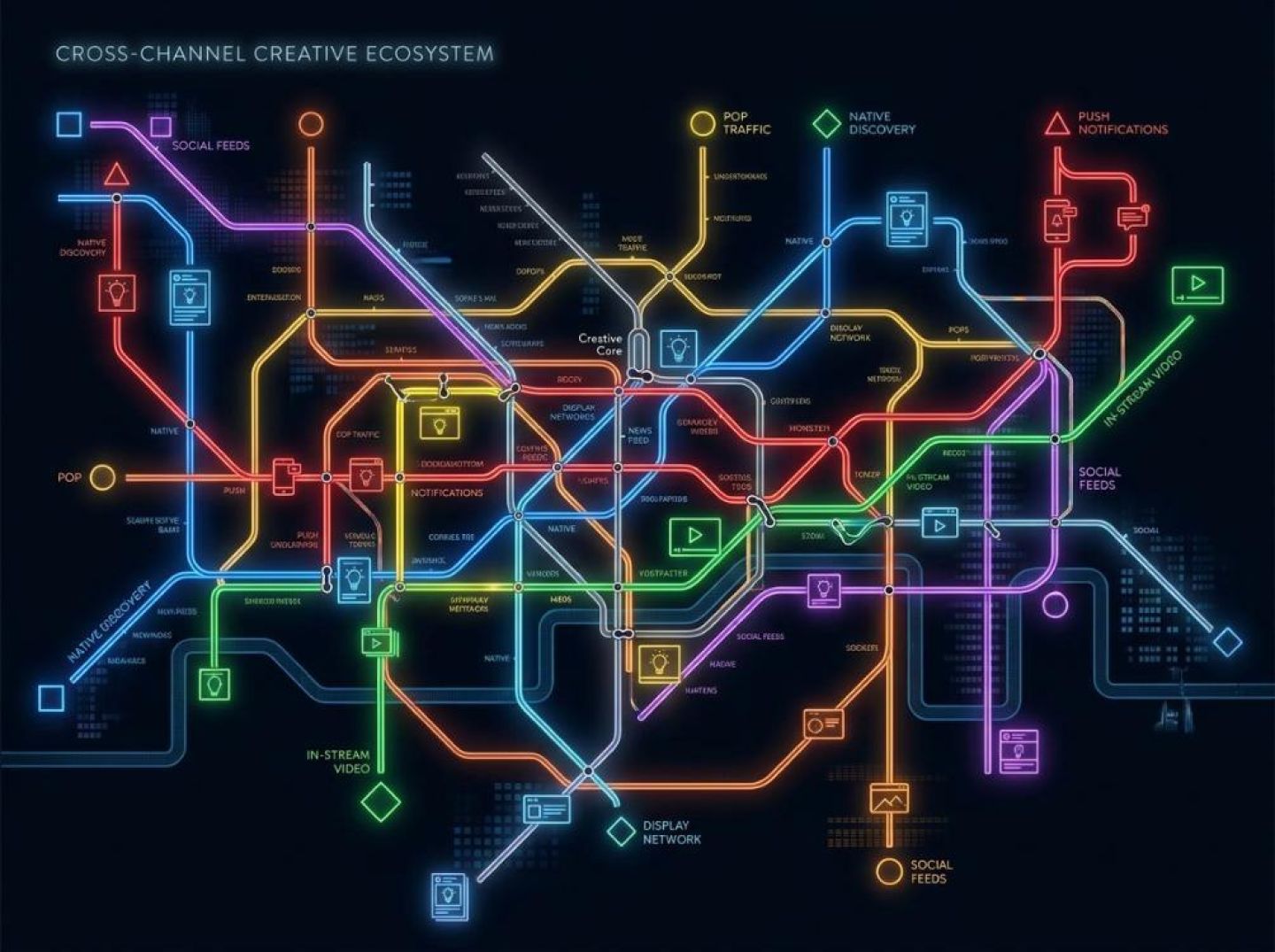
Once you’re tagging hooks and offers, the next move in your “marketing OS” is obvious: find where those same ideas are already being stress‑tested across every paid channel. That’s the job of the cross‑channel mapping layer—and it’s where tools like Anstrex, AdPlexity, and similar spy platforms stop being curiosities and start acting like a creative router between TikTok, LinkedIn, native, push, and pops.
At a basic level, Anstrex lets you reverse‑engineer the path of a winner. You drop in a TikTok headline, a product name, or a distinctive visual motif and see which native or push campaigns are running creatives that rhyme with it. You can then sort by longevity, placements, and networks to surface the ads that have survived weeks or months of spend—your proxy for “this idea is actually printing money.”
This matters more every quarter because TikTok is no longer a niche “social” line item. It’s a premium video channel with TV‑like storytelling formats such as Series Ads and high‑impact units like Logo Takeover and TopReach that brands are using to dominate cultural moments. When a hook works inside that environment—where users open the app five to fifteen times a day and ad experiences are designed to feel native to the feed—it’s worth asking: where else is that same hook being weaponized in cheaper, lower‑funnel inventory?
A practical workflow:
3. Map derivative vs. original creatives.
Often you’ll see a sequence: a raw, story‑driven creator video on TikTok, then three months later dozens of banner‑like native units pushing the same core promise into arbitrage traffic. That tells you two things: first, that the hook works beyond a single platform; second, that there’s already an established “performance ceiling” you can benchmark against.
4. Check how the same ideas behave inside TikTok’s own premium stack.
Because formats like Pulse Tastemakers and Pulse Mentions let brands align with specific creator communities and conversations, they effectively act as a bridge between creator‑led storytelling and paid placements that feel like content. If you see a hook thriving in low‑rent push but falling flat when adapted into polished Pulse or TopReach executions, it’s a signal that the creative was propped up by arbitrage, not genuine audience resonance.
5. Look for creator‑driven patterns, not just copycats.
As Adweek’s coverage of creator‑led programs points out, a handful of well‑matched creators can drive millions of purchases and meaningful sales lift precisely because their storytelling unlocks demand the brand never saw. In your spy stack, that means you’re not only stealing hooks—you’re identifying which creator archetypes (educator, skeptic, confessional, “reluctant expert”) seem to travel best into native and push when their narratives get compressed into three lines of ad copy.
Cross‑channel mapping also helps you avoid the trap of treating TikTok as a pure awareness channel and native as the only performance engine. With TikTok now rebuilding the full funnel—using generative tools like Symphony to scale creative and search‑driven formats that push viewers straight into purchase—you can track whether a winning push hook is actually just a downstream echo of a TikTok concept that’s driving both view‑through and direct sales.
The goal is not to blindly clone every top ad you find. It’s to build a translation layer. Each time you identify a winning creative pattern on TikTok, you ask: what’s the minimum viable expression of this idea in a 90‑character native headline? In a brutalist push notification? In a LinkedIn carousel aimed at buyers instead of bored scrollers? Your spy stack provides the answer key by showing you how other advertisers have already solved those translations—and which versions the market is willing to fund for weeks at a time.
Once that cross‑channel map is live, your “marketing OS” stops guessing. New TikTok or LinkedIn hits are no longer isolated flashes; they’re prompts for rapid, pre‑modeled variants across native, push, pops, and in‑stream. And every time you see an unexpected winner in the wild, you know exactly where to plug it back into your system.
Receive top converting landing pages in your inbox every week from us.
Most Read
Discover how performance marketers can build cross-channel verification journeys that turn skeptical prospects into confident buyers across TikTok, native, push, and pop advertising. Learn how to coordinate creative messaging, reinforce trust at every touchpoint, and measure the hidden influence of fragmented customer journeys using competitive ad intelligence.
Elena Morales
7 minOct 20, 2026
Recently Updated
Discover how creepy out-of-home advertising, TikTok micro-stories, and AI-powered creative tools can turn isolated ads into high-performing serialized campaigns. Learn how to map competitor ad sequences with Anstrex, build story-driven funnels, measure performance across multiple touchpoints, and optimize creative for stronger conversions and ROI.
Samantha Reed
7 minOct 18, 2026
Most Read
Discover why viral TikTok ads don't always translate into profitable, sustainable campaigns. Learn how performance marketers can use Anstrex ad intelligence to identify winning hooks, map audience motivations, manage brand-safety risks, and turn cultural trends into repeatable advertising strategies.
David Kim
7 minOct 17, 2026