10 minOctober 2, 2026

Our tools monitor millions of native, push, pop, and TikTok advertising campaigns.
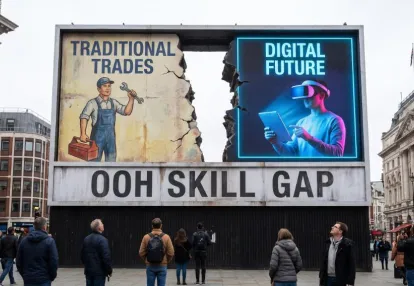
Get StartedMost OOH veterans still think about their careers the way the industry looked ten years ago: a world of locations, relationships, and printed posters. But the work that is actually being created — and the jobs that will exist five years from now — are being shaped by something very different: machine-modeled demand, agentic AI, and always-on performance data.
You can already see this gap in the way new platforms talk about OOH. When Broadsign and Draft Digital launched the first fully agentic, end‑to‑end AI‑powered OOH campaign for Lot of Happiness, the story wasn’t “we booked some great boards.” The focus was on how buy‑side and sell‑side agents could “rapidly coordinate complex tasks” across parties, with humans providing oversight and guardrails as the system handled planning, optimization, and execution at scale. In that campaign, Broadsign wasn’t just selling access to the “largest aggregation of video-enabled displays” — it was explicitly trying to “unlock the power of agentic trading for OOH” and layer AI on top of “screen-level audience indexes, dynamic creative, [and] guaranteed in-advance buying” to drive a “paradigm shift” in how the business operates, as.
That language — agents, indexes, guarantees, demand, efficiency — is the real signal about where roles are heading. The value isn’t just in knowing where the units are; it’s in understanding how those units are modeled, packaged, and optimized inside algorithmic systems.
A similar shift shows up in how newer networks are organizing themselves. When Trillboards integrated the machine-learning intelligence system hellOOH, they weren’t solving a “we need more screens” problem; they were addressing what they called an “intelligence asymmetry” in the market. As their team described it, demand intelligence in most OOH organizations is fragmented, creating latency between how the market is behaving, what sales understands, and how quickly revenue strategy can respond. By using hellOOH to structure market behavior, verify campaign history, and map decision‑maker relationships, Trillboards isn’t just selling inventory — it’s building a compounding advantage based on “predictive demand signals.”
This is a fundamentally different center of gravity for careers. Traditional OOH roles have been built around:
Those skills still matter — but they’re no longer the growth engine. The industry’s growth is being driven by roles that can:
Platforms like AdQuick make this especially clear. Their “universal adapter” positioning is less about being a marketplace and more about turning OOH into a true performance channel. The platform feeds planners real‑time exposure, audience, and lift data so that OOH achieves “parity with modern performance channels,” while AI models analyze “trillions of possible combinations of OOH units” using consumer, demographic, and behavioral data to place every ad dollar strategically, as the AdQuick team outlines. That is not a poster‑booking workflow; it’s an intelligence workflow.
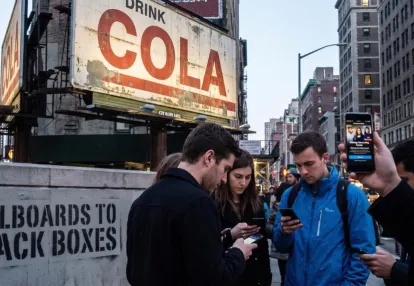
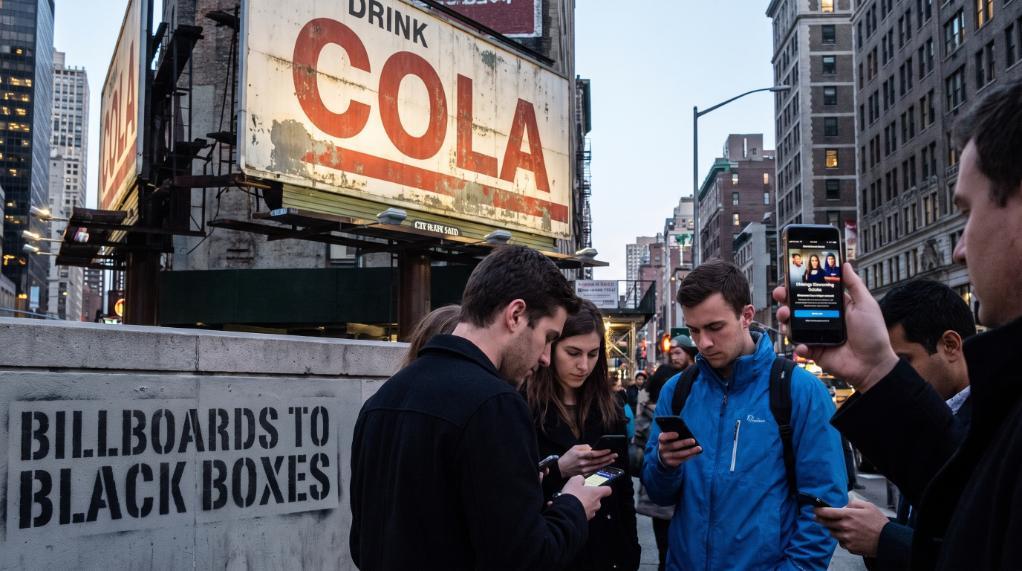
This is the hidden gap: most career paths in OOH are still optimized for selling and delivering media, while the industry’s most aggressive innovation is happening around building, governing, and improving the black boxes that decide what gets shown, where, and at what price.
If your job title today revolves around sales, planning, or operations, your future relevance depends less on learning yet another CMS and more on learning how to work with — and inside — these intelligence layers. The opportunity is not just to “adapt” to automation, but to become the person who knows how to ask, and answer, the new core question Trillboards poses: “What is happening, why, and what is likely to happen next?”
For most of the industry’s history, OOH performance was something you “felt” more than you proved. You relied on traffic counts, gut instinct about a location, and whether the client “heard good things” from the field. That era is ending. The same forces that turned search, social, and CTV into hard performance channels are now rewiring out‑of‑home — and they’re doing it fast.
Three shifts are driving this transformation: measurement, optimization, and automation.
1. Measurement: the unmeasurable is now instrumented
What used to be a fuzzy awareness play is becoming a quantifiable, multi-touch contributor to ROI. Platforms like AdQuick pull in mobile location, behavioral, and demographic data at scale, then tie it back to specific units and campaigns. Instead of “this board gets a lot of cars,” planners see how an individual structure indexes against the brand’s target audience, what visitation or conversion lift it drives, and even the “halo effect” that OOH has on adjacent digital campaigns when it runs alongside search or social in the same market, as described on the.
Crucially, this is not quarterly recap PDF territory anymore. Impression, movement, and performance data are delivered in near real time, which brings OOH “into parity with modern performance channels” in the words of the same AdQuick overview. When a marketer can see OOH results inside the same dashboards where they monitor paid social and programmatic display, OOH stops being the mysterious offline line item and starts behaving like part of the performance stack.
2. Optimization: from static plans to living systems
Traditional OOH planning was a one‑shot decision: pick the locations, lock the contract, hope the mix works. Data‑driven planning flips that on its head. Machine learning models now evaluate billions of potential combinations of units against audience, movement, and contextual signals to assemble an optimized package for a specific objective. Rather than relying on broad assumptions, platforms like AdQuick’s AI engine analyze “trillions of possible combinations of OOH units” to place each dollar where it is most likely to generate impact, according to their description of AI‑powered optimization.
On the sell side, intelligence platforms are doing something similar for demand. Tools such as hellOOH, highlighted in an analysis of Trillboards’ strategy on OOH Today, continuously ingest real campaign signals to model who is buying, where, and in which formats. Instead of static spreadsheets and backward‑looking reports, operators get a living prediction layer that answers “what is happening, why, and what is likely to happen next?” That shift from reports to predictive modeling is what lets OOH companies behave more like data‑driven performance marketers and less like order takers.
3. Automation and agentic AI: OOH joins the programmatic stack
Once you can measure and optimize, the natural next step is to automate. Programmatic DOOH made the first leap, plugging screens into DSPs so buyers could transact OOH like any other biddable media. As the AdQuick team notes, enabling programmatic DOOH within a familiar DSP environment “aligns with how today’s marketers already operate across other channels” and helps OOH shed its status as an outlier.
Agentic AI is now pushing that logic even further. In the first end‑to‑end agentic AI‑powered OOH campaign for Lot of Happiness, AI agents handled planning, buying, and optimization across a massive supply footprint, coordinating complex tasks between buy and sell sides with human guardrails in place, as reported by OOH Today. Broadsign’s CTO described how layering AI on top of global static and digital inventory — paired with audience indexes, dynamic creative, and guaranteed buying — “sets the stage for a paradigm shift that will transform the OOH business,” in the same coverage.
In practical terms, that means OOH can now behave like a full‑funnel, responsive channel: budgets can move dynamically between locations and formats; creative can swap based on context; underperforming segments can be dialed down and winners ramped up mid‑flight. For marketers trained on performance media, this removes the biggest historical friction with OOH. For OOH professionals, it means the value you create is less about knowing which board is “hot” and more about knowing how to interrogate the black box — how to ask better questions of the data, interpret what the models are telling you, and translate that into strategy.
The net result is that OOH is no longer a slow, intuition‑driven outlier. It is a fully instrumented performance environment, powered by intelligence loops that are getting faster every quarter. The talent that will thrive in this world are the people who can bring classic OOH judgment into conversation with these new systems — and who are ready to trade “I think this will work” for “here’s what the model is seeing, and here’s how we should respond.”
If you’ve spent years selling boards, scouting sites, or wrangling installs, it can be hard to see yourself in job descriptions that talk about “AI‑powered optimization” and “OOH intelligence platforms.” But the gap is smaller than it looks. Most of the new, data‑driven roles are just your existing skills wearing new titles.
Let’s translate some of the most common classic OOH jobs into their emerging counterparts.
1. Account Executive / Sales Manager → OOH Performance Strategist or Revenue Operations Manager
Scan the classifieds on industry boards and you see familiar titles everywhere: Business Development Representative (Media Sales) in New York, Ad Sales Account Executive in Miami, Sales Manager – Outdoor Advertising in Southern Illinois, National Account Executive in Los Angeles, and Local Media Sales Executive in Denver — all roles focused on prospecting, pitching, and closing inventory across markets, as recent listings on OOH Today’s employment classifieds make clear.
In a data‑driven environment, the same “hunter” and relationship skills translate directly into roles like OOH Performance Strategist, Revenue Operations Manager, or Programmatic Sales Lead. Instead of only selling locations, you’re selling outcomes: lift in web traffic, store visits, or incremental reach.
Where you once relied on rate cards and traffic counts, you now translate platform outputs — such as real‑time impression data, modeled audiences, and multi‑touch attribution — into narratives that a CMO can act on. Modern platforms that bring OOH “into parity with modern performance channels” by delivering data in real time, as the team at AdQuick describes their universal adapter approach, create exactly the environment where a seasoned seller can evolve into someone who guides clients on how to use that intelligence, not just how much to spend.
Your levers change from “add another board on the bypass” to “reallocate budget toward units with higher visitation lift,” but the core strengths — persuasion, negotiation, account growth — remain the same.
2. Real Estate & Development → Inventory Intelligence or Supply Strategy Manager
Many networks still employ dedicated Real Estate VP/Director/Associate roles, focused on finding, permitting, and securing premium locations, as seen in current listings for real estate and development positions aggregated on OOH Today’s job board. These people know exactly which corners matter, how drivers actually move through a market, and what a given panel is really “worth” beyond a published CPM.
In the new ecosystem, that skill set reappears under titles like Inventory Intelligence Manager, Supply Strategy Lead, or Network Optimization Analyst. Instead of only asking “Can we get a permit here?”, these roles ask “How does this location perform in modeled demand curves, visitation studies, and programmatic auctions?”
Platforms that analyze “trillions of possible combinations of OOH units” using consumer, demographic, and behavioral data — a capability highlighted in AdQuick’s overview of its AI‑powered optimization engine — still need humans who understand why a panel that looks perfect on a map underperforms in real life, or why a small digital screen by a transit hub punches above its weight.
If you’ve spent years assessing sightlines, traffic patterns, and local politics, you’re already doing analog inventory intelligence. The new title simply adds dashboards, data feeds, and experimentation frameworks to decisions you’ve been making your whole career.
3. Operations & Install → OOH Data Operations or Signal Quality Specialist
Traditional listings for Director of Operations, Sign Installer, or LED Video Screen Service & Installation Tech — like the roles frequently advertised for national vendors on OOH Today — sound about as far as you can get from “data science.” Yet, as OOH becomes measurable and programmable, every sensor, screen, and play log becomes a data source. If that data is wrong, the models and optimizations built on top of it are wrong, too.
That’s why you’re starting to see operations experience map into roles such as OOH Data Operations Specialist, Signal Quality Analyst, or Measurement Implementation Manager. These positions sit at the intersection of hardware, software, and reporting: making sure screens are online, feeds are accurate, proofs of play are clean, and discrepancies are diagnosed quickly so performance reporting stays trustworthy.
The same discipline that keeps a digital spectacular’s LED modules humming is exactly what’s needed to ensure the “always‑on performance data” described in modern OOH platforms remains reliable. Your instinct for troubleshooting a flaky controller or a misaligned vinyl becomes an instinct for troubleshooting missing impressions, GPS drift, or broken API connections — different tools, same mindset.
In each case, the translation is less about becoming a different person and more about learning a different language. Your real advantage isn’t that you can suddenly code or build models; it’s that you already understand the reality on the street that these black‑box systems are trying to represent.
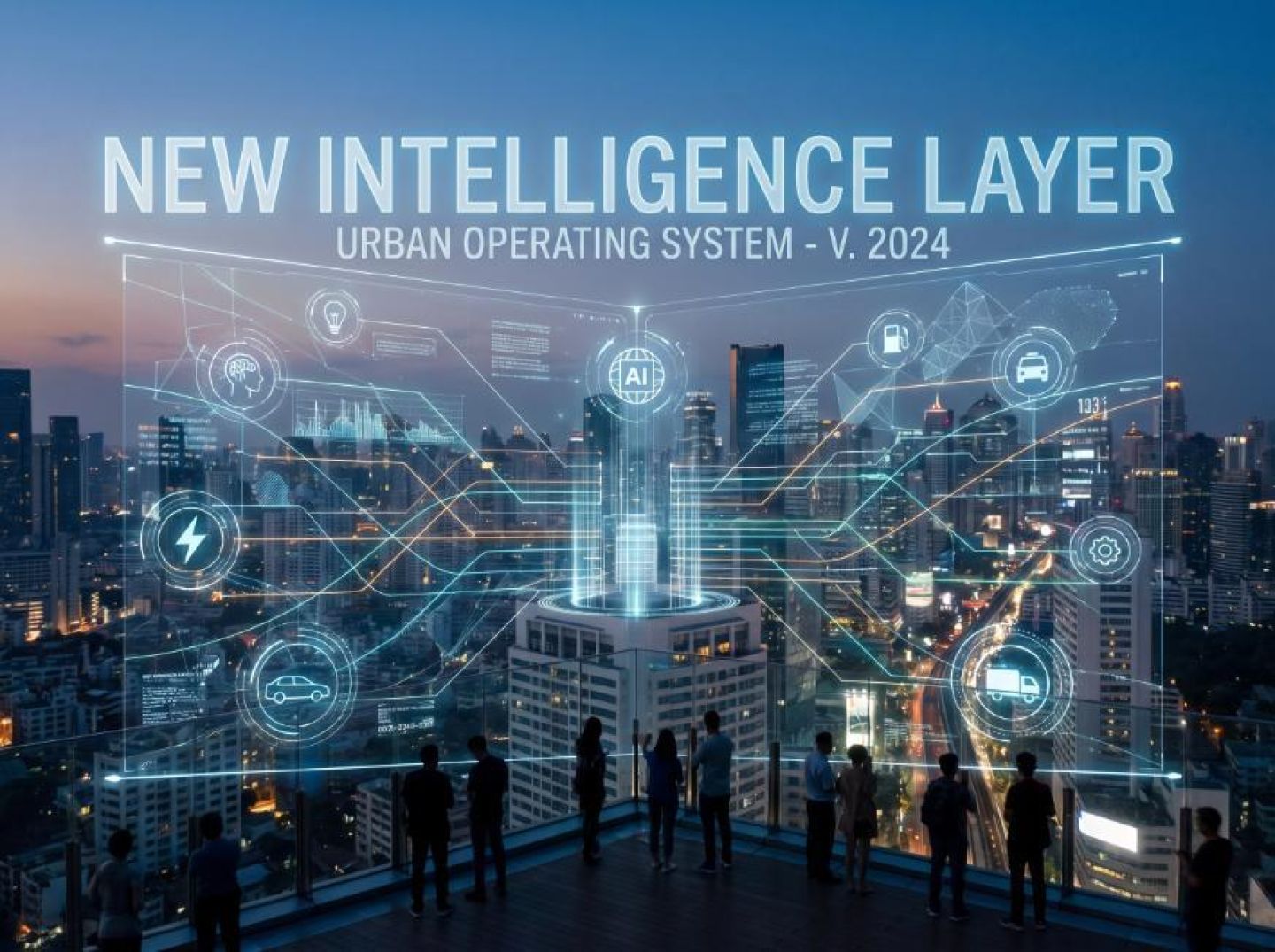
In the old OOH world, “intelligence” meant a sales rep with a good memory and a thick notebook. In the new world, it’s a living data layer that constantly answers three questions: What is happening? Why is it happening? What is likely to happen next? That’s the layer you plug into when you move from classic OOH roles into data‑driven ad intelligence.
At a high level, these new roles sit on top of platforms that ingest signals from everywhere: historical campaign logs, bid streams, audience movement, CRM activity, even who called which rep last quarter. Systems like hellOOH assemble this into four core intelligence layers: a verified campaign graph, an agency and decision‑maker map, a relationship/contact spine, and a predictive demand engine. Meanwhile, planning and buying platforms like AdQuick feed off movement data, demographics, and performance outcomes to turn static inventory lists into dynamic, optimizable media plans. The “black box” you keep hearing about is basically this stack of models plus the people who know how to interrogate it.
So what do those people actually do all day?
1. Demand intelligence and revenue strategy
Roles with titles like “OOH Revenue Intelligence Manager” or “Demand Strategy Lead” live closest to the sales team. Their job is to keep a constantly updated picture of who is spending, through which agencies, in which geographies, and on what formats. On a platform like hellOOH, that means:
Instead of asking a rep, “Who’s big in QSR this quarter?” these roles ask the system. The work product is playbooks, target lists, and territory strategies that give their org what OOH Today described as a “faster intelligence loop” — seeing demand shifts before competitors do and mobilizing sales against them.
2. Data‑driven planning and optimization
Another cluster of roles sits where planning used to be, but with far more firepower. Titles might include “OOH Intelligence Planner,” “Optimization Strategist,” or “Programmatic DOOH Specialist.” These people live inside tools that, as AdQuick explains, can analyze “trillions of possible combinations of OOH units” by layering audience, behavioral, and location data.
On a day‑to‑day basis, they:
Where a classic planner might pull a few maps and a DEC report, an intelligence planner is using a DSP‑like interface to architect campaigns, taking advantage of the real‑time data and optimization AdQuick says brings OOH “into parity with modern performance channels.”
3. Relationship and contact intelligence
A less obvious but fast‑growing area is what you could think of as “OOH CRM on steroids.” Because hellOOH doesn’t just track campaigns; it builds an “industry relationship & contact infrastructure” that connects spend to specific humans across holding companies, independents, and brands. Roles here include “Agency Intelligence Analyst” and “Market Development Ops.”
Their work looks like:
This is where someone with a background in sales support or local market development can shine: all the relationship nuance you used to track in your head now lives in a graph, and your job is to make that graph sharper and more actionable.
4. Performance, attribution, and learning loops
Finally, there are roles dedicated to proving and improving outcomes: “OOH Attribution Specialist,” “Measurement Lead,” or “Performance Intelligence Manager.” With platforms now quantifying visit lift, brand search, and even the “halo effect” OOH has on digital, these specialists:
In other words, they close the loop. What used to be a wrap‑up deck becomes training data — and your ability to connect the numbers to what you’ve seen in the field is exactly what makes those models trustworthy.
Across all of these roles, the common thread is the same: you’re still answering fundamental OOH questions about who to call, where to run, and how to prove it worked. You’re just doing it with an intelligence layer that can see more of the market, much faster, than any single person ever could.
In the last few years, the biggest shift in OOH hasn’t been “more data” or “more screens.” It’s been the move from tools that wait for instructions to systems that act like teammates. That’s what people mean by agentic AI: software that can observe, decide, and execute on your behalf within guardrails, the way a strong account exec or planner would.
You can already see this playing out in campaigns where buy‑ and sell‑side AI agents coordinate complex tasks across parties while humans supervise and set constraints. In one fully agentic campaign for Lot of Happiness, autonomous agents handled end‑to‑end planning and activation across the world’s largest aggregated OOH supply, including video, in‑store, and cinema inventory, with humans stepping in for strategy, approvals, and exceptions as needed, as described in an OOH Today case study. That’s the template: machines grind through thousands of micro‑decisions; humans frame the problem, set intent, and judge outcomes.
For OOH talent, that flips the job description. The most valuable people are no longer expert order takers (“Give me a brief and I’ll build a plan”). They are AI orchestrators who can:
Think about AI‑powered optimization platforms that already analyze “trillions of possible combinations” of OOH units using consumer, demographic, and behavioral data to place every dollar more precisely, as one AdQuick overview explains. Nobody expects you to out‑calculate that engine. Your edge is knowing which combinations actually make sense for a CPG launch vs. a ballot measure, when to prioritize halo effects for adjacent digital campaigns, and how to trade a small efficiency loss for a big creative or political win.
This is where classic OOH skills become superpowers instead of relics.
On the sell side, the rise of agentic intelligence is doing the same thing to market understanding. Tools that continuously ingest real‑world OOH signals and build living demand models — mapping campaigns, decision‑makers, and buying patterns into a unified intelligence graph — are collapsing the time between “something is happening” and “we know what to do about it,” as one profile of Trillboards’ hellOOH platform put it. Instead of manually piecing together who’s active, which agencies are driving spend, and where a category is heating up, you’re supervising an agent that flags likely repeat advertisers, emerging categories, and early buying signals — and you decide which ones are worth a human‑led pursuit strategy.
In this world, the “best” talent:
Agentic OOH doesn’t erase the craft of this industry; it magnifies the people who can connect messy human reality with machine‑driven precision. The winners will be those who stop competing with the algorithms on speed and start leading them on judgment, context, and commercial instinct.
Receive top converting landing pages in your inbox every week from us.
Guide
Discover how OOH professionals can transition from traditional billboard, sales, operations, and creative roles into data-driven ad intelligence careers. This guide maps existing OOH skills to intelligence, planning, activation, and network platforms while showing how street-level expertise can become a competitive advantage in modern performance advertising.
Marcus Chen
7 minOct 2, 2026
Guide
Discover how OOH professionals can transition from traditional sales, planning, real estate, and operations roles into data-driven ad intelligence positions. This guide explains how measurement, AI, predictive demand, optimization, and agentic systems are reshaping OOH careers and turning traditional industry experience into a competitive advantage.
Samantha Reed
7 minOct 2, 2026
Guide
Explore why traditional OOH sales experience is no longer enough as buyers become increasingly data-driven and equipped with AI, attribution, and competitive intelligence tools. This guide outlines the new OOH competency stack, from funnel intelligence and data literacy to outcome-based selling and strategic judgment.
David Kim
7 minOct 1, 2026