8 minNovember 15, 2026

Our spy tools monitor millions of native ads from over 60+ countries and thousands of publishers.
Get StartedWhen an advertising platform influences how your message is matched, delivered, and optimized, buying traffic becomes more complicated than choosing a bid and uploading a creative.
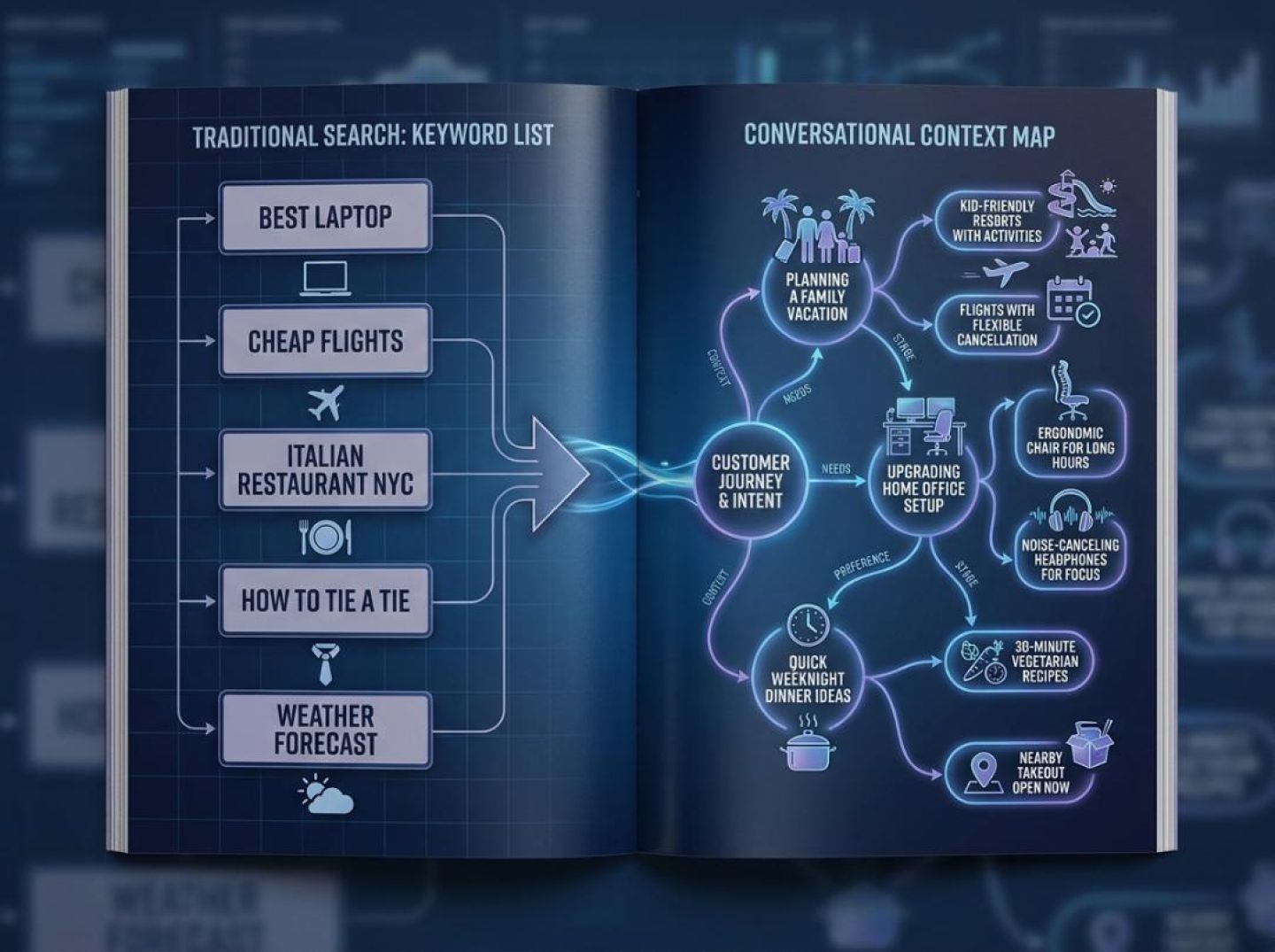
Conversational advertising adds another layer. Instead of targeting only a list of keywords or a familiar feed placement, advertisers may provide contextual guidance and rely on the platform to determine when an ad is relevant to a user's interaction.
That creates a new challenge for performance marketers: how do you evaluate a campaign when you cannot see every context behind an impression, every delivery decision, or every factor influencing the reported result?
On ChatGPT, measurement and transparency are still important questions for advertisers. AdExchanger's coverage of ChatGPT Ads explores some of the challenges involved in understanding performance on this emerging advertising channel.
The answer is not to assume the platform is secretly rewriting every campaign. It is to build independent benchmarks, monitor what you can observe, and test whether platform optimization is actually helping your business.
Here is how to approach that process—and how Anstrex can contribute to your competitive research.
Traditional search advertising gives marketers a relatively familiar way to express intent.
A person searching for “divorce lawyer near me” is expressing a different need from someone searching for “how to save my marriage.” Advertisers can organize campaigns around those terms, choose match types, and review available search-term reporting.
Conversational advertising introduces a different model.
Rather than relying exclusively on exact keyword lists, advertisers may provide contextual descriptions of the topics, situations, or problems where their offers should be relevant. These descriptions are sometimes referred to as context hints.
Examples might include:
The idea is to connect an ad with a relevant context rather than depend entirely on a literal keyword match.
In a conventional search campaign, available search-term reports can provide insight into the queries that triggered ads. Conversational environments are more complicated because an ad may be evaluated in relation to a broader interaction rather than one isolated phrase.
DASH TWO's overview of ChatGPT advertising describes the contextual approach and how advertisers provide guidance for the conversations in which their ads may be relevant.
This changes the research process. Advertisers may have less direct visibility into the complete context behind an individual impression, depending on the platform's reporting and disclosure features.
A campaign can therefore receive impressions without giving the advertiser the same query-level detail available in traditional search advertising.
WordStream's ChatGPT Ads overview also discusses the role of conversational relevance and bid in ad selection.
The important distinction is that limited visibility does not mean advertisers should assume the platform is deliberately hiding poor performance. It means they need to be careful about what conclusions they draw from the available reporting.
In a traditional display placement, advertisers generally know the format and surrounding environment: a website, feed, sidebar, or video placement.
A conversational interface is different. The surrounding answer can change with the user's question and the context of the interaction.
That makes message relevance especially important.
An ad that presents a useful next step may fit naturally into a conversation. A generic brand message may feel disconnected from what the user is trying to accomplish.
Marketing Dive's coverage of OpenAI's advertising positioning at Cannes Lions discusses the company's emphasis on response-oriented calls to action and the user experience surrounding ads.
For advertisers, the lesson is not that every campaign must sound like an AI-generated answer. It is that the relationship between the user's task and the advertised offer deserves more attention.
New advertising environments rarely begin with the same depth of benchmarks and reporting available in mature channels.
Advertisers need to understand which metrics are available, how conversions are attributed, what reporting windows apply, and whether results can be compared across campaigns.
Search Engine Journal's assessment of ChatGPT Ads six months into the rollout discusses the difficulty of defining consistent performance expectations for a developing channel.
That makes it especially important to establish your own benchmarks rather than assume that a particular CTR or CPC is automatically good.
A simplified way to think about a conversational advertising campaign is through three advertiser-controlled inputs:
The platform then applies its own delivery and matching systems. The advertiser may not have direct access to every decision involved in eligibility, relevance, placement, or optimization.
When results change, several explanations are possible:
You should not automatically attribute a performance decline to AI rewriting. Without direct evidence of a creative modification or a controlled test, that explanation remains a hypothesis.
There is also a platform-level business context. Advertising can become an important revenue source for AI companies, but platform growth objectives and advertiser profitability are not the same thing. Marketing Dive's reporting provides context on OpenAI's advertising positioning.
This is why ChatGPT advertising requires a more deliberate measurement strategy. You are working in an environment where contextual matching and platform-controlled delivery may make some campaign decisions less visible than they are in traditional keyword campaigns.
Automated bidding can change how advertisers manage campaigns.
Instead of manually setting every bid, an advertiser allows the platform to adjust bidding based on the signals and objectives available to its optimization system.
That can save time and help a campaign respond to changing conditions. It also means the advertiser is relying on a system whose complete decision process may not be visible.
When you use automated bidding, you are no longer manually choosing every auction-level bid. The platform makes adjustments according to its bidding logic, campaign objective, and available signals.
In a conversational advertising environment, relevance may also be part of the ad-selection process. WordStream's ChatGPT Ads overview discusses the relationship between bid and relevance.
However, advertisers should avoid assuming that automated bidding is automatically optimizing for the platform's financial interests at the expense of advertiser ROI. The actual outcome depends on the bidding objective, system design, available signals, and campaign settings.
The practical question is whether the automated strategy is achieving the business outcome you intended.
View-through conversions can add another layer to campaign reporting.
A view-through conversion generally refers to a conversion that occurs after someone has been exposed to an ad without necessarily clicking it, within the applicable attribution window and platform rules.
This can be useful when an ad contributes to awareness or consideration before a later purchase. But it can also create reporting differences between the advertising platform and the advertiser's backend.
For example, a customer might see an ad, later visit a brand through another channel, and complete a purchase. The platform may report an attributed view-through conversion, while the backend may assign the order to a later visit or another tracked interaction.
Neither report, on its own, proves how much additional revenue the ad created.
This is particularly important when the advertiser cannot inspect the full context of the user's interaction or all the other marketing exposures that occurred before the purchase.
AdExchanger's discussion of ChatGPT Ads highlights the broader challenge of understanding how impressions contribute across the customer journey.
A platform may optimize toward a defined objective using the signals available to it. Those signals are not necessarily identical to the metrics your finance or growth team uses to evaluate success.
For example:
The best approach is to compare these views rather than treating any single dashboard as the complete truth.
Advertising platforms may test delivery strategies, placements, or available creative variations. But an advertiser should distinguish between a platform selecting or delivering supplied assets differently and a platform actually rewriting the advertiser's copy.
Those are different actions.
If the platform changes the order in which supplied assets appear, that does not prove it has rewritten the headline. If performance shifts after a product update, that does not prove the update caused the change.
To establish that creative was modified, you need direct evidence: a platform-provided change record, an observable difference in the displayed ad, or another reliable source.
OpenAI has also explored new advertising formats and conversational experiences. AdExchanger's coverage of Sponsored Agents discusses the development of sponsored conversational experiences. Search Engine Journal's report on visual ad testing in ChatGPT covers another area of experimentation.
These developments show why advertisers need to keep reviewing the formats and reporting available to them. They do not establish that every campaign is being silently rewritten or that every new format is automatically included in an advertiser's campaign.
Instead of trying to guess what the platform is doing internally, document the information you can verify:
This creates a reference point when results change.
The goal is not to assume that every platform update is harmful. It is to understand whether a change coincides with a meaningful shift in your own business results.
If you treat platform-reported results as ground truth, you may miss important differences between attributed performance and actual business outcomes. A stronger approach combines platform reporting with independent analytics and controlled testing.
On search and social, advertisers commonly evaluate campaigns through CTR, CPC, CPA, conversion rate, and ROAS.
Those metrics remain useful in conversational advertising, but they may not tell the whole story.
A conversational interface is not simply another feed or search results page. Users may be working through a decision across multiple prompts, comparing options, or asking for help with a complex task.
The advertising experience needs to be evaluated in that context.
A person asking about the best season for a family trip to the Swiss Alps may not be ready to book a hotel. But the conversation may reveal an interest that could develop into a more specific travel decision.
Marketing Dive's coverage of OpenAI's advertising positioning discusses the idea of reaching users while they are exploring possibilities and making decisions.
This is different from assuming that every conversation represents immediate purchase intent.
Advertisers should distinguish between a user exploring a topic, comparing solutions, and actively looking to buy. Those situations may call for different offers and calls to action.
A sponsored message that feels disconnected from the user's task may be ignored or dismissed.
An ad that offers a useful next step may be more relevant to the situation.
Marketing Dive's reporting also discusses OpenAI's attention to ad dismissal or “cross-out” behavior and the company's claims about changes in that metric since launch. These are platform-reported observations, not independent proof of improved advertiser profitability.
A lower dismissal rate may indicate that users are finding ads less disruptive. It does not automatically mean they are generating more incremental revenue.
In a conversational environment, a useful call to action might be more specific than a generic brand slogan.
For example:
These examples are creative directions, not confirmed platform requirements.
The central principle is to make the relationship between the user's task and the advertised offer clear. A strong CTA should set an accurate expectation about what happens after the click or interaction.
A more complete evaluation framework can include three dimensions.
1. Conversation fit
Where reporting is available, examine whether the ad is being dismissed, whether users engage with it, and whether the message appears relevant to the intended context.
Do not assume that every platform-level engagement metric is available to advertisers or that it can be compared directly with metrics from another channel.
2. Assistive intent
Evaluate whether the call to action offers a meaningful next step. A calculator, comparison tool, product guide, or personalized planning resource may be more appropriate than a generic product pitch in some situations.
Measure what happens after the interaction: qualified visits, completed actions, leads, and the quality of those leads.
3. Downstream business impact
Review conversions, repeat visits, assisted activity, revenue, and customer value where reliable data is available.
View-through conversions can be part of the analysis, but they should be interpreted according to their attribution rules. They should not be treated as proof that the ad caused the purchase.
There is no reason to abandon CTR, CPC, CPA, or ROAS. The better approach is to interpret each metric in the context of the campaign's role.
A campaign intended to introduce a product may need different evaluation criteria from one intended to capture high-intent demand.
Before scaling, decide:
If you do not define success in advance, you risk allowing the easiest available platform metric to become the campaign's entire objective.
If you are testing a new advertising environment, it helps to have a reference point outside that environment.
That is where competitive intelligence can contribute.
Anstrex is a competitive intelligence tool for researching visible advertising activity across supported native and push advertising sources. It can help advertisers examine creative approaches, offers, landing pages, and recurring campaign patterns.
Its role in a ChatGPT advertising strategy is indirect but useful: it can help you develop creative hypotheses from other parts of the advertising market before adapting those ideas to a conversational environment.
Do not approach competitor research as a hunt for one magic ad.
Instead, build a structured library of patterns in your niche:
Organize the examples by product category, audience problem, offer type, and apparent funnel stage.
This gives you a reference library of visible advertising strategies. It does not establish that every example is profitable.
Anstrex research can help you identify ads that have remained visible over time and examine estimated traffic activity where those indicators are available.
Long-running ads may deserve closer inspection because they represent repeated visible activity. But longevity and estimated spend do not prove profitability.
An advertiser might continue running a campaign because it is profitable, because it is testing variations, because it serves a strategic purpose, or because the organization has not yet changed its budget.
Use these signals to prioritize research, not to certify an ad as a winner.
For every interesting example, record:
For each group of related ads, examine the components that make up the offer.
Map the hook. What problem, desire, or outcome does the ad introduce?
Identify the proof. Does the advertiser use testimonials, product demonstrations, credentials, comparisons, or other evidence?
Look for friction reducers. Are there guarantees, payment plans, trials, or clear explanations of what happens next?
Trace the journey. Does the ad lead to a product page, quiz, advertorial, lead form, or checkout?
This process helps you understand how an advertiser presents its offer and moves a visitor toward the next step.
It does not reveal the advertiser's private conversion rate, margins, or customer acquisition cost.
A creative concept that works in a native ad may need a different execution in a conversational placement.
For example, a native ad may use a provocative headline to introduce a problem. In a conversational environment, you could test a version that begins with the same problem but offers a practical way to evaluate the user's situation.
A quiz-style funnel could inspire a structured interactive experience, if the advertising format and product capabilities support it.
The important distinction is to preserve the underlying customer insight while adapting the execution to the new environment.
WordStream's ChatGPT Ads overview provides context on the role of relevance in conversational ad matching.
Your Anstrex research library can help you identify creative ideas and offer structures that are worth testing.
You can then compare those ideas with your ChatGPT campaign results:
Do not compare CTR or CPA across unrelated channels as if the audiences, placements, and attribution methods were identical.
Instead, use each channel's results to understand how the same underlying message performs in different environments.
As conversational advertising develops, platforms may introduce new ad formats and sponsored experiences.
AdExchanger's coverage of Sponsored Agents discusses the broader direction of sponsored conversational experiences.
Anstrex provides a different kind of visibility: it helps you research the ads and funnels that are observable across its supported advertising sources.
That makes it a useful complement to your own campaign analytics—not a substitute for ChatGPT's campaign reporting or a way to inspect its private optimization system.
Research the wider market first. Then adapt the strongest ideas to your own audience, offer, and measurement standards.
You cannot control every decision made by an advertising platform. But you can build a measurement process that helps you identify when campaign results change and investigate the possible causes.
The goal is not to prove that AI is secretly rewriting your ads. It is to determine whether a change in delivery, creative presentation, or optimization coincides with a meaningful difference in business performance.
A practical framework has three layers:
Before you investigate a performance change, document the original creative and campaign setup.
Start with a small set of established creative approaches informed by your Anstrex research:
For each example, save the exact headline, body copy, CTA, image, destination URL, and landing-page version.
Then record how those assets perform in the channel where they were originally tested.
Useful benchmark metrics may include:
Compare results within the same channel and under reasonably similar conditions. A ChatGPT campaign may have a different audience, context, placement, and user journey from a native or search campaign, so exact metric parity should not be expected.
Decide in advance what level of performance change should trigger an investigation.
For example, a team might decide to review a campaign if its conversion rate falls materially below its established baseline for several consecutive days.
A threshold such as a 25% decline can be used as an internal alert rule, but it is not a universal benchmark or proof of platform interference.
Make sure you consider:
The objective is to detect meaningful deviations, not react to every daily fluctuation.
You may not have access to every internal platform decision, but you can make your own campaign data more useful.
Separate creative approaches.
Organize campaigns or creative variations by the type of message they use.
For example:
This lets you compare different approaches without assuming that the platform is rewriting them.
Tag creative characteristics.
Use consistent naming conventions and UTM parameters to identify attributes such as:
These tags help you investigate which types of creative perform differently.
They do not reveal whether a platform's language model has changed or modified an asset.
Track the full visitor journey.
Where your analytics setup permits, review:
Use consistent tracking and document changes to landing pages, analytics tags, and attribution settings.
If a campaign's CTR changes but landing-page conversion remains stable, the issue may be different from a campaign where clicks remain steady but qualified leads decline.
Keep a change log.
Record campaign edits, platform feature updates, budget adjustments, creative replacements, and tracking changes.
This makes it easier to distinguish a platform-related event from a change made by your own team.
Once your tracking and documentation are in place, design tests that change one important variable at a time.
The following approaches can help.
Mirror-creative test: same concept, different CTA
Take a creative structure that has performed well in another channel and develop two versions for the conversational environment.
Keep the other important campaign conditions as consistent as possible, including budget, audience eligibility, timing, and bid settings where the platform allows.
Compare the results using the same measurement rules.
If the conversational version performs better, you have evidence that the CTA approach may be better suited to that environment. You have not necessarily proved that the platform penalized or rewrote the direct version.
Golden-copy canary: keep a reference creative
Choose one established creative and preserve an exact copy of its original wording and assets.
Use it as a reference when reviewing performance over time.
If its performance changes, compare the campaign's delivery, audience, placement, budget, landing page, tracking, and available platform reporting.
If the original submitted creative remains unchanged but the displayed ad appears different, document the difference and seek confirmation from the platform before attributing it to automated rewriting.
If the submitted and displayed creative are the same, investigate other possible causes before changing the message.
Time-boxed creative tests
Run short, controlled tests comparing a simple message with a more detailed version.
For example:
Choose a test period based on expected traffic and conversion volume rather than assuming that three to five days will always produce a reliable answer.
Keep the landing page and measurement method consistent. If the test produces too little data, extend it or treat the result as inconclusive.
A weekly review can help your team identify changes before they become long-term assumptions.
Ask:
AI-assisted reporting can help organize observations and flag unusual changes. But automated summaries should be checked against the underlying campaign and analytics data.
The objective is to build a repeatable investigation process—not to assume every performance fluctuation is evidence of AI interference.
With a documented baseline, consistent tracking, and controlled creative tests, you can evaluate the impact of platform optimization without relying on speculation.
Conversational advertising introduces new ways for campaigns to match users, deliver creative, and report results. That creates opportunities, but it also makes independent measurement more important.
Do not assume that every campaign is being silently rewritten. Do not assume that a lower CTR proves the platform has damaged your creative. And do not accept platform-reported conversions as proof of incremental business growth.
Instead, document what you submit, monitor what you can observe, and test the variables that matter.
Use Anstrex to research visible advertising strategies, identify creative patterns, and develop ideas worth testing. Then evaluate those ideas against your own campaign data, customer quality, and business economics.
The goal is not to outguess the algorithm. It is to make sure that your advertising decisions remain grounded in evidence—even when the system making delivery decisions is difficult to see.
Receive top converting landing pages in your inbox every week from us.
How-To
AI-driven advertising changes how campaigns are matched, delivered, and measured. Discover how to monitor those changes, build independent creative benchmarks, and use Anstrex research to develop better tests without assuming the platform's black box is always right.
Rachel Thompson
7 minNov 15, 2026
How-To
AI agents can help media teams monitor competitors, organize creative intelligence, generate testable hypotheses, and support campaign optimization. This practical blueprint explains how to build a supervised agent workflow without handing over unrestricted control of your advertising budget.
Liam O’Connor
7 minNov 14, 2026
Recently Updated
Your reporting dashboard may show who is converting, but it may miss how the market is changing. Discover how competitive ad intelligence can reveal emerging customer needs, crowded positioning, and new opportunities for growth.
Liam O’Connor
7 minNov 14, 2026