6 minSeptember 28, 2026

Our tools monitor millions of native, push, pop, and TikTok advertising campaigns.
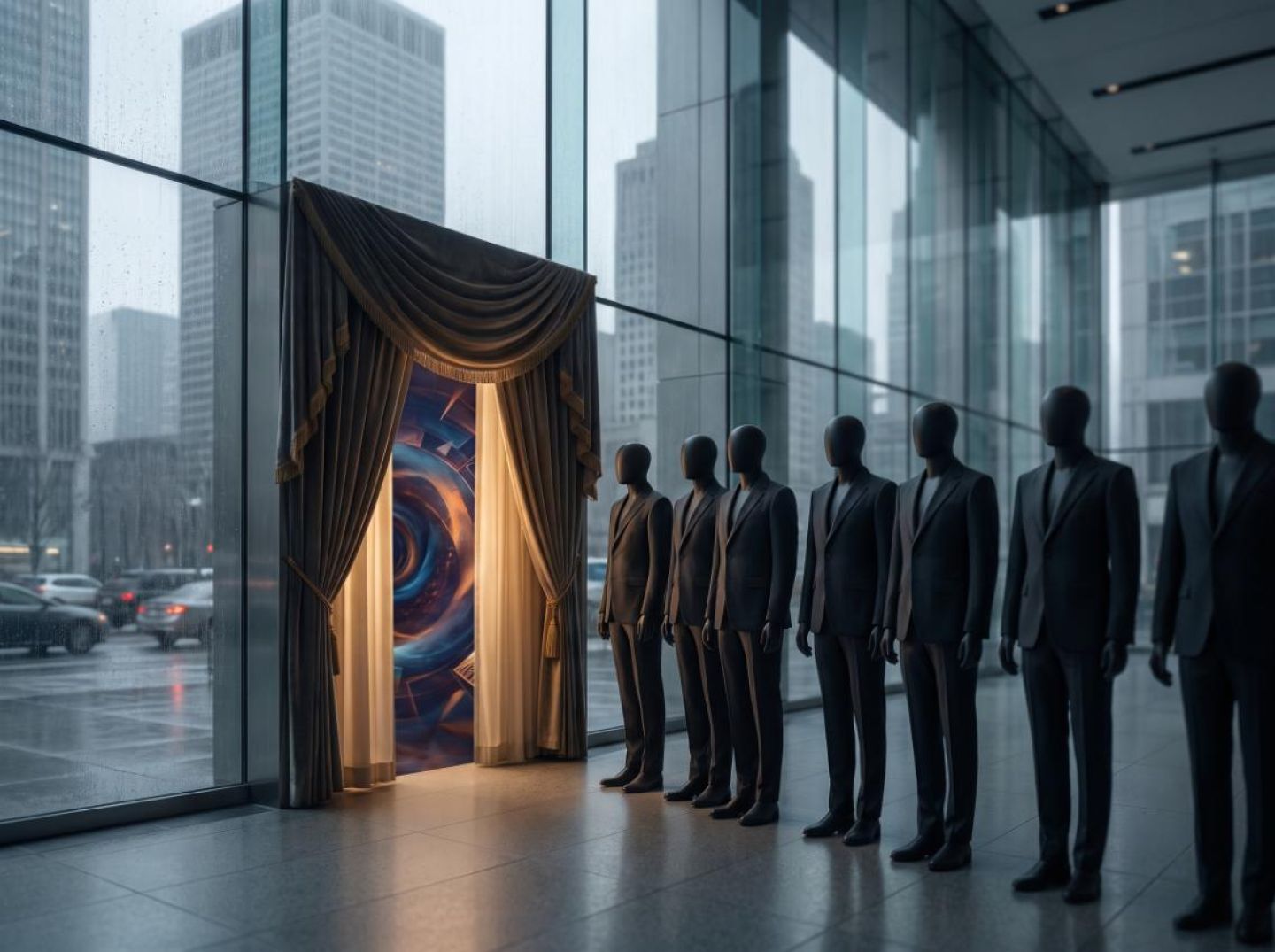
Get StartedOn a gray weekday morning in Manhattan, a line of women in power blazers and sensible heels wrapped around a glass-walled lobby. They weren’t queuing for coffee or a keynote. They were there to quit. One by one, they shuffled into a velvet-draped “mainstage,” took the mic, and announced the thing they were done with: apologizing in emails, being the default note-taker, explaining the same idea three times to be heard once. Then they quite literally walked out.
Pure Leaf’s “Break Conference” looked like a real business summit, down to the branded lanyards and panel stages. But the agenda was built around one radical act: giving women permission to take a break from “always-on” expectations. It was an experience-led stunt, engineered more like theater than a CPG activation — and it rippled far beyond the photo booth. This wasn’t just a clever campaign; it was a hostile takeover of a tired corporate ritual, rewritten as a piece of cultural commentary.
Inside brands and agencies, moves like this are quietly rearranging the org chart.
Story-driven spectacles are becoming the proof points that unlock executive trust, budget, and strategic control. When a single cultural moment can deliver 100 million views and tens of millions in incremental revenue, as Terence Reilly did with Stanley’s car-fire TikTok that helped turn “indestructible tumblers” into a growth engine for the entire brand portfolio, the person who authored that narrative doesn’t stay confined to the creative department for long. As Reilly explains in his conversation with Adweek, the real unlock wasn’t media efficiency — it was the “gift of trust and time” to take bold creative risks, flip an “ugly” product into a cultural flex, and then scale wins with a “drive it like you stole it” mindset.
That kind of trust is a power transfer.
Boards and C-suites are discovering that a killer story can do what flawless attribution often can’t: move markets, reset categories, and create proprietary language that competitors are forced to use. Market engineering experts argue that storytelling is the oxygen of category creation — the mechanism by which products become movements and users become evangelists. The marketers who can distill an entire value proposition into a repeatable narrative aren’t “making ads”; they’re encoding the future economics of the business.
At the same time, the canvas for that story has exploded. As Zoom’s head of brand and media, Whitney Magnuson, points out, modern storytelling isn’t just about reaching people — it’s about reaching the systems that mediate discovery, from social algorithms to search and LLMs. Distribution behavior now shapes the story as much as creative intent, with each platform demanding its own tone, pacing, and call to action, as she explained to the Content Marketing Institute. In that environment, the team that understands how to architect experiences across culture, creators, and machines is the team that sets the brand’s agenda.
Performance marketers, meanwhile, are waking up to a hard truth: they’ve been optimizing inside someone else’s story.
As media leaders like Carat’s Michael Law and Papa John’s Shivram Vaideeswaran argue, brands win attention today by meeting people in culture — not by shoving more impressions into a “linear funnel” that no longer exists. Their Brandweek conversation, captured by Adweek, reframed the modern media plan as a “bowl of spaghetti” that mixes paid, influencers, aggregators, and organic social into one messy, living ecosystem. In that bowl, tactical optimization still matters. But it’s the upstream creative and narrative choices — the decision to hijack a conference format, lean into a meme, or architect an “experiential” piece of thought leadership with influencers — that determine whether there’s anything worth optimizing in the first place.
For performance marketers, the choice is stark. They can keep perfecting the art of tweaking bids and thumbnails on campaigns they didn’t design, or they can learn to decode this new playbook: story as strategy, spectacle as market engineering, experiences as distribution. As creative leaders step into boardrooms armed with culture-breaking case studies and narrative roadmaps, the leftovers will still need optimizing. The question is whether you want to be the one writing the story — or the one endlessly A/B testing its final slide.
Brand storytelling used to mean squeezing emotion into a 30-second spot. Today, it means architecting an entire world your audience can step into, argue with, remix, and carry into rooms you’ll never enter. That shift—from isolated “ads” to persistent narrative universes—is quietly rewiring who holds power inside brands.
In the old model, creative teams decorated a strategy someone else set. Product led. Finance led. Sales led. Creative executed. But as markets get noisier and categories blur, the story is the strategy. Category design, positioning, and messaging are now inseparable from narrative craft; storytelling is, as one analysis put it, “the oxygen” that determines whether a product becomes a movement or dissolves into noise, because stories shape how customers interpret risk, hope, and urgency and ultimately decide where to place their bets (Branding Strategy Insider). When narrative becomes the mechanism by which a company defines its category, conditions its market, and rallies its internal culture, storytellers can no longer sit at the kids’ table.
You can see this power shift most clearly in the places where brand stories are now being tested and televised: conferences, stages, and shared media environments. A decade ago, the marketing conference was where you went to collect swag and sit through slide decks. Now, as one veteran marketer described it, a major event operates like a “pop-up experience for your company,” a temporary but high-stakes theater where your brand voice has to show up in 3D—through activations, unscripted hallway conversations, and who you trust to pick up a microphone (MarTech).
Those rooms expose, in real time, which leaders can hold a narrative under pressure. The same source notes that the conference “fire” reliably reveals who thrives speaking into a microphone and who hides from the stage. In other words, influence is no longer measured only in budget control or org charts; it’s measured in who can own the story when the lights are bright and the feedback loop is instant. The executives who can frame a problem, articulate a worldview, and invite an audience into that premise are the ones people cluster around at the bar—and the ones colleagues quietly start to follow back inside the company.
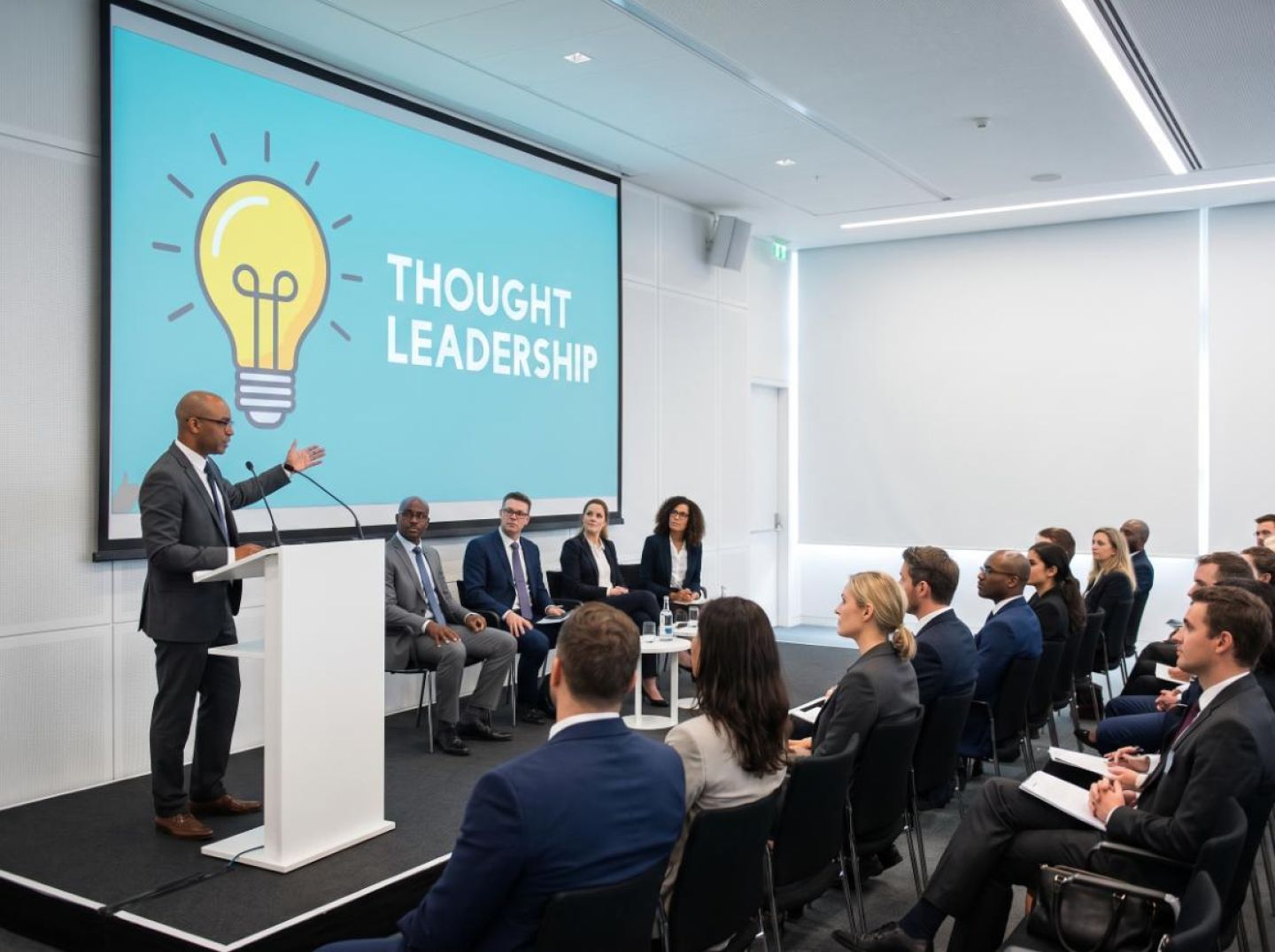
That’s why event stages and media appearances are being reclassified from “nice-to-have PR” to core levers of market power. Instead of pitching from the podium, the most effective leaders use the stage to declare how they see the world, knowing that if the audience recognizes themselves in that premise, conversion becomes a byproduct rather than the point. As one speaking coach argues, the job isn’t to shill a product but to express a point of view so clearly that your brand becomes the obvious choice for people who share it, effectively turning thought leadership into conditioning for future demand (Content Marketing Institute).
This is where creative leadership steps past “making things look good” and into market engineering. When your category is defined not by features but by an ongoing narrative—who you say the hero is, what you decide the real enemy is, how you describe the future you’re building toward—then the people who can craft and defend that story are the ones shaping pricing power, partner ecosystems, and even regulatory debates. As one framework for modern go-to-market makes explicit, thought leadership and storytelling don’t sit on top of strategy; they “elevate your company from participant to shaper,” influencing the very language and metrics by which the market is judged (Branding Strategy Insider).
Inside organizations, this reality is forcing a subtle but profound redistribution of influence. You can’t credibly show up onstage or in an industry narrative with a fractured internal story. When only a fifth of your employees can agree on what value you create and why you’re better at delivering it, your external messaging will wobble, no matter how clever the copy or glossy the campaign. That’s why heads of storytelling and brand are increasingly being tasked not just with campaigns, but with aligning the internal narrative—interrogating what the company believes, who it serves, and what it refuses to compromise on—before a single keynote is written (Content Marketing Institute).
The net effect: the center of gravity is drifting toward the people who can design narratives that hold across formats, audiences, and moments of truth. As brand storytelling expands from “spot” to spectacle—encompassing live experiences, thought leadership, influencer ecosystems, and even how you brief large language models—creative leaders who understand narrative as a strategic operating system are stepping into roles that once belonged exclusively to product, finance, or sales. The brands that recognize this shift early will reorganize around it. The ones that don’t will keep sending their creatives to decorate a strategy someone else wrote—and watch their stories, and their market share, quietly fade into the background noise.
The modern creative leader isn’t just a “big idea” person anymore. They’re an experience architect—someone who can turn a loose theme, a cramped conference sponsorship, or a half-baked brief into a living environment that moves people, unlocks intelligence, and quietly shifts who holds power back at headquarters.
You can see this most clearly at industry events. What used to be a logo on a lanyard is now a pop‑up ecosystem: deliberately designed spaces, off‑agenda gatherings, and narrative-driven “micro worlds” that say more about a brand’s priorities than any manifesto ever could. As one observer of the conference circuit put it, every event has become “a pop‑up experience for your company,” a temporary stage where your brand voice and your people are on display in real time and under pressure, revealing who can actually carry the story and who can’t, and giving leaders a rare live diagnostic of their own talent and positioning in the market, as described in this analysis of why marketing conferences are still worth it.
This is where the “experience architect” earns their influence. They’re not just picking the carpet color for the booth. They’re orchestrating how the story unfolds over three days: how a breakfast salon sets up the tension, how the breakout sparks debate, how the late‑night bar conversation turns into a product pilot or a partner deal. They ensure your brand isn’t merely present in the program guide but present in the memories people take home. In a fragmented media environment where winning attention means “meeting consumers in culture, not just pushing messages,” as one conversation about how brands can win attention in a fragmented world argued, that kind of architected presence becomes a competitive weapon.
Inside organizations, the same skill set is migrating from the event floor into the C‑suite. Legacy brands navigating hypergrowth are increasingly elevating creative leaders who can knit together product, brand, sustainability, and culture into one coherent experience. The leadership dynamic at Stanley 1913 is a prime example: the partnership between the chief brand officer and the chief product and sustainability officer hinges on “secure vulnerability” and constant alignment so they can decide which collaborations and cultural moments to pursue and which to walk away from, a capability they unpack in a discussion of Stanley 1913’s hypergrowth. That’s experience architecture at the board level—treating every launch, collab, and retail footprint not as isolated bets but as connected chapters in a narrative universe.
What makes these leaders so influential is that they don’t treat storytelling as garnish; they treat it as infrastructure. Market “engineering” frameworks now explicitly name storytelling as the oxygen that turns a product into a movement and users into evangelists, insisting that the best leaders can “distill their entire value and future promise into a memorable, repeatable story,” as one exploration of why great products fail without market engineering contends. When you see the world this way, you stop asking creative teams to “add some emotional color” at the end and start asking them to design the conditions—formats, rituals, spaces—where that story can be experienced, argued with, and retold.
You can see the same pattern in advanced B2B influence programs. The brands getting outsized results aren’t just collecting expert quotes; they’re building creative content environments—interactive microsites, documentary series, experiential research launches, and conference activations—that give influencers something they’re proud to inhabit and share. When B2B teams “architect a creative content experience,” influencers become more motivated, more generous, and more effective amplifiers, turning thought leadership into a shared stage rather than a static PDF, as detailed in a breakdown of why.
Taken together, these shifts explain why experience architects are moving from “break conference” wranglers to fixtures in boardrooms. They sit at the intersection of culture, commerce, and capability; they see conferences as laboratories, content as environment, and every touchpoint as a chance to test and refine the story the company is really telling the world—and itself. In an era where the brand is the experience, the people who can design that experience end‑to‑end are no longer support players. They’re power brokers.
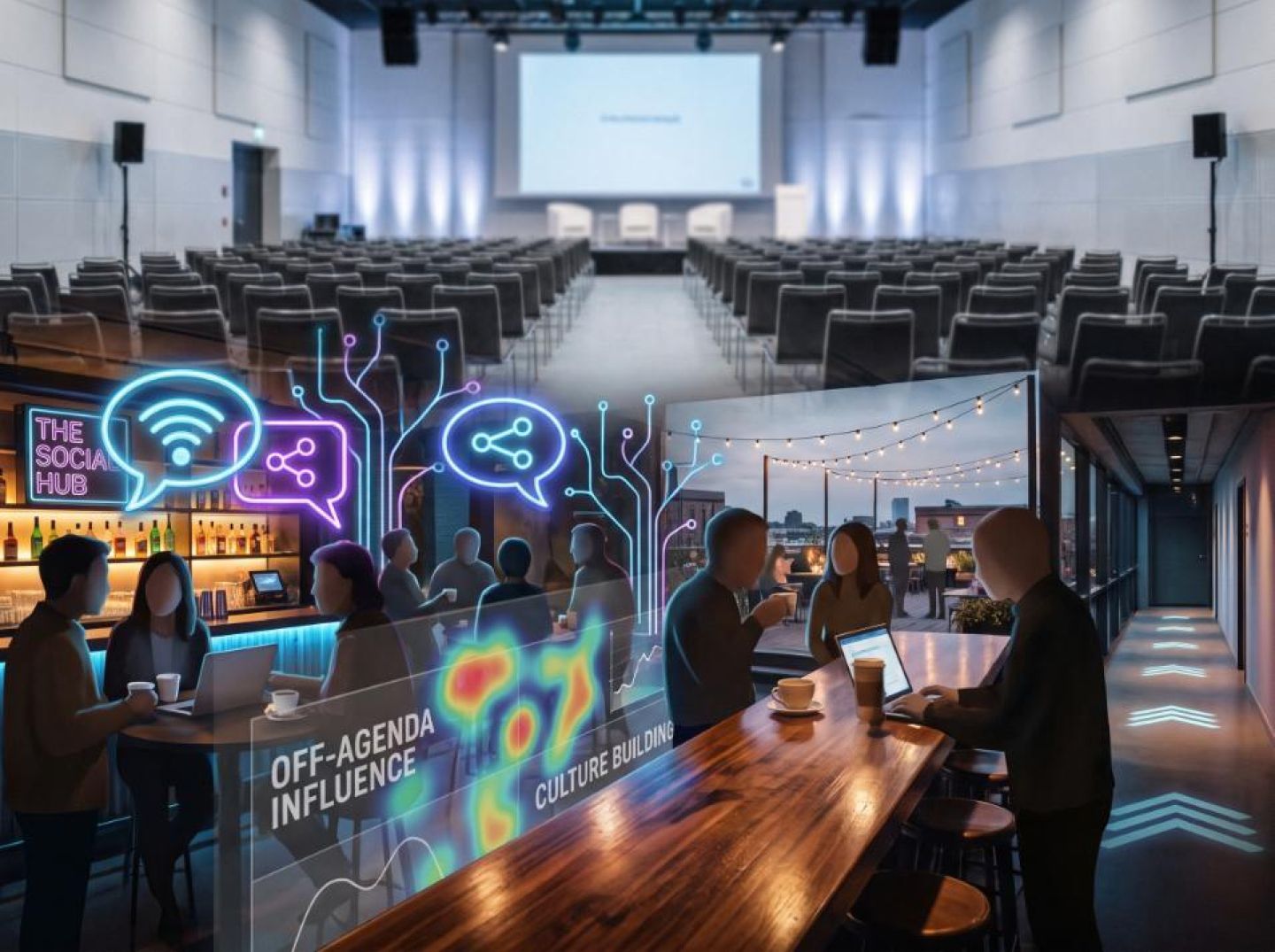
The real story of “brand storytelling” right now isn’t happening in your campaign tracker. It’s happening at the bar after the panel, in the creator’s group chat, on the unofficial conference rooftop meet-up that wasn’t on the agenda. Those liminal spaces—what some marketers half-jokingly call the “break conference inside the conference”—are where culture-first ideas are minted, traded, and carried back into organizations by people who don’t always sit on the org chart where power traditionally lives.
Industry events are the clearest Petri dish for this shift. A few years ago, your presence meant a logo on a lanyard and a mid-tier speaking slot. Today, the most interesting brands are treating the entire conference as a pop-up world they can temporarily inhabit: a speakeasy suite that becomes ground zero for nightly debriefs, a creator-hosted breakfast series that turns hallway gossip into signal, a content studio set up off the expo floor to record unscripted conversations that surface real market dynamics. As one observer of conference culture notes, these gatherings are less about passively consuming sessions and more about “always talking”—eating, walking between events, lingering in hotel lobby bars, and relentlessly trading intelligence on who’s hiring, who’s selling, and which products actually work in the wild, a flow of information MarTech describes as a form of live “intelligence gathering.”
When you architect those experiences around a genuine cultural premise—not a product pitch—you quietly reassign who matters in the room. The people who thrive in these break-conference environments are rarely the ones with the biggest titles; they’re the ones who can read the room, host a conversation, and turn a passing comment into a narrative thread others want to pull. Event stages work the same way. As Jay Acunzo argues in a discussion on turning speaking into strategy, the point of the mic is not to hard-sell but to reveal how you see the world, because when you use the stage to share a sharp, lived point of view instead of features, you recast yourself as a reference point for the market rather than another vendor in the aisle (Content Marketing Institute).
That dynamic is even more pronounced when you bring creators and influencers into the mix. In advanced B2B programs, external creators aren’t just rented distribution; they are co-architects of the story. The expectation is that they will bring their own formats, running jokes, and editorial standards—basically, the cultural logic of their own communities. As one analysis of B2B influence programs notes, when brands treat influencer work as a creative discipline in its own right—building interactive microsites, documentary-style video, and experiential content tied to industry narratives—influencers become proud co-owners of the work, more motivated to share it, and more willing to expend their own reputational capital on it, turning the program into a performance multiplier rather than a bolt-on tactic (TopRank Blog).
Inside the company, that has consequences. If the most effective way to “engineer” a market is through a repeatable, emotionally resonant story that others can tell on your behalf, then whoever can design and steward that story starts to look less like “the person who makes the deck pretty” and more like the de facto architect of category perception. In the language of modern market design, storytelling is the oxygen that turns a product into a movement and users into evangelists, and thought leadership is what elevates you from participant to shaper by giving the industry its future-facing vocabulary (Branding Strategy Insider). Creators who can hold a room at an offsite, influencers who can translate a dense white paper into a meme-able narrative, and in-house strategists who can turn hallway chatter into a signature point of view are, functionally, doing that market engineering.
The upshot: culture-first storytelling—whether it shows up as an underground “break conference,” a creator-led content series, or a point-of-view-driven keynote—reshuffles power away from those who merely own budget lines and toward those who can convene, interpret, and narrate a community. The org chart may not update overnight, but the real center of gravity moves to the people who can walk into a noisy room, surface the unspoken story everyone’s already living, and give it a name others are proud to repeat.
Thought leadership used to mean sending your CMO to do the same slideware keynote on three different stages. Now, it’s closer to market leadership itself—a way of designing how an entire category thinks, talks, and allocates budget. As one strategist put it, thought leadership is what moves a company “from participant to shaper,” setting the language, metrics, and expectations for everyone else in the space, not just reacting to them, as Branding Strategy Insider argues in its work on Market Engineering.
That shift is fundamentally a shift in power. When a brand becomes the place the industry goes for the “why,” not just the “what,” the centre of gravity moves from product and performance dashboards to narrative and worldview. The people who design and deliver that worldview—the creative leaders, not just the quota-carrying execs—suddenly hold the keys to category destiny.
You can watch this transfer of authority play out in three layers: stages, signature stories, and the emerging authority playbook.
1. Stages: Where the power signals live
In the old model, conference stages were reserved for C‑suite victory laps and safe case studies. Today, high-value stages look more like live studios for active ideas. According to one marketer describing why conferences still matter for modern teams, the real action is now in dynamic, pop-up brand experiences where the conference becomes a “temporary expression” of your voice, and where speaking slots, sponsored lounges, and live tapings all blend into one extended, on-the-record conversation, as MarTech notes.
Crucially, those stages increasingly feature creators, operators, and heads of brand—not only CEOs. The people who can hold a room, improvise with an interviewer, and translate a messy trend into a memorable story are the ones who accrue follow-up DMs, investor interest, and press inquiries. Inside the company, that visibility converts into soft power: budget approvals, earlier involvement in strategy, and the right to say “no” to misaligned initiatives.
2. Signature stories: The new balance sheet assets
If storytelling is the “oxygen” that turns products into movements and users into evangelists, as one Market Engineering framework from Branding Strategy Insider frames it, then signature stories are the concentrated, ownable form of that oxygen. They are not taglines. They are the handful of narratives you tell over and over—on stage, in sales decks, on podcasts, in investor memos—that explain:
Think of a recurring customer transformation story, a canonical “origin myth” about how the product was born, or a bold prediction about where the category is heading. When done right, these stories become shorthand used by analysts, partners, and even competitors. They change what buyers believe is possible, and they quietly reframe the evaluation criteria for your entire category.
Creative leadership’s power move is to architect and protect these stories. That means saying “no” to random talking points that break the arc, and “yes” to formats—documentary-style video, live salons, immersive reports—that can make the story tangible. As TopRank has observed in B2B influence work, when thought leadership is treated as a creative content experience rather than a PDF with a few expert quotes, collaborators become proud to share it—and that pride becomes an organic distribution engine.
3. The new authority playbook
Authority now accrues to the people who can orchestrate three moves at once:
In this new landscape, the question inside ambitious organizations is quietly changing. It’s no longer just “Who owns the product roadmap?” but “Who owns the story everyone else will use to explain this market?” The people who can answer that with clarity—and perform it on the right stages—are the ones quietly rewriting the org chart in their favor.
For performance marketers, the power shift to creative leadership isn’t a threat to your relevance. It’s a promotion—if you’re willing to stop being channel operators and start acting like creative intelligence units.
The old job description was simple: own a few acquisition channels, optimize toward a CPA or ROAS target, and ship as many experiments as possible. That operating model assumed a relatively linear customer journey and cheap attention. Now, as one media leader described it on an episode of Adspeak, the path to purchase looks less like a funnel and more like a “bowl of spaghetti” in which paid, creators, aggregators, and organic all collide in culture at once, forcing teams to become far more nimble and integrated in how they show up where audiences actually are in a fragmented world of attention](https://www.adweek.com/brand-m...).
In that environment, the best performance marketers are no longer just launching ads; they’re embedding themselves upstream, where narratives, creators, and cultural premises are decided. Think of your team less as “the people who run Meta and search” and more as a creative intelligence function: the group that understands, in real time, which stories, formats, and voices actually move people from passive awareness to active intent.
That starts with redefining what “performance” means. According to research cited by the Content Marketing Institute, buyers now initiate over 80% of vendor relationships themselves, often long after they’ve been quietly shaped by thought leadership and content they discovered on their own. If your dashboards only light up when someone clicks a last-touch ad, you’re missing the compounding performance impact of brand storytelling that conditions the market months earlier. Creative leaders are already building metrics for “narrative adoption”—language share, idea recall, influencer pickup—alongside pipeline and revenue. Performance teams need to claim that ground, not fight it.
The opportunity is to become the connective tissue between creative ambition and commercial outcomes. When influencer programs evolve from “pull quotes in ebooks” to genuinely inventive experiences—interactive microsites, documentary-style series, or experiential content built around industry tension—participating experts become proud evangelists, dramatically expanding organic reach and lifting results. As one analysis of B2B influence programs noted, when brands architect that kind of creative content, influencers are more motivated to share and the work turns into a true performance multiplier](https://www.toprankmarketing.c...). Performance marketers should be the ones quantifying those multipliers, feeding them back into planning, and arguing for bolder concepts because the numbers prove they work.
That also changes how you show up in the “break conference inside the conference.” Those hallway conversations and late-night bar debates are no longer just networking; they’re live intelligence streams on which narratives are catching, what products actually deliver, and who’s emerging as a trusted voice. As one marketer described it, you’re “always talking”—collecting market signals between panels, on the way to breakfast, and at the bar, then acting on that knowledge before someone else does](https://martech.org/why-market...). A creative intelligence-minded performance team doesn’t just hand out business cards; they come home with a prioritized list of tensions, phrases, and creators to test in-market within days.
Practically, this shift has three implications for your team:
3. You become the integration layer between brand and demand. The most effective teams are designing systems where a single north-star signal—often some blend of resonance and revenue—guides both brand storytelling and demand capture. Performance marketing doesn’t sit at the end of the line waiting to “harvest” demand; it helps decide which ideas deserve the biggest stage, the biggest creator, and the biggest bet.
The net result: performance marketers who embrace this role will find themselves pulled into earlier conversations, closer to the C-suite, and far more central to how the company competes. The ones who cling to channel-only thinking will watch power—and budgets—consolidate around the creative leaders who can speak both in stories and in numbers.
Receive top converting landing pages in your inbox every week from us.
Recently Updated
Explore what OOH hiring trends reveal about the gap between traditional billboard operations and the industry’s performance-marketing ambitions. This guide examines job boards, missing data roles, and the growing need for competitive intelligence and performance-focused tools in out-of-home advertising.
David Kim
7 minSep 28, 2026
Most Read
Explore how experience-led brand storytelling is shifting influence inside modern organizations, moving creative leadership closer to strategy, culture, and the C-suite. This guide examines the rise of experience architects, creator-driven storytelling, thought leadership, and the evolving role of performance marketers as creative intelligence teams.
Elena Morales
7 minSep 28, 2026
In-Depth
Learn why “great ads” are no longer enough in an AI-first advertising economy, where creative is increasingly used as a targeting signal and performance input. This guide explains how to build data-obsessed creative teams, replace vibes-based inspiration with live creative intelligence, and turn every campaign into a learning engine.
Liam O’Connor
7 minSep 27, 2026