9 minSeptember 28, 2026

Our tools monitor millions of native, push, pop, and TikTok advertising campaigns.
Get StartedOut-of-home has started talking like a performance channel.
Platforms promise that they’ve finally “solved the puzzle” of measurement, boasting about real-time data, AI-driven planning, and attribution that puts billboards on par with search and social. One prominent player even claims it has moved OOH “from a world of intuition to a future defined by precision and performance,” positioning itself as a kind of “universal adapter” that makes the unmeasurable measurable. In this narrative, OOH is no longer a feel-good awareness buy; it’s a tightly tuned machine that can be optimized, iterated, and scaled like any modern performance channel.
On paper, it sounds like the industry has cracked it. AI models analyze “trillions of possible combinations” of units, layering in consumer, demographic, and behavioral data to put “every ad dollar” in exactly the right place at the right time, with the promise of real-time reporting and even a measurable “halo effect” on adjacent digital campaigns. The message is clear: the guesswork is gone, the lagging metrics are fixed, and OOH is ready to stand shoulder-to-shoulder with performance mainstays like paid search, paid social, and programmatic display.
But if you really want to know where an industry is headed, don’t just listen to its headlines. Watch who it hires.
OOH’s own job boards tell a quieter, more revealing story than any press release. Week after week, industry classifieds are dominated by roles that would look familiar to a billboard operator from 20 years ago: Sales Manager – Outdoor Advertising in Southern Illinois, Ad Sales Account Executive in Miami, National Account Executive in Los Angeles, Local Media Sales Executive in Denver, Account Executive – Billboard Ad Sales in yet another market. In one typical roundup of “11 OOH Employment Opportunities,” nearly every opening is some flavor of sales or field operations, from sales representatives and local account execs to sign installers and LED service techs.
These are essential roles, but they’re not the hiring pattern of a sector that has fully embraced performance science. If OOH has truly been reinvented as a real-time, AI-optimized, attribution-rich channel, where are the data scientists and growth analysts inside the media owners? Where are the marketing engineers, incrementality specialists, and lifecycle strategists whose entire job is to squeeze more revenue out of the same impressions?
A similar tension shows up in the industry’s own self-reflection. One publisher and plant owner argues that OOH is at a “crossroads,” urging operators to stop “selling billboards” and start selling business outcomes instead. He notes that the sector has become very good at talking about “locations, impressions, CPMs, availability, inventory, audience measurement and every other metric imaginable”—useful tools that nevertheless fall short of what brands actually buy: market share, product launches, momentum, outperformance of competitors, the stuff that makes performance marketers’ dashboards turn green. His provocation—“What if OOH stopped selling billboards?”—is really a challenge to close the gap between metrics and meaningful outcomes.
That gap is exactly where the job boards become fascinating.
If you treat OOH classifieds as a living data feed rather than just a help-wanted page, a different picture of the “future of OOH” emerges. You can see which functions are being scaled (traditional sales, site acquisition, physical operations) and which are barely visible (performance strategy, experimentation, customer analytics). You can see where companies are doubling down on legacy revenue motions and where they’re quietly inching toward service models that sound more like consultative performance marketing than commodity media selling.
In other words, the roles OOH companies are urgently funding—and the ones they’re not—reveal the industry’s true readiness to compete in a world of black-box algorithms and outcome-obsessed CMOs. The billboards may be glowing with programmatic promise, but the payroll tells us whether OOH is really evolving into a performance-native channel, or simply learning to speak the language of one.
If you want to know where an industry is headed, don’t start with the press releases—start with the job boards.
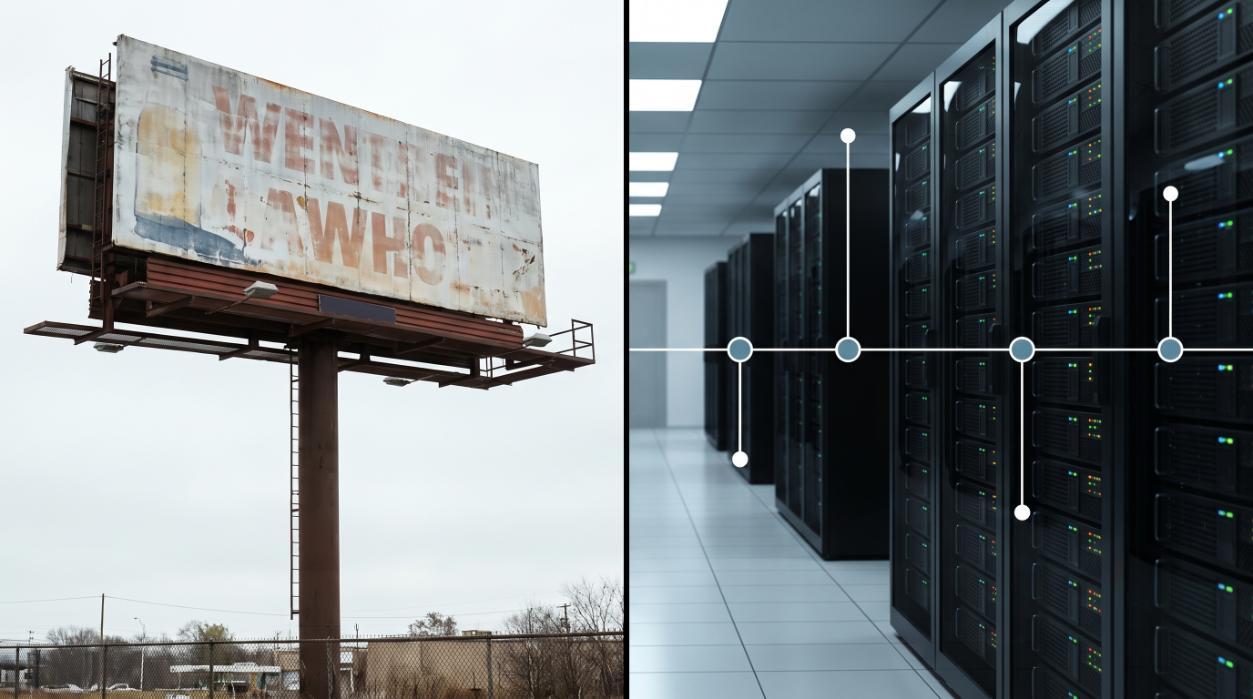
The out-of-home ecosystem quietly publishes a running ledger of its priorities every time a new role goes live. Read enough of those listings and the pattern becomes obvious: beneath the glossy talk of AI, real‑time data, and “universal adapters,” OOH hiring still looks like a sector caught between two eras.
Look at the recurring “Employment Opportunities” roundups that OOH Today curates. Week after week, the spine of the category is unmistakable: sales roles dominate. You’ll see a Southern Illinois–based Sales Manager – Outdoor Advertising at D.O.T. Outdoor, ad sales account executives in Miami, national account executives in Los Angeles, and local media sales executives in Denver. A later edition of the same series features essentially the same mix—regional sellers, national sellers, and business development reps—reaffirming that the primary growth lever for most OOH operators is still human‑driven, relationship‑based selling rather than automated demand capture, as their own repeated classified lists make clear.
Alongside those sales roles, you see the operational backbone required to keep a largely physical medium alive. Postings for sign installers, LED video screen service and installation technicians, and directors of operations tell you that infrastructure and uptime are not abstractions; they are line items, staffed by people who climb structures, service hardware, and move trucks. In a world where platforms promise that OOH has been “moved from a world of intuition to a future defined by precision and performance,” the fact that operators are still hiring hands‑on installers at scale is a reminder that this is not a purely software‑eaten market yet, no matter how advanced the planning and optimization tools become.
At the same time, there are glimmers of that promised performance future embedded in the same classifieds. When a media owner posts for a Graphic Designer/Brand Marketing Specialist – OOH or a Business Development Representative in a major market, they are signaling a shift in how inventory is packaged and sold. These aren’t just order‑taking account execs; they are hybrid roles designed to make OOH feel more like a modern marketing product—story‑driven, brand‑conscious, and increasingly framed in language familiar to digital buyers. That dovetails with how platform players describe their own value: one leading OOH platform talks about using advanced machine learning to analyze “trillions of possible combinations of OOH units” and deliver performance‑grade planning, arguing that this turns OOH into a “non‑negotiable part of modern marketing strategies” by matching how digital teams already buy search, social, and programmatic media.
The tension between these two realities—the physical and the programmatic—shows up as “body language” in the job mix. A board full of quota‑carrying sellers and territory‑bound managers says the growth strategy is still: hire more people to knock on more doors. A surge in roles like marketing analysts, attribution specialists, or programmatic traders would say something very different: that OOH companies are reorganizing around data, automation, and performance metrics that make sense to a CMO who lives inside a dashboard.
Notice, too, what’s largely absent today. For all the talk of real‑time data and AI optimization, there are comparatively few postings for data scientists, measurement engineers, or product managers inside traditional plant operators. Instead, you see those capabilities concentrated in specialized platforms that position themselves as the connective tissue of the channel, promising to make “the unmeasurable measurable” and “the slow, fast” by layering intelligence on top of a fragmented supply base that is still hiring like it’s a territory business, not a traded marketplace. The classifieds quietly confirm that structure: operators invest in local boots on the ground; platforms invest in the black boxes that translate those boards into performance language.
Read this way, OOH job boards function like a market report without charts. They reveal an industry that absolutely wants the credibility and budgets of performance marketing, but is only partway through the organizational rewiring required to get there. The titles being hired today are the clearest signal of which side of that divide a given company actually lives on—and how fast the broader channel is really moving from billboards to black boxes.
If you take the OOH industry’s performance narrative at face value, you’d expect job boards to be littered with data scientists, attribution specialists, and growth marketers. But when you “follow the headcount,” a very different allocation of dollars comes into focus.
Most of the money in OOH still flows to the oldest line item in the book: people who sell billboards.
Scan a recent “employment opportunities” roundup from an industry classifieds board and you’ll see a familiar pattern. The bulk of open roles are for frontline revenue generators: Sales Manager – Outdoor Advertising, Ad Sales Account Executive, Sales Representative, National Account Executive, Local Media Sales Executive, and Account Executive – Billboard Ad Sales, all clustered under a single “Sales” heading in an OOH employment post.
These are not growth hackers or media mix modelers; they’re classic territory sellers, tasked with “developing and executing sales strategies,” “building and maintaining relationships,” and “identifying new business opportunities” for static and digital units. Compensation, in turn, is tied to inventory sold, not necessarily to measurable lift in app installs, ROAS, or CAC. The org chart is telling you what really matters: fill the faces, protect yield, keep panels lit.
There are supporting roles, of course—real estate, ops, installation—but they’re still in service of inventory, not incrementality. Titles like Real Estate VP/Director/Associate, Director of Operations, Sign Installer, and LED Video Screen Service & Installation Tech in that same classifieds listing are about securing locations, maintaining structures, and keeping hardware running. Necessary work, but not the footprint of a channel that claims parity with search and social on performance.
That’s the quiet contradiction baked into the industry’s current moment. On one side, you have platforms arguing that they’ve “solved the puzzle” of OOH, with real‑time data, AI‑powered optimization, and attribution that allegedly brings billboards into “parity with modern performance channels,” as one universal adapter pitch puts it. This narrative is about trillions of combinations simulated by machine learning, continuous optimization against outcomes, and proving ROI far beyond impressions or reach.
On the other side, the actual payroll of the average OOH company looks like it did 10 or 15 years ago: inventory‑centric, territory‑based, and relentlessly focused on selling panels. When a publisher describes its business as “specializing in high‑impact billboard and digital display solutions” and then hires a Sales Manager to lead a team of reps charged with expanding “local and regional sales efforts,” the economic engine is obvious in the job description itself, as seen in that Southern Illinois Sales Manager role.
This isn’t a moral failing; it’s an incentive structure. As long as revenue primarily comes from moving specific units in specific places, organizations will staff up around unit movement—no matter how advanced the targeting or reporting layer becomes. Even when companies talk aspirationally about “stopping selling billboards” and instead selling business outcomes, the reality is that most of the open seats are still quota‑carrying sellers whose day‑to‑day depends on closing 14′ x 48′s, not on quantifying market‑share gain, as one reflective industry essay on not just “selling billboards” candidly argues.
In contrast, the few businesses leaning hard into OOH as a true performance channel tend to invest in software, data partnerships, and analytics talent rather than incremental headcount in field sales. The very claim that an OOH platform can “analyze trillions of possible combinations of OOH units,” stitch in behavioral data, and attribute a “halo effect” on adjacent digital campaigns implies a back office full of engineers, data scientists, and product managers rather than more account executives, as highlighted in that AI‑driven planning and attribution narrative.
Put bluntly: if the industry as a whole truly believed OOH was now a performance channel, we’d see fewer openings for “Billboard Ad Sales” and more for “Performance Marketing Strategist, OOH,” “Attribution Lead,” or “Marketing Science, Out‑of‑Home.” Until that shift happens at scale, the job boards are signaling that most OOH dollars still behave like traditional media budgets—funding feet on the street, not brains on the model.
If you want to understand where an industry is not going, look for the jobs that never get posted.
In OOH, the silence is deafening.
Scroll through recent “OOH Classifieds” roundups and you see a familiar cast of characters: Sales Manager – Outdoor Advertising, Ad Sales Account Executive, National Account Executive, Local Media Sales Executive, Account Executive – Billboard Ad Sales. Week after week, the job feeds in places like the “11 OOH Employment Opportunities” and “12 OOH Opportunities” roundups are crowded with people who sell space, secure locations, install signs, and keep LED screens blinking. The core engine is still field sales, real estate, and operations.
What you don’t see is just as important as what you do.
For an industry that now describes itself as a data‑rich, AI‑optimized, performance channel, there is a conspicuous absence of roles that would actually make that narrative real inside media owners and agencies. Where are the attribution scientists tasked with proving out the “halo effect” of OOH on adjacent digital campaigns that platforms like AdQuick showcase in their own case studies? Where are the lifecycle marketers or growth PMs responsible for turning anonymized movement data into real retargeting, incrementality, and LTV stories clients can take to their CFOs?
If OOH is truly “in parity with modern performance channels,” as AdQuick’s description of its universal adapter argues, you’d expect the talent mix to begin converging with what you see in paid search, social, and programmatic: measurement leads, marketing data engineers, experimentation managers, media mix modelers, and CRO strategists. Instead, the hiring patterns suggest OOH companies are content to let a handful of tech vendors own the performance‑story layer while they continue to run a classic space‑selling operation.
Look more closely at the non‑sales roles that do make the cut in those recurring OOH Today lists. Real Estate VP/Director/Associate. Director of Operations. Graphic Designer/Brand Marketing Specialist. Sign Installer. LED Video Screen Service & Installation Tech. These are crucial positions, but they’re optimized around asset deployment and creative production, not performance analytics, channel optimization, or revenue operations.
The gap is striking when you put the job feed side‑by‑side with the industry’s own marketing. On the one hand, platforms tout AI‑powered optimization that “analyzes trillions of possible combinations of OOH units,” ingesting consumer, demographic, and behavioral signals so “every ad dollar is placed strategically,” as AdQuick’s overview of its machine‑learning engine explains. On the other hand, the average OOH company is still staffing as if the hard problems are coverage, foot traffic, and making sure the vinyl goes up on time.
This isn’t a moral failing; it’s a strategic tell.
When a sector outsources its most sophisticated capabilities to a thin layer of platforms while continuing to hire overwhelmingly for sales and plant, it’s signaling that transformation is happening around it, not inside it. The absence of roles like “Head of OOH Measurement,” “DOOH Performance Strategist,” or “Marketing Science Lead – Out‑of‑Home” suggests that many operators still view performance as a pitch deck talking point, not an internal competency worth building headcount around.
For performance marketers, that missing headcount has concrete implications:
The dog that isn’t barking in the OOH job feed is the one that will ultimately matter most to performance marketing: the internal teams who can connect physical impressions to digital outcomes with the same rigor, experimentation culture, and full‑funnel accountability that already define the rest of modern growth. Until those roles appear in meaningful numbers, OOH will keep selling the future of performance marketing while staffing for the past.
On paper, OOH is living in the same universe as Meta, Google, and The Trade Desk. In practice, it’s still closer to selling newspaper inserts.
Start with the vision. In AdQuick’s telling, OOH has finally crossed the chasm into performance marketing. Their platform promises real‑time delivery of campaign data, granular measurement of the “halo effect” OOH has on adjacent digital channels, and AI models that evaluate “trillions of possible combinations” of units to maximize ROI, all of which is meant to bring OOH “into parity with modern performance channels” as described in their own “universal adapter” overview. In this world, OOH is a fully instrumented, API‑ready surface in your growth stack: bought programmatically, optimized by machine learning, and evaluated on incrementality, not intuition.
Now contrast that with the labor market.
When you scan the weekly classifieds from industry outlets like OOH Today, you’re not looking at the hiring plan of a performance channel. You’re looking at the hiring plan of a territory‑based media business. The roles are overwhelmingly quota‑carrying: Sales Manager – Outdoor Advertising, Ad Sales Account Executive, National Account Executive, Local Media Sales Executive, Account Executive – Billboard Ad Sales. The job descriptions are about “building relationships,” “closing deals,” and “expanding local and regional sales efforts,” not forecasting marginal ROAS, stitching cross‑device identity, or configuring event streams into a clean room.
What’s striking isn’t just what’s present in those listings; it’s what’s missing. In roundups of “11 OOH Employment Opportunities” and “12 OOH Opportunities” you’ll see the occasional operations lead, real estate director, or graphic designer, but you won’t find a single role titled attribution analyst, OOH performance strategist, data engineer, or programmatic optimization lead in the current OOH Today feeds. For a channel that, in AdQuick’s narrative, has “moved the industry from a world of intuition to a future defined by precision and performance,” the staffing picture looks remarkably pre‑precision.
That’s where the “two parallel universes” really come into focus:
Both universes are real. AdQuick and a handful of tech‑forward players are absolutely dragging OOH toward the logic of performance media, and sophisticated brands are already planning, buying, and measuring OOH as a data‑rich channel. But the ground reality revealed by hiring patterns suggests that, across much of the industry, OOH is still sold and staffed like a traditional local media business. The infrastructure of a performance channel exists; the headcount and incentives of a performance channel largely do not.
For marketers, this disconnect is the tell. When the story you hear at conferences is about AI optimization and cross‑channel lift, but the roles being funded are almost entirely sales, it means the technology is ahead of the operating model. Until those two universes converge—until the average OOH organization is hiring analysts and optimization leads as aggressively as it hires account executives—OOH will remain a strange hybrid in the growth mix: a channel that can behave like performance marketing, but often operates like something closer to real estate with ad copy on top.
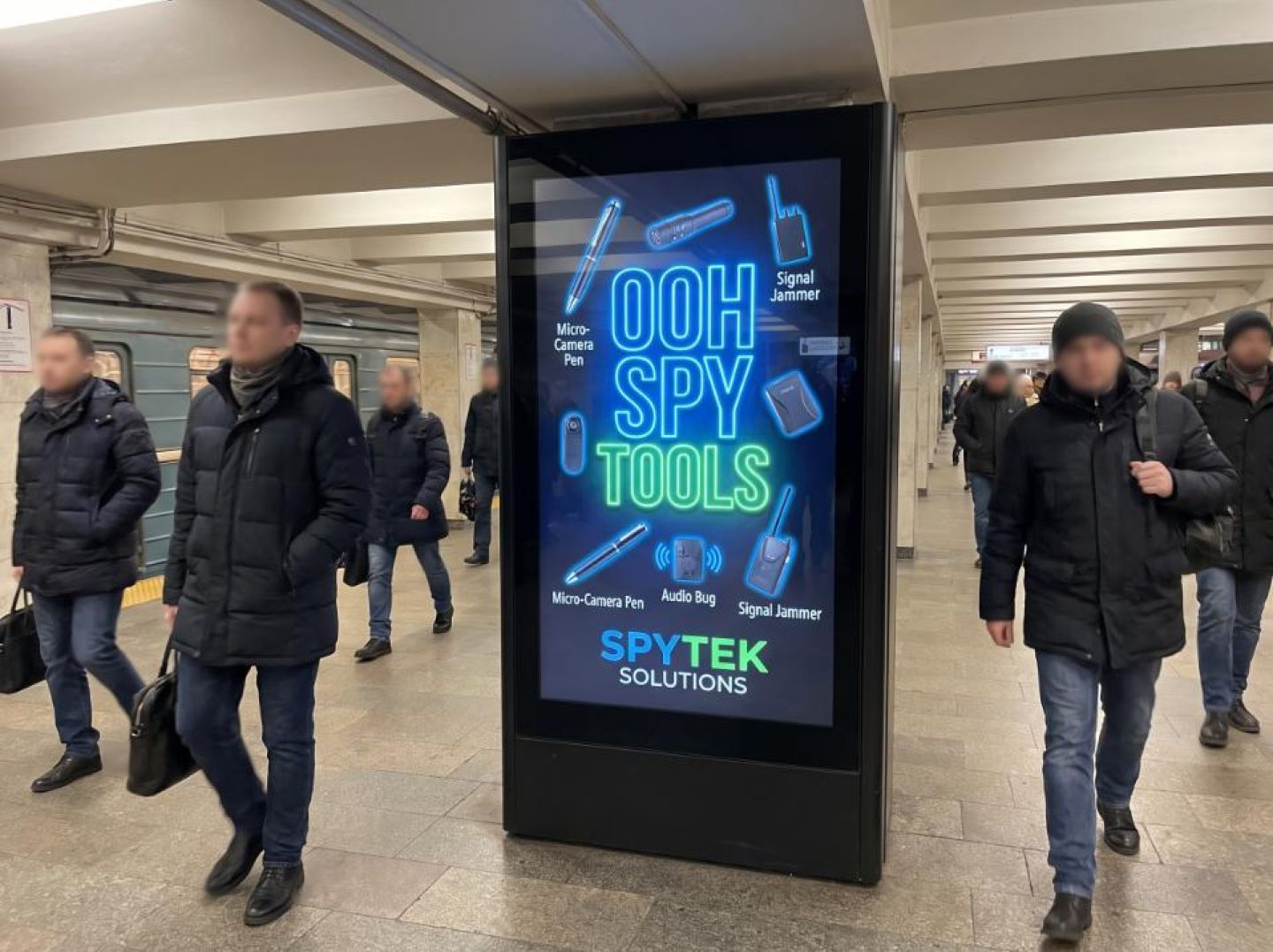
Performance marketers don’t wake up wanting “more OOH.” They wake up wanting better weapons: competitive intelligence, incrementality proof, and knobs they can actually turn. If OOH wants a permanent line in the performance budget, it has to stop selling rectangles on roadsides and start selling spy tools.
Think in terms of what a senior growth lead actually does all day. They are less interested in whether a board is 14′ x 48′ and far more interested in questions like:
AdQuick’s own “universal adapter” positioning accidentally points to the missing piece. Their pitch leans heavily into making the “unmeasurable measurable,” quantifying the “halo effect” OOH has on adjacent digital campaigns, and bringing OOH “into parity with modern performance channels” via real‑time data and AI‑driven optimization. That’s not just about prettier dashboards; it is about surveillance-grade visibility on what’s happening in the physical attention economy.
But the hiring market shows the industry is still mostly staffing for inventory pushing, not intelligence building. When a typical OOH employment roundup is dominated by “Sales Manager – Outdoor Advertising,” “National Account Executive,” and “Account Executive – Billboard Ad Sales,” you’re looking at an ecosystem optimized to fill boards, not to instrument them. That’s a problem for performance teams, who are now trained by Meta, Google, and The Trade Desk to expect attribution, experimentation, and competitive monitoring as table stakes.
What they really need from OOH breaks down into three categories.
1. Competitive mapping, not inventory lists
Traditional OOH starts the conversation with “available units” and CPMs. Performance marketers want a live map of who is on which screens, for how long, and at roughly what spend level. They don’t want to know which boards you have; they want to know which boards their rivals can’t stop buying.
The “universal adapter” idea that AdQuick describes—tying together disparate data sources, normalizing formats, and making cross‑channel measurement possible—is vastly more compelling if it lets a CMO see that a competitor just blanketed the airport arrivals corridor in their top three markets last week. OOH’s value jumps when it behaves like a physical‑world version of Meta’s Ads Library combined with SEMrush.
2. Outcome‑level diagnostics, not vanity metrics
OOH has become “exceptionally good at talking about locations, impressions, CPMs, availability, inventory, audience measurement and every other metric imaginable,” as Brent Baer notes when he urges the industry to stop “selling billboards” and start selling outcomes. Performance leaders will happily ignore a million measured impressions if they can’t tie those impressions to lift in branded search, lower CAC in conquest campaigns, or higher conversion rates on specific cohorts.
Done right, the kind of “halo” analytics AdQuick is touting should be weaponized to answer concrete questions: Did the four‑week OOH burst in Chicago reduce paid social CPMs in that market relative to the national baseline? Did app installs from organic channels rise faster in exposed zip codes versus control? These are spy tools for budget allocation, not feel‑good proof points for award decks.
3. Control systems, not fixed‑term contracts
Finally, performance marketers need the ability to react. Programmatic DOOH and DSP integrations that let brands buy OOH the way they already buy other channels, as AdQuick describes in its programmatic DOOH capabilities, are only half the story. The other half is tying that flexibility to triggers and intelligence.
Imagine a world where a spike in competitor OOH presence on a certain commuter corridor automatically unlocks your defensive creative in nearby inventory, or where you can throttle spend up during a launch week precisely because early “halo” indicators are green. That’s not just screens; that’s a control layer over real‑world attention, behaving the way a performance marketer expects a modern DSP to behave.
The irony is that OOH has everything it needs to become this kind of black‑box spy network: persistent presence in the physical world, increasingly digital surfaces, and, in platforms like AdQuick, the beginnings of a data spine. What’s missing is an explicit pivot away from staffing and rewarding people for selling boards, toward building tools that let growth teams watch, test, and out‑maneuver their competition.
Until OOH can offer those tools, it will remain a nice‑to‑have line item in awareness budgets, not a must‑have lever in performance war rooms.
Receive top converting landing pages in your inbox every week from us.
Recently Updated
Explore what OOH hiring trends reveal about the gap between traditional billboard operations and the industry’s performance-marketing ambitions. This guide examines job boards, missing data roles, and the growing need for competitive intelligence and performance-focused tools in out-of-home advertising.
David Kim
7 minSep 28, 2026
Most Read
Explore how experience-led brand storytelling is shifting influence inside modern organizations, moving creative leadership closer to strategy, culture, and the C-suite. This guide examines the rise of experience architects, creator-driven storytelling, thought leadership, and the evolving role of performance marketers as creative intelligence teams.
Elena Morales
7 minSep 28, 2026
In-Depth
Learn why “great ads” are no longer enough in an AI-first advertising economy, where creative is increasingly used as a targeting signal and performance input. This guide explains how to build data-obsessed creative teams, replace vibes-based inspiration with live creative intelligence, and turn every campaign into a learning engine.
Liam O’Connor
7 minSep 27, 2026