

TikTok Ads, Affiliate Marketing
6 minSeptember 7, 2026

Our spy tools monitor millions of native ads from over 60+ countries and thousands of publishers.
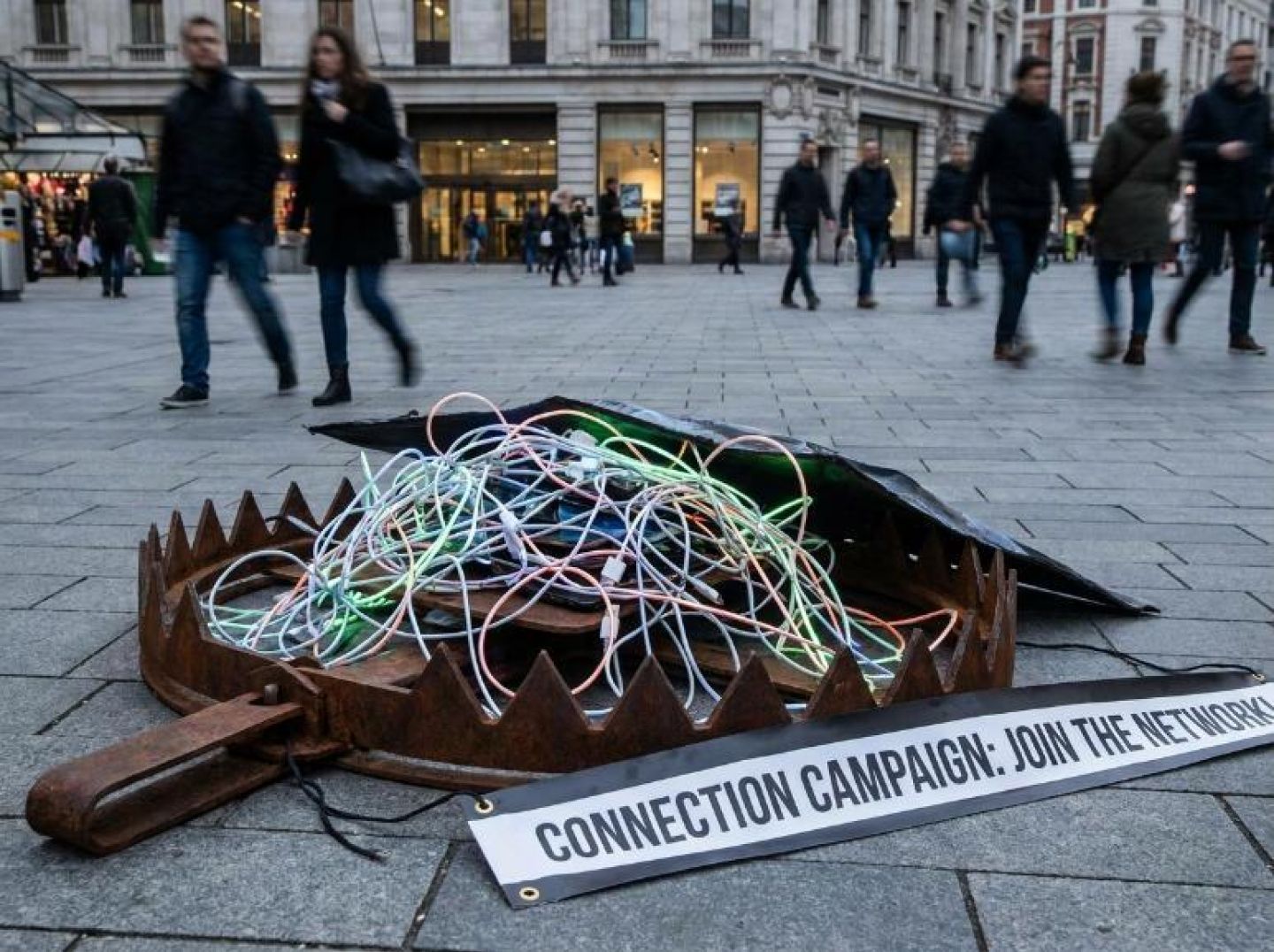
Get Started“Connection” has become the fig leaf that hides an uncomfortable truth: a lot of brand campaigns are optimized to win the internet, not to grow the business.
Scroll through any quarterly marketing recap and you’ll see the same highlight reel: millions of views, a spike in hashtag mentions, a Cannes shortlist, maybe a cleverly hijacked cultural moment. These are framed as evidence that a campaign “sparked real connection.” But when you ask what that connection actually did for incremental sales, future demand, or even qualified site traffic, the room gets quiet.
This is the connection campaign trap: mistaking visible attention for valuable impact.
Part of the problem is structural. As performance marketing proved how reliably you can turn intent into sales, it trained executives to expect clean attribution and immediate results. Over time, budgets flowed toward the lower funnel because that’s where marketers can show the CFO exactly how dollars turn into revenue, as AdExchanger explains. The flip side is that anything that can’t be tied to a shopping cart or a lead form in a neat dashboard gets put in a special bucket labeled “brand” or “connection” and held to a much lower standard of accountability.
That’s where virality morphs into a vanity metric. If the campaign is “for connection,” then views, social buzz, and press coverage become the de facto KPIs. But those metrics are proxies at best, and misleading at worst. A trending campaign can absolutely move people and still fail to move any meaningful business indicator.
You can see the cracks in the system whenever scale enters the picture. In Unilever’s creator ecosystem, 300,000 influencers are pushing AI-assisted content across dozens of platforms and hundreds of markets at once. At that velocity, the traditional evaluation infrastructure that once separated smart creative bets from bad ones simply breaks. Human panels take weeks. Brand trackers tell you what happened last quarter. A/B‑testing each asset across that many creators is a fantasy. As Search Engine Journal notes, the result is a universe of “connection” content where no one can reliably say what’s actually working right now.
So marketers fall back on what they can see: the loudest moments, the biggest spikes in social chatter, the splashiest OOH stunt riding the latest meme. Digital out‑of‑home makes it possible to deploy reactive creative in hours, which tempts brands to jump into every trending topic simply because they can. Yet if the brand’s role in that cultural moment isn’t credibly earned or meaningfully additive, the activation feels forced and quickly backfires. The brands that win in OOH are the ones that treat cultural participation as a strategic choice, not a reflex, adding something genuinely valuable to the moment instead of chasing presence for its own sake, as.
For performance marketers, the lesson is blunt: if your upper‑funnel “connection” campaigns aren’t instrumented to generate and capture demand in ways you can measure, you’re not building a brand; you’re subsidizing expensive entertainment. The goal isn’t to abandon emotion, storytelling, or cultural relevance. It’s to stop letting virality stand in for value and start holding every campaign—no matter where it sits in the funnel—to the same standard: prove what it did for today’s buyers and tomorrow’s.
Performance marketers don’t actually hate “connection.” What they hate is connection that stalls out at the top of the funnel and never shows up in the numbers.
The core mistake with most feel-good “connection” campaigns is that they’re built as if demand creation and demand capture are two separate universes. Brand teams get to play in the emotional, cultural sandbox; performance teams are left to wring revenue out of whoever is already on the verge of buying. One group is rewarded for share of voice, the other for ROAS. They rarely share a model of how demand actually gets created and then harvested.
That split is exactly how you end up with campaigns designed to “go viral” rather than drive net-new, future demand. Tactics like flash mobs, street performances and viral challenges are often celebrated because they “captivate onlookers’ attention” and spark social buzz, as the Brax team describes with flash-mob and Ice Bucket–style campaigns. They are optimized for emotional resonance, originality and shareability. But none of those guarantees that more qualified buyers will show up in your funnel next quarter.
Meanwhile, performance marketing has become so good at demand capture that it’s created its own trap. As AdExchanger points out, the past two decades of ad tech have been spent making the lower funnel hyper-efficient: better targeting, refined attribution and constant optimization around conversions and ROAS. That success made it easy—rational, even—for budgets to flow toward tactics that show immediate, attributable outcomes.
The downside is structural. When you only fund what you can see and measure this quarter, you over-invest in harvesting existing demand and under-invest in creating tomorrow’s demand. You get better and better at competing for the same finite pool of in-market buyers. As AdExchanger’s analysis argues, that’s when you hit the growth ceiling: acquisition costs climb, conversion rates erode and incremental gains become painfully expensive.
“Connection” campaigns are supposed to solve that. Instead, most of them just replicate the same mistake in a different costume. They create attention, not structured demand. A 30-day TikTok fitness challenge that drives user-generated content, like the kind Brax highlights, can absolutely “spread like fire.” But if there’s no deliberate path from that challenge to owned audiences, to education, to product consideration, you haven’t created demand; you’ve rented a fleeting moment in the feed.
The reality is messier and more multidimensional than the “brand vs. performance” debate suggests. People don’t move from “connection” to “conversion” in a straight line. They bounce across channels and formats, investigating and re-evaluating as they go. Research on the “messy middle” and multi-touch journeys, summarized by illumin’s work on conversion paths, shows that a typical buyer might first see you on CTV, later encounter display, get nudged by retargeting and only convert after yet another exposure. Awareness, reinforcement and capture are all part of a single, interdependent system.
That’s why purely feel-good brand plays hit a ceiling: they light up the very top of the journey but don’t plug into the rest of the system. Without clear intermediate steps—site visits, first-party data capture, product education touches, incremental intent signals—there’s nothing for performance channels to amplify or close. Brand is treated as a mood, not as measurable momentum.
For performance marketers, the fix starts with reframing demand creation as an upstream part of the same optimization problem, not a separate religion. Upper-funnel work should be judged by how it increases the flow and quality of people entering your conversion paths, not by how many people used the hashtag. When you can see, as illumin’s conversion-path reporting illustrates, how a CTV impression or social video reliably appears in profitable paths downstream, you’re no longer choosing between “connection” and “performance.” You’re engineering both ends of the demand equation so that the ads that win attention also expand the universe of buyers your performance engine can actually convert.
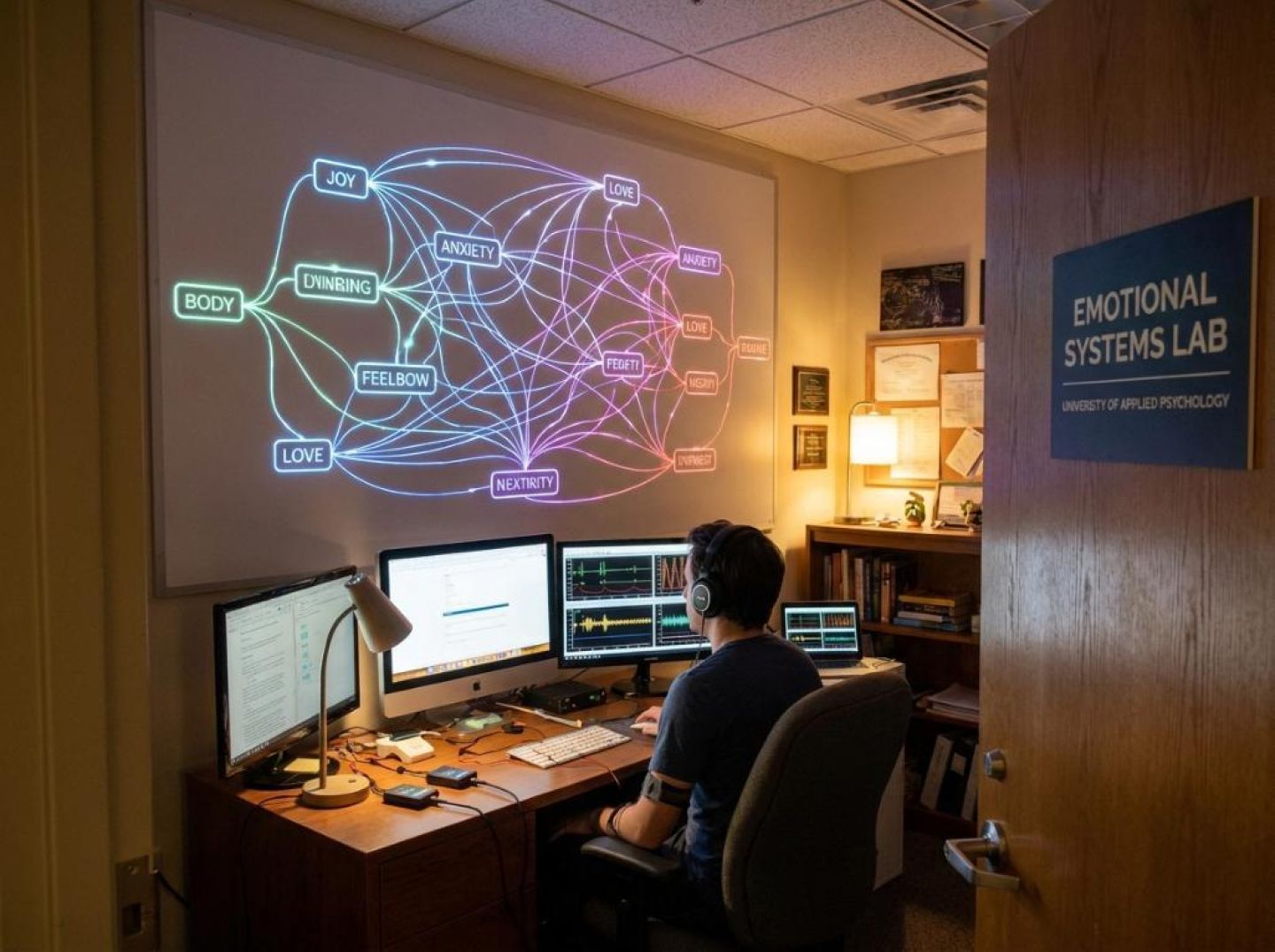
Emotional advertising doesn’t have to live in the land of “we think it worked.” If you design for it, “connection” can throw off hard, real‑time signals that performance teams can optimize against just as ruthlessly as a search ad.
The first shift is to stop treating emotional response as a vague brand lift and start treating it as behavioral intent. Streaming and CTV are the clearest proof point. For years, those channels were parked in the “reach and awareness” bucket because they inherited linear TV’s measurement playbook. As one analysis of Tubi campaigns showed, once publishers wired in outcome measurement, emotional video placements that looked like pure storytelling started showing measurable lower‑funnel impact: quick‑serve restaurant campaigns drove a 26% lift in store visits and a 37% lift in incremental sales, while retail saw a 21% lift in visits and 27% lift in incremental sales, according to performance benchmarks. Those are not “vibes”; they are direct response signals attached to what used to be considered pure brand films.
Under the hood, what’s changing is that emotional media is being wired into live feedback loops. Creative is no longer evaluated months later via brand trackers; it’s scored and reallocated in near real time. One partnership described in Search Engine Journal connects creative-effectiveness models directly into a media platform so that before a campaign launches, marketers can predict which emotionally resonant concepts are likely to win, and while the campaign runs, they can scale the assets that drive real outcomes and pause the ones that don’t. That’s exactly the governance performance marketers have been demanding: emotion at the front of the funnel, but budget decisions made on live outcome data, not post‑hoc rationalizations.
The same principle applies across the full journey. Emotional storytelling is often the first touch, not the last. A CTV spot builds familiarity, a social or display unit reinforces the story, and then a retargeting ad closes. If you only score the last click, every “connection” tactic looks wasteful. Tools that map actual conversion paths show how these touchpoints stack. One example from illumin’s path‑to‑conversion reporting highlights journeys where a CTV impression creates awareness, followed by display and then retargeting that finally triggers the sale. When you can see that pattern at scale, you can stop asking, “Did that emotional video convert?” and start asking, “What conversion paths does this video reliably initiate, and what’s the blended ROAS of the whole chain?”
Real‑time emotional measurement also requires better context signals. People don’t experience your ad in a vacuum; they experience it in a mood, in a moment, in a feed. Research on “connected content” shows that contextual fit dramatically changes how people respond: 84% of consumers say they connect with ads that feel relatable to their lived experience, 76% prefer ads relevant to the content they’re consuming, and 78% feel more connected when the ad appears at the right moment, as one Marketer survey reported. The kicker: 30% of consumers say a better‑quality ad experience increases their likelihood to purchase. Those are quantifiable signals you can monitor in flight—engagement rates, completion rates, add‑to‑cart behavior by context and placement—not just soft “sentiment.”
To make that actionable, think less like a campaign factory and more like a signal engine. Instead of one hero spot and a dozen cutdowns, build a modular creative system that can respond to four dimensions of signal—consumer, commerce, culture, and category—the way connected‑content practitioners describe “catch and release” media: you catch signals in those four areas and release the version of your story that is most attuned to that exact moment. When a shared cultural event spikes emotional availability (a championship game, a season finale), you run the big, cinematic film. When someone is leaning back in a streaming app or scrolling social, you serve shoppable or utility‑driven variations that echo the same emotional theme but are instrumented with clear calls to action and trackable outcomes.
This is where performance marketers can reshape “connection” work instead of rejecting it. Demand that every emotional idea be:
Do that, and “feel‑good” campaigns stop being a line item you have to defend and start becoming just another part of a measurable growth system—one where the warm, fuzzy feelings are simply early‑stage signals in a hard‑nosed, performance‑driven loop.
If you want emotional “connection” campaigns that actually move numbers, you can’t start with a blank page and a vague brief about “human stories.” You start with proof: ads that are already pulling hard emotional response and downstream action in the wild.
That’s where a spy tool like Anstrex stops being a “nice‑to‑have” and becomes your emotional‑performance R&D lab.
Instead of browsing ads by niche or network, you’re hunting for a specific signature: creatives that clearly trade in feeling and still scale.
In Anstrex, that means filtering for:
You’re essentially reverse‑engineering the “cultural participation” filter that brands use in OOH. When Lauren Mikoloski talks about moments that combine “scale, momentum and brand relevance” as the only ones worth activating in out‑of‑home, she’s describing the same bar you want to set for your emotional ad hunting: high reach, clear momentum, and a brand that doesn’t feel bolted on to the sentiment. As OOH Today explains, the winners “add something meaningful to the moment… while staying true to who they are.” In Anstrex, long‑running, high‑spend emotional ads are your evidence that the creative is doing exactly that.
As you collect, tag ads not by surface features (“funny,” “sad”) but by the emotion + outcome they’re aimed at: “relief → demo,” “belonging → newsletter,” “awe → purchase.”
Now you put your performance brain to work. Go beyond “this feels good” and treat each winning ad like a conversion path in miniature.
Look for:
You’re trying to map how these creatives convert raw emotion into the “next interaction” that a path‑to‑conversion view would pick up. When illumin describes CTV creating awareness that later flows into display, retargeting, and finally conversion, they’re describing a sequence of nudges, not a one‑and‑done hit of feeling. As illumin outlines, the job is to understand how each touch moves a user from one behavioral state to the next. Great emotional ads in Anstrex are doing that inside a single asset: hook → empathy → promise → proof → click.
Document these patterns in a living “connection playbook”:
The point is not to plagiarize someone else’s teary testimonial. It’s to steal the machine they’ve built for turning connection into measurable intent.
Use your swipe file to create modular, testable building blocks:
Then, rebuild these blocks around your own proof, product, and audience. This is the same move budget‑constrained marketers use when they design viral challenges that tie directly back to brand and values. When the Brax team talks about low‑cost viral campaigns that “spark strong emotions or relatability” and convert that energy into user‑generated content and participation, they’re describing a repeatable recipe, not a one‑off stunt. As the Brax blog points out, the campaigns that “spread like fire” are engineered around emotional resonance plus a clear, easy action to take next.
Your Anstrex‑informed variants should do the same thing:
The final unlock is to stop treating this as “creative inspiration” and start treating it as a forecasting tool.
Once you’ve launched ripped‑and‑reframed “connection” ads, watch:
The emotional patterns that show up as consistent assist‑touches become your next wave of creative briefs. You’ve effectively turned Anstrex into a scanner for “connection” systems that are already producing ROI, and your own media stack into the lab where you make them pay off for your brand.
Start by accepting an uncomfortable truth: if a creative has been running for months on a volatile, arbitrage‑driven channel like native, push, pops, or TikTok with real budget behind it and constant variant testing, it is almost certainly making money.
No one keeps a “feel‑good” ad live at scale in those environments out of sentimentality. They keep it live because it’s throwing off hard performance: leads, sales, ARPU, LTV. Your job is to surface those survivors first.
The practical way to do this in Anstrex is to build a ruthlessly selective filter set that mimics how an aggressive media buyer behaves.
Start by filtering for campaign longevity. In channels where creative fatigue is fast and competition is brutal, anything that survives more than a few weeks deserves scrutiny. Think in terms of “half‑life”: a TikTok ad that’s still being served heavily after 30–60 days, or a native/push creative that’s been observed for 90+ days, has cleared multiple decision cycles inside the advertiser’s team. That mirrors what outcome‑focused CTV buyers have found as they moved streaming from “reach” to hard outcomes: longer‑running placements correlate with measurable lifts in store traffic, sales, and even vehicle purchases, as benchmark studies on platforms like Tubi have shown when campaigns are optimized for incremental impact rather than impressions alone, according to this analysis from.
Next, layer on spend intensity. In a spy tool, you don’t see the P&L, but you do see strong proxies:
If an advertiser is willing to push the same asset across networks and regions, it’s unlikely they’re doing it for soft “connection.” They’re seeing concrete financial returns.
Then, filter for variant depth. Emotionally rich campaigns that are actually engineered for performance look less like a single “hero film” and more like a dense web of iterations: angles, hooks, thumbnails, captions, landers. The new “connected content” paradigm is about catching signals and constantly releasing tailored versions across contexts, rather than one static anthem spot, as Melissa Hansen describes in her breakdown of omnichannel creative for Marketing Dive. In a spy tool, that shows up as:
Rank and prioritize campaigns where longevity, spend, and variant depth all intersect. Those are your “connection” ads that have already proven they don’t just make people feel something; they make them do something.
From there, you can get more sophisticated by reading the patterns the way a path‑to‑conversion report does. In illumin’s work on conversion paths, CTV might introduce the story, display reinforces it, retargeting closes the deal. Your spy data lets you approximate that same journey in the wild: the TikTok UGC ad that plants the emotional seed, the native advertorial that deepens the narrative, the push angle that drags the user back with urgency.
Look for creative families where:
When you see that kind of coherence across dozens of variants and months of spend, you’re looking at a connection‑driven performance system, not a one‑off viral moment.
Finally, steal with intent. Export those long‑running, high‑spend, high‑variant clusters and:
You’re not copying scripts; you’re reverse‑engineering the emotional architecture that’s already tied to measurable ROI. The same way CTV teams are starting to use search‑lift and lower‑funnel data as a feedback loop for future video creative, as outlined in this discussion on integrating search and video from MarTech, you are using spy data as your upstream signal: proof that a certain emotional shape reliably turns into revenue.
Once you have that short list of proven survivors, you can move to the next step: breaking down exactly how those creatives deploy “connection” beats in the first three seconds and on the page, and rebuilding them for your own offer and media mix.
Once you’ve pulled a few dozen proven winners from Anstrex, your job isn’t to admire them. It’s to reverse‑engineer the emotional grammar they share.
If you look closely at long‑running native, push, pop and TikTok ads, you’ll start seeing the same emotional patterns that brand teams pour millions into on TV and CTV—just stripped down, sped up and wired directly to a click.
First, map the relational storylines. High‑performing creatives almost always orbit a relationship: parent–child, couple, teammates, “me vs. my old self,” or “outsider vs. the world.” Those arcs matter because they create demand upstream, not just capture it. When a story makes someone feel seen in their role—stressed parent, hustling founder, overlooked athlete—it nudges them into tomorrow’s buyer pool long before the retargeting impression. That’s exactly the blind spot performance‑only teams hit when, as one analysis of performance marketing’s evolution points out, demand capture crowds out demand creation. In Anstrex, tag every ad where the “hero” is really a relationship dynamic, not a product feature, and note how that relationship is framed in headline, lead image and first three seconds of video.
Next, isolate the “belonging” hooks. Native and social winners lean hard on the same emotional shortcuts that big brand campaigns use: “People like us do things like this.” Look for explicit social proof (“over 50,000 women over 40 are switching to…”), implied in‑group language (“If you’re the kind of person who…”), or community constructs (challenges, clubs, tribes). Low‑budget viral tactics work for the same reason: engagement‑driven challenges and flash mobs only spread when they make participation feel like joining a crowd, as the breakdown of low‑cost viral campaigns and social challenges makes clear. In your swipe file, flag creatives where the “call to belong” is doing more work than the literal call to action.
Then, chart the hope/fear framing. Almost every durable direct‑response ad runs on one of three emotional engines:
Brand teams dress this up as “aspiration vs. anxiety,” but performance creatives make it explicit. In Anstrex, categorize each winning ad by its dominant polarity: is this primarily promising a positive future or protecting from a negative one? Pay special attention to which emotional angle shows up early in the scroll or pre‑roll—the same way integrated video/search campaigns look at whether a TV spot sparks search curiosity in the first few beats. When a CTV or YouTube ad like Fox’s “Miracle” drives a spike in branded search because it dares people to feel hope, that’s not just a media phenomenon; it’s evidence, as one analysis of search–video interplay argues, that specific emotional levers reliably turn into next‑step intent. Your spy‑tool review is doing that same emotional A/B test, just in reverse.
Finally, dissect the “shared moment” visuals. Long‑running winners rarely open on a product close‑up. They open on a human moment you instantly recognize: the 2 a.m. glow of a phone in bed, a chaotic family breakfast, a quiet commute, teammates in a tunnel, a lone runner on a dark street. These are visual shorthand for moments when decisions are made and habits can be broken. Journey analytics consistently show that actual conversions emerge from a sequence of touches—CTV impression, social scroll, retargeting click—rather than a single magic ad, which is why tools mapping paths to conversion emphasize how different placements “hand off” attention. Performance creatives mimic that by dropping you into a specific, relatable micro‑scene that feels like the moment right before you’d search, compare or finally act.
The point of this exercise isn’t academic. When you tag relational arcs, belonging hooks, emotional polarity and shared‑moment imagery across dozens of profitable ads, you get an empirical emotional taxonomy. That taxonomy becomes a creative brief you can actually optimize against: test “outsider‑to‑insider” belonging vs. “protector” fear framing; open on solitary late‑night phone scrolling vs. bustling kitchen chaos; anchor copy in “join the movement” vs. “stop being left behind.”
You’re no longer guessing at “connection.” You’re borrowing the same emotional tropes that sell cars during the World Cup and applying them, with hard‑edged discipline, to creatives you can measure down to the last click.
Receive top converting landing pages in your inbox every week from us.
Most Read
Discover how performance marketers can build cross-channel verification journeys that turn skeptical prospects into confident buyers across TikTok, native, push, and pop advertising. Learn how to coordinate creative messaging, reinforce trust at every touchpoint, and measure the hidden influence of fragmented customer journeys using competitive ad intelligence.
Elena Morales
7 minOct 20, 2026
Recently Updated
Discover how creepy out-of-home advertising, TikTok micro-stories, and AI-powered creative tools can turn isolated ads into high-performing serialized campaigns. Learn how to map competitor ad sequences with Anstrex, build story-driven funnels, measure performance across multiple touchpoints, and optimize creative for stronger conversions and ROI.
Samantha Reed
7 minOct 18, 2026
Most Read
Discover why viral TikTok ads don't always translate into profitable, sustainable campaigns. Learn how performance marketers can use Anstrex ad intelligence to identify winning hooks, map audience motivations, manage brand-safety risks, and turn cultural trends into repeatable advertising strategies.
David Kim
7 minOct 17, 2026














)