10 minSeptember 7, 2026

Our tools monitor millions of native, push, pop, and TikTok advertising campaigns.
Get StartedYour competitors aren’t just buying more boards—they’re quietly stationing people who dissect every one of your placements, trace the QR hits and brand searches, and then rebuild your entire funnel from shoulder-level traffic all the way to the checkout page. As buyers increasingly research and shortlist vendors long before any rep picks up the phone, the operator who still thinks the answer is “one more quota‑carrying OOH salesperson” will keep losing campaigns they never even knew existed, exactly like the invisible operators described in this cautionary tale on how buyers now search and decide and the reps who win by obsessively understanding an advertiser’s real business, not just their budget line, as shown in the profile of curiosity‑driven OOH sellers.
By the time your best rep gets a meeting, the real decision-making has already started without you—and often without any human contact at all.
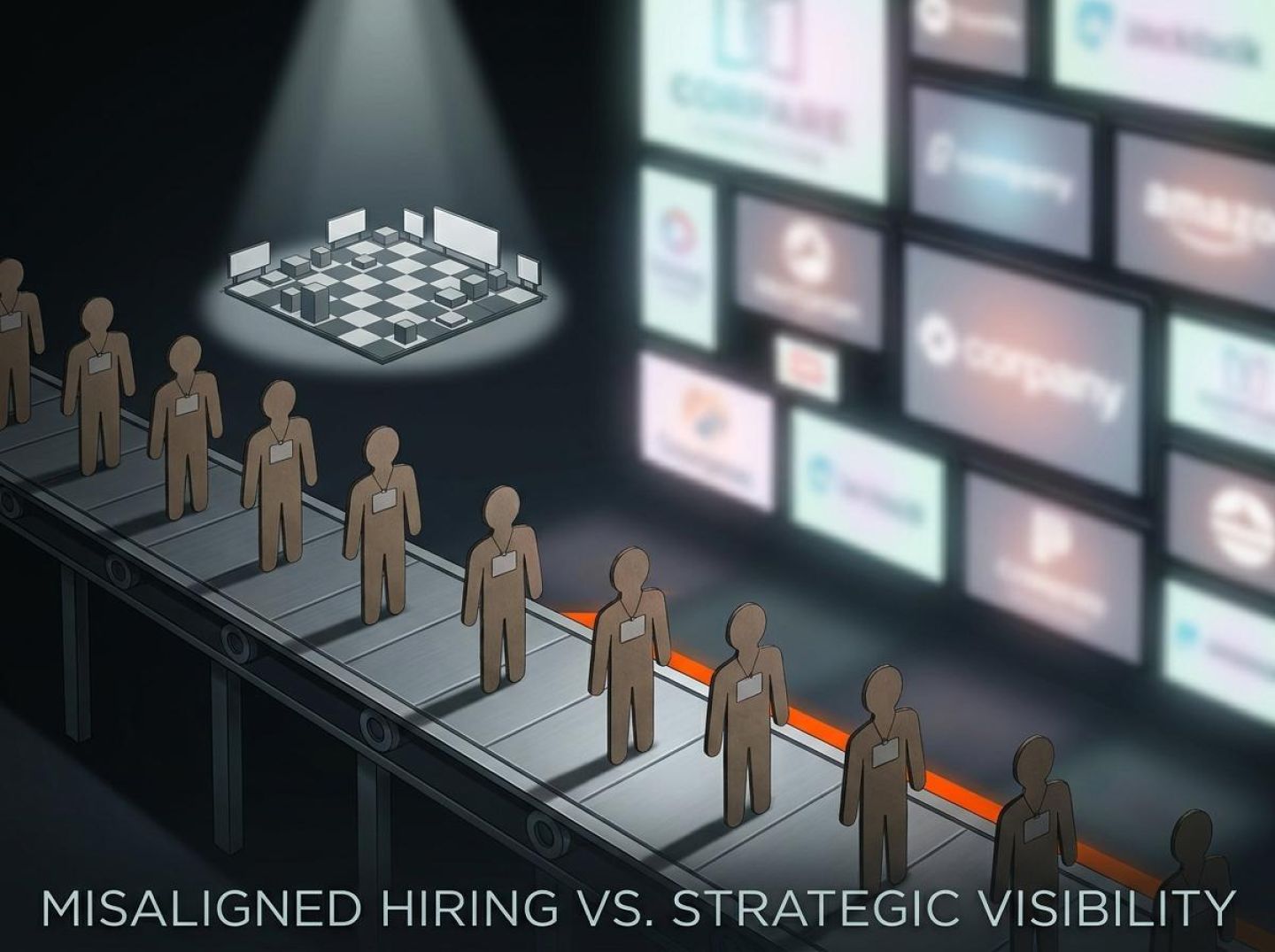
A regional marketing manager expanding into a new city doesn’t begin by asking, “Who reps Lamar in that market?” She begins by opening a browser and searching for outdoor options, scanning a few sites, and quietly deciding who looks competent enough to call. As Jonathan “JG” Graviss describes in an OOH Today case example, one operator with more inventory, stronger market position, and a decade of experience never even got an email because their site was buried on page three. They didn’t “lose” the deal; they never knew it existed.
That is the hidden shift that makes a “media spy” more valuable than another smiling closer.
Buyers are now running the early stages of the sales process themselves. They build shortlists, price ranges, and even draft media mixes before a rep’s first outreach ever connects. When they do finally hit “Submit” on a form or reply to a cold email, they have already dismissed a half-dozen vendors whose websites were too thin, whose inventory maps were too cryptic, or whose case studies didn’t answer the questions they were actually asking.
Even the search mechanics have changed. That same manager may never type “billboards in Tulsa” into a traditional search bar. She may ask an AI assistant which outdoor operators cover a specific corridor with digital faces and get back a neat, three-operator list. Those answers are being built from whatever the AI can mine from your site, your Google Business Profile, and what the rest of the internet has to say about you, just as Graviss points out when explaining how AI tools now shape the buyer’s first impression in his SEO for OOH operators guidance.
If your footprint, formats, audience stories, and proof points aren’t clear and structured in those public signals, you are invisible at the exact moment when a serious buyer is narrowing the field. This is less about “marketing fluff” and more about basic discoverability: the blocking and tackling your next media hire has to own.
The problem is that most independents still staff as if the first move will always be theirs. Leadership greenlights a new hire to “help sales” under the assumption that outbound volume is the bottleneck. As Graviss has argued in his analysis of why the first marketing hire is such a hard internal sell, many operators create a role that exists primarily to relieve pressure—clean up the website, manage the dormant social accounts, design nicer decks—and then struggle to see a straight line from all that activity to revenue six months later, because there was no clear plan for how that role would influence the way buyers actually shop and shortlist in the real world, an issue he unpacks in his breakdown of setup failures.
What’s missing is someone whose core mandate is not to “do marketing tasks,” but to map and monitor the pre-rep buying journey like an intelligence operation. That person behaves less like a traditional sales rep and more like a media spy: they quietly track which search terms actually bring in qualified planners, which pieces of content show up in AI-generated answers, which competitors dominate certain vertical queries, and where your boards, QR scans, and branded searches show up in the wild.
Instead of asking, “How many calls did we make this week?” they ask, “On how many of the queries that matter did we even appear?” Instead of assuming relationships will surface every opportunity, they assume many of the best ones will never declare themselves unless you are findable, legible, and obviously competent in the buyer’s private research stack.
Your next great OOH hire is the one who treats that invisible front half of the funnel as their territory—and brings back hard intelligence your closers can actually sell from.
Hiring more reps feels like action. The pipeline looks light, the phone isn’t ringing enough, and headcount becomes the lever you can actually pull this quarter. But if your real problem is that buyers can’t see you, can’t understand you, or can’t distinguish you from the operator down the road, adding another voice to say the same things in the same way will not change the outcome.
Look at how most independent OOH teams are built. You have a handful of hunters running territories, a shared deck, a rate card, maybe a “greatest hits” folder of case studies. When numbers soften, the reflex is, “We just need more feet on the street.” That mindset assumes the constraint is outbound effort. In reality, for many operators the constraint is upstream: you’re invisible, or you’re undifferentiated, at the exact moment buyers are educating themselves.
As one analysis of buyer behavior in OOH points out, a regional marketing manager expanding into a new market isn’t waiting for your rep to call. She’s opening a browser, scanning three operator sites, and shortlisting two. The third operator—with more inventory and deeper experience—never even enters the conversation because their site sits on page three of the results. That operator doesn’t lose a deal; they never know a deal existed. No number of new reps can fix the fact that, in the buyer’s self-directed research phase, you’re not even on the radar.
This is what a strategy problem looks like from the inside: you experience it as “slower inbound,” “longer sales cycles,” or “harder prospecting,” so you prescribe more activity. But beneath those symptoms, your market positioning, digital presence, and proof of performance aren’t keeping pace with how buyers actually plan campaigns today. You’re sending highly paid sales talent to solve problems that should have been addressed long before the first conversation—how you show up in search, what your inventory looks like on the page, what questions your content answers, and how you frame outcomes instead of locations.
The same pattern shows up when operators finally decide to “do marketing.” The first hire is often made reactively, to relieve pressure rather than to execute a defined strategy. As one seasoned consultant to independent operators explains in a breakdown of why the first marketing hire is such a tough internal sell, that person is usually tasked with fixing neglected items—the outdated website, the dormant social feeds, the proposals that need design—without a clear mandate for driving demand or shaping positioning. Leadership sees activity but can’t connect it to revenue and begins questioning the investment within six months, a classic “setup failure” rather than a hiring failure.
The same thing happens when you “fix” soft revenue by hiring another rep into an unchanged system. You get more dials, more emails, more lunches—and the same hit rate. The new hire burns time explaining your value proposition from scratch in every meeting because no groundwork has been laid in the places buyers are already looking. Your website still reads like a brochure from 2014. Your inventory map is still a PDF attachment. Your campaigns still go dark the moment the flight ends, with no end-to-end attribution story that a marketer can take back to their CMO.
What you actually need is someone who treats the market like a puzzle, not like a territory—someone who behaves more like a media spy than a closer. Instead of asking, “Who else can I call this week?” they ask, “Who is already looking, where are they looking, and what are they seeing when they find us?” They dissect how prospects search, what AI-assisted tools surface when someone asks about “billboards near downtown,” which competitors consistently appear in those answers, and what language those competitors use that you don’t. They audit your funnel from first impression to renewal and identify the leaks: the unanswered questions on your site, the missing proof points in your proposals, the post-campaign reports that fail to tie impressions to business outcomes.
Until that work is done, stacking more people on the phones is just adding weight to a shaky structure. You’re amplifying a weak signal. The operators who win the next decade of OOH aren’t going to be the ones with the most reps; they’ll be the ones whose strategy ensures that, by the time any rep walks into a room, the buyer has already decided, “These people clearly know what they’re doing.”
The person you’re missing isn’t another closer. It’s the one who walks into the weekly revenue meeting with a laptop full of proof.
An OOH Competitive Intelligence Strategist is part researcher, part analyst, part war-room operator. Their job is not to “work a list” or “bang the phones.” Their job is to answer three questions, every single day:
Instead of being measured by how many lunches they book, they’re measured by how much uncertainty they remove from high‑value buyers and their advisors—human and algorithmic.
Where your traditional seller asks, “When does your next campaign flight?” the strategist asks, “What is your CMO’s AI dashboard telling them to do with that budget—and what would it take for OOH to win that recommendation?”
That last part is not hypothetical. As AI-powered planning tools move from novelty to normal, tomorrow’s marketing decisions will be heavily influenced by models that optimize across channels. As Brent Baer points out, these systems aren’t just buying impressions; they’re advising CMOs on how to build brands, allocate dollars, and predict outcomes. They “learn” from the evidence they see. If all they encounter from your market is a rate card and a coverage map, OOH will look like a blunt instrument next to digital platforms overflowing with attribution data.
A true Competitive Intelligence Strategist treats that as a solvable problem. They build a living library of case studies, performance benchmarks, and local proofs that feed not just your pitch deck, but the logic of the tools buyers increasingly trust. They track how OOH impacts search volume, store traffic, and conversions in your region, then translate that into the language of incremental lift and modeled ROI that algorithmic planners can understand. In other words, they do exactly what the “world’s smartest CMO” would reward: they create the strongest, clearest body of evidence for OOH’s value.
This role also flips your vantage point on competition. A rep tends to look sideways: “How do I beat the guy down the street on this buy?” A strategist looks upward and outward: “How do I make OOH win against paid social, CTV, and retail media when the brand’s planning engine compares them?” They monitor how new self‑serve tools, performance guarantees, and attribution products from other channels are resetting client expectations. They know, for instance, that while OOH has historically sold location and reach, marketers are now judging every medium by its ability to drive business outcomes and prove them, a shift underscored by the way AI is being framed as marketing’s next “strategic advisor” in industry discussions about the future of planning and measurement.
Crucially, a Competitive Intelligence Strategist is not just a better-prepared salesperson in disguise. Their output is organizational, not individual. They build:
When they sit down with a regional marketer, they’re not asking for a shot at the next RFP. They’re walking in with a clear picture of what the brand is trying to solve, how rival channels are courting that spend, and what specific proofs OOH must deliver to win more than its “usual” slice of the plan.
If your current team is full of energetic sellers but light on this kind of intelligence, it will show up in subtle but costly ways: decks that default to inventory porn instead of outcomes; pitches that can’t answer how OOH will complement the brand’s performance stack; awkward silence when a client’s analyst or AI tool challenges your assumptions. A Competitive Intelligence Strategist exists to prevent those moments. Their mandate is simple: make sure that when the smartest people—and the smartest machines—in the room evaluate options, OOH shows up not as the loudest pitch, but as the most defensible decision.
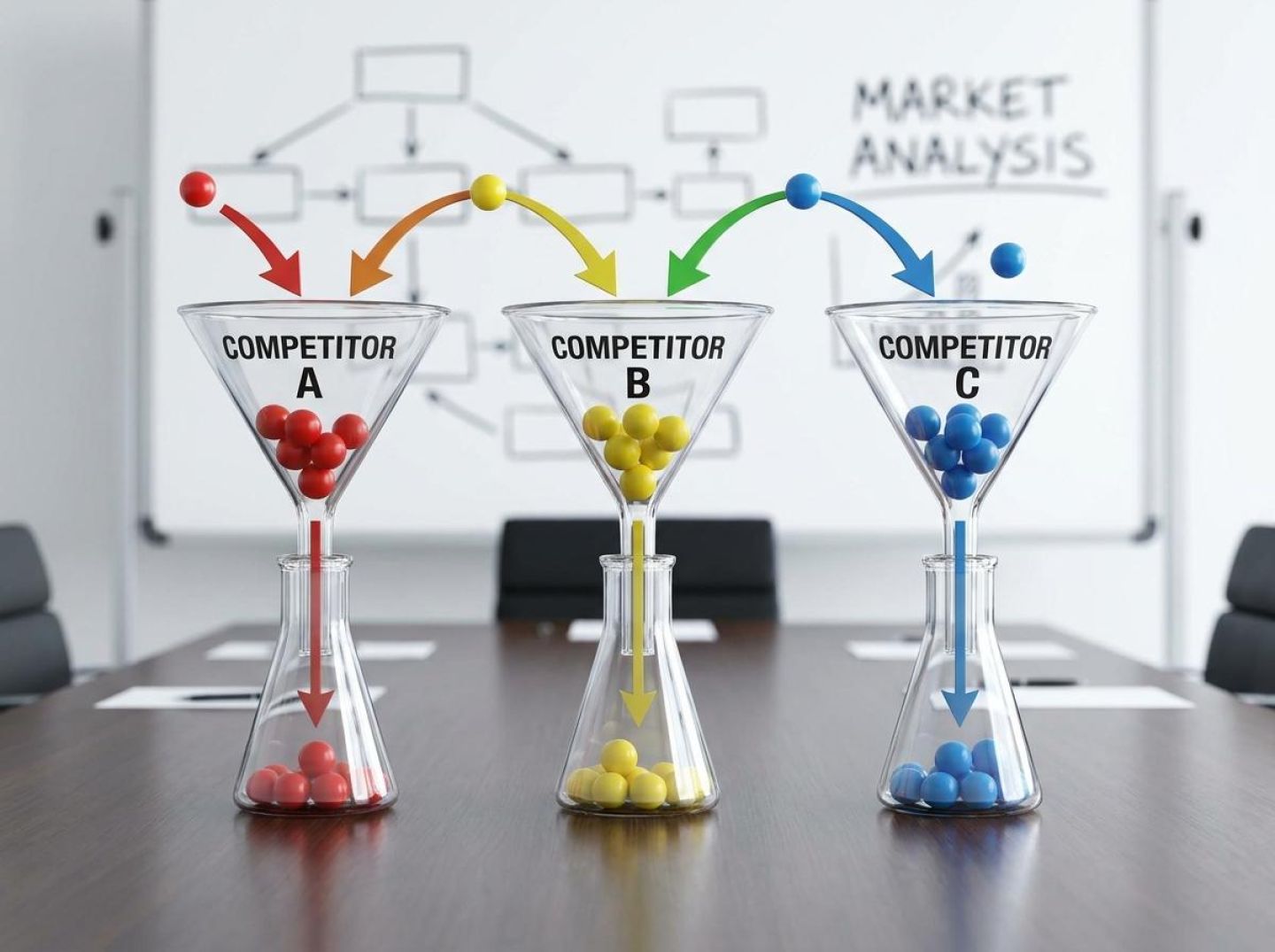
If your OOH “strategy” is still based on what reps hear anecdotally (“X brand is heavy on billboards this quarter”), you’re already behind. The OOH Competitive Intelligence Strategist earns their keep by treating the market like a solvable puzzle—and ad spy tools are the flashlight.
This isn’t just looking at pretty creatives on Instagram. It’s systematically reverse‑engineering the funnel behind every panel, place‑based screen, and retail media impression your competitors are buying.
A media spy doesn’t just drive the market; they document it. Using ad spy platforms and structured field logging, they build a living map of:
That last one matters more every month. As OOH Today has pointed out, when a retailer turns its aisles, endcaps, and checkout lanes into digital inventory, the “billboard vs. retail media” distinction starts to collapse. Your spy is the person who can say, with receipts, “Brand X just shifted 30% of its roadside spend into that grocery network—and here’s what that does to our pitch.”
A good tool stack lets them tag those sightings by advertiser, category, operator, location, and estimated spend. Over a quarter, patterns emerge that no single rep call will ever surface.
OOH may not have a literal click‑through, but every good campaign has a next step: search, QR, vanity URL, promo code, app download. Your media spy traces that path on purpose.
For every major competitive campaign they identify, they:
This is where OOH starts to look a lot like performance media. When a panel drives someone to search “car insurance near me,” the question is: which brand actually appears? As one marketer described in an OOH Today analysis of search behavior, the buyer often shortlists the first two or three results and ignores the rest. Your spy is the one discovering that a competitor’s OOH is effectively funding your rival’s SEO because you don’t own the post‑exposure search real estate.
Reverse‑engineering that path lets you walk into a client meeting and say, “Here’s what your customer actually sees after they look up from the billboard—and here’s how to fix it.”
Once you’ve mapped the external media and the internal funnel, the magic is in the gaps:
This is where the blurring of OOH and retail media becomes a weapon instead of a threat. If, as one OOH Today column on Walmart’s media pivot argues, a store is now a media property and the endcap is premium inventory, then your spy’s job is to show brands how your roadside, transit, and place‑based assets complete that physical‑world funnel.
None of this matters if it stays in a spreadsheet. The strategist packages their findings into assets your reps can actually use:
Now, when a rep walks into a meeting, they’re not saying, “We have great boards.” They’re saying, “Here’s exactly how your rival is using this market—and here’s the funnel we’ve designed to beat it.”
That is not a sales rep’s side project. That is the full‑time work of a media spy.
When you stop treating competitive intel as trivia and start treating it as a design input, three big levers of your OOH program get sharper: creative, placement, and attribution.
Most teams still brief creative from a slide titled “Competitive Landscape” that’s really just three JPEGs and a bullet: “They’re big in billboards.” A media spy treats that landscape like a living system, not a mood board. They’re tracking which competitors lean into brand‑building vs. offer‑driven messaging, how long they sit on a single concept, and which formats show up right before key seasonal spikes. That pattern recognition becomes the backbone of a better brief.
If you know a rival’s new app rollout is supported by a four‑week high‑frequency digital blitz with short, dynamic headlines, your creative doesn’t just “go clever.” It decides whether to counter‑program (simpler, more iconic, long‑wear brand creative) or out‑punch (even more contextual, time‑of‑day copy). This is exactly the kind of evidence‑based planning the emerging “AI CMO” will reward: as one analysis of AI‑driven marketing leadership argues, the first responsibility is to “build the brand” and use every channel to improve awareness, consideration, and long‑term outcomes, not simply buy more impressions, which requires creative that is strategically distinct rather than generically visible (“the world’s smartest CMO” perspective).
Creative timing also changes. Your media spy isn’t just spotting when a competitor goes heavy; they’re correlating that surge with product launches, price changes, or category news. Instead of asking your agency for “Q4 concepts,” you brief them around real windows: “We know Competitor A floods transit shelters two weeks before their annual rate increase. We’re going to pre‑empt that with a ‘same product, fair price’ message in the exact corridors they dominate.” Creative becomes an offensive maneuver, not a decoration on a fixed calendar.
Placement strategy is where intelligence turns into unfair advantage fastest. Traditional buying still chases GRPs and “good boards.” A competitive strategist looks at a verified campaign log by brand, format, and corridor and builds a map of battles you should fight—and ones you should avoid. If everyone in your category is over‑indexed along the same freeway spine, a spy‑led plan might deliberately shift budget into under‑contested commuter rail, street‑level digital, or proximity placements near retail decision points.
Tools that maintain a continuous, verified campaign graph and a “living model of demand” make this far more precise. When a platform ingests real OOH signals and shows how demand moves across formats and geographies over time, you’re no longer guessing which neighborhoods are heating up; you’re watching them in near‑real time. One such system explicitly frames this as an evolution from backward‑looking reporting to predictive modeling, continuously organizing campaigns, agencies, and decision‑makers into four intelligence layers so operators can see “what is happening, why, and what is likely to happen next,” rather than what happened last quarter (a recent look at this predictive demand engine explains the shift).
Armed with that, your planner can do things an inventory‑first seller never will:
Attribution is where all of this becomes provable. The biggest historical knock on OOH—“We can’t tie it to outcomes”—is exactly what the AI‑assisted CMO is trying to solve by combining media mixes, predictive models, and outcome metrics. If Out of Home wants to show up in that recommendation set, it has to feed the machine better evidence of effect. That starts with smarter test design, and intelligence is what makes those tests clean.
Your media spy can identify markets and timeframes where a key competitor is quiet, so you can run true lift studies without overlapping category noise. They can also flag when a rival suddenly switches formats or creatives, helping you avoid mis‑attributing fluctuations in search, app installs, or store traffic to your own boards when, in reality, the whole category changed its pressure. Over time, you get a cleaner read on what unique role your OOH plays in brand search, branded direct traffic, and conversions—exactly the sort of cross‑channel contribution the AI CMO will recognize as proof that OOH is a brand‑building, performance‑driving channel rather than just an awareness line item, as described in that same analysis of AI‑driven media decision‑making (the argument that AI will “follow the evidence” to channels that improve acquisition and long‑term value hinges on this).
When your OOH hire behaves like a media spy, every board you buy is informed by what the market is actually doing. Creative is briefed against live conditions, placements are chosen with a clear theory of where to attack or avoid, and attribution is designed to isolate your true effect. That is the kind of intelligence loop that wins the next era of Out of Home—not more feet on the street, but a sharper mind in the war room.
Receive top converting landing pages in your inbox every week from us.
Most Read
Discover how performance marketers can build cross-channel verification journeys that turn skeptical prospects into confident buyers across TikTok, native, push, and pop advertising. Learn how to coordinate creative messaging, reinforce trust at every touchpoint, and measure the hidden influence of fragmented customer journeys using competitive ad intelligence.
Elena Morales
7 minOct 20, 2026
Recently Updated
Discover how creepy out-of-home advertising, TikTok micro-stories, and AI-powered creative tools can turn isolated ads into high-performing serialized campaigns. Learn how to map competitor ad sequences with Anstrex, build story-driven funnels, measure performance across multiple touchpoints, and optimize creative for stronger conversions and ROI.
Samantha Reed
7 minOct 18, 2026
Most Read
Discover why viral TikTok ads don't always translate into profitable, sustainable campaigns. Learn how performance marketers can use Anstrex ad intelligence to identify winning hooks, map audience motivations, manage brand-safety risks, and turn cultural trends into repeatable advertising strategies.
David Kim
7 minOct 17, 2026