12 minSeptember 13, 2026

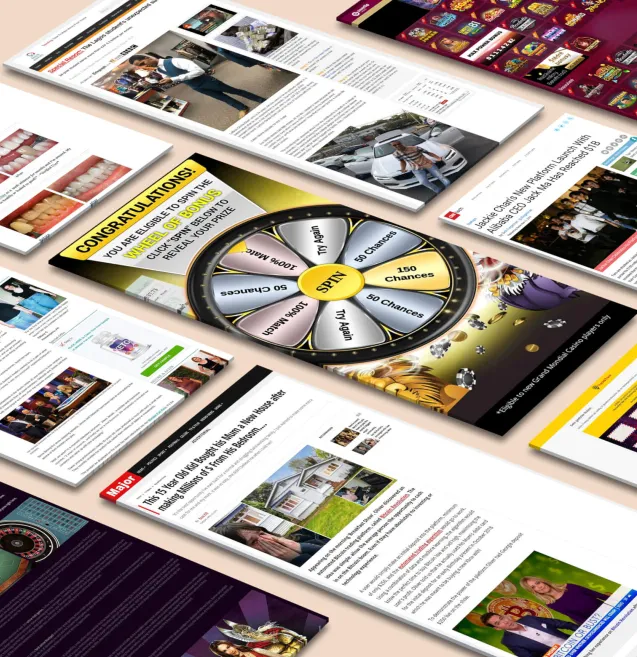
Our spy tools monitor millions of native ads from over 60+ countries and thousands of publishers.
Get StartedYour competitors aren’t beating you because they have smarter email drips. They’re beating you because, right now, they know exactly which headlines, angles, and thumbnails are quietly scaling on Taboola, Outbrain, push networks, shady little pop sources, and TikTok’s For You feed—and you don’t.
While your team is arguing about whether to stay on Marketo or migrate to HubSpot, theirs is inside native ad dashboards and spy tools, watching what’s actually getting the click: the “weird niche pain” hook that’s crushing on finance audiences, the contrarian angle that prints leads in healthcare, the ugly-but-high-converting landing page layout they’d never dare show on LinkedIn. Then they wire those learnings back into everything: ad creative, lead magnets, nurture sequences, even the subject lines in the Marketo instance you’re so busy “rearchitecting.”
Modern ad platforms are quietly rewarding this behavior. Google’s own Demand Gen campaigns and Performance Max don’t just place ads in one neat channel; they spill your creatives across YouTube, Discover, Gmail, Maps and more, letting a single winning hook echo across half the internet. As the latest Google Ads benchmarks point out, the top accounts aren’t just flipping on AI features like PMax and Smart Bidding—they’re obsessing over how tightly their ads and landing pages align, because platforms are explicitly “rewarding tighter alignment between keywords, ads, and landing pages” with cheaper clicks and more conversions.
That’s not an “email workflow” problem. That’s a message–market fit problem.
On the native side, performance marketers have quietly known this for years. The brands winning at scale don’t just track their own CTRs and CPCs; they’re constantly comparing against industry standards to see who’s outpacing them on the same audiences and placements. When they see a competitor suddenly dominate a widget with a new angle—“X is dead, try this instead,” “the controversial way to cut CAC in half,” “you’ve been lied to about [insert metric]”—they don’t shrug and go back to optimizing a nurture branch. They test that narrative in their own native ads, then mirror the language in cold outbound, retargeting, and yes, the email sequences your team keeps rebuilding from scratch.
The irony is that marketing technology is more powerful than ever—and more wasted than ever. As one recent martech analysis notes, organizations are only using about half of what they buy. You can have Marketo, HubSpot, a CDP, lead scoring, and AI copy generation; if the hooks and offers you feed into them are weaker than what your competitors are running on TikTok and native, your “sophisticated journey” just automates mediocrity at scale.
Meanwhile, ad platforms are handing you clues in plain sight. Google’s new YouTube Demand Gen features are built to “spark discovery and win new customers before they even begin searching,” using AI to surface the creatives most likely to convert across surfaces. That means every winning competitor asset in your category is a live, public signal about what your buyers actually respond to—if you’re paying attention.
The next demand gen advantage doesn’t come from squeezing 3% more efficiency out of your workflows. It comes from flipping your mental model: stop treating email and automation as the strategy, and start treating them as distribution channels for what really matters—proven hooks, offers, and pages ripped straight from the competitive battlefield.
Spy first. Automate second. Because the team that knows, with receipts, which ad angles are already driving profitable growth in their category—across native, push, pop, and TikTok—is the team whose entire acquisition, nurture, and conversion engine compounds faster than anything you can get from a Marketo vs. HubSpot comparison chart.
Marketing leaders keep relitigating the same question: “Should we stay on Marketo or move to HubSpot?” It feels strategic because the budgets are big, the RFPs are long, and the slideware is gorgeous. But it’s the wrong first question.
The real shift in demand gen isn’t “Which MAP?” It’s “Which market signals are we actually paying attention to?”
Look at how much oxygen the Marketo debate still gets. Entire guides break down alternatives by total cost of ownership, migration plans, and feature matrices. When a platform comparison notes that Marketo’s real cost includes licenses, services, admin time, integrations, training, and add‑ons, and that teams are wrestling with steep learning curves and admin dependency, the conversation is still framed around operational efficiency and usability, not competitive advantage, as the HubSpot team explains. The implicit promise is: once you pick the right system, turn on enough workflows, and clean up the data model, pipeline will follow.
But your competitors aren’t winning because they picked the perfect MAP. They’re winning because they built a better radar for what the market is actually responding to before a lead ever touches your database.
Right now, your marketing automation platform is wired around a narrow band of signals: email opens and clicks, form fills, page views, event attendance, maybe a couple of intent scores. Those are all downstream behaviors. They happen after a prospect has already opted into your world. They tell you how people interact with your assets.
Meanwhile, the biggest demand shifts are happening upstream in places your MAP can’t see: native ad networks, YouTube demand campaigns, TikTok’s recommendation engine, and the countless placements where buyers first encounter a problem, an angle, or a promise.
On native, for example, almost every surface is being tracked and analyzed, but not in the tidy, linear way email platforms imagine. Native campaigns live or die on a delicate creative “sweet spot” where ads blend into editorial just enough to slip through a visitor’s guard, yet still stand out to be noticed. As one breakdown of native ads tracking points out, you only know you’ve hit that sweet spot when further tweaks to headlines, creatives, or targeting stop moving performance. That is a completely different optimization universe than A/B‑testing subject lines for a nurtured lead that’s already in your CRM.
And notice what native buyers are optimizing for. The same analysis emphasizes that goals span brand awareness, purchases, and app installs, with native often deployed to promote a brand “without any concrete (and measurable) outcome in mind” in the short term. In other words, they’re actively probing what messages and angles slip past ad blindness and actually change behavior, not just what subject line gets a 2% higher open rate from people who already know them.
Similarly, Google’s latest YouTube Demand Gen product isn’t being sold on the promise of better drip campaigns; it’s about surfacing winning creative and offers before anyone types a search query. Google describes Demand Gen as a way to combine trusted creators, AI‑powered relevance, and dynamic product placements to “win new customers before they even begin searching,” with tools that automatically build and test high‑impact assets across YouTube and other properties and expand discovery into places like Google Maps and shoppable surfaces, as outlined in their Demand Gen rollout. That entire model assumes you’re obsessed with creative performance and audience response in the wild, not just with nurturing whoever happens to submit a demo form.
This is the crux: MAP debates are inward‑looking. They optimize how efficiently you communicate with people you already have. Market‑signal debates are outward‑looking. They optimize your understanding of what’s actually working in the real, messy ad auctions where your category is being shaped.
Teams that win the next phase of demand gen will still care about marketing automation—but as plumbing, not as strategy. Their strategic edge will come from instrumenting and interrogating the noisy, fast‑changing signals from native, social, and video placements; from benchmarking their own performance and creatives against industry norms and competitors, the way sophisticated native buyers use external benchmarks for CTRs, CPCs, and conversion rates to understand where they stand, as one native performance guide recommends.
Until your internal debates shift from “Which MAP feature does this?” to “Which external signals are we missing—and who’s already acting on them?” you’re optimizing the plumbing while someone else rewrites the script.
Your nurture tracks are a static museum exhibit. The ad ecosystem is a live‑fire testing range.
On any given day, thousands of performance marketers are spending their own money to answer the questions your content committee is still workshopping: Which hook actually stops the scroll? Which promise earns the click? Which angle gets someone to pull out a credit card? Native, push, pop, TikTok, YouTube Shorts—collectively, they’re a real‑time laboratory of psychological triggers and intent signals your MAP data will never show you.
Native alone is a goldmine. By design, it lives in the grey area between “content” and “ad.” As the team at Voluum explains in their deep dive on native ads tracking, native works best at a “sweet spot” where it blends in enough to earn trust but still stands out just enough to be noticed. That balance isn’t philosophical; it’s empirical. It’s discovered by relentlessly testing headlines, thumbnails, and story angles across thousands of placements and letting the click‑through rate, scroll depth, and downstream conversions declare a winner.
That’s the first thing native, push, and pop advertisers know that your nurture doesn’t: creative isn’t a branding exercise, it’s an optimization surface.
If you spy on top‑spending native placements—on Taboola, Outbrain, MSN, Yahoo, Newsmax, niche blogs—you’ll see the same patterns repeat. High‑velocity winners tend to:
Performance marketers don’t arrive at those patterns by taste. They arrive there because the losers get turned off. As the Brax team notes when they urge advertisers to compare performance with industry standards, the entire ecosystem is calibrated around hard benchmarks: CTRs, conversion rates, CPC, and ultimately ROAS. If a headline can’t clear the bar, it dies quickly and quietly. Your nurture, by contrast, can limp along for quarters on “good enough” metrics because no one is holding it to a market‑level standard.
Push and pop networks take that ruthlessness even further. Their audiences are interruption‑native and skeptical. Marketers survive there by compressing their entire funnel into a handful of words and a tiny image. When a push ad scales, it’s because the value proposition is so visceral that it breaks through indifference on the worst inventory on the internet. If your webinar title or lead magnet can’t match the clarity and punch of a profitable push notification, it’s probably not as compelling as you think.
Then there’s TikTok. Its For You feed is essentially an AI‑powered intent engine wrapped in entertainment. Creators and brands learn, brutally fast, which story arcs hold attention, which cold opens hook in three seconds, which visual metaphors actually land. TikTok’s algorithm, like modern AI‑native ad platforms more broadly, is constantly inferring micro‑intent from swipes, rewatches, and hovers, then matching the right creative to the right moment. As MarTech describes in their look at how targeting is shifting toward intent, the frontier isn’t “people like this” but “people trying to do this right now.”
That’s the second thing these ad ecosystems know that your nurture doesn’t: timing and context beat persona decks.
Most B2B nurtures are frozen around static stages—TOFU, MOFU, BOFU—paced out by arbitrary cadences your platform can handle. Meanwhile, media systems on native, social, and programmatic are increasingly agentic, reallocating spend and rotating creatives in response to real‑time behavior, not your ideal customer profile slide. As MarTech points out in their piece on turning marketing complexity into a competitive advantage, the modern ecosystem rewards teams that can integrate signals across channels and move quickly, not those that simply accumulate more tools.
The final thing performance ad buyers understand is that creative strategy has moved upstream. Once execution is automated—bids, placements, even variations—the hard part is deciding what to say and how to frame it. That’s why AI‑native advertisers are obsessing over sharper messaging frameworks and distinctive narratives before they ever load assets into a DSP, a shift MarTech underlines in its discussion of AI‑native advertising. Those inputs are being stress‑tested in the wild at unimaginable scale.
Your nurture sees only what happens after someone has already opted in. The ad ecosystem sees what the rest of the market ignores, scrolls past, and bounces from—and what slices through that noise anyway. If you’re not systematically spying on that live testing lab and importing its winners into your messaging, you’re running demand gen with one eye closed.
“Spying” is only an advantage if you can turn what you see into something your competitors can’t copy by refreshing their ad set.
Anstrex and similar tools give you the raw feed: which hooks are scaling, which funnels are sticky, which landers are getting enough budget to matter. The job of a modern demand gen team is to turn that feed into proprietary messaging, offers, and motion — demand gen IP that compounds instead of resets every quarter.
The first move is to stop looking at ads as creative inspo and start treating them as a live panel study on buyer intent. Platforms are already wired this way. TikTok’s B2B team, for example, is pushing marketers to optimize around engagement signals and completion rather than raw reach, because how someone interacts with a unit is a better predictor of pipeline than how many people saw it. When you watch native or TikTok campaigns inside Anstrex, you’re essentially seeing which messages survive that ruthless signal filter at scale.
Turn that into structure. Every time you spy a winning ad, you should be classifying it against a shared framework: problem, promise, proof, pay‑off, and pattern.
Within a month of disciplined tagging, you’ll have a living database of outside‑in hypotheses about what your market actually responds to — not what your internal stakeholders wish were true.
From there, your job is synthesis and drift, not copy‑paste. You map those patterns against your positioning and your ICP’s buying stages. This is where the broader shift toward intent‑driven creative matters. AI‑native ad systems increasingly reward brands that align messaging to decision stages and real‑time behavioral signals, not just to static personas. Your “spying” gives you the raw language of desire; your strategy decides where that language belongs along the journey and how far you can push it without breaking the brand.
A practical way to operationalize this is to build a “Message Bank” and “Offer Bank” directly from what you see winning in the wild:
When Invisalign embedded a Smile Quiz directly in its TikTok ad, it wasn’t chasing vanity engagement. It used an interactive format to capture pre‑qualified interest at a lower cost per lead. Inside Anstrex, you can see dozens of equivalent “micro‑offer” patterns in B2B: assessment funnels, ROI planners, build‑vs‑buy checklists. The demand gen IP is not “we have a quiz too,” it’s which diagnostic you own and how tightly it connects to your product’s unique value.
Once you’ve banked the patterns, you plug them into your owned channels as systematically as Google is now plugging them into its media products. The new YouTube Demand Gen campaigns, for instance, use AI‑assisted creative assembly and multimodal asset creation to scale winning concepts across YouTube, Discover, and beyond. Likewise, Google’s shift from Display to Demand Gen means success now hinges on stronger, more varied creatives that can flex across multiple high‑intent surfaces with fewer knobs for manual optimization.
Your advantage isn’t owning the knobs — it’s owning the inputs. If your hooks, proof points, and offers already come from a hardened corpus of what the market has proven it will respond to, automation stops being a black box and starts being a force multiplier. The algorithm is just a very fast, very unforgiving editor of your IP.
Finally, you need a feedback loop that keeps this IP compounding instead of going stale. That means:
In a world where AI can spin 200 headline variations before lunch and media buying is drifting toward autonomous optimization, the defensible edge isn’t who clicks “launch” first. It’s who is sitting on the deepest, most reality‑tested understanding of what this category’s buyers actually notice, believe, and act on — and who treats every “spied” ad not as a template, but as a datapoint in building that understanding.
Most teams treat ads, email, and on-site as three different jobs. That’s exactly why so many funnels leak: the hook that got someone to click the ad disappears as soon as they hit the landing page, and the email sequence might as well belong to a different company.
The demand gen edge comes from doing the opposite. You take the winning hooks you’ve spied in the wild, harden them into your own IP, then wire that same narrative through every surface: the ad, the page, and the inbox.
Your spying stack has already told you what’s working out there: curiosity headlines, “quiz before pitch” flows, specific promises (“cut XYZ cost by 37%”), contrarian angles, or highly concrete outcomes.
This is where native and social shine. Performance marketers use long-form, editorial-style creatives precisely because they can load them with nuanced hooks that slip past ad fatigue and “banner blindness,” which is why native ads tracking is treated as a separate discipline from display or email optimization. When you see an angle consistently funded across placements and geos, assume it’s paying for itself.
Pick one of those hooks and make it the spine of a campaign theme, not just a headline test.
The highest-intent moment in your funnel is not the form fill; it’s the first three seconds after the click. Your job is to prove to the visitor that:
That means your landing page should:
Once someone converts on that landing page—lead, trial, demo, or low-ticket purchase—the hook that got them there should shape your email strategy.
Most nurture streams are built around brand messaging or product feature sets. Instead, map each stream to the buying story you started in the ad:
To make this work at scale, you need the plumbing. Platforms are increasingly built to connect campaign data with CRM and lifecycle logic. TikTok’s native integration with HubSpot exists specifically so campaign-level signals can flow into email and lifecycle targeting, and email engagement can feed back into ad optimization. Treat your stack the same way: hooks and behaviors should be shared data, not siloed dashboards.
The point of spying is not to copy; it’s to steal the learning loop. Performance marketers obsessively test because they can see, in real time, which hooks make money. You should too.
That means:
Finally, aligning ads, email, and site isn’t just about the first journey; it’s about the second and third.
When you wire your funnel this way, “spying on ads” stops being a parlor trick to make your media buying cheaper. It becomes the R&D engine for your entire demand gen ecosystem—where the hook that wins the scroll also wins the inbox, the meeting, and the revenue.
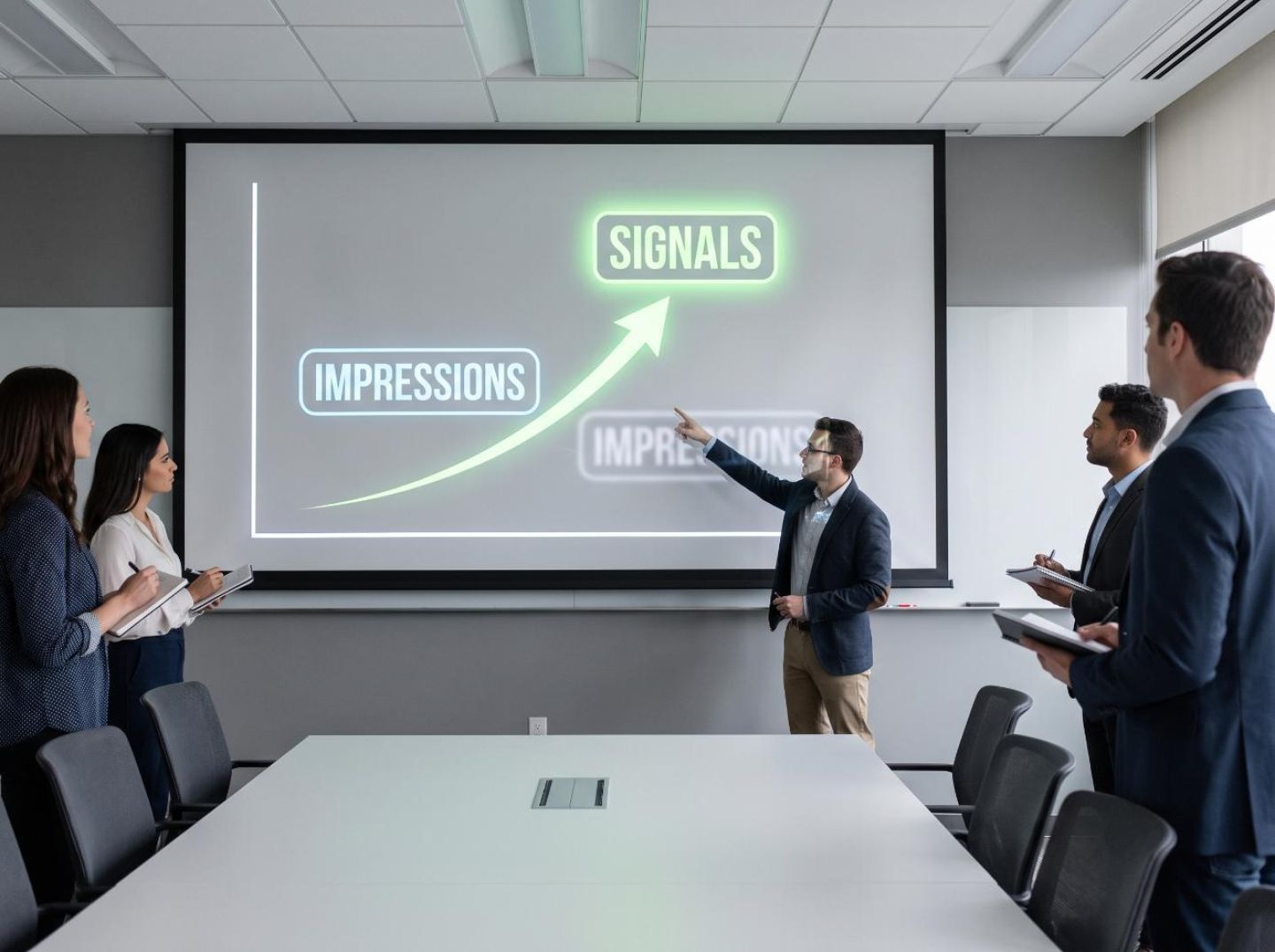
Impressions are what platforms sell you. Signals are what your demand engine actually needs.
An impression tells you someone existed in a feed. A signal tells you who leaned in, what they cared about, and how much intent they showed. The teams pulling away from the pack are the ones treating every click, scroll, and view-through as learnable input, not vanity output.
Platforms are already moving in this direction. Google’s new YouTube Demand Gen features are explicitly designed to tie creative, context, and behavior together so campaigns can “spark discovery and win new customers before they even begin searching,” using AI to match assets with real-time user interest across YouTube, Discover, and even Maps inventory. In parallel, fully automated types like Performance Max and Demand Gen give advertisers broader surface area for the same effort, with Smart Bidding and tools like AI Max quietly optimizing toward outcomes instead of just reach, which is why AI-powered campaigns tend to drive higher conversion and relevancy rates.
That’s the macro trend: platforms turning behavioral signals into automated targeting and bidding. Your job is to do the same thing inside your own stack.
In a native-led demand engine, “signals over impressions” starts with how you instrument the journey. Tools like Brax make it trivial to unify performance across placements, creatives, and publishers, but the real advantage comes when you move beyond CTR and CPC to ask:
When you compare these patterns against industry benchmarks for CTR and conversion that platforms like WordStream aggregate, you get an honest view of whether your campaigns are just average or structurally outperforming. Industry baselines keep you realistic; your own behavioral signals tell you where you’re uniquely strong.
From there, you design an engine that learns:
2. Promote signal-rich behaviors to first-class metrics. If platforms are rewarded for conversion events, your internal reporting should reward micro-behaviors that predict them: demo page visits, pricing hovers, repeat content visits, high-intent category browsing. Give those events value in your analytics and feed them back into your bidding strategies and creative rotation.
3. Feed hooks across your ecosystem, not just back into ads. When a particular pain-point frame or offer structure hits, it shouldn’t just get a budget boost. It should spawn new landing variants, nurture sequences, outbound scripts, and sales enablement. That’s how you transform what MarTech calls an increasingly complex marketing ecosystem into a connected advantage: the same signal that optimizes demand gen on YouTube or native also refines messaging in email and on-site.
4. Let automation work, but constrain it with strategy. As benchmarks from over 15,000 Google Ads accounts showed, the highest performers still obsess over fundamentals like account structure, negative keywords, and landing page relevance, because platforms are “rewarding tighter alignment between keywords, ads, and landing pages.” The equivalent in native and social is aligning your best-performing hooks with the exact audiences and post-click experiences that validate them. Automation can allocate spend, but only you can define what a qualified signal looks like.
Finally, close the loop. When your analytics show that certain publishers produce high CTR but low-qualified engagement, treat that as a negative signal and down-rank or exclude them. When a specific video length and narrative arc drives outsized completion and click-through on YouTube Demand Gen, standardize that structure in your next production batch and let Google’s AI-assisted creative tools scale it to new surfaces. When a native angle drives better-than-benchmark conversion rates, log it as a reusable pattern in your messaging library and build new variations on top.
Over time, this turns your operation into a compounding system: every click sharpens your understanding of the market, every campaign enriches your library of proven hooks, and every new channel you plug in adds more signal, not more noise. Impressions stay the fuel. Signals become the strategy.
Receive top converting landing pages in your inbox every week from us.
Most Read
Demand generation is shifting from marketing automation alone toward real-time market intelligence and proven creative signals. This guide shows how to use native, push, pop, and TikTok ad intelligence to uncover winning hooks, turn them into demand gen IP, and connect those insights across ads, email, landing pages, and the full customer journey.
Elena Morales
7 minSep 13, 2026
Most Read
Discover how to connect ad spy data with on-site behavior, CRM insights, and revenue outcomes to uncover the real drivers of ROI. Learn how to turn Anstrex from a creative swipe tool into a closed-loop system for testing winning ad angles, funnels, and customer journeys.
Dan Smith
7 minSep 9, 2026
Must Read
Agentic AI is moving product research and comparison upstream, often before buyers ever click a native or push ad. This article explains how marketers can adapt to the shift by making product feeds, offers, creative angles, proof points, and landing experiences easier for AI systems to understand and recommend. It also explores how high-intent clicks are changing, why AI-generated recommendations are reshaping creative angles, and how advertisers can optimize for both AI-mediated decisions and human action.
Samantha Reed
7 minAug 30, 2026