Native Ads, Pop Ads, TikTok Ads
11 minOctober 28, 2026

Our spy tools monitor millions of TikTok ads from over 55+ countries. Biggest TikTok Ad Library in E-commerce and Mobile Apps!
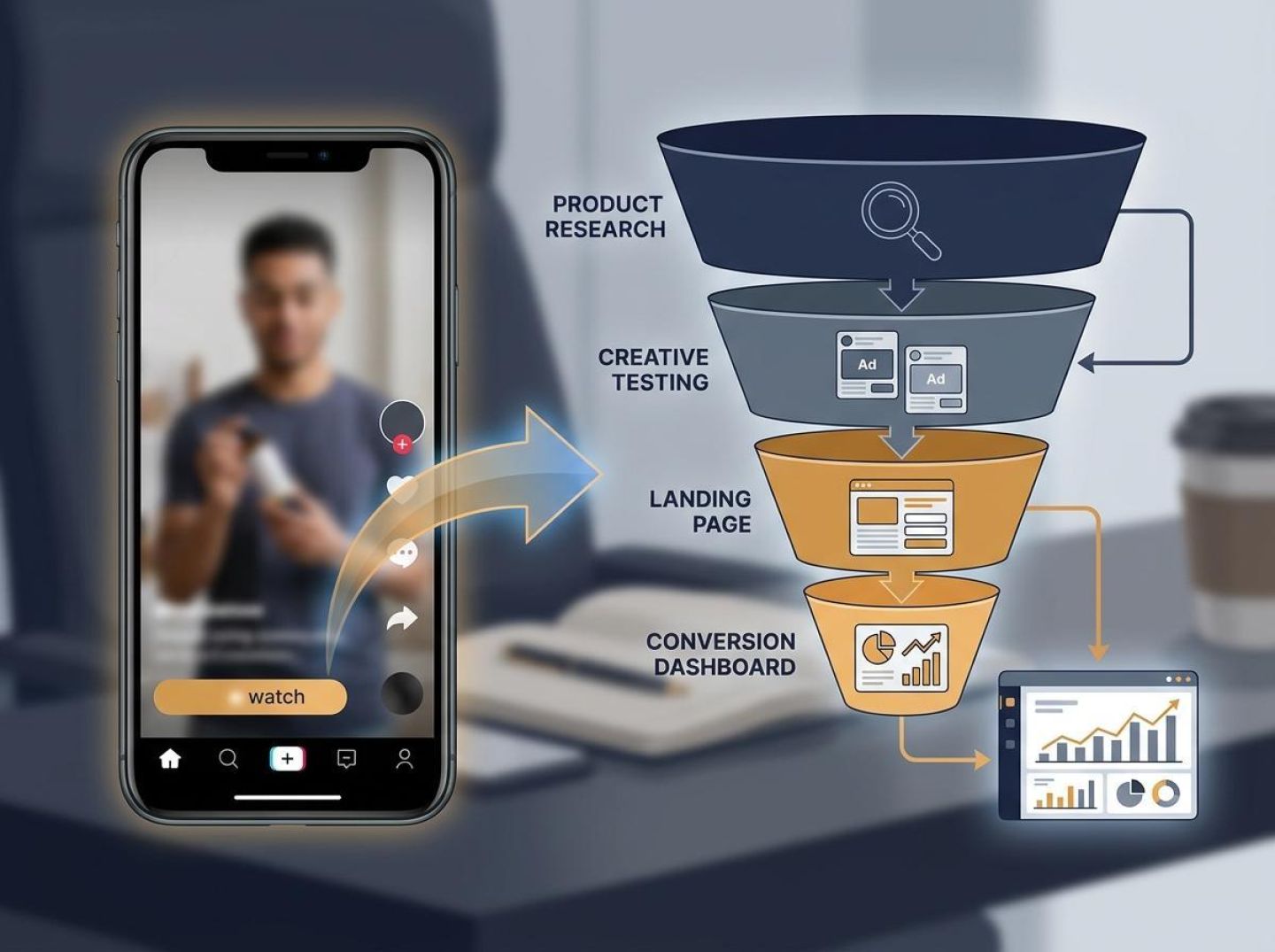
Try It FREEA product can rack up millions of views on TikTok and still fail to produce a profitable campaign. Attention is only the beginning. The real opportunity lies in identifying why a product attracts interest, understanding which creative messages motivate buyers, and turning those insights into a repeatable acquisition strategy.
For Anstrex.com/blog/what-billboard-campaigns-from-ally-primark-and-purito-can-teach-performance-marketers-about-native-ad-creative" target="_blank" rel="noreferrer noopener">performance marketers, that means moving beyond the hunt for a single viral product. TikTok can serve as a testing environment for products, offers, and creative concepts. Native advertising and pop traffic can provide additional distribution opportunities, provided the product economics, audience fit, and landing-page experience support expansion.
The goal is not to assume that a winning TikTok video will automatically work elsewhere. It is to build a disciplined process for researching demand, testing creative hypotheses, capturing buyer intent, and measuring whether a campaign remains profitable across channels.
The viral-product playbook is tempting because its promise is simple: find a trending product, create an engaging video, and scale the campaign while attention is high.
The problem is that a spike in views does not necessarily indicate purchase intent. A video may spread because it is funny, surprising, controversial, or visually satisfying. Those qualities can generate engagement without creating enough demand to support customer acquisition costs.
A more durable approach treats TikTok as one part of a larger marketing system.
Short-form videos can reveal how people respond to product demonstrations, problem-solution narratives, creator recommendations, and specific benefits. Comments and questions can also expose objections that may not appear in traditional keyword research.
These observations are useful starting points. They help marketers form hypotheses about which products deserve further investigation and which messages might motivate potential buyers.
TikTok's advertising ecosystem also offers campaign formats and conversion-focused capabilities that can support objectives beyond awareness. For an overview of the platform's advertising approach, see Neil Patel's discussion of TikTok advertising.
However, costs, available formats, and campaign performance vary by audience, market, objective, and competition. Do not assume that TikTok will always provide cheaper attention than another platform. Establish your own benchmarks and evaluate performance against the economics of your offer.
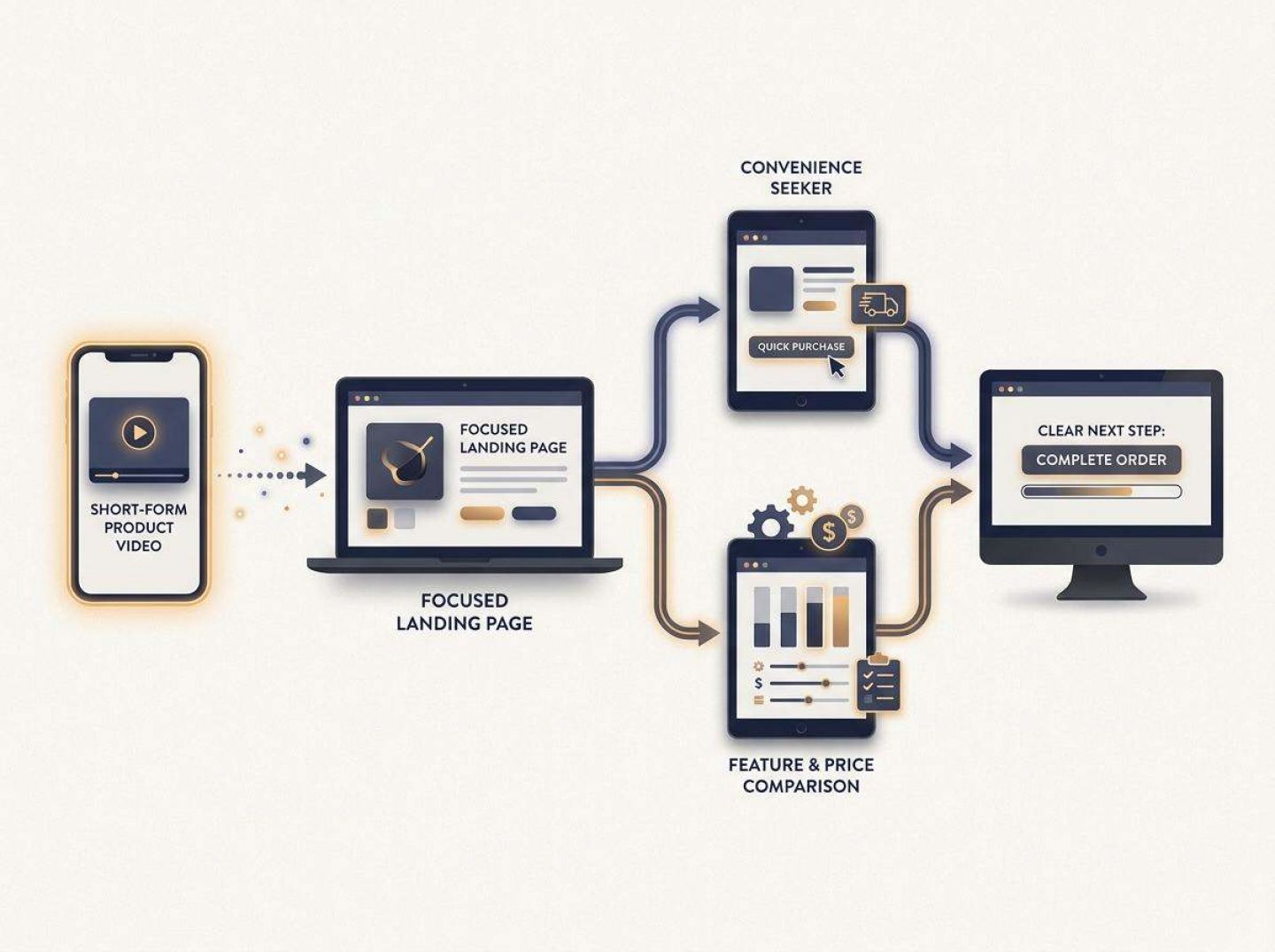
A promising creative should lead into an experience that helps interested users make a decision.
Depending on the product, that experience might be a product page, comparison guide, quiz, calculator, demonstration, or qualified lead form. The destination should match the promise made in the video and make the next action clear.
TikTok campaign examples discussed by HubSpot's Marketing Blog illustrate how interactive experiences and lead-generation design can help connect creative engagement with conversion goals.
The wider lesson is that a successful campaign should be designed around readiness, not reach alone.
A viral moment can help validate a product concept or creative angle, but its results may be difficult to reproduce. Trends change, competing advertisers enter the market, and platform distribution can fluctuate.
Instead of depending on a single breakout video, build a system that can answer three questions:
When those questions guide the strategy, virality becomes a useful source of information rather than the foundation of the entire business.
The next step is to identify products worth investigating before committing meaningful advertising spend.
TikTok can provide useful discovery signals, particularly when product demonstrations, creator recommendations, and shopping-related discussions reveal repeated interest. But no single engagement metric proves that a product is commercially viable.
Use several types of evidence together.
Start with product videos that generate questions about availability, pricing, use cases, shipping, or where to buy. Where visible, examine shopping-related interactions and the context surrounding the product.
Look for evidence that people understand what the product does and why they might want it.
Distinguish between entertainment and commercial interest. A video can receive enormous attention because the demonstration is unusual, while viewers may have little reason to purchase the item themselves.
One successful creator video can be an outlier. Multiple independent creators discussing similar products or demonstrating comparable benefits provide a broader set of observations.
Compare how each creator presents the product. Does one lead with a problem, another with a transformation, and another with a demonstration? Do comments repeatedly raise the same question or objection?
Repeated patterns can suggest which messages deserve controlled testing.
They do not establish that the product is profitable, so investigate pricing, competition, availability, fulfillment costs, and likely customer acquisition costs before proceeding.
TikTok's search bar can help uncover language that people use when looking for solutions. Try problem-oriented phrases, product categories, and common use cases.
Record relevant autocomplete suggestions, recurring questions, and the types of videos that appear. Compare those findings with search data, customer reviews, and other research sources when available.
The goal is to understand the underlying motivation rather than simply copy a trend.
A product that depends entirely on a particular joke, filter, or creator personality may be difficult to translate into another advertising format.
Before adding it to your shortlist, ask:
Visually demonstrable products can be especially useful for creative testing, but visual appeal is only one part of commercial viability.
For additional context on how brands approach product discovery and commercialization through social commerce, see Marketing Dive's coverage of food and beverage brands on TikTok Shop.
Once a product shows enough promise to investigate further, study the creative that attracts interest.
The objective is not to reproduce a creator's video word for word. It is to identify the underlying message, demonstration, and audience motivation that might explain its performance.
Build a creative pattern library that your team can use to develop original variations.
The first few seconds can determine whether a viewer continues watching. Review how successful videos introduce the product or problem.
Common hook categories include:
Record the opening, the visual, the promise, and how quickly the product appears. Then test original executions of the same broad concept.
The product itself is not always the most persuasive part of the creative.
A kitchen appliance might be presented as a way to save preparation time, simplify entertaining, or create a particular type of drink. Those benefits appeal to different motivations even though the underlying product is identical.
Use comments, reviews, and customer questions to identify which benefits appear relevant. Then create distinct angles rather than relying on superficial edits to one advertisement.
Note whether a video begins with a problem, introduces the product, shows the outcome, or answers an objection.
The sequence can help determine how to structure the next stage of the funnel. A product that requires explanation may benefit from a more detailed pre-sell page, while a straightforward product might need only a concise explanation and a focused offer.
Creators may use demonstrations, personal experiences, questions from viewers, or responses to earlier videos to make a product easier to evaluate.
For your own campaigns, use authentic testimonials, accurate product demonstrations, and substantiated claims. Do not fabricate reviews, invent customer experiences, or present staged reactions as genuine evidence.
AI-assisted tools can help organize large collections of creative examples, group similar hooks, extract themes from text, and flag unusual engagement patterns for review.
However, engagement statistics must be interpreted in context. A high comment-to-view ratio does not automatically mean a high purchase rate, and publicly visible engagement does not reveal an advertiser's actual return on investment.
Use automated analysis to prioritize human review. The final decision should account for audience relevance, claim accuracy, product economics, and the feasibility of adapting the concept to another placement.
The output of this process should be a concise creative brief containing the product, audience hypothesis, hook, benefit, demonstration sequence, objections, and proposed variations.
A strong creative can attract attention, but the landing experience determines what happens next.
The transition from TikTok to another channel should preserve the message that interested the user while helping the marketer understand what the visitor needs.
If a video demonstrates a specific product benefit, the destination should explain that benefit clearly. Sending visitors to a generic homepage can create unnecessary friction and weaken the connection between the ad and the offer.
Depending on the buying decision, a more suitable destination might be:
The best option depends on the complexity of the product and the audience's level of intent.
A click is an entry point, not a complete picture of the visitor's interest.
Where consent, platform policies, and available tools permit, measure useful actions such as product-detail views, quiz completions, selected options, add-to-cart events, and qualified lead submissions.
Use those events to understand which creative messages attract visitors who continue through the funnel.
Do not collect more personal information than necessary. Email addresses, phone numbers, and other identifiers must be handled under applicable privacy rules, consent requirements, and platform policies.
People may discover a product on TikTok and eventually purchase through TikTok Shop, a brand website, a retailer, or a marketplace. Some may research the product further before making a decision.
A robust strategy accounts for those possibilities rather than forcing every visitor into one conversion path.
Use available attribution data and customer feedback to understand how different channels contribute. Be transparent about what can and cannot be measured, particularly when a purchase happens outside your own website.
If visitors interact with different product options or consume different types of content, those behaviors may help identify their interests.
For example, one group may care most about convenience, while another wants to understand durability or compare prices. Follow-up content can address those distinct needs when the data supports the distinction and the use complies with applicable privacy requirements.
The goal is to make the next interaction more relevant—not to infer sensitive personal characteristics or make unsupported assumptions about individuals.
After a product and its creative angles have been evaluated, the next question is whether the concept can work in other acquisition environments.
Native advertising and pop traffic have different audience behaviors and placement characteristics. A TikTok creative should therefore be treated as a source of hypotheses—not as an advertisement that can automatically be copied into every channel.
Native placements often appear alongside editorial content or within recommendation feeds. Their effectiveness depends on the placement, audience, offer, and destination experience.
A useful native campaign may translate a short video into a problem-solution narrative:
The story should fit the placement without misleading readers into believing that an advertisement is independent editorial coverage.
Test several distinct angles based on observed buyer motivations. For example, a product might be positioned around convenience, ease of use, or a particular practical outcome—provided those benefits are accurate and supported.
Pop-under, redirect, and other pop placements can deliver visitors with very different levels of awareness and intent. Results depend heavily on the source, targeting, frequency, landing page, and offer.
A visitor arriving through an interruption-based placement may have less context than someone who deliberately clicked a detailed product comparison. The landing experience should account for that difference.
Keep the promise clear, minimize unnecessary friction, and monitor both conversion volume and downstream quality. Cheap visits do not guarantee profitable acquisition.
Avoid misleading redirects, forced interactions, deceptive close controls, or claims that exaggerate the product's benefits.
Tools such as Anstrex can support research into available advertising creatives, campaign angles, landing-page structures, and observed competitor activity.
Use that information to ask practical questions:
Competitive research is a source of ideas, not proof of performance. An ad appearing in a spy tool does not reveal its exact spend, conversion rate, profitability, or strategic purpose.
Create original advertisements, respect intellectual property, and substantiate all claims in your own campaign.
When possible, separate creative-angle tests from landing-page tests and offer tests. Changing everything at once makes it harder to identify what caused a performance difference.
Set a clear success metric before launching. Depending on the campaign, that might be qualified lead cost, purchase conversion rate, customer acquisition cost, or contribution margin.
Only expand a concept when the evidence supports it and the expected economics remain viable.
A cross-channel strategy only makes sense when the measurement framework follows the customer journey.
Views, clicks, and engagement can help diagnose creative performance, but they do not establish whether a campaign is profitable. A product can attract large audiences while losing money after advertising costs, fulfillment, returns, and other expenses are included.
Creative discovery
Monitor relevant engagement indicators, video retention, click-through rate, and other metrics that help explain whether the creative attracts the intended audience.
Landing-page performance
Measure page engagement, product-detail interactions, quiz completion, lead submission, add-to-cart rate, and purchase conversion where relevant.
Commercial performance
Evaluate acquisition cost, revenue, refunds, fulfillment costs, and contribution margin. Include the costs that materially affect the economics of the offer.
A low cost per click is useful only if the resulting visitors can support a commercially viable outcome.
TikTok, native advertising, and pop traffic may report conversions differently. Before comparing results, check attribution windows, event definitions, tracking coverage, and whether the same purchase can be credited to multiple platforms.
Use consistent reporting where possible, and clearly distinguish platform-reported conversions from independently reconciled business results.
If a user discovers a product on one platform and buys elsewhere, the original channel may have contributed to the sale without receiving last-click credit. Acknowledge that limitation rather than assigning unsupported revenue to an earlier interaction.
Before scaling, estimate the revenue and contribution available from a conversion, then compare it with the full cost of acquiring and serving that customer.
For a simple direct-response campaign, the core relationship is:
Contribution after acquisition = revenue − product and fulfillment costs − other variable costs − advertising cost.
The precise calculation will vary by business model. Include relevant transaction fees, returns, commissions, and other variable expenses where applicable.
A campaign should not be called profitable based on gross revenue or a platform's return-on-ad-spend figure alone if substantial costs remain unaccounted for.
A single strong day or viral creative may be an outlier. Review performance across enough observations to understand whether the result is stable and whether increasing spend changes acquisition costs or audience quality.
Use controlled tests, clear thresholds, and regular reviews. Expand budgets gradually when the evidence supports it, and retain the ability to pause campaigns that no longer meet your criteria.
The strongest system connects research, creative development, landing-page performance, and commercial results.
If a product attracts attention but fails to convert, investigate whether the issue lies in audience intent, the offer, the landing page, pricing, or trust. If a creative attracts fewer clicks but produces better customers, its lower volume may still be commercially valuable.
Feed those findings back into product selection and creative planning. Over time, the advantage comes from making better decisions—not from finding one video that performs unusually well.
TikTok can be a valuable environment for discovering products, testing creative messages, and observing how audiences respond to different benefits. But a burst of attention does not guarantee sustained demand or profitable acquisition.
The opportunity is to turn those observations into a repeatable process.
Research evidence of buyer interest. Study creative patterns without copying competitors. Build a landing experience that captures meaningful intent. Adapt validated concepts for native advertising and pop traffic rather than assuming that one platform's results will transfer automatically. Then measure the entire funnel using consistent definitions and realistic cost assumptions.
Competitive intelligence can help you find ideas worth testing, while disciplined measurement tells you which ideas deserve more investment.
The objective is not to chase every viral product. It is to build a marketing system that learns from attention, converts relevant demand, and expands only when the economics support it.
Receive top converting landing pages in your inbox every week from us.
Must Read
Viral views alone do not create a sustainable performance marketing strategy. Learn how to research promising TikTok products, identify repeatable creative patterns, capture buyer intent, and adapt validated concepts for native advertising and pop traffic. Build a full-funnel process that measures qualified conversions and profitability rather than relying on short-lived viral spikes.
Marcus Chen
7 minOct 28, 2026
Must Read
Search rankings and organic clicks can change even when your content is valuable. Discover how to build resilient marketing funnels that connect native ads, push and pop traffic, TikTok creative, and SEO into a measurable system designed to turn attention into conversions.
Samantha Reed
7 minOct 27, 2026
How-To
Discover how marketers can use retail media, connected TV (CTV), and checkout advertising to uncover promising holiday campaign angles before scaling into native, push, pop, and TikTok traffic. Learn how to analyze winning messages, offers, creative formats, and funnel sequences with competitive ad intelligence and apply those insights to faster, more disciplined campaign testing.
Liam O’Connor
7 minOct 25, 2026