10 minOctober 25, 2026

Our spy tools monitor millions of native ads from over 60+ countries and thousands of publishers.
Get StartedThe big retail and CTV platforms all tell the same story with different logos: own the screens, own the pipes, own the checkout.
In connected TV, that “screens, pipes, checkout” stack is no longer a theory; it’s the operating system for giants like Anstrex.com/blog/shopify-vs-amazon-why-some-sellers-are-abandoning-amazon-for-shopify" target="_blank" rel="noreferrer noopener">Amazon and Walmart. As one analysis of CTV consolidation puts it, Amazon assembled its stack piece by piece: Fire TV and Prime Video as the screen, its DSP and ad tech as the pipes, and the retail business as the checkout, so an advertiser can buy CTV, target on purchase behavior, and see the downstream transaction without ever leaving Amazon’s walls, as VideoWeek observed. Walmart took the shortcut via acquisition: Vizio brings the TV OS, home‑screen inventory and viewing data; Vibe layers in self‑serve buying and execution; Walmart Connect and the stores themselves are the checkout. Same architecture, different badge.
From a media‑owner perspective, that stack is about control and margin. From a performance buyer’s perspective, it’s an arbitrage map.
If you’re used to buying native, push, and pop traffic on open exchanges, think of these closed ecosystems as extremely expensive but extremely accurate research labs. They compress what used to be weeks of guesswork into a few days of data: which storyboards stop thumbs, which offers pull people through to payment, which audiences and contexts actually move product. The giants use that insight to optimize their own stack. You can use it to “spy, steal, scale.”
Spy: Use screens and checkout as a prediction engine
On CTV, the “screen” is where ideas get battle‑tested with real people, at real frequency, with real creative variation. CTV’s pitch to brands is that it’s not just GRPs anymore; it can prove incremental sales impact with randomized experiments built into delivery, turning premium video into a causal testing ground for what actually changes behavior, as.
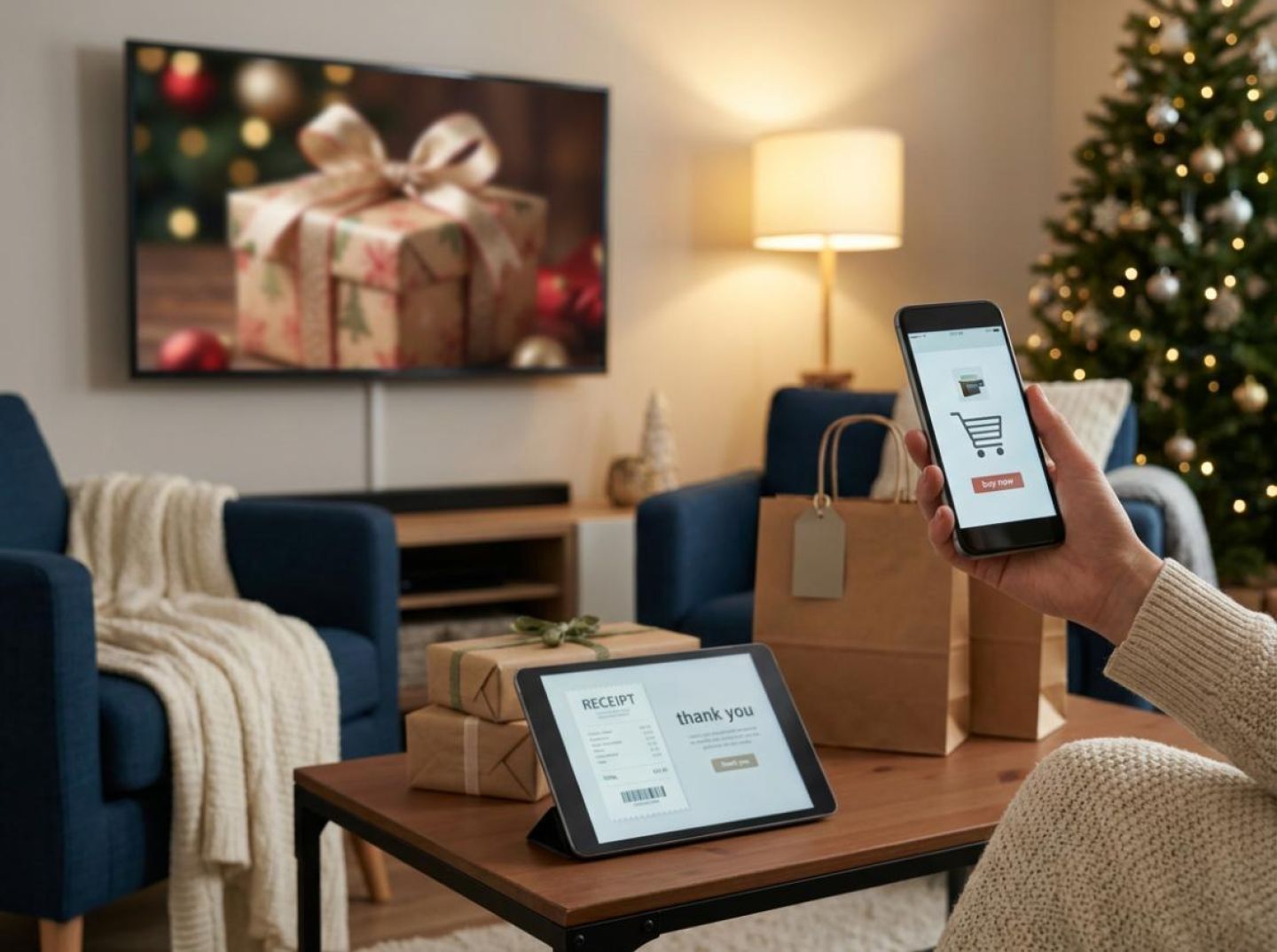
At checkout, the same thing is happening in miniature. Holiday media plans increasingly treat the moment of transaction as the center of gravity because attention there is loaded with intent and emotion: a customer is deciding, paying, and often feeling a bit of joy or relief, as Marketing Dive described. When a new‑to‑brand visitor sees your offer at checkout and says yes, that is one of the cleanest possible signals that the message, timing, and value proposition are aligned.
Your “spy” job is to treat these moments as structured experiments. Let the platforms do what they’re built to do—optimize creative and placements to sales—and then read those outputs like a trader reading order flow: which angles clear volume, which ones die on the vine, and in what combinations of audience and context.
Steal: Ethically rip the playbook, not the pixels
You can’t export Amazon’s audiences or Walmart’s identity graph. You can absolutely export the learnings. When a particular TV storyline consistently shows incremental lift in CTV experiments, that is a signal that the underlying hook—“solve this anxiety,” “upgrade this ritual,” “beat the holiday rush this way”—has real causal power, not just correlation, as the focus on incrementality and experimentation in CTV is making clear in the work.
Similarly, if a specific checkout placement consistently drives add‑ons, sign‑ups, or upsells across different basket compositions, you’ve identified an offer construct that travels: the way the incentive is framed, the urgency, even the microcopy that turns a passive buyer into an active one, echoing the “transaction moment” mindset.
Stealing ethically means you replicate the architecture of what worked—the angle, sequence, objection‑handling—not the assets or proprietary data. Think of your CTV and checkout wins as templates for native headlines, prelanders, push notification copy, and pop entry hooks.
Scale: Push proven winners off‑platform
The whole point of spying and stealing inside “screen/pipe/checkout” walled gardens is to scale what works into cheaper, more flexible channels. Once a hook proves it can move people to checkout in an environment where every impression is expensive and heavily scrutinized, you have a high‑conviction candidate for arbitrage on native, push, and pop.
Holiday advertisers are already thinking this way, treating TV as a performance channel engineered to drive people directly to digital checkout, then retargeting those visitors with follow‑up impressions, creating a loop from TV to site to purchase that Marketing Dive summarized. You can extend that loop further: use CTV and checkout to validate hooks and offers, then syndicate those same messages into open‑web native placements, high‑volume push traffic, and aggressive pop campaigns where your media costs are lower and your optimization cycles are faster.
The retail and CTV giants are racing to own every screen, pipe, and checkout because that’s where value accrues for them. For you, the performance buyer, that same map shows exactly where to spy on what actually works, what to ethically steal from the results, and how to scale those proven ideas into the messy, underpriced corners of the open web.
Retail media is basically running your funnel in public. Every sponsored tile, end-cap video, and “people also bought” carousel is a live, paid A/B test of audience, offer, and message. The trick is learning to read those signals the way a performance marketer reads a spy tool – and then rebuilding the same funnel logic inside native and push.
Retailers are already thinking full‑funnel. At Rethink Retail in New York, Google’s Ads Liaison and product leaders talked about holiday “full‑funnel strategies” that stretch from awareness to conversion within the same commerce ecosystem, underscoring how on‑site search, display, and promotions now behave like an integrated system rather than isolated placements, as summarized in a recent Search Engine Roundtable recap. Retail media networks like Lowe’s One Roof Media, Walmart Connect, and Amazon Marketing Cloud are built to do the same thing: move shoppers from discovery to checkout without ever leaving the retailer’s owned stack.
To reverse‑engineer that into arbitrage, start by treating each retail ad as a data point in a funnel blueprint:
With Anstrex, you can operationalize this spying. First, catalog the retail insights: make a simple spreadsheet of recurring angles (“save time,” “pro‑grade,” “family safe”), offers (BOGO, bundles, financing), and intent buckets (high‑intent search, mid‑intent category browsing, low‑intent homepage display). Then jump into Anstrex’s native and push intelligence and filter by those same brands, angles, or product types. You’ll often see the exact messages retailers are scaling on‑site mirrored in off‑site native and push creatives.
This is where arbitrage starts to pay off. Instead of brainstorming from scratch, you:
2. Steal the sequencing. Retail media already behaves like a sequenced funnel: awareness video → on‑site banner → sponsored product → checkout upsell. The convergence of CTV and retail media means those sequences are measured all the way to offline sales, as AdExchanger’s interview with Walmart Connect and Magnite makes clear. Rebuild that same journey with arbitrage traffic: native advertorial (awareness) → listicle or quiz (consideration) → direct offer page (decision) → push follow‑ups or pop remarketing (checkout nudge).
3. Steal the checkout psychology. Holiday checkout media is prized precisely because it rides the “joy of checking out” – that emotional high when a shopper has resolved uncertainty and is ready to say yes again. A recent piece on holiday media planning argued that checkout is where advertisers can insert “useful” offers while customers are already in a buying mindset, framed as an expansion of “the Transaction Moment™” across selection and confirmation screens, in Marketing Dive’s discussion of checkout media. Use Anstrex to find push creatives and landing pages that mimic that energy: low friction, clear add‑on value, and strong social proof right at the moment you re‑engage a clicker or bounce.
The goal isn’t to copy a single ad; it’s to copy a system. Retail giants are spending eight‑ and nine‑figure budgets to discover which audiences, offers, and narratives convert during peak holidays. With a disciplined Anstrex workflow, you can quietly deconstruct those blueprints and rebuild them as native and push funnels that behave like mini retail media networks – only this time, you own the pipes.
Holiday checkout is one of the few moments in the season when you don’t have to fight for attention — you’re borrowing it from the transaction itself. As one analysis of holiday media plans argues, the biggest opportunity isn’t out in the feed; it’s “within the shopping experience itself, at checkout,” where people are no longer just scrolling, they’re buying and open to “something useful” layered onto that moment of action, as.
That emotional context is gold for arbitrage. Holiday checkout often sits at the intersection of relief (“I found the right thing”), satisfaction (“I got it on sale”), and mild anxiety (“Did I forget someone?”). Reaching that page is a small win after comparison shopping, promo-code hunting, and inventory FOMO. If you treat installed pops, interstitials, and TikTok ads as “remote checkouts” instead of random interruptions, you can mirror that psychology and timing.
Think of checkout media as a template for hyper-timed pops. On a retailer’s confirmation page, a bank might surface a card perk or BNPL option; a restaurant might offer a post‑purchase treat. These aren’t category matches so much as “commerce‑adjacent utilities” built around who the shopper is and what they’re doing in that exact second, a pattern Marketing Dive describes when it talks about financial services, subscriptions, and restaurants “introducing something useful” at the Transaction Moment™.
You can recreate that same dynamic in pops and interstitials by keying off checkout‑like behaviors instead of generic pageviews or session starts. For example:
This is where checkout media becomes a low‑risk testing ground. On‑site, you already see which holiday checkout tiles, upsells, and add‑ons win in a context of high attention and clear intent. Those winners are effectively pre‑validated scripts for your pop and interstitial monetization. You’re not guessing which message might work in a pop — you’re syndicating the variants checkout has already stress‑tested in real commerce.
The same logic applies to TikTok. Holiday CTV and retail media are increasingly engineered around “driving consumers directly to checkout,” a shift that recent holiday research highlights when it describes TV’s evolution from pure awareness into a performance channel optimized for site visits and purchases, as Marketing Dive reports. TikTok is simply the thumb‑native, sound‑on version of that same behavior: short bursts of attention, quickly resolved into a tap to buy or save.
When you study holiday checkout placements, you see a few repeatable creative moves you can port into TikTok without feeling spammy:
Under the hood, retail media is proving that “context‑sensitive brand‑building” works best when the context is not abstract demographics but live commercial behavior, a point Adweek makes in its argument that retail media reaches high‑value shoppers at “opportune moments.” For arbitrage, that means your holiday pops, interstitials, and TikToks should be triggered by actions that rhyme with checkout: cart views, wishlists, booking flows, tracker visits, even email receipts.
Do that, and you stop treating these formats as random attention theft. Instead, they become off‑site extensions of the same joyful, commerce‑adjacent moments checkout media already owns — short, well‑timed invitations to upgrade a decision your customer just made, rather than distractions from what they came to do.
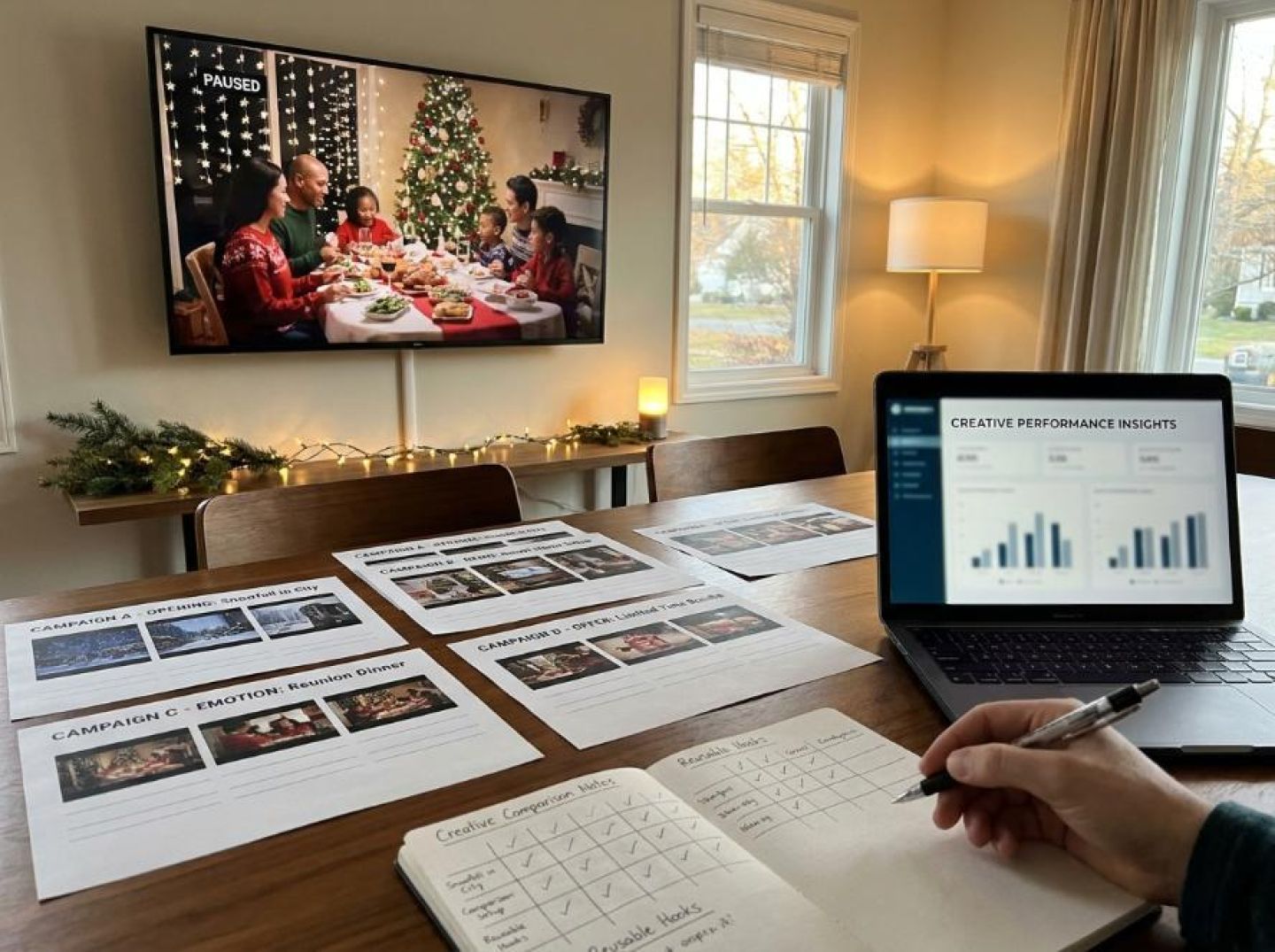
CTV holiday campaigns are secretly the biggest multivariate creative tests you’ll run all year. You’re pumping high-production spots into a lean‑back environment, at scale, against broad household targets. That’s not just “brand building.” Framed properly, it’s a randomized, always‑on split‑test of which stories, lines, visuals, and offers actually move people.
CTV is structurally built for experimentation. As one analysis of the medium argues, CTV will never out‑Google Google on last‑click attribution; its natural advantage is “causal credibility” through randomized controlled designs where some households or geos see a campaign and others don’t, allowing you to isolate lift with scientific rigor, as AdExchanger explains. Holiday buys pour budget into those designs, giving you huge sample sizes and rapid feedback on what your creative is doing to outcomes you care about: incremental revenue, sign‑ups, or store visits.
At the same time, CTV is being wired directly into the “screen, pipes, checkout” triad that platforms like Walmart and Amazon already control. Walmart’s acquisition of Vizio and ad‑tech firm Vibe, for example, gives it the TV operating system, the ad‑delivery pipes, and the retail checkout data in one stack, so an advertiser can run premium video and watch downstream sales without leaving the ecosystem, as VideoWeek describes. That means your holiday creatives aren’t just getting views; they’re being evaluated against real purchase behavior — essentially pre‑scoring which narratives are worth redeploying into more aggressive performance channels.
The performance arbitrage play is to stop treating CTV as a single “hero” story and start decomposing it into modular parts you can reuse in native, push, pops, and TikTok. Think of each 15–30 second holiday spot as a container for:
Holiday rotation does the rest. Your CTV plan almost certainly includes multiple creatives, cutdowns, and versions tailored to different dayparts, publishers, and audiences. That’s a natural randomized test of which combinations of hook + proof + offer lift outcomes when everything else is held relatively constant, a structure similar to how geo‑based experiments vary spend and read back total business impact, as.
Once the holiday flights are live, build a simple “message leaderboard” instead of a “spot leaderboard.” Don’t ask, “Which ad won?” Ask:
Because emerging CTV stacks let you connect exposure to checkout‑linked outcomes, the way Walmart and Amazon already do across their ecosystems, you can attribute those lifts to narrative ingredients, not just to media weight, as.
Then turn those ingredients into performance‑channel assets:
The key is discipline. Treat your holiday CTV plan as the world’s fanciest split‑test, not just a reach play. Use the randomized structure and checkout‑linked measurement that platforms are racing to consolidate, described by both VideoWeek and AdExchanger, to identify which narratives actually create lift. Then redeploy those winning story modules into the cheaper, faster channels — native, push, pops, and TikTok — where you can scale them aggressively for arbitrage while everyone else is still arguing about which 30‑second spot “felt most on brand.”
Receive top converting landing pages in your inbox every week from us.
How-To
Discover how marketers can use retail media, connected TV (CTV), and checkout advertising to uncover promising holiday campaign angles before scaling into native, push, pop, and TikTok traffic. Learn how to analyze winning messages, offers, creative formats, and funnel sequences with competitive ad intelligence and apply those insights to faster, more disciplined campaign testing.
Liam O’Connor
7 minOct 25, 2026
Must Read
Learn how to build a responsible competitive ad intelligence workflow for an advertising landscape increasingly shaped by AI-generated creatives, disclosure labels, and digital watermarks. Discover how to analyze competitors’ AI usage, identify creative patterns, and develop ethical guardrails that support transparent, compliant, and differentiated campaigns.
Dan Smith
7 minOct 23, 2026
Most Read
Discover how performance marketers can build cross-channel verification journeys that turn skeptical prospects into confident buyers across TikTok, native, push, and pop advertising. Learn how to coordinate creative messaging, reinforce trust at every touchpoint, and measure the hidden influence of fragmented customer journeys using competitive ad intelligence.
Elena Morales
7 minOct 20, 2026