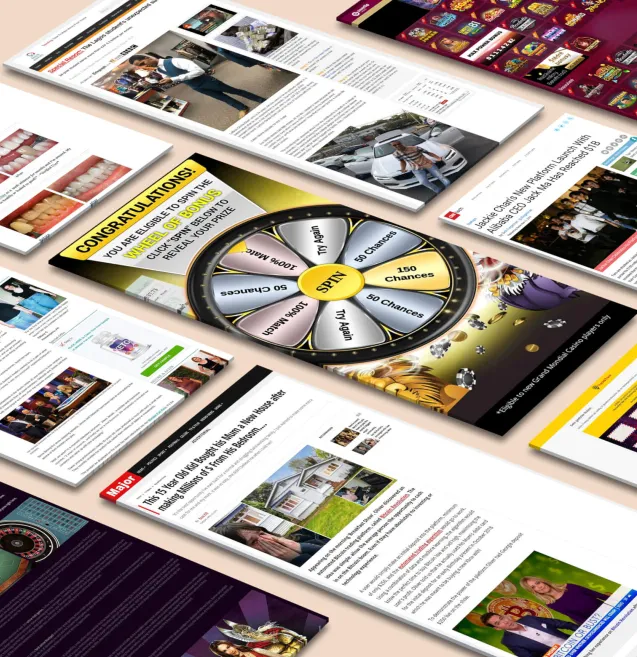
Our spy tools monitor millions of native ads from over 60+ countries and thousands of publishers.
Get StartedAI in advertising has transformed the world of digital marketing, providing businesses with unmatched abilities to connect with their audiences. For companies wanting to remain competitive in this rapidly changing environment, it is essential to understand AI-powered marketing strategies.
Key statistics show the rapid growth of AI in advertising. In 2021, the market was valued at approximately $15.84 billion and is projected to skyrocket to around $107.5 billion by 2028. This explosive growth highlights the significance of incorporating AI technologies into marketing strategies.
In fact, as we move further into 2024, AI is set to become the foundation of innovation in digital advertising, reshaping strategies and redefining success metrics.
By examining these aspects, you will gain a thorough understanding of how AI-powered marketing is transforming the industry, allowing businesses to achieve greater efficiency, improved targeting, and higher returns on investment.
Artificial intelligence (AI) in advertising refers to the use of complex algorithms and machine learning methods to improve different parts of marketing campaigns. AI-driven advertising technology includes various tools and systems created to enhance targeting, personalization, and performance measurement. The main elements are:
Machine learning is essential for improving ad performance. Here are the key ways it contributes:
By combining these technologies, advertisers can create highly effective campaigns that not only reach the right audience but also deliver the right message at the right time. This level of precision is transforming the landscape of digital marketing, making AI an essential tool for modern advertisers.
The history of AI in marketing is a journey marked by rapid technological advancements and increasing sophistication. Initially, AI's role in marketing was limited to basic data analysis and rudimentary customer segmentation. However, as machine learning algorithms matured, their application within the industry grew more complex and impactful.
The introduction of expert systems laid the groundwork for AI in marketing. These systems used rule-based algorithms to simulate human decision-making processes, offering early insights into consumer behavior.
The rise of digital marketing saw AI being used for email campaigns and online advertisements. Basic recommendation systems emerged, utilizing collaborative filtering to suggest products based on user preferences.
The advent of big data revolutionized how marketers utilized AI. Advanced machine learning models could now process vast amounts of information, leading to more accurate predictive analytics and customer insights.
This decade marked a significant leap with the integration of deep learning technologies. Natural Language Processing (NLP) and Natural Language Generation (NLG) enabled chatbots and virtual assistants to improve customer interaction. Programmatic advertising also gained traction, automating ad placements based on real-time bidding.
Generative AI began transforming content creation, allowing for hyper-personalized messaging at scale. Predictive analytics became more sophisticated, enabling marketers to anticipate consumer needs with greater precision. Integration with AR and VR opened new avenues for immersive advertising experiences.
These milestones highlight how AI technologies have evolved from basic analytical tools to essential components of modern marketing strategies. Today, businesses leverage AI not just for efficiency but also for creating deeply personalized customer experiences that drive engagement and loyalty.
Programmatic advertising represents a significant advancement in the realm of digital marketing, automating the process of buying and selling ad space through AI-driven technology. Unlike traditional methods that involve manual negotiations and placements, programmatic advertising leverages machine learning algorithms to streamline ad management, making it more efficient and effective.
Machine learning algorithms play a pivotal role in enhancing the efficiency of ad management. These algorithms process and analyze vast datasets to make informed decisions about which ads to display, when, and to whom. This level of automation offers several advantages:
Programmatic advertising exemplifies how AI in advertising is revolutionizing traditional marketing paradigms through predictive analytics and automated processes. The integration of machine learning algorithms not only enhances operational efficiency but also drives better outcomes by aligning ad delivery with user intent.
Accurate audience segmentation is crucial in maximizing the effectiveness of any advertising campaign. By dividing a broad consumer base into smaller, more manageable segments, you can tailor your marketing efforts to meet the specific needs and preferences of each group. This leads to higher relevance scores and better engagement rates.
Predictive analytics plays a significant role in this process. By analyzing historical data, predictive models forecast user behavior, enabling you to design more targeted ad campaigns. For instance:
Hyper-personalization techniques go beyond basic demographic information. They incorporate real-time data to adjust content dynamically, ensuring each user receives an ad that resonates with their unique interests and behaviors.
To improve relevance scores while managing ad frequency effectively, consider implementing the following techniques:
Incorporating these strategies allows for a more refined and efficient approach to audience targeting. By leveraging advanced technologies like predictive analytics and hyper-personalization, you can ensure your advertising efforts are both impactful and resource-efficient.
Generative AI technologies are changing how businesses create content for digital advertising. With the help of machine learning, generative AI can generate large amounts of high-quality content quickly, saving time and resources compared to traditional methods.
Two important technologies that make this possible are Natural Language Processing (NLP) and Natural Language Generation (NLG):
Generative AI offers several advantages for advertisers:
Here are some real-world applications of generative AI in advertising:
The rise of generative AI also goes hand in hand with the growth of native advertising, where ads are designed to blend seamlessly with the content they appear in. This strategy not only improves user experience but also boosts ad engagement rates.
Generative AI's ability to streamline content creation processes is a game-changer for digital advertising. This technology not only enhances efficiency but also ensures messages are relevant and engaging for target audiences across different channels.
Discover use cases of AI's role in digital marketing campaigns through the success stories of companies like Vanguard and HOLT CAT. These organizations have effectively harnessed AI tools to drive their advertising initiatives, resulting in notable improvements.
Vanguard, a leading investment management company, leveraged AI to enhance client engagement. By integrating machine learning algorithms into their customer service operations, Vanguard significantly improved the personalization of their communication strategies.
HOLT CAT, a prominent Caterpillar dealership, adopted AI-powered tools to streamline their ad campaigns. They employed programmatic advertising techniques to automate ad placements across various platforms.
These examples underscore the transformative impact of AI in digital marketing. By embracing AI-driven strategies, companies can achieve substantial improvements in both engagement metrics and overall campaign effectiveness.
Ethics in AI marketing practices is a crucial consideration for modern advertisers. Leveraging machine learning models can lead to ethical dilemmas, including copyright infringement risks and biases inherent within training datasets.
To ensure responsible usage, advertisers can adopt the following strategies:
Ensuring these practices helps maintain trust and integrity in AI-powered marketing initiatives.
Embracing emerging technologies such as generative models opens up new opportunities for businesses looking to stay competitive. AI in advertising not only improves efficiency but also leads to significant increases in return on investment.
To learn more and stay informed about the future of marketing strategies powered by artificial intelligence, check out additional resources available online. Staying engaged with this constantly evolving field can offer valuable insights and practical tools for your marketing efforts.
Receive top converting landing pages in your inbox every week from us.
Featured
This article explores why AI-generated ad copy that sounds polished and persuasive can still quietly destroy advertising ROI when it lacks validation from real campaign performance data. It explains how marketers fall into the “fluency trap,” mistaking smooth language for effective messaging, while AI-generated sameness creates a dangerous cycle of declining differentiation and rising acquisition costs. The article also highlights how tools like Anstrex help advertisers validate AI-generated copy against real-world competitive ad data, uncover proven messaging patterns, and build campaigns grounded in actual market behavior instead of AI guesswork.
Elena Morales
7 minMay 24, 2026
Most Read
This article explores why AI tools alone are no longer a competitive advantage in advertising as generative AI becomes standard infrastructure across Meta, Google, TikTok, and other ad platforms. It explains how the real differentiator now lies in the quality of the competitive intelligence, performance data, and strategic inputs marketers feed into AI systems. The article also highlights how tools like Anstrex help advertisers bridge the gap between AI-generated content and profitable campaigns by supplying real-world creative intelligence, validated ad structures, and market-tested insights.
Liam O’Connor
7 minMay 24, 2026
How-To
This article explores why performance marketers should stop dismissing Cannes Lions campaigns as irrelevant “brand advertising” and instead treat them as a valuable source of creative strategy intelligence for native ads. It breaks down the structural patterns behind award-winning campaigns — including tension-driven headlines, editorial-style visuals, curiosity gaps, and identity-based emotional hooks — and explains how these can be adapted into scalable native advertising campaigns. The article also highlights how tools like Anstrex help marketers identify Cannes-level creative patterns already proving profitable across live native ad networks.
Priya Kapoor
7 minMay 24, 2026