

11 minMay 24, 2026

Our spy tools monitor millions of native ads from over 60+ countries and thousands of publishers.
Get StartedAsk a performance marketer what they think of Cannes Lions and you'll get an eye-roll so dramatic it could power a split test. The festival is "brand fluff," they'll say — a week of rosé-fueled back-patting on the French Riviera that has nothing to do with the gritty realities of click-through rates, cost-per-acquisition targets, and affiliate payouts. It's a fair instinct. When your livelihood depends on dashboards that refresh by the minute, a gilded trophy for "creative excellence" can feel like a participation award from another planet.
But that instinct is wrong — or, at the very least, dangerously incomplete.
Consider what a Cannes jury actually is. It's a panel of senior creatives, strategists, media buyers, and brand leaders who have spent entire careers dissecting what makes people stop scrolling, lean in, and act. These are not civilians charmed by a pretty picture; they are the most ad-literate professionals on earth, professionally trained to be skeptical of hollow spectacle. When a piece of work survives their scrutiny — multiple rounds of debate, scoring, and re-evaluation — it has cleared a skepticism bar that dwarfs anything your target audience will ever apply. In effect, a Cannes jury functions as a proxy focus group with the harshest possible grading curve.
That matters more than ever in native advertising, where the creative is the strategy. As Voluum's native advertising guide puts it bluntly, you and your competitor get the same amount of pixels for an ad — the only differentiator is your creativity. When the media container is identical for everyone on a content recommendation widget or an in-feed placement, no amount of bid optimization can rescue a dull headline or a lifeless thumbnail. Creative quality isn't a nice-to-have; it's the entire competitive moat.
And here's the part that should make performance marketers sit up: audiences themselves have already moved past the "sponsored content is inherently bad" reflex. Research consistently shows that consumers don't care if content is sponsored by a brand as long as the message itself delivers genuine value. That finding collapses the supposed wall between "brand storytelling" and "direct-response creative." If the message is good enough, the disclosure label becomes invisible.
The market has noticed. Native advertising now accounts for the dominant share of display spend, and as Basis has documented, native ads register an 18 percent higher lift in purchase intent compared to banner ads — a stat that should translate directly into affiliate and performance KPIs. Meanwhile, the brands winning at Cannes aren't floating above commercial reality. When AB InBev earned Creative Marketer of the Year for a historic third time, its own CEO of marketing made the connection explicit: creativity, he explained, is always in service to driving growth, crediting the approach with delivering all-time high revenues. Cannes Lions CEO Simon Cook echoed the point, noting that AB InBev had made creativity "scalable, measurable, and sustainable" — language pulled straight from a performance marketer's vocabulary.
So when a campaign wins a Lion, what you're really looking at is a creative hypothesis that has been stress-tested by experts, validated by engagement data (because shortlist submissions increasingly require proof of results), and distilled into a replicable structure. Performance marketers who wave this off as irrelevant are leaving free creative R&D on the table — research funded by someone else's seven-figure production budget, packaged into case studies you can dissect over lunch.
The question isn't whether Cannes winners are relevant to your native campaigns. It's why you haven't been reverse-engineering them already.
Every June, the Cannes Lions jury hands out metal cats to campaigns that look, on the surface, like unrepeatable bolts of genius. They're not. Strip away the celebrity directors, the seven-figure production budgets, and the emotional case-study films scored to piano music, and what remains are structural patterns — recurring moves that show up again and again across winning entries in categories like Creative Data, Social & Influencer, Digital Craft, and the former Creative Effectiveness Lions. Once you see these patterns, you can map each one directly onto the components of a native ad: the thumbnail, the headline, and the landing page opening. Here are the five that matter most.
1. Tension-Driven Headlines. The strongest Cannes entries almost always begin with a friction point — a claim that contradicts received wisdom or sets two ideas on a collision course. Think less "Brand X Helps You Sleep Better" and more "The Mattress Company That Wants You to Stay Awake." Tension creates a micro-promise that the content will resolve a surprising conflict. For performance marketers, this translates directly into headline copy: lead with the contradiction, not the benefit. As Voluum's native advertising guide puts it, you and your competitor get the same number of pixels for an ad, and what differentiates you is creativity — specifically, the willingness to experiment with headline and image combinations until you discover what resonates.
2. Editorial-Native Visual Language. Winners in Digital Craft and branded content categories rarely look like ads. Their thumbnails borrow the visual grammar of the publisher environment — photojournalistic crops, muted color palettes, candid human moments instead of polished product shots. The underlying principle, as Basis Technologies explains, is non-disruption: the most effective native ads blend naturally into the form and function of the editorial habitat in which they live. For your next Taboola or Outbrain campaign, that means auditing the publisher's actual content thumbnails and reverse-engineering their aesthetic before designing yours.
3. Utility-First Value Propositions. Consider McDonald's Gamifries, a campaign highlighted by BBH Singapore's CCO Sascha Kuntze as a "genuinely useful, open-source product" that reached an audience notoriously hostile to brand intrusion — gamers — with zero media spend. The takeaway for native practitioners: when the ad itself is the utility (a tool, a template, a calculator, a cheat sheet), the line between content and conversion collapses. Your landing page opening should deliver value before it asks for anything.
4. Identity-Based Emotional Hooks. Cannes juries consistently reward work that makes people feel seen — campaigns anchored in a specific community's self-concept. AB InBev's repeated wins, for instance, reflect what Cannes Lions CEO Simon Cook described as creativity that is "scalable, measurable and sustainable" across hundreds of brands. The scalability comes from identity targeting: each brand speaks to a distinct tribe. In native, this means thumbnails and headlines should signal "this is for people like you" rather than "this is from Brand X."
5. Narrative Curiosity Gaps. The final pattern is the oldest storytelling trick in the book, deployed with surgical precision: withhold one critical piece of information. Winning case studies open with a question the viewer can't answer without engaging. In a native ad, the curiosity gap lives in the space between the headline and the landing page. The headline implies a revelation; the first paragraph must begin delivering it immediately, or you lose the click you paid for.
These five structures aren't a creative straitjacket. They're a starting taxonomy — a shared vocabulary that lets you move from "we need a better ad" to "we need a stronger curiosity gap in the headline and a more editorial thumbnail." The magic was never magic. It was architecture.
You don't need a Croisette badge or a DDB retainer to pull apart a Grand Prix winner and find out what makes it tick. What you need is thirty minutes, a notepad, and a willingness to treat award-winning creative not as untouchable art but as a system of discrete, transferable decisions. Reverse-engineering isn't copying — it's extracting the principle behind each creative choice and re-expressing it within the constraints of a 600×400 thumbnail and a seventy-character headline. The difference between a $2M branded content piece and an in-feed native ad is scope, not strategy.
Here's the process, broken into five repeatable steps you can run on any Cannes case study — or any competitor ad that catches your eye.
Step 1: Name the Single Controlling Emotion (5 minutes). Watch the case film or read the campaign summary and ask one question: what does the audience feel before they think? McDonald's Gamifries, for instance, triggers a mix of surprise and belonging — gamers suddenly see a fast-food brand speaking their language with a genuinely useful, open-source product rather than a cringe-worthy sponsorship logo. Write that emotion down in two words or fewer. It becomes the emotional trigger your native variants must preserve.
Step 2: Map the Message Hierarchy (5 minutes). Every great campaign says several things, but it says them in a deliberate order. Identify the primary claim (what the brand promises), the proof point (why you should believe it), and the reframe (the unexpected twist that earns attention). AB InBev's multi-year approach — embedding brands like Bud Light and Stella Artois into Netflix shows — layers cultural relevance on top of product presence, a hierarchy that Cannes Lions CEO Simon Cook described as making "creativity scalable, measurable and sustainable." In a native ad, you only have room for one layer at a time: pick the element that carries the most curiosity or tension and lead with it.
Step 3: Isolate the Visual Hook (5 minutes). Crop the hero image to thumbnail size — literally. If the visual still tells a story at 300 pixels wide, you've found a composition principle worth borrowing. Look for contrast, a single focal subject, and implied motion. If it turns to mush at small scale, the principle is cinematic, not thumbnail-native, and you need to substitute an equivalent image concept.
Step 4: Extract the Headline Formula (5 minutes). Translate the campaign's core tension into headline scaffolding. Most Cannes winners follow one of three formulas: Unexpected Juxtaposition ("Fast Food × Pro Gaming"), Specificity + Intrigue ("1.2 Billion Impressions, Zero Media Spend"), or Identity Callout ("Gamers Won't Believe Who Made Their Newest Accessory"). Write at least four headline variants per formula. As Voluum's native advertising guide stresses, you should add at least a few more image and headline variations every couple of days because there is a strong correlation between regularly refreshing ads and sustained performance.
Step 5: Build a Test Matrix and Launch (10 minutes). Pair each headline variant with two to three thumbnail concepts and assign them to separate ad sets. This is where the Cannes inspiration becomes a media-buying discipline. Follow a rigorous split-testing protocol to discover top-converting segments and placements, checking data daily, especially in the first seventy-two hours. Kill underperformers fast, scale the winners, and — critically — document which principle from the original campaign each winning variant expressed. That insight compounds: the next time you crack open a Cannes case study, you'll already know which structural levers move your specific audience.
Thirty minutes, five steps, and a handful of testable native ads built on the same strategic DNA that earns Lions — minus the rosé budget.
Every June, the Palais des Festivals celebrates creative immortality — the campaign so perfect, so culturally resonant, that it deserves to be frozen in bronze. But native advertising doesn't work on the timeline of immortality. It works on the timeline of decay. And the single most important thing Cannes can't teach you is what to do on day fourteen, when your beautifully crafted ad starts bleeding clicks.
The creative decay curve in native is brutally fast. An in-feed ad isn't a billboard on the Sunset Strip that commuters absorb subconsciously for months. It lives inside a content feed where the same user might see it three, five, ten times in a week. Familiarity breeds not contempt exactly, but something worse for your budget: invisibility. The ad stops registering. Click-through rates soften. Cost per acquisition climbs. And if you're sitting there admiring your one brilliant creative — the one you spent three weeks perfecting after binge-watching Cannes reels — you're watching your margins evaporate in real time.
The operational reality is far less glamorous than the inspiration phase. As Voluum's native advertising guide makes clear, there's a strong correlation between regularly refreshing ads and sustained performance, with the recommendation to add new image and headline variations every couple of days. Not every couple of weeks. Not when the mood strikes. Every couple of days. The same guide draws a hard line: no creative should run longer than three months, and you should be checking data daily, especially at the start, so you can pivot quickly when a variation underperforms.
That cadence sounds exhausting if you think of every creative as a standalone act of genius. It sounds perfectly manageable if you think of every creative as a modular system — which, if you followed the reverse-engineering framework in the previous section, is exactly what you should have built. When your creative is structured as a set of interchangeable components (hook type, image style, emotional register, CTA framing), producing fresh variations isn't starting from scratch. It's turning dials.
This is where the Cannes mindset actively misleads marketers. The festival rewards singularity — one campaign, one execution, one unforgettable moment. When Cannes Lions CEO Simon Cook praised AB InBev for making creativity "scalable, measurable and sustainable" across hundreds of brands globally, he was describing exactly this kind of operational discipline. AB InBev didn't win Creative Marketer of the Year three times by producing one transcendent ad and retiring to the yacht. They built a machine — one that embeds creativity into how the company operates, not just into isolated campaigns.
You need the same machine, scaled to your budget. The compounding advantage of systematic variation is enormous. While a competitor launches one polished ad and watches it decay over six weeks, you're running four variations in week one, killing the two weakest by day five, replacing them with two new iterations built on what the data told you, and repeating. By month two, you've tested sixteen to twenty combinations. You haven't just found what works — you've built an empirical map of your audience's attention triggers that no amount of creative intuition could replicate.
The real competitive moat in native advertising isn't having one award-worthy ad. It's having a process that produces fresh, structurally sound variations continuously, informed by performance data rather than gut feeling. Cannes can hand you the creative principles. But the refresh cycle — the unsexy, relentless discipline of variation, measurement, and replacement — is where those principles actually compound into results. Build the system first. Let brilliance emerge from the volume.
Here's the uncomfortable truth about Cannes case study decks: by the time you've dissected them, adapted their structural principles, and built your own creative around them, thousands of other marketers have done the same thing. The festival is a lagging indicator. The campaigns it celebrates are months or even years old. The patterns they embody, however — emotional specificity, editorial camouflage, curiosity gaps, narrative tension — didn't originate at Cannes and they don't live there. They live in the native ad networks running right now, at this moment, across millions of placements. And you can find them without a festival pass.
Consider the sheer scale of what's available to mine. Native advertising spend was projected to reach $402 billion globally by 2025, driven largely by the explosive growth of in-feed formats and programmatic buying. That's not a niche channel — it's an ocean of creative data, with millions of ads competing for attention across networks like Taboola, Outbrain, Revcontent, and MGID every single day. Somewhere inside that ocean, the structural patterns that Cannes rewards are already running at scale, deployed by media buyers who may never have heard of the Palais des Festivals but who understand, through sheer iterative testing, that certain creative architectures outperform everything else.
This is where Anstrex becomes less of a spy tool and more of a creative strategy engine. Its native ad intelligence platform indexes ads across every major native network, letting you search, filter, and sort by the variables that actually matter for pattern recognition. The critical filter is longevity. Any ad can launch with strong numbers for a week on the back of novelty. An ad that's been running for sixty, ninety, or a hundred-plus days is telling you something different entirely — it's telling you the underlying structure works at performance scale, not just as a creative concept but as a revenue-generating machine. When you filter for ads with extended run times, you're effectively letting the market do your Cannes jury work for you.
Layer network and geo filters on top and the picture sharpens further. You can isolate what's working on Taboola versus Outbrain, in the US versus Germany, in finance versus health. You start to see that the same structural principles keep surfacing — the curiosity-driven headlines that withhold just enough, the images that feel editorial rather than commercial, the landing pages that deliver on the implicit promise rather than pivoting to a hard sell. These are the same principles that judges in the Cannes branded content and entertainment categories reward, the ones Basis Technologies noted when describing how the most effective native campaigns abide by non-disruption, blending naturally into the editorial habitat around them while delivering hyper-relevant content that feels authentic rather than transactional.
The workflow is straightforward. Start by searching within your vertical. Sort by longest-running ads. Study the top fifty. You'll notice clusters — recurring headline formulas, image styles, landing page structures. These clusters are your Cannes-level patterns, validated not by a jury of agency creatives but by millions of real clicks and conversions. Then cross-reference those patterns against the structural principles you've already extracted from award-winning campaigns. Where the two overlap, you've found the sweet spot: creative strategy that is both artistically sound and commercially proven.
You don't need to reverse-engineer a Grand Prix winner's case study film to understand what makes native advertising resonate. You need to see what's surviving the merciless Darwinian pressure of live ad networks, where every impression costs money and nothing runs at scale unless it earns its keep. Anstrex gives you that visibility — not as a shortcut to plagiarism, but as a telescope aimed at the creative patterns the market has already validated. The festival celebrates the theory. The data shows you the proof.
Let's address the elephant in the headline. The word "stealing" has been doing a lot of heavy lifting throughout this article, and it was chosen deliberately — to provoke, to reframe, and to be honest about what competitive creative analysis actually involves. But provocation without precision is just clickbait, and this is where we draw the line clearly enough that you can operate with confidence rather than legal anxiety.
The distinction is simpler than most marketers make it, and more consequential than most realize.
What you can replicate is a creative structure — the architecture of an idea. A headline formula that uses curiosity gaps. An emotional framework that moves from empathy to aspiration to action. A visual composition style that mimics editorial photography rather than stock imagery. A narrative arc that opens with a personal confession before pivoting to product utility. These are patterns, not property. No one owns the concept of leading with a question. No one holds a trademark on the three-act story structure. When you study a Cannes-winning campaign and extract its underlying logic — the reason it worked rather than the specific way it looked — you're doing exactly what creative professionals have done since the invention of advertising itself.
What you cannot replicate is specific creative execution. Lifting copy verbatim. Downloading and reusing someone else's images, illustrations, or video assets. Cloning a brand's visual identity closely enough that consumers might confuse the source. Reproducing a distinctive tagline or slogan. These aren't grey areas; they're intellectual property violations, and in the native advertising space — where the entire format depends on blending seamlessly into editorial environments — the temptation to mimic specific execution is particularly acute.
Here's where the grey areas genuinely live. Native advertising's core strength, as Basis has documented, is non-disruption — ads that "blend naturally into the form and function of the editorial habitat in which they live." That blending imperative creates a unique ethical tension. When your format is designed to look like the surrounding content, the line between "inspired by a competitor's approach" and "passing off someone else's creative as your own" can blur quickly. A headline that uses the same emotional trigger as a competitor's is fair game. A headline that uses the same twelve words in the same order is not. A landing page that adopts the same longform editorial structure as a New York Times Paid Post is legitimate strategy. A landing page that copies the Times's specific typographic choices, layout design, and visual branding to imply a false association is deceptive.
The guardrails are straightforward. First, never use assets you didn't create or license. Second, if your execution could be reasonably confused with another brand's campaign, you've gone too far. Third, structural inspiration should always lead to original output — and this is the critical point. As the Voluum Blog emphasizes, "you and your competitor get the same amount of pixels for an ad" and "what differentiates you from others is your creativity." The entire premise of competitive creative analysis rests on the understanding that observed patterns are only starting points. If you study a winning campaign's structure and produce something that looks, reads, and feels identical to the original, you haven't differentiated — you've duplicated. And duplication doesn't just raise ethical red flags; it fails commercially. Audiences who've already seen the original will register your version as a pale imitation. Platforms that detect near-identical creative will throttle your delivery.
The honest framework is this: steal the blueprint, build your own house, furnish it with things that belong to you. If at the end of your creative process someone could place your ad next to the one that inspired it and the two are interchangeable, you've crossed the line — legally, ethically, and strategically.
Receive top converting landing pages in your inbox every week from us.
How-To
Discover how competitors turn “great ads” into full-funnel revenue by building an invisible layer of search, native, CTV, social, DOOH, and measurement around their hero creative. Learn how to reverse-engineer these systems using ad intelligence and uncover the signals that reveal how campaigns are actually monetized.
David Kim
7 minOct 6, 2026
How-To
Learn how to turn big brand-building stunts into measurable performance funnels across Native, Push, Pop, and TikTok. This guide breaks down how to repurpose stunt assets, build channel-specific sequences, design story-led landers, and measure their impact on conversions and revenue.
Priya Kapoor
7 minOct 5, 2026
Most Read
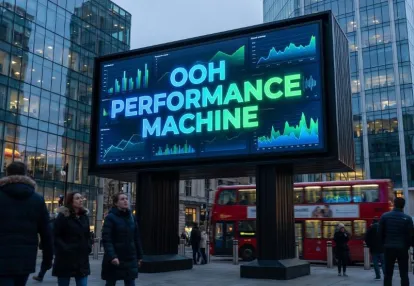
Learn how to turn OOH inventory into a measurable performance media machine using digital ad spy data. This guide shows how to borrow proven offers, funnels, and creatives from digital advertising, build hybrid OOH-to-online journeys, and connect physical exposure to measurable revenue.
Dan Smith
7 minOct 4, 2026








)