6 minJuly 26, 2024

Our spy tools monitor millions of native ads from over 60+ countries and thousands of publishers.
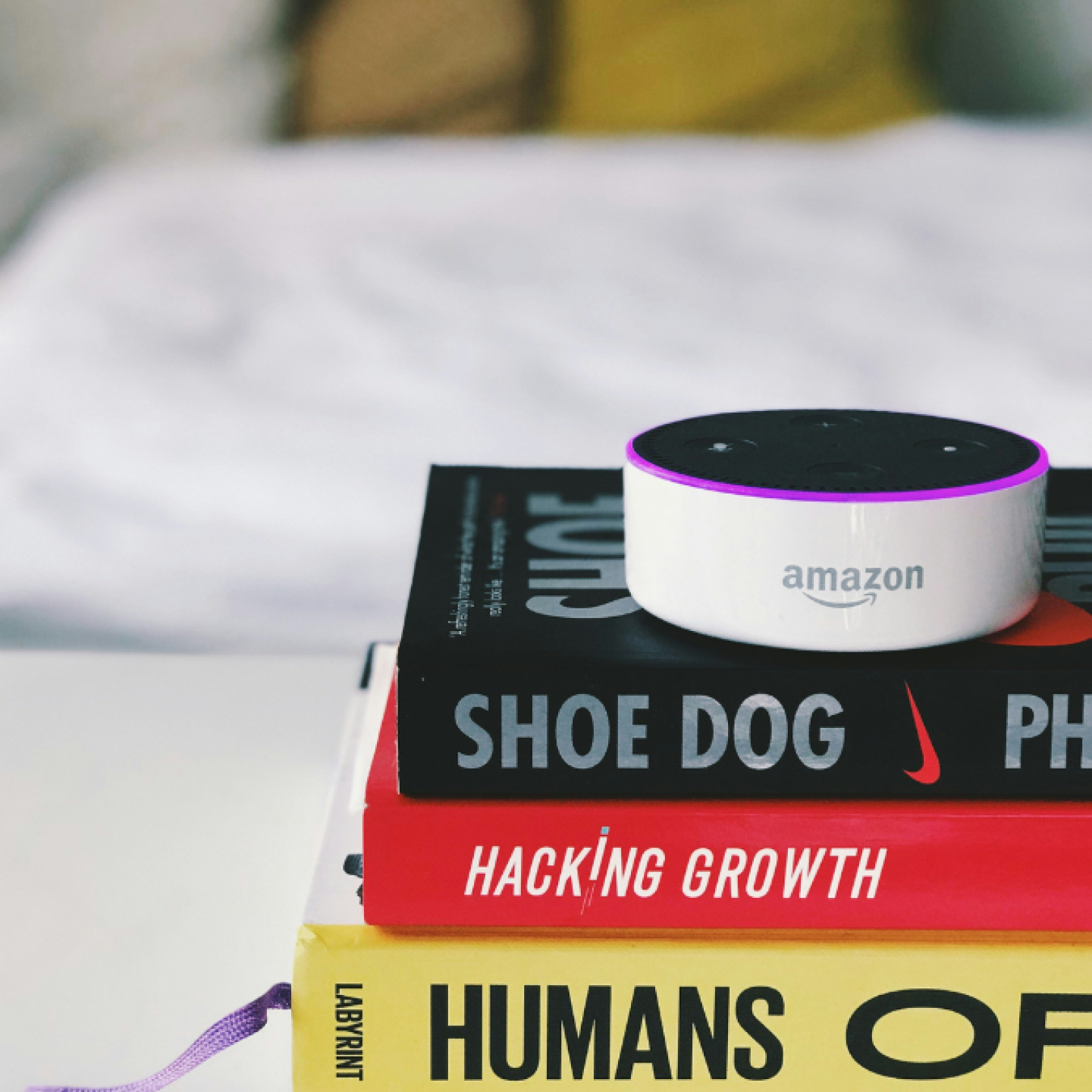
Get StartedThe Alexa Echo ecosystem has transformed modern advertising. Smart speakers, like the Amazon Echo, are not just tools for playing music or setting reminders; they are powerful devices that gather and analyze user data to improve ad targeting.
Key takeaway: Smart speakers have a significant impact on advertising strategies. The role of ad targeting is crucial in maximizing their effectiveness, allowing advertisers to deliver highly personalized ads based on user interactions.
Discover how Alexa Echo is reshaping ad targeting and explore tools like Anstrex to create successful campaigns.
For privacy concerns and information on how your data is used, visit Amazon Customer Service.
The Alexa Echo is one of Amazon's many smart speakers designed to fit perfectly into your home. These devices can understand voice commands, allowing you to do things without using your hands. Whether it's playing music, managing smart home devices, checking the weather, setting reminders, or even making purchases, Alexa Echo smart speakers have a lot to offer.
Here are some key features:
Smart speakers mainly communicate with users through voice commands. When you talk to an Alexa Echo device, it processes what you said to give you a personalized experience. Here's how it works:
During these interactions, Alexa collects important data which includes:
This valuable dataset helps Amazon create detailed user profiles. By understanding individual likes and habits, Amazon can show highly targeted advertisements that resonate with specific users.
For example:
Such precise targeting enhances the effectiveness of ad campaigns, ensuring that users see ads relevant to their interests.
The Beginner's Guide to Adsgram shows how businesses can leverage advanced tools to enhance ad targeting precision further.
Understanding these mechanisms highlights how integral smart speakers like the Alexa Echo have become in modern advertising ecosystems.
Understanding how Alexa devices collect data is essential for grasping their role in ad targeting. At the core of this ecosystem lies a sophisticated mechanism designed to gather and analyze user interactions.
Alexa Echo devices collect a wide range of data, including:
Tracking mechanisms are integrated into every facet of the Alexa ecosystem. Here’s how it works:
Profiling involves creating a detailed picture of each user based on their interactions with Alexa. Here’s how profiling works within the Alexa ecosystem:
The data collection mechanisms within the Alexa ecosystem are designed to provide deep insights into user behavior, making ad targeting more effective than ever before.
Third-party skills in the Alexa ecosystem play a crucial role in data collection and ad targeting. These skills, created by independent developers, enhance the capabilities of Alexa devices and allow users to access services beyond what Amazon offers.
Third-party skills gather different types of user interaction data, including:
This data is invaluable for creating detailed user profiles that advertisers can use for more precise ad targeting.
The relationship between developers and advertisers is mutually beneficial. Developers earn revenue through partnerships with advertisers who value high-quality, specific user data. Advertisers gain access to niche audiences that third-party skills can uniquely reach.
Key aspects of this relationship include:
By effectively utilizing third-party skills, advertisers can significantly improve their targeting strategies while providing developers with financial incentives to enhance and innovate their services.
Targeted advertising within the Alexa ecosystem uses user interaction data to make ads more relevant and effective. When users interact with Alexa using voice commands, these interactions generate valuable data points about their preferences, interests, and behaviors. This data is processed to create detailed user profiles, which are then used to deliver personalized ads.
Comparing standard ads with targeted ads within the Alexa ecosystem reveals clear advantages for targeted approaches:
The strategic use of user interaction data in targeted advertising makes the Alexa ecosystem a powerful tool for advertisers looking to maximize their campaign performance and reach highly engaged audiences.
Using Alexa's extensive data gives advertisers many benefits. The insights gained from user interactions enable targeted campaigns that yield significant returns on investment (ROI).
By analyzing voice commands and interaction patterns, advertisers gain a comprehensive understanding of user preferences. This data allows for the creation of highly personalized ad content that resonates with individual users.
Campaigns driven by precise targeting based on Alexa's rich dataset typically see higher conversion rates. Tailored ads are more likely to engage users, leading to increased sales and customer loyalty.
The ability to target specific user segments with high accuracy often results in higher bids from third-party advertisers. These targeted ads can command up to 30 times more than standard placements due to their effectiveness in reaching the right audience.
Personalized advertisements reduce wastage by focusing on users who are more likely to be interested in the product or service being advertised. This precision boosts engagement and drives better campaign performance.
Analyzing voice command data offers profound insights into consumer behavior, empowering advertisers to craft messages that truly connect with their audience.
Privacy policies play a crucial role in shaping user trust and acceptance of smart speaker technologies like the Amazon Echo. Both Amazon's devices and third-party skills available on the platform have specific guidelines on data collection and usage. However, these policies often lack clarity and detail, leaving users uncertain about what information is being collected and how it is utilized.
Understanding how users perceive privacy in relation to smart speaker usage is essential for advertisers. Surveys indicate that many users are wary of potential privacy invasions:
While smart speakers like the Alexa Echo provide advanced functionalities that revolutionize advertising strategies through precise targeting, the associated privacy implications cannot be ignored. Advertisers must navigate these concerns carefully, ensuring that their practices align with ethical standards and legal requirements to maintain user trust.
Ensuring ethical data use in smart speaker advertising necessitates robust auditing frameworks. These frameworks are designed to monitor how data is collected, used, and shared within the Alexa ecosystem. By implementing these measures, advertisers and developers can maintain transparency and protect user privacy.
Network traffic analysis plays a crucial role in the auditing process. By monitoring the flow of data between users and Alexa devices, auditors can detect:
These analyses help in creating a secure environment where user privacy is prioritized, and advertisers can confidently utilize the rich dataset provided by Alexa devices without compromising ethical standards.
Receive top converting landing pages in your inbox every week from us.
Editor’s Pick
This article explores how the traditional creative advantages of large advertisers are rapidly disappearing as AI and ad intelligence tools democratize both production and strategy. Drawing on IPA effectiveness research, it argues that many large brands are trapped by ROI-driven thinking, narrow targeting, and slow decision-making processes that reduce profitability despite increasing efficiency. The article shows how smaller advertisers can leverage competitive intelligence, AI-powered creative production, and rapid testing cycles to outperform bigger competitors. Rather than relying on expensive production budgets or agency-driven intuition, modern challengers can build intelligence-first workflows that prioritize market insights, creative iteration, and execution speed. Ultimately, the piece argues that the new competitive moat is not production quality or budget size, but the ability to learn, adapt, and launch faster than larger organizations.
Samantha Reed
7 minJun 11, 2026
In-Depth
This article explores the branding lessons performance marketers can learn from out-of-home (OOH) advertising and apply to native campaigns. It argues that an obsession with clicks, CPA, and ROAS often causes marketers to overlook the long-term value of repetition, contextual relevance, and environmental trust—principles that have made billboards and other OOH formats effective brand builders for decades. The piece explains how native advertising can combine the brand-building power of OOH with the measurable performance of digital marketing, while showing how competitive intelligence tools like Anstrex can help marketers identify competitors already using these strategies. Ultimately, it presents a practical framework for building stronger brands through native advertising without sacrificing performance.
David Kim
7 minJun 10, 2026
Announcement
This article explores why some of the most effective native advertising lessons come from an unexpected source: out-of-home (OOH) advertising. It demonstrates how billboards and native ads share the same fundamental challenge—capturing attention in just a few seconds amid heavy distraction. The piece breaks down five proven OOH creative principles, including minimalist design, bold messaging, contextual relevance, and creative refresh cycles, showing how they can improve native ad performance. It also provides a practical framework for mining billboard campaigns for inspiration and validating concepts with competitive intelligence tools like Anstrex. Ultimately, the article argues that cross-channel creative thinking will become a critical advantage as native advertising grows more competitive.
Elena Morales
7 minJun 10, 2026