10 minJune 10, 2026

Our spy tools monitor millions of native ads from over 60+ countries and thousands of publishers.
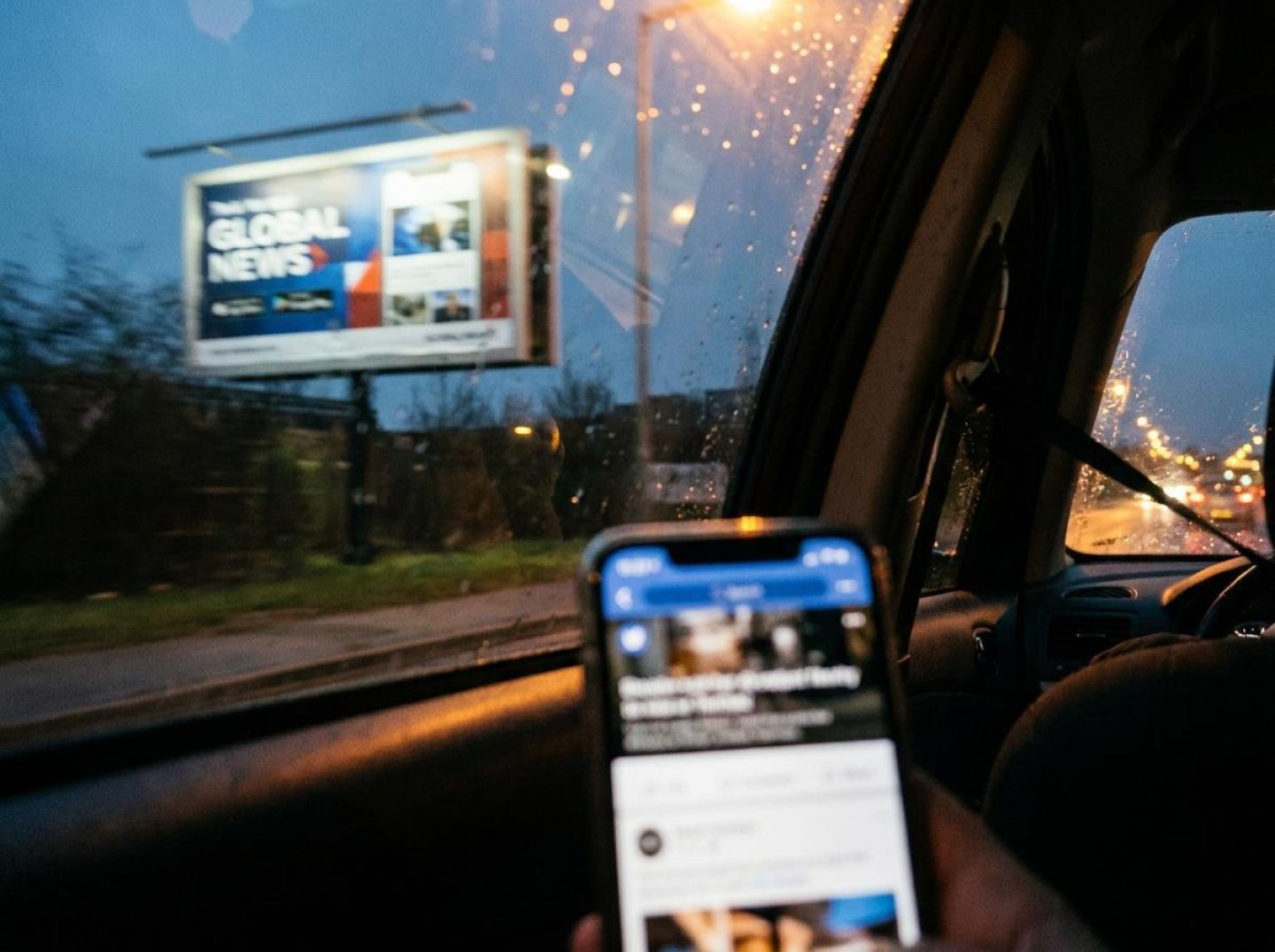
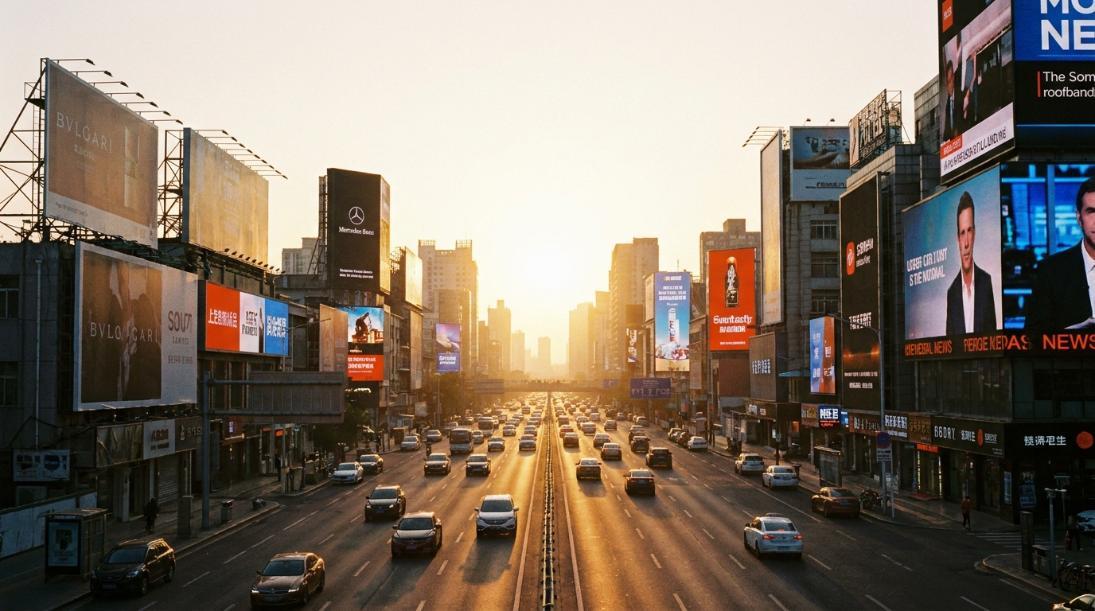
Get StartedPicture a driver on a six-lane highway at seventy miles per hour. A billboard appears on the horizon, grows larger for maybe three seconds, and vanishes in the rearview mirror. Now picture a user scrolling a news feed on her phone during a lunch break. A native ad thumbnail and headline slide through her field of vision in roughly the same sliver of time before her thumb flicks it into oblivion. Different mediums, different centuries of origin — and yet the creative challenge facing each advertiser is functionally identical: communicate one compelling idea, instantly, to a person who is not looking for you, in an environment overflowing with competing stimuli.
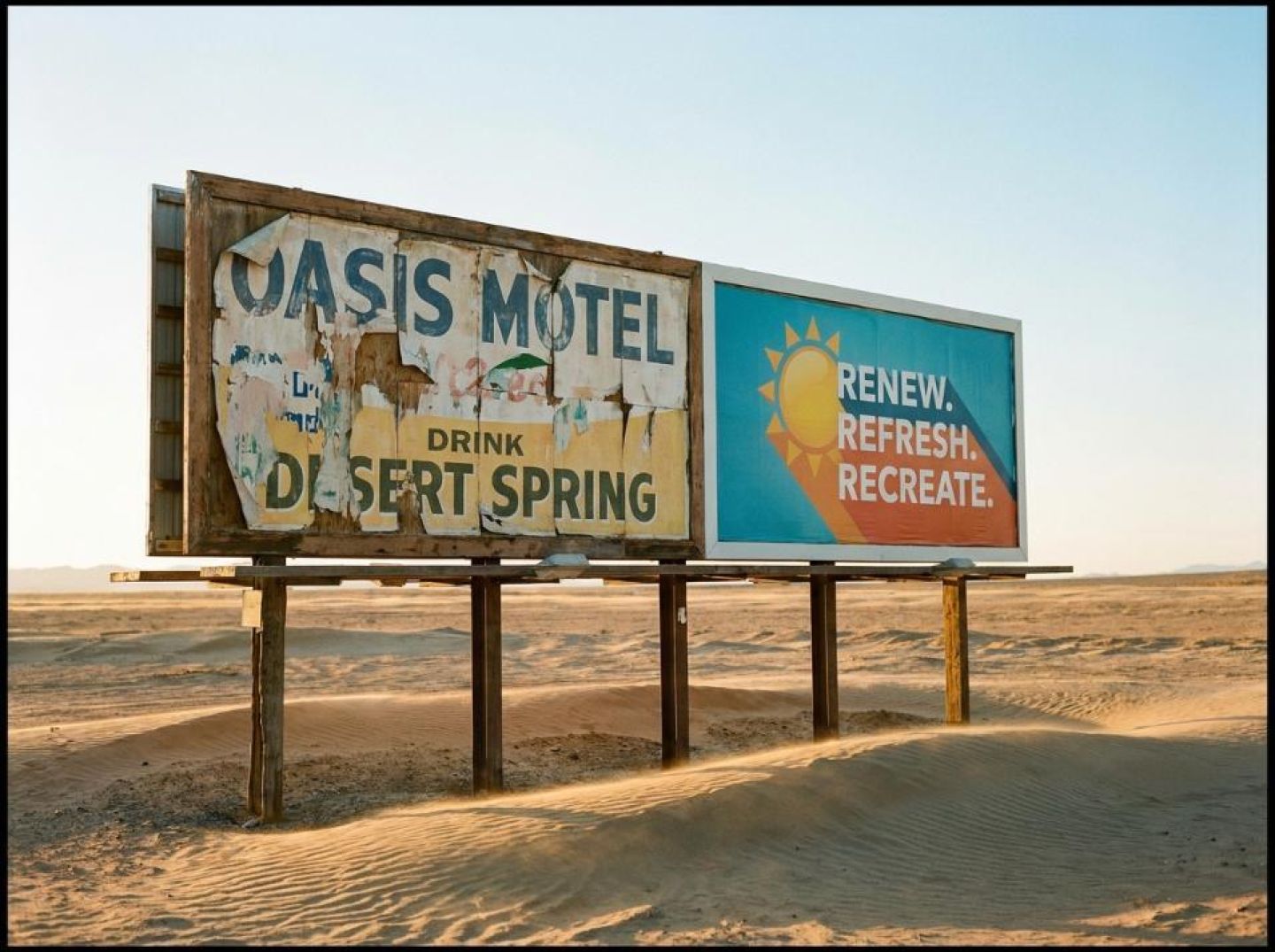
This is the insight hiding in plain sight, and most performance marketers miss it entirely because they've been trained to think in channel silos. They study rival native ads inside spy tools, dissect Facebook libraries, and A/B test headline formulas against other headline formulas — all without ever glancing at the one medium that has been pressure-tested against attention scarcity for over a century. As OOH Today notes in its analysis of modern billboard trends, billboards only have a few seconds to make an impression, making clarity, bold visuals, and strong design essential. Swap the word "billboards" for "native ad thumbnails" and the sentence remains perfectly true. The constraint set is the same: ruthless simplicity, unmistakable visual hierarchy, and a message that survives even when the viewer's conscious attention is elsewhere.
The parallel extends beyond just the time window. Both formats live inside visually cluttered contexts they cannot control. A billboard competes with road signs, storefronts, other billboards, and the cognitive load of driving itself. A native ad competes with editorial headlines, recommended content widgets, social notifications, and every other ad unit fighting for the same strip of screen real estate. In both cases, the advertiser doesn't get to reshape the environment — they get a fixed canvas and nothing more. As the Voluum Blog puts it when advising native advertisers, you and your competitor get the same amount of pixels for an ad, and what differentiates you from others is your creativity. That line could just as easily describe two competing billboards on the same stretch of interstate, each allocated the same fourteen-by-forty-eight-foot vinyl rectangle.
What makes this overlap so strategically useful is that out-of-home creative has been refined through decades of real-world Darwinism. Billboard designers learned long ago that a second font is usually one font too many, that negative space is a weapon rather than wasted inventory, and that a single dominant image will always outperform a collage. These are not aesthetic preferences; they are survival adaptations born from an environment where failure is immediate and obvious — no one pulls over to re-read a confusing billboard. Digital advertisers, by contrast, often overcomplicate their creatives precisely because the medium makes it easy to do so. They cram multiple value propositions into a headline, layer fine-print disclaimers beneath thumbnails, or choose busy lifestyle photos that collapse into visual noise at widget scale.
The advertisers who are quietly pulling ahead have recognized that the physics of attention don't change just because the surface shifts from vinyl to pixels. They are borrowing principles forged on highways and applying them to content feeds — and in the sections that follow, we'll break down exactly how they do it.
Billboard designers have spent decades solving a creative puzzle that digital advertisers are only now recognizing as their own: how do you communicate a compelling message to a distracted audience in under three seconds? The solutions OOH creatives have landed on aren't abstract branding philosophies — they're tactical design rules, stress-tested at seventy miles per hour, that map almost perfectly onto the constraints of native ad thumbnails, headlines, and push notification copy. Here are five principles worth stealing.
1. Minimalist Layouts for Fast Readability → Clean Thumbnail Composition
As OOH Today has documented, minimalist billboard creative relies on clean layouts, bold typography, and limited copy to achieve fast readability and strong recall, especially along highways. The native ad equivalent is a thumbnail stripped of visual clutter — one subject, one focal point, generous negative space. Taboola's own data reinforces this: images without text overlays deliver a 19% higher CTR than those crammed with captions and badges. When you let a single striking image do the talking, the viewer's eye doesn't have to triage competing elements — it simply lands and locks.
2. Bold, Copy-First Creative → Headline-Dominant Native Ads
Some of the most iconic billboards in history carry almost no imagery at all. Think of a stark background with a single provocative line of text. OOH designers lean into bold copy-first creative to make boards feel immediately relevant to passing drivers. In a native feed, this translates to leading with the headline rather than the image. A sharp, benefit-loaded headline paired with a simple, supportive thumbnail often outperforms a gorgeous photo saddled with a generic caption.
3. Humor and Cultural References for Memorability → Curiosity-Gap Headlines
Clever copy and cultural references are becoming increasingly important in modern OOH because they make campaigns more memorable. A billboard that riffs on a trending meme or drops a wry punchline earns a mental bookmark — drivers think about it long after they've passed. Native advertisers achieve the same stickiness with curiosity-gap headlines that tease without revealing, creating an open loop the reader needs to close. The mechanism differs, but the underlying psychology is identical: give the audience something surprising enough that ignoring it feels like a loss.
4. Maximalist, High-Energy Visuals for Competitive Environments → Scroll-Stopping Imagery in Dense Feeds
Where minimalism thrives on highways, maximalism dominates cluttered urban intersections. Bright colors, layered visuals, and high-energy compositions are designed to stand out in visually competitive areas. A dense social or content-recommendation feed is the digital equivalent of Times Square. Here, vibrant color photos boost CTR by 49% compared to black-and-white images, confirming that saturated, high-contrast thumbnails punch harder when they're competing with dozens of surrounding content cards for a split second of attention.
5. Contextual, Location-Aware Messaging → Publisher-Contextual Native Placements
A billboard near an airport that says "Forgot your charger?" feels eerily personal. That contextual relevance — matching the message to the environment — is something OOH designers use to make location-aware messaging land with precision. Native advertising's parallel is contextual targeting: serving a financial planning ad alongside a retirement article, or a fitness supplement ad within a wellness editorial. Because native ads are designed to mimic the look, feel, and function of their editorial environment, aligning the creative's subject matter with the surrounding content amplifies that native camouflage and makes the ad feel less like an interruption and more like a natural next click.
Each of these five principles solves the same root problem from different angles: earning attention from someone who has none to spare. The billboard industry refined these solutions over decades of real-world testing. Smart native advertisers don't need to reinvent them — they just need to translate the format.
A billboard on Interstate 405 doesn't lose its structural integrity after sixty days. The vinyl doesn't fade. The lighting still works. But to the commuter who passes it twice a day, five days a week, that board might as well be invisible by week six. The message hasn't changed — the audience's tolerance for it has. This is creative fatigue in its purest, most analog form, and OOH advertisers have understood its mechanics for decades. What's surprising is how many digital advertisers — people who live inside dashboards and obsess over click-through rates — still treat their native ad creatives as if they're carved in stone.
The parallel is almost eerie. A commuter driving the same route sees the same billboard roughly ten times a week. A user who checks a news aggregator app three or four times a day might encounter the same native ad thumbnail with comparable frequency — except the algorithmic feed compresses what would be weeks of billboard exposure into just a few days. Creative fatigue doesn't operate on a calendar; it operates on impression density. The more frequently a single individual encounters the same creative, the faster that creative decays. OOH planners have always known this, which is why billboard rotations are timed not to quarterly budgets but to estimated exposure frequency along specific corridors.
Digital native advertisers have access to the same logic, yet too many launch a campaign with a handful of creatives and let them run until performance craters. The data is unambiguous: as Voluum's native advertising guide stresses, there is a strong correlation between regularly refreshing ads and sustained performance, and no creative should run longer than three months — a ceiling, not a target. Their recommendation to add at least a few new image and headline variations every couple of days mirrors the OOH instinct that every placement cycle demands fresh visual thinking.
Billboard advertisers have also long practiced a form of split testing that predates digital A/B frameworks. An OOH campaign might run two different designs across comparable traffic corridors — same metro, same demographic density, different creative executions — and measure response through call tracking, promo codes, or foot traffic studies. The methodology is cruder than a pixel-tracked conversion funnel, but the mindset is identical: never assume you know what works until you've tested alternatives in context. For native advertisers, Voluum advocates checking data daily, especially at launch, and using split testing alongside whitelists and blacklists to isolate top-converting segments and placements. The cadence is faster, but the discipline is the same.
What OOH veterans understand intuitively — and what digital teams need to internalize — is that creative refresh isn't just a performance optimization tactic. It's a survival requirement. As the demand for innovative ad content continues to rise, brands that recycle the same assets across placements and time periods aren't just leaving clicks on the table; they're actively training their audience to ignore them. A billboard company rotating creative for a highway in Phoenix wouldn't dream of using the same design it ran in Seattle without adapting for the environment. Yet native advertisers routinely push identical thumbnails across wildly different publisher contexts — a tech blog, a lifestyle magazine, a local news site — as though the surrounding content doesn't shape how the ad is perceived.
The mindset shift is subtle but transformative: stop thinking of creative refresh as maintenance and start treating it as the campaign itself. Exposure frequency, not an arbitrary calendar, should dictate when new variations enter the rotation. Every placement is a different highway, and every scroll is a new commuter passing by. The advertisers who internalize that — the ones who borrow the OOH habit of treating fatigue as the default enemy — are the ones whose native campaigns keep performing long after the competition's creatives have faded into the feed like old vinyl on the interstate.
Inspiration without a system is just daydreaming. If the previous sections convinced you that OOH creative holds transferable lessons for native advertising, this is where you stop admiring billboards and start dissecting them. Here's a four-step framework that turns analog observation into digital performance.
Step 1: Build Your Swipe File of OOH Creative
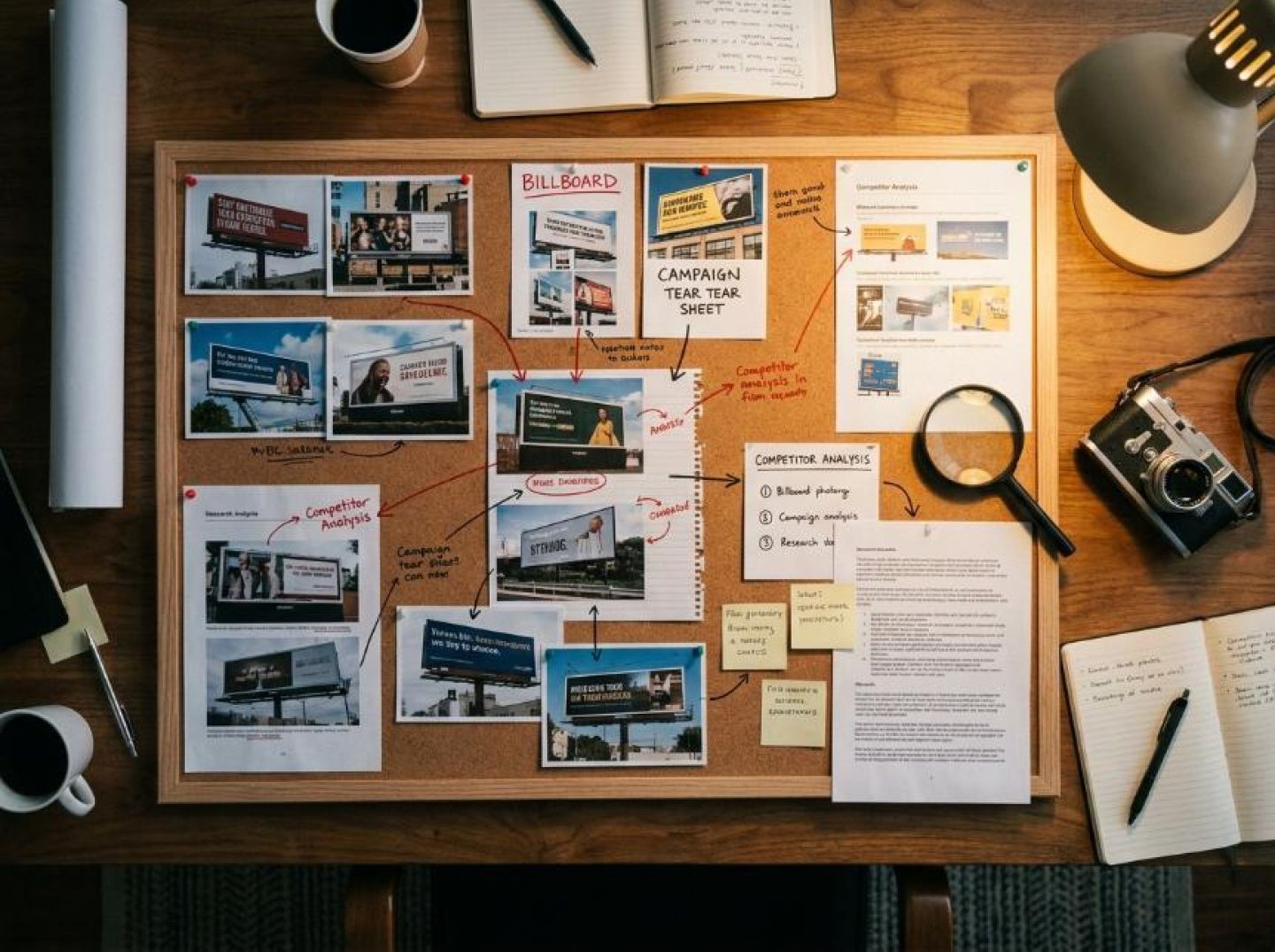
You don't need to drive every interstate in America. The Out of Home Advertising Association of America (OAAA) maintains galleries and case studies of award-winning campaigns. Sites like Ads of the World and Moat aggregate outdoor creative from global markets. Instagram hashtags like #billboarddesign and #OOHadvertising surface hundreds of real-world examples daily. Your own commute counts, too — photograph boards that stop you mid-thought and drop them into a dedicated folder. The goal is volume: you need at least fifty to sixty examples before patterns begin to emerge.
Step 2: Deconstruct Each Board Into Four Core Elements
Every effective billboard, no matter how clever, relies on the same anatomy. First, the visual anchor — a single dominant image or graphic that commandeers attention. Second, the copy hook — rarely more than seven words, built around contrast, curiosity, or humor. Third, the emotional trigger — the feeling the board wants you to leave with, whether that's urgency, desire, fear of missing out, or simple amusement. Fourth, the implied CTA — billboards almost never say "click here," yet the best ones make the next step obvious through context (a phone number, a URL, or just a brand name you'll Google later). Catalog each board against these four columns. Within a few dozen entries, you'll notice clusters: boards that lean on a single striking photo with minimal text, boards that weaponize humor with no product shot at all, boards that use stark color contrast as their primary attention device.
Step 3: Translate Those Elements Into Native Ad Components
The visual anchor becomes your thumbnail image — the single frame that must earn a glance inside a crowded content feed. The copy hook maps directly onto your headline, where you have roughly the same seven-to-twelve-word budget before a reader's eyes move on. The emotional trigger informs your description text, the line beneath the headline that either reinforces the click impulse or kills it. And the implied CTA? In native, that's baked into the entire unit's promise — the reason someone believes the content behind the click is worth their time. As Voluum's creative guidance makes clear, what differentiates you from competitors occupying the same pixels is your creativity, and experimenting with various combinations is the only way to discover what resonates with your target audience.
Step 4: Validate With Competitive Intelligence Before Spending a Dollar
This is where the framework goes from educated guess to data-backed strategy. Open Anstrex's native ad spy tool and search for the patterns you've extracted — bold single-image thumbnails, minimal-copy headlines, humor-driven angles, high-contrast color schemes. Filter by duration and network to surface ads that have been running long enough to suggest profitability. If you find native campaigns already mirroring the OOH patterns you've identified, you have market-level confirmation that the creative structure converts. If you don't, you may have found a white-space opportunity your competitors haven't exploited yet. Either outcome is valuable. Given that the demand for quality and innovative ad content is rising across native formats, advertisers who bring structurally sound, creatively differentiated concepts to the table hold an increasing edge.
The loop — observe, deconstruct, translate, validate — takes less than an afternoon the first time and becomes almost reflexive after that. Every highway drive becomes a focus group. Every Anstrex search becomes a confirmation engine. And every native ad you launch carries the structural DNA of creative that was pressure-tested long before it reached a pixel.
The numbers tell a story that should make every digital advertiser pay attention. Native advertising spend is projected to reach $402 billion by 2025, a staggering 372% growth from 2020 levels. As programmatic buying makes native inventory increasingly scalable and accessible, the barrier to entry is collapsing — which means the barrier to standing out is rising proportionally. When everyone can buy the same placements with the same targeting tools, the only remaining differentiator is the creative itself.
This isn't a hypothetical future. It's already happening. Native advertising now accounts for nearly 60% of total display ad spending in the United States, with close to three-quarters of native display dollars flowing through social networks alone. The format has proven itself as one of the most reliable channels for brand communication, with studies finding it to be the most impactful medium for brand favorability. But scale and reliability create their own paradox: the more advertisers flood into a channel, the harder each individual ad has to work to earn attention. The creative quality bar isn't just rising — it's being reset entirely.
In this environment, the advertisers who win won't be the ones with the biggest budgets or the most sophisticated bidding algorithms. They'll be the ones with the most original creative instincts. And originality, almost by definition, doesn't come from studying your own medium in isolation.
This is a truth that creative professionals across disciplines have understood for centuries. Film editors study musical composition to understand rhythm and pacing. Architects study biological structures to solve engineering problems. Choreographers borrow from martial arts. The pattern is consistent: breakthrough thinking comes from importing principles across domain boundaries, not from incremental optimization within a single field.
The OOH-to-digital bridge explored throughout this article is simply one expression of that cross-pollination mindset. Billboard designers have spent decades perfecting the art of capturing attention instantly through clarity, bold visuals, and messaging that communicates in seconds — constraints that map remarkably well onto the native ad environment, where thumbnails are small, headlines are short, and users are scrolling fast. Meanwhile, native advertising platforms like Taboola have generated data showing that principles long championed in OOH — such as letting imagery speak without overlaying text — deliver 19% higher click-through rates in digital environments. The lessons aren't just philosophically compatible; they're statistically validated.
But the bigger point isn't about billboards specifically. It's about the mental model. Elite native advertisers don't think of themselves as "digital marketers." They think of themselves as communicators who happen to be working in a digital medium right now. They study packaging design to understand shelf appeal. They analyze magazine covers to understand hierarchy. They watch how street artists command attention in cluttered urban environments. Every medium that has ever competed for human attention in the physical world has something to teach the person competing for attention in a feed.
As the native advertising market races toward its $402 billion horizon, the temptation will be to lean harder into automation, algorithmic optimization, and platform-native best practices. Those tools matter. But they're table stakes. The advertisers who separate themselves from the pack will be the ones who bring something the algorithm can't generate on its own: a creative perspective forged by looking beyond the screen, into the rich and battle-tested world of attention that existed long before anyone ever scrolled a feed.
Receive top converting landing pages in your inbox every week from us.
How-To
Discover how marketers can use retail media, connected TV (CTV), and checkout advertising to uncover promising holiday campaign angles before scaling into native, push, pop, and TikTok traffic. Learn how to analyze winning messages, offers, creative formats, and funnel sequences with competitive ad intelligence and apply those insights to faster, more disciplined campaign testing.
Liam O’Connor
7 minOct 25, 2026
Must Read
Learn how to build a responsible competitive ad intelligence workflow for an advertising landscape increasingly shaped by AI-generated creatives, disclosure labels, and digital watermarks. Discover how to analyze competitors’ AI usage, identify creative patterns, and develop ethical guardrails that support transparent, compliant, and differentiated campaigns.
Dan Smith
7 minOct 23, 2026
Most Read
Discover how performance marketers can build cross-channel verification journeys that turn skeptical prospects into confident buyers across TikTok, native, push, and pop advertising. Learn how to coordinate creative messaging, reinforce trust at every touchpoint, and measure the hidden influence of fragmented customer journeys using competitive ad intelligence.
Elena Morales
7 minOct 20, 2026