Our tools monitor millions of native, push, pop, and TikTok advertising campaigns.
Get StartedIVR/Click2Call has been a hot topic lately. In this blog article, we want to give you more insight in what IVR actually is and how to run these type of campaigns. So, what does it actually mean IVR/Click2Call. Well, IVR literally means ‘’interactive voice response’’ which is an automated telephone system technology that allows incoming callers to access information through a voice response system from pre-recorded messages without having to speak to anyone. Click2Call however, is often the term that is being used for these type of offers even though it says more about the flow as it only takes a click on the ‘’call now’’ button to convert.
IVR/Click2Call campaigns can be used in all sorts of verticals such as:
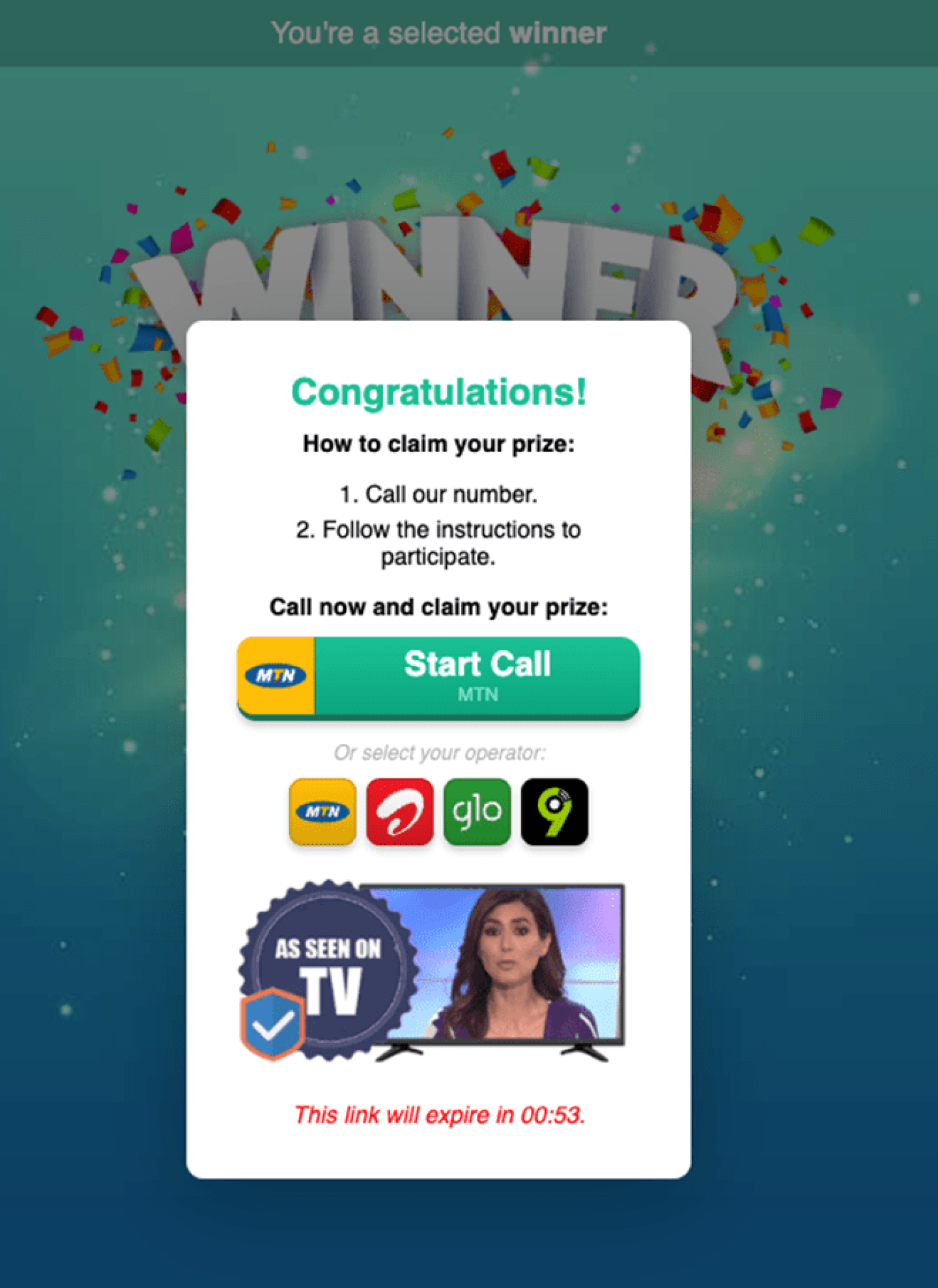
The traffic that is mostly used on these type of campaigns are push, pop, and social traffic. However, the more known IVR/Click2Call becomes, the more people are finding ways to convert this. In order to get the most success, it is recommended to run these campaigns with a pre-lander. One of the leading providers of IVR campaigns is Traffic Company. They are currently focused most on the Sweepstake angle and offer a variety free pre-landers which you can choose from. This is very useful and time saving feature as they are already translated and ready to be used! These types of campaigns typically run on a rev-share payment model which means, the longer the user stays on the phone, the higher the payout will be.
When starting to run these type of campaigns, it is important to test different ad material such as images and push messages. For push ad message, its advised to try multiple icons and texts to find out what works best for you. In order to decide what works best, you should take a look at the CTR. However, this doesn’t say everything - cause sometimes images with a high CTR can have a low CR. Therefore, it’s best to look at the profit instead of the ROI.
Also don’t forgot to check with your Account Manager at Traffic Company what pre-landers are advised and split test a few of them! Of course, you can also choose to run with your own pre-landers and do your own little investigation on our platform. This way you will be able to find out what currently works well in the marketplace by searching on multiple keywords such as ‘iPhone’, ‘Congratulations’ and ‘Win’ for example, and to get an idea of what kind of pre-landers and angles people use in their sweep campaigns.
After you’ve found out what pre-lander and promotion works best for you, you need to move on to the optimization by blacklisting and whitelisting sources that do, and don’t perform well respectively. Once you have done all of that, you start scaling in terms of traffic, and start generating a steady income. With IVR, it’s really important to be able to scale. The reason for this is because you are dealing with real (unique) callers. This could mean that caller number 600 might stay on the phone for 5 seconds and delivers you let’s say $0.20, while caller number 5000 might stay on the phone for 10 minutes and delivers you $15. So more people you are reaching, the higher the chance of improving your profitability.
If you are planning to run your campaign on push traffic, we advise you to add pop to the mix as well. The reason for this is because push has the right quality, and pop has the volume needed to make it successful. Also remember that Traffic Company’s In-house IVR is available for both 3G and Wifi traffic, so don’t exclude any of it as it will help you scale! And of course, in order to generate more traffic for your campaigns its advised to run with multiple ad-networks and to work with a tracking tool to be able to analyze the traffic efficiency.
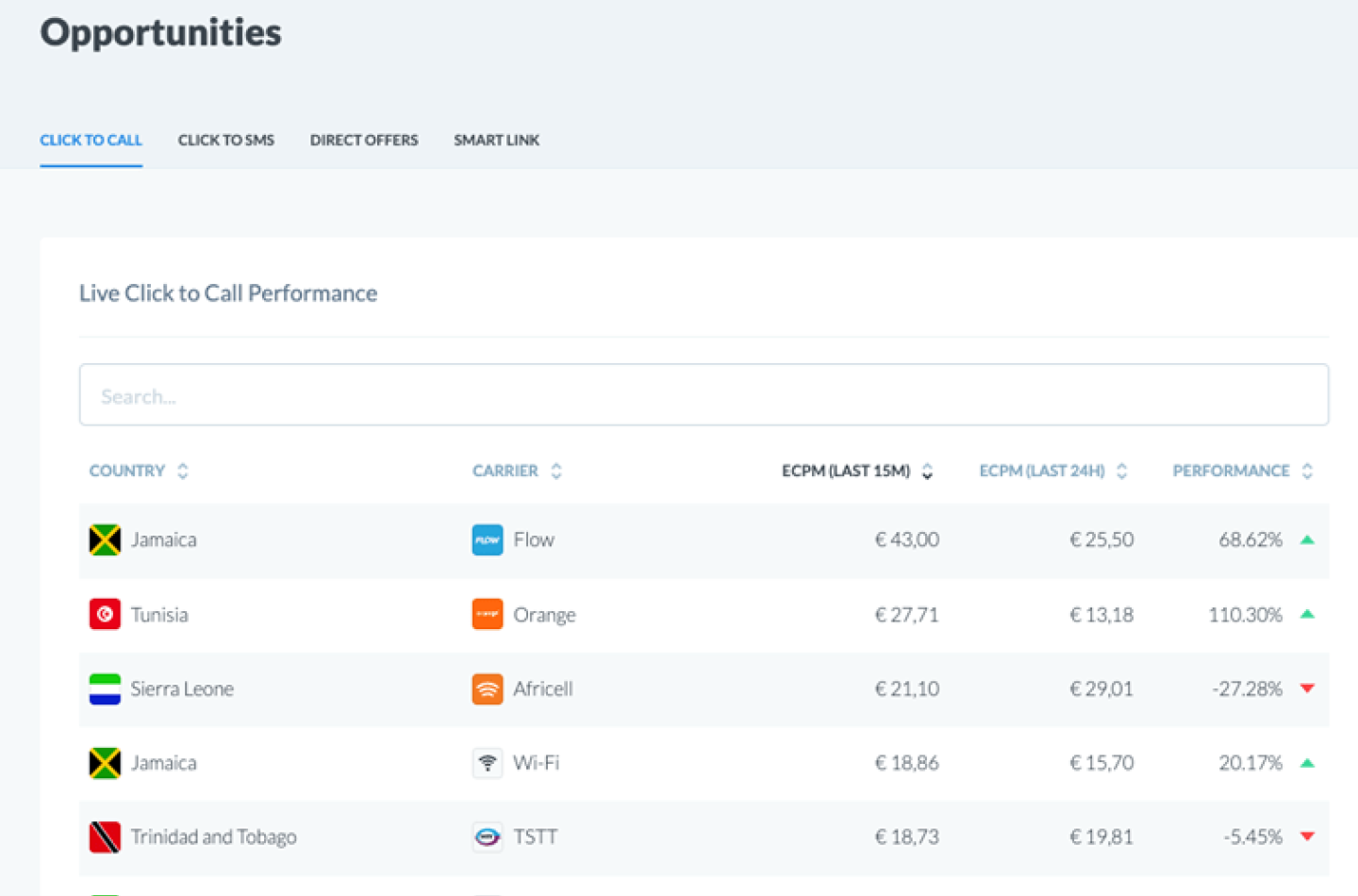
As IVR/Click2Call is a rapidly changing market in terms of performance, it’s important to keep up-to-date. To help you with this, Traffic Company has created an IVR Performance API which displays the following:
This data is displayed per geo and carrier and gives great insight in which you can act upon, as it not only helps to be up-to-date, but also to run more stable on the long run. As we have a lot of clever people working in this industry, some have even build a tool that they connect with Traffic Company.
There is also has a Telegram group where you will find updates about the top ECPM by carrier and the top revenue by carrier multiple times a day
For more information join Traffic Company’s Telegram group:
All in all, IVR/Click2Call is definitely something to keep an eye on as its slowly conquering the market. Traffic Company is great for both starters and experienced publishers, so if you’re excited to try it out for yourself, we recommend to sign up with Traffic Company to get started right away!
Receive top converting landing pages in your inbox every week from us.
In-Depth
Discover how out-of-home (OOH) job listings reveal the future of performance marketing, from data-driven media sales to programmatic digital billboards. Explore how sales, operations, creative production, and real estate roles are evolving as OOH becomes a more measurable, automated, and performance-focused advertising channel.
Elena Morales
7 minOct 11, 2026
Must Read
Discover how out-of-home (OOH) hiring trends reveal emerging opportunities in digital advertising, mobile billboards, and performance marketing. Learn to identify underpriced media inventory, spot promising geographic markets, connect OOH exposure with digital campaigns, and use competitive intelligence to uncover new arbitrage opportunities.
Liam O’Connor
7 minOct 11, 2026
Must Read
Discover how native advertisers can transform everyday moments into memorable, high-performing campaigns through eventization. Learn to use scarcity, time-sensitive offers, contextual targeting, and always-on micro-events to engage audiences, improve campaign relevance, and uncover winning competitor strategies with Anstrex.
Priya Kapoor
7 minOct 11, 2026