TikTok Ads, Affiliate Marketing
7 minJuly 21, 2026

Our spy tools monitor millions of TikTok ads from over 55+ countries. Biggest TikTok Ad Library in E-commerce and Mobile Apps!
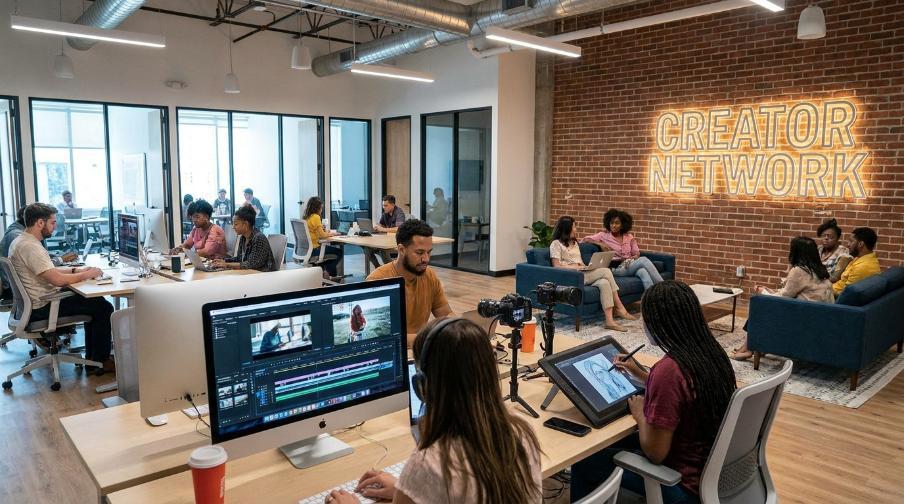
Try It FREEWhen Starbucks and TikTok took the stage at Cannes Lions in late June 2026 to unveil a custom Creator Network, the marketing world collectively leaned in. This wasn't another influencer partnership or a hashtag challenge with a media buy stapled to it. It was something structurally different — a bespoke toolset co-built inside TikTok's Content Suite that made Starbucks the first brand to pilot this kind of integration with the platform. And the infrastructure behind it reveals just how much work — and how many years — went into making it possible.
The program didn't appear out of thin air. It grew directly from the Green Apron Creators initiative, which Starbucks launched back in 2024 to harness something it already had in abundance: baristas who couldn't stop posting about their jobs. Gen Z makes up the majority of Starbucks' barista workforce, and they were already creating content at scale — posting at three times the rate of employees at similarly sized chains, according to data cited in the announcement. Green Apron Creators gave those employees a framework, career development opportunities, and a reason to keep going. The TikTok Creator Network is the next logical step: turning that organic engine into a paid media asset.
Here's what the pilot actually involves. Through the custom Creator Network, Starbucks can distribute briefs to select employee-creators, review and approve content through structured workflows, and then compensate those creators through an ad revenue-sharing model. That last detail matters enormously. This isn't a flat fee or a gift card incentive. It's a compensation structure tied directly to paid media performance, which means legal frameworks, tax implications, and platform-level financial tooling that most brands — and most platforms — aren't equipped to handle. As Erin Silvoy, Starbucks' senior vice president of global marketing, explained in press materials, the collaboration with TikTok provided an opportunity "to build a customized tool that allows us to celebrate and amplify our partners' authentic storytelling."
The enterprise infrastructure alone should give pause to anyone thinking they can replicate this over a weekend. We're talking about centralized brief distribution, approval chains that presumably flow through brand, legal, and regional marketing teams, and an onboarding process that can scale across a workforce of hundreds of thousands. TikTok is positioning Creator Networks as a broader product — a way for brands to build customizable pools of employees, partners, or brand advocates whose content can be used in paid advertising — but the Starbucks version is clearly a premium, co-developed implementation.
And the consumer appetite is real. According to Sprout Social data cited alongside the announcement, 61% of Gen Z say they frequently learn about new products or services from employee-generated content, while 61% of all consumers believe brands should compensate employees who promote them on social media. The demand signal is clear: people trust employees more than polished brand accounts, and they expect those employees to be paid for the effort.
This is also happening in a broader context where major brands are racing to build creator infrastructure at scale. When Unilever's CEO declared traditional advertising "lazy marketing" and committed to scaling creator collaborations by 20 times to reach over 300,000 influencers, the message was unmistakable: the biggest companies in the world are building industrial-grade creator operations. Manual workflows can't support that kind of scale, which is exactly why Starbucks went directly to TikTok's product team to build custom tooling.
The takeaway is sobering. What Starbucks built required two years of cultural groundwork, a direct partnership with TikTok's engineering and product organization, a workforce already creating content at extraordinary volume, and the financial infrastructure to share ad revenue. It's the R&D version of employee-driven marketing — brilliant, effective, and almost completely inaccessible to anyone without an enterprise budget and a Fortune 500 Rolodex.
But the principles underneath it? Those are available to everyone.
Strip away the Starbucks logo, the TikTok partnership announcement, and the Cannes Lions stage, and what you're left with is a performance insight that has been hiding in plain sight for years: content that looks like a real person made it crushes content that looks like a brand made it. Every data set points in the same direction. The only question is how aggressively you're willing to act on it.
Start with the format itself. Short-form video isn't just trending — it's compounding. According to HubSpot's 2026 State of Marketing Report, 104 percent more marketers named short-form video their highest-ROI content format in 2026 compared to 2024. That's not incremental growth; that's a doubling of conviction among professionals who are watching their own dashboards. But the critical nuance is that not all short-form video performs equally. The clips that drive results — unboxings, honest reviews, "how I use this" walkthroughs, behind-the-scenes footage — don't look like ads. They look like something a person would organically share with a friend. Brands like Gymshark have internalized this, regularly posting creators wearing their gear during actual training sessions rather than relying on studio shoots, because it builds the kind of credibility that polished production actively undermines.
The platform data reinforces the pattern. TikTok's engagement rate of 3.7 percent sits well above every major social competitor, and its average CPM of around $9 undercuts Meta's roughly $15 — meaning each dollar spent on creator-style content there produces more interaction at lower cost. Within TikTok's own ad ecosystem, the gap between native-feeling and traditional creative is stark: Spark Ads deliver 34 percent higher conversions than standard in-feed placements, specifically because they amplify organic-looking posts rather than interrupting the feed with something that screams "advertisement." The best-performing brand content on TikTok, as Neil Patel's analysis notes, doesn't look like advertising at all.
Then there's the discovery layer. Employee-generated content — the exact format Starbucks is scaling through its Green Apron Creators program — has become a genuine product discovery channel. Sprout Social data cited by Marketing Dive shows that 61 percent of Gen Z consumers have discovered products or services through content created by a brand's own employees. That's not influencer marketing. That's not paid media. It's people who happen to work at a company sharing authentic moments — and it's converting at scale.
Rhode Skin offers another proof point. The brand uses TikTok to show products in casual, lifestyle contexts that feel personal rather than promotional, and the strategy has helped it build one of the most engaged beauty communities on the platform without defaulting to high-production campaigns.
Here's what matters for affiliates: none of this data is proprietary. Every insight Starbucks is operationalizing — the superiority of creator-style formats, the engagement advantages of short-form video, the conversion lift from native-feeling creative — is publicly available and confirmed across multiple independent sources. Starbucks doesn't have an information advantage. It has an operational one: the budget to build custom infrastructure, the employee base to generate content at scale, and the TikTok partnership to distribute it efficiently.
The strategic question for an affiliate making $2,000 a month isn't whether creator-style content works. That debate is settled. The real question is far more specific: which creator-style formats are already converting in your niche right now, and how do you identify them without burning through hundreds of test budgets to find out?
Starbucks can afford to pioneer because Starbucks is building a category that didn't exist before — employee-creator infrastructure fused into a platform partnership. You are not Starbucks. You don't need to invent a new model. You need to find what's already winning and replicate the pattern before your competitors notice it. That's not a shortcut; it's the only rational strategy when the data on what works is sitting in the open, waiting to be collected.
The method starts with ad intelligence. Tools like Pipiads, Anstrex, and TikTok's own Creative Center top ads library let you filter live campaigns by vertical, engagement metrics, run duration, and format. The critical filter is sustained spend. Any ad that has been running for three or more weeks is almost certainly profitable — no media buyer keeps pouring money into a loser that long. When you sort by longevity in your niche, you're looking at a curated gallery of proven creative, already validated by real budgets and real conversions.
Open twenty or thirty of those ads and you'll start seeing the same structures repeat. The hook in the first one to two seconds is almost always a pattern interrupt — a question, a bold claim, a product held up to the camera with no preamble. The middle section follows two or three dominant templates: the "day in my life" walkthrough, the problem-agitation-solution monologue, or the silent demo with text overlays and trending audio. CTAs tend to land in the final three seconds or sit as persistent text rather than being spoken. Talent presentation skews casual — ring lights, natural backgrounds, direct eye contact. Catalog these elements into a swipe file organized by hook type, visual format, audio choice, CTA placement, and video length. After an hour of focused analysis, you'll have the two or three dominant creative templates that drive performance in your category.
This matters because the biggest mistake affiliates make mirrors the biggest mistake brands make on TikTok. As Neil Patel has documented, the most common TikTok failure is importing creative from other channels — repurposing a YouTube pre-roll or a polished Instagram Reel and expecting it to perform. It won't. TikTok rewards content that feels native to the platform, which is exactly why Spark Ads deliver 34 percent higher conversions than standard in-feed placements. Your swipe file ensures you're building from formats that have already passed TikTok's native-feel test, not guessing at what might work.
Once your templates are mapped, the execution is straightforward. Brief a micro-creator — or shoot it yourself — using the exact hook structure, pacing, and visual style you documented. You're not copying anyone's script. You're adopting the structural grammar that the platform's algorithm has already selected for. The content still needs to be yours: your product, your angle, your voice. But the architecture is borrowed from winners.
The cost? A mid-tier ad spy tool subscription runs roughly $40 per month, which is all you need for a single focused research sprint. That's a rounding error compared to the tens of thousands Starbucks invested in co-developing proprietary creator infrastructure. And as Semrush's ecommerce strategy guide recommends, you should start with a small group of relevant partners rather than trying to scale a massive creator roster from day one. One well-briefed creator producing three variations of a proven format will outperform a dozen creators improvising without structure.
The swipe file is your R&D department. Forty dollars is your research budget. Everything after that is execution.
The numbers make the case more clearly than any argument could. TikTok generated $33.1 billion in global advertising revenue in 2025, a 43 percent increase year over year. Its engagement rate of 3.7 percent towers above every major social competitor. More than half of TikTok users have purchased from brands after seeing products on the platform, and TikTok Shop alone drove $15.82 billion in U.S. sales in 2025. By every meaningful metric — revenue growth, commerce infrastructure, purchase intent — this is no longer a niche channel for dance trends and memes. It is a full-funnel advertising platform that is still, somehow, under-occupied.
That "somehow" is the entire opportunity. Only 26 percent of marketers currently run TikTok campaigns, which means nearly three-quarters of the competitive field hasn't shown up yet. And the cost structure reflects that absence. TikTok ads average a CPM of around $9, compared to Meta's average Facebook CPM of roughly $15 — a gap that translates to roughly 40 percent more reach per dollar spent. For affiliates testing creative, iterating on hooks, and building performance data, that cost advantage is not a trivial detail. It is the difference between learning what converts at a price you can absorb and learning it at a price that bleeds your margin dry.
But the window has an expiration date, and you can see it closing in real time.
When Unilever's CEO declared that the era of expensive corporate brand advertising was over and committed to scaling creator collaborations by 20 times, the signal wasn't subtle. Unilever is building a network of over 300,000 influencers, including plans for a micro-influencer in every postal code in key markets like India. That is not a pilot program. That is the industrialization of creator-driven content at a scale the marketing industry has never attempted. And Unilever is not the only brand moving in this direction — HubSpot's 2026 data, as cited by Semrush, found that 89 percent of companies worked with a content creator or influencer in 2025, up from just 50 percent the year before. The trendline is vertical.
What makes the acceleration even more severe is how fast creators themselves are scaling production. An Adobe Express study found that 71 percent of video creators across YouTube, TikTok, and Instagram have adopted AI video generation or editing tools, with 56 percent reporting they save over 30 minutes per video and 10 percent shaving more than four hours off production time. Those creators are also seeing a 19 percent average increase in audience watch time and a 17 percent boost in engagement. The math is brutal for anyone sitting on the sidelines: 300,000 creators, most of them armed with AI tools that cut production time in half while improving performance metrics, all entering the same auction you'll eventually need to compete in.
Every quarter you delay means entering a more expensive, more crowded marketplace with less room for the cheap experimentation that builds genuine creative instinct. The affiliates who learn to read winning creative patterns now — who build their intuition for what hooks, what pacing, what visual language drives clicks at today's $9 CPMs — will carry that knowledge forward as costs rise. The affiliates who wait will pay tomorrow's CPMs to learn yesterday's lessons. The arbitrage isn't just financial. It's informational. And unlike CPMs, the knowledge compounds.
You've seen the strategy. You've seen the window. Now here's how you actually execute — step by step, with a total outlay that won't exceed $40.
Step 1: Build Your Swipe File ($0, one afternoon). Before you create anything, you need to study what's already converting. Search TikTok for your niche keywords — "best running shoes," "skincare routine," "home office setup" — and save every video that has strong engagement but looks like it was shot by a regular person, not a production studio. You're looking for the pattern Starbucks identified in its own workforce: authentic, creator-style content that feels personal rather than promotional. Save 30 to 50 videos. Note the hooks, the camera angles, the pacing, and especially how products are introduced without sounding like a pitch. This swipe file is your creative blueprint.
Step 2: Choose Your Affiliate Offers and Stack Them ($0). Pick two to three complementary products from affiliate networks — Amazon Associates, ShareASale, Impact, or TikTok Shop's own affiliate program. The key is selecting products that naturally appear together in a single piece of content. A "morning routine" video can feature a coffee mug, a journal, and a desk lamp without feeling forced. Stack your commissions across multiple items per video instead of relying on a single product link.
Step 3: Set Up Your Content Infrastructure ($0–$15). You need a free TikTok business account, a free CapCut account for editing, and a link-in-bio tool like Beacons or Stan Store (free tiers work). If you want a slight edge, spend $10–$15 on a clip-on ring light and a phone tripod from Amazon. That's your entire production budget. The reason this works is that TikTok's own AI tools are lowering the production bar for brands that never had much of a budget, and that same infrastructure benefits solo affiliates equally.
Step 4: Produce Your First Five Videos ($0, one weekend). Batch-create five videos using the formats from your swipe file. Prioritize "how I use this," honest reviews, and unboxing-style clips. Each video should be 30 to 90 seconds. Film them all in one session, then edit across the week. Your goal isn't perfection — it's volume and pattern-matching against content that's already proven to work.
Step 5: Optimize for TikTok Search ($0, ongoing). TikTok is functioning as a search engine for product discovery, and its Search Hubs and algorithmic recommendations are pushing the platform toward a place where discovery leads straight to purchase. Use keyword-rich captions, on-screen text with search-friendly phrases, and hashtags that match the queries your target buyers are actually typing. This is your organic SEO layer.
Step 6: Post, Measure, Iterate ($0–$25 optional ad spend). Publish one video per day for five days. Track views, watch time, click-throughs, and conversions. After five days, identify your top performer and put $5 per day behind it as a Spark Ad for three to five days. That's $15–$25 in paid amplification on content that's already shown organic traction — the same flywheel logic that Starbucks uses when it takes employee-generated content and leverages it in paid advertising.
Total cost: a ring light, a tripod, and a small ad test. Everything else is free. The strategy isn't theoretical — every component maps directly to the infrastructure that billion-dollar brands are building right now. The only difference is they're spending millions to formalize what you can do this weekend with a phone and a checklist.
Receive top converting landing pages in your inbox every week from us.
Most Read
Discover how performance marketers can build cross-channel verification journeys that turn skeptical prospects into confident buyers across TikTok, native, push, and pop advertising. Learn how to coordinate creative messaging, reinforce trust at every touchpoint, and measure the hidden influence of fragmented customer journeys using competitive ad intelligence.
Elena Morales
7 minOct 20, 2026
Recently Updated
Discover how creepy out-of-home advertising, TikTok micro-stories, and AI-powered creative tools can turn isolated ads into high-performing serialized campaigns. Learn how to map competitor ad sequences with Anstrex, build story-driven funnels, measure performance across multiple touchpoints, and optimize creative for stronger conversions and ROI.
Samantha Reed
7 minOct 18, 2026
Most Read
Discover why viral TikTok ads don't always translate into profitable, sustainable campaigns. Learn how performance marketers can use Anstrex ad intelligence to identify winning hooks, map audience motivations, manage brand-safety risks, and turn cultural trends into repeatable advertising strategies.
David Kim
7 minOct 17, 2026