Spy On Profitable Native Ads
Largest TikTok Ads Library
Uncover Profitable Push Ads
Secrets of Pop Ads Unleashed
Find Hottest Dropship Products
Topic:
Media Buying
Total articles: 227
Most Read
When AI gives every advertiser the ability to produce endless creative variations, production itself stops being a competitive advantage. The real edge shifts to competitive intelligence: identifying which ads, hooks, landing pages, and creative patterns are actually surviving in the market. By using tools like Anstrex as a signal detector rather than simply relying on AI as a content factory, marketers can make smarter creative decisions before spending their own budget.
David Kim
8 minAug 11, 2026
Quick Read
AI has made ad production faster and cheaper, but that abundance has made competitive research harder. The strongest signal is no longer how many ads a competitor creates—it is which ads survive sustained spend. By tracking creative longevity, evolution, and landing-page patterns, marketers can separate validated campaigns from short-lived tests and use those insights to build smarter campaigns of their own.
Liam O’Connor
Must Read
Consumers are becoming more willing to accept advertising when it provides clear value, but tolerance does not equal attention. For native and push advertisers, the opportunity is to turn that growing tolerance into engagement through relevance, trustworthy creative, competitive intelligence, and rigorous measurement. The advertisers that understand what already works—and continuously validate it against their own data—can reduce wasted impressions and build stronger campaigns.
Priya Kapoor
9 minAug 10, 2026
Case Study
Google's growing use of its own properties in AI results is reducing the visibility and traffic available to external publishers and brands. As AI Mode reshapes search discovery, performance marketers can reduce their dependence on Google by exploring push, pop, and TikTok in-stream advertising—using competitive ad intelligence to identify proven campaigns and enter alternative channels before costs rise.
Samantha Reed
In-Depth
As AI automates more of the performance marketer's execution work, human pattern recognition is becoming more valuable—not less. The competitive edge comes from studying live competitor campaigns, recognizing shifts across channels, and using those insights to give AI stronger strategic inputs. Ad intelligence becomes the training ground for better judgment, while automation turns that judgment into action at scale.
Dan Smith
9 minAug 9, 2026
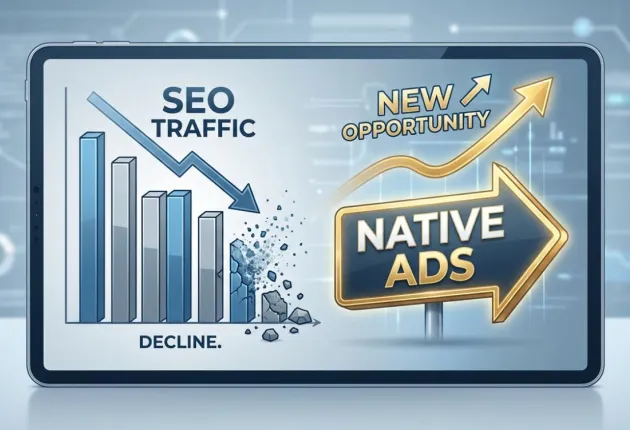
As Google search traffic declines, publishers are under growing pressure to replace lost revenue, creating new opportunities for native advertisers. Performance marketers can use competitive ad intelligence to identify undervalued publisher inventory, study proven campaigns, test networks, and secure favorable placements before pricing and competition normalize.
Rachel Thompson
12 minAug 9, 2026
Platform changes can disrupt profitable campaigns before advertisers even understand what changed. By monitoring competitor creative shifts, campaign longevity, geographic movement, and channel changes through ad intelligence, performance marketers can spot early signals of algorithm updates, policy changes, and shifting auction dynamics—giving them time to adapt before the impact reaches their own campaigns.
Elena Morales
7 minAug 8, 2026
Guide
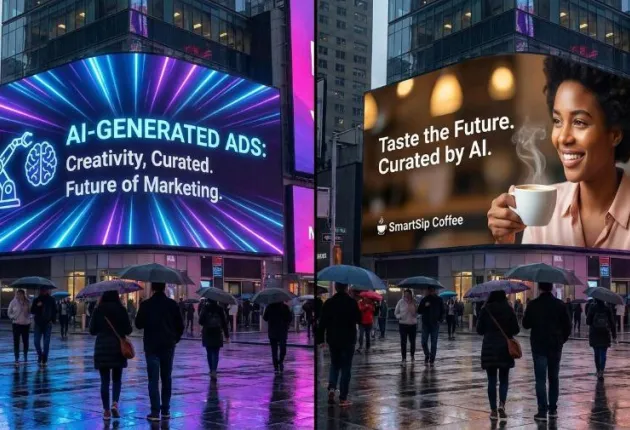
AI has made ad production faster and cheaper, but it is also pushing brands toward increasingly similar creative. As generic AI output fills the market, competitive ad intelligence becomes the missing input: marketers can identify saturated patterns, find emerging opportunities, and give AI real market context before generating new creative. The result is a repeatable process for creating ads that are differentiated rather than simply more numerous.
8 minAug 8, 2026
Recently Updated
AI has made ad creation faster, cheaper, and more accessible, but that advantage is quickly becoming universal. As creative production becomes commoditized, competitive intelligence becomes more important—not less. By tracking what competitors are actually running, where they are investing, and which creative patterns persist, marketers can give AI better strategic inputs and avoid producing more of the same.
10 minAug 8, 2026
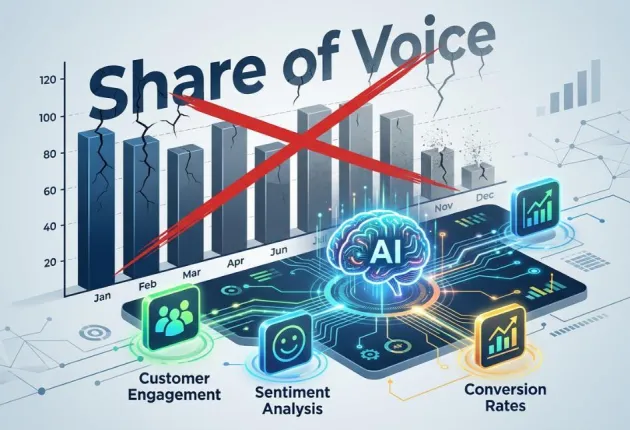
AI Share of Voice is valuable for brand marketers focused on visibility, but it offers little practical value for performance marketers who compete in paid advertising auctions. Instead, advertisers should track competitive ad presence—campaign longevity, geographic expansion, creative volume, and network coverage—to identify proven offers, discover scalable markets, and make faster media buying decisions based on real advertising activity rather than fluctuating AI citations.
6 minAug 7, 2026
Showing 6 of 23