
8 minAugust 31, 2026

Our tools monitor millions of native, push, pop, and TikTok advertising campaigns.
Get StartedScroll any OOH job board and you’ll see endless openings for account executives, ops managers, and installers—but not a single role whose mandate is to know, with discipline and precision, what every competitor is running, where, and for whom. In a digital world where “ad spying” tools are considered basic hygiene and marketers obsess over what rivals launch on Meta or Google, OOH still treats competitive ad intelligence as a nice-to-have side task, the same way many independent operators only later admit they treated marketing itself as an undefined, reactive function that someone squeezes in “alongside their real job,” as Jonathan Graviss has described.
That blind spot is no longer harmless. Buyers are quietly shortlisting vendors long before a rep calls, often through search journeys where the operators who show up—or don’t—win or lose without realizing a decision was ever on the table, just as a stronger operator can miss an inbound entirely because their presence lives on “page three,” out of sight and out of contention, as another OOH Today analysis makes painfully clear. In that environment, not having anyone whose job is to systematically track what your competitors are selling, how they package it, and which brands are already in their orbit isn’t just an oversight—it’s a structural disadvantage that leaks deals, pricing power, and market share every single quarter.
If you want to understand what an industry truly values, don’t listen to the keynotes—read the job ads.
Scroll through the recurring “10 OOH Employment Opportunities” roundups on any given week and a pattern snaps into focus. In the May 23rd classifieds, the roles clustered neatly into two buckets: revenue and delivery. On the revenue side you see listings like a Business Development Representative in New York for Liquid Outdoor Media, Ad Sales Account Executives in Miami, Dallas Sales Representatives, a National Account Executive in Los Angeles, and a Local Media Sales Executive in Denver, all framed explicitly as media sales or business development positions, as summarized in one of the recent.
On the delivery side, you get a tidy mix of Director of Operations, Graphic Designer/Brand Marketing Specialist, Sign Installer, and LED Video Screen Service & Installation Tech. Another week’s batch, published May 30, repeats the same structure almost verbatim: the same Liquid Outdoor Media Business Development Representative role in New York, more Ad Sales Account Executives, and the same slate of operations, design, and installation jobs, as documented in the later.
What’s missing is almost louder than what’s there.
There is no “Competitive Intelligence Manager – OOH,” no “Market Insights Lead – Outdoor,” no “Category Analyst, Competitor Campaigns.” No one is explicitly paid to know, in a structured, ongoing way, which brands are on which boards, what creative is live in which markets, how share of voice is shifting, or where rivals are quietly scaling formats or categories.
Instead, the assumption is that sales reps “just know” what’s going on because they’re in the field, driving to meetings, or chatting with agencies. The Liquid Outdoor Media Business Development role, for example, is framed as “heavily” focused on new business development and proactive outreach to larger regional advertisers and agencies, emphasizing a “fast-paced, competitive team-oriented environment” and relationship-building, as the job description highlights. But nowhere does it say this person is responsible for systematically documenting where those same advertisers are already spending in OOH, which competitor networks they favor, or how category creative is evolving across markets.
The competitive lens shows up only as a vague character trait (“competitive environment”) rather than an operational discipline. “Competitive” here means you like to win deals, not that you maintain a living map of your rivals’ footprint, pricing posture, and client mix.
This isn’t how adjacent parts of the advertising ecosystem behave. On the buy side and in digital channels, “ad spying” and competitive creative tracking are so normalized they’ve become part of the basic marketing stack. Tools that record every Facebook or Google ad a competitor runs are considered table stakes. Yet in OOH, the closest analog most organizations have is a Slack channel for “cool campaigns we saw on the highway” and the occasional pitch deck slide labeled “category landscape” assembled from memory and drive-by photos.
The job boards simply mirror this blind spot. They reflect an industry mental model where:
When competitive intelligence does surface, it’s treated as a side quest. A sales manager might ask reps to “keep an eye on” what Lamar or OUTFRONT is doing in a region. An ops director might notice a rival suddenly wrapping more trucks or lighting up more large-format digital spectaculars in a lifestyle center. But these are anecdotes, not a job description, and certainly not a career path.
The silent gap in OOH job listings isn’t just semantic. It signals an industry that still largely believes competitive insight will somehow emerge organically from the field, rather than being something you hire for, tool up for, and measure. Until that belief changes, the boards will keep filling with sellers and installers—and the most actionable market intelligence in OOH will remain everyone’s job, and therefore no one’s.
In most mature ad channels, “what are my competitors doing?” isn’t a curiosity—it’s a funding line.
Search, social, programmatic, and even email all treat competitive ad intelligence as table stakes. There are job families, tools, and workflows built around it. No one would dream of running serious Google Ads without regularly checking rivals’ keywords and creatives in tools like SEMrush or Similarweb, or managing a multimillion‑dollar paid social budget without constantly reviewing what other brands are running through Meta’s own Ad Library. In digital, the assumption is simple: if you’re not watching the market, you’re flying blind.
You see it reflected everywhere in how those ecosystems hire. Performance marketing teams routinely include roles whose explicit charter is to monitor competitor activity: “Growth Marketing Analyst – Competitive Intelligence,” “Market Insights Manager – Paid Media,” “Performance Strategy Lead – Category Intelligence.” These people aren’t generalists who might glance at a rival’s ad once in a while; they are responsible for ingesting, structuring, and circulating what the competition is doing across search, social, display, and programmatic so planners and buyers can react.
By contrast, when you look at how OOH staffs its organizations, that kind of mandate is conspicuously missing. Weekly classifieds roundups in out‑of‑home trade press are filled with frontline sellers and operational specialists, but nothing like a dedicated competitive insights function. In the May 23rd postings, for example, the roles flagged in “10 OOH Employment Opportunities” were a roll call of revenue and delivery: Business Development Representative, Ad Sales Account Executive, Sales Representative, National Account Executive, Local Media Sales Executive, Billboard Ad Sales Account Executive, plus a Director of Operations, Graphic Designer, Sign Installer, and LED Service Tech, as OOH Today’s classifieds listing made clear. A week later, the May 30th roundup repeated essentially the same pattern of sales and operations headcount, again with no sign of anyone tasked with systematically cataloging competitors’ campaigns, as the follow‑up “10 OOH Employment Opportunities” feature on OOH Today illustrated.
That gap stands out even more when you compare it to the rigor with which other channels operationalize market watching. In paid search, competitive analysis is woven into the daily workflow: marketers are expected to know which rivals are bidding on their brand terms, what offers show up in ad copy, and how auction dynamics shift over time. Agencies pitch this as a core value‑add, not a nice‑to‑have, regularly presenting screenshots of competitors’ search ads and impression share charts sourced from platforms like Google’s Auction Insights or third‑party trackers. In paid social, brand and performance teams alike benchmark their creative concepts and hooks against what they see in Meta’s and TikTok’s public ad transparency tools, as well as third‑party “ad spy” databases that catalogue the best‑performing UGC and direct‑response ads in each vertical.
Even email and lifecycle teams, often seen as slow and “owned” versus competitive acquisition channels, keep their own watchtowers. Specialists subscribe to every relevant competitor newsletter, run them through parsing tools, and log subject lines, send cadence, and promotional cycles into shared spreadsheets or dashboards. When a rival ramps up a discounting streak, changes its welcome series, or starts pushing a new category, that information flows quickly to retention and acquisition leads who can adjust messaging and offer strategy.
The throughline: in other channels, competitive ad intelligence is not an ad‑hoc favorite pastime of a few sharp sellers; it’s a formalized discipline with owners, tools, and outputs. The question isn’t whether you watch competitors, but how robust your system is. That’s why a search director can tell you, with receipts, how three main rivals shifted budget over the last quarter, and a paid social manager can show you a deck of 50 competitor ads annotated for hooks, formats, and offers.
OOH, on the other hand, still tends to treat competitive awareness as something you pick up by osmosis: what a rep notices on their commute, what a client casually mentions, what someone snaps a photo of at a conference. The industry has salespeople and operations teams doing heroic work, as those weekly job boards demonstrate. What it doesn’t yet have—at least not in any systematic, advertised way—is the equivalent of the search strategist who lives inside auction insights or the social analyst who lives inside ad libraries.
Other channels proved long ago that once you give competitive intelligence a clear owner and a clear mandate, behavior changes. Budgets get reallocated faster. Creative evolves faster. Category shifts are spotted earlier. The missing piece in OOH isn’t a philosophical belief in watching the competition; it’s the step every other channel has already taken: making that watchtower an actual job.
If other channels treat competitive intelligence as non‑negotiable, why hasn’t OOH even named the function, much less hired for it?
The short answer: the industry’s org charts, mental models, and incentives are still wired for a different era. Competitive ad intelligence doesn’t show up in job titles because it doesn’t yet exist as a recognized problem to solve. It gets dissolved into “sales hustle,” “marketing support,” or “owner’s instinct.”
Start with what the industry actually hires for. In the May 23 employment roundup, the roles line up almost perfectly into two lanes: people who bring money in and people who make the product show up. Sales-heavy listings like “Business Development Representative (Media Sales)” at Liquid Outdoor, “Ad Sales Account Executive,” and “National Account Executive” dominate the page, all framed around prospecting, pitching, and closing new advertisers, as the “10 OOH Employment Opportunities” classifieds make clear. On the other side, roles like “Director of Operations,” “Graphic Designer/Brand Marketing Specialist – OOH,” “Sign Installer,” and “LED Video Screen Service & Installation Tech” exist to fulfill campaigns once they’re sold.
There is no third lane on that list—no “Market Intelligence Manager,” no “Competitive Insights Analyst,” no “Category Strategy Lead.” Not even as a bullet point buried inside a sales or marketing role. The labor market is a mirror, and what it reflects back is that OOH organizations see revenue and delivery as the only essential muscles. Everything else is “nice to have.”
That same two‑bucket mindset shows up in how independent operators approach marketing itself. When Jonathan “JG” Graviss describes how most small and mid‑size plants make their first marketing hire, the picture is unmistakably reactive. The owner has been winging it. A rep has been hacking together social posts between cold calls. Eventually something hurts enough that they make a hire to “relieve pressure,” usually without a defined scope or success metric, as his breakdown of first‑time marketing hires points out. The new marketer inherits a backlog of neglected tasks: a website refresh, dormant social channels, ugly proposal decks, trade show logistics.
None of that is market or competitive intelligence. It’s production. It’s brand hygiene. It’s necessary work, but it’s inward‑facing. When the first “marketing” seat is defined as “do all the stuff nobody else has time for,” there is zero political oxygen left for a role whose job is to look outward, synthesize competitor behavior, and feed strategy.
This is the setup problem Graviss is really warning about: the decision to “hire marketing” and the decision of what marketing is supposed to do are treated as the same conversation. In that framing, a competitive intelligence hire is impossible. You cannot justify a new, non‑revenue seat for an undefined function when your only mental model for marketing is “the person who makes our sell sheets pretty,” as his column on setup failures makes painfully clear.
Layer on three structural headwinds:
Combine those factors and you get an industry where competitive ad intelligence is functionally everyone’s side‑gig and no one’s job. Owners assume their memory and network are sufficient. Sales teams assume being “competitive” just means grinding harder. The rare marketing hire is granted a sprawl of tactical tasks that keep them too busy to ask, “What are our rivals actually doing, and how should that change what we sell, build, and say?”
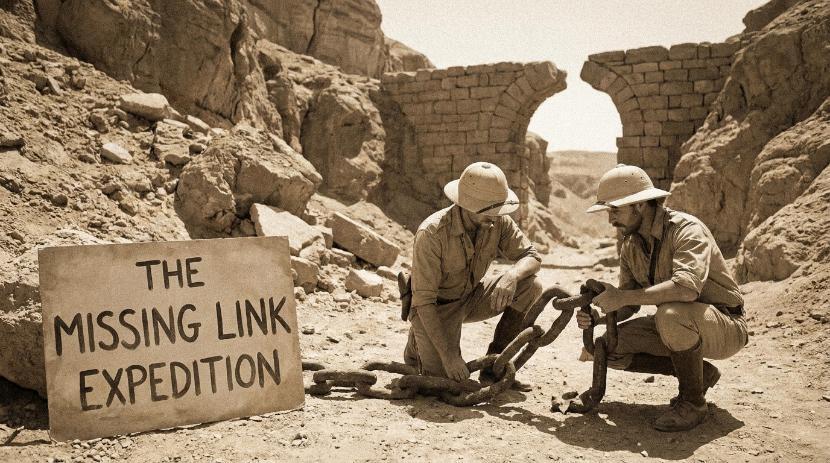
Until OOH rewrites that script—adding a third lane to its org chart that values learning the market as much as selling into it and delivering on it—competitive ad intelligence will remain a missing link: widely needed, quietly practiced in fragments, but almost never named on a job posting.
The most dangerous thing about OOH’s lack of competitive ad intelligence isn’t the money you lose on bad deals. It’s the money you never even get the chance to lose.
When you don’t know where competitors are showing up, what they’re charging, or which brands are already testing the market, entire revenue streams disappear before your sales team ever hears about them. It feels like a soft quarter or a tough category. In reality, there were live opportunities moving through the market — they just never crossed your radar.
You can see this clearly in digital channels. Performance marketers assume there are unseen auctions firing all day long; that’s why they obsess over impression share, lost auction insights, and competitor keyword overlap. They accept that “deals you never see” are a structural risk, and they invest in tooling and talent to shrink that blind spot.
OOH, by contrast, still behaves as if every deal is the result of a relationship, a phone call, or a lunch. The operating assumption is: if there’s money to be had in my market, my reps will hear about it. But that’s already untrue.
As one regional marketing manager story in an OOH-focused case study illustrates, a buyer expanding into a new market will open a browser, search for outdoor options, and skim a few operators’ sites. In that example, the operator with the largest footprint and deepest experience “did not lose a deal. They never knew a deal existed,” because their site was buried on page three of search results, far below the competitors the buyer actually contacted, as Jonathan Graviss describes. That’s not a sales objection. That’s pure invisibility.
Competitive ad intelligence in OOH is fundamentally about making those invisible moments visible. It’s the function that would tell you:
Without that lens, your P&L starts to absorb a series of hidden taxes.
First, there’s a pipeline tax. Classifieds pages filled with roles like “Business Development Representative,” “Ad Sales Account Executive,” and “Local Media Sales Executive” all lean on hunter language — more calls, more outreach, more hustle — but not a single listing mentions a responsibility for monitoring competitive placements, pricing, or share of voice, as a recent rundown of OOH employment opportunities makes clear. When no one owns competitive awareness, your team’s answer to every soft patch is more activity, not better targeting. They chase what they can see, not what’s actually happening.
Second, there’s a pricing and positioning tax. If you never see the full slate of campaigns running across your market, you can’t accurately benchmark what premium location, data integration, or creative services are worth. You’ll either underprice — and quietly leave margin on the table — or overprice and get written off early in the planning process. In both cases, the damage rarely shows up as “we lost because of X competitor.” It surfaces as generic feedback: “budget constraints,” “different direction,” “client decided to pause.” The real story is that someone else told a clearer, more data-backed story about why their locations and format mix were the better buy.
And that leads to the narrative tax. In every other digital channel, competitive intelligence is raw material for storytelling: “You’re underweight on YouTube versus your top three rivals,” or “Your main competitor just launched a conquesting campaign on your brand terms.” That kind of insight turns a media vendor into a strategic partner.
In OOH, most pitches still sound like inventory tours and rate cards because operators don’t have the competitive context to do anything else. You can’t credibly say, “Your category is already testing large-format digital at these three intersections, but no one has locked up transit or street furniture yet,” if you don’t have a disciplined way to see that activity in the first place. The result is a story that starts and ends with what you own, rather than what the client could be losing to in the real world.
The cost of flying blind, then, isn’t just missed emails or slow quarters. It’s the slow erosion of your strategic relevance. Every time a buyer plans OOH without you — because you weren’t visible, you didn’t know the competitive landscape, or you couldn’t frame their opportunity against what rivals are doing — you’re training the market to see you as optional. Competitive ad intelligence is the missing link not because it’s a nice-to-have dashboard, but because it’s the only way to systematically surface the deals you never see and underpin the stories you currently can’t tell.
If competitive ad intelligence is the missing function, then the OOH industry needs an actual seat for it: a role with a name, a mandate, and a dashboard. Call it the OOH Competitive Intelligence Manager.
This is not a rebranded sales manager or a data analyst with a new slide template. It’s a cross‑functional operator whose job is to answer three questions, every week:
From those questions flow the real responsibilities.
First, market and competitor mapping. Right now, “who else is on the street?” tends to live in reps’ heads and occasional drive‑bys. A Competitive Intelligence Manager builds a systematic view. They maintain an always‑on inventory of which advertisers are showing on rival structures, at what scale, and in what patterns. When a regional brand suddenly appears on five competitor digitals along a bypass you also serve, that becomes a signal: this category is active, this advertiser is open to OOH, and this corridor is being priced — data your team can actually act on instead of discovering it by accident on the way to lunch.
Second, search‑side visibility. Buyers are already doing their own reconnaissance long before your rep hits send on a prospecting email. As Jonathan Graviss describes in his piece on why your next advertiser might already be searching for you, a regional marketing manager will often shortlist operators from a quick browser query or an AI assistant’s answer. The Competitive Intelligence Manager treats that digital and AI surface as contested ground. They monitor which competitors are being recommended in common “outdoor advertising in [city]” searches, how those operators describe their inventory and value, and where your own web presence fails to earn a slot in the consideration set.
That means partnering with marketing, but with a different lens: not “How do we rank?” but “Who is beating us to the buyer’s first impression, and why?” If an AI tool is summarizing your rival as “the leading digital billboard provider in the metro area” because their site is rich with structured data and case studies, while you’re a generic name in a directory, that is competitive intelligence — and it’s the manager’s job to surface it with clear recommendations on content, schema, and proof points that change how you show up.
Third, pipeline surfacing. The primary value of this role is making invisible demand visible. When a new category starts testing OOH in a neighboring market, when a national brand begins rotating creative hinting at a product launch, when a competitor suddenly fills boards with a DTC logo you’ve never heard of — those are opportunities to pre‑empt “We already did a test with someone else.” The Competitive Intelligence Manager formalizes this by building a “watchlist” of priority brands and categories, then briefing sales weekly on who’s moving where, with suggested outreach angles and likely budget levels.
This is where the role diverges sharply from what shows up in today’s job ads. Current listings skew toward frontline revenue and operations: sales managers, account executives, real estate leads, installers, and techs, as seen in the mix of positions like sales manager, ad sales account executive, and director of operations in recent employment opportunities. Someone is always responsible for “identifying new business opportunities,” but it is tacked onto a quota‑carrying role, not treated as an intelligence function with its own tools, cadence, and KPIs.
In contrast, an OOH Competitive Intelligence Manager would:
The deliverable isn’t a slide deck; it’s a steady stream of “Here’s what we’re not seeing yet, and here’s how to go get it.”
Put differently: sales owns the conversation; operations owns the structures; marketing owns the story. A Competitive Intelligence Manager owns the map — the living picture of how money, attention, and competitors are actually moving through your markets — and makes sure everyone else is steering by it instead of by memory and hunches.
Receive top converting landing pages in your inbox every week from us.
Must Read
Discover how AI-generated ad fatigue is making native, push, and TikTok campaigns increasingly look alike, weakening engagement and reducing competitive advantage. Learn how to use competitive ad intelligence tools to identify repetitive creative patterns, develop more distinctive ads, and stand out in AI-driven advertising auctions.
Liam O’Connor
7 minOct 14, 2026
How-To
Learn how to connect out-of-home (OOH) advertising with digital performance campaigns to create measurable cross-channel funnels. Discover how to plan LED truck routes, coordinate search and social ads, optimize mobile landing pages, and track conversions so physical advertising drives measurable business results.
Samantha Reed
7 minOct 13, 2026
How-To
Discover how big-brand sports sponsorships use fan behavior, geographic targeting, and cross-channel advertising to reach high-intent audiences beyond celebrity endorsements. Learn how to reverse-engineer sponsorship strategies, validate audience segments with competitive intelligence, and build cost-effective campaigns around local fandom, CTV, mobile, and creator content.
Dan Smith
7 minOct 12, 2026













)