9 minAugust 29, 2026

Our spy tools monitor millions of TikTok ads from over 55+ countries. Biggest TikTok Ad Library in E-commerce and Mobile Apps!
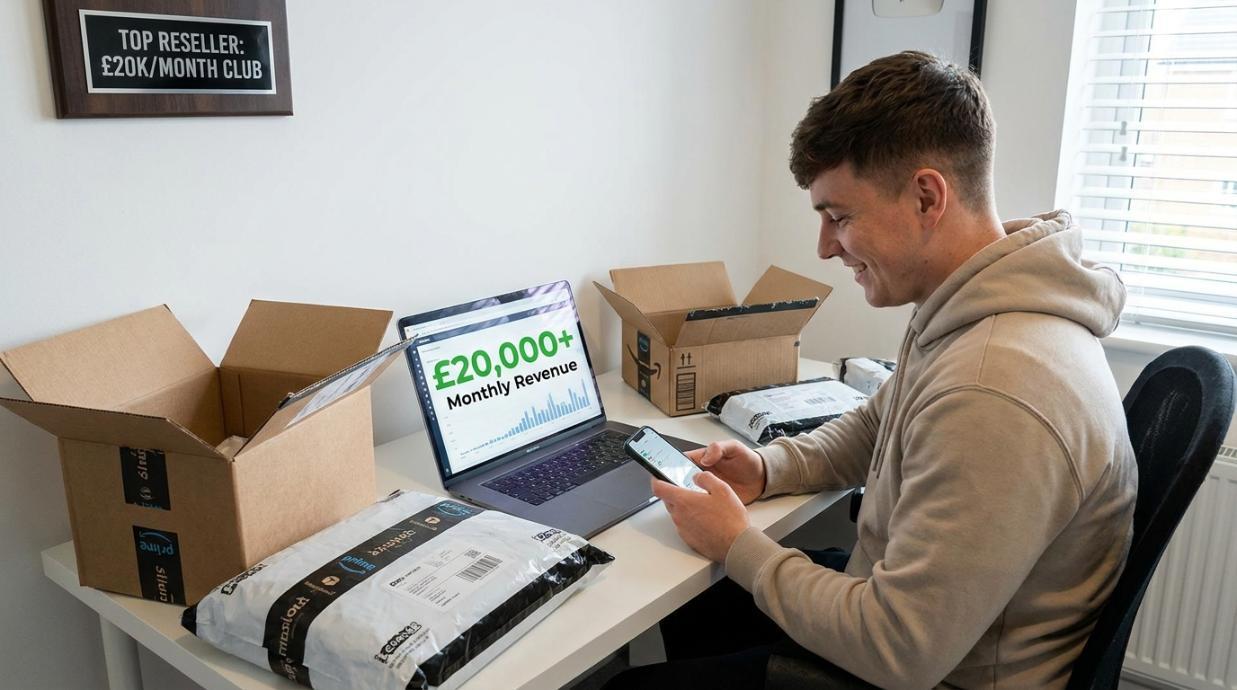
Try It FREEA 20-year-old reseller quietly making £20,000 a month on TikTok isn’t outgunning Kraft Heinz’s nine-figure media machine because his videos are slicker or his budget is bigger; he’s winning on the one skill a CPG giant can’t simply outspend him on: the reflex to constantly sniff out where attention and arbitrage are moving next, then move with it before anyone has written the case study. While Kraft Heinz is locking in a five-year global NFL partnership and ramping marketing investment by 37% year over year to keep legacy brands at the “center of culture,” the kid with a ring light and a Shopify login is treating every channel as disposable — a temporary edge to exploit until the CPMs climb and the algorithm cools.
That mindset turns out to be better adapted to the actual media economy we’re in, where almost every incremental dollar of ad growth has been swallowed by a handful of giants and everyone else is fighting over a pie that, as one analysis of the so‑called “Gilded Age” of advertising puts it, stopped getting bigger the summer TikTok showed up. When TikTok merged Musical.ly in 2018, most senior marketers shrugged it off as a lip-sync fad; eight years later it’s a 1.7‑billion‑user behemoth that absorbed so much demand that platforms like X watched blue‑chip advertisers cut annual spends from tens of millions of dollars to budgets a mid-sized dental practice could match. Yet for all that, only about 26% of marketers are running serious TikTok campaigns, even as the platform drives $33.1 billion in ad revenue and conversion rates that, as performance marketers now document, rival lower‑funnel stalwarts. In that gap between where the budgets are and where the attention actually lives, small operators have built six‑figure businesses by treating channel choice as a living hypothesis instead of a loyalty program.
Contrast that with the way most large brands are wired to behave. Kraft Heinz’s CMO talks about reinventing century‑old staples by meeting consumers “wherever attention lives,” from pantry staples to game‑day experiences and TikTok feeds, but the company’s real bets are still locked into long-dated partnerships, annual planning cycles, and platform commitments negotiated at holding‑company scale. That’s not incompetence; it’s the rational behavior of an incumbent optimising inside a fixed ecosystem. The 20‑year‑old reseller doesn’t have that constraint. He can ride TikTok Shop this quarter, short‑form live streams on another app the next, and some underpriced retail media network after that, dumping any channel the moment the math stops working. In a landscape where channels churn every 18 months, attention is fragmented, and ad inventory is effectively an auction that punishes slow movers, it’s the brands that treat their media mix like a portfolio of constantly tested hypotheses — not a set of relationships to honor — that are quietly getting the best return on every pound they spend.
Kraft Heinz is about to spend more on a single sports partnership than most DTC brands will see in a decade—and by traditional standards, it’s a smart bet. The company just inked a sweeping, multi-year deal with the NFL to keep its pantry brands woven into tailgates, broadcasts, and big cultural moments, a move their CMO frames as “showing up wherever attention lives,” from stadium parking lots to TikTok feeds, in order to keep 70-plus heritage brands culturally central rather than nostalgic curiosities, as an interview in Adweek puts it. That’s the classic enterprise view of channels: identify where the most reliable attention is, secure a defensible position with a big check, then scale creative and media efficiencies on top.
The kid doing £20k a month reselling trainers on TikTok is playing an entirely different game. He isn’t “present wherever attention lives” in some abstract sense; he’s glued to the minute-by-minute shifts of where attention is undervalued. He hops from organic For You virality to Spark Ads, from short-form hauls to live shopping, from his own profile to affiliate placement in other creators’ videos, as soon as he senses that a format’s CPMs, conversion rates, or algorithmic push are momentarily out of sync with how many other sellers are exploiting it. He’s not loyal to TikTok so much as he is loyal to the process of discovering whichever slice of TikTok (or Instagram, or Snapchat, or Discord) is briefly mispriced.
Look closely, and Kraft Heinz and the reseller actually agree on one thing: the funnel is no longer linear. Consumers don’t discover on TV, consider on social, and convert in-store in a neat progression. As Digitas’ Liane Nadeau argues in a Cannes conversation covered by AdExchanger, people now discover, consider, and buy in a single swipe across platforms that refuse old channel definitions. In that “fluid funnel,” programmatic is just plumbing, not a channel, and the real work is orchestrating networked experiences that travel with the user.
But here’s the split: big CPG still tends to interpret that fluidity through the lens of channel planning—how do we map all these touchpoints into a durable, multi-year portfolio of “must buy” environments? The NFL deal, creator partnerships, TikTok presence, and retailer media all roll up into an architecture of flagship channels that can be modeled, forecasted, and optimized year over year. The £20k reseller, by contrast, interprets fluidity as a license to abandon any “architecture” the moment the numbers tell him the edge is gone. He doesn’t need predictable reach; he needs the next pocket of arbitrage.
That edge rarely shows up if you only study where competitors are already entrenched. Enterprise marketers are being coached to watch for sustained spend as proof of channel fit, and to treat rising budgets on a given platform as evidence that “it’s working for the category,” a pattern performance analysts describe on the Semrush blog when they recommend tracking multi-month trends in competitor ad spend. That’s helpful for de-risking nine-figure commitments; it’s almost irrelevant to someone whose whole advantage lies in skating to empty ice—formats, placements, or geos where competitors aren’t yet spending and where CPCs haven’t been bid into oblivion.
Instead of obsessing over established TV or retail media line items, the reseller tracks micro-signals: a TikTok live shopping feature getting a sudden organic push, a drop in CPIs on YouTube Shorts as Google leans into new inventory (mirroring the way app marketers have seen Shorts undercut traditional video CPIs by more than 20%, as a multi-channel UA guide from App Samurai notes), or a weekend where creators in his niche are testing a new hook structure that’s clearly overperforming. His “media plan” is a rolling series of experiments, not a fixed stack ranked by historical GRP.
Even on TikTok itself, you can see the difference between channel loyalty and channel discovery. Brands treat TikTok as one giant line item—“We’re on TikTok now”—and then gravitate toward premium, predictable placements like TopView and high-reach sequential formats designed for tentpole moments, the kind of buys TikTok is packaging in offerings like TopReach and multi-ad storytelling units described in Neil Patel’s breakdown. Those products absolutely have their place, especially when you’re trying to dominate a cultural weekend. But the reseller doesn’t care about owning a moment; he cares about milking whatever corner of TikTok Shop is momentarily converting at 6x ROAS before the rest of the market notices.
In other words, Kraft Heinz’s $100M bet is optimized for certainty across a known portfolio of winning channels. The £20k reseller’s hustle is optimized for optionality in discovering the next one. One worldview assumes that the job of a marketer is to deepen roots in the channels that have already “proven out.” The other assumes that, by the time a channel has a name, a rate card, and a conference panel, the real upside has already moved on.
Kraft Heinz isn’t doubling down on NFL inventory in a vacuum. It’s doing what almost every large advertiser has been trained to do in a market where growth has stalled: defend share inside a shrinking pie by clinging harder to the channels that have historically “worked.”
That pie really is stagnant. Outside the big five platforms, the rest of the ad industry has been effectively flat since TikTok went mainstream. As one analysis of the so‑called “Gilded Age” of modern advertising points out, non‑oligopoly ad spend has hovered around the same level for years while TikTok and the other walled gardens absorbed “every incremental dollar of advertising growth” since 2018, the year it merged Musical.ly into what became a 1.7‑billion‑user attention sink. That same piece notes how once‑dominant channels like X have seen top‑spending brands slash budgets from eight figures to amounts a “mid‑sized dental practice” could match, underscoring how brittle channel fortunes have become when the market stops expanding and attention shifts elsewhere.
In a world where the overall pie isn’t growing, big brands respond with defensive channel loyalty. The logic is simple: if the CMO can’t show total category growth, they can at least show stability in the places procurement knows how to benchmark. That’s why you get $100 million poured into legacy partnerships instead of 50 smaller, riskier experiments. The budget is locked into “TV,” “search,” “social,” and “sponsorships” line items not because consumers move this way, but because the spreadsheet does. As Digitas’ Liane Nadeau has argued, traditional “channel planning” is an artifact of the org chart—TV budget here, audio budget there—even though real people now discover, consider, and buy in a “fluid funnel” that jumps across platforms in seconds.
The catch is that when the consumer journey liquefies, love for specific channels morphs from an asset into a liability. Loyalty to the NFL deal, to linear GRPs, to a decade‑old Facebook playbook gives the illusion of safety precisely when it blocks you from following where marginal attention and underpriced distribution are actually moving.
You can see this disconnect in how marketers talk about the big platforms themselves. TikTok still lives in many plans as a “niche” or experimental line, despite the fact that the platform generated $33.1 billion in global ad revenue in 2025, grew that revenue 43% year‑over‑year, and now outperforms rival social platforms with a 3.7% engagement rate. More than half of its users have purchased after seeing a product featured there, and TikTok Shop did $15.82 billion in U.S. sales in 2025 alone. Yet only about 26% of marketers are running serious campaigns on the platform, a gap that exists largely because budgets are structurally anchored to legacy channels they “know how to buy” rather than to wherever attention and commerce have actually shifted.
Underneath that inertia is a mental model that assumes channels are stable, discrete lanes: TV for awareness, search for intent, social for engagement. But the walled gardens have already demolished those neat boundaries. In mobile, Meta and TikTok now function as a “discovery layer,” where creative‑driven algorithms find high‑LTV users based on hooks and content, while Google App Campaigns and Apple Search Ads sit at the “intent layer,” catching people ready to act. Each channel is less a box on a plan than a tool in a continuously optimizing system. When big brands cling to old categories instead of asking “what job does this touchpoint now do in the journey?”, they end up overfunding familiar lanes and underfunding emerging ones.
Channel loyalty feels rational in the boardroom because it maps to historical data, vendor relationships, and a reassuring sense of control. But in a saturated, oligopoly‑dominated market where new surfaces—from Shorts to Reels to creators’ own commerce layers—can spin up and scale in months, that loyalty quietly turns into opportunity cost. The £20k reseller isn’t winning because he’s disloyal for sport; he’s winning because he refuses to confuse a channel that once worked with a channel that still deserves his next incremental pound.
The uncomfortable truth hiding inside Kraft Heinz’s nine-figure NFL bet is this: most CMOs don’t actually need more money. They need the courage and systems to move money faster.
Ask CMOs and you get a very different story. A majority — 56% — say they don’t have the budget they need to execute their 2026 strategy, and more than half say they lack the necessary resources, according to Gartner data summarized by Marketing Dive. But those same surveys also show marketing budgets as a percentage of revenue are basically flat year over year. The top-line wallets aren’t being slashed; they’re being frozen. The constraint isn’t absolute spend, it’s allocation agility.
Kraft Heinz is a perfect example of how this plays out at scale. The company did not suddenly discover a forgotten vault of cash. It carved out $600 million for a turnaround plan and then chose to pour nearly an extra $100 million of that into marketing specifically, lifting marketing to at least 6% of net sales in 2026, as its leadership detailed in prepared remarks covered by Marketing Dive. That uplift sounds bold, but it’s still in line with industry norms and only a modest step up from the ~5.5% of revenue they had already committed, based on earlier disclosures reported by.
What’s actually changed is not the existence of a budget, but where and how aggressively it gets pointed. Kraft Heinz has “reallocated dollars towards higher-return brand media” and consolidated around “fewer, more effective media partners,” as its CEO explained on the earnings call, a shift that coincides with big, visible anchor deals like the five-year NFL partnership and a sweeping pact with Disney’s media and experiential footprint, moves described in detail in earnings coverage. That’s not a spend-more reflex; that’s a rebalance-more-decisively reflex.
The problem for most CMOs is that their allocation reflex still runs in the opposite direction. When pressure mounts, they default to channel loyalty: defend the “proven” line items, water everything else. But in a world where the walled gardens, streaming, retail media, and emerging discovery surfaces are continuously reshaping attention, defending a static mix is a form of self-imposed austerity.
Performance marketers in mobile have already admitted this out loud. In 2026, sophisticated user acquisition teams talk about multi-channel as a default, not an experiment, building engines that treat each platform as a specific tool in a broader system. Walled gardens like Meta, Google, TikTok, and Apple Search Ads have become “creative intelligence platforms,” where the game is feeding algorithms diverse hooks and letting them find high-intent, high-LTV users, as outlined in AppSamurai’s playbook on multi-channel UA. Crucially, these teams don’t ring the CFO every time they want to test YouTube Shorts or a new ad network; they re-route portions of existing spend and make the test pay rent by proving incremental value.
B2B and brand CMOs can steal that logic without copying the channels. The question isn’t “Can we afford to test X?” It’s “What 5–10% of our current mix is clearly underperforming and should be reallocated to learning?” Competitive intelligence tools have already normalized this mindset. When a rival spikes spend in a channel and then abruptly retreats, analysts don’t declare that channel “too expensive”; they interpret the shift as a signal to re-examine their own mix, as the Semrush guide to competitor ad spend points out in its discussion of reading spend changes as performance signals. Budget becomes a portfolio to be optimized, not a fixed tribute to last year’s favorites.
This is where AI is being misunderstood inside the C-suite. Seventy percent of marketers say AI is a key strategic goal, but only 30% feel they have the infrastructure to implement it properly, according to the same Gartner-based survey cited by Marketing Dive. The temptation is to lobby for a “new AI budget” on top of everything else. That is backwards. The first job of AI in marketing is not to justify new spend; it’s to expose where current spend is wasted, under-measured, or misaligned — and then free that trapped capital for channel discovery.
Todd Kaplan’s mandate at Kraft Heinz is instructive here. His remit isn’t “add more media,” it’s “keep 70 brands at the center of culture,” which he does by pairing big cultural platforms like the NFL with more experimental surfaces where younger audiences actually discover food, from social video to creator ecosystems, as he explained in an interview about managing legacy brands in a discovery-first world on Adweek’s Speed of Culture podcast. That cultural objective forces a portfolio mindset: no single channel can carry both reach and relevance, so budgets must be continually reallocated to wherever discovery is actually happening.
The £20k/month reseller understands this intuitively. They don’t complain about a lack of budget; they rotate the same budget through new surfaces until they find a pocket of underpriced attention, then scale into it. Enterprise CMOs are sitting on orders of magnitude more cash than that reseller — but until they treat budget as a discovery engine instead of a protection racket for legacy channels, they’ll feel just as constrained, no matter how many times the line item ticks from 5.5% to 6% of revenue.
Before you move a pound out of “safe” channels and into something new, your job isn’t to believe in that channel. It’s to treat the channel as a hypothesis, and to steal as much signal as you can from other people’s spend before you risk your own.
That’s what the £20k‑a‑month reseller is doing instinctively: spying before spending.
The wrong way to use ad intelligence is as a scoreboard: “Competitor X spends most on Meta, so we should too.” The right way is to treat every visible budget move as a live experiment someone else is running on your behalf.
Tools that track competitor ad spend and placements let you see not just where rivals are active, but how their behavior changes over time. You’re looking for three patterns:
If a competing DTC snack brand ramps YouTube Shorts and stays there for six months, they’re effectively telling you, “We validated this as a growth channel for impulse food.” If another player floods TikTok with premium formats, then abruptly disappears, you don’t just copy or reject TikTok; you write down a hypothesis: “TikTok works, but only with natively good creative and an offer that converts fast.”
Ad spend data alone can’t tell you whether a channel is fundamentally misaligned with your audience or simply misused. You need to look at the ads themselves.
If a competitor turned video on hard for a quarter and then stopped, a guide to analyzing rival budgets would tell you to inspect those creatives directly. In Google’s Ads Transparency Center, filter to YouTube or video formats and watch what they actually ran. Were they repurposed TV spots crammed into vertical frames? Was the hook buried five seconds in? Did they ever test creator‑led, product‑in‑hand demos?
The same logic applies on TikTok. Many legacy brands still treat it like “just another social feed,” even as the platform positions itself as a full‑funnel engine with Logo Takeover, Prime Time, and expanded Pulse inventory built specifically to absorb brand budgets. When you see a CPG rival dabble in TikTok, then retreat, you should be interrogating their approach:
If the creative and funnel are weak, their pullback tells you almost nothing about the channel’s potential; it tells you they ran an expensive bad test.
Ad intelligence becomes powerful when you pair it with a mental model of what each channel is for in your system.
In mobile UA, for example, sophisticated teams now treat Meta and TikTok as a discovery layer, and Google App Campaigns and Apple Search Ads as an intent layer, because those platforms have evolved into “creative intelligence” engines and high‑intent marketplaces respectively, according to a breakdown of multi‑channel UA in 2026. The important move isn’t “everyone is on TikTok”; it’s “TikTok is where we earn attention cheaply and learn what hooks work, which then informs what we push into search, TV, or retail media.”
So when you spy on competitors:
Kraft Heinz, for instance, talks about keeping its brands at the “center of culture” by pairing a five‑year NFL deal with algorithm‑native channels like TikTok and Reels, reading generational shifts “in real time,” as its CMO described on a podcast about their NFL partnership. That’s the mindset you want to reverse‑engineer from your competitors’ media trails: What role does each channel play in their machine?
Once you’ve built a picture of where others are exploring, your task is not to copy their allocations; it’s to write down explicit tests:
Every pound moved should be labeled with a hypothesis, a time box, and a kill‑or‑scale rule. Ad intelligence reduces the odds you’re walking into a dead channel; disciplined testing prevents you from turning someone else’s hunch into your next fixed cost.
The reseller does this instinctively in miniature: scan, spot an opening, run a £500 test, then either deepen or walk away. With the right spying discipline, an enterprise CMO can do the same thing with millions—turning channel choice back into a hypothesis, not a habit.
The £20k‑a‑month reseller doesn’t “optimize” like a brand team. There’s no six‑week creative sprint, three‑round approval gauntlet, then a nervous national launch. There’s a loop: find a new pocket of attention, lob in a rough message, watch the numbers for a week, and either double down or walk away.
They’re not playing the game of “perfect creative.” They’re playing the game of “right‑enough creative in the right place, right now.”
Contrast that with Kraft Heinz. The company is pushing at least 6% of net sales into marketing and has layered another $100 million onto a turnaround plan that leans heavily on a smaller number of “heavier‑hitting” partners, including a five‑year NFL pact and a broad Disney partnership. Those are monster bets that all but require you to believe the channel is right before you ever see a performance report. When your media plan is baked into multi‑year sponsorships and culture‑defining campaigns, the cost of being wrong about the channel is enormous, no matter how sharp the creative is.
The reseller’s loop attacks the problem from the opposite direction: assume you’re probably wrong about the channel, and get to that realization cheaply.
In performance terms, channel testing beats creative polishing for a simple reason: channel fit multiplies everything. App marketers have already internalized this. As App Samurai’s breakdown of modern user acquisition makes clear, different platforms now function more like tools in a kit than interchangeable “media.” Meta and TikTok are the discovery layer, where algorithms chew through hooks and formats to find people who didn’t know they wanted you. Google and Apple Search are the intent layer, harvesting demand from people actively looking. Ad networks are the reach and niche layer, getting you into places the walled gardens don’t cover well.
If your offer belongs in the intent layer but you insist on brute‑forcing your way through TikTok because “that’s where the culture is,” you’re just running perfect creative in the wrong room.
The reseller doesn’t overthink that taxonomy; they live it. They might skim competitor spend dashboards to see that rivals are quietly pouring more into YouTube Shorts or pulling back from display. They’re noting not just “who is spending where?” but “who kept spending there for more than a quarter?” Sustained spend is a clue the channel is working; a sudden drop is a clue it isn’t—at least not with the current approach. That’s enough to queue up a micro‑test: £500 into Shorts with three rough creatives, measure lead cost and retention, then decide whether to scrap or scale.
That loop—spy, test, decide—can cycle multiple times before a big brand team has even finished its annual media review.
Notice what this loop doesn’t require. It doesn’t require a full brand book for every new channel. It doesn’t require the CMO to convince a board that, this year, they’re exiting TV to fund a TikTok landgrab. It requires a bias toward small, fast deployments and a willingness to reallocate before the campaign case study is written.
When you run this way, “channel loyalty” starts to look like a liability. Kraft Heinz can talk, very credibly, about showing up “wherever attention lives” and building an entrepreneurial marketing culture that behaves more like a startup, as Todd Kaplan describes in his Speed of Culture conversation. But the economic reality of nine‑figure sponsorships and concentrated media partnerships is that you’re structurally slower to move money. The reseller, on the other hand, can decide on Monday that TikTok is tapped out for their niche and have 80% of that spend reallocated to search, Reddit, or an obscure ad network by Friday.
The point isn’t that big brands are foolish and scrappy resellers are geniuses. It’s that the mechanic that makes the reseller’s £20k work so hard is not magical creative; it’s their loop. They accept that most channels will fail for them and design a process that makes those failures cheap, quick, and informative. In a world where 56% of CMOs already feel underfunded for their future strategies, according to recent coverage, the edge won’t go to the marketers who can defend their existing channels the longest. It will go to the ones who can discover—and abandon—channels faster than everyone else, with creative that’s good enough to let the channel prove whether it deserves your loyalty at all.
Receive top converting landing pages in your inbox every week from us.
How-To
Learn how to connect out-of-home (OOH) advertising with digital performance campaigns to create measurable cross-channel funnels. Discover how to plan LED truck routes, coordinate search and social ads, optimize mobile landing pages, and track conversions so physical advertising drives measurable business results.
Samantha Reed
7 minOct 13, 2026
How-To
Discover how big-brand sports sponsorships use fan behavior, geographic targeting, and cross-channel advertising to reach high-intent audiences beyond celebrity endorsements. Learn how to reverse-engineer sponsorship strategies, validate audience segments with competitive intelligence, and build cost-effective campaigns around local fandom, CTV, mobile, and creator content.
Dan Smith
7 minOct 12, 2026
Guide
Discover how out-of-home (OOH) advertising can drive measurable conversions by connecting physical placements with digital performance campaigns. Learn how to use location intelligence, competitive insights, mobile OOH, TikTok retargeting, localized landing pages, and attribution to build high-ROI multi-channel funnels.
Rachel Thompson
7 minOct 12, 2026