11 minSeptember 1, 2026

Our spy tools monitor millions of native ads from over 60+ countries and thousands of publishers.
Get StartedFor decades, OOH sales has been powered by two things: relationships and instinct. The best reps could “read” a market, eyeball a location, and stitch together a package that felt right. That intuition still matters—but on its own, it’s now a liability. Modern marketers are under pressure to justify every dollar using the same granular, daily performance data they get from search, social, and programmatic display. When OOH is still sold as untrackable “boards and brand lift,” it gets pushed to the bottom of the plan.
The constraint was never OOH’s impact; it was its infrastructure. The channel evolved faster than the systems around it. As one overview of the category notes, OOH planning has long leaned on “gut feel,” while today’s growth strategies demand “massive amounts of granular data” to drive targeting, optimization, and competitive advantage—something OOH historically “lagged behind” on not because it underperformed, but because it lacked the right infrastructure. That gap is exactly where the new performance-era toolset lives.
Think about what has changed in just a few years. Digital formats, dynamic creative, mobile data, and now AI have turned OOH into a channel that behaves much more like digital media. As Jawad Hassan points out in his analysis of OOH measurement, the medium is becoming “more dynamic and responsive,” increasingly shaped by data and artificial intelligence, and now sits “closer in capability to digital media than at any point in its history” thanks to the growth of digital panels and smarter deployment and optimization tools. The problem is that many sales motions are still built for a static, one-sheet world.
A true performance media infrastructure fixes that mismatch at the system level. Instead of cobbling together PDFs, spreadsheets, and one-off data pulls, platforms like AdQuick put the entire OOH lifecycle—planning, buying, trafficking, and reporting—into a single, standardized environment. Their “universal adapter” approach automates the workflows that used to eat weeks, giving buyers instant access to the world’s largest aggregated OOH inventory and shrinking time-to-launch by as much as 10x, with some campaigns moving from idea to live execution in as little as 48 hours. For a sales team, that’s not a minor convenience; it’s the difference between being a slow, analog vendor and a fast, digital-native partner.
Just as important, these platforms democratize data and measurement so OOH can finally sit inside the same reporting stack as every other performance channel. Instead of vague “impressions,” APIs now feed verified store visits, OOH-driven web sessions, and the “halo effect” on adjacent digital campaigns directly into a brand’s omnichannel dashboards, delivering daily, granular ROI insights in near real time. That starts to answer the CMO’s most pointed question: “If I move budget into OOH, what happens to my cost per acquisition?”
The industry is also beginning to experiment with even more advanced layers of intelligence. In one recent campaign, fully agentic AI systems on both the buy and sell side collaborated to plan and execute an end-to-end DOOH initiative, coordinating complex tasks across parties with human guardrails in place. Broadsign describes this “agentic trading” approach—built on the largest global aggregation of static and digital OOH supply, enriched with screen-level audience indexes and dynamic creative—as the foundation for a “paradigm shift” that brings unprecedented scale, data, and efficiency to both buyers and sellers. This is not a speculative future; it’s a working prototype of what OOH sales infrastructure will look like.
Yet the full value of this infrastructure only materializes when measurement catches up. As Hassan underscores, OOH still suffers from fragmented methodologies and inconsistent metrics across markets and formats, creating friction for advertisers, agencies, and operators alike and limiting OOH’s ability to function as part of a “unified data ecosystem.” Performance-minded OOH platforms are effectively building that ecosystem from the ground up, aligning exposure, outcome, and attribution data with the standards buyers already use for other channels.
For OOH sellers, that shift from intuition-led pitching to infrastructure-powered performance is the bridge across the offline–online chasm. Once your inventory is accessible, comparable, and measurable in the same way as digital media, your role stops being “the billboard person” and starts looking a lot more like a performance media strategist who just happens to control some of the most attention-rich screens in the world.
Treating OOH as a standalone, “special case” channel is no longer just old‑school—it’s actively eroding its value in modern media plans.
When OOH lives in a silo, it gets sold as scenery: impressions, coverage, vibes. Meanwhile, the people controlling budgets are optimizing against CAC, ROAS, and incrementality across search, social, CTV, and programmatic. If your inventory and your pitch can’t plug into that performance stack, you’ve made OOH very easy to cut.
The irony is that OOH now generates exactly the kind of data that performance marketers crave. Platforms like AdQuick have effectively turned OOH into a “universal adapter” for the rest of the media ecosystem—normalizing location, audience, and outcome data so it can sit alongside Google, Meta, and Trade Desk reporting. That same infrastructure reveals another uncomfortable truth: when OOH is treated as a disconnected line item, buyers systematically under‑allocate to it because they can’t see the full‑funnel impact.
One of the most underused weapons here is the documented “halo effect” OOH has on adjacent digital campaigns. When OOH exposure lifts branded search, improves click‑through rates, or lowers CPAs in paid social, that incremental value often gets misattributed to the digital channels that are easier to measure. In a siloed model, OOH takes the budget hit while performance channels get the credit. In an integrated model, OOH becomes the multiplier that makes the entire mix work harder.
The same pattern is playing out inside operators. Many media owners have made real progress on execution—inventory systems, scheduling, basic automation—but they haven’t brought their sales culture or processes into a shared performance reality with the buy side. As one executive at Trillboards put it, OOH has “more data than ever, but very little of it is structured into usable intelligence,” which is why the company turned to hellOOH’s machine‑learning‑driven market intelligence platform. If your internal view of demand is still stitched together from last quarter’s orders and rep anecdotes, you’re operating on a different clock speed than the marketers optimizing campaigns daily.
That gap is widening fast. The first fully agentic, AI‑powered OOH campaigns are already live, with buy‑ and sell‑side agents collaboratively planning, optimizing, and reporting in real time. In one such initiative, Broadsign overlaid agentic AI on top of its global static and digital supply—complete with screen‑level audience indexes, dynamic creative, and guaranteed buying—to “transform the OOH business” into something that behaves like a true performance channel. For a growing lottery brand with limited budget, that wasn’t a shiny toy; it was a way to compete using first‑party performance data across channels rather than throwing generic GRPs at the wall and hoping something stuck.
When you look at those examples, the cost of clinging to a siloed OOH model becomes obvious:
The upside, however, is just as stark. As platforms bring OOH “into parity with modern performance channels” through real‑time data and AI‑powered optimization, the channel is no longer an outlier—it’s a performance lever that can be planned, tested, and scaled like everything else. The only real question is whether your sales motion evolves in step, or whether you keep selling OOH as if it exists in its own universe while the rest of the industry quietly moves on.
If OOH is going to sit at the same table as search, social, and programmatic, it needs something those channels take for granted: tight, fast feedback loops.
In digital, the loop is obvious. You launch a campaign, watch performance in near real time, and reallocate spend or swap creative in hours, not quarters. Historically, OOH has been the opposite: long lead times, lagging measurement, and “set it and forget it” media plans. The result is an intelligence gap that makes OOH feel slow and opaque next to the rest of the plan.
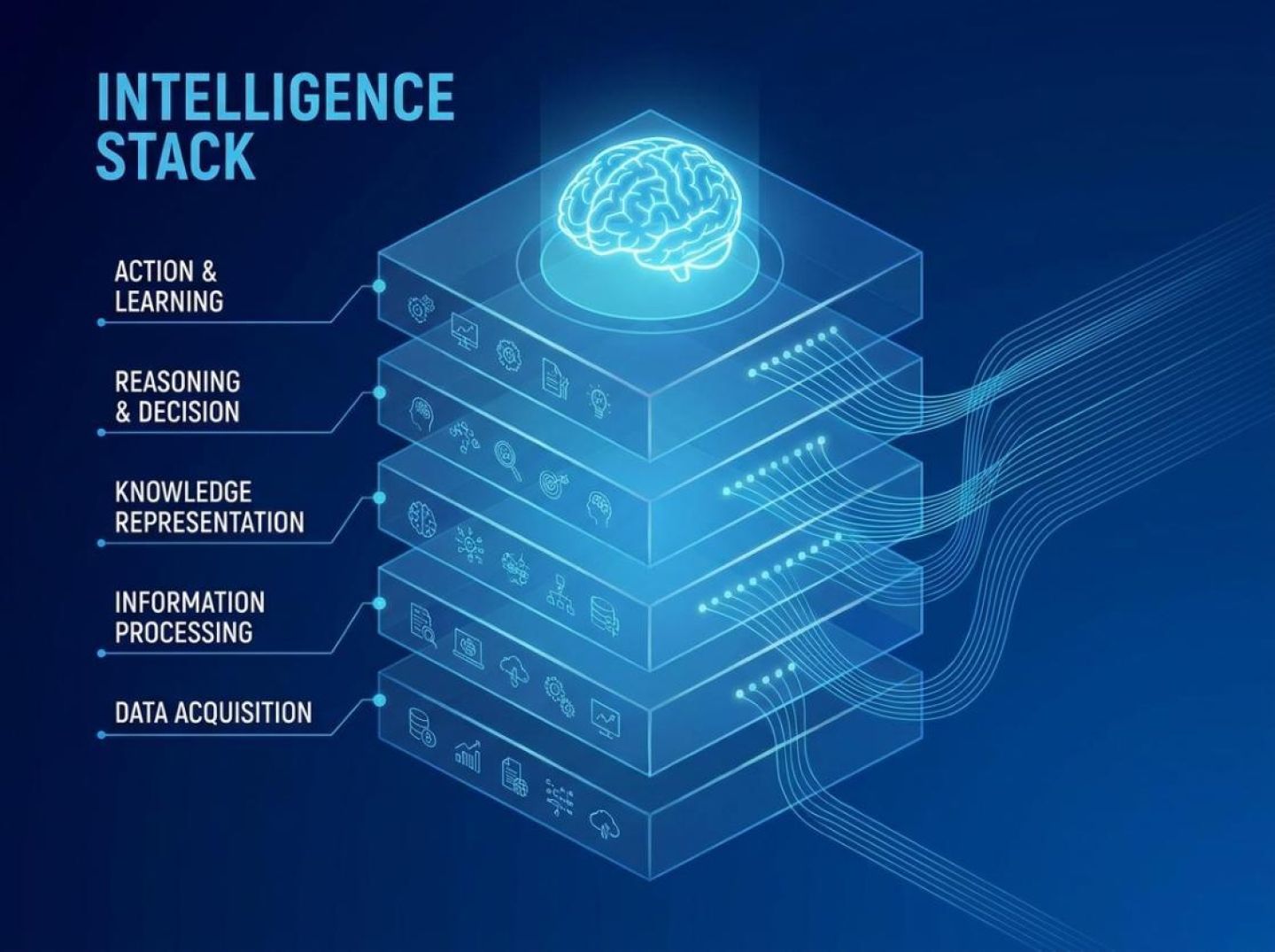
The fix is not “more data” in the abstract. It’s a new intelligence stack that connects three things in one loop: what’s happening in the real world, what’s happening in your digital performance, and what your sales team does next.
You can already see this stack emerging. Platforms like AdQuick are effectively becoming a “universal adapter” for OOH, normalizing disparate inventory, location, and audience data and surfacing it in real time so marketers can treat OOH like any other performance channel. As the team behind AdQuick describes it, they’re moving OOH “from a world of intuition to a future defined by precision and performance,” using machine learning to analyze trillions of possible unit combinations and deliver OOH data in real time. That’s the raw material you need for a feedback loop: fresh, structured signals, not static spreadsheets.
But raw data is only the foundation. The next layer is demand intelligence: systems that don’t just tell you how a single campaign performed, but predict where demand will move next and which prospects are most likely to buy specific inventory. When Trillboards integrated the machine‑learning platform hellOOH, they weren’t just upgrading their reporting—they were installing a new brain. hellOOH ingests market behavior, campaign history, and decision‑maker relationships, then turns that mess into predictive demand signals. The payoff is a compounding advantage: organizations “operating with better models of demand do not just sell more efficiently; they see the market earlier than everyone else.”
For an OOH seller, “seeing the market earlier” is where the feedback loop becomes a revenue engine. Instead of waiting for an RFP, your reps can:
The loop continues post‑launch. Modern OOH campaigns now generate performance data that can be read alongside digital metrics, not in a separate, slower report. In one Cannes Lions case study, AdQuick showed how a tightly orchestrated festival takeover let a brand reach about 15,000 highly concentrated industry decision‑makers, generating organic social amplification and inbound interest as the campaign unfolded, not months later in a wrap deck. The campaign’s success demonstrated that when planning, buying, and measurement are de‑frictioned, OOH can operate as agile infrastructure rather than as a static backdrop.
Agentic AI takes this a step further by letting software agents coordinate OOH decisions with the rest of the media mix. In the first end‑to‑end agentic AI‑powered OOH campaign for Lot of Happiness, buy‑ and sell‑side agents worked together to plan and optimize a multichannel program, with the OOH component plugged into first‑party performance data and a cleaner, more automated ecosystem. As Broadsign’s CTO explained, layering AI on top of global static and digital supply—plus data like screen‑level audience indexes and dynamic creative—sets up a “paradigm shift that will transform the OOH business”. The important part for sales: the system can respond to performance signals and re‑optimize placements without a new, weeks‑long planning cycle.
For OOH reps who want to become performance marketing powerhouses, this intelligence stack changes the job description:
Fast feedback loops won’t replace the art of OOH. They will expose, in hard numbers, where that art is creating outsized performance—and where it isn’t—so you can double down on the former and quietly retire the latter. The sellers who embrace this new intelligence stack will be the ones performance marketers trust, because they’ll finally be speaking the same language: test, learn, optimize, repeat.
If you want OOH to be treated like a performance channel, you can’t keep writing “brand billboard lines” while the same client’s top-of-funnel dollars are being driven by ruthless native tests on Meta, TikTok, YouTube, and programmatic. The fastest, least-political workflow to change that is simple: mirror what is already winning for them online.
Here’s a concrete workflow you can run with almost any performance-savvy advertiser, using their own data and your own inventory.
Don’t start by asking, “What’s your brand line?” Start with: “Can you send me 5–10 of your best-performing native ads from the last 90 days?”
You’re looking for:
Position this as a performance unlock: you want to mirror the angles that are already generating cheap customers and then prove OOH can scale those angles to net-new audiences. In the same way AdQuick’s partnership with OUTFRONT is about standardizing insights and unifying reporting so teams can “build and compare plans across formats with greater clarity,” you’re standardizing creative intelligence across formats by starting with the same winning raw material.
Bonus: if they’re using first-party performance data to drive multichannel planning – like the agentic DOOH experiments Draft Digital described – this ask lands instantly. You’re speaking their language.
Once you have the ads, ignore the polish for a moment. You’re not copying layouts; you’re mining the angle.
For each winner, have a simple worksheet:
Example: A top TikTok ad for a fintech app might open with: “If you’re still paying bank fees, watch this.” That tells you:
Your goal is a shortlist of 3–5 core angles that repeatedly show up across their winning ads. Those are your OOH candidates.
Now map those angles into creative that works at 60 mph or in a 3-second glance.
For each angle, draft:
Continuing the fintech example:
Make three variations per angle:
This is where you can exploit what hellOOH calls “fastest intelligence loops.” If your buyer has DOOH or programmatic OOH in the mix, build variants on the same angle that can be rotated in near-real time, just like native tests. Same message architecture, different phrasing or proof.
You will not track last-click conversions off a highway board the way they do from a TikTok swipe. You can, however, mirror the logic of their optimization.
For any placement where it’s reasonable (transit, street-level, malls, large format near retail):
Your story to the client becomes: “We’re running the same angles that are already winning in your native channels, then using OOH to stress-test which of those angles also drives incremental lift in search, direct, and brand traffic.”
That language is familiar to teams already tying OOH to digital outcomes through unified reporting, as described in AdQuick’s push to make OOH “as easy, measurable, and performance-driven as any digital channel” via its OOH sales cloud. You are simply extending that mindset down to the creative layer.
Don’t just send boards. Send a mini test plan:
Then define success in the same units their growth team cares about: lower blended CAC in test markets, higher conversion rates on branded search in exposed areas, stronger engagement with the same angles in retargeting.
You’re no longer pitching “a billboard near the freeway.” You’re proposing: “Let’s take the angles your Meta and TikTok data already crowned as winners and use OOH to scale and stress-test them in the real world, with feedback that flows right back into your performance dashboards.”
That’s how an OOH seller starts sounding less like “IRL impressions” and more like a native strategist who just happens to control enormous real-world canvases.
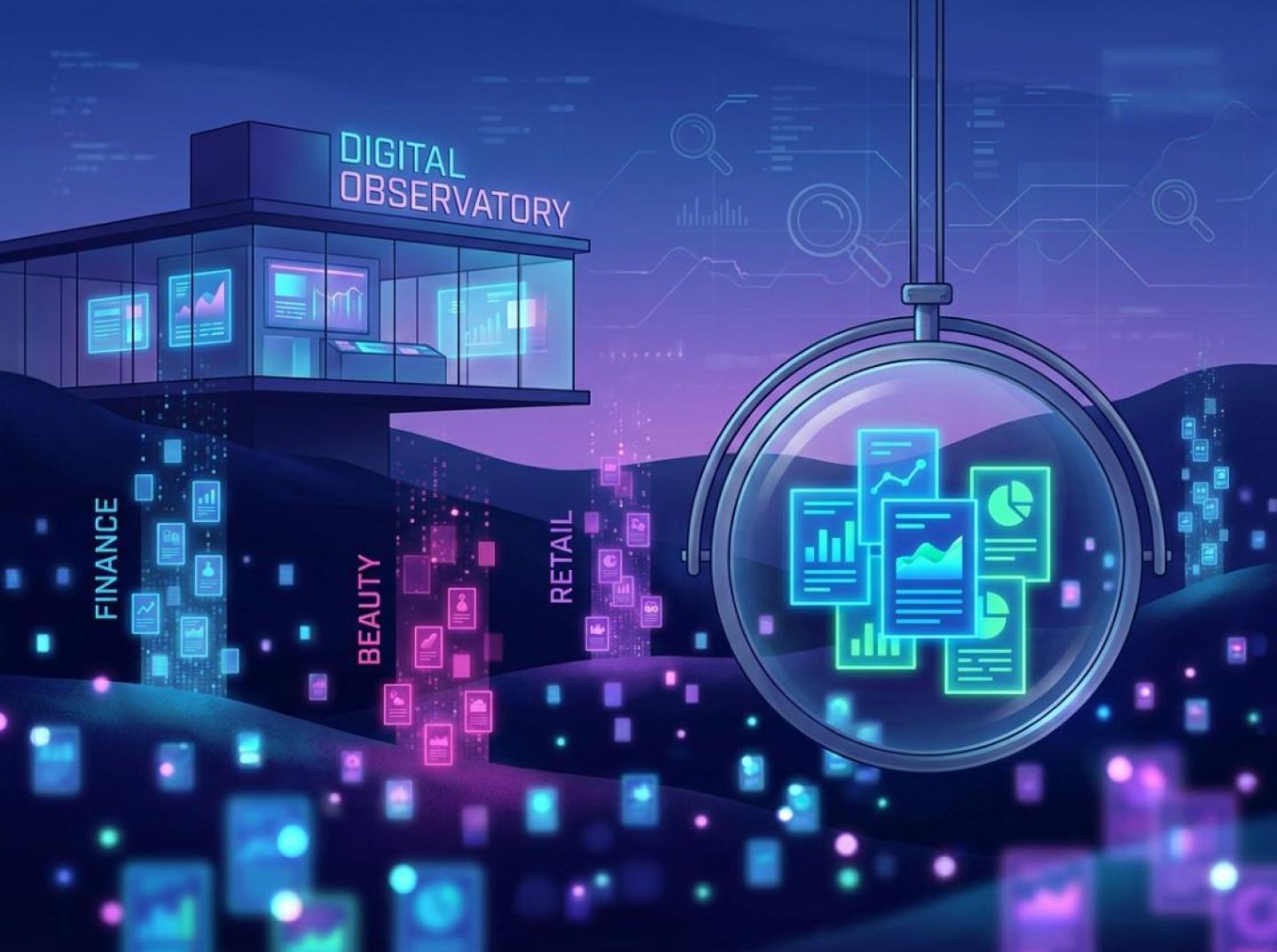
The engine of this workflow lives inside the performance team’s spyglass: competitive intelligence tools like Anstrex. If you’re serious about making OOH feel like a performance channel, you don’t start with a blank Keynote slide—you start with the exact native angles that are already printing money for your client (and their competitors) online.
Here’s how that looks when it’s done properly.
The performance team begins by pulling top‑performing native ads in Anstrex by vertical—finance, DTC beauty, health, B2B SaaS, whatever categories your clients play in. They aren’t just looking at pretty thumbnails; they’re sorting by real performance proxies: longest running, widest placement footprint, highest estimated spend, and frequency of creative reuse. In a world where digital OOH is increasingly planned and optimized in real time, with data flowing at the same cadence as other performance channels, this kind of creative reconnaissance mirrors the data‑rich planning that platforms like.
For each vertical, the team identifies 10–20 “anchor” creatives that have clearly broken through. Then they dissect them. What’s the core angle?
You’re not copying lines; you’re categorizing angles. The job is to decode the psychological promises that are winning the auction again and again. Performance teams do this instinctively online. Your OOH team needs to treat it as a formal input—because those same angles are what will get scrutinized by growth and CRM teams who already know, down to the decimal, which hooks actually convert.
Next, performance codifies those angles into a living “Angle Library” per vertical. Think of it as a source‑of‑truth wiki for what resonates at the top of the funnel: every entry tagged by benefit (speed, savings, status, simplicity), objection handled, and audience segment. As OOH moves toward what industry leaders call a “single source of truth” measurement mindset, this type of library becomes the creative counterpart: a unified language for what actually works.
Only after that library exists do you invite OOH creative and sales into the process.
You’re not asking them to be mini‑media buyers; you’re handing them a ranked, vetted set of angles that have already survived the brutality of native testing. Instead of, “What do you want on the billboard?” the conversation becomes, “These are the five angles driving your cheapest customer acquisition on Meta and Taboola—let’s translate your top two into the physical world.” That framing instantly elevates OOH from “brand layer” to performance extension in the eyes of clients whose confidence in the channel is already rising as digital formats and AI‑driven OOH revenue hit record highs.
At this point, the performance team should package their findings into a simple, repeatable deliverable:
That deliverable becomes your brief, not an inspiration mood board. It’s what allows the OOH team to draft concepts that can be rationalized in the same language the client’s VP of Growth uses to defend their Meta budget.
Crucially, this is also where you quietly close the loop between OOH and digital. Once those angles are mirrored in OOH creative, you can use AdQuick‑style location and audience data to plan placements that over‑index for the same cohorts the native ads are targeting, and then track downstream lift in site visits or app installs with the kind of precision that modern OOH platforms claim is now table stakes. When your performance team sees that an angle is over‑delivering in certain geos (e.g., “paycheck two days early” crushing it near transit hubs), that insight feeds back into both the Angle Library and the next wave of native tests.
What starts as a simple Anstrex pull by vertical turns into a shared performance brain between online and offline. The sales team no longer walks into the room selling “a big beautiful canvas.” They walk in selling proven angles, battle‑tested online and now amplified by OOH’s scale—and backed by the same data‑driven rigor that is rapidly transforming OOH from intuition‑led to performance‑defined.
An OOH strategist’s real leverage isn’t “being creative.” It’s being a ruthless editor of complexity.
Performance teams are swimming in long‑form and mid‑form assets: 1,500‑word advertorials, 45‑second UGC explainers, intricate carousels that drag a cold prospect all the way to checkout. Those pieces are built to earn a scroll, not a glance. Your job is to distill that entire persuasion stack into a single, 5‑second billboard that still carries the same promise and proof the media buyers are scaling online.
The constraint is brutal: one view, one message, maybe one proof point. But that’s exactly why OOH can become the spine of a performance story instead of a decorative afterthought.
Start by forcing every winning native angle into a two‑line formula:
If the Meta headline is “This app finds you hidden tax deductions in 3 minutes,” your billboard line 1 might become: “Find hidden tax write‑offs in 3 minutes.” Then you steal the strongest proof from the long‑form: “Trusted by 147,000 self‑employed workers.” The long native flow might have 19 bullets of social proof and screenshots; your board gets one unmissable number, blown up to 6‑foot type.
This is where OOH’s unmediated attention is a feature, not a bug. As AI agents increasingly mediate digital feeds and inboxes, out‑of‑home remains one of the only channels that reaches people directly, without being filtered or throttled by an algorithm, as the team behind AdQuick’s Cannes campaign pointed out when they described OOH as a uniquely “unmediated physical” touchpoint in their case study. A 5‑second read has to do what 30 seconds of skippable video does online—just without the risk of being swiped past or auto‑muted.
To get there, you reverse‑engineer the long‑form:
As OOH workflows become more automated and data‑rich—from AI‑mediated buying and dynamic creative in fully agentic DOOH campaigns like the Lot of Happiness lottery initiative described by OOH Today—the strategist’s value shifts upstream. Execution is getting standardized. Intelligence and distillation are the moat.
You’re not just writing a billboard; you’re creating the “native thumbnail” for the entire performance narrative. When done properly, that 5‑second concept becomes:
Distillation is not about dumbing down; it’s about forcing the performance story through the smallest possible aperture and seeing what survives. The strategist who can do that reliably—starting from the angles already validated in native, and compressing them into bold, 5‑second OOH—turns billboards into performance billboards, and turns an offline line item into a measurable, scalable growth lever.
Receive top converting landing pages in your inbox every week from us.
Must Read
Discover how AI-generated ad fatigue is making native, push, and TikTok campaigns increasingly look alike, weakening engagement and reducing competitive advantage. Learn how to use competitive ad intelligence tools to identify repetitive creative patterns, develop more distinctive ads, and stand out in AI-driven advertising auctions.
Liam O’Connor
7 minOct 14, 2026
How-To
Learn how to connect out-of-home (OOH) advertising with digital performance campaigns to create measurable cross-channel funnels. Discover how to plan LED truck routes, coordinate search and social ads, optimize mobile landing pages, and track conversions so physical advertising drives measurable business results.
Samantha Reed
7 minOct 13, 2026
How-To
Discover how big-brand sports sponsorships use fan behavior, geographic targeting, and cross-channel advertising to reach high-intent audiences beyond celebrity endorsements. Learn how to reverse-engineer sponsorship strategies, validate audience segments with competitive intelligence, and build cost-effective campaigns around local fandom, CTV, mobile, and creator content.
Dan Smith
7 minOct 12, 2026