8 minFebruary 3, 2019

Our spy tools monitor millions of native ads from over 60+ countries and thousands of publishers.
Get StartedWhether you are an affiliate or not, chances are you know a lot about advertisements by now. Why? Because you encounter ads everyday as you surf in the world wide web! Ads for trendy clothes, ads for smartphones, ads for vacation resorts, you name it and the internet has it! The web is filled with advertisement and business owners have waited patiently for it to become as successful as it is now.
But seeing different kinds of ads that are being ran today, sometimes you find yourself asking “Well, what are the various types of ads that I can use to promote my business?”, and that is a great question. The age of the internet is the age of information, after all. This article will help you differentiate two of the most common and effective types of ads: native advertising and display advertising. Let’s get started!
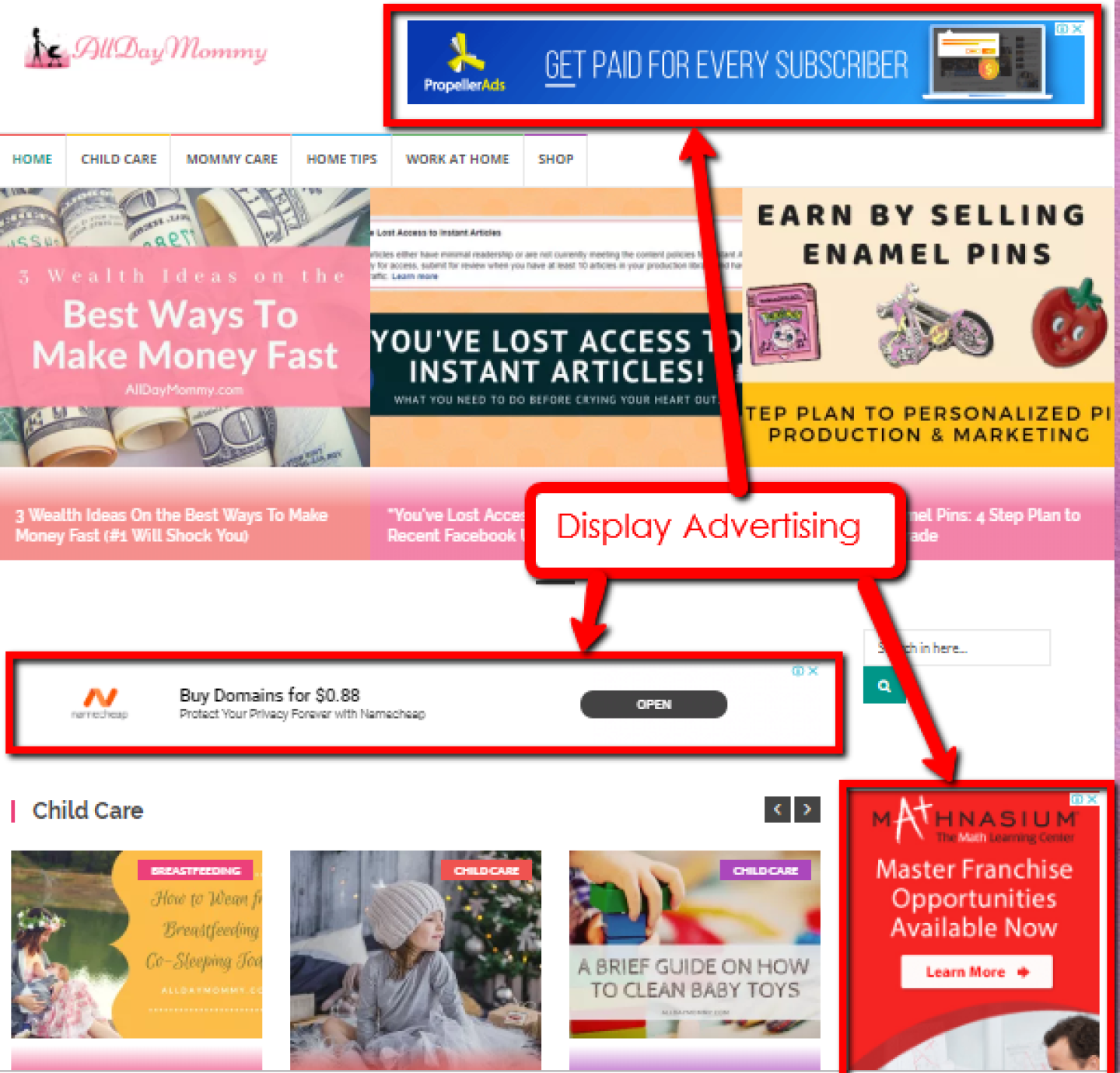
Display advertising is the more traditional form of advertising. Also known as ‘banner’ advertising, display advertising works like an online flyer, like a literal poster that you can see in a webpage you are browsing. As opposed to native advertising, display advertising is fairly direct and straightforward, conveying the sense of a ‘real’ ad. With customizable sizes ranging from the 125 x 125 Button ad to the typical 300 x 250 Medium Rectangle banner, from 930 x 180 Top Banner to the gigantic 970 x 90 Large Leaderboard, the possibilities and variations for display banners are seemingly endless!
The different combinations in terms of format, styles, and size allows for a more customizable feel in a faster, more direct brand-client interaction.
Aside from the flexibility display ads come along with, it is also worth noting that display advertising travels faster, further, and wider. Different algorithms used by different search engines can connect you to numerous websites that carries different display advertisements. For example, Google’s Display Network is huge enough to present different display advertisements through millions of trusted websites and page, and that can be based solely on your search keywords or your specific preference.
Display advertising holds a more direct approach in advertising, and because of this it is fairly easier to track. Tracking through clicks, conversions, and impressions will give business people a real-time update of how a product is being received while also giving a live feedback of how consumers feel about it.
The main examples of today’s display advertising come in three: you have the standard static images, the eye-catching GIF ad, and the slick Animated HTML5. When talking about the surface roles of display advertising, it can be commonly used in Standard and Dynamic Audience Retargeting, Audience Acquisition, and Brand Awareness.
Native Advertising is the ‘modern’ type of advertising. As the name suggests, this type of ads are seemingly native to the environment they are in. Content-wise they do not deviate from the behavior of the surroundings, giving you a more ‘natural’ feel from it. It means that this is the type of advertising that people sometimes do not notice, because it blends in well, as an article, an informative video, as an ad in your newsfeed.
Unlike banner advertising, native advertising gives consumers a non-disruptive interaction. Because it feels and looks natural to the whole content of the page, it keeps the consumers engaged and interested in the ad for a longer period of time. Nowadays, the abundance of advertisements tend to give people ‘ad blindness’ where they consciously ignore ads thinking it takes up too much time from their browsing. Native advertisements tend to eliminate that by behaving as if it is not an advertisement but just a simple and informative piece of blog (or web) content. If it does not feel like you are reading an ad about a product, then that native ad is doing its job.
In-feed ads, content widgets, search listings, and customized content, these are the areas of native advertising that thrives the most. Native ad hides itself inside these ads, camouflaging itself as an in-article example or a product in review. Why are they widely used? Native ads are known to at least be 25% more viewed than the traditional banner, as they elicit more time and attention as opposed to just a static image. Native advertising is also the leader in the smartphone era, where a study showed that more than 95% of consumers agree that native ads help them purchase items more.
Both coming in from different angles and niches with different specialties, native advertising and display advertising are both great forms of advertisements, they key is only the approach and execution of your consumer play. And when used wisely, they can work miracles.
Receive top converting landing pages in your inbox every week from us.
Editor’s Pick
The rapid hiring surge across the out-of-home advertising industry is revealing far more than growth—it’s exposing where media budgets, technology investments, and consumer attention are headed next. This article explores how digital advertisers can use OOH hiring trends as a form of competitive intelligence, uncover emerging geographic opportunities, identify retail media convergence signals, and build a practical monitoring framework that turns job listings into actionable marketing insights.
Liam O’Connor
7 minJun 21, 2026
Quick Read
Google Analytics is one of the most powerful tools for understanding your own website performance, but it was never designed to reveal what your competitors are doing. This article explores the limitations of relying solely on GA for strategic decision-making, the dangers of passive analytics, and the competitive intelligence frameworks modern marketers need to monitor rival campaigns, AI visibility, ad creative, and market shifts before they impact performance.
Marcus Chen
7 minJun 20, 2026
Most Read
This article challenges the assumption that first-party analytics provide the most complete picture of marketing performance. It argues that internal dashboards are inherently limited by survivorship bias, showing only the behavior of users who already entered a brand’s funnel while ignoring broader market dynamics. By contrast, competitor ad data reveals valuable external signals such as keyword opportunities, messaging shifts, auction dynamics, spend patterns, and emerging market trends. The article explores how revealed preference theory, ongoing competitive intelligence systems, and AI-powered analysis can help marketers move beyond isolated internal metrics and build a more honest, market-aware view of performance. Ultimately, it advocates combining first-party analytics with competitor intelligence to create a more accurate and actionable decision-making framework.
Priya Kapoor
7 minJun 12, 2026