12 minSeptember 7, 2026

Our tools monitor millions of native, push, pop, and TikTok advertising campaigns.
Get StartedThe title on your contract might say “truck-side media buyer,” “festival activation lead,” or “OOH planner,” but the work you’re doing is quietly driving the clicks, signups, and sales that show up in someone else’s dashboard. That “street team route,” “LED truck loop,” or “big-box retail takeover” you’re executing isn’t just a splashy moment in the real world—it’s the uncredited first touch in an invisible funnel that spills straight into TikTok swipes, native article reads, push opt-ins, and pop-under conversions, now trackable with the same rigor as any performance channel.
For years, OOH was treated as a beautiful black box: powerful, but separate from the hyper-measurable world of digital. Meanwhile, digital teams chased audiences into ever-more-crowded feeds, battling ad blockers, privacy walls, and now floods of AI-generated noise. As one observer of the retail media boom noted, the industry is rediscovering that “consumers still live in the real world,” and that reality is increasingly being treated as a media network in its own right, where “the checkout lane becomes Main Street” and “the store becomes a media property” that looks a lot like OOH in different clothing, as.
That shift matters for your job description. The same truck wrapping a new CPG launch outside a warehouse club, the same mobile LED unit circling a stadium, or the same on-site screens flanking a festival entrance are no longer just about “awareness.” They’re seeding demand at the top of the funnel and priming the exact audiences that digital teams retarget later in TikTok, native, and programmatic campaigns. When a mobile OOH blitz pushes a brand’s physical share of voice ahead of its current share of market, the data shows that market share follows, a dynamic OOH Today described in the context of LED truck campaigns that simultaneously build brand and feed performance.
The difference now is that the “invisible” part of that funnel is disappearing. Modern OOH infrastructure is finally wired into the same measurement and attribution stack that powers digital, turning what used to be a hunch (“we saw a lift after the campaign”) into hard evidence. Platforms like AdQuick act as a universal adapter between OOH and the rest of the marketing ecosystem, correlating real-world exposures with website analytics, verified store visits, and even the “halo effect” on adjacent channels like paid social, native, and programmatic. When someone spots your truck-side creative, then searches the brand on their phone, lands on an article via native, and later converts off a push or pop campaign, that full path can now be modeled and attributed back to the original OOH touch.
In other words, the festival you’re “just activating” is actually a precision audience qualifier for downstream retargeting. The grocery network screens you’re trafficking are effectively building first-party signals for retail media platforms that behave more like OOH than most marketers care to admit, a convergence that OOH Today argues is blurring the line between aisles and avenues. And the parade of localized truck routes you route-plan each week is a rolling top-of-funnel engine that performance marketers tap into—often without ever realizing your work is doing the heavy lifting.
This isn’t about rebranding OOH as “digital with billboards.” It’s about finally exposing the real customer journeys your “offline” roles have been shaping all along—and proving, with data, how those seemingly analog jobs are the starting point of some of the most effective digital funnels a brand can buy.
The idea that out-of-home is a “separate” channel—nice for brand sizzle, irrelevant to digital results—isn’t just outdated. It’s actively harming the people who run OOH by hiding the real impact of their work.
You can see the roots of the myth in how the industry is still organized. Most media org charts split responsibilities into clean little boxes: performance over here, brand over there, OOH in its own operational cul-de-sac. Because OOH historically looked “manual” and “messy” next to programmatic display, it was treated as a specialty craft, not a core driver of revenue. As the team behind AdQuick’s Cannes Lions campaign notes, marketers already accept that OOH works—the blocker is the “operational friction” that makes it feel complex and slow, so it gets left out of “fast‑moving media plans” even when it should be central to them, as their Cannes case study puts it.
That structural separation bakes in a mental separation: OOH is something you “layer on” after the “real” performance plan is set. So the people executing truck routes, wallscapes, or festival footprints get pigeonholed as logistics specialists rather than growth drivers. Your buys are categorized as “brand,” while the incrementality they unlock in search, social, and ecommerce is quietly attributed to whoever owns those dashboards.
The problem is, the market no longer behaves in those neat silos—if it ever did. In a world where AI agents are increasingly filtering inboxes, feeds, and content, unmediated physical attention is becoming more scarce and therefore more valuable. As the Cannes write‑up points out, OOH is now “one of the only advertising channels that reaches people directly, without algorithmic filtering,” giving it a unique role in sparking the very journeys that digital teams later take credit for, according to the.
Look at how brands are actually winning. When Saatva hit the ceiling on search-led growth, adding OOH didn’t just raise awareness; it turned into their “highest performing channel” once measured through store visits, search lift, and direct traffic, as OOH Today recounts. The halo on digital wasn’t a side effect—it was the entire point. Mobile OOH in particular is described as simultaneously building top‑of‑funnel awareness and driving “foot traffic lift, web traffic correlation, device ID passback for digital retargeting, and sales attribution.” That’s not a silo. That’s the connective tissue of the funnel.
The tech has already caught up to this reality. Platforms that treat OOH as performance media can now pass back device IDs, correlate exposures with site visits, and feed those signals into retargeting and optimization loops. AdQuick’s own platform is framed as making OOH “a non‑negotiable part of modern marketing strategies” by putting it in parity with other performance channels—programmatic DOOH, real‑time data, and AI‑powered optimization included, as described in their “universal adapter” overview. The more that happens, the harder it is to maintain the fiction that OOH lives in a separate universe from “digital.”
And if you zoom out to where mobility and media are going, the silo story makes even less sense. As autonomous vehicles scale, OOH is expected to become both “top‑of‑funnel awareness AND the mid‑funnel conversion mechanism,” triggering in‑car offers, AR overlays, and instant bookings when someone passes a board, according to an OOH Today look at self‑driving futures. Windows-as-screens, dynamic creative, and mobility hubs packed with DOOH are all extensions of the same idea: OOH isn’t a backdrop. It’s a trigger layer for mobile commerce and digital engagement.
In other words, the “siloed OOH role” exists mostly on the org chart and in outdated mental models. On the ground—and increasingly, in the data—OOH is already functioning as performance media, feeding signals and demand into digital systems that rarely give it credit. The myth persists not because it’s true, but because the measurement and ownership structures around you haven’t caught up to the journeys you’re actually shaping.
OOH doesn’t sit outside the funnel; it builds the part of the funnel most digital dashboards are blind to—and then quietly supercharges everything that happens downstream.
Think about what actually happens when someone sees your LED truck, your grocery-store screen, or your Walmart end-cap display. They don’t usually stop, pull out their phone, and type in the exact vanity URL on the creative. More often, they:
On paper, the credit goes to search, social, or retail media. In reality, your OOH was the first nudge—the invisible funnel entry point.
This is exactly why over‑prioritizing last‑click performance media eventually breaks. When brands run 80% performance and 20% brand, they see early wins…until search, social, and retargeting hit a ceiling. As one analysis of the 60/40 brand‑to‑activation rule points out, performance marketing “eventually runs out of audience to convert” because there’s not enough new demand being created at the top. OOH is where that top-of-funnel demand is being created every day—just not where performance teams are looking for it.
Modern OOH makes this dynamic visible instead of theoretical. When you run a mobile LED fleet or a multi‑DMA billboard program, you can now match exposure zones to digital outcomes: search volume lift, site traffic spikes, app installs, and even incremental store visits. Platforms like AdQuick ingest mobile location, demographic, and behavioral data to show the “halo effect” your boards or trucks have on adjacent digital campaigns. That retargeting pool your performance team is bragging about? A meaningful chunk of it was primed by someone driving past your creative on the commute home.
The same pattern is playing out inside retail. When a big-box chain strings digital screens through the aisles and wraps end caps with sponsored messaging, it’s not just “in‑store signage.” As one look at Walmart’s evolving media network argues, the store is becoming a “media property” in its own right, with loyalty data and mobile tech turning aisles into addressable audience corridors. That in‑store OOH is what makes the sponsored placement in the retailer’s app or on its website convert more efficiently later. The retail media team gets the sale. The OOH-like exposure in the physical environment built the intent.
For OOH operators and planners, this is the invisible funnel you’re already running:
And because modern OOH is increasingly bought and measured like a performance channel—with programmatic DOOH, real-time analytics, and AI‑driven optimization that evaluates “trillions of possible combinations of OOH units,” as one AdQuick overview describes—it no longer has to sit in the “brand-only” bucket. You can prove, with data, that the festival activation route, the LED truck loop, or the retail takeover isn’t a vanity play; it’s where the digital journey actually starts.
Your job might be labeled “OOH,” but the outcomes you’re driving are very much digital. The challenge—and the opportunity—is to start treating your real-world impressions as the first step in a measurable, cross-channel funnel instead of a disconnected, “nice-to-have” moment in the wild.
Most OOH teams don’t have a measurement problem. They have an infrastructure problem.
The work is influencing digital journeys all day long; it’s just leaking out of systems that were never designed to capture it. When that happens, leaders default to intuition, last-touch dashboards, and whatever can be cleanly pulled into a spreadsheet. The result is predictable: OOH gets treated as a soft, “brand-only” line item while performance channels take a victory lap on conversions they didn’t actually originate.
Fixing that isn’t about inventing new vanity URLs. It’s about rebuilding the plumbing so OOH is measured on the same terms as paid search, social, and programmatic.
At a minimum, that infrastructure has three layers: identity, signals, and feedback loops.
Identity is how you connect a glance in the physical world to a person who later shows up in your digital data. Modern platforms already do this at scale. A mobile OOH campaign can pass back anonymized device IDs from people exposed to a route, then match those IDs to site visits, app opens, or even in-store footfall. As one analysis of mobile OOH noted, a single LED truck can simultaneously drive “foot traffic lift, web traffic correlation, device ID passback for digital retargeting, and sales attribution that connects physical presence to real business results,” turning what used to be a fuzzy top-of-funnel tactic into a measurable performance engine for the digital stack (OOH Today).
Identity is useless without signals. You need a continuous feed of what’s happening in the physical environment so you can tie it to what’s happening online. This is where real-time OOH data stops being “nice to have” and becomes non-negotiable. When an OOH network can stream impression counts, location context, and audience composition in real time, it finally comes into parity with modern performance channels. That’s the promise of tools positioning themselves as a “universal adapter,” piping location, demographic, and behavioral data into the same planning and reporting environment you use for digital, so OOH stops living on a PDF and starts living in the same live dashboards as your CPMs and ROAS (AdQuick).
On top of that data layer sits feedback loops—the piece most organizations are still missing. The goal isn’t just to report that “OOH worked.” It’s to continuously reassign credit and budget based on how OOH is changing downstream performance.
That means wiring your analytics and ad platforms so they can:
In practice, this looks like feeding OOH exposure segments into your DSP so you can bid differently on people who’ve already seen your physical ads. It looks like aligning DOOH plays with dayparted search spikes, or using OOH-triggered events—like a billboard along a high-autonomy corridor or a digital cluster around a mobility hub—to fire in-app offers and mobile commerce journeys in real time, exactly the kind of “trigger layer” future where outdoor becomes both awareness and mid-funnel conversion at once (OOH Today).
Once those loops are in place, you can let machines do the heavy lifting. Instead of someone in “OOH” manually guessing which boards to buy, you can let an optimization engine analyze trillions of possible unit combinations, incorporating consumer movement, demographics, and behavior to choose placements that maximize downstream digital impact (AdQuick). That’s when OOH stops being an intuition channel and starts behaving like a strategic performance channel: plan, activate, measure, optimize, repeat.
The invisible funnel doesn’t become visible because someone feels differently about OOH. It becomes visible when you treat OOH like any other modern channel: build the identity graph, wire the signal pipes, and close the feedback loops so credit flows to the places that actually created the demand.
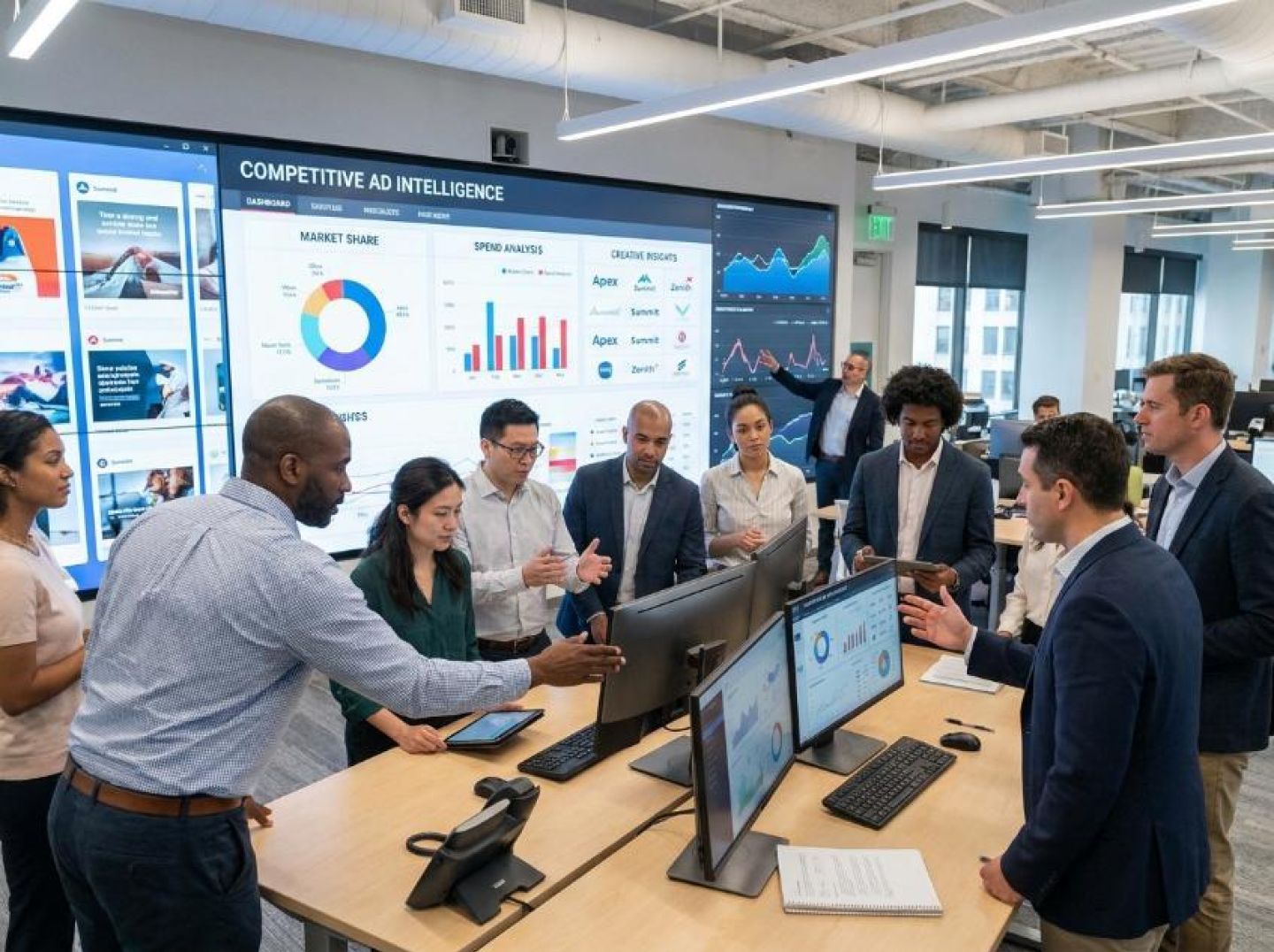
Competitive ad intelligence is the missing bridge between the analog world your OOH lives in and the programmatic screens your buyers live behind.
It’s not about slapping a few impressions numbers into a PDF. It’s about giving media buyers the same thing they already expect from paid search, social, and retail media: live, comparable, directional data about what’s actually happening in market—so OOH can be evaluated, optimized, and defended in the same language as everything else.
That starts by treating OOH as part of a larger location‑based media fabric, not as a separate, special snowflake. When Walmart quietly became a media company—turning its aisles into “avenues” and its end caps into “premium inventory,” as one retail‑media analysis put it—it wasn’t inventing something new. It was operationalizing what OOH has always done: connect brands and people in physical space, then translate that influence into digital action.
Competitive intelligence is how you prove those connections at scale.
Instead of guessing how your LED trucks, in‑store screens, or campus kiosks stack up, you map them against everything else a buyer could purchase in that same geography and time window—retail media networks, rideshare video, CTV hotspots, search volumes, social buzz, even autonomous mobility corridors that are already being eyed as the next “high‑value” OOH zones in a self‑driving future.
From a buyer’s perspective, that kind of intel does three important jobs:
2. Reframes OOH budgets as competitive moves, not line items.
When retail media is exploding, your billboard outside a grocery store is not just a sign—it’s a defensive perimeter around a rival’s data‑rich in‑store network. If media buyers can see that every dollar they don’t put into your corridor is likely to end up in a competitor’s end‑cap loop or rideshare screen, they suddenly understand OOH in share‑of‑voice terms, not just CPMs. Competitive intelligence makes that trade‑off visible.
3. Turns “OOH is working” into “here’s where to double down.”
The job isn’t simply proving lift; it’s routing the next dollar to the right board, truck, screen, or city. That’s where intelligence and infrastructure converge. When an attribution layer can show that specific locations are over‑indexing on verified visits, conversion rates, or assisted search—even if the last click happens in a retail app—buyers finally have the performance granularity they’re accustomed to in other channels. Modern OOH platforms are already surfacing these insights daily, not quarterly, by standardizing data from thousands of media owners, as the.
The real unlock is what happens when this intelligence is exposed upstream in the tools where planners actually make decisions.
If a media buyer inside their digital planning environment can:
…then OOH stops being a disconnected, “nice to have” awareness line and becomes a calibrated lever inside the same optimization logic they use for everything else.
This is the bridge: using competitive ad intelligence to translate OOH’s very real, very physical influence into the digital signals media buyers already trust—so your billboards, trucks, and place‑based screens show up on the same planning monitors, with the same rigor, as any other performance channel.
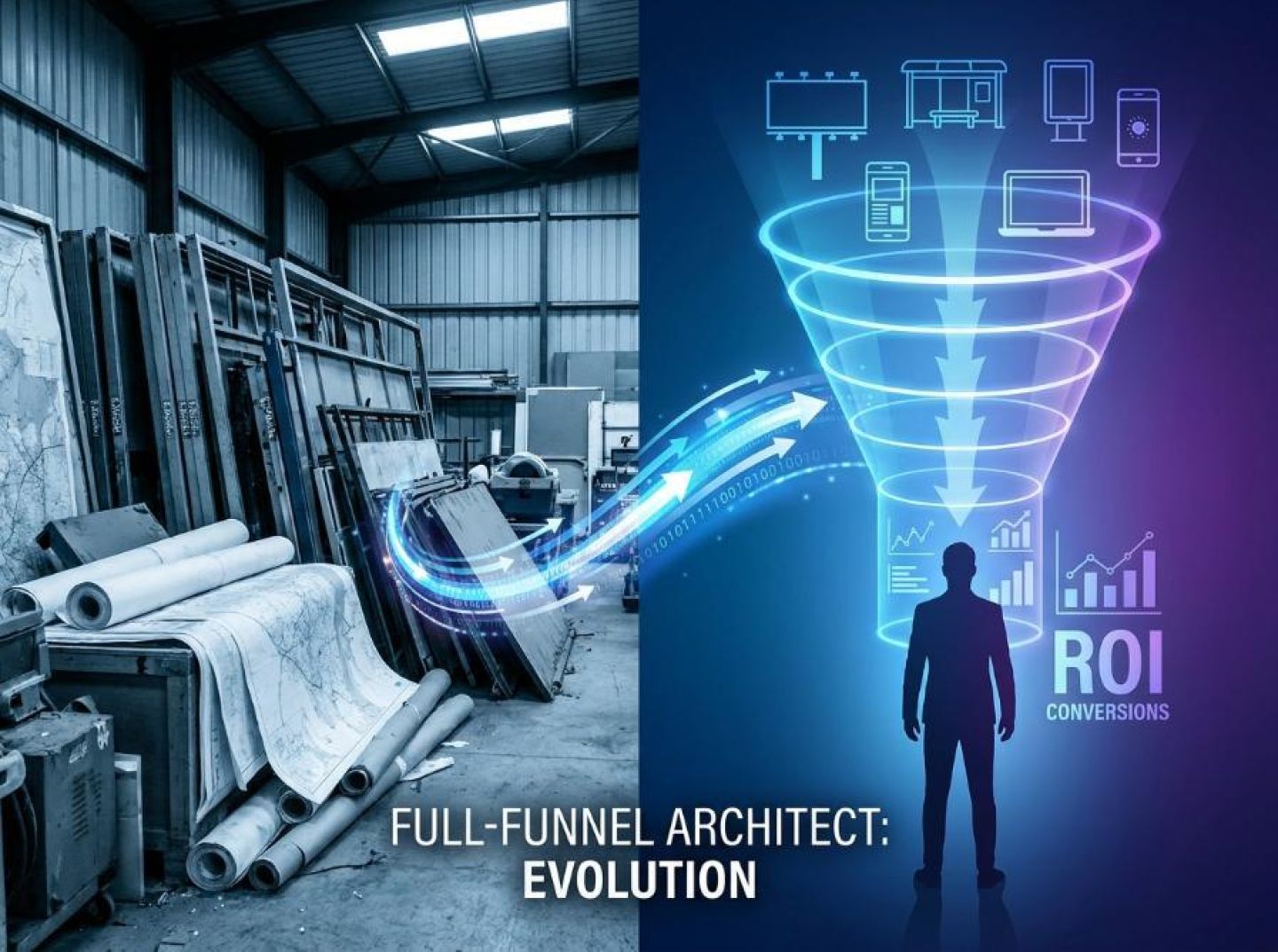
Turning an “OOH operator” into a “full‑funnel performance architect” isn’t a rebrand. It’s a rewiring of what the role is accountable for, how it works with data, and how it shows up inside modern growth teams.
Right now, most operators are still cast as inventory wranglers: find panels, negotiate rates, traffic creative, send photos, ship a post-campaign deck with impressions and maybe some modeled lift. Useful, but fundamentally back-office. Meanwhile, the rest of the marketing org is operating in a world where channels are planned, optimized, and judged through a single, performance-centric lens.
To close that gap, OOH practitioners have to step into the same decision loop as performance marketers—and own the connective tissue between a physical impression and the digital behaviors it sparks.
The good news is the infrastructure is finally here. Platforms that position themselves as a kind of “universal adapter” for OOH have already done the hard work of normalizing inventory, stitching in mobility and commerce data, and surfacing live performance signals. That means the operator’s value is no longer “I know every board in this market,” but “I can design, run, and optimize an OOH program that behaves like a performance channel.”
In practice, that shift looks like three concrete upgrades to the role.
1. From placement owner to journey architect
A performance architect starts by mapping journeys, not just GRPs. They can answer questions like:
Case studies like the Cannes Lions campaign that framed OOH as “infrastructure for culture” show what happens when you plot media against an actual human journey, not a static location grid. By greeting attendees on the way into town and seeding visuals before the festival even opened, the campaign didn’t just deliver impressions; it became part of the broader Cannes conversation and kicked off measurable inbound demand.
That’s journey architecture: designing physical placements to set up—and be amplified by—the digital behaviors you expect next.
2. From reporting what happened to orchestrating what happens next
Traditional OOH reporting is retrospective. A performance architect runs OOH with the same real-time, test‑and‑learn muscle you’d expect in paid social.
Because modern platforms deliver exposure, mobility, and outcome data in near real time, as AdQuick’s performance-focused approach emphasizes, OOH practitioners can:
This is where competitive ad intelligence from earlier in the article becomes operational. If you know where a rival is overspending and which of your units are quietly driving conversion, you can reallocate budget and creative in-campaign to capture that demand, not just document it.
3. From isolated measurement to a single source of truth
You can’t be a performance architect if your channel is still measured on an island.
The industry is already pushing toward unified, cross-format systems that align OOH with the metrics and standards used in digital, as Jawad Hassan argues in his call for a “single source of truth”. The performance architect leans into that shift by:
When you treat mobile and digital OOH as levers in the brand–performance mix, you unlock outcomes that blur the old divide. As one analysis of mobile OOH’s role in the 60/40 brand–performance debate points out, the right campaign can build awareness at scale and simultaneously drive foot traffic, web visits, and attributable sales. A full-funnel architect knows how to structure, prove, and scale that kind of outcome.
This is the invisible funnel in action. The OOH operator who can design journeys, run live cross‑channel experiments, and plug results into a shared measurement spine doesn’t just “place billboards.” They become the person in the room who understands how unmediated, physical attention powers the digital performance everyone else is optimizing. And once you can see that, you can’t go back to treating OOH as anything less than a core performance discipline.
Receive top converting landing pages in your inbox every week from us.
Recently Updated
Discover how TikTok, YouTube, and LinkedIn are turning creator content into performance marketing opportunities, and why brands should look beyond influencer fit and engagement metrics. Learn how to evaluate creator campaigns using earnings per click (EPC), marketing efficiency ratio (MER), and arbitrage margins to identify profitable creative, improve campaign decisions, and scale what works.
Dan Smith
7 minOct 16, 2026
Featured
Discover how performance marketers can turn the post-holiday advertising period, known as Q5, into an opportunity for lower-cost testing and smarter campaign optimization. Learn how to use Anstrex ad spy data to identify winning creatives, analyze competitor funnels, launch original landing pages, and turn Q5 insights into scalable Q1 campaigns.
Elena Morales
7 minOct 14, 2026
In-Depth
Explore what Pure Leaf’s “Break Conference” reveals about the gap between polished brand marketing and measurable performance. This guide breaks down how Native, Push, TikTok, and affiliate-style funnels use creative testing, clear offers, first-party data, and hard performance metrics to turn cultural moments into revenue.
Rachel Thompson
7 minOct 1, 2026