11 minAugust 22, 2026

Our spy tools monitor millions of native ads from over 60+ countries and thousands of publishers.
Get StartedFor two decades, anstrex.com/blog/unlocking-the-secrets-of-affiliate-success-with-advanced-google-analytics-techniques" target="_blank" rel="noreferrer noopener">affiliate marketing ran on a simple circuit: a buyer typed a curiosity-stage query into Google, clicked a listicle or review post, and followed an affiliate link to a merchant. That circuit has been severed — not gradually weakened, but structurally removed. What affiliates are experiencing right now isn't a traffic decline. It's a topology change. The section of the buyer journey where affiliate content historically lived has been absorbed into an AI answer layer that resolves the query before a click ever happens.
The scale of this shift is hard to overstate. Seer Interactive's 2026 study, spanning 5.47 million queries and 2.43 billion organic impressions across 53 brands, found that brands appearing on AI Overview–present SERPs but not cited within the overview itself saw organic click-through rates fall 67 percent over the course of 2025. Meanwhile, cited brands earned 120 percent more organic clicks per impression than their uncited competitors on the same results page. The gap isn't between good content and bad content. It's between content that AI models consume and regurgitate, and content that gets bypassed entirely. For most affiliate sites — built to rank, attract a click, and redirect — the AI layer doesn't send traffic somewhere else. It consumes the traffic in place, satisfying the query without the user ever leaving the search results page.
This is the zero-click economy in full bloom. As Neil Patel's analysis of Chartbeat data documents, smaller publishers — those with fewer than 10,000 daily page views, a category that includes the vast majority of affiliate sites — have lost roughly 60 percent of their search referral traffic over two years. AI summaries assemble answers from multiple sources and hand them directly to the user. The publisher who optimized for that query, who built the comparison table and wrote the pros-and-cons breakdown, gets nothing. The affiliate link embedded in that content never loads.
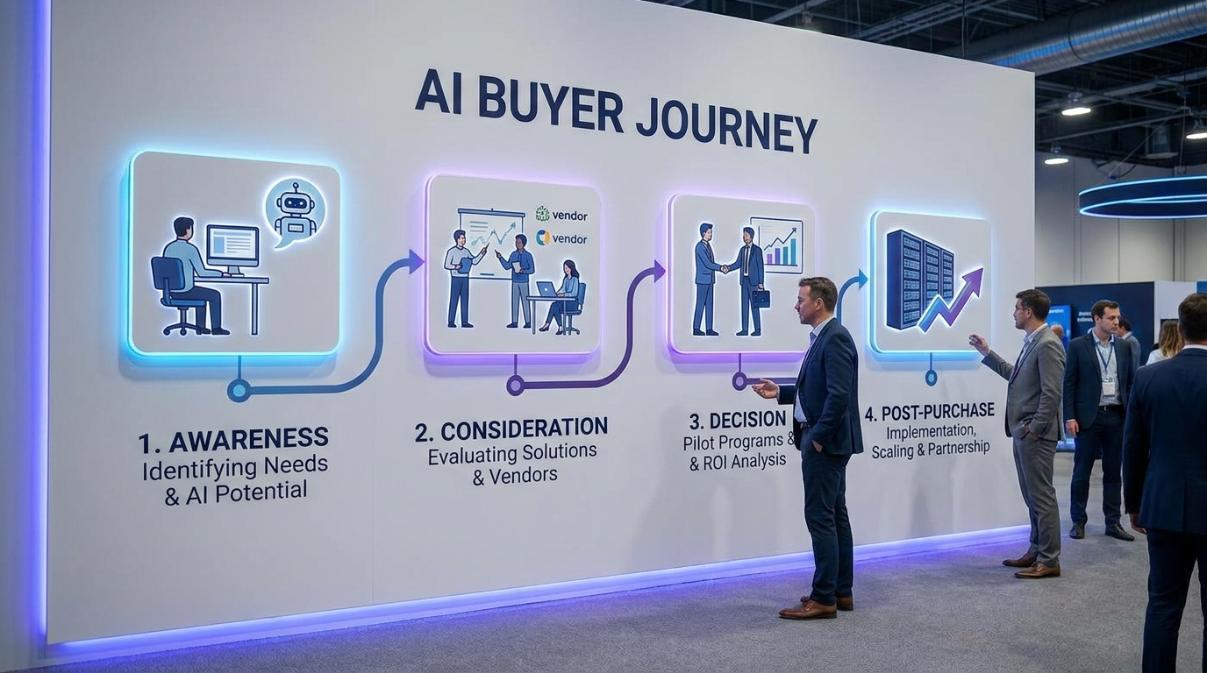
What makes this a phase change rather than a cyclical dip is what's happening on the buyer's side. Forrester's study of 18,000 buyers found that 80 percent of the B2B buying journey now happens without vendor involvement — buyers form near-final shortlists through AI-synthesized research before they ever visit a website. The discovery phase didn't migrate to a new channel affiliates can chase. It collapsed into a pre-click synthesis layer where AI models curate vendor credibility signals — case studies, third-party citations, verified reviews — and deliver a recommendation before a human hand touches a mouse.
Most affiliates are responding to this reality as though it were a volume problem: produce more content, target more keywords, diversify to new platforms. But you cannot outproduce a layer that sits above you in the information architecture of every major search engine. The top of the funnel hasn't thinned. It has been amputated. What remains is a mid-journey buyer who arrives at your content — if they arrive at all — already carrying a shortlist, already past the "what are my options" phase, and looking for something entirely different than a ranked list of ten alternatives. The affiliates who survive this shift won't be the ones who figure out how to recapture the top. They'll be the ones who recognize that the middle of the journey is now the entry point — and rebuild everything around that reality.
The buyers who still click through to an affiliate page in 2026 aren't exploring. They're confirming. That distinction reshapes everything about what "mid-funnel" means and why it's the only territory affiliates can realistically defend.
To understand the middle, you first have to see what now sits above and below it. Above: AI answer engines have absorbed the discovery layer. A buyer wondering about a product category receives a curated shortlist — two or three recommended brands — before they ever encounter a traditional search result. As HubSpot's analysis of AI search behavior documents, Google serves AI Overviews for non-branded, category-level queries 1.9x more often than for branded ones, meaning the exact queries affiliates historically dominated ("best X for Y") are the ones most aggressively intercepted by machine-generated answers. Below the middle sits the transaction layer — the merchant's cart, the checkout flow, the conversion event itself. Affiliates have never owned that, and they never will.
What remains is a narrow but high-value window: the moment after a buyer has a shortlist and before they commit. This is the validation phase, and it's where affiliate content either earns its commission or gets skipped entirely. The buyer arriving at a comparison page in this window isn't asking "what are my options?" They're asking "is this the right option?" They already have two or three names in mind. What they need is credibility confirmation — evidence that the choice forming in their head is sound. They need objections addressed, edge cases explored, trade-offs made explicit. They need the specific kind of editorial judgment that a generic AI summary cannot deliver with nuance.
This is precisely why the Trust Loop framework articulated by AdExchanger matters so much for affiliates right now. The argument is straightforward: every historical advantage publishers once had — voice, expertise, production quality — is being flattened by AI systems producing good-enough output in seconds. The one asset that remains beyond AI's reach is audience trust. For affiliates, that trust manifests in a very specific way: the reader's belief that this page exists to help them decide correctly, not merely to route them toward whichever merchant pays the highest commission.
The practical consequence is that the classic "best X for Y" listicle only survives if it functions as a credibility accelerator rather than a discovery engine. When a buyer validates a shortlist, they aren't scanning ten options hoping one catches their eye. They're looking for the two or three options they already have in mind, and they're reading to see whether the author's reasoning matches — or intelligently challenges — their own. A page that lists twelve products with thin descriptions and affiliate buttons doesn't serve that need. A page that takes a genuine editorial position, explains why one choice fits a specific use case better than another, and acknowledges the trade-offs involved does.
This demands a fundamentally different page architecture and editorial posture. The affiliate's job has migrated from introducing options to confirming decisions. Introductions are now handled upstream by AI. The confirmation layer — where a human voice weighs evidence, surfaces context the algorithm missed, and earns the reader's trust in real time — is the territory that remains. Affiliates who build for that window will own the middle. Those who keep building discovery pages for a discovery layer that no longer exists will find themselves optimizing for a click that never comes.
If you want to know which affiliate campaigns actually survive a compressed buyer journey, stop sorting by recency. Sort by longevity. When you filter campaigns in competitive intelligence tools like Anstrex by continuous spend duration — looking specifically at native ad campaigns and landing pages that have maintained consistent budgets for ninety days or more — the survivors start to look nothing like the campaigns most affiliates launch. The cleverest hooks disappear after two weeks. The lowest-CPC arbitrage plays burn out within a month. What remains, quietly compounding, are campaigns built around a single structural principle: the landing page establishes perceived authority before the visitor's compressed decision window can collapse past it.
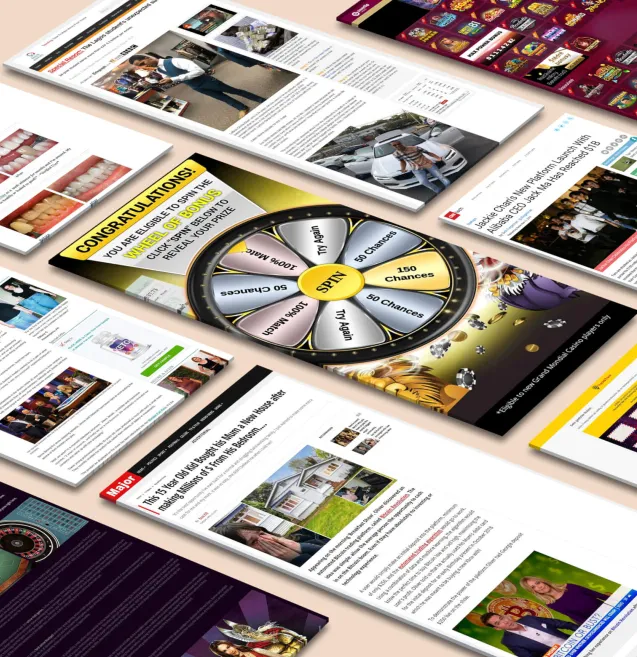
The pattern is remarkably consistent. Surviving landing pages place third-party proof above the fold — not buried in a testimonial carousel at the bottom, but visually anchored within the first viewport. They use editorial-style framing rather than promotional framing: headlines that read like investigative findings rather than sales pitches, bylines with named authors or attributed experts, publication-date timestamps that signal currency. Many adopt comparison structures that mirror the format AI answer engines use — concise, multi-option evaluations with clear differentiators — which serves double duty as both a conversion architecture and a signal that AI models can parse and potentially cite. And the most durable campaigns exhibit what Search Engine Journal describes as "corroborated presence" — the kind of multi-source credibility signal that AI models use to determine which vendors get surfaced and which get bypassed entirely at the research stage.
This matters because the landing page is precisely where most marketers chronically underinvest. As MarTech reported, top-performing teams treat paid media as an end-to-end system rather than a series of disconnected optimizations, yet the majority of marketers rank landing pages and post-click experience last in actual optimization effort — even while acknowledging them as critical to ROI. The gap isn't strategic disagreement; it's operational constraint. Team capacity, design resources, and development bandwidth consistently prevent marketers from closing the gap between what they know matters and what they actually improve. For affiliates, that gap is a structural advantage waiting to be claimed. Every competitor who pours budget into audience targeting and bidding strategy while neglecting the page itself is handing you the one leverage point the compressed journey makes decisive.
The AI visibility dimension compounds the advantage. Marketing Dive found that 37% of consumers now begin searches with AI tools rather than traditional search engines, and that a brand earning inclusion in an AI-generated answer before a user even formulates a query holds a fundamentally stronger position across both paid and organic channels. For affiliates, this means the landing page isn't just a conversion asset — it's a discoverability asset. Pages structured with the editorial framing, comparison formats, and corroborated credibility signals that AI models favor aren't only converting the visitors who arrive. They're increasing the likelihood of being cited in the AI-generated answers that now precede and often replace the click entirely.
When you study the ninety-day survivors in any competitive intelligence tool, you're not looking at a creative insight. You're looking at an operational one. The affiliates who endure aren't outspending or out-hooking. They're closing the landing page investment gap that the rest of the industry refuses to close — and in a journey that now compresses to seconds, that three-second authority window is the only real estate left that matters.
The single trait separating affiliate campaigns that thrive under journey compression from those quietly bleeding out isn't better copywriting, sharper targeting, or even a superior offer. It's speed of authority transfer — how quickly a landing page moves a visitor from "I've never heard of this source" to "this source is credible enough to act on." That speed has always mattered, but the compressed buyer journey has turned it into an existential filter.
Here's the mechanical reality. A visitor arriving at an affiliate page in 2026 — whether from a native ad, a surviving organic click, or a citation trail from an AI answer — has already done their research. The AI did it for them. They watched a summary synthesize four competing products. They read the AI-generated comparison. By the time they land on your page, they are not browsing. They are confirming or rejecting. You have seconds, not minutes, and certainly not the leisurely scroll-and-compare sessions that affiliate marketers designed for five years ago.
This is where most campaigns die. They front-load benefit claims and calls to action, treating urgency as the primary conversion lever. But urgency without credibility is noise. The pages that survive the confirmation-or-rejection filter are the ones that achieve what brand marketers call trust transfer almost instantaneously — establishing that the source behind the recommendation is worth believing before the visitor's thumb reaches the back button.
What makes this particularly interesting is that the credibility signals required to win human visitors now overlap almost perfectly with the signals AI models themselves use to determine which sources deserve citation. As AdExchanger has argued, the differentiator for content has shifted from what was made to who stands behind it — because AI can now produce "good-enough" content indistinguishable from the real thing at a glance. When content alone can no longer prove its origins, the only durable commercial asset is the trust an audience places in the source. That principle applies to affiliate landing pages with equal force.
The affiliates winning this race are essentially reverse-engineering AI's own authority heuristics and front-loading them for human visitors within the first scroll. That means third-party citations — not vague "experts agree" language, but named sources with verifiable claims. It means specificity: exact figures, dated evidence, structured comparisons that mirror the format AI answer engines themselves generate. It means editorial tone over promotional tone, because AI models trained on the open web have learned to distinguish between the two, and so have the humans those models have been training for the past two years.
This isn't theoretical. The sites that earn citations in AI-generated answers — and therefore capture the residual clicks that still exist — are the ones deploying exactly these signals. As Ahrefs noted, the sites winning from here don't just earn clicks; they get cited as the source the answer is built from, which demands a fundamentally different content architecture than traditional affiliate optimization.
The underappreciated insight is that building for AI citation-worthiness and building for instant human trust are now the same project. Structured evidence, verified claims, transparent sourcing, editorial restraint — these are not separate strategies for two different audiences. They are a single strategy for a world where the AI did the browsing and the human showed up to judge. The affiliates who grasp this aren't optimizing landing pages. They're constructing authority at a speed the collapsing journey demands — and that speed, more than any other variable, determines who survives.
The gap between knowing what works and actually doing it is where most affiliate campaigns die in the middle of the funnel. Before you can build for the compressed buyer journey, you need an honest picture of where your current campaigns stand — and a systematic way to find the openings your competitors are leaving wide open.
Step One: Audit Your Campaigns Against the Authority-Speed Benchmark
Pull every active landing page and score it on a single dimension: how many seconds does it take for a first-time visitor to encounter a credible trust signal? This isn't about whether trust signals exist somewhere on the page. It's about whether they appear before the first scroll. Time yourself. If you can't identify a specific, verifiable authority marker — a named expert, a recognizable publication logo, a data point with a cited source, a visible methodology — within three seconds of page load, that page is failing the authority-speed test.
Run this audit across every landing page in your portfolio and sort the results into three tiers. Pages that deliver authority signals above the fold within three seconds go into a "defend" tier. Pages that have authority elements buried below the fold or behind a click go into a "fix" tier. Pages relying entirely on generic social proof ("thousands of satisfied customers") or unverifiable claims go into a "rebuild or kill" tier. The rebuild tier is where your budget is quietly evaporating, because these are the pages least equipped to survive a journey where about 60% of searches now end without a click and the visitors who do arrive carry disproportionately high intent.
Step Two: Use Competitive Intelligence to Map Mid-Funnel Gaps
The mid-funnel is where most affiliates under-invest and where the largest arbitrage opportunities still exist. Open your competitive intelligence tool — Anstrex, AdPlexity, SpyFu, or whatever you use — and filter for campaigns in your vertical that have sustained spend for sixty days or more. These long-running campaigns have already survived the platform's cost-per-action gauntlet, which means they're converting. Study their landing pages not for creative inspiration but for structural patterns. What authority mechanisms do they deploy? Where in the page architecture do comparison elements appear? How do they handle the objection layer that sits between initial interest and conversion?
Now look for what's missing. In most verticals, the longest-running campaigns cluster around the same two or three angles, leaving adjacent mid-funnel positions completely uncontested. As Search Engine Journal reported, sixty-two percent of enterprise domains are technically invisible to AI models, and the brands those models fail to mention on unbranded category queries represent a staggering eighty-one percent gap. That invisibility isn't limited to enterprise brands — it's a structural condition across affiliate verticals too, and it means the mid-funnel content that would answer comparative, evaluative, and contextual queries simply doesn't exist yet for huge swaths of the market.
Cross-reference those gaps against the queries AI answer engines are surfacing in your category. The strongest position you can build isn't a page that ranks for a single keyword. It's a page that becomes the source an answer engine cites when a buyer asks the comparative question your competitors haven't bothered to answer thoroughly. As Ahrefs noted, the sites winning from here don't just earn clicks — they get cited as the source the answer is built from. Build your mid-funnel pages to be that source, and the compressed journey works for you instead of against you.
Receive top converting landing pages in your inbox every week from us.
In-Depth
Explore what Pure Leaf’s “Break Conference” reveals about the gap between polished brand marketing and measurable performance. This guide breaks down how Native, Push, TikTok, and affiliate-style funnels use creative testing, clear offers, first-party data, and hard performance metrics to turn cultural moments into revenue.
Rachel Thompson
7 minOct 1, 2026
Must Read
Explore why traditional OOH experience is no longer enough as out-of-home advertising becomes more data-driven, measurable, and connected to digital channels. This guide outlines the cross-channel, measurement, AI, and competitive-intelligence skills modern OOH employers and candidates need.
David Kim
7 minSep 25, 2026
How-To
Learn how to measure whether sports-star and celebrity advertising actually delivers efficient CPC, CPA, search lift, and downstream conversions. This guide shows how to test celebrity creative against creator alternatives and use competitive intelligence and measurement to turn expensive star power into a measurable performance asset.
Elena Morales
7 minSep 25, 2026