8 minAugust 23, 2026

Our tools monitor millions of native, push, pop, and TikTok advertising campaigns.
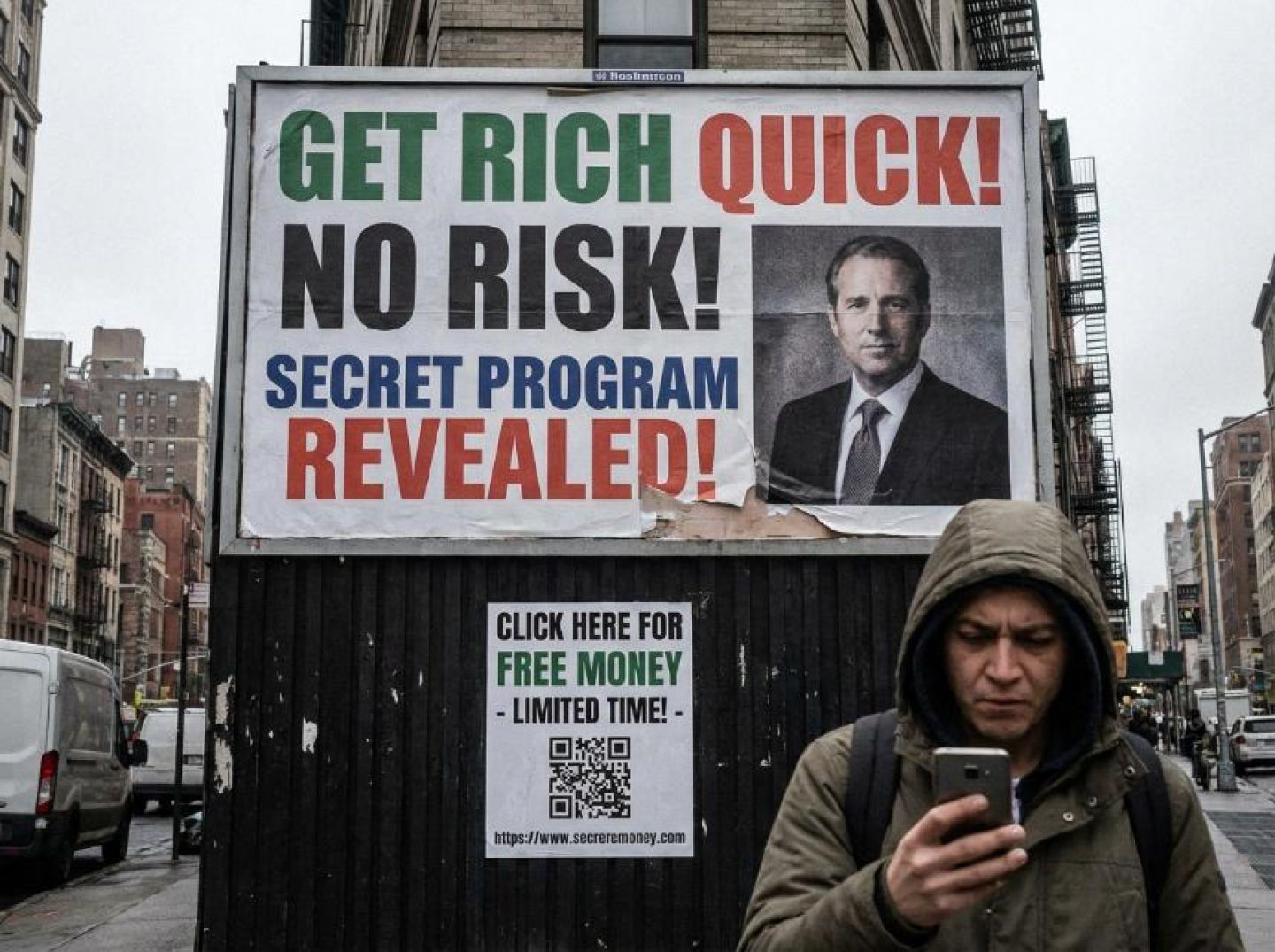
Get StartedMany in the marketing and tech world have dismissed the Phia scandal as just another affiliate fraud story. But reducing it to an internal squabble over commission attribution — the way much of the industry treated the Honey controversy — misses a threat that should alarm every media buyer, not just every affiliate manager.
Here's the critical distinction. Honey was accused of intercepting affiliate referrals that another publisher had already earned. Merchants still paid one commission on a completed sale; the money simply shifted from one publisher to another within the affiliate ecosystem. Publishers were furious, but advertisers largely shrugged because their total cost per acquisition didn't change. Phia, if the allegations hold, did something fundamentally different: it manufactured commissions that should never have existed. According to testing conducted by Capital One Shopping and Harvard Business School professor Ben Edelman, Phia's iOS Safari extension allegedly opened background tabs and fired affiliate tracking links without any explicit user action the moment a consumer visited a participating merchant's site. In Edelman's words, merchants are the direct victims of forced clicks — paying out on sales that would have occurred organically, with no legitimate referral driving them.
That difference changes who is harmed and how far the damage radiates. Affiliate marketing typically captures only a slice of an advertiser's online sales, which naturally limited Honey's blast radius to transactions already flowing through affiliate channels. Forced clicks, by contrast, can touch any shopping session where the extension is active, converting what would have been a direct or paid-search visit into an affiliate transaction. The estimated take — roughly $12 million, according to industry insiders with access to large data sets — may sound modest next to a Fortune 500 media budget, but the downstream distortion is orders of magnitude larger than the commissions themselves.
This is not unprecedented. Nearly two decades ago, Edelman uncovered similar forced-click behavior by eBay affiliates Shawn Hogan and Brian Dunning. Both were eventually charged with wire fraud, pleaded guilty, and served prison sentences — Dunning's indictment alleging over $5.3 million in unearned compensation and Hogan's exceeding $15.5 million. Phia has not been criminally charged, and the specifics differ, but the legal precedent underscores how seriously the justice system can treat this conduct.
What most coverage overlooks is the collateral damage to every other channel feeding the same merchants. If a forced click silently stamps an affiliate cookie on a user who originally arrived via a Facebook prospecting ad or a Google Shopping click, the affiliate gets credit, the paid channel's attributed ROAS drops, and the media buyer — seeing diminished returns — pulls budget or raises bids to compensate. The fraud doesn't stay quarantined in the affiliate silo; it poisons the entire funnel's economics. And as AdExchanger has noted in its coverage of platform-level ad fraud, a core structural problem is that misaligned incentives allow fraud to persist because the parties best positioned to detect it often profit from ignoring it.
Edelman himself is unequivocal about intent, calling the behavior "misconduct" and flatly rejecting the possibility that forcing clicks could be unintentional. The alleged choice to deploy through an iOS Safari extension rather than a traditional desktop add-on may have been strategic: mobile extensions have historically received far less scrutiny from researchers, networks, and competing publishers. Whether that was by design or by opportunism, the result was the same — a blind spot that went undetected while every media buyer optimizing against the same merchant storefronts was making decisions on contaminated data.
The regulatory infrastructure designed to combat ad fraud is growing more sophisticated — and it's still arriving too late for the people who need it most. When Ofcom published its report on best practices for countering platform ad fraud earlier this month, the recommendations were genuinely promising: mandate that platforms give third-party auditors access to large, representative random samples of all active ads, proactively alert users who clicked on confirmed fraudulent ads, and hold platforms accountable for the revenue they extract from fraudulent inventory. Rob Leathern, who led ads integrity and privacy teams at both Facebook and Google, offered a detailed breakdown arguing that "the most important thing" a code should mandate is exactly this kind of transparency. He's right. But notice who these recommendations are aimed at: platforms, regulators, and industry-level compliance bodies. The individual affiliate or media buyer — the person logging into a dashboard at 8 a.m. and deciding where to allocate today's spend — is nowhere in the picture.
This is the structural blind spot. The entire fraud conversation happens one level above the people burning money. Regulators like Ofcom write codes of conduct for platforms. Network compliance teams audit merchant relationships after campaigns have run. Industry bodies publish post-mortem reports. All of this is retrospective. It catches fraud after the budgets have already been drained, after the misleading impressions have already been served, after the phantom conversions have already been counted. For the media buyer making real-time allocation decisions, none of it functions as an early warning system.
The incentive misalignment makes this worse. As AdExchanger bluntly noted, platforms actually benefit from fraud — advertisers still pay when their ads run on fraudulent publishers or resellers, and when platforms do issue refunds, they often come as ad credits rather than cash. The platform keeps its revenue either way. Sometimes the advertiser is the scammer, and that scenario "works out rather nicely for the platform, revenue-wise" too. For platforms to take fraud seriously, it must be something they pay for, not something they profit from. Until that changes, the burden of detection falls on individual practitioners — who currently have almost no proactive tools embedded in their daily workflow.
The UK's Chartered Trading Standards Institute has called on the government to confront what it describes as an "epidemic of fraud" on Meta's platforms, with its chief executive arguing that "the profits they make from criminal activities is eye-watering." Yet even after sustained public scrutiny, the Financial Conduct Authority identified over a thousand ads for unauthorized financial products in a single week, and quick searches of Meta's own publicly accessible ads library continue to surface deepfake endorsements and fabricated press coverage generating hundreds of thousands of views. The top-down pressure is real, but it clearly isn't moving fast enough to protect individual budgets.
This dynamic mirrors what happens at the analytics level with ghost spam and referrer fraud — bad data that looks indistinguishable from good data until you build a discipline of filtering for it. The "set it and forget it" tracking mentality that pervades affiliate marketing creates the same vulnerability at the campaign level that unfiltered analytics creates at the reporting level: a false sense of confidence built on contaminated signals.
What the industry lacks is a practitioner-level early warning system — not another top-down code of conduct, but a daily operational discipline that gives media buyers proactive fraud signals before they commit spend. The regulatory frameworks are necessary, but they're designed to govern platforms, not to protect the person deciding at 8:15 a.m. whether a traffic source is legitimate. That gap between institutional accountability and individual decision-making is where most of the money disappears.
Most media buyers open an ad spy tool looking for winning creatives to emulate. That's leaving money on the table — or more accurately, leaving fraud undetected. The same competitive intelligence platforms that reveal what your rivals are running can also surface patterns that correlate with fraudulent or unsustainable campaigns, if you know what to look for. Here are three signals hiding in plain sight.
Signal 1: The "Implausibly Hot" Campaign — Metrics That Defy Gravity
When you spot a campaign inside a tool like Anstrex that appears to be running at enormous scale across multiple networks and geos simultaneously, with creative that seems almost generic, pause before you copy it. That kind of omnipresence can be a hallmark of forced-click affiliate fraud rather than brilliant media buying. As Ben Edelman explained, in schemes built on forced clicks both click-through rate and revenue per user will be implausibly high — numbers that look extraordinary on the surface but are manufactured by triggering affiliate tracking without genuine user intent. If a campaign's apparent reach and longevity don't square with the quality of its creative or the niche it occupies, treat that dissonance as a fraud indicator, not a growth hack to reverse-engineer.
Signal 2: The Frontloaded Flame-Out — Spend Curves That Peak and Vanish
Ad spy tools let you track how long a campaign has been running and how aggressively it scales. One of the most reliable red flags is a spend pattern that spikes dramatically in its first days or weeks and then disappears entirely. This mirrors a broader pattern that MarTech has documented across nearly a thousand ad accounts: advertisers who overspend early in pursuit of hypergrowth often flame out and lose stakeholder buy-in. In the fraud context, the dynamic is even more pronounced. Fraudulent affiliates frequently flood a merchant's program with fabricated volume, collect commissions before anyone audits the data, and then vanish — leaving the advertiser with a spike in attributed sales that, upon closer inspection, would have happened anyway. When you see a competitor's campaign follow this trajectory in your spy tool, resist the urge to replicate its early momentum. That curve likely represents wasted spend, not validated demand.
Signal 3: The Platform Blind Spot — Mobile-Only or Single-Environment Campaigns
Competitive intelligence tools index ads across desktop, mobile, and multiple traffic sources. Pay attention to campaigns that appear exclusively in a single environment — particularly mobile. Edelman's research into the Phia allegations revealed that the suspected forced-click behavior was concentrated on mobile through an iOS Safari extension rather than a traditional desktop browser extension, precisely because mobile has historically received far less scrutiny from researchers and networks. Fraudsters gravitate toward the least-monitored surfaces. If your ad spy data shows a campaign running only on mobile inventory with no desktop counterpart, and its volume metrics seem disproportionately large for its vertical, you may be looking at an operation designed to exploit a detection gap rather than a savvy mobile-first strategy.
None of these signals is conclusive on its own. A campaign can legitimately scale fast, perform well on mobile, or show high engagement. But when two or all three of these patterns converge on the same advertiser or affiliate, the probability that you're looking at fraud — or at minimum, an unsustainable operation you should not model your own spend after — increases sharply. The ad spy tool you're already paying for can surface these patterns before they show up in your own attribution reports. The question is whether you're using it as a mood board or as an early-warning system.
One day a brand is running hundreds of creatives across multiple geos, saturating every placement your spy tool tracks. The next day — nothing. No gradual wind-down, no seasonal tapering, no pivot to a new angle. Just a clean, abrupt vanishing act. Most media buyers barely register these disappearances; they're too focused on what's currently live to notice what's suddenly gone. But sudden advertiser disappearances are one of the most reliable fraud signals hiding in your competitive intelligence data, and learning to track them can save you from running headlong into the same trap that just swallowed someone else.
When a high-volume advertiser vanishes overnight from a network, the cause is almost never good news. In the best-case scenario, they ran out of budget — the kind of aggressive, frontloaded spending that, as MarTech has documented, tends to characterize deep-pocketed operators who confuse ad spend with performance and "flame out" after burning through capital in pursuit of hypergrowth. But the worst-case scenarios are far more common and far more instructive: the advertiser was shut down for compliance violations, the affiliate network pulled the offer after discovering fraudulent traffic, or the advertiser themselves realized the conversions they were paying for were largely synthetic. In each of these cases, the disappearance is the market correcting itself — and if you were about to promote the same offer or model the same funnel, you were seconds away from wasting real money on a dead or toxic opportunity.
The mechanism here is straightforward. Fraudulent or non-compliant campaigns tend to scale fast precisely because they're cutting corners — cloaking landing pages, making unverifiable claims, buying bot traffic to inflate early performance metrics. That artificial velocity makes them look like winners inside your spy tool. They appear to be spending aggressively and running for weeks, which is exactly the profile most affiliate marketers filter for when looking for campaigns to model. But the longevity signal is the critical variable. A campaign that runs hard for ten days and then evaporates is telling a fundamentally different story than one that has been live for six months.
This is why tracking advertiser longevity as a systematic practice — not just checking what's live today — matters so much. Build a simple watchlist of advertisers who are scaling aggressively in your vertical, and check it weekly. When one drops off entirely, investigate before you emulate anything they were doing. Look at whether the offer itself is still active on the affiliate network. Check whether the landing page domains have been taken down or flagged. Cross-reference the disappearance with any compliance updates from the network.
The broader ecosystem dynamics reinforce why this diligence is necessary. As AdExchanger reported, platforms often have misaligned incentives when it comes to policing fraud — advertisers still pay when their ads run on fraudulent publishers, and refunds frequently come as ad credits rather than cash. This means that the enforcement actions that do happen tend to be sudden and severe rather than gradual, which is exactly why disappearances look so abrupt in your spy data. The platform or network isn't gently discouraging the bad actor; it's pulling the plug all at once after an internal investigation concludes.
Think of advertiser longevity as a health score for offers and verticals. Short-lived campaigns that scaled fast and died faster are the equivalent of a flashing warning light. They tell you that something in that ecosystem — the traffic sources, the offer terms, the compliance environment — is unstable. And instability, in affiliate marketing, is where fraud lives. The advertisers who survive month after month, adjusting creatives and iterating on angles without disappearing, are the ones operating on solid ground. Those are the campaigns worth studying. Everything else deserves skepticism before it gets your budget.
Legitimate brands treat their ad creatives like assets. They invest in design, test variations methodically, and iterate over weeks or even months because every creative carries brand equity forward. Fraud operations operate on an entirely different clock. They clone whatever's converting right now, deploy it at massive scale, and discard it within days — sometimes hours — because they have zero interest in long-term brand perception. They need fast extraction, and that urgency leaves a distinct fingerprint in your ad spy data if you know how to read it.
Think of it this way: a genuine DTC skincare brand might run a hero creative for three to six weeks, gradually introducing new hooks, adjusting thumbnail imagery, and split-testing calls to action. Each iteration builds on the last because the brand is optimizing for sustainable customer acquisition costs. A fraudulent affiliate promoting the same product — or a counterfeit version of it — doesn't have that luxury. Their creatives get flagged, reported, or simply stop converting once platforms catch on to the landing page behind them. So they rip a proven ad, swap a headline or color scheme just enough to pass automated duplicate detection, and push it live again. The result is an abnormally high creative turnover rate on campaigns that simultaneously show abnormally high volume. That combination — velocity plus scale — is the tell.
This pattern connects directly to a broader problem that MarTech has highlighted: confusing ad spend with marketing performance. When advertisers overspend early in pursuit of hypergrowth, they often flame out and lose stakeholder buy-in. Fraud operators exploit this exact dynamic. They know that brands chasing aggressive growth metrics are less likely to scrutinize where their affiliate-driven conversions actually originate. The spend looks productive on the surface — impressions are high, clicks are flowing, and attribution dashboards light up green. But the underlying creative behavior tells a different story. No legitimate advertiser burns through dozens of near-identical creatives in a single week unless something deeply unusual is happening.
Your ad spy tool can surface this signal with surprisingly little effort. Sort campaigns by creative count relative to flight duration. If a campaign launched five days ago and has already cycled through fifteen or twenty creative variants — each one visually similar but with minor cosmetic differences — you're likely looking at a churn-and-burn operation. Compare that against established advertisers in the same vertical, who might produce fifteen creatives across an entire quarter.
The consequences of ignoring this signal are real and measurable. As Adweek reported in its investigation of Phia's alleged scheme, advertisers may be paying commissions on sales that would have occurred anyway when affiliate clicks are generated without a legitimate referral, meaning the fraud directly damages merchants' bottom lines. Rapid creative recycling is often the operational machinery behind exactly this kind of scheme — each new creative variant represents another attempt to capture attribution credit before the previous version gets pulled.
The sophistication of these operations is increasing, too. Modern fraud rings don't just clone static images; they use templated video generators, AI-assisted copy spinning, and automated deployment pipelines that can push a new creative variant live within minutes of the last one being taken down. This means the velocity signal is becoming even more pronounced, and therefore even more useful as a detection mechanism.
Build a simple dashboard that tracks creative lifespan by advertiser. Flag anything with an average creative duration under seventy-two hours that's running at meaningful spend levels. Cross-reference those flagged advertisers against the disappearance patterns discussed earlier. When high-velocity creative recycling and sudden advertiser vanishings overlap on the same offer, you've identified a campaign ecosystem that deserves immediate scrutiny — not next quarter, not at the next team meeting, but now.
Landing page cloning is one of the most reliable tells in affiliate fraud — and one of the most overlooked. When you pull up an ad spy tool and notice multiple advertisers running nearly identical landing pages with only minor domain variations, you're not looking at a competitive niche where everyone happened to arrive at the same design. You're looking at a single operator spinning up disposable funnels, collecting commissions across several merchant programs simultaneously, and burning each domain before anyone connects the dots.
The mechanics are straightforward. A fraudulent affiliate identifies a landing page that converts well — often a legitimate advertiser's own page — and replicates it down to the button colors, testimonial layouts, and call-to-action copy. They register a handful of similar-sounding domains, deploy the clones, and route traffic through affiliate links that earn them commissions on every sale. Because each domain appears to be a separate advertiser, no single merchant or network sees the full picture. The operator collects payouts across all of them until one gets flagged, at which point they simply rotate in a new clone and keep going.
This tactic thrives because of the same misaligned incentives that allow other forms of affiliate fraud to persist. As AdExchanger noted in its coverage of Ofcom's proposed ad fraud code, platforms actually benefit from fraud because advertisers still pay when their ads run through fraudulent publishers or resellers, and refunds, when they come at all, are often issued as ad credits rather than cash. That dynamic means there's little institutional pressure to surface cloned landing pages proactively. The burden falls entirely on the advertiser — or the compliance team at the affiliate network — to detect the pattern themselves.
Ad spy tools are uniquely positioned to expose this kind of operation because they aggregate creative and landing page data across networks and geographies in ways that no single merchant can replicate internally. By systematically searching for pages that share structural elements — identical HTML frameworks, matching image assets, copied headline structures — you can map a cluster of clones back to a single origin point. The key is looking not just at what's identical, but at what's slightly different: a swapped logo here, a modified disclaimer there, a different tracking pixel firing in the background. These minor variations are the fingerprints of a clone operation trying to avoid automated detection.
The financial stakes of missing these patterns can be substantial. The Phia investigation reported by Adweek demonstrated how a single operation allegedly extracted more than $10 million from merchants by generating affiliate commissions that should never have existed. While Phia's scheme relied on forced clicks rather than cloned pages, the underlying principle is the same: fraudulent operators exploit the fragmented nature of affiliate tracking to collect payouts that no legitimate referral earned. Landing page cloning simply uses a different entry point — fabricated advertiser identities rather than fabricated click events — to achieve the same extraction.
The systematic approach matters here. Running a one-time audit won't catch an operator who cycles domains every few days. You need recurring sweeps that flag structural similarities across new campaigns, cross-referenced with domain registration data and affiliate network IDs. When the same WHOIS registrant, the same hosting provider, and the same page architecture keep appearing behind what looks like different businesses, you've found your clone ring. The ad spy tool surfaces the creative evidence; your investigative process connects it to the financial trail. Together, they transform what would otherwise be an invisible drain on your budget into an identifiable, actionable threat.
Receive top converting landing pages in your inbox every week from us.
In-Depth
Explore what Pure Leaf’s “Break Conference” reveals about the gap between polished brand marketing and measurable performance. This guide breaks down how Native, Push, TikTok, and affiliate-style funnels use creative testing, clear offers, first-party data, and hard performance metrics to turn cultural moments into revenue.
Rachel Thompson
7 minOct 1, 2026
Must Read
Explore why traditional OOH experience is no longer enough as out-of-home advertising becomes more data-driven, measurable, and connected to digital channels. This guide outlines the cross-channel, measurement, AI, and competitive-intelligence skills modern OOH employers and candidates need.
David Kim
7 minSep 25, 2026
How-To
Learn how to measure whether sports-star and celebrity advertising actually delivers efficient CPC, CPA, search lift, and downstream conversions. This guide shows how to test celebrity creative against creator alternatives and use competitive intelligence and measurement to turn expensive star power into a measurable performance asset.
Elena Morales
7 minSep 25, 2026