11 minOctober 14, 2026

Our spy tools monitor millions of native ads from over 60+ countries and thousands of publishers.
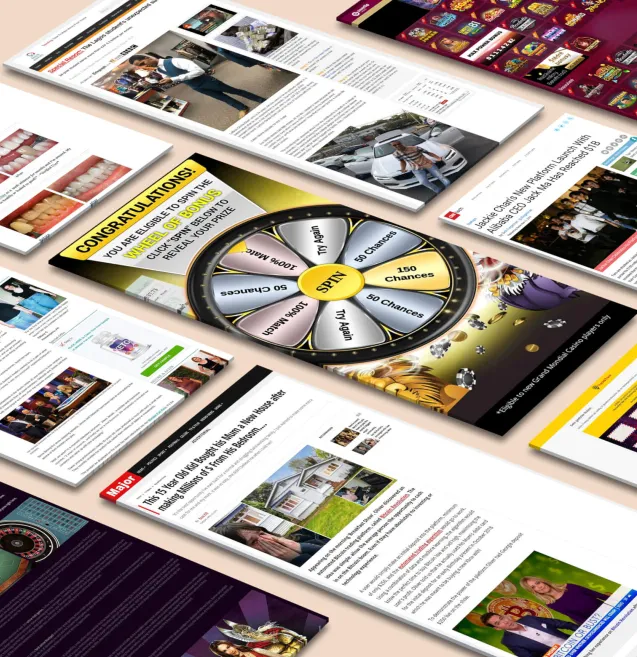
Get StartedAI has finally made it effortless to pump out decent ads at scale—and that’s exactly why your click‑through rates are quietly dying. As platforms normalize broad targeting and lean harder on creative as the main signal, as outlined in MarTech’s analysis of Google, Meta, and TikTok automation, everyone is feeding the same models with the same prompts, churning out “good enough” native, push, and TikTok creatives that blur into one another and train both algorithms and humans to scroll right past them.
Consumers are already signaling that they can spot this sameness: in Canva’s research on AI in marketing, summarized by MarTech’s report on consumer attitudes toward AI ads, 70% say AI-generated ads feel like they’re “missing their soul”—and when every brand relies on identical AI tools and templated skills to generate TikTok videos and ad copy, as described in Social Media Examiner’s coverage of TikTok’s Symphony Creative Studio, your campaigns stop standing out and start becoming invisible.
If it feels like every ad in your feed is using the same hook, the same pacing, and the same “TikTok voice,” it’s not your imagination. It’s the logical outcome of everyone pointing generative tools at the same performance data, the same trend reports, and the same platform‑recommended prompts.
The homogenization starts upstream, at the model level. Platform AIs are trained on what has already worked inside their own auctions. TikTok’s Symphony Creative Studio, for example, digests “TikTok trends, top‑performing ad signals, business goals, and brand guidelines” to automatically turn a brief into finished video concepts, storyboards, and scripts, as Social Media Examiner explains. Meta’s and Google’s creative systems work from the same basic recipe: optimize toward the historically highest‑clicking patterns. When millions of advertisers tap into those same baked‑in patterns, the output converges fast.
The tooling layer tightens that loop. TikTok’s new “skills” let marketers literally clone the structure of proven ads—the opening hook, the mid‑roll proof, the call‑to‑action—and remix them for their own products. Those skills are interoperable, so you can use a “TikTok copywriting” skill to write Meta ads, or run Instagram skills to script TikTok videos, turning the ecosystem into a giant, cross‑platform template engine, as Social Media Examiner notes. What looks like flexibility on paper becomes sameness in practice: the same narrative scaffolding is now being copy‑pasted across native widgets, push notifications, Reels, and Shorts.
Even the philosophical promise of AI—“it levels the playing field”—has a homogenizing side effect. For smaller brands, the ability to generate studio‑quality product images and endless variations for pennies is transformational. But when most advertisers follow the same playbook of training a model on brand guidelines, then churning out dozens of performance‑tested variants, they stop competing on originality and start competing on who can iterate the template fastest. The shift is visible in Meta’s ecosystem, where the Andromeda update stopped privileging tiny tweaks of the same ad and pushed brands toward genuinely different creatives at higher volume, a shift unpacked in Social Media Examiner’s guidance on AI ad creative systems. The problem is that “different” is increasingly defined by the platform’s own pattern library, not by the brand’s point of view.
Put all of this together and you get an invisible wave: generative models trained on yesterday’s winners, platform skills that standardize structure across channels, auction intelligence that points everyone at the same perceived gaps, and creator networks scaled with AI‑assisted workflows. Each layer nudges marketers toward what the machine already recognizes as “good.” The result is a quiet, compounding sameness—native, push, and TikTok ads that technically perform, but blur into an undifferentiated background hum your audience scrolls past without ever really seeing.
When everyone is optimizing to the same playbook, the performance edge doesn’t just shrink — it evaporates.
AI‑driven tools and platform “best practices” are pushing brands toward the same hooks, the same structures, the same creator archetypes. When Unilever announced a shift to a 300,000‑influencer, social‑first machine, the headline was the scale of the network. But buried in the details is something more revealing: the vast majority of those creators are already leaning on AI for editing, effects, and even idea generation. In a recent Adobe Express study summarized by Search Engine Journal, 71% of creators across YouTube, TikTok, and Instagram reported using AI video tools, with over half saying those tools save them at least 30 minutes per video. Multiply that by hundreds of thousands of creators all optimizing for the same engagement metrics and formats, and Unilever isn’t just building scale — it’s building a gigantic, distributed factory for AI‑assisted content that inevitably trends toward sameness.
That sameness is not neutral. It’s a drag on performance.
Ad auctions don’t just reward “good” creative; they reward creative that is distinct enough to earn more efficient engagement than what the algorithm already expects. Competitive intelligence tools like Polaris AI, as described in an AdExchanger breakdown of social ad auctions, show that the true signals of advantage show up first in the auction: falling CPMs, rising share of voice, and pockets of outlier efficiency. Those signals are, in large part, reflections of how your creative interacts with the feed around it. If your TikTok UGC, your Meta Reels, and your native placements look and feel indistinguishable from everyone else’s, you’re not sending a “this is working” signal — you’re just blending into the noise.
This is the hidden cost of creative convergence: as assets become more templated, your ability to generate alpha in the auction collapses.
Users feel that collapse long before your dashboards do. In Canva’s “The state of marketing and AI 2026” report, summarized by MarTech’s coverage of consumer attitudes toward AI ads, 70% of consumers said AI ads are easy to spot because they feel like they’re “missing their soul,” and 69% worry the future of advertising will become a sea of “AI‑generated slop.” That’s not philosophical criticism; it’s a practical warning. When audiences experience the feed as one long, interchangeable ad — same tone, same talking points, same “this changed my life in 30 days” hook — they mentally batch your brand with every other me‑too offer. Click‑through rates erode not because your targeting is bad, but because your creative no longer earns the right to be noticed.
This erosion is amplified by the very automation marketers are relying on to win. As MarTech’s analysis of AI‑native advertising points out, leading advertisers are already deploying continuous creative optimization loops that spin out hundreds of variations in real time. On paper, that looks like infinite diversity. In reality, those variations are usually micro‑tweaks inside a very narrow template: same framing, same promise, same creator archetype, with only a word or two swapped. The algorithm optimizes for the fastest wins, which tends to pull everything toward the current “local maximum” — the creative pattern that works well enough across broad audiences. Over time, that feedback loop hardens into a house style for the entire category.
Native and push networks are no safer. As more buyers feed the same winning angles, creatives, and landers into the same optimization systems, competition stops being about who has the best idea and starts being about who can tolerate the worst margins. You’re no longer competing on message, but on how cheaply you can acquire clicks in a marketplace where your ad looks like every other offer in the widget or notification tray.
The really painful part? Consumers are explicitly telling brands what they want instead: AI that enhances, not replaces, human creativity. In interviews with publishers and ad tech leaders, executives cited in AdExchanger’s look at AI‑assisted video describe the sweet spot as using AI to upgrade the viewing experience — better angles, smoother edits, richer effects — while keeping real people and real products at the center. That is the opposite of the generic, over‑templated feed most performance advertisers are sleepwalking into.
When every ad uses the same AI shortcuts, your media budget stops buying attention and starts buying indifference. Creative convergence doesn’t just make your ads boring; it silently taxes every impression you pay for, as platforms throttle your reach and users scroll right past content they’ve seen a hundred times before in slightly different clothing.
AI didn’t just add a new tool to the media buying stack; it rewired where the battle is fought.
For a decade, performance marketers obsessed over audience settings. You won or lost on who you could target, how finely you could slice intent, and how cleverly you could stack interests. That era is closing fast.
Across Google, Meta, and TikTok, broad, AI‑driven targeting is becoming the default. Products like Performance Max, Meta Advantage+, and TikTok’s automated expansion loosen your grip on audience controls and ask you to hand more of the decision‑making to machine learning. As one analysis put it, platforms increasingly want you to bring “broad audience inputs, strong conversion signals, and compelling creative,” and then let the algorithm decide who is most likely to convert, making your ad assets themselves a primary qualification signal for reach and relevance, as.
In that world, creative is no longer “what you say after you’ve found the right people.” Creative is how the platforms figure out who the right people are.
Every headline, visual, and hook acts as metadata for the algorithm. The systems infer “who this is for” from the language, scenes, and structure of your ads. If you’re selling a high‑ticket B2B product but you lead with a generic “Save time and money” hook over a stock‑looking office backdrop, the platform has almost no signal that this is for CFOs at mid‑market SaaS companies versus solopreneurs or students. Conversely, if your video opens with “If you manage a finance team at a 200‑person software company…” the creative itself becomes a precise targeting hint.
That’s the upside. The downside is what happens when everyone feeds the same machine with the same inputs.
TikTok’s Symphony Creative Studio and its upgraded Agent are a perfect illustration. Marketers can now go from brief to script to avatar‑driven video in a few clicks, powered by the platform’s own “top‑performing ad signals,” current trends, and brand guidelines, as outlined in Social Media Examiner’s breakdown. TikTok even exposes skills that analyze your hooks, middle sections, and CTAs so you can model whatever is already working on the platform.
It’s incredibly powerful — and that’s exactly the problem.
If your “creative is targeting,” and your creative is being generated by an engine trained on the same winning patterns as everyone else’s, you’re effectively opting into the average. Your hooks, structures, pacing, and even B‑roll vocabulary converge on the same norm‑core template. The algorithm sees you as just another instance of the dominant cluster it already understands.
The result is a double penalty:
Scale accelerates the issue. When a company like Unilever spins up a 300,000‑influencer, AI‑assisted content network, they aren’t just flooding social feeds with more ads; they’re mass‑producing a particular style of AI‑shaped creative, at industrial volume, built from the same tooling and performance data everyone else is tapping, as Search Engine Journal notes. Those patterns become the training data for the next generation of models, which then recommend the same formulas back to the rest of the market.
So the new reality is brutal but clear: in AI‑driven ecosystems, creative is simultaneously your pitch and your targeting key. When you let generative tools collapse your ads into platform‑average templates, you’re not just blending into the feed aesthetically. You’re teaching the algorithm that there’s nothing uniquely identifiable about you — and it responds accordingly.
If you dropped creative from 2015 into today’s ad auctions, it would stand out immediately: long copy blocks, desktop‑first layouts, overtly “banner‑y” design. Drop most of today’s AI‑assisted ads into a scroll, though, and something stranger happens—they blur together into a single, platform‑approved composite.
That’s the “average ad” AI is quietly training everyone toward.
Across channels, you can already sketch its outline.
On TikTok, the average ad starts with a three‑second, face‑to‑camera hook, formatted almost exactly like the templates inside TikTok’s own AI ecosystem. Skills in Agentic Hub literally deconstruct top‑performing videos into reusable building blocks—“problem POV,” “before/after,” “I tried X so you don’t have to”—and then hand those blocks back to marketers as ready‑made scripts, shot lists, and captions, as described in Social Media Examiner’s breakdown of TikTok’s Agentic Hub. Symphony Creative Studio takes it further, stitching trends, stock B‑roll, auto‑generated subtitles, and text‑to‑avatar voiceovers into finished UGC‑style videos from a short brief.
When thousands of advertisers pull from the same AI‑scaffolded hooks and structures, TikTok ads converge on a narrow band of patterns: handheld phone shot, jump‑cut pacing, a curiosity headline in the first frame, then a sped‑up “here’s exactly how I did it” walkthrough. The human layer still tweaks product details and branding, but the bones are machine‑standardized.
Native and push formats are undergoing a similar flattening—only here, the convergence is driven more by what AI prefers to read than what humans prefer to watch. As AI crawlers become a meaningful traffic source, publishers have begun experimenting with “markdown‑style” advertorials and FAQ pages specifically engineered for machine comprehension. That has already triggered backlash; experts quoted in an AdExchanger industry roundup note that AI search engines are starting to strip or downgrade overly templated, FAQ‑like sponsored content because it looks deceptive or manipulative to the model.
The unintended side effect: native ads are quietly reconfiguring themselves into something that sits in the overlap of “easy for LLMs to parse” and “familiar to performance copy generators.” It’s why you see the same quasi‑editorial layouts—question‑headline, numbered benefits, bolded bullets, final FAQ—repeated across health, finance, and SaaS. AI copy tools, trained on that layout, then recommend it back to writers, reinforcing the loop.
Even more telling is what’s happening at the macro level when you study auction data instead of isolated creatives. Competitive intelligence platforms like Polaris AI, profiled in an AdExchanger feature on social ad auctions, don’t just surface CPMs and share‑of‑voice; they decode which formats, placements, and creative archetypes are driving those results. When an insurer like Progressive consistently outbuys competitors on efficiency, the machine infers a “safe” pattern—diversified placements, short explainer creative, clear savings claim—and then recommends or rewards similar setups for everyone else entering that category.
As broad, automated targeting becomes the norm, creative becomes a primary qualifier, as MarTech has argued in its analysis of AI‑driven campaigns. But if everyone is using the same tools and the same auction feedback signals to qualify, the “right” angles collapse into a narrow funnel of platform‑sanctioned best practices: benefit‑first headlines, human‑face thumbnails, social‑proof overlays, and a 15–30 second runtime, whether you’re selling car insurance or collagen powder.
Scale accelerates this collapse. When a marketer like Unilever moves half its global budget into a 300,000‑influencer, social‑first machine, as detailed in Search Engine Journal’s coverage of its AI‑assisted creator network, it isn’t just buying more creators; it’s mass‑producing variations of the same AI‑assisted creator format. A majority of creators already lean on AI editors and generators for pacing, transitions, and even hook suggestions. Plug that into a centralized brief and you don’t get 300,000 distinct creative ideas—you get 300,000 on‑brand renditions of the same few battle‑tested templates.
In native, push, pops, and TikTok, the “average ad” the system is converging on is fast, clear, and ruthlessly optimized for engagement signals. It is also increasingly indistinguishable from its neighbors. The zag—the weird angle, the structurally different story, the creative that targets by repelling the wrong audience—sits outside the trained envelope of what the algorithms recognize as safe and performant. And that is exactly where the next edge is hiding.
Spy tools used to be about theft. You stole angles, hooks, and landers from whoever was beating you in the auction. In an AI-saturated world, they can become something very different: a way to systematically detect where the herd is clustering and then deliberately go the other way.
Most marketers open Adplexity, Anstrex, Minea, or the TikTok Creative Center with the same unconscious brief: “Show me what’s working so I can make something like that.” That instinct is exactly what trains platforms’ machine learning to converge on a single “average ad.” When every performance marketer is copying the same hooks and layouts the algorithms already favor, you’re feeding the homogenization loop that section four unpacked.
But those same spy tools can be turned into anti-homogenization weapons if you treat them as pattern detectors instead of swipe files.
First, redefine what “winning” creative means inside your tools. Don’t just pull the top‑spend or longest‑running ads; cluster them. Look at 50–100 of the highest‑spend native, push, or TikTok ads in your niche and catalog what keeps repeating: the same “one weird trick” headline structure, the same three TikTok opening shots (selfie confessional, green‑screen stitch, silent unboxing), the same fake‑system notification frames on push. What you’re mapping is the dominant AI‑trained pattern the auctions are rewarding.
This is where you zig.
If 80% of the top TikTok creatives in your category open on a front‑facing selfie with text at the top, test an over‑the‑shoulder screen recording with a real‑world environment in the background. If native winners lean heavily on hyper‑polished AI illustrations, borrow from the “AI‑assisted” playbook that video executives described in Denver and keep the core of the asset stubbornly human: real faces, imperfect lighting, subtle camera moves that AI can enhance but not replace, just like the augmented zooms and pans Google TV’s Shravan Majithia pointed to as a smart middle ground. The point is not to LARP as analog; it’s to anchor your ad in signals that feel grounded while competitors race toward pristine sameness.
Broad, automated targeting makes this even more powerful. As platforms themselves have argued, creative is increasingly the primary qualifier of who sees your ad; your headline, visuals, and format are becoming the targeting signal, not just the persuasion layer, as one analysis of Performance Max and Advantage+ campaigns bluntly put it. That means when you zag at the creative level, you’re not only standing out in‑feed—you’re also giving the algorithm different data about who responds, which can push your ad into pockets of the audience your rivals’ average ads never touch.
Spy tools can also be your reality check against “AI slop.” Consumers are already signaling that they can feel when an ad has had its soul sanded off. In one recent survey on AI in marketing, 70% of respondents said they can usually spot AI‑generated ads because they feel like they’re “missing [their] soul,” and nearly seven in ten worry the future will be a sea of “AI‑generated slop,” according to a report on how consumers want AI ads with a human touch. When you scroll your spy tool results and see page after page of the same sterile stock‑plus‑emoji or mid‑journey‑fantasy aesthetic, you’re looking at what those people are complaining about in quantified form.
So build a simple “anti‑slop” checklist directly off your spying:
Finally, treat competitive spying as a way to pressure‑test your own ideas before the auction does. Before you ship a new native page or TikTok concept, run a mini “pre‑mortem” in your spy stack: which cluster will this ad accidentally fall into? Which common AI‑pattern does it rhyme with—hook wording, pacing, color palette, framing? Then force yourself to introduce one or two deliberate breaks from that cluster while keeping the offer intact. Over time, you train your team to see the water they’re swimming in and to use spy tools not as copy‑paste machines, but as radar for where sameness is thickest.
Everyone else is using these tools to slide closer to the mean. If you’re willing to use the exact same inputs to identify where not to go, you’ll let the algorithms keep doing their broad targeting work while your creative stands out just enough to earn a different kind of data—and, with it, a different kind of edge.
Receive top converting landing pages in your inbox every week from us.
Must Read
Discover how AI-generated ad fatigue is making native, push, and TikTok campaigns increasingly look alike, weakening engagement and reducing competitive advantage. Learn how to use competitive ad intelligence tools to identify repetitive creative patterns, develop more distinctive ads, and stand out in AI-driven advertising auctions.
Liam O’Connor
7 minOct 14, 2026
How-To
Learn how to connect out-of-home (OOH) advertising with digital performance campaigns to create measurable cross-channel funnels. Discover how to plan LED truck routes, coordinate search and social ads, optimize mobile landing pages, and track conversions so physical advertising drives measurable business results.
Samantha Reed
7 minOct 13, 2026
How-To
Discover how big-brand sports sponsorships use fan behavior, geographic targeting, and cross-channel advertising to reach high-intent audiences beyond celebrity endorsements. Learn how to reverse-engineer sponsorship strategies, validate audience segments with competitive intelligence, and build cost-effective campaigns around local fandom, CTV, mobile, and creator content.
Dan Smith
7 minOct 12, 2026