7 minOctober 12, 2026

Our tools monitor millions of native, push, pop, and TikTok advertising campaigns.
Get StartedBig-brand sports tie-ins aren’t really buying celebrities. They’re buying contexts, signals and access to high-intent behavior that most advertisers never bother to map.
On the surface, that World Cup logo slap, the NFL CTV buy or the jersey patch looks like a visibility play: “Put the brand where everyone is watching.” And yes, visibility still matters. Global tournaments and major leagues concentrate attention, and that scale delivers an easy-to-report impression count. But as one World Cup analysis noted, when every brand shows up the same way, visibility becomes the baseline, not the differentiator, and impressions alone rarely justify the spend when CMOs are under pressure to prove ROI by 2028 (Marketing Dive).
What sophisticated sponsors are actually buying is the right to plan against fandom—and the anstrex.com/blog/tiktoks-new-image-sharing-app-whee-just-took-this-massive-step" target="_blank" rel="noreferrer noopener">data infrastructure to do it.
Look at women’s sports. Inventory is scarce, measurement is patchy and historical benchmarks are thin, which makes “traditional” GRP-style planning almost impossible. Advertisers are mostly buying on CPM, but because they lack robust benchmarking data, those CPM buys often aren’t architected to deliver meaningful reach or optimized frequency (AdExchanger). If you judged women’s sports strictly by linear broadcast scale, you’d assume the opportunity is limited.
But that framing misses where the real asset lives: in the depth and shape of fandom signals, especially across social and creator ecosystems.
Female athletes, leagues and teams have built direct, high-TikTok-ad-stuns-the-world-heres-why" target="_blank" rel="noreferrer noopener">engagement channels that dramatically outpunch their “official” properties. Atlanta Dream star Angel Reese, for example, has amassed roughly 5.2 million followers on Instagram, compared with about 3.7 million for the entire WNBA, illustrating how athlete-led communities can dwarf league-owned ones (AdExchanger). Big brands are not just buying her name—they’re buying the fandom graph around her: who follows, comments, shares, stitches her content and how that fan energy spills into purchases, watch parties, travel and culture.
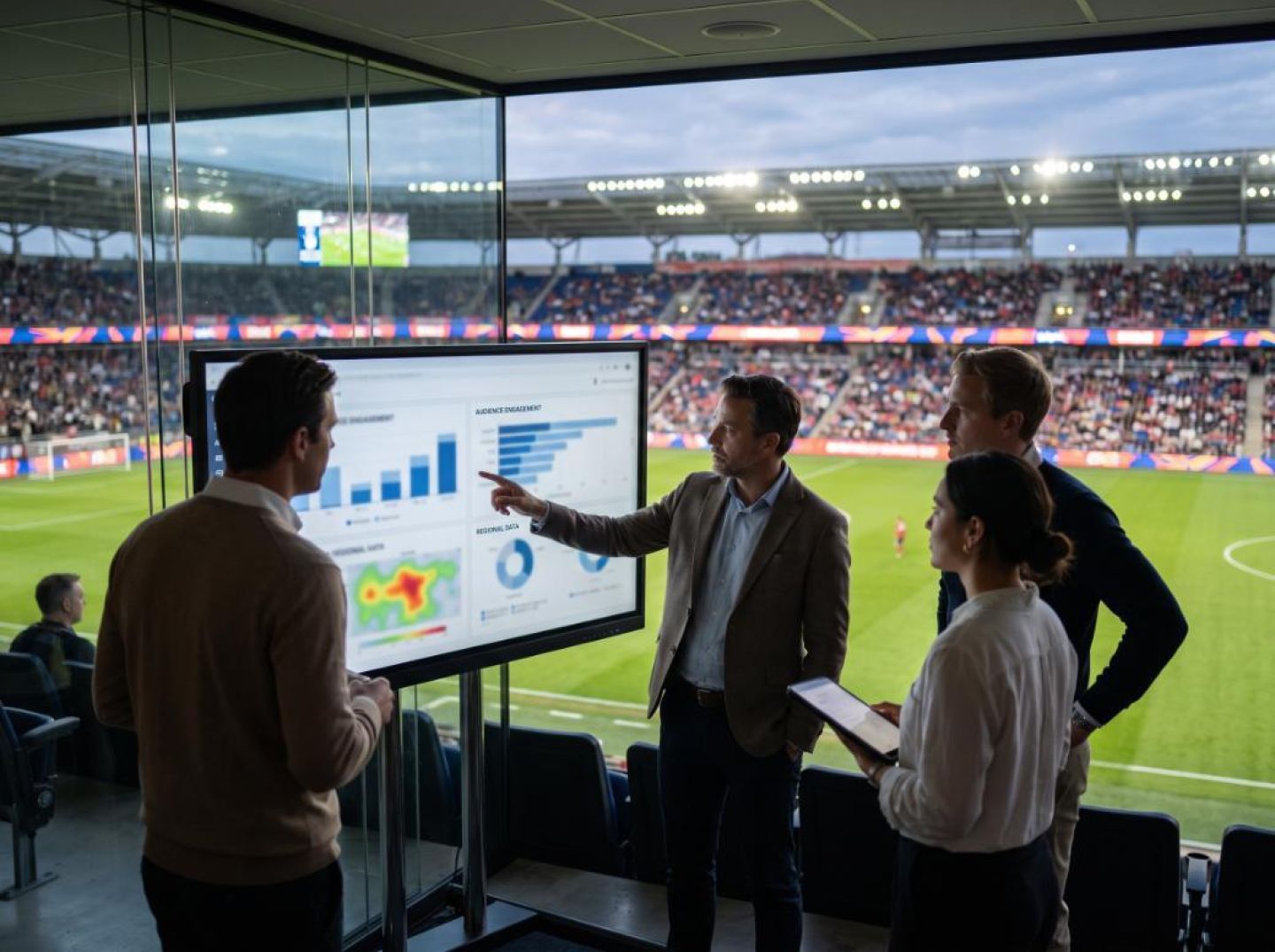
That’s why the more advanced players aren’t fixated on a single face on a billboard. They’re investing in tools that decode and track fandom as a living system. The Women’s Sports Index, built by Deep Blue and Mondo Metrics, is a good example: instead of simple social listening, it uses MondoTrends to scan TikTok, YouTube and other public data, benchmark social analytics in real time, and surface engagement signals across a broad pool of posts so brands can see where energy is actually building, not just where they already know to look (AdExchanger). That’s the kind of “air traffic control” that lets sponsors follow fan momentum rather than chase yesterday’s ratings report.
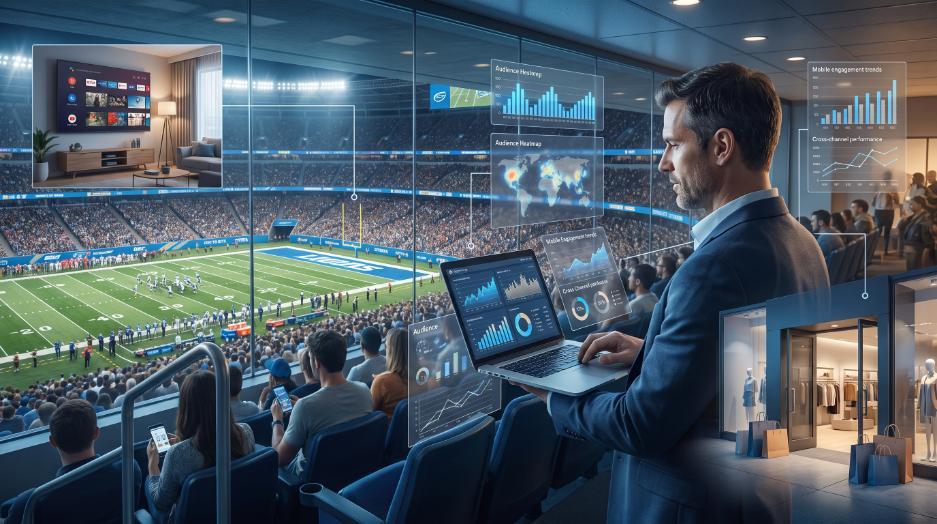
You see the same pattern in how brands approach the NFL and NHL on CTV. On paper, a big game is just a block of live inventory. In practice, smart advertisers are paying for the chance to overlay geography, location intelligence and cross-screen behavior on top of that inventory, so they can buy contexts, not just spots.
Football and hockey fandom are intensely local, and the action around a team looks radically different from one market to the next. Rather than treat every NFL or NHL viewer as a generic sports demo, sophisticated advertisers concentrate investment around relevant markets and align messaging with regional opportunities—game-day offers near stadiums, local dealership promotions mapped to team territories, or retail pushes around store footprints (illumin; illumin). They’re buying the right to customize, not just the right to appear.
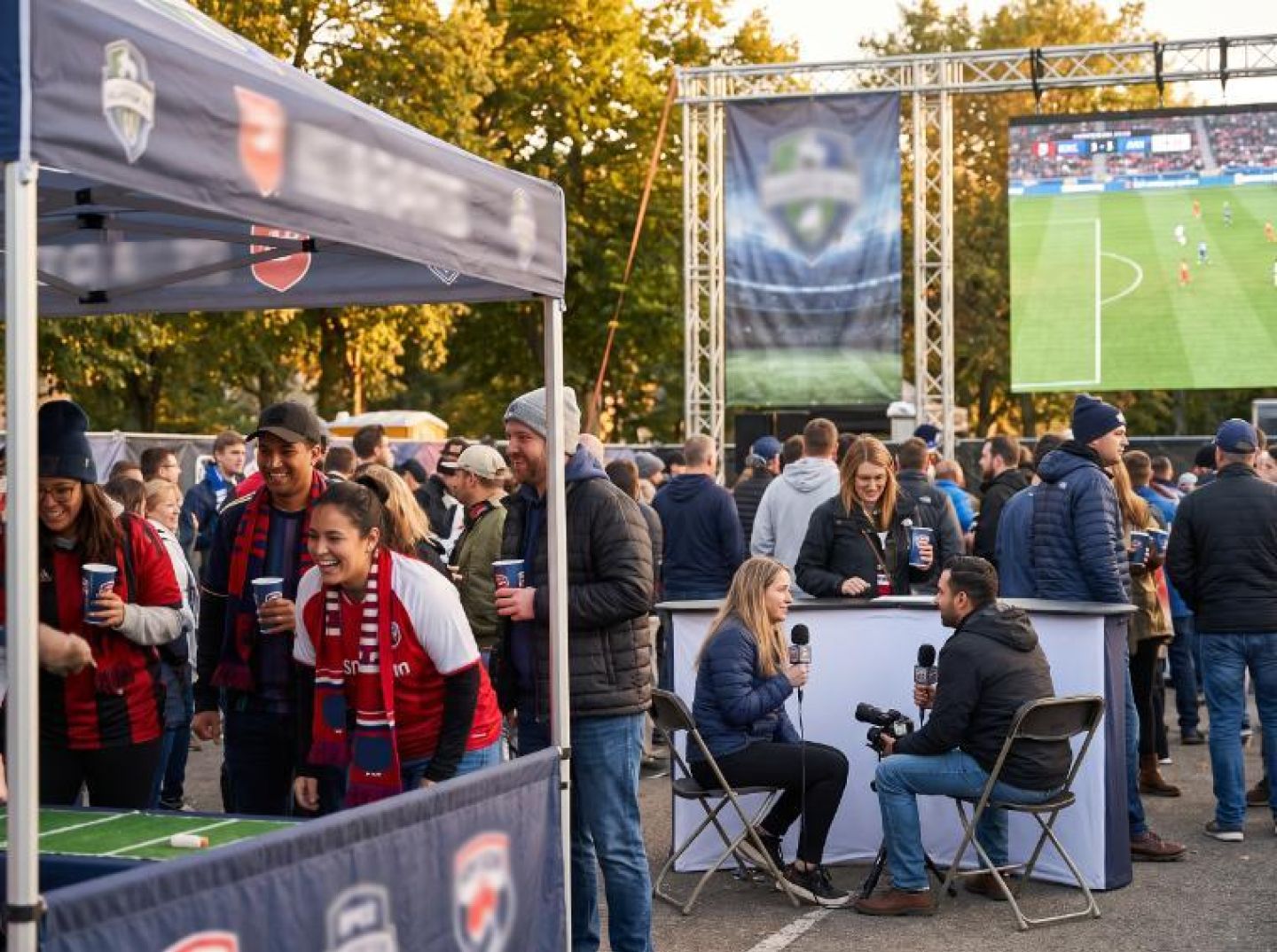
More importantly, they’re buying access to the moments around the game. Using location intelligence, brands can identify stadium visitors, tailgaters, fan-zone attendees, frequent sports venue visitors and live sports streamers, then reconnect with those “Live Audiences” long after the final whistle through sequential messaging and cross-screen retargeting (illumin). That turns a single sponsorship window into a persistent addressable segment.
This is the real play behind mega-events, too. World Cup audiences don’t just sit and watch; they plan trips, stream related content, stock up on food and beverages, shop for merch and coordinate viewing parties. Those behaviors—travel planning, streaming choices, retail baskets, hosting patterns—are rich intent signals that can be harnessed to segment “traveling fans,” “party hosts,” “casual viewers” and more, each with different messaging and channel strategies (AdExchanger). The sponsors winning here aren’t closer to the players; they’re closer to the signals.
When you strip away the gloss, big-brand sports tie-ins are less about borrowing a famous face and more about renting a high-value attention system: tightly clustered moments, dense fan communities and measurable behaviors that surround them. The celebrity is optional. The targeting strategy behind the fandom is the asset you actually want to steal.
If you want to steal the strategy behind a big-brand sports sponsorship, you need to learn to read it like a media plan instead of a fan poster.
Start by ignoring the logo and asking three questions: who are they really buying, where are they trying to reach them and what behavior are they trying to intercept?
Most marketers lump everyone into “football fans” or “World Cup viewers.” The smarter sponsors don’t. They segment by context.
When analysts dissected World Cup audiences, they found distinct fan modes: the traveling super‑fan booking trips, the streaming‑only cord‑cutter, the party host stocking up for watch gatherings, the shopper grabbing merch and the casual viewer grazing highlights on mobile. Each of those behaviors—travel planning, OTT usage, retail purchases, social‑gathering prep—showed up as separate, measurable signals in mobile and commerce data, which is exactly how major events are now being planned against, as one AdExchanger analysis of World Cup behavior makes clear.
Reverse‑engineering that logic is straightforward:
You’re not just observing “who advertises,” you’re mapping fan contexts and the slices that matter most to your own category.
The same thinking is reshaping women’s sports. Brands working with Deep Blue’s Women’s Sports Index aren’t treating women’s leagues as a generic GRP dump; they’re dissecting how this specific fandom translates into engagement, purchase intent and platform behavior, which is why agency leaders warn that porting a men’s sports playbook over wholesale will likely fail, as they told AdExchanger in a piece on the scarcity of women’s sports inventory. When you see a sponsor show up heavily in shoulder‑content, creator shows and league‑owned documentaries rather than just game broadcasts, that’s your clue they’ve identified an “always‑on” engagement segment, not just a game‑day crowd.
Next, look at where the investment actually shows up. Big brands rarely treat a league or tournament as one monolithic buy.
Football fandom is intensely local, and advanced CTV buyers now concentrate investment around specific DMAs, retail footprints and dealership clusters. An NFL CTV playbook from illumin describes how restaurants push game‑day offers only in markets surrounding certain teams, how national retailers weight impressions toward regions with stores and how auto brands align creative with local dealer groups instead of running a single “national” message.
You can reverse‑engineer that thinking by:
When the same beer brand appears on local CTV, in bars within a three‑mile radius of the stadium and in grocery chains that dominate that team’s home market, you’re looking at a radius strategy, not a vanity logo. You can copy that play on a smaller scale around your own “stadiums”: franchise territories, flagship stores, college campuses, even youth tournaments.
Finally, study when sponsors show up relative to the event.
Sophisticated buyers don’t treat the match window as the only moment that matters. They build sequential paths: pre‑event awareness, in‑event participation and post‑event retargeting, especially now that location and cross‑screen data can reconnect with people who attended games or watch parties, as the illumin NFL CTV guide explains.
You can see this in the wild when:
To reverse‑engineer this, build a simple timeline for any sponsorship you admire: T‑30 days, T‑7, game day, T+7, T+30. Log every visible touchpoint: ads, social pushes, in‑store displays, creator collabs, experiential activations. The resulting pattern will reveal the journey they’re buying—often far richer than the logo you saw on screen.
Once you can see sponsorships as networks of audience segments, local geos and behavioral timelines, you stop envying the logo and start stealing the blueprint.
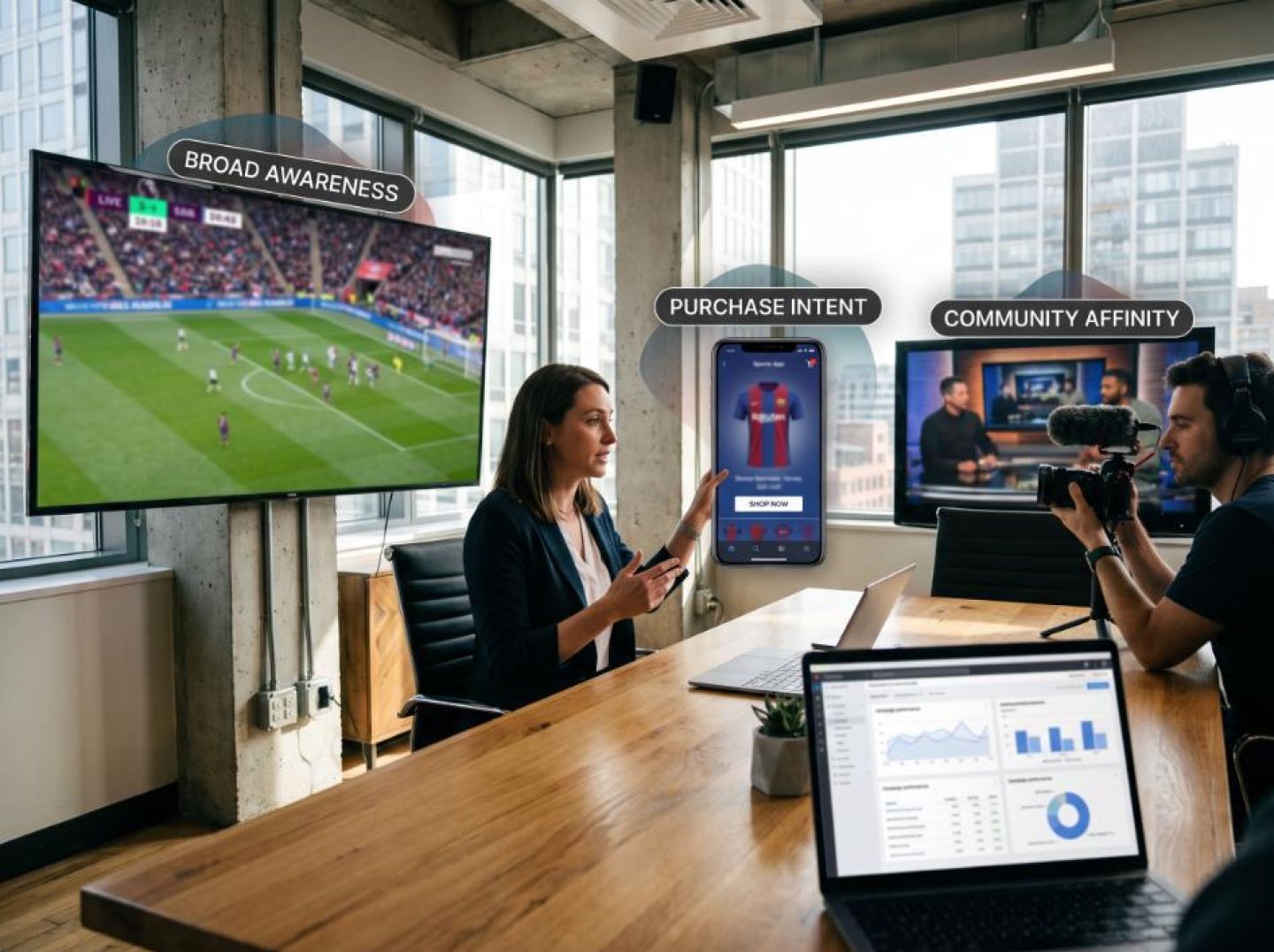
When a brand shows up in different environments around a tentpole event, it’s not just chasing “reach.” Each placement is a proxy for intent. If you want to steal the strategy, you need to treat CTV, mobile and creator content as different demand signals, not just different screens.
Start with CTV. A World Cup, NFL or March Madness CTV buy is rarely about driving an immediate click; it’s about intercepting concentrated, lean‑back attention at scale. As Nicole Greene points out in her piece on how the World Cup will test sponsorship ROI, the value of these events is that they “concentrate attention” in a way fragmented digital channels can’t. When you see a brand leaning heavily into live sports on CTV, assume they’re optimizing for:
Now contrast that with mobile. In a mega‑event context, mobile is where latent interest turns into observable behavior. As one sports data analysis for advertisers notes, World Cup fans don’t just watch more; they spike in “travel planning, streaming-related activities, retail purchases and social-gathering preparation,” and those behaviors show up as mobile signals first, from map searches to ecommerce browsing to food delivery orders, according to an examination of mobile data around mega-events. Heavy mobile activation around a sponsorship usually implies the brand is chasing:
Creator content and social, especially in women’s sports, signal something different again: depth of engagement and identity‑level affinity. In categories where linear inventory is scarce and benchmarking is thin, women’s sports marketers have relied on athlete and creator channels to build highly engaged followings. As one overview of the women’s sports marketplace notes, individual athletes often dwarf their leagues in followers (Angel Reese vs. the WNBA is the canonical example), and advertisers are turning to a Women’s Sports Index that tracks “engagement signals across a wider pool of posts” to read purchase intent from creator‑led content, according to a recent analysis of women’s sports ad inventory and creator data. When you see a brand over‑index into creator integrations, UGC remixes and social‑first series tied to a sports moment, you can infer:
The trick is to connect the dots the way sophisticated sponsors do. When you see a brand simultaneously on jersey patches (broadcast visibility), in CTV pre‑rolls (attention concentration), in mobile betting and delivery apps (transactional signals) and inside creator feeds (engagement and social proof), you’re looking at a full intent stack. Your job isn’t to copy their logo placement; it’s to translate each surface into the underlying behavior they’re really paying to intercept.
Once you’ve sketched your hypothesis segments from where brands show up, the next step is to prove they actually exist — and that they’re worth chasing. This is where tools and data come in. You’re not looking for a perfect single source of truth; you’re looking for converging signals that your segment is real, addressable and over-concentrated around a particular sports moment.
Start by pressure‑testing your segments with social over‑indexing. You can do this with anything from native platform tools to third‑party social listening. If you think a brand is quietly chasing “affluent Latina Premier League fans who bet on matches,” you should see those traits clustering together in the data: accounts that follow specific clubs, engage with betting content and over‑index on certain fashion, QSR or fintech brands. When a segment is real, it tends to leave a signature — a distinct mix of interests, creators, locations and purchase signals that shows up far more often than in the general population. This is the social equivalent of what Nicole Greene describes as attention concentrating around events like the World Cup: behavior that is unusually dense in one context compared to everywhere else.
Next, validate those patterns with audience panels and deterministic data, not just social vibes. Many CTV and programmatic partners maintain audience panels or modeled segments built from set‑top box data, app usage and purchase histories. If your “Latina Premier League bettors” hypothesis is right, you should see uplift on attributes like “online sports betting,” “Spanish‑language content consumption,” “football fandom” and specific retail or QSR chains when you narrow to certain zip codes or DMAs. Location‑based panels can be especially useful here. When platforms like illumin describe “stadium and arena visitors,” “game‑day POI audiences” and “tailgating and fan‑zone visitors” as targetable segments, they’re effectively giving you a prebuilt lens on how real‑world sports behavior clusters by market, venue and time of day. Use those lenses to check whether the type of fan you think a brand is buying actually shows up in the data around specific venues or event footprints.
Then, layer in geography and venue patterns to sharpen your targeting thesis. Football and hockey, for example, are intensely local. In its breakdown of NFL CTV strategy, illumin lays out how advertisers can carve out “regional sports fan audiences,” “live sports streaming audiences” and even “frequent sports venue visitors” around particular team markets, then reconnect with those same people after the game. Their NHL playbook shows a similar approach, with advertisers mapping “fan‑zone visitors” and “RadiusIQ event audiences” around arenas over an 84‑game season to test and refine who actually responds to different messages. When you see a big‑box retailer heavily present around regional NHL or NFL inventory, and you can match that to audience segments that over‑index on in‑person attendance plus specific retail visitation patterns, you’re no longer guessing who they’re buying — you’re verifying it.
Finally, use ad‑spy platforms and creative intelligence tools as your competitive microscope. These tools let you see which brands are showing what messages, in which formats, against which publishers and creators. When you map that against your social and panel insights, you can often infer the underlying segment. For instance, if a financial services brand runs high‑polish CTV spots during national NFL broadcasts while simultaneously pushing creator‑led TikTok content tagged to tailgate locations, and your panel data shows those areas over‑index on “sports and fitness enthusiasts” plus “live sports streaming audiences,” the composite points to a specific target: upwardly mobile, highly engaged fans who toggle between big‑screen viewing and mobile social consumption. That aligns with the kind of “experience‑first” sponsorship strategies described in World Cup sponsorship analysis, where brands are rewarded for joining fan rituals across channels rather than just popping up in a single broadcast slot.
The goal is not to reverse‑engineer an entire brand’s media plan. It’s to get to a high‑confidence answer to three questions: does this micro‑segment actually exist at scale; can I find it in multiple datasets (social, panels, location, CTV); and are sophisticated buyers already paying to reach it? When the same segment keeps lighting up across social over‑indexing, audience panels, geo‑behavioral data and ad‑spy views of creative, you can be confident it’s worth building into your own playbook — with or without a celebrity or an official logo on the field.
Once you can see where a big brand is buying, the next move is to reverse‑engineer why. The same sports moment can be used three totally different ways: to be seen (visibility), to feel present with fans (connection) or to deepen credibility (trust). If you can infer which one they’re actually chasing, you can copy the structure of the play — without copying the price tag.
Start with visibility. A national CTV buy in the World Cup final or an NFL playoff game is almost always about scale, not subtlety. Massive reach, simple story, big logo. As one breakdown of World Cup sponsorships noted, most marketers still default to impressions because they’re easy to tally and compare, even though they say almost nothing about whether anything changed in fans’ minds or behaviors, which is why so many CMOs struggle to prove ROI on sports spends in the first place, according to this analysis of tournament sponsorships from Marketing Dive. When you see that pattern — broad national media, minimal targeting, generic creative that could run in any sport — you’re looking at a visibility objective.
You probably can’t replicate that scale, but you can borrow the structure: one highly visible “tentpole” moment that forces awareness, supported by lighter‑weight placements that echo the same message. For a challenger brand, that might mean buying the local broadcast of a rivalry game, dominating YouTube pre‑roll around highlight compilations that week, and wrapping the main fan podcast instead of the main TV feed. The logic is the same: one hero moment for reach, plus a surround that makes it feel ubiquitous to the people you care about.
Connection looks different in the wild. When a brand leans into fan zones, watch parties, creator collaborations and on‑the‑ground content, they’re trying to join the experience, not just wallpaper it. Coverage of modern sponsorships has pointed out that the standout campaigns are the ones that contribute something to fandom itself — on‑site activations, creator‑led recaps, localized offers — instead of just slapping a logo everywhere, as explored in this World Cup sponsorship review from Marketing Dive. You see the same pattern in the rise of “community‑first” brands that treat Discords, group chats and creator‑run streams as the primary battlefield; Poppi, for example, explicitly orients its marketing around fandom and conversation, a shift toward “brand fandom” that’s been documented in ad industry coverage of word‑of‑mouth strategies on.
You can steal that without renting a stadium. If you notice a sponsor pouring budget into fan festivals, meet‑ups and backstage‑style content during a major event, translate that structure into channels you can afford: host a co‑watch stream with creators instead of a physical fan zone, partner with a local bar or coworking space instead of a league, or build a mini “content hub” that recaps the event from your audience’s POV instead of paying for TV features. The spine of the tactic — put your brand inside the fan ritual — is portable even when the venue isn’t.
Trust is subtler, but the footprint gives it away. Brands chasing credibility tend to go deep on narrower properties, often tied to underserved or emerging parts of the sports ecosystem. Look at the way some advertisers are embedding themselves in women’s sports not just with game inventory, but with original series and league‑adjacent content, effectively becoming co‑producers rather than just media buyers, as detailed in coverage of women’s sports IP partnerships on AdExchanger. That’s a trust move: you’re staking a long‑term position inside a community, betting that association and consistency will make you feel like “one of us” over time.
Most smaller marketers assume they can’t play that game because they can’t fund a documentary series or a new tournament. But the structure is replicable on a smaller grid. Pick a specific slice of fandom where you can show up over and over — a women’s college conference, a regional semi‑pro league, a particular creator’s post‑game breakdowns — and commit to it for a season or longer. Instead of a single burst of impressions, you’re constructing a drumbeat: recurring segments, recurring offers, recurring faces. Niche publishers have been quietly proving that this kind of “anti‑scale” strategy can drive more revenue from fewer, better‑matched eyeballs by focusing on a narrow but valuable audience, a point underscored in reporting on premium, executive‑focused media models from.
The practical workflow looks like this: map the media footprint of a brand you admire around a sports moment, label each tactic as visibility, connection or trust based on its shape, then sketch a cheaper analog in your own channel mix. Maybe your “World Cup final” is a conference championship on regional TV. Maybe your “Fanatics‑style festival” is a Slack community watch‑along. Maybe your “league documentary” is a recurring YouTube interview series with local athletes. The money scales down. The strategic spine doesn’t.
Fandom might look massive on TV, but it behaves hyper‑local in real life. That’s good news if you don’t have “official sponsor” money, because it means you can win on geography instead of scale.
Big brands have already done the hard work here. They’re quietly mapping where emotion, attention and bodies actually cluster around a game — then over‑investing in those pockets instead of blanketing the whole country. You can steal that same playbook with three moves: follow the fan density, mirror the footprint and localize the moment.
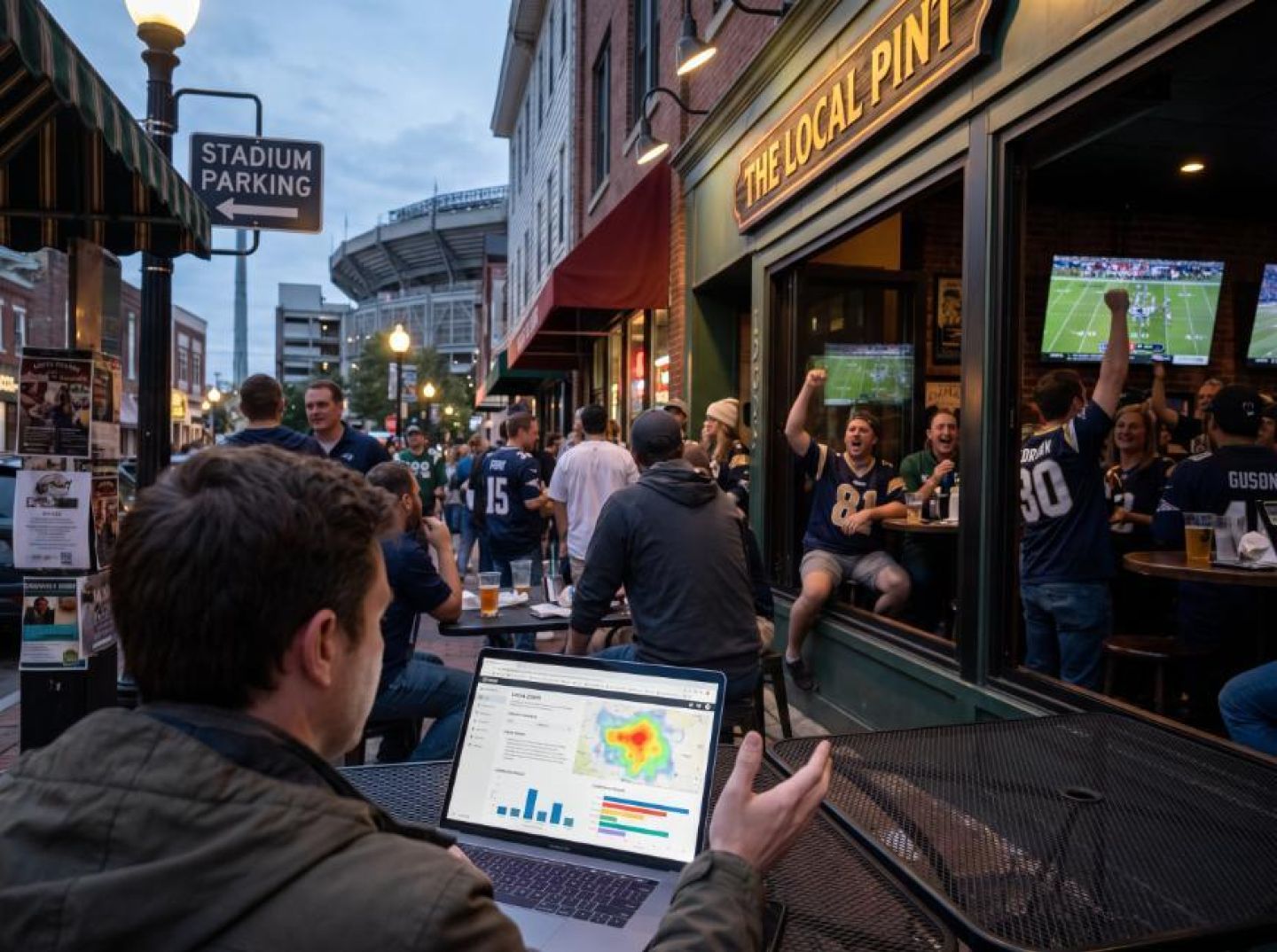
First, accept that “sports audience” is not a single national blob. As the NFL CTV playbook from illumin points out, football fandom is fundamentally tied to specific cities, stadiums and rituals: fans driving to arenas, packing certain bars, showing up at watch parties and tailgates. That means the value of an impression is not evenly distributed. A view in the 10‑mile halo around a stadium on game weekend is worth more than a cheap CPM in a neutral market three states away.
This is exactly why sophisticated advertisers are layering geographic intelligence into their sports media buys. Using the kind of “stadium and arena visitors,” “game‑day POI audiences” and “tailgating and fan‑zone visitors” segments described by illumin, they can see where real‑world fan behavior is spiking — then aim connected TV, social and out‑of‑home around those zones. You don’t need their data stack to copy the logic. Start scrappy: pull game schedules, map stadium locations, search for “team + sports bar + city,” look at event listings, and check local TikTok or Instagram geotags on recent game days. You’re trying to answer one question: Where does the fandom physically concentrate in my region?
Once you see that pattern, reverse‑engineer how big brands are valuing markets. Global tentpoles like the World Cup are forcing marketers to re‑examine where attention truly concentrates. As one analysis of World Cup sponsorships in Marketing Dive put it, the opportunity is no longer just about logo impressions; it’s about “showing up in environments where people are already engaged.” At a global level, that means host cities and time‑zone‑friendly markets. At your level, it means your version of “host cities”: the college town an hour away, the two neighborhoods that fill every bar on Sunday, the suburb with disproportionate youth leagues.
Take a single team and sketch a “fan belt” around it: the home city, the commuter ring, the cluster of watch bars in nearby towns. You now have a mini‑map of where a national brand would over‑index its budget. Instead of buying broad awareness across an entire DMA, you can focus on just those ZIP codes or radiuses with lightweight tools: Meta’s radius targeting around key venues, Google’s location targeting tied to “game‑day” keywords, or localized CTV through platforms that let you buy by ZIP or city instead of national inventory.
The key is to stack your presence in those fan belts before, during and just after the moment of peak emotion. World Cup strategists are being pushed, as Marketing Dive notes, to move beyond counting impressions and toward localized activations that actually join the fan experience. You can do this on a micro‑scale: a pre‑game offer that only runs in the three ZIP codes around the stadium; a “we’re still open” message targeting late‑night foot traffic after home games; or CTV spots that only appear in markets when the local team is playing in prime time.
Don’t overlook “shoulder” opportunities where fandom and commerce already intersect. Coverage of events like Fanatics Fest in New York City has highlighted how a single sports‑adjacent gathering pulls together athletes, media, creators and vendors into one city for a few days, creating a dense pocket of content and influence in a specific location, a phenomenon described in Adweek’s reporting on Fanatics’ expanding sports media footprint. You may not be in New York during Fanatics Fest, but your region likely has its own festivals, fan conventions, pre‑season camps or rivalry weekends that temporarily turn one area into “sports capital of the week.” Those are the moments when local targeting outperforms any generic “football fan” audience.
Finally, think like a performance marketer, not a sponsor. Big brands may be stuck justifying eight‑figure deals with fuzzy “awareness” numbers; Gartner’s outlook, cited in that same Marketing Dive, predicts most CMOs will struggle to prove ROI on large sports sponsorships because they haven’t defined outcomes beyond impressions. You don’t have that problem. If you’re concentrating modest spend into a handful of high‑fandom neighborhoods and time windows, you can tie lift in store traffic, online orders or lead volume directly to those geo‑pulses.
In practice, “borrowing” big‑brand geo strategy just means being more precise: follow where fans actually gather, flood those pockets instead of chasing everyone everywhere, and measure the spike. You’re not buying the sport; you’re buying the streets, screens and moments where the sport temporarily takes over your local world.
Receive top converting landing pages in your inbox every week from us.
How-To
Learn how to connect out-of-home (OOH) advertising with digital performance campaigns to create measurable cross-channel funnels. Discover how to plan LED truck routes, coordinate search and social ads, optimize mobile landing pages, and track conversions so physical advertising drives measurable business results.
Samantha Reed
7 minOct 13, 2026
How-To
Discover how big-brand sports sponsorships use fan behavior, geographic targeting, and cross-channel advertising to reach high-intent audiences beyond celebrity endorsements. Learn how to reverse-engineer sponsorship strategies, validate audience segments with competitive intelligence, and build cost-effective campaigns around local fandom, CTV, mobile, and creator content.
Dan Smith
7 minOct 12, 2026
Guide
Discover how out-of-home (OOH) advertising can drive measurable conversions by connecting physical placements with digital performance campaigns. Learn how to use location intelligence, competitive insights, mobile OOH, TikTok retargeting, localized landing pages, and attribution to build high-ROI multi-channel funnels.
Rachel Thompson
7 minOct 12, 2026