8 minAugust 31, 2026

Our spy tools monitor millions of native ads from over 60+ countries and thousands of publishers.
Get StartedMost brands don’t have a top-of-funnel problem. They have a translation problem.
You can buy a celebrity, a Super Bowl slot, or a viral TikTok and still wake up to stagnant revenue, because attention doesn’t automatically convert into intent. The “missing middle” is the connective tissue between big, high-concept moments and the gritty, measured machinery of direct-response funnels.
You can see this gap in how organizations structure their teams. High-impact video, TV, and social campaigns often live in one silo, while search, performance media, and CRO live in another. As one analysis of Fox Sports’ emotionally charged World Cup spot “Miracle” showed, the best TV ads don’t just entertain; they reliably generate spikes in branded and category searches. When that ad aired, viewers didn’t run to stores first — they went to Google and YouTube to figure out who, what, and where. The campaign did its job at the top of the funnel. The real question was whether the brand’s search and performance infrastructure had been architected in advance to catch that demand.
Most aren’t. Awareness teams declare victory on reach, share of voice, and emotional lift. Performance teams obsess over click-through rate, cost per acquisition, and return on ad spend. But if those groups define success on completely different time horizons and don’t share a unified demand strategy, you get the classic pattern: a spike in buzz, a bump in brand searches, and then… nothing. The intent dissipates because nobody built a bridge from “I just saw that amazing ad” to “I know exactly what to do next.”
Channel-level metrics often make this worse. At the top of the funnel, marketers celebrate impressions and view-throughs, while mid- and bottom-funnel teams focus on lead quality and revenue. Yet, as a recent breakdown of modern campaign optimization pointed out, the metrics that matter must evolve as a prospect moves from awareness to consideration to decision — applying one generic KPI across every stage almost guarantees wasted spend. If your brand team is optimizing only for emotional engagement and your performance team is optimizing only for last-click ROAS, there is no shared definition of progress in the middle.
Scale amplifies the problem. Unilever’s experiment with a 300,000-creator network of AI-assisted content is a glimpse into where marketing is headed: thousands of hyper-local pieces of media flooding feeds in parallel. As observers of that initiative have noted, the risk isn’t just poor individual performance; it’s a “signal-to-noise” issue where local hits don’t cohere into a clear, compelling brand narrative. In other words, you can “win” micro-moments all day and still fail to create a guided journey that feels like it’s leading somewhere specific.
Even at smaller scales, this fragmentation is visible in paid social. Performance buyers grind out endless variations of user-generated content in the hope of manufacturing a few “hit” creatives that clear their ROAS targets and soak up the majority of spend. Those hits are valuable, but in isolation they’re still just point solutions: a prospect might see a clever problem-solution ad, click, browse, and then drop back into the ether because there’s no orchestrated follow-up across search, email, and retargeting that reflects what they just consumed.
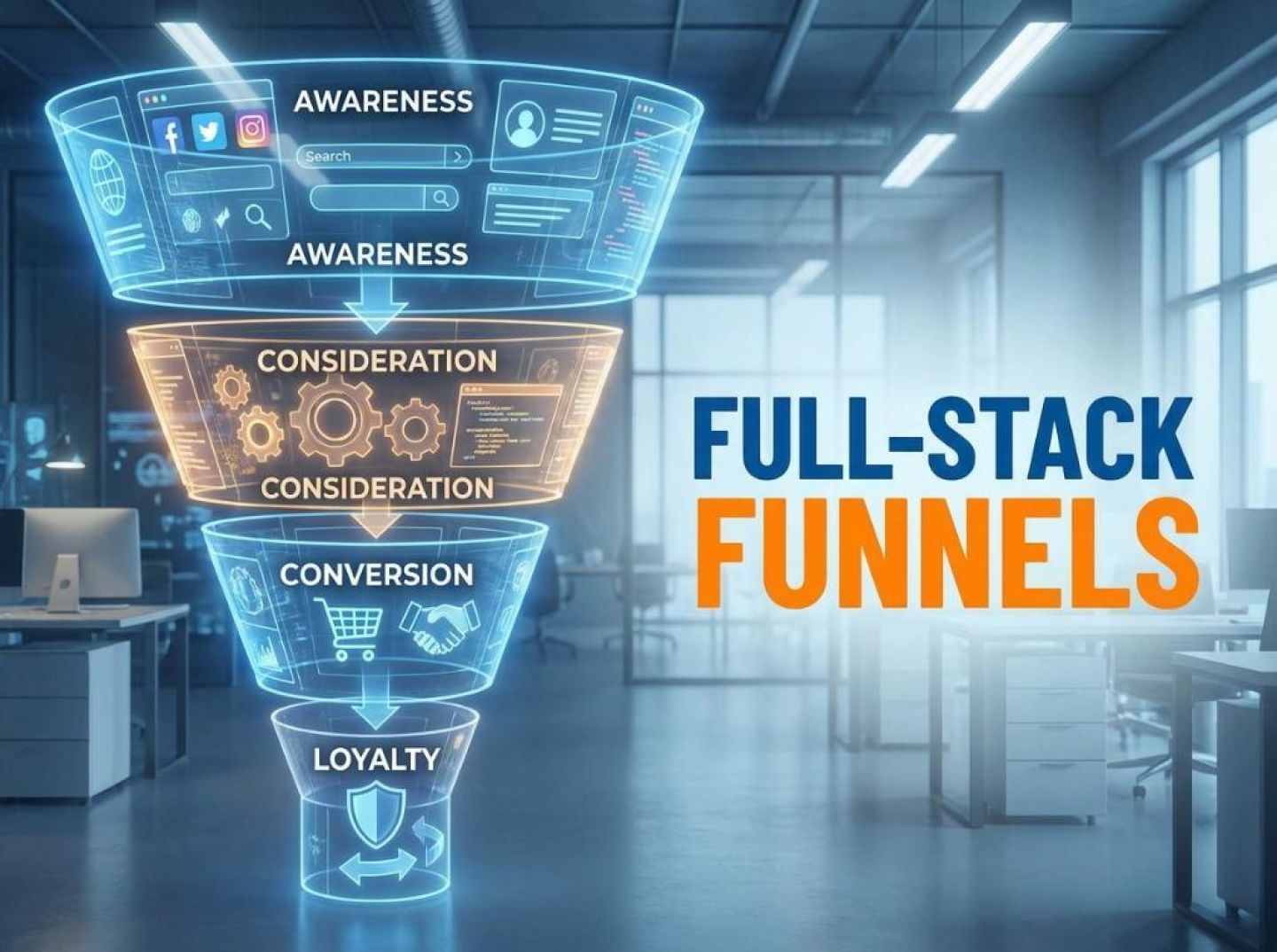
Underneath all of these symptoms is the same structural flaw: we still design campaigns as disconnected events instead of as demand systems. Awareness is briefed, bought, and measured as if its only job is to make people feel something. Direct response is briefed, bought, and measured as if its only job is to make people do something. The missing middle is where feeling becomes doing — and that only happens when creative, media, search, and measurement are planned as one continuous, competitive strategy rather than competing fiefdoms.
Competitive intelligence isn’t about copying your rivals’ ads or obsessing over their vanity metrics. It’s about reverse-engineering where demand is forming, how it moves, and where it’s being left on the table. You’re not spying for curiosity; you’re spying to build a working demand map that connects high-concept buzz to mid-funnel evaluation and bottom-funnel action.
The first step is to treat competitors’ big campaigns as demand signals, not creative inspiration. When a rival drops a splashy TV spot, a viral creator collab, or a tentpole brand film, they’re not just buying attention—they’re triggering search, scrolls, and comparison. As one analysis of Fox Sports’ World Cup work shows, emotionally charged TV spots immediately translate into surges in Google and YouTube activity, which is why search, video, media, and measurement ought to be planned as one integrated demand strategy. Your job is to watch those spikes and ask: which questions is their campaign causing people to ask?
Building that view starts with systematic “spying” across platforms:
From here, you can start translating noisy creative into a structured demand map. Think in layers:
2. Questions and objections (middle of the funnel). Look at their mid-funnel assets: explainer videos, comparison pages, retargeting creatives. Which objections are they preemptively neutralizing? What specific use cases or personas are they calling out? Performance-minded teams often see that when ads shift from broad category claims to specific niches—say, “back brace for construction workers with chronic pain”—qualified response rates jump, as one Facebook ads playbook on persona-specific creative emphasizes through its hyper-targeted problem-solution ads
3. Micro-conversions and proof (bottom of the funnel). Study their retargeting and email: trial offers, bundles, guarantees, social proof. How are they tipping hesitant evaluators into buyers? Which combinations of claims + offers keep reappearing?
The point isn’t to admire their funnel; it’s to see where the energy flows—and where it doesn’t. Many brands still optimize their upper funnel for impressions instead of action, even though click-level behavior can reveal whether a message is genuinely resonating with a specific niche or simply generating cheap views. As one breakdown of impression vs. click value notes, in targeted and remarketing campaigns, clicks become a critical “barometer of resonance,” especially for mid- and bottom-funnel audiences whose behavior signals real intent rather than passive exposure to ad impressions. When you see a competitor pouring spend into a message that earns views but few clicks or repeat creatives, you’re likely looking at a weak bridge between awareness and intent.
On the flip side, when you spot a pattern—certain angles, headlines, or offers that persist across channels and over time—you’re looking at validated demand. Continuous creative and consumer intelligence platforms are already helping brands track how sentiment, perception, and purchase intent evolve, so they can optimize messaging before those shifts show up in lagging metrics like sales or brand lift studies, as one exploration of next-generation consumer intelligence argues. Your competitor’s persistence with a particular hook is a free, real-time signal that this message is winning today’s auctions and quietly manufacturing tomorrow’s growth.
Put simply: spying with purpose means treating every competitor campaign as a live experiment you didn’t have to pay for. You’re not just screenshotting clever videos—you’re decoding which emotional triggers create search, which language earns clicks, which offers convert skeptics, and where interest dies. Once that demand map is clear, you can design your own “missing middle” assets to intercept, reframe, and ultimately capture the intent your competitors are spending to create.
The biggest mistake teams make with award-winning creative is treating it like a museum piece instead of raw material.
Your job in the “missing middle” is to turn the glossy 60‑second brand film or clever stunt into a system of direct-response assets: hooks, angles, proof points, and offers that can be tested, iterated, and scaled.
Think of it as going from “case-study sizzle reel” to “ad set architecture.”
Start by stripping the concept down to its working parts. Every high-concept campaign, no matter how abstract, is built on a few core elements:
Pull those elements out. The emotional state becomes the backbone of your headlines. The villain becomes the spine of your problem-agitation copy. The hero moment becomes your proof creative. The symbol becomes your scroll-stopping visual or opening hook in UGC.
Competitive intelligence accelerates this teardown. By watching which competitor ads run the longest and rack up the most impressions, you’re not guessing which emotional and narrative elements are converting; you’re seeing the patterns in the wild. As one breakdown of Facebook eCommerce performance notes, sorting rivals’ ads by longevity and impression volume in tools like the Ads Library or MagicBrief is a fast proxy for performance, and a reliable way to “find creative inspiration” you can adapt into your own funnel.
Once you’ve decomposed the big idea, you rebuild it in DR form, bottom-up.
From a 60-second hero film, you might generate:
You’re not inventing from scratch; you’re re-skinning the same emotional architecture in formats that can actually be measured.
This is where modern creative intelligence tools become your unfair advantage. Platforms like DAIVID use models trained on tens of millions of human ad responses to predict attention, emotional impact, and likely next actions before you spend a dollar in media. In their partnership with ADIN.AI, those predictions feed directly into a “live loop” where creative forecasts inform media allocation and then get refined as real performance data comes back. In practice, that means you can score dozens of cuts or concept variations from a single brand asset and only push the top quartile into your ad accounts.
But even the smartest pre-testing doesn’t replace live-fire data. When these derivative assets hit your DR channels, you use classic performance signals to decide which “pieces of the brand idea” actually carry their weight.
For mid- and bottom-funnel traffic, clicks become your sanity check. As one analysis puts it, in targeted and retargeting campaigns, ad clicks are “your headlights in the dark,” revealing whether a specific message and angle truly resonates with a defined audience segment or needs to be reworked (Brax explains this relationship between clicks and resonance in depth). At this stage, you’re less interested in cheap impressions and more interested in which variant of the campaign’s core tension and resolution reliably moves people forward.
The same logic applies across channels. As performance frameworks for 2026 emphasize, optimization levers should shift as leads move deeper into the journey: TOFU assets are judged on reach and engagement, while MOFU and BOFU assets are tuned for interaction and progression, not just visibility (one recent overview of “campaign optimization strategies that actually work” makes this channel-by-metric alignment explicit). Your repurposed brand creative should follow that same pattern, with early cuts optimized for completion and recall, and later variants optimized for CTR, time on page, and conversion rate.
The strategic shift is subtle but profound: instead of asking, “How do we do something as big as that campaign?”, you ask, “How many shippable DR components can we extract from that campaign, and how fast can we test them?”
Your award reel stops being the end of the story and becomes the creative briefing for a performance machine.
Most brands don’t have a “creative problem.” They have a landing problem.
They pour seven figures into a film that spikes awareness, searches, and brand sentiment, then send all that new intent to a page that behaves like the campaign never happened. The message, tone, and promise reset. The visitor has to do the cognitive work of reconnecting the dots. Many won’t bother.
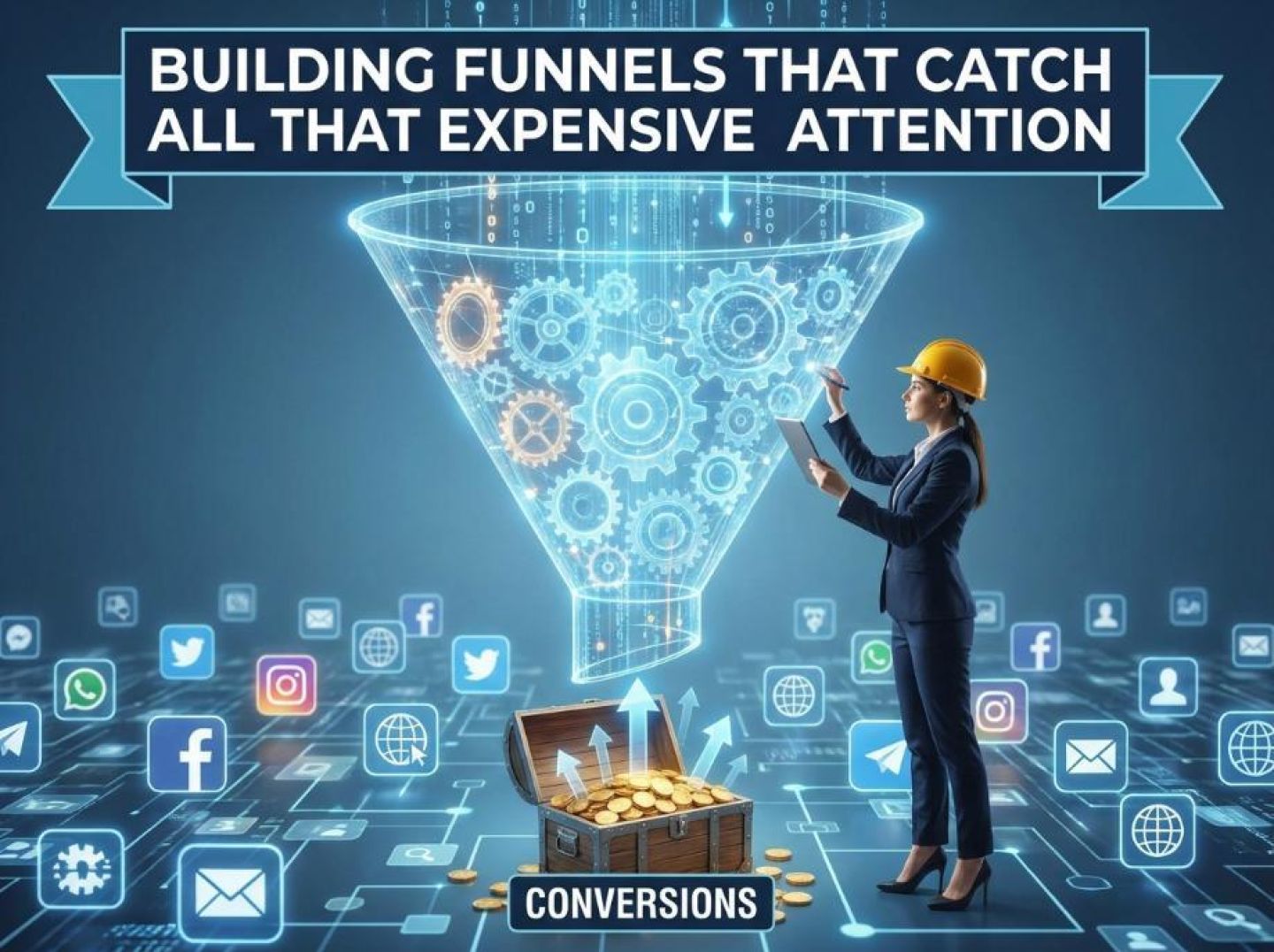
Fixing the landing isn’t about prettier hero images. It’s about building funnels that are designed, from the outset, to catch every scrap of expensive attention your campaigns generate—and route it to the right next step.
Competitive intelligence is your blueprint.
When a big brand moment hits—your own or a rival’s—the first signal lives in the wild: searches, videos, social chatter, retargeting inventory. As one analysis of TV and video campaigns points out, the best broadcast and online ads don’t just lift awareness; they trigger immediate search and YouTube behavior. That spike is your proof of demand in motion. Your job is to make sure there’s a tailored, relevant “catcher’s mitt” waiting at every likely entry point.
Start with search. Look at the queries that bloom around a competitor’s new campaign: “[Brand] sustainability,” “[Brand] vs [Brand],” “[Brand] student discount,” “is [Brand] worth it.” Those phrases are live‑fire discovery on what the market actually wants to know. They should map one‑to‑one to landing experiences, not generic homepages.
If you see a rising volume of comparison and evaluation terms, you need landing pages that act like a buying coach: clear category framing, side‑by‑side comparisons, proof moments, and soft commitments (calculators, quizzes, “build your plan” flows) that push a prospect one step closer to a decision. This is the “consideration” layer that modern optimization frameworks argue requires its own metrics and content, not recycled awareness assets, with mid‑funnel KPIs like video completion, engagement, and secondary clicks treated as primary signals—not vanity stats.
Then there’s the retargeting layer. Once someone has reacted to your brand work—watched the hero film, clicked a social teaser, searched your slogan by name—they’ve essentially qualified themselves as mid‑funnel. Here, clicks aren’t just a nice‑to‑have; they’re the headlights that show you whether your message is truly moving people forward. As one breakdown of ad clicks vs. impressions notes, in retargeting and mid‑to‑bottom funnel work, click behavior is the clearest indicator that a specific angle or offer is resonating enough to prompt action.
Most brands fixate on that click and neglect the page that follows it. Instead, you should architect a ladder of landing states:
Competitive intelligence tells you which of these rungs actually exists in your category—and where competitors are leaking demand. If you see rivals running emotional, future‑of‑the‑category campaigns but routing everything to a generic homepage, you have an opportunity: build a dedicated “campaign spine” that owns those newly activated searches and social clicks with tailored landers.
The newer generation of consumer intelligence platforms is pushing this even further. Instead of waiting for quarterly brand lift studies, teams can monitor live shifts in sentiment, intent, and associations, then adjust landing and funnel narratives before those shifts show up in revenue. As one look at continuous brand measurement argues, the real advantage comes when you stop treating brand and performance as separate worlds and start optimizing the full system—messaging, media, and destination—against both today’s conversions and tomorrow’s demand.
On the execution side, AI‑native media and creative tools are closing the gap between learning and implementation. Systems that can test hundreds of ad and page variations quickly, as described in recent work on AI‑driven creative and targeting, make it possible to turn competitive signals into landing experiments in days, not months. But speed only matters if you’re testing against the right questions: “What did this campaign make people care about?” and “What kind of page makes it absurdly easy for them to act on that feeling?”
Bridging the missing middle at the landing layer is ultimately about respect—for the cost of your attention, and for the effort your audience has already made. They’ve watched the film, clicked the teaser, typed your name. Your funnel should greet them like it’s been expecting them, not like they’ve knocked on the wrong door.
If the “missing middle” is a discipline, then dropshipping, lead gen, and arbitrage are its proving grounds. These models live and die on a simple question: can you turn abstract attention into trackable, compounding cash flow without burning the brand to the ground?
Let’s look at how full‑stack funnels actually show up in the wild.
Classic dropshipping is notorious for “pump and dump” creatives—outrageous TikTok hooks slapped on anonymous products. But the operators who last treat every viral as a lab for the next funnel.
They start by reverse‑engineering hooks from competitors. Use ad libraries and spy tools to map which angles (“Stop wasting water with this new shower head”) rack up impressions but, more importantly, which drive clicks. As the team at Brax points out, in targeted campaigns clicks are your resonance check: your narrow audience should be interacting. If a competitor has huge impression volume but an anemic estimated CTR, you’ve found a weak angle to beat.
From there, the full‑stack funnel looks like this:
The competitive edge: you’re not merely copying “winning products.” You’re mapping which competitor brand campaigns (UGC, influencer, native advertorials) are quietly feeding their performance ads, then building a tighter bridge between those narratives and your own direct‑response stack.
Lead gen—whether B2B SaaS, insurance, or local services—has the richest “missing middle” opportunity. Teams run smart thought‑leadership or YouTube campaigns, then send traffic to a one‑size‑fits‑none demo form.
The fix is to assign each funnel stage a job and measure it by the right signals. As Search Engine Journal emphasizes, you don’t judge an upper‑funnel YouTube push by the same CPA as branded search. You look for branded search lift, direct traffic, and video completions to validate that your narrative is landing.
Full‑stack looks like this:
Competitive intelligence here means dissecting how top players connect their thought‑leadership to pipeline. Track which of their webinars get repurposed into ad snippets, which case studies are pushed hardest, and how their branded content correlates with surges in search visibility. Then architect your own funnel so every piece of brand content has a direct‑response sequel.
In arbitrage (media buying, affiliate, native, even some search arbitrage), your “brand” may be just a shell—but the economics are unforgiving. Relying only on bottom‑funnel clicks in saturated auctions is, as one AdExchanger analysis puts it, a “mathematically guaranteed path to margin erosion.”
The arbitrageur’s full‑stack playbook:
In all three models, the operators who win are the ones who treat “brand vs. performance” as a false choice. They use competitive intelligence to see how others are manufacturing demand, then build full‑stack funnels that catch, shape, and monetize that demand across every stage—not just at the checkout or the form fill.
Receive top converting landing pages in your inbox every week from us.
Must Read
Discover how AI-generated ad fatigue is making native, push, and TikTok campaigns increasingly look alike, weakening engagement and reducing competitive advantage. Learn how to use competitive ad intelligence tools to identify repetitive creative patterns, develop more distinctive ads, and stand out in AI-driven advertising auctions.
Liam O’Connor
7 minOct 14, 2026
How-To
Learn how to connect out-of-home (OOH) advertising with digital performance campaigns to create measurable cross-channel funnels. Discover how to plan LED truck routes, coordinate search and social ads, optimize mobile landing pages, and track conversions so physical advertising drives measurable business results.
Samantha Reed
7 minOct 13, 2026
How-To
Discover how big-brand sports sponsorships use fan behavior, geographic targeting, and cross-channel advertising to reach high-intent audiences beyond celebrity endorsements. Learn how to reverse-engineer sponsorship strategies, validate audience segments with competitive intelligence, and build cost-effective campaigns around local fandom, CTV, mobile, and creator content.
Dan Smith
7 minOct 12, 2026