11 minJune 15, 2026

Our spy tools monitor millions of native ads from over 60+ countries and thousands of publishers.
Get StartedOut-of-home advertising has a problem that no amount of industry optimism can paper over: it cannot tell you, with any real precision, whether the money you spent actually worked. Unlike virtually every digital channel — where impressions are logged, clicks are tracked, and conversions are attributed down to the keyword — a static billboard sits on the side of a highway and hopes for the best. There is no click. There is no pixel. There is no A/B test running in the background to tell you that the version with the red headline outperformed the one with the blue headline by fourteen percent. There is a media buyer, a location, a creative brief, and a prayer.
This isn't a fringe critique. It's an acknowledgment that even OOH's most vocal defenders are making openly. As OOH Today has warned, without integration into real-time traffic patterns, mobile conversion paths, and behavioral data signals, OOH impressions become nothing more than guesswork — and "in a world of hyper-precision marketing, guesswork is worthless." The publication paints a stark picture of the medium's trajectory if operators stay passive: highways lined with fading static boards, advertisers migrating to in-car media networks, and younger media planners ignoring outdoor entirely. That's not a competitor's hit piece. That's the trade press sounding an alarm from inside the building.
The structural gap is threefold. First, OOH cannot verify impressions with the granularity that enterprise marketers now consider table stakes. Traffic counts and demographic estimates are proxies, not proof. Second, traditional OOH cannot adapt messaging in real time — the creative is locked the moment it goes up, regardless of what the market, the weather, or the competitive landscape does in the weeks that follow. Third, and most critically, there is no reliable mechanism to tie a billboard exposure to a downstream conversion without layering on third-party attribution tools that introduce their own assumptions and margins of error.
None of this means the medium lacks impact. In fact, the evidence suggests the opposite. AdQuick's research shows that when people encounter a creative, visually engaging OOH ad, nearly half search for the advertiser and almost a quarter make a purchase — outcomes delivered to actual human beings, not bots and not synthetic impressions. The neurological response data is real. The purchase intent is real. The problem is that advertisers have no scalable way to determine which creative drove that response, which location amplified it, or which message framing made the difference between someone Googling the brand and someone driving past without a second thought.
This is the paradox that makes the measurement crisis so dangerous. OOH is sitting on what AdQuick calls "the single greatest arbitrage opportunity in modern advertising" — a medium that delivers verified human attention at a fraction of the cost of digital — and yet the industry risks folding by "failing to invest in the measurement infrastructure that enterprise marketers require." Marketers aren't being unreasonable when they demand proof. They've been burned too many times by channels that couldn't substantiate their claims.
What OOH desperately needs is not just better hardware or programmatic integration — it needs an external signal that can validate creative decisions before a billboard goes up and while a campaign is running. It needs a way to pre-test messaging frameworks, emotional hooks, and audience resonance at scale. That signal already exists. It lives in the performance data generated by billions of native ad impressions — and almost no one in the OOH world is paying attention to it.
If out-of-home advertising operates inside a black box, native advertising operates inside a glass house — and that difference should matter enormously to every OOH planner who cares about creative effectiveness. Native advertising is the one major channel where virtually everything is visible: the headlines competitors test, the thumbnail images they pair with those headlines, the landing pages they drive traffic to, and even how long a given creative has been running — a reliable proxy for whether it's actually working. It is, in structural terms, the exact opposite of buying a billboard and hoping for the best.
The foundational principle is deceptively simple. As AdPushup explains, the basic philosophy of native advertising revolves around making ads appear less like ads — blending sponsored content so seamlessly into a publisher's editorial environment that audiences engage with it rather than instinctively tuning it out. That philosophy, designed to combat the "banner blindness" that plagues display advertising, has a critical byproduct: because every native ad must earn its click through the strength of its headline, image, and framing rather than through placement dominance, every campaign becomes a live experiment in persuasion. Across networks like Taboola, Outbrain, and MGID, thousands of advertisers are simultaneously testing which emotional hooks, curiosity gaps, and visual cues drive the highest engagement — and the results of those experiments are radically transparent to anyone who knows where to look.
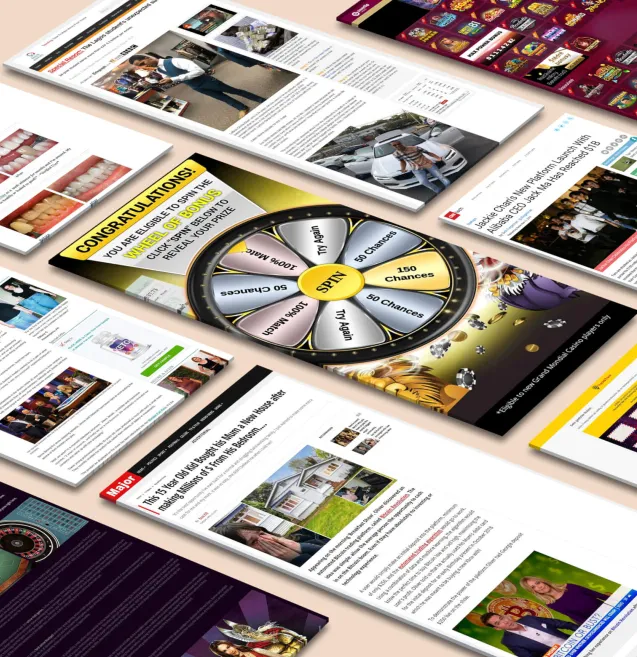
Intelligence platforms and spy tools make this transparency actionable. They allow marketers to search by advertiser, vertical, or keyword and surface the exact creatives running across major native networks at any given moment. You can see which headlines a competitor launched last week, which ones survived into this week, and which ones disappeared — killed by poor click-through rates. You can examine landing page structures, identify whether an advertiser is leading with a listicle, a video sales letter, or an editorial-style pre-sell page, and reverse-engineer the conversion logic behind each approach. The duration a creative stays live is itself a data point: ads that run for months are almost certainly profitable, which means their messaging has been validated by real consumer behavior at scale.
This matters because native advertising doesn't just test creative assets — it tests audience psychology. As the Voluum Blog argues, native ads succeed precisely because they fit the mindset of the audience, matching the voice and flow of the content environment they appear within. That requirement forces advertisers to develop an unusually deep understanding of what their audience actually wants to read, click, and engage with. The feedback loop is immediate and granular: click-through rates reveal whether a headline resonates, engagement depth shows whether the landing page delivers on the headline's promise, and downstream conversion metrics expose whether the entire funnel holds together. Every variable is measurable, and every measurement is available — often publicly — to anyone paying attention.
OOH has nothing remotely comparable. A highway billboard offers no click-through rate, no engagement depth metric, no way to know whether version A of a headline outperforms version B without commissioning expensive brand lift studies weeks after launch. Native advertising generates that intelligence continuously, automatically, and at a fraction of the cost. It is the richest open-source creative testing laboratory in modern advertising — a place where messaging hypotheses are validated or killed in days, not months. And yet the vast majority of out-of-home planners walk right past it, never once checking what the native ecosystem has already proven about the very audiences they're trying to reach with a static poster and a prayer.
Here's the uncomfortable truth most OOH planners never consider: a native ad and a billboard are, at the creative level, nearly identical formats. Both give you a headline, an image, and roughly two seconds of human attention before the moment is gone. The difference is that native ads generate granular performance data on every single one of those moments — and billboards generate none. That asymmetry is not just an academic observation. It is an operational gap that costs OOH advertisers millions of dollars in untested creative every year.
Let's get tactical about what, exactly, an OOH strategist can extract from native ad intelligence and how each insight maps to a concrete planning decision.
Headline phrasing that drives action. Native ad platforms like Taboola, Outbrain, and MGID surface millions of headline variations daily across publisher networks, and the performance signals are ruthlessly clear. Headlines survive or die based on click-through rates updated in real time. When a curiosity-driven construction — something like "Doctors Are Stunned By This Simple Fix" — sustains a 90-day native campaign across multiple networks and geographies, that emotional framework (curiosity layered with authority) has been validated at a scale no OOH test market could replicate for anything less than six figures. An OOH planner can study which headline archetypes endure in native feeds and directly apply those linguistic patterns to billboard copy. If urgency-based phrasing ("Before You Renew Your Lease, Read This") consistently outperforms benefit-based phrasing ("Save Money on Your Next Lease") in native, you now have a data-informed starting point for your billboard headline — tested for pennies on the dollar.
Emotional angles that sustain campaigns longest. Campaign longevity in native advertising is a proxy for creative durability. Ads that run for weeks without creative fatigue reveal the emotional registers that hold up under repeated exposure — exactly the condition a static billboard faces. If fear-of-missing-out angles burn out in ten days but aspirational identity angles sustain for sixty, that tells you something critical about which emotional tone to commit to a twelve-week highway buy.
Visual patterns in top-performing thumbnails. Native thumbnail images are constrained to small dimensions, high contrast, and instant legibility — constraints that mirror billboard design almost exactly. Monitoring which thumbnail compositions earn the highest engagement over time reveals whether close-cropped faces outperform wide landscapes, whether warm color palettes beat cool ones, and whether images with a single focal point defeat cluttered compositions. Every one of those findings translates directly to billboard visual design.
Landing page messaging hierarchies. This one is less obvious but equally valuable. The landing pages behind top-performing native ads reveal how advertisers sequence their persuasion: which benefit leads, which proof point follows, and which call-to-action closes. For OOH campaigns that drive traffic to a URL, QR code, or branded search term, aligning the billboard's promise with a landing page structure already proven in native creates a seamless persuasion arc from physical to digital.
The urgency of all this intensifies when you consider the trajectory of the medium itself. As OOH Today has warned, a static billboard that cannot adapt in real time risks becoming "a silent actor performing in a theater where the audience has left the room." When your format is unable to respond, unable to adapt messaging, and unable to link dynamically with audience behavior, you cannot afford to guess about creative. You have to validate before you commit. Native ad intelligence is the pre-flight checklist the OOH industry has never had — and every month spent ignoring it is another month of flying blind into six-figure media buys with nothing but gut instinct in the cockpit.
The money is moving fast. With programmatic DOOH spend projected to reach $1.35 billion by 2026 and eighty-six percent of marketers planning to increase their OOH budgets over the next two years, a staggering amount of capital is about to pour into a channel that still lacks anything resembling robust pre-campaign creative validation. That's a recipe for waste on an industrial scale — unless you build a bridge between native ad intelligence and OOH planning. Here's the four-step playbook for doing exactly that.
Step 1: Audit your competitors' native messaging before you brief a single creative.
Before you commission billboard designs, spend a week inside native ad intelligence tools mining your vertical for patterns. What headlines are competitors sustaining over thirty, sixty, ninety days? Which emotional hooks — fear, curiosity, aspiration, urgency — dominate the long-running campaigns? What value propositions keep appearing in winning thumbnails? This isn't casual browsing; it's structured competitive research. You're building a map of the messaging territory your market has already validated with real clicks and real engagement data. As the Voluum blog notes, native advertising lets marketers take root in the consciousness of potential clients over time — which means the campaigns that survive longest represent battle-tested creative insights you can borrow for free.
Step 2: Run low-budget native tests of your billboard concepts.
Take your top three to five headline-and-image combinations — the ones destined for a $200,000 OOH buy — and run them as native ads first. Distribute them across three or four high-performing networks like Taboola, Outbrain, MGID, or Revcontent for seven to fourteen days. Budget $500 to $2,000 per concept. You're not trying to drive meaningful revenue from these campaigns; you're generating statistically significant click-through and engagement data on each creative variation. By the end of the test window, you'll know which headline pulls twice the CTR, which image stops the scroll, and which value proposition falls flat. That intelligence turns a subjective creative review into an evidence-based one.
Step 3: Let the winners dictate your OOH creative hierarchy.
The native test results now become your creative brief. The headline with the highest CTR becomes your primary billboard copy. The emotional angle that sustained engagement across multiple publisher environments becomes your visual direction. The call-to-action framing that drove the most downstream behavior — searches, sign-ups, landing page visits — becomes the CTA on your OOH unit. You're not guessing anymore. You're deploying creatives that have already proven they can capture attention in under two seconds, which is exactly the window a driver or pedestrian gives a billboard.
Step 4: Close the measurement loop with parallel native campaigns.
This is where the playbook pays its biggest dividend. After your OOH campaign launches, run concurrent native campaigns using the same messaging in the same geographic markets. Track the lift in click-through rates, branded search volume, and conversion behavior in markets with OOH exposure versus markets without it. This creates a digital attribution layer that connects offline impressions to online outcomes — addressing what AdQuick describes as an existential challenge: building measurement infrastructure that enterprise marketers actually recognize and trust. The native campaign becomes both a performance channel in its own right and a measurement instrument for the OOH buy it mirrors.
The entire process — from competitive audit through post-campaign attribution — adds perhaps two to three weeks and a low four-figure budget to your OOH planning cycle. What it eliminates is the creative gamble that has defined outdoor advertising for a century. You stop hoping your billboard works. You start knowing, before a single unit goes live, that the message has already been validated by the most unforgiving judges available: real people deciding in real time whether your headline is worth their attention.
There is a line in AdQuick's argument about OOH trust that deserves to be pulled out, examined, and taken seriously: every impression is the whole dollar, delivered to an actual human being who might actually buy something. No bots. No synthetic impressions. No thirty-six cents on the dollar after ad fraud, viewability failures, and made-for-advertising sites siphon off the rest. In an era where marketers have been trained to accept that a significant chunk of their digital spend evaporates before a single human ever sees the creative, the physicality of OOH is not merely a charming anachronism — it is a structural advantage. A billboard exists in the world. It occupies space. A person with a body, in a city, doing things, either sees it or they do not. That binary is, paradoxically, what makes OOH one of the most honest media buys left in modern advertising.
But honesty about delivery and intelligence about messaging are two different things. You can guarantee that real humans see your ad and still waste the opportunity by showing them the wrong headline, the wrong image, the wrong value proposition. The trust premium that OOH commands — higher recall, higher favorability, nearly a quarter of viewers making a purchase after seeing a compelling creative — compounds only when the creative itself has been validated before the buy. And that is exactly where native ad intelligence fills the gap. Native campaigns let you test dozens of headline-image combinations against real audiences, generating granular performance data on click-through rates, engagement depth, and conversion behavior. When you feed those learnings into your OOH creative strategy, you are no longer paying a premium for trust alone; you are paying for trust multiplied by precision.
The urgency of this combination becomes clearer when you consider the threats on the horizon. As OOH Today has warned, in a world of hyper-precision marketing, guesswork is worthless — and the rise of autonomous vehicles, in-car media networks, and dynamic DOOH platforms with data triggers means that advertisers will increasingly demand verified, measurable outcomes from every impression they purchase. Static boards running untested creative risk becoming what the publication calls "the telephone poles of advertising." The industry has roughly fifteen years before self-driving cars become the default, and in that window, the operators and brands that survive will be the ones who build intelligence loops into every campaign, not just the digital ones.
This is where the compounding effect matters. A single-channel OOH strategy gives you trust without optimization. A single-channel native strategy gives you optimization without the trust premium of a physical, bot-free medium. Neither alone is sufficient. But when you use native data to pre-validate creative and then deploy the winning variants across high-trust OOH placements, you create a feedback loop that no purely digital or purely offline approach can replicate. The trust ensures that your impression reaches a real person. The intelligence ensures that what they see is the message most likely to move them. And the combination — verified human attention against data-proven creative — produces a return profile that makes the gap between what OOH delivers and what the industry currently charges for it look less like a curiosity and more like the greatest arbitrage opportunity in modern advertising. That arbitrage will not last forever. The brands that capture it will be the ones who stopped treating OOH and digital intelligence as separate conversations and started treating them as two halves of the same strategy.
Receive top converting landing pages in your inbox every week from us.
Most Read
Discover how to connect ad spy data with on-site behavior, CRM insights, and revenue outcomes to uncover the real drivers of ROI. Learn how to turn Anstrex from a creative swipe tool into a closed-loop system for testing winning ad angles, funnels, and customer journeys.
Dan Smith
7 minSep 9, 2026
Must Read
Agentic AI is moving product research and comparison upstream, often before buyers ever click a native or push ad. This article explains how marketers can adapt to the shift by making product feeds, offers, creative angles, proof points, and landing experiences easier for AI systems to understand and recommend. It also explores how high-intent clicks are changing, why AI-generated recommendations are reshaping creative angles, and how advertisers can optimize for both AI-mediated decisions and human action.
Samantha Reed
7 minAug 30, 2026
Editor’s Pick
As organic clicks decline and paid acquisition becomes more competitive, advertisers need to look beyond CTR and CPC and focus on the conversion architecture connecting ad creative, landing pages, offers, and post-click experiences. This article explains how to reverse-engineer competitor funnels, identify patterns that have survived real-world testing, and use those insights to build stronger, original conversion systems.
Dan Smith
7 minAug 29, 2026