8 minSeptember 25, 2026

Our tools monitor millions of native, push, pop, and TikTok advertising campaigns.
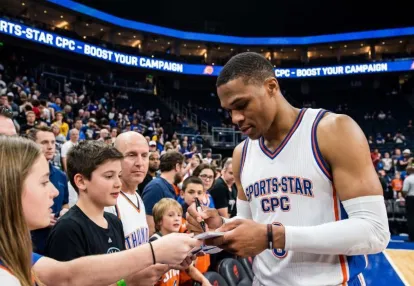
Get Started“Celebrity sells” used to be a media plan. Today it’s just an expensive line item.
In the old model, a famous face plus a prime-time buy equaled impact. Measurement was crude, channels were few, and creative was hard to compare. A Super Bowl spot with a sports star signaled ambition, and that signaling alone often justified the spend.
That logic breaks down in an auction-driven, multi-signal marketplace where every impression competes in real time. The most valuable information about whether your investment is working is now embedded in media allocation, efficiency trends, placement strategy, and channel shifts—signals that show up first in the auction, not in the press release. As one analysis of social ad markets notes, when a brand’s CPM drops, another suddenly leans into a new placement, or a third starts concentrating spend in a specific geography, those moves are no longer trivia; they’re competitive tells about who is actually outbuying competitors, not just outspending them, and why that advantage is likely rooted in precision and diversification rather than sheer budget size, according to this overview of competitive signals inside social ad auctions.
That shift exposes how hollow “celebrity sells” is as a strategy. A sports star can still spike attention, but attention alone is cheap and abundant. What marketers actually need to know is whether that spike translates into efficient reach, search interest they’re ready to capture, and measurable downstream behavior. When a high-impact TV campaign hits, the real story now unfolds on Google, YouTube, and retail media: search volumes, Anstrex.com/blog/write-like-a-pro-10-copywriting-books-to-outshine-90-of-creators" target="_blank" rel="noreferrer noopener">click-through rates, and view-through engagement either confirm that the message resonated or quietly reveal that it didn’t. The most effective modern campaigns are built on connective tissue between creative, media, search, and measurement so that emotionally charged video doesn’t just entertain but reliably generates intent and demand that performance channels are prepared to absorb, as laid out in this argument to stop treating search and video as separate teams.
At the same time, creative itself is under a microscope. The industry gathers at Cannes to champion “human creativity,” yet CMOs still admit they struggle to prove that their creative works. Studies from Forrester and Gain Theory highlight how far behind creative measurement is relative to media ROI, leaving many brands with big-budget celebrity assets and no clear framework to evaluate whether those assets outperform cheaper alternatives in auction environments. That gap is fueling interest in contextual and creative intelligence tools that can analyze which specific executions win attention and bids and why, even though many budgets are still too constrained to invest meaningfully in such technology, as one Cannes wrap-up on confused creators and creative effectiveness points out.
Compounding the pressure, creators and niche influencers are proving that authenticity and always-on presence can beat sporadic star power. Challenger brands are intentionally favoring self-shot, grassroots content that feels like community rather than advertising, and they’re seeing that relatability and posting frequency can outperform glossy production at scale. A brand like Joyride grew a multi-million-strong following using transparent, DIY content and then validated bold creative choices by quickly pulling underperforming work and redeploying into values-driven storytelling that massively overdelivered on view targets, as described in a discussion of how purpose-led brands win without compromise.
Meanwhile, B2B marketers are discovering that the real performance edge comes from always-on influencer relationships, not from borrowing the biggest name for a single flight. Long-term collaborators grow into genuine advocates, deepening their understanding of the brand narrative and compounding impact in ways a one-off activation rarely matches, a pattern underscored by research into how.
Put together, these shifts mean that a sports-star campaign is no longer a strategy; it’s a tactic that must compete, impression by impression, against scrappy creators, always-on influencer ecosystems, and precision media systems optimized in real time. The only rational question now isn’t “Will a celebrity sell?” but “Can this particular celebrity creative beat the benchmark CPC and CPM you can already get without them—and can you prove it in the auction data?”
The most expensive myth in modern advertising is that “celebrity + cause + lifestyle” is a strategy. It isn’t. It’s a template – and templates get punished in auctions.
On paper, the formula looks unbeatable: put a sports star in aspirational settings, wrap them in a social cause, layer on lifestyle vignettes, and push the spot everywhere. In practice, you’re building the same creative structure everyone else is, then paying a surcharge for a famous face to deliver it.
To understand why that breaks down, you have to deconstruct each piece of the formula and how platforms actually read it.
Celebrity: A sports star gives you attention, but auctions buy outcomes, not vibes. Algorithms don’t care whose jersey is on screen; they care whether users stop, watch, click, search, or buy. As feeds become more algorithmic, even follower counts are losing their predictive power. A majority of Reels views come from non-followers, and even regular posts are reaching mostly people who never opted in, according to Sprout Social’s analysis cited in MarTech. That means the value of a celebrity’s “built-in audience” is structurally smaller than it used to be. What matters more is what they’re saying, how they’re saying it, and whether that content is contextually relevant to the people the platform decides to show it to.
Cause: Bolting on a cause might humanize a brand, but in an auction it primarily functions as a relevance signal. That’s only helpful if the issue is meaningfully connected to your category and the way your audience discovers or evaluates you. When DAIVID ranked World Cup ads by emotional impact, Fox Sports’ “Miracle” spot topped the list not just because it tugged heartstrings, but because it created a surge of intent that flowed directly into search and video behavior. The “cause” in that case – national pride, underdog narratives, communal viewing – was inseparable from the core product experience. Too many celebrity campaigns, by contrast, treat cause as a decorative layer. The auction sees emotional but untargeted engagement that fails to convert into branded searches, site visits, or lower-funnel actions.
Lifestyle: Those slow-motion training montages and rooftop parties are meant to make the brand feel aspirational. But lifestyle alone is an incredibly blunt instrument in performance environments. In social and programmatic auctions, the strongest signals are hiding in how efficiently other advertisers are buying attention – their CPMs, their placement mix, their geographic focus – not in how glossy their footage looks. When a competitive intelligence platform like Polaris AI surfaces that Progressive is “outbuying” rivals on acquisition costs through audience precision and diversified placements, as AdExchanger reports, it’s a reminder that media systems are optimizing around fit and efficiency, not photogenic lifestyles.
The real problem is that “celebrity + cause + lifestyle” tends to be episodic, and auctions reward consistency. A sports star shows up for a tentpole campaign, dominates for a flight, then disappears. But the performance advantage in influence-heavy programs comes from always-on, compounding relevance. In B2B, brands with ongoing influencer collaborations are vastly more likely to report success than those doing one-off activations, because sustained relationships deepen narrative understanding and generate organic advocacy, according to TopRank’s analysis of always-on influencer programs. The same principle applies when your “influencer” is a World Cup winner instead of a niche analyst. If the relationship begins and ends with a big hero spot, you’re paying for attention that never has time to compound.
You also see the formula’s limits as you move closer to conversion. Lower-funnel creative that actually moves product tends to give creators more freedom to share real experiences and opinions, even if that makes the brand a bit uncomfortable. Overly controlled, brand-safe scripts – the default mode for celebrity campaigns – can reduce credibility and performance in those environments, as research highlighted by MarTech makes clear. The more your sports star sounds like a legal disclaimer in a hoodie, the worse the ad will fare against scrappier, more authentic creators in the same auction.
Once you strip away the mythology, “celebrity + cause + lifestyle” is just a set of creative inputs that the auction will test like any others. The sports star effect only shows up in your CPC or CPA when those inputs generate measurable signals – emotional impact that turns into search, relevance that lowers CPMs, credibility that boosts conversion – more efficiently than the alternatives you could have bought for the same money. Everything else is just paying a premium to look like everyone else, slightly bigger and slightly louder.
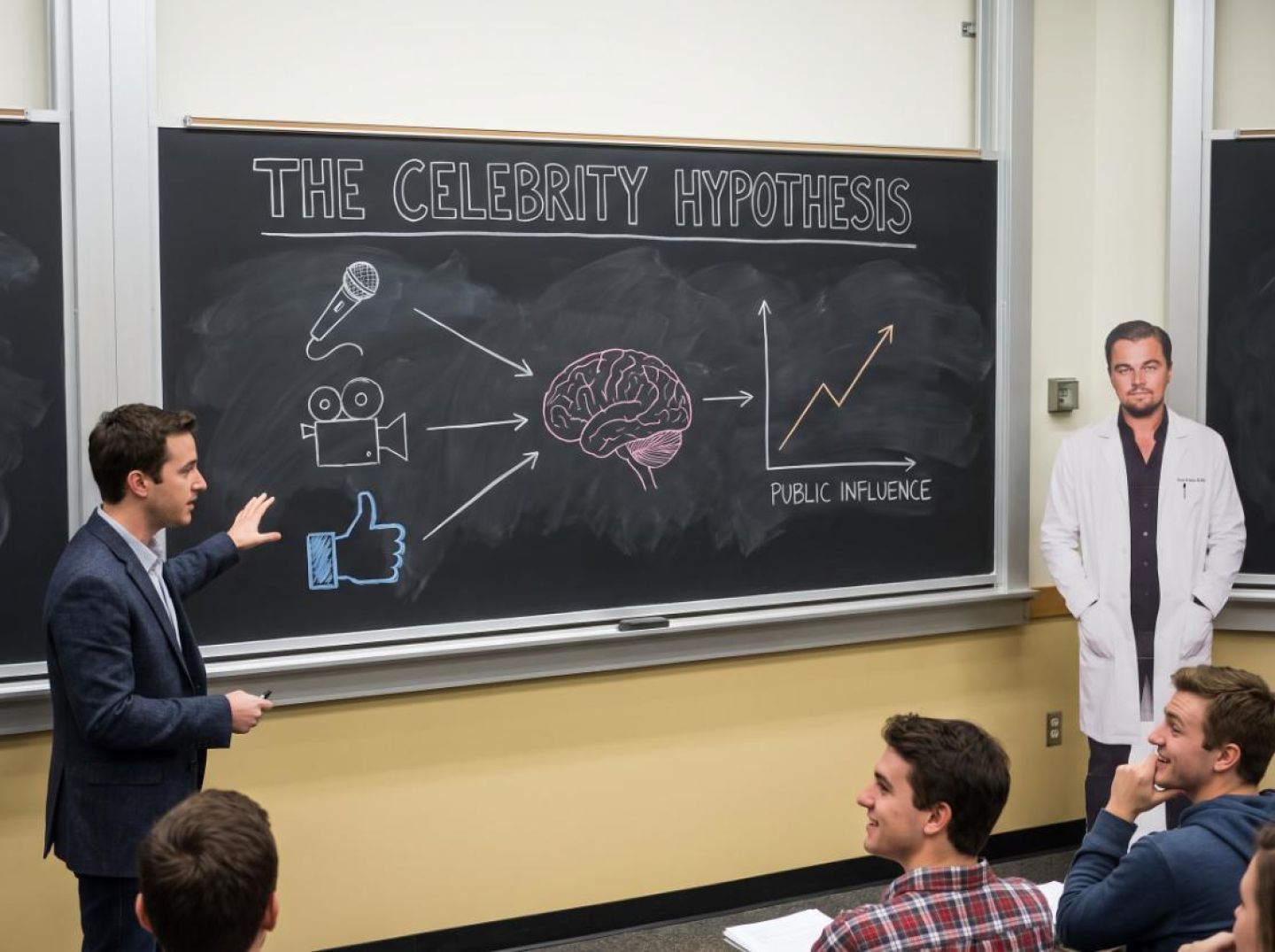
Before you can decide whether a sports-star concept is “working,” you need to stop treating it as an article of faith and start treating it as a hypothesis.
At its simplest, the hypothesis behind a celebrity creative sounds like this: “Featuring [X athlete] will increase [Y outcome] for [Z audience], compared with a similar non‑celebrity creative at the same media cost.” That’s it. Not “make the brand cooler,” not “win Cannes,” not “get our CEO a selfie.” A specific talent, a specific metric, a specific comparison.
To get there, you have to strip away the halo. In a fragmented fan journey where people bounce from broadcast to social to retail to streaming in a single afternoon, the presence of an athlete doesn’t magically “connect the dots.” As one group of industry leaders pointed out, the brands that win are the ones that can actually “join those dots from the live moment to the retail moment to the ecom moment, to the creator to the media to the event,” turning passion into a coherent experience rather than a single big moment on TV, as an Adweek roundtable on fan experience argued. Your hypothesis has to live inside that reality, not above it.
So, what are you really testing when you test a sports star?
You’re not testing whether they’re famous; you’re testing whether their presence improves the unit economics of your auction. The right frame is incremental value per impression or per click, not raw scale. In the same way that influencer programs only prove their worth when they move from one-off “activations” to measurable, always-on performance, as TopRank’s research on B2B influence showed, celebrity work only earns its premium when it produces durable, repeatable lift over your baseline creative.
That requires you to separate the “who” from the “what.” The “who” is the athlete: their credibility with a given segment, their existing relationship with your category, their role in the culture of that sport. The “what” is the creative construct: the storyline, offer, channel mix, and call to action surrounding them. Most post‑mortems stop at “the player was a great fit for our brand,” when the more useful question is “did adding this player to this specific construct outperform a non‑celebrity version of the same idea?”
Framing it as a hypothesis forces you to define the job your celebrity is being hired to do. Is it upper‑funnel emotional priming? Then test against emotional engagement and search lift. Emotional measurement platforms have shown how high‑impact sports creative can become a demand map: when Fox Sports’ “Miracle” World Cup promo topped the list for intense positive emotion, the real value wasn’t bragging rights; it was the surge of people who immediately turned to search and video to learn more, as MarTech’s coverage of that campaign made clear. If that’s the job, your hypothesis might be: “This athlete-led spot will generate a higher lift in branded search and video completion rates than a non‑athlete spot with similar emotional tone.”
If, instead, you’re hiring the celebrity to drive mid‑ or lower‑funnel action, the hypothesis has to shift. Are you expecting them to justify a richer CPC on paid search, or a higher CPM in connected TV, because their presence improves click-through, add-to-cart rate, or conversion? Then your test design must isolate those outcomes. As critics of “aspirational billboard” influencer campaigns have argued, paying for broad visibility when you actually need consideration or sales is just making the wrong objective more expensive, a mistake MarTech’s analysis of misaligned influencer KPIs underscored. The same logic applies to athletes: if your hypothesis is about sales, your measurement can’t stop at views and buzz.
Trust is another invisible variable that belongs inside the hypothesis. Fans are increasingly sensitive to whether an endorsement feels earned or transactional. Research on influencer credibility has found that people expect creators to have real experience with a product before they recommend it, and they penalize overly scripted or obviously surface-level partnerships, as recent coverage of influencer authenticity and ROI explained. Sports fans are no different: they accept personalization and new formats when it feels like an extension of their passion, but bristle when data or talent are used in ways they didn’t anticipate, a tension that surfaced in the discussion about trust in that Adweek conversation on fan engagement. Your hypothesis must account for this: “A long-time user of our product will outperform a ‘check-clearing’ newcomer, even if the newcomer has more followers.”
Finally, you need to be honest about time. A single tentpole campaign can prove whether a specific execution was efficient, but it can’t prove whether an athlete strategy is effective. The most successful influence programs work over time, with recurring appearances and deepening narratives, not one‑night stands; according to TopRank’s longitudinal study of always-on influence, brands that invest in ongoing relationships are dramatically more likely to report success. Translating that insight to sports means writing hypotheses about compounding effects: “Across three seasons, this athlete partnership will lower our effective CPC in sports contexts by X% versus rotating one-off celebrity cameos.”
In other words, the celebrity question is not “Can we afford this?” but “What, precisely, are we paying to learn?” When you can answer that in a single sentence, you’re ready to run a real test.
If Section 3 gave you the hypothesis, this is where you build the surveillance system to test it in the wild.
You’re not competing with “your last campaign.” You’re competing with every other advertiser bidding into the same auctions, many of whom are also leaning on athlete halo. A competitive‑intel framework turns Anstrex from a spy tool into a decision engine: not “who’s running a sports-star spot?” but “who’s actually winning with it, on what angles, and at what apparent cost?”
Think in three layers: landscape, pattern, and performance proxy.
1. Landscape: Map the celebrity-concept cluster, not just “sports ads.”
Start by building an Anstrex board specifically for sports‑star creatives in your category and adjacencies. Don’t filter only by “athlete” keywords; pattern-match on structure:
Label these creatives with tags like “hero‑worship,” “purpose‑overlay,” “UGC‑style,” “offer‑forward,” “search‑bait,” and “retargeting.” Over a few weeks, you’ll see clusters emerge: big‑budget hero films, mid‑funnel social cuts, and scrappier, creator‑style executions.
This mirrors the way sophisticated influencer programs segment formats and roles. As TopRank’s research notes, the standout programs aren’t the ones with the biggest names; they’re the ones with the most differentiated content experiences. Your Anstrex board should reflect that same diversity of role and format, not a wall of interchangeable “anthem” spots.
2. Pattern: Decode creative strategies and message archetypes.
Once the board is populated, stop scrolling and start coding. Create a simple schema in a spreadsheet or Notion doc and log for each creative:
This is where you distinguish the World Cup‑style “aspirational billboard” plays from performance‑oriented constructions. Much influencer work still hugs the upper funnel; campaigns like Poppi’s vending‑machine stunt drove massive TikTok visibility but were fundamentally an awareness tactic, as MarTech’s breakdown of broken influencer strategy points out. Many sports‑star ads in Anstrex will reveal the same pattern: expensive reach wrapped around a weak or absent commercial ask.
Tag, too, anything that clearly anticipates downstream behavior. Some TV spots are engineered as search engines: distinctive lines, product names, or offers that are easy to query later. As a recent MarTech analysis of World Cup ads argued, the strongest campaigns are built on the assumption that good creative will immediately spill into Google and YouTube. If a sports‑star ad is full of generic slogans but devoid of searchable hooks, note it. It’s probably burning money at the top of the funnel and forcing search and social teams to clean up afterward.
3. Performance proxy: Read auction signals, not just “longevity.”
You don’t see other brands’ CPCs inside Anstrex, but you do see behavioral clues: how long a creative runs, where it runs, how it’s iterated, and what replaces it.
Instead of assuming “long‑running = working,” treat longevity as one signal among several:
Here, Anstrex becomes your contextual performance lab. When you see a brand pull a high‑gloss, athlete‑driven ad and later lean into lo‑fi, values‑driven content — the way Joyride swapped polished production for “grassroots‑looking” social to outperform at scale, as documented in Adweek’s look at purpose‑meets‑performance campaigns — treat that as an observable test result. The brand is telling you, through its media behavior, what cleared the internal ROI bar.
Cross‑reference that with the segmentation work you did in Step 2. Over time, you’ll find patterns like:
Finally, zoom out beyond your own sport or even sports altogether. Women’s sports marketers, for example, have been forced to build planning tools around real‑time social engagement because standard benchmarks don’t exist. The Women’s Sports Index filters TikTok and YouTube content to surface engagement signals and link them to brand lift and purchase intent, an approach AdExchanger described as “air traffic control” for fandom. Use Anstrex the same way: as directional radar, not a scoreboard. You’re not trying to copy competitors’ celebrity bets; you’re trying to infer which combinations of star, story, and structure are likely to clear your CPC and CPA thresholds before you step onto the field.
Once that framework is in place, your sports‑star hypothesis stops being a hunch and starts being a set of testable scenarios. And now you’re ready to design the actual experiments.
Sometimes the most efficient “celebrity” in your account is a person nobody outside your niche has ever heard of.
The trap with sports stars is that you’re renting attention, not building it. You get a spike of familiarity every time your athlete creative lands in feed, then the graph drops back to baseline. By contrast, a mid‑tier creator who shows up for your audience every week starts to behave more like owned media than paid reach.
This isn’t theory. In B2B, always‑on influencer programs dramatically outperform one‑off activations: marketers who skip always‑on are 17x more likely to report their influencer efforts as ineffective. The reason, as that analysis points out, is compounding trust. Over time, a creator who keeps making content with you stops feeling like a sponsor slot and starts feeling like part of the community’s fabric. When you port that logic into performance media, a “benchwarmer” creator can quietly out‑CPC your sports hero.
Here’s when that happens — and how to spot it in the numbers instead of in the ego.
First, look at fan psychology. Sports has what one executive called an “unfair advantage” in loyalty, but the actual fan journey is wildly fragmented. Your athlete is just one stop between teams, leagues, broadcasters, creators, retail, and social. In that chaos, fans don’t necessarily reward the biggest name; they reward the touchpoint that feels the most human and useful at the moment they see it.
That’s why grassroots creative can routinely beat high‑gloss athlete spots on cost metrics. Challenger brands that deliberately favor “DIY,” self‑shot content often see that this kind of transparent, low‑polish storytelling builds more trust and engagement than big‑budget work, especially when it’s published frequently and consistently rather than in occasional bursts. A creator who lives in that aesthetic is natively optimized for the feed your auctions are actually happening in. Your sports star, styled like a 30‑second TV hero, often is not.
Second, pay attention to where the gravity of fandom actually lives. In women’s sports, for example, individual athletes often dwarf leagues in social reach; one WNBA player has millions more Instagram followers than the league itself. Measurement platforms built for that ecosystem focus less on who is “famous” in a broadcast sense and more on where engagement and purchase intent are actually clustering. That same shift in mindset helps you see when a niche creator has become a better demand signal than your marquee name.
Third, zoom out from the ad unit. A sports‑star spot can be phenomenal at generating emotion and search interest — exactly what creative‑intelligence tools call out when they rank the most engaging World Cup ads. But interest only turns into efficient CPCs if your ecosystem is ready to catch it: search, video, landing experience, and retargeting all pulling in the same direction. A smaller creator you work with every week is often easier to integrate into that system. Their content shows up across Shorts, TikTok, YouTube, and search snippets, so your performance media is amplifying a story users are already encountering organically.
So when is your creator benchwarmer actually the starter?
In those scenarios, the CPC math will quietly tell you what pride doesn’t want to hear: the bench player is your franchise. The job of your testing framework is not to protect the sports star; it’s to find whoever reliably moves the scoreboard at the price you can afford, then give them the minutes.
If athlete campaigns feel risky, it’s usually because they’re hard to measure with the same rigor you apply to search, programmatic, or lifecycle. You’re making a seven‑figure bet on a human being, then hoping for “lift.” That’s not a moat; that’s a gamble.
The way out is to treat celebrity as a system you can instrument end‑to‑end, not as a one‑off stunt you recap in a sizzle reel. The brands that win with stars aren’t the ones with the biggest names; they’re the ones that wire creative, media, search, and influencer into a single demand engine so they can prove, quickly and repeatedly, that a given face is worth its CPC.
Start by connecting your “moment” to the rest of your funnel. A big athlete spot shouldn’t just win a brand‑lift study; it should light up search queries, direct visits, and creator content for weeks. As one analysis of Fox Sports’ World Cup “Miracle” campaign showed, emotionally resonant video doesn’t just entertain, it creates a demand map you can track across Google, YouTube, and retail partners. If your sports‑star creative runs in prime inventory and you don’t see coordinated spikes in branded search, YouTube watch‑through, and product detail page views within hours, that’s an early signal the CPC you’re paying for that face is overpriced.
This is also where your measurement sophistication becomes a competitive moat. CMOs are still struggling to prove creative effectiveness, even as they invest in AI to squeeze more efficiency out of media, according to research highlighted by AdExchanger. That gap is your opportunity. Instead of treating “creative testing” as a rotation of rough cuts, build a live, always‑on experimentation framework around your stars:
Over time, that data becomes proprietary: you know not just whether “celebrity” works, but which archetypes, storylines, and channel mixes actually earn back their CPC premium.
The same logic that separates always‑on influencer programs from intermittent activations applies here. Research summarized on TopRank’s B2B influence study found that brands running always‑on programs were dramatically more likely to report success than those relying on bursts. The underlying reason is trust and compounding familiarity. If you treat your athlete as a recurring character in your marketing universe instead of a seasonal cameo, you can measure lift cumulatively: how does conversion and repeat purchase shift in cohorts first exposed during season one of the partnership versus later seasons? Does the cost per incremental customer fall as fans recognize the story arc?
That long‑view lens also reframes risk. A one‑off endorsement lives or dies on a single flight. An always‑on, multi‑format presence — broadcast, shorts, live creator collabs, retail experiences — lets you adapt to what the data is telling you. If a polished TV spot underperforms but a lo‑fi behind‑the‑scenes series with the same athlete over‑indexes, you can rebalance spend toward the content that behaves more like the grassroots stories that performance‑oriented brands like Joyride have used to beat big‑budget production, as Adweek has reported.
Finally, remember that sports fandom is relationship capital, not just reach. Fans cross live games, social feeds, retail, and ecommerce in a single day, and the brands that “win” are the ones that can join those dots from stadium to checkout to creator content, according to leaders quoted in an Adweek discussion on the fan journey. If you instrument your athlete campaigns across that full path — store traffic, loyalty sign‑ups, creator‑driven lower‑funnel content, and repeat visits — you’re not just de‑risking a celebrity gamble. You’re building a moat made of measurement: a closed‑loop system that turns every sports‑star flight into an input to your next, more efficient one.
Receive top converting landing pages in your inbox every week from us.
Must Read
Explore why traditional OOH experience is no longer enough as out-of-home advertising becomes more data-driven, measurable, and connected to digital channels. This guide outlines the cross-channel, measurement, AI, and competitive-intelligence skills modern OOH employers and candidates need.
David Kim
7 minSep 25, 2026
How-To
Learn how to measure whether sports-star and celebrity advertising actually delivers efficient CPC, CPA, search lift, and downstream conversions. This guide shows how to test celebrity creative against creator alternatives and use competitive intelligence and measurement to turn expensive star power into a measurable performance asset.
Elena Morales
7 minSep 25, 2026
Quick Read
Ad-spy tools and performance marketing are helping reshape OOH from a traditional media channel into a data-driven, programmable performance environment. This guide explores how competitive intelligence can influence OOH hiring, talent requirements, funnel strategy, measurement, and agentic AI workflows.
Dan Smith
7 minSep 23, 2026