11 minJune 20, 2026

Our spy tools monitor millions of TikTok ads from over 55+ countries. Biggest TikTok Ad Library in E-commerce and Mobile Apps!
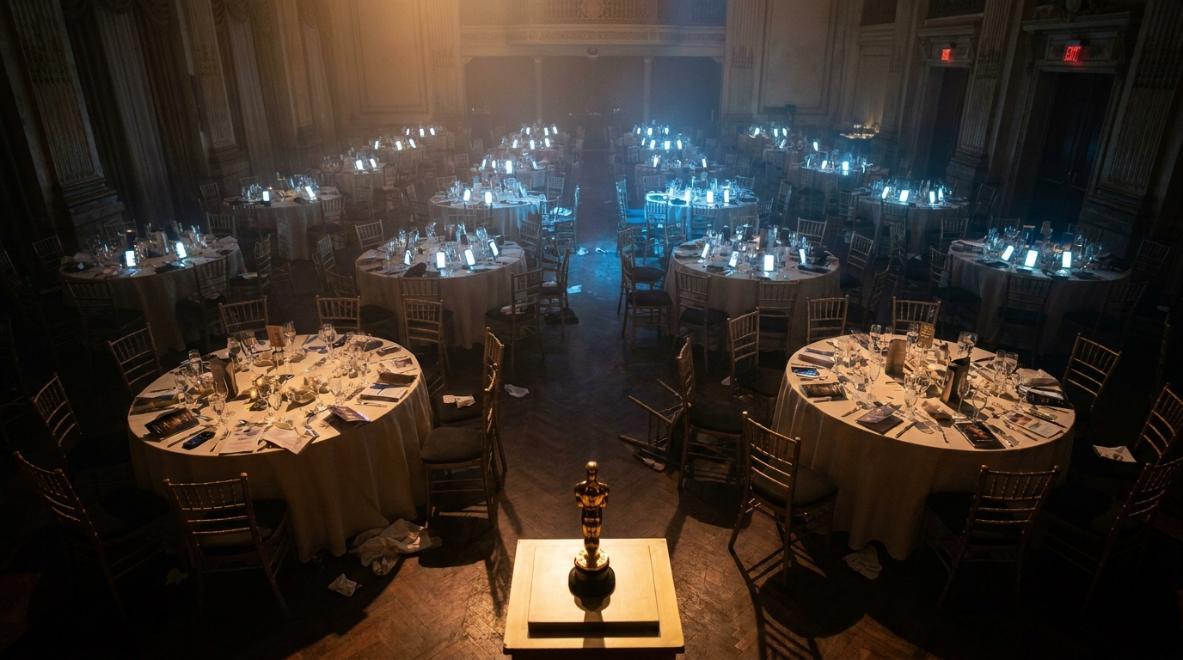
Try It FREEEvery June, the advertising world convenes on the French Riviera to celebrate the same virtues it has worshipped for decades: originality, craft, and the kind of conceptual daring that makes a jury of peers lean forward in their chairs. The Cannes Lions, the One Show, D&AD — these institutions have spent half a century defining what "great" advertising looks like. And the work they elevate is, almost without exception, polished to a mirror shine, built on a singular big idea, and months in the making. There's just one problem: the platforms where the most commerce actually happens couldn't care less about any of that.
TikTok's algorithm is brutally indifferent to the qualities that win trophies. It doesn't measure novelty. It doesn't reward months of production. It optimizes for watch time, completion rate, and engagement — signals that have far more to do with pattern recognition and format fluency than with the kind of conceptual originality a D&AD pencil demands. When a user's thumb hovers over their screen, the decision to watch or scroll happens in a fraction of a second, and what triggers the scroll most reliably is anything that looks, feels, or smells like an advertisement. Production polish — the very thing traditionally trained creatives spend careers perfecting — has become a liability.
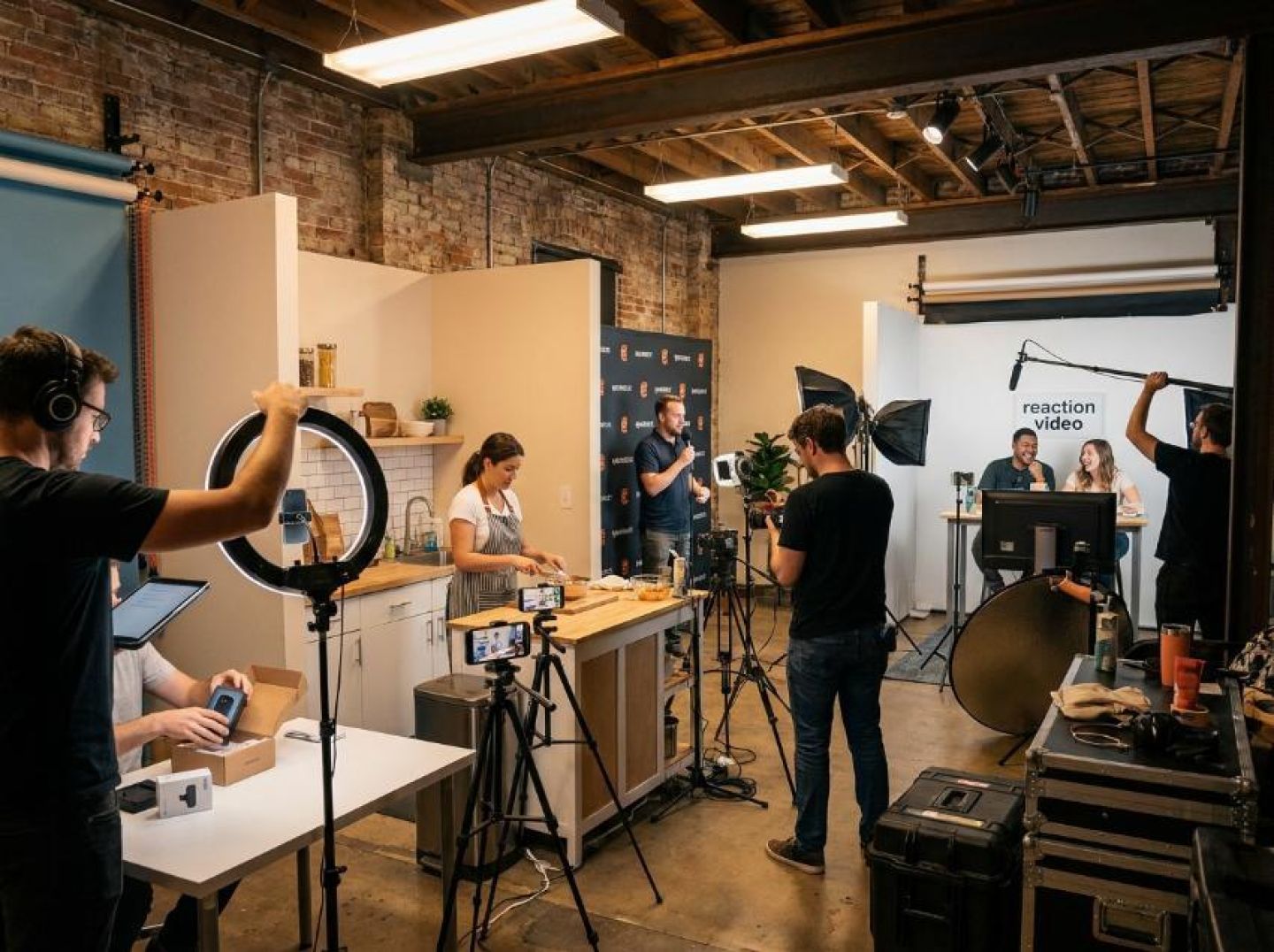
This isn't just anecdotal intuition. As VideoWeek reported, even major broadcasters are being forced to confront this reality: "if you try to stick to broadcasting production values on social media, you'll never publish anything." The observation came in the context of TV companies learning from digital-native creators, but the lesson applies with even greater force to advertising. Creators who dominate short-form platforms learn what works through relentless iteration — producing videos quickly and cheaply, testing formats, and doubling down on whatever the algorithm rewards. That model is fundamentally incompatible with the agency world's traditional cadence of briefs, storyboards, multiple rounds of client feedback, and six-figure production budgets.
The brands that are actually winning on TikTok have internalized this. Rhode Skin, for example, uses TikTok to show products in casual, lifestyle contexts that feel personal rather than promotional. Gymshark regularly posts creators using their workout gear during real training sessions, building credibility that no studio shoot could replicate. Neither brand succeeds because it had a groundbreaking idea that no one had ever seen before. They succeed because they matched the native visual language of the platform — the shaky handheld footage, the direct-to-camera address, the unscripted energy that tells the algorithm this is content, not this is an interruption.
The data reinforces the pattern. The videos that perform best on short-form platforms don't look like ads — they look like something a real person made: unboxings, honest reviews, "how I use this" clips, behind-the-scenes moments. These aren't the formats that earn a standing ovation at an awards gala. They're the formats that earn a completed view, a share, and a purchase.
Here lies the uncomfortable implication at the heart of this piece: the advertising industry's highest honors are selecting for the wrong traits. Traditionally trained creatives are optimizing for peer approval — for the nod of a fellow art director, the admiration of a jury that values what's never been done before. But TikTok's top-spending advertisers are optimizing for purchase behavior, and that requires a completely different set of instincts. Speed over deliberation. Familiarity over novelty. Volume over perfection. The creative playbook that actually drives commerce on these platforms isn't hidden because it's brilliant. It's hidden because the industry's tastemakers have been trained to look away from it.
The top-spending advertisers on TikTok don't start with a blank page. They start with a database. While traditional agencies still romanticize the brainstorm — the whiteboard, the creative director's gut instinct, the big reveal — performance-driven teams have built something far more methodical: a continuous intelligence loop that treats creative development less like art direction and more like quantitative research.
The process looks something like this. First, these teams monitor the landscape obsessively. They track which products are gaining traction, which hooks are stopping thumbs in the first 500 milliseconds, which audio tracks are being repurposed across categories, and which ad structures — the split-screen comparison, the POV unboxing, the whispered ASMR review — are generating disproportionate engagement relative to spend. They aren't watching TikTok for entertainment. They're conducting market surveillance.
Second, they dissect. A high-performing ad isn't evaluated as a holistic "concept" the way a Cannes jury might assess it. It's broken into modular components: the opening frame, the text overlay timing, the pacing of the value proposition, the position and style of the call to action, the ratio of talking-head footage to product demonstration. Each element is catalogued, tagged, and compared against performance benchmarks. The result isn't a mood board — it's a pattern library.
Third, they produce at velocity. Once a structural pattern shows promise, the team generates dozens of variations — different hooks grafted onto the same body, alternate CTAs tested against the same narrative arc, the same script delivered by three different creator archetypes. This is exactly how the most successful creators already operate. As VideoWeek has documented, creators learn what works on platforms like YouTube and TikTok through relentless testing — they create videos, iterate at speed, and find formats that land with audiences. Top advertisers have simply industrialized that same feedback loop, replacing individual intuition with systematic pattern recognition.
The economics justify the approach. Short-form video has become the single highest-ROI content format in digital marketing, with 104% more marketers naming it their top-performing format in 2026 compared to just two years earlier. But the videos capturing that ROI share a defining characteristic: they don't look like ads. They look like something a real person made — unboxings, honest reviews, casual "how I use this" clips. The creator-style aesthetic isn't a stylistic preference; it's a performance variable that the data has validated over and over again.
This is why the traditional "creative brief" — a document that typically describes a target audience, a key message, and a desired emotional takeaway — has become functionally obsolete for these teams. In its place sits the creative swipe file: a living, constantly updated repository of proven structures, trending formats, and competitive creative pulled from real-time ad libraries and intelligence tools. The swipe file doesn't tell you what to say. It shows you what's already converting, and invites you to reverse-engineer why.
Brands deploying continuous creative optimization loops — where AI evaluates engagement signals and automatically evolves messaging — are compressing what used to be quarterly learning cycles into daily ones. Speed itself becomes a competitive moat. The team that can move from pattern identification to creative production to live testing in 48 hours will outperform the team that spends three weeks refining a single hero asset, no matter how polished that asset might be.
Call it unsexy. Call it formulaic. But don't call it lazy. This is discipline masquerading as simplicity — and it's the foundational practice that separates TikTok's biggest spenders from everyone still waiting for inspiration to strike.
When Unilever CEO Fernando Fernández declared that traditional TV-heavy campaigns were "lazy marketing" and announced plans to shift half the company's massive advertising budget toward a social-first strategy, he wasn't just making a provocative earnings call soundbite. He was articulating a structural thesis that the rest of the industry is still catching up to: the era of the single hero campaign — that one exquisitely produced sixty-second spot meant to carry a brand for an entire quarter — is a relic of a distribution landscape that no longer exists.
The numbers make the ambition concrete. Unilever's target is a network of over 300,000 influencers, including a micro-creator in every postal code in key markets like India. Creator collaborations would scale by twenty times. Traditional advertising agencies that had spent decades building relationships around six-figure production budgets and a handful of celebrity partnerships suddenly faced an operationally impossible mandate — one that manual sourcing, onboarding, and content approval workflows were never designed to handle. Specialized creator agencies picked up business that legacy agency-of-record relationships had assumed were locked in permanently.
But Unilever isn't an anomaly. It's the logical endpoint of a trend that has swept the entire industry. As Semrush reported, 89% of companies worked with creators or influencers in 2025, a staggering jump from roughly 50% just a year earlier. The question is no longer whether brands should distribute their creative production across a network of creators. The question is how fast they can build the systems to do it.
This is where the creative philosophy has to fundamentally change. When you're managing three hundred thousand content producers instead of one agency team, you cannot bet on a single "big idea" surviving contact with the market. You need a system — a content engine that produces volume, tests rapidly, and kills underperformers without sentimentality. The intelligence loop described in the previous section becomes the operating system for the entire network: data on what formats, hooks, and product angles are working flows outward to creators, who execute proven patterns with their own authentic variation. You don't need one genius creative director. You need a distributed workforce that can adapt a winning framework to a thousand different audiences simultaneously.
AI is accelerating this system beyond what even Fernández likely imagined when he announced the strategy. A 2026 Adobe Express study found that 71% of video creators have now adopted AI video generation or editing tools, with 41% deploying them weekly. The performance gains are not trivial: creators using these tools are seeing a 19% average increase in audience watch time and a 17% boost in community engagement. More than half of the creators surveyed plan to increase their AI tool spending over the next year. When you overlay these numbers onto Unilever's 300,000-person network, what emerges is a massive distributed engine for AI-assisted content production operating at a scale the marketing industry has never attempted.
The traditional agency model — months of development, rounds of internal reviews, a single shoot day, a final cut that has to be perfect because it's the only cut — simply cannot compete with this velocity. "Originality" in the classic advertising sense becomes a bottleneck at this scale, not a virtue. What matters instead is pattern recognition, rapid iteration, and the willingness to let data, not taste, determine what survives. The creative director's instinct doesn't disappear entirely, but it migrates upstream — into the system design, the brief architecture, the guardrails that keep three hundred thousand voices pointed in roughly the same strategic direction while allowing the market to sort winners from losers in real time.
The formats that dominate TikTok's top-performing ad slots aren't the product of some visionary creative director staring at a mood board. They're patterns — repeatable, structural, and surprisingly well-documented. Unboxings. "How I use this" clips. Honest reviews. Behind-the-scenes peeks. Engagement challenges. These aren't creative breakthroughs. They're archetypes, and the advertisers who treat them as such are winning at a pace that traditional development cycles can't match.
Start with why these formats convert. An unboxing video isn't art, but it weaponizes anticipation — the slow reveal, the first-touch reaction, the unscripted moment of delight or disappointment. It manufactures social proof in real time. A "how I use this" clip does something even more potent: it collapses the distance between consideration and purchase by letting viewers see a product functioning in someone's actual life. As Semrush's ecommerce strategy breakdown makes clear, the videos that perform best on TikTok and Reels don't look like ads at all — they look like something a real person made, whether that's an unboxing, an honest review, or a casual behind-the-scenes clip. Rhode Skin exemplifies this, using TikTok to show products in lifestyle contexts that feel personal rather than promotional. Gymshark takes the same approach, regularly posting creators wearing their gear during actual training sessions — a format that builds far more credibility than a studio shoot and gives buyers a realistic sense of fit, quality, and performance. The payoff isn't abstract: brands investing in these creator-style formats are seeing 3.84x more website visits and meaningfully higher average order values.
The psychological mechanics are consistent across all of these formats. Parasocial trust — the feeling that the person on screen is a friend, not a spokesperson — lowers the viewer's defense against persuasion. Native feel ensures the content survives the scroll; anything that looks like an ad gets punished by both the algorithm and the audience's thumb. Social proof, meanwhile, operates at a level that no brand manifesto can replicate, because the viewer sees someone like them making a real purchasing decision.
Engagement challenges add another dimension entirely. When a fitness brand launches a 30-day challenge on TikTok, it isn't just creating content — it's sparking emotions and relatability that drive viral participation, turning customers into co-creators who distribute the brand's message for free. These campaigns succeed because they invite action rather than passive consumption, generating earned media at a scale that paid placements alone can't achieve.
This is where the competitive advantage crystallizes. Traditionally trained creatives approach each brief as a blank canvas — a new problem requiring a novel solution. Performance marketers who've studied TikTok's winning ads do something different: they build creative libraries organized by format type, hook structure, and product category. They know that an unboxing with a text-overlay hook in the first 0.8 seconds outperforms a lifestyle montage. They know that a "day in my life" format converts differently for beauty than for SaaS. They don't start from scratch because they don't have to.
The difference isn't talent or taste. It's taxonomy. As VideoWeek noted in its analysis of how creators outpace traditional broadcasters, the model only works when content is created quickly and cheaply — when teams iterate at speed and find formats that land with audiences rather than laboring over a single polished asset. When you've cataloged what works, creativity becomes combinatorial rather than improvisational. You're not waiting for lightning to strike. You're engineering the conditions that make it inevitable.
The question isn't whether intelligence-driven creative will replace intuition-driven creative. That transition is already underway. The real question is what happens to the people — and the org charts — when it does.
For decades, the creative department operated like a priesthood. A small group of senior creatives — the executive creative director, the head of art, the copywriter with the Cannes Lions on their shelf — sat at the top of a pyramid, and their taste functioned as the strategy. Briefs flowed down. Executions flowed up for approval. The entire structure assumed that the most valuable thing in the building was someone's refined judgment about what would resonate. But when the most valuable thing becomes data about what actually resonates, that pyramid doesn't just flatten. It inverts.
Consider the emerging role that AI plays in this shift. As Social Media Examiner detailed, producing quality ad creative with AI requires building a brand knowledge base, systematically training generative tools on customer personas, brand positioning, and proven ad structures before anyone touches a design canvas. That's not the work of a traditional art director. It's the work of a strategist-operator hybrid — someone who can translate brand identity into structured prompts, interpret performance data, and iterate in near real-time. The creative genius in this model isn't the person with the best eye. It's the person with the best system.
This redistribution of creative authority has organizational consequences that most companies haven't confronted. The first is headcount. When product images that once required studio shoots and freelance photographers can be generated for pennies, the economic argument for large in-house production teams dissolves. But the need for volume skyrockets — Meta's Andromeda update, for instance, now penalizes slight variations of the same ad, demanding genuinely distinct creative. You need fewer hands and more minds, fewer producers and more architects of creative systems.
The second consequence is governance. As AdExchanger warned in its examination of what it calls "the cult of performance," when organizations let AI-driven tools optimize creative without human guardrails, the results can be genuinely disturbing — from hypersexualized AI-generated imagery in Skechers' out-of-home campaigns to fabricated product review ads that would have been scandalous just a few years ago. The org chart needs a new role that doesn't exist in most companies: a creative integrity function that sits between the performance team and the brand team, with the authority to veto what the algorithm rewards but the brand cannot survive.
The third consequence is the most disorienting. When the question of who should own TikTok Shop — agency or in-house — becomes, as Acadia CEO Jared Belsky put it, a genuine strategic puzzle, it reveals how blurred the lines between creative, commerce, and media have become. The traditional agency model separated these disciplines into different teams, different floors, sometimes different buildings. Intelligence-driven creative demands they collapse into a single, integrated function where the person analyzing ROAS and the person writing scripts share a Slack channel — or are the same person.
The winners in this new structure aren't the brands that hire the best creatives. They're the ones that design organizations where intelligence flows fastest — from platform data to creative execution to iteration — with the fewest handoffs, the fewest ego checkpoints, and the fewest layers of approval standing between a signal and a response.
Receive top converting landing pages in your inbox every week from us.
Guide
Award-winning ads can inspire powerful performance creative, but they need to be rebuilt for the way algorithms, feeds, and users behave across Native and TikTok. This guide shows how to reverse-engineer high-profile creative into scalable hooks, angles, formats, and AI-driven testing systems that can improve performance.
Elena Morales
7 minSep 19, 2026
In-Depth
Learn how to apply the Network Operations Center (NOC) model to modern media buying by connecting creative, delivery, site, CRM, and revenue signals in one operating system. This guide shows how to use Anstrex, AI tools, alerts, guardrails, and incident runbooks to monitor TikTok and paid media performance and respond faster to problems.
David Kim
7 minSep 17, 2026
In-Depth
Discover how city-level ad intelligence can help marketers build campaigns that feel local while scaling globally. Learn how to use Anstrex to uncover geographic, language, creative, and funnel patterns across Native, TikTok, Push, and Pops, then turn those insights into repeatable localized campaigns.
Elena Morales
7 minSep 16, 2026