TikTok Ads, Affiliate Marketing
10 minAugust 1, 2026

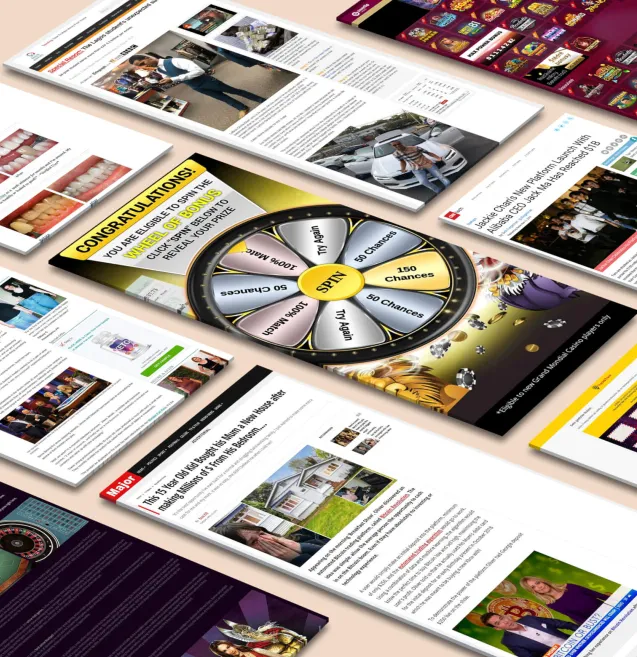
Our spy tools monitor millions of native ads from over 60+ countries and thousands of publishers.
Get StartedThe shift already happened. If you're still thinking about AI-generated ad creative as something on the horizon — a capability your competitors might adopt next year — you're misreading the landscape. U.S. businesses are on track to spend $57 billion on AI-powered advertising this year, roughly 12% of total ad spending, and that money isn't flowing into experimental pilots. It's funding production lines that operate at a pace and scale that would have been unthinkable eighteen months ago.
Consider what the production economics actually look like now. Product images that once required studio shoots, professional photographers, and budgets stretching into the thousands can now be generated for a couple of cents. That's not a marginal cost reduction. That's the cost collapsing so completely that it ceases to function as a barrier. Any advertiser running native, push, or pop campaigns — verticals where creative volume has always been a weapon — is now swimming in a flood of variants produced by competitors who face almost zero incremental cost per new asset.
The creative pipeline has been transformed at every stage. Leading advertisers are deploying continuous creative optimization loops, where AI evaluates engagement signals in real time and automatically evolves messaging to improve performance. This isn't A/B testing in the traditional sense, where you pit two headlines against each other over a week. It's a living system that generates, measures, iterates, and replaces creative on a rolling basis — faster than any human team could manage manually.
And the copy itself? One agency working at scale with Meta ads reported that AI now writes about 90% of their ad copy, with humans stepping in only for final refinement — what they call "copy chiefing." The team's role has shifted from writing to directing, from producing individual pieces to shaping the output of a system that generates material continuously.
This matters whether or not you've adopted AI yourself, because the environment you're advertising in has changed regardless of your own toolset. The number of distinct creatives competing for attention in any given auction, any given feed, any given ad zone has multiplied. When brands can test and adapt hundreds of variations quickly, they can respond to cultural moments, seasonal shifts, and competitive moves far faster than those relying on traditional production cycles. Your hand-crafted ad isn't just competing against another hand-crafted ad anymore. It's competing against the output of a system designed to iterate relentlessly until it finds what works.
The temptation is to see this as purely a technology story — new tools, new capabilities, new workflows. But that framing misses the point. This is an environmental shift. The density of creative in the ecosystem has changed. The speed at which winning angles emerge and get copied has changed. The shelf life of any single ad concept has shortened dramatically. Even the evaluation infrastructure that once separated good creative decisions from bad ones is struggling to keep up, as Search Engine Journal noted when examining how traditional measurement tools buckle under the weight of AI-generated content at scale.
The rules are different now. And if the rules are different, the tools you use to understand the competitive landscape need to be different too.
There's a comforting bit of conventional wisdom making the rounds in marketing circles right now: because AI lets competitors generate so many ad variations, competitive intelligence has become a firehose of noise, and therefore spy tools are losing their value. The logic sounds reasonable on the surface. When a rival brand ran fifteen ads, you could open a transparency library, scroll through each one, and walk away with a decent understanding of their strategy in ten minutes. When that same brand runs fifteen hundred variations — most of them auto-generated headline swaps, color shifts, and CTA permutations — the task feels impossible. So why bother?
That logic is exactly backwards, and understanding why requires grasping what actually happens inside those fifteen hundred variations. The vast majority of AI-generated creative never scales. It gets launched into a testing matrix, absorbs a few dollars of spend, underperforms, and gets killed — sometimes within hours. What remains live and receiving meaningful budget might be a dozen ads at most. The problem for anyone doing manual competitive research is that dead creative and winning creative look identical when you're just browsing a library. There's no skull-and-crossbones icon on a variation that was paused for a 0.3% click-through rate. Without a systematic way to filter for longevity and performance signals, a marketer either wastes hours sifting through chaff or — far worse — copies a variation that the competitor already killed internally for poor performance. You end up reverse-engineering their failures instead of their successes.
This is the evaluation gap that AI-scale creative production blows wide open. When every brand can produce hundreds of variations in a single afternoon, the infrastructure that used to separate good creative decisions from bad ones simply stops working at that volume. Producing the same mediocre ad at mass scale yields no results; it just yields more mediocrity, faster. The brands winning in this environment aren't the ones generating the most creative — they're the ones with the tightest feedback loops between generation, testing, and optimization.
And that's precisely where unfiltered competitive research becomes dangerous. If you can't distinguish between a variation that ran for six weeks with increasing spend and one that burned out in forty-eight hours, you have no signal — just noise dressed up as intelligence. The competitive signals that actually matter are buried in media allocation decisions, efficiency trends, and spend consistency over time, not in a static screenshot of ad copy. As AdExchanger's analysis of social ad auctions makes clear, the strategic question isn't what creative a competitor is running — it's why certain creative keeps receiving budget while the rest gets cut.
This is also why the fragmentation problem compounds so quickly. As Cadent and Google Cloud have argued, the advertising ecosystem was already fragmented before AI entered the picture, and if every new AI capability launches without connecting to a broader intelligence layer, you end up with "smarter silos" rather than smarter decisions. The same principle applies to competitive research: browsing a competitor's ad library in isolation, without layering on spend duration, format frequency, or placement data, is just staring at one disconnected silo.
The real takeaway is counterintuitive but critical. The problem was never too much data. Marketers have always wanted more data. The problem is unfiltered data — creative volume without the analytical scaffolding to separate the signal from the noise. And that distinction is exactly what transforms spy tools from nice-to-have curiosities into operational necessities.
The enterprise world is already building infrastructure to solve this exact problem — but from the inside out. The DAIVID and ADIN.AI partnership is a perfect illustration: they've created a live loop between creative intelligence and media execution that lets brands like Ajinomoto score creative effectiveness at scale, link those scores to real-time media performance, and surface signal from noise before budget gets allocated to the wrong places. DAIVID CEO Ian Forrester framed the core tension well: creative is a key driver of advertising outcomes, but it has historically been measured in isolation, disconnected from media results. Their system closes that gap for brands evaluating their own campaigns.
But here's the critical asymmetry: you don't have access to your competitor's internal creative scoring loop. You can't see which of their 1,000 ad variations their DCO system flagged as high-performing. You can't see their real-time pause-and-scale decisions as they happen inside their ad account. What you can see is the external artifact of those decisions — the ads that survived.
This is where ad intelligence platforms like Anstrex operate, and why their function needs to be reframed in the AI-saturated era. They aren't idea theft machines. They're pattern-recognition systems that do what human review can no longer accomplish: track thousands of creatives across ad networks, identify which ones have genuine longevity, and surface the strategic patterns buried in a competitor's full portfolio of tests.
Consider the mechanics. Duration tracking — how long an ad has been running — is one of the most underappreciated signals in competitive analysis. When a competitor is running AI-driven Dynamic Creative Optimization that automatically tests combinations of headlines, visuals, and calls to action to find optimal variations for each audience segment, the ads that persist in the wild for weeks or months are the survivors of that optimization loop. They represent the output of a sophisticated testing process you'd otherwise need to replicate yourself. An ad that ran for three days and disappeared was likely killed by the algorithm or the media buyer. An ad that's been running for sixty days across multiple geolocations is a confirmed winner — and that persistence data is precisely what spy tools capture.
Network breadth adds another layer of signal. When the same creative angle appears across native, push, and display networks simultaneously, it tells you the advertiser isn't just testing — they're scaling. When a landing page is captured alongside the creative, you can see not just what message attracted the click but what conversion architecture was built to receive it. Geo targeting data reveals which markets a competitor considers worth the spend. None of these are browsing features. They're signal-extraction mechanisms designed to decode strategic intent from observable behavior.
The parallel to what DAIVID and ADIN.AI built for internal campaign governance is direct. Their system scores creative at scale and surfaces signal from noise so brands can allocate budget with confidence. Ad intelligence platforms provide an analogous capability for competitive analysis — evaluating what's working across the market, not just within your own account. The difference is the data source. Internal tools read performance metrics. External tools read persistence, scale, and distribution patterns. Both are doing the same fundamental job: separating the creative that actually works from the creative that merely exists.
And in a market where AI ensures that creative merely existing is no longer a meaningful achievement, that separation has never mattered more.
The old competitive research workflow was simple enough to fit on a napkin: browse competitor ads, find ones you like, adapt them. That approach worked when competitors ran a handful of creatives per campaign. It collapses entirely when a single brand can generate a thousand variations in an afternoon. The new workflow demands a fundamentally different posture — not browsing, but filtering; not mimicking, but reverse-engineering validated strategy.
Think of it this way. Social Media Examiner's framework for AI-driven ad creative argues that you need to build a comprehensive brand knowledge base before you ever prompt an AI to generate a single ad. The same principle applies to competitive intelligence. Just as AI creative output is only as good as the strategic context you feed it, competitive research is only as good as the filtering methodology you apply. Without a filtering discipline, you're scrolling through an infinite gallery of noise, mistaking volume for insight.
The new workflow starts by filtering for duration and recurrence. An ad that ran for three days and disappeared was likely a failed test. An ad that ran for eight weeks across multiple networks represents a validated hypothesis — someone's media budget kept it alive because it was performing. That distinction is everything. Next, you identify creative patterns that persisted: recurring angles, consistent emotional appeals, headline structures that kept appearing in refreshed variations. Then you analyze the landing pages behind those survivors, because the landing page reveals the strategic bet — the offer, the funnel architecture, the conversion logic. Finally, you reverse-engineer the hypothesis the competitor validated and use it to inform your own original variations.
This filtering discipline matters most in the channels where creative volume has exploded beyond human comprehension. In native advertising, where ads are designed to blend seamlessly into editorial feeds, AI has made it trivially easy to spin up hundreds of headline-and-thumbnail combinations. The signal-to-noise ratio is punishing. Filtering by longevity in a tool like Anstrex instantly separates the headlines that earned clicks from the ones that burned budget. Push notification ads present a similar challenge at even smaller scale — tiny creative canvases where the difference between a winning notification and a dud is a single word swap. When competitors test fifty push variations in a week, only duration data tells you which phrasing actually drove engagement. Pop ads, meanwhile, have always been a volume game, but AI has accelerated that volume dramatically. Here, landing page analysis becomes the decisive filter, because the pop creative itself is minimal — the real intelligence lies in which offer pages and funnel structures survived weeks of traffic.
This approach creates what amounts to a virtuous cycle. Better competitive intelligence produces better strategic briefs. Better strategic briefs produce better AI-generated variations. And as MarTech has reported, brands deploying continuous creative optimization loops — where AI evaluates engagement signals and automatically evolves messaging — gain speed as a competitive advantage. Faster identification of winners feeds back into sharper competitive analysis, because you now know what to look for in your competitors' next moves.
The marketers who treat spy tools as a scrolling gallery will drown. The ones who treat them as strategic filtration systems — using duration, network spread, and landing page architecture as their lenses — will extract the kind of validated intelligence that no amount of raw AI generation can replicate on its own. The tool hasn't lost its value. The methodology just needed to catch up.
When every brand on the planet has access to the same generative AI tools, the creative itself stops being the competitive advantage. The headlines, the image variations, the format adaptations — all of it becomes table stakes. What separates the brands that win from the ones generating expensive noise is what happens before the prompt gets typed: the strategic layer that determines which angles to pursue, which pain points to press, which offers to structure, and which formats earn attention in specific channels. AI doesn't replace that layer. It makes the absence of it catastrophically obvious.
This is the insight that experienced practitioners keep circling back to. As Nick Shackelford explained on Social Media Examiner, AI amplifies you — if you already have good ideas, it helps you execute them faster and produce more of them, but if your ideas are weak, it just helps you produce more weak material at speed. He's watched brands churn out a hundred or two hundred creatives a week and get nothing for it, because they kept producing "the same mediocre-looking ad on a mass scale." The teams that outperform don't test more; they test with more intention, informed by a clear understanding of what genuinely new and different looks like in their market. That understanding doesn't come from AI. It comes from strategic intelligence.
And this is precisely where competitive analysis becomes indispensable. When you study not just what competitors are running but what survived — which angles they keep funding, which offer structures they scale, which visual formats they double down on after weeks of testing — you're extracting the strategic insight that AI cannot generate on its own. You're reverse-engineering the decisions that sit upstream of execution. You're identifying the audience pain points that actually drive action, validated not by guesswork but by real market spend.
The advertising ecosystem is accelerating this dynamic. AI-powered Dynamic Creative Optimization systems can now automatically test combinations of headlines, visuals, and calls to action to identify which variations perform best for specific audiences and contexts. That capability is extraordinary — but it's available to everyone. Your competitors have the same DCO infrastructure, the same generative tools, the same ability to resize, localize, and personalize at scale. The technology is a commodity. The question it can't answer is what to test — which messaging territories are worth exploring, which competitive white space exists, which positioning angles your market hasn't seen yet.
This is the strategic paradox of the AI era: the easier it gets to produce creative, the harder it gets to produce creative that matters. Volume without direction is just noise, and the platforms are already drowning in it. Every brand deploying AI without strategic guidance is effectively subsidizing the algorithm's education while extracting nothing in return.
Competitive intelligence breaks that cycle. It transforms the infinite possibility space of "what could we make?" into the focused question of "what should we make, given what's actually working?" It tells you which emotional registers are resonating in your category, which proof structures are earning clicks, which formats are holding attention in specific placements. It gives your AI tools the one thing they desperately need and cannot produce for themselves: direction grounded in market reality.
The brands that understand this aren't worried about competitors generating a thousand variations. They're worried about competitors who generate a thousand variations and know which ten directions are worth exploring — because those are the brands whose AI output compounds rather than diffuses. Strategy was always the differentiator. AI just made it the only one that counts.
Receive top converting landing pages in your inbox every week from us.
In-Depth
Emotional storytelling is becoming a powerful targeting signal as AI-driven platforms take over more audience selection and delivery. This guide shows performance marketers how to use spy data to reverse-engineer emotional arcs and build cross-channel sequences that move audiences from emotional hooks to solution moments, social proof, and conversion.
Liam O’Connor
7 minSep 13, 2026
Must Read
Performance marketers can stay aggressive without crossing ethical or compliance boundaries by turning competitive ad spying into a structured, defensible intelligence process. This guide covers AI-powered monitoring, ethical data practices, governance guardrails, and practical workflows for using competitor insights to drive smarter performance decisions.
Priya Kapoor
7 minSep 13, 2026
How-To
Spy tools are only valuable when they become part of a repeatable competitive intelligence workflow. This guide shows agencies how to turn ad intelligence into market reality checks, AI-powered monitoring, strategic narratives, and recurring client rituals that strengthen long-term partnerships.
Marcus Chen
7 minSep 12, 2026