11 minAugust 12, 2026

Our spy tools monitor millions of TikTok ads from over 55+ countries. Biggest TikTok Ad Library in E-commerce and Mobile Apps!
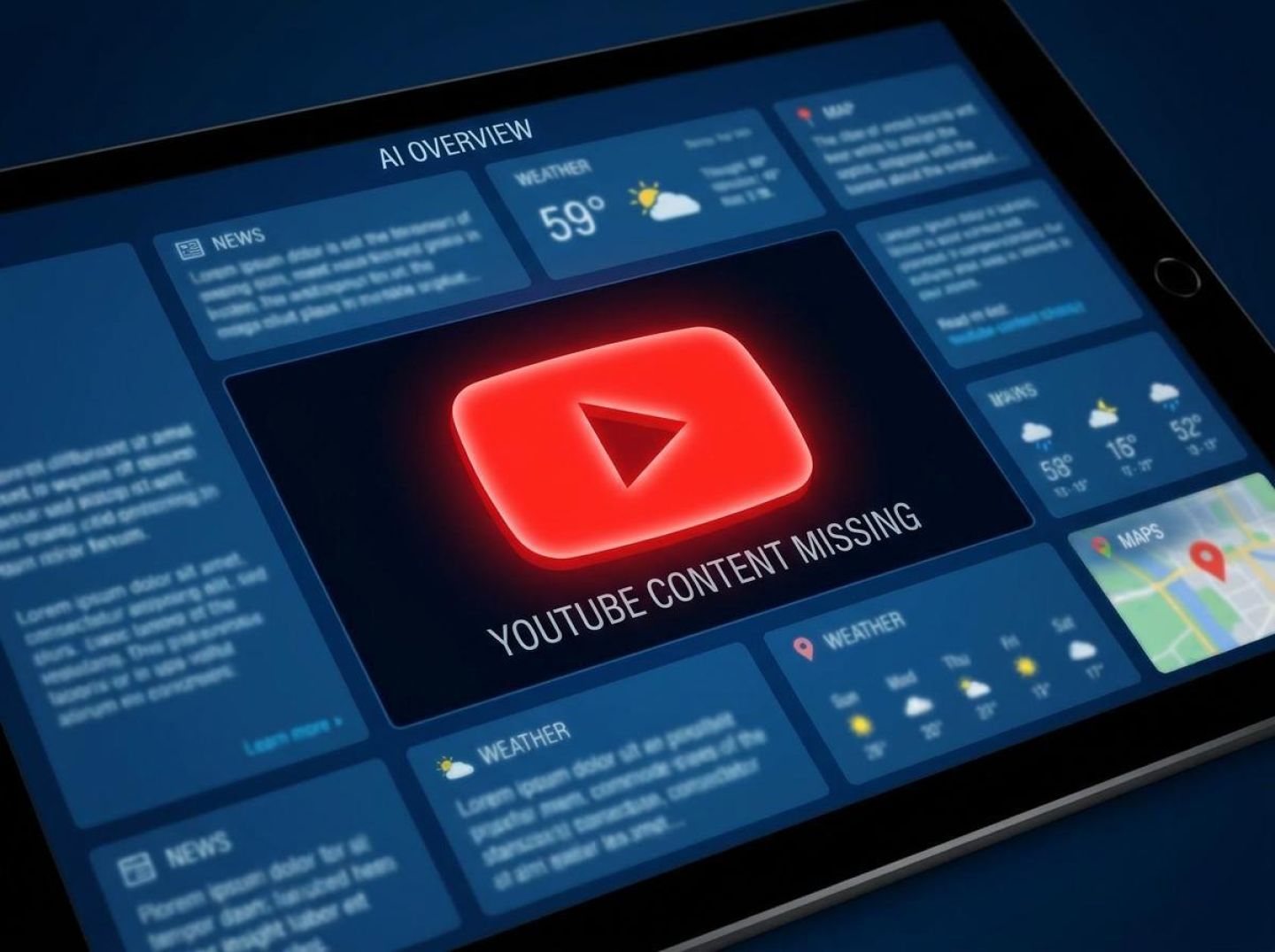
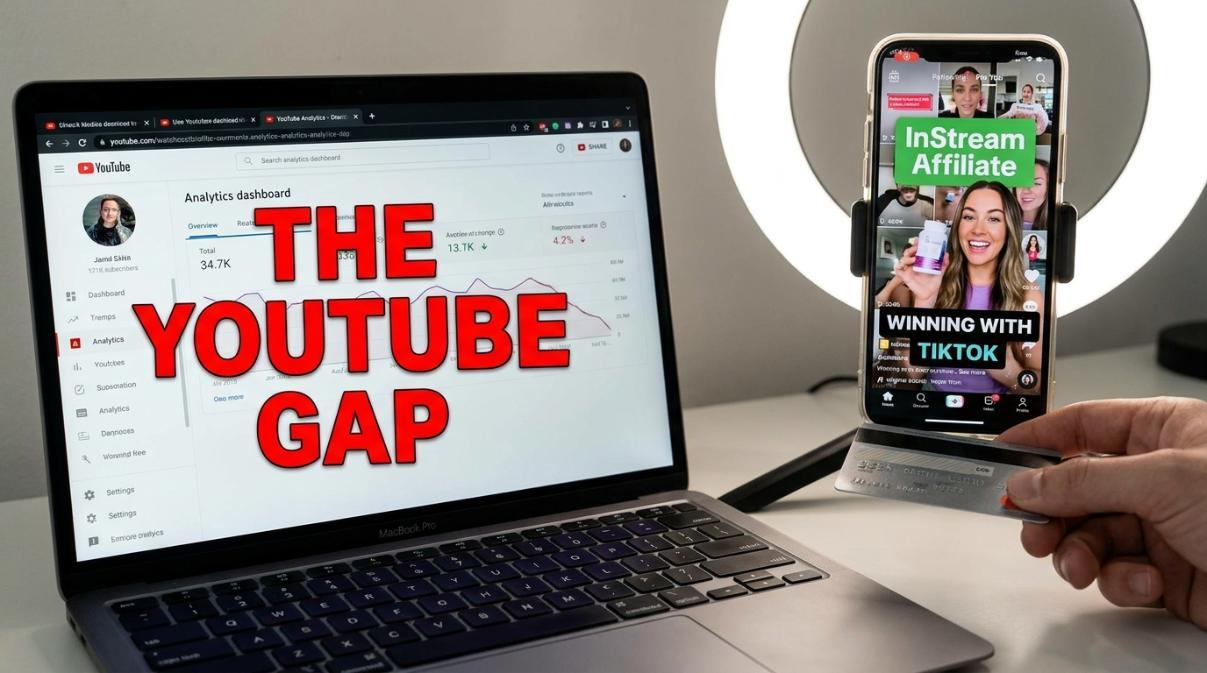
Try It FREELet's get the obvious part out of the way: the YouTube gap in Google's AI Overviews is real, it's measurable, and if you've spent two decades building text-based SEO assets while ignoring video, you're feeling it right now. As Search Engine Journal's deep dive into the problem put it, departments that prioritized backlink profiles for years now find themselves without the production workflow or institutional muscle memory to show up where AI systems are actually looking. That's a legitimate strategic problem, and anyone dismissing it isn't paying attention.
But here's where the conversation goes sideways: too many marketers are treating the YouTube gap as the entire chess board when it's actually just one piece. The real pattern isn't about YouTube specifically — it's about marketers chronically underinvesting in platforms until the arbitrage window narrows to a crack, then scrambling to build presence at premium cost. We did it with blogs in 2008, with Instagram in 2015, and with TikTok organic reach in 2022. The YouTube-in-AI-Overviews moment is the latest iteration of the same cycle, not a unique inflection point.
What makes this cycle different — and more dangerous — is that Google is actively redefining what "visibility" even means, and it's doing so in a way that serves Google's interests far more than yours. When Google updated Search Console to let brands track social media and video performance inside search results, most marketers celebrated. But as Search Engine Journal's analysis of that move argued, the update functions less as a reward and more as a shield — a way to mask the organic click loss that AI summaries are inflicting on publishers. If your website traffic drops by a third, Google can now point to your TikTok impressions on the search page and tell you you're still winning, even when no one is actually clicking through to your site.
This reframing matters enormously for affiliate marketers. The entire affiliate model depends on clicks that become conversions. Impressions inside someone else's answer box are not revenue. And yet, the rush to optimize for AI Overviews is essentially a rush to appear in a format where Google controls the presentation, the click-through rate, and the ability to devalue your placement at any time. You're optimizing for a metric that sits inside a system designed to keep users on Google — a system that, as WordStream's study on AI Overview stability noted, is already sourcing content from .edu sites and social platforms in ways that don't always align with actual expertise, making the whole landscape unpredictable even for well-positioned brands.
None of this means you should ignore YouTube or abandon search entirely. It means you should stop treating "get cited in AI Overviews" as a strategy and start treating it as a tactic — one that belongs inside a broader revenue architecture where you own the conversion path rather than renting it from Google's increasingly opaque algorithm. The marketers who are already building that architecture aren't waiting for Google to decide their content is worthy of a carousel slot. They're building direct-response engines on platforms where the distance between content and conversion is measured in a single tap, not in the hope that an AI summary sends a fraction of its readers downstream. That distinction — between visibility you rent and revenue you own — is exactly where TikTok's ad ecosystem enters the picture.
The narrative that TikTok is a brand-awareness playground where performance metrics go to die hasn't been true for a while, but it's persisting in enough media plans to create one of the most exploitable arbitrage windows in digital advertising. The platform generated $33.1 billion in global advertising revenue in 2025, a 43 percent increase year over year — numbers that put it squarely in the territory of mature, scaled ad infrastructure, not an experiment you run with leftover budget. TikTok Shop alone hit $15.82 billion in U.S. sales, growing at 108 percent annually. When a commerce engine doubles in a single year, "unpredictable ROI" stops being a credible objection and starts being a confession that you haven't looked at the data recently.
What makes this particularly relevant for affiliate marketers is the cost structure. TikTok ads average a CPM of around $9, compared to roughly $15 on Meta's Facebook. Pair that cost advantage with a 3.7 percent engagement rate — comfortably above every other major social platform — and the math becomes difficult to argue with: you're getting more interactions per dollar on a platform where more than half of users have purchased from brands after seeing products featured in their feed. That combination of cheap reach, high engagement, and demonstrated purchase behavior is exactly the environment affiliate marketers need to scale profitably.
Yet only 26 percent of marketers currently run TikTok campaigns. For the affiliate community specifically, that adoption gap isn't a warning sign — it's the alpha. Every percentage point of market share claimed before auction competition intensifies is margin you lock in at a discount. As Neil Patel's analysis argues, the brands that establish their TikTok presence now will be building platform knowledge at a lower cost than those who wait for CPMs to inevitably climb.
What's changed most recently isn't just scale — it's the sophistication of full-funnel control. TikTok's new premium formats give performance marketers tools that used to require television budgets or elaborate YouTube retargeting sequences. Pulse Premiere is a sequential format that delivers up to three ads from the same brand to the same user within a 15-minute window, timed to high-engagement periods. That kind of deliberate, high-frequency storytelling — building awareness, deepening consideration, and driving action in a compressed timeline — was historically a capability only linear TV could deliver at scale.
TopReach consolidates the first ad a user sees when opening the app with the first in-feed placement in the For You feed, giving launch campaigns dominant reach through a single buy. And the expanded Pulse suite, including Pulse Mentions and Pulse Tastemakers, lets affiliates position offers adjacent to organic conversations already happening in their category — making promotional content feel native rather than intrusive.
Perhaps the most consequential addition for affiliate marketers is Search Hubs, a paid placement that appears at the top of TikTok search results. With Search Hubs, you can control the search experience around your brand or product category using videos, banners, and creator content. This is TikTok building its own version of paid search — except it sits inside a platform where the search behavior itself is already shaped by purchase intent embedded in scrolling habits. For affiliates who've spent years mastering Google Shopping campaigns and YouTube discovery ads, Search Hubs represent a familiar mechanic deployed in an environment with far less competition and significantly lower costs.
The infrastructure is no longer experimental. The question isn't whether TikTok can support performance marketing at scale — it demonstrably can. The question is how long the pricing advantage survives once the other 74 percent of marketers finally catch up.
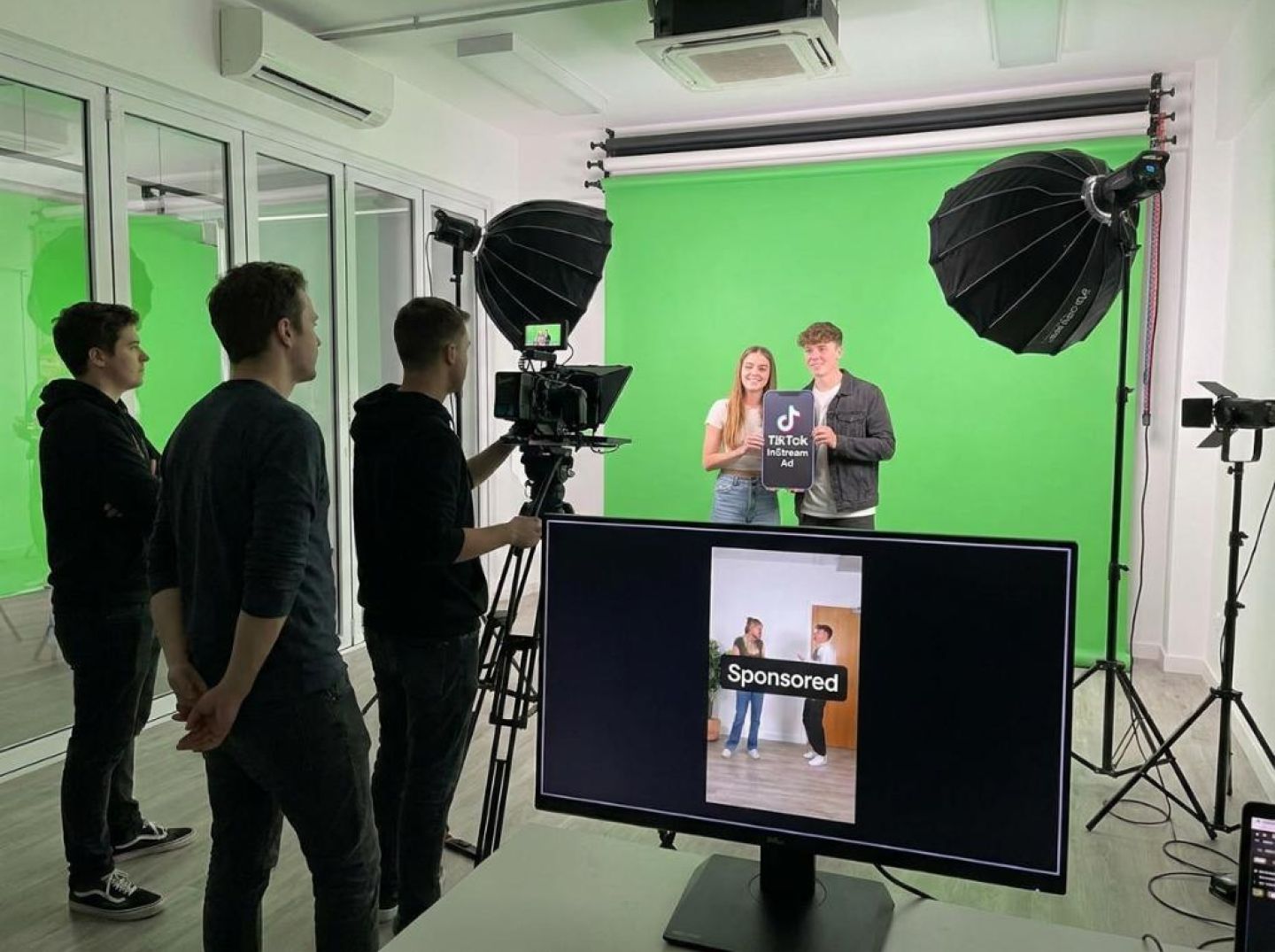
If you're an affiliate marketer repurposing a YouTube pre-roll or a polished Meta carousel video and dropping it into TikTok's in-feed or InStream placements, you're not just underperforming — you're paying full price for content the platform is structurally designed to punish. The data on this is no longer anecdotal. It's quantified, it's large-scale, and it explains a gap in affiliate performance that no amount of bid optimization can close.
The most damning evidence comes from Billion Dollar Boy's partnership with DAIVID, which used emotion-tracking technology to analyze 5,000 creator-led assets across TikTok and Instagram. The headline finding should be tattooed on the forehead of every affiliate creative director: assets that led with product, benefit, or brand messaging in the opening seconds saw view rates collapse by 44 percent, brand favorability drop by 12 percent, and consideration crater by 41 percent — compared to content that built a hook first and let the product arrive as the payoff rather than the pitch. For affiliate offers, where the entire monetization model depends on the viewer staying long enough to hear a call to action and click through, that 44 percent view-rate drop isn't a creative preference problem. It's a structural failure. You're losing nearly half your audience before you ever get to the link.
The same research found that demonstration-based content — showing the product in actual use, the before-and-after, the creator's genuine explanation — outperformed declarative "this product is amazing" messaging by 33 percent in brand favorability and 15 percent in consideration. Creators have understood this instinctively for years. The emotion-tracking data just puts a dollar figure on what brands lose by ignoring it.
TikTok's own ad infrastructure confirms the pattern from the platform side. As Neil Patel's analysis of TikTok's premium ad push details, Spark Ads — which boost creator-style organic posts as paid placements rather than serving traditional ad units — deliver 34 percent higher conversions than standard in-feed ads. That 34 percent gap isn't a fluke of one campaign or one vertical. It reflects an algorithmic reality: TikTok's distribution engine rewards content that feels native, and it throttles content that feels imported. For affiliates, Spark Ads effectively mean you can take a creator's genuine, already-performing organic post and amplify it with paid spend while retaining the distribution advantages that made it perform organically in the first place. That's a compounding advantage that no amount of polished production can replicate.
And if you thought the solution was to scale synthetic creator content with AI tools, TikTok is closing that door too. The platform has now labeled more than 3 billion AI-generated videos using Content Credentials, creator disclosures, and watermarking technology — and it's actively treating AI-generated content the same way it treats spam. Billo CEO Donatas Smailys offered a blunt interpretation of the crackdown: "Platforms don't spend money fighting content that works. They fight content that makes people scroll past." That distinction matters enormously for affiliate marketers evaluating whether to invest in human creator networks or AI-generated content farms. TikTok isn't making a moral argument about authenticity. It's making a business decision based on engagement data, and the business decision is that synthetic content degrades feed quality, reduces session time, and ultimately hurts the ad revenue engine that generated $33 billion last year.
The competitive moat for affiliates on TikTok InStream, then, isn't automation, production budgets, or volume of creative variants. It's the ability to source or produce human-led, platform-native content that the algorithm will actually distribute — content that hooks before it sells, demonstrates before it declares, and feels like something a real person made because a real person did. The affiliates already winning in this environment understand this at a creative-production level, and that operational knowledge is the real edge worth studying.
Every platform gives you some window into what competitors are running. Meta has its Ad Library. Google lets you preview search ads. But none of these environments reward the kind of rapid creative iteration that TikTok demands — and that difference is what makes TikTok InStream ad intelligence disproportionately valuable for affiliate marketers right now.
When we talk about "InStream spying," we're describing a specific, repeatable practice: systematically monitoring competitors' active ad creatives, landing pages, opening hooks, offer structures, and engagement signals using TikTok's native Ad Library alongside third-party competitive intelligence tools. The goal isn't idle curiosity. It's identifying which angles are surviving TikTok's ruthless algorithmic filtering, which hooks are earning watch time past the three-second mark, and which offer presentations are generating enough engagement to stay in rotation. Every ad you see running consistently on TikTok has already passed a market test that would have cost you money to replicate from scratch.
What makes this intelligence uniquely actionable is the sheer volume of creative being produced and discarded. TikTok's creative-velocity demands are now baked into the platform itself. Symphony, TikTok's AI creative suite, includes daily video generations — fresh, auto-generated ad variations customized to a brand's past performance data, designed to cycle out underperformers and scale winners automatically. As Social Media Examiner's coverage noted, the system is essentially doing what a dedicated ads manager does manually: watching what performs, then turning creatives on and off. When your competitors are generating and testing new variations every single day through platform-native AI tools, the library of market-tested creative signals available to anyone paying attention is enormous and constantly refreshing. You're not looking at a static catalog of last quarter's campaigns. You're watching real-time creative natural selection.
The specific signals affiliate marketers should be tracking include hook format and pacing in the first one to three seconds, the emotional or curiosity-driven angle used to frame the offer, whether the creative uses a creator face or product-only footage, the type of call-to-action and where it appears in the video, landing page structure and offer framing on click-through, and — critically — how long a specific creative stays in active rotation. Duration in rotation is a proxy for profitability. If a competitor's ad has been running for three weeks with consistent engagement, it's almost certainly cash-flow positive.
The urgency behind building this practice now comes down to cost. TikTok ads currently average a CPM of around $9, compared to roughly $15 on Meta — and as Neil Patel's analysis makes clear, that advantage is explicitly temporary. With only 26 percent of marketers currently running TikTok campaigns, auction competition remains suppressed. As adoption grows, CPMs will rise and the cost of validating creative hypotheses will climb with them. The intelligence you gather today reflects a less crowded environment where testing is cheaper, iteration is faster, and the penalty for a losing creative is a fraction of what it costs on more mature platforms.
This creates a compounding advantage. The affiliate marketers who are systematically cataloging winning hooks, offers, and creative structures now are building a playbook validated at $9 CPMs. When those CPMs inevitably rise toward Meta-level pricing, they won't be starting from scratch — they'll be optimizing from a foundation of market-tested knowledge that latecomers will have to acquire at two or three times the cost. Competitive intelligence is always valuable, but intelligence gathered during a pricing window this favorable is a strategic asset with a shelf life. The window is open. The question is whether you're looking through it.
Receive top converting landing pages in your inbox every week from us.
Recently Updated
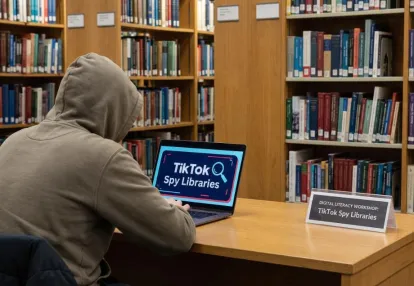
Learn how TikTok spy libraries can become a pre-testing engine for OOH creative, helping marketers identify winning hooks, formats, and messaging before deploying truck-side and DOOH campaigns. This guide presents a hybrid workflow for mining digital ad patterns, testing them digitally, validating them in physical environments, and feeding the results back into a reusable creative intelligence system.
Samantha Reed
7 minSep 23, 2026
Editor’s Pick
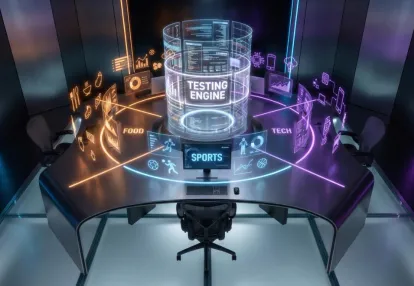
Discover how to turn food, sports, and tech trends into structured creative testing hypotheses instead of one-off ad ideas. Learn how to build vertical-specific blueprints, test them across Native, Push, Pops, and TikTok, and use performance data to continuously improve your creative strategy.
Dan Smith
7 minSep 20, 2026
Guide
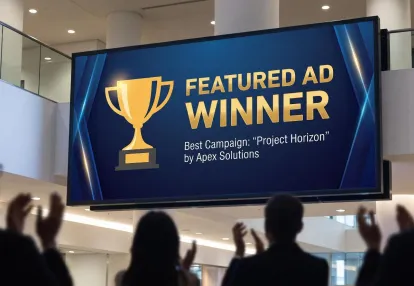
Award-winning ads can inspire powerful performance creative, but they need to be rebuilt for the way algorithms, feeds, and users behave across Native and TikTok. This guide shows how to reverse-engineer high-profile creative into scalable hooks, angles, formats, and AI-driven testing systems that can improve performance.
Elena Morales
7 minSep 19, 2026