6 minSeptember 23, 2026

Our spy tools monitor millions of TikTok ads from over 55+ countries. Biggest TikTok Ad Library in E-commerce and Mobile Apps!
Try It FREEMost people think the creative revolution is happening inside AI editors: one-click hooks, auto-cut B‑roll, instant captions. That’s the visible part. The real revolution is happening somewhere far less glamorous — in the “spy libraries” quietly reshaping how we decide what to make in the first place.
As platforms automate targeting, your ad doesn’t just persuade; it decides who even sees it. As one analysis of Performance Max, Advantage+ and TikTok’s recommendation engine points out, broad, AI-driven targeting means headlines, visuals, and scripts have become “the strongest signals for who sees your ads,” effectively turning creative into the new targeting layer itself, not just a downstream persuasion tool, as this MarTech deep dive argues. In other words, the algorithm is now reading your creative to figure out whom to hunt for.
If creative is targeting, then guessing is malpractice. That’s why the most advanced TikTok marketers don’t start in CapCut; they start in spy mode.
TikTok’s own ecosystem is quietly normalizing this. Instead of writing scripts from scratch, marketers are plugging into systems that surface what’s already winning at scale. In one breakdown of TikTok’s new workflow, Melissa Laurie walks through Content Suite — essentially a searchable, filterable ad library where you can browse creative by keyword, vertical, objective, recency, and geography, much like a friendlier version of Facebook’s Ads Library, but with AI-powered search across hooks, formats, and styles, as detailed in this Social Media Examiner walkthrough. Her first move isn’t “write a script”; it’s “search your own brand, then your competitors, then your whole category.”
That sequence matters. It reframes “creative” from an act of inspiration into an act of pattern recognition:
Browse for 30–60 minutes like this and you’re no longer spitballing ideas. You’re working from a living pattern library of first frames, CTAs, on-screen text, and pacing that are already clearing the performance bar in your market. Laurie explicitly tells first-time advertisers to sit down “with a cup of coffee and browse the library” before spending a cent, because that research “expands creative thinking and provides concrete models to work from,” as she explains in.
AI sits on top of that — but it’s not the main character. TikTok’s official AI “skills” (like Viral Video Creator) can now tap into millions of videos to propose structures for your own ads: hooks, middle beats, and closing CTAs modeled on what is already performing. Laurie estimates those skills get you to about “70%” of a strong concept; the rest is human originality and brand nuance, according to the same Social Media Examiner analysis. The important nuance: the AI isn’t conjuring brilliance from nowhere. It’s compressing trend data — a spy library distilled into prompts.
This is the real creative revolution: not that anyone can hit “generate,” but that anyone can stand on the shoulders of the entire paid social universe before they shoot.
You can see the same logic in how smarter TikTok advertisers are building a broader “creative supply.” Instead of a handful of hero videos, they’re assembling systems: brand assets, creator UGC, and TikTok One collaborations that can be remixed and tested across multiple concepts and objectives, a strategy highlighted in HubSpot’s breakdown of high-impact TikTok campaigns. In practice, that means you’re not just copying a single winning format you spot in a library — you’re building your own modular inventory of hooks, angles, and visual worlds, informed by what the spy tools tell you the algorithm is currently rewarding.
The marketers who win the next decade won’t be the ones with the fanciest AI editor. They’ll be the ones who treat creative like product development: anstrex.com/blog/the-ai-transparency-trap-why-the-consumers-distrust-ai-content-finding-actually-advantages-savvy-performance-marketers" target="_blank" rel="noreferrer noopener">market research first, pattern library second, production third. The “spy library” isn’t a nice-to-have research hack. It’s the new brief.
Digital marketers are spoiled. If you run a TikTok, Meta, or Google campaign today, you can see which hook drives the cheapest qualified lead by dinner. You can spin up twenty variants, let the platform’s automation sort winners from losers, and have your CRM feeding back which clicks turned into paying customers. It’s not just measurement; it’s x‑ray vision on what’s working and why.
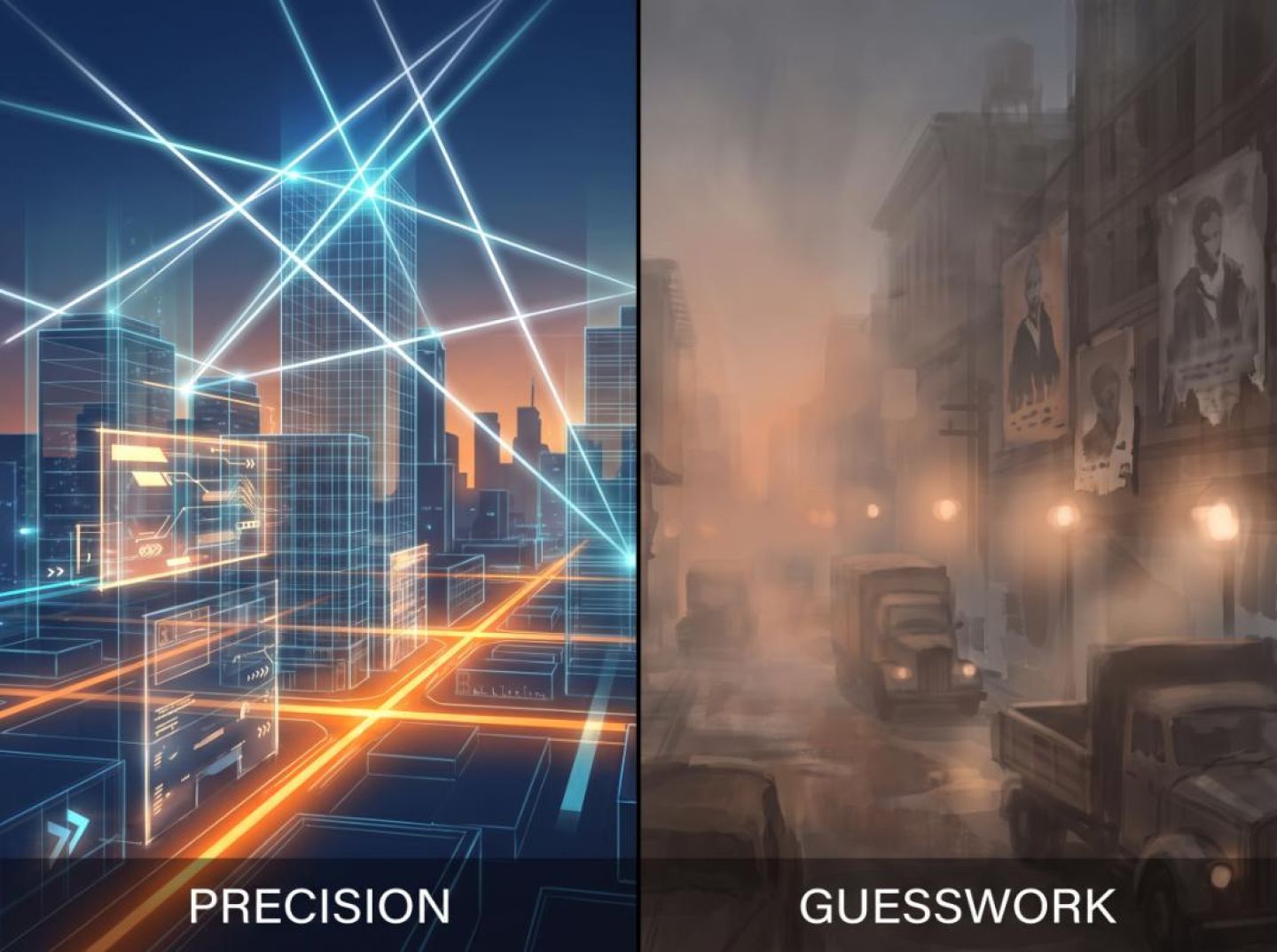
That visibility isn’t an accident. It’s the result of a decade of platforms wiring together three things OOH still largely lacks: automated distribution, continuous feedback loops, and standardized “spy libraries.”
On the digital side, the media pipes are already fully plumbed. TikTok’s Smart+ and similar systems don’t just show your ads; they automatically test combinations of audiences, bids, and creatives, then reallocate spend in real time. As the team at HubSpot notes, when you connect TikTok directly into your CRM, campaign‑level insights sync automatically and lifecycle data flows back into the platform, so the algorithm is constantly learning which impressions turned into revenue, not just clicks, inside a single integrated loop of creative → targeting → outcome.
At the same time, the platforms have weaponized creative as a targeting signal. As one MarTech analysis puts it, broad targeting has effectively turned “creative into the new targeting.” You’re pushed toward Performance Max, Advantage+, and TikTok’s automated expansion, where you hand over control of audience knobs and instead communicate your intended buyer through the content itself — the headline, the visual, the call to action. The system watches who responds to which creative patterns and uses your ad to decide who should see the next one.
None of this works without deep instrumentation. TikTok isn’t just guessing which videos resonate; it’s already tagging billions of clips as AI‑generated, tracking content provenance via C2PA credentials, and testing detection systems at the account level to understand who is posting what, about which topics, and how users respond. As one recent report on their spam enforcement explains, TikTok has dismantled over 86 million fake accounts in a single quarter and is now tuning its models around sensitive verticals like politics, financial advice, and medical content — all of which requires fine‑grained, real‑time reading of content and behavior across the platform’s entire video library.
In other words: the digital ecosystem runs on live, structured, standardized feedback. Every ad impression is an experiment. Every creative variation becomes a data point in a constantly growing spy library that you can query by objective, audience, format, and outcome. Creators and brands make better content not because they’re more inspired, but because the system tells them, every hour, which formats, framings, and hooks just moved the needle.
Now compare that to how most OOH still operates.
A national brand spends seven figures on billboards, transit shelters, or even high‑impact formats like LED trucks. They get traffic counts, a modeled reach estimate, and maybe a post‑campaign survey. If they’re lucky, they’ll see an aggregate lift in branded search and some incremental site traffic — weeks later. In the absence of clean, standardized feedback, OOH defaults to the bluntest possible questions: “Did awareness go up?” “Did we see lift in the market?” It’s like trying to optimize TikTok creative based only on quarterly revenue.
The result is that OOH is often misjudged or killed outright. In a much‑cited case, Saatva added OOH after hitting a performance marketing ceiling and, by a direct‑response attribution lens, the campaign looked like dead weight. When the team rebuilt their framework to consider in‑store visitation, brand‑direct traffic, search lift, and recall over a lagged period that matched their buying cycle, they discovered OOH was actually their highest‑performing channel, fundamentally reshaping the brand’s growth strategy and validating a nine‑year head start on competitors still measuring it wrong.
What’s missing is not just better math, but the structural equivalent of digital’s spy libraries. There is no shared, queryable corpus of “OOH creative + context + outcome” the way there is for TikTok hooks or Meta UGC ads. Even the most advanced mobile OOH — like LED billboard trucks that route against real human movement patterns, competitor locations, and behavior segments, essentially acting as precision media vehicles rather than static signs — are rarely plugged into a feedback loop that can tell you, across hundreds of campaigns, which creative archetypes work best for which routes, time windows, or audience clusters.
Digital has x‑ray vision because it has standardized the experiment: consistent formats, always‑on tracking, platform‑native analytics, and ever‑growing creative libraries encoding what works. OOH is still flying mostly on instruments designed for a pre‑algorithm world — panel surveys, modeled lift, and sporadic brand studies.
The opportunity isn’t to make OOH more like “digital banners on a highway.” It’s to build the missing playbook: the spy libraries, test rigs, and measurement frameworks that let physical creative participate in the same feedback‑rich, pattern‑driven ecosystem that’s made TikTok and its peers so unnervingly efficient.
If Section 2 was about digital’s “x‑ray vision,” this is where we start stealing that vision for out-of-home.
TikTok already comes with a built‑in pattern library — millions of ads being graded in real time by both humans and algorithms. The mistake OOH teams make is treating this as “some social thing” instead of the single richest source of ready‑made creative patterns on the planet.
The trick is to stop asking “What’s a good TikTok?” and start asking “What kind of TikTok reliably moves strangers from cold scroll to concrete action — and can that shape a billboard or truck‑side?”
TikTok’s own AI “skills” are essentially sanctioned spy tools. As Social Media Examiner explained, the Viral Video Creator skill mines millions of videos to surface top‑performing ads and break them down into hook, middle, and call to action. Most marketers use that to crank out more TikToks. You should be using it as a pattern extractor.
Instead of copying scripts, catalog formats:
Those are templates, not TikToks. Stripped of sound and motion, the best of them become OOH‑native patterns:
You’re not porting content; you’re porting logic.
As platforms automate targeting, creative has become a targeting signal. According to MarTech’s analysis, Google, Meta, and TikTok are all pushing broad, AI‑driven campaigns where your video itself tells the system who should see it. That’s exactly what OOH has never had: hard feedback on which messages self‑select the right people.
You can fake it.
3. Watch cost deltas as signal, not gospel.
As Social Media Examiner notes, TikTok’s AI will happily nudge you to pause new creatives because legacy ads have cheaper results. Ignore early recommendations. For OOH scouting, you care less about absolute CPA and more about relative resonance between lines over a few days of equal spend.
An OOH “test flight” might be ten variants of a truck‑side headline, each as a static TikTok ad with a simple lead or add‑to‑cart CTA. The two or three that draw out‑sized engagement and conversion among the right segments earn the privilege of physical production.
Short‑form is hypersensitive to context. Research summarized by SilverPush shows TikTok trends spike and decay in 48–72 hours, with both opportunity and brand‑safety risk compressing into that same window. That volatility is your lab for OOH context decisions.
You’re looking for three things:
TikTok itself is starting to erase the line between in‑feed and IRL. As Social Media Examiner reported, TikTok’s “Out of Phone” program is syndicating creator videos to gym screens, taxis, supermarkets, bars, and malls across Europe. That’s essentially DOOH powered by social creative.
Instead of waiting for your media partners to explain it to you, reverse‑engineer it:
Those motifs are the missing link between an algorithm‑picked hook and a truck‑side execution your media buyers can actually ship.
Mining TikTok and other native platforms this way turns them from inspiration feeds into structured spy libraries. You’re not just watching trends; you’re extracting repeatable patterns, pressure‑testing them in
The bridge between a TikTok “spy library” session and a truck-side A/B test is not magic. It’s a workflow. And once you see it as a workflow, you can start to industrialize it.
It looks like this: watch → tag → translate → simulate → ship → validate.
Your creative team’s first job isn’t to write a line of copy; it’s to sit inside TikTok’s recommendation engine and watch it work. As platforms shift toward broad, AI-driven targeting, creative has become the primary signal that tells algorithms who should see an ad, not just what they see. As one analysis of Performance Max, Advantage+, and TikTok’s own systems points out, “creative is now a targeting signal,” not just a persuasion tool, because headlines and visuals help the machine decide which sub-audiences will engage most intensely with a piece of content (MarTech).
In practice, that means your “spy library” review is not random browsing; it’s structured pattern mining. You’re looking for repeatable hooks, story arcs, and visual devices that the algorithm is clearly rewarding with reach and engagement in your category.
Every promising TikTok or native unit goes into a shared log with a few key tags:
This is where you borrow from the way top TikTok advertisers already operate. Advanced teams build “real creative supply” by mixing brand assets, UGC, and creator collabs, then let campaigns reveal which ingredients actually move qualified leads, rather than just views, as described in HubSpot’s breakdown of high-impact TikTok setups (HubSpot). Your tagging system should mirror that discipline: you’re not tagging for vibes; you’re tagging for performance hypotheses.
A good internal spy library entry might read:
Dental anxiety / ‘I put off the dentist for 10 years’ confession / close-up of mouth / big text overlay / ends with 1 simple question.
From here, you’re not copying the ad. You’re extracting the pattern.
Next, you port those social-native patterns into concepts that can survive on a moving truck or a roadside board.
Ask three translation questions:
3. What is the built-in qualifier?
Digital platforms increasingly optimize toward “qualified lead” behaviors, like quiz completions or deep-funnel actions. In one case, Invisalign used an in-ad quiz on TikTok to pre-qualify interest and saw a 28% higher form completion rate and lower CPAs because the creative itself generated a signal of intent (HubSpot). Your OOH version can’t host a quiz, but it can borrow the structure: ask a self-sorting question in five words, or create a “this is for you if…” line that filters passersby.
For example, the social hook “I ignored my back pain for 6 months… then this happened” might become a truck-side line:
Still putting off your back pain?
Scan when you’re ready to fix it.
Same emotional journey, zero reliance on sound or multi-step storytelling.
Before you wrap a fleet, run a lightweight digital simulation round.
Take your top 10–15 OOH-ready lines and:
The point is not to find perfect OOH winners. It’s to eliminate obviously weak ideas by seeing which headlines naturally attract the kind of engagement that correlates with real intent. Marketers already use CRM connections and pixels to feed these signals back into TikTok and improve qualification (HubSpot); you’re piggybacking on the same loop, but your output is a shortlist of OOH candidates, not another batch of social ads.
Now bring the digital discipline outside.
Where TikTok’s systems use watch time and interaction patterns to separate spammy or low-quality accounts from credible ones in sensitive categories like medical or financial advice (Search Engine Journal), your OOH measurement layer is doing something similar: distinguishing mere curiosity from genuine intent via the actions that follow exposure.
The final step is the one most teams skip: closing the loop.
When a truck-side line outperforms, don’t just note that it “worked.” Go back to your pattern tags:
Update your spy library with that verdict. The next time you’re mining TikTok, you’re not starting from scratch; you’re looking for patterns that rhyme with what your trucks have already proven in the wild.
Over time, this hybrid workflow shifts OOH from opinion-driven art direction to a repeatable system. TikTok becomes less of a distraction and more of a high-velocity R&D lab, and truck-sides become less of a gamble and more of a scaled deployment of patterns you’ve already seen win—twice.
Digital out-of-home is where your spy-library insights finally collide with the real world.
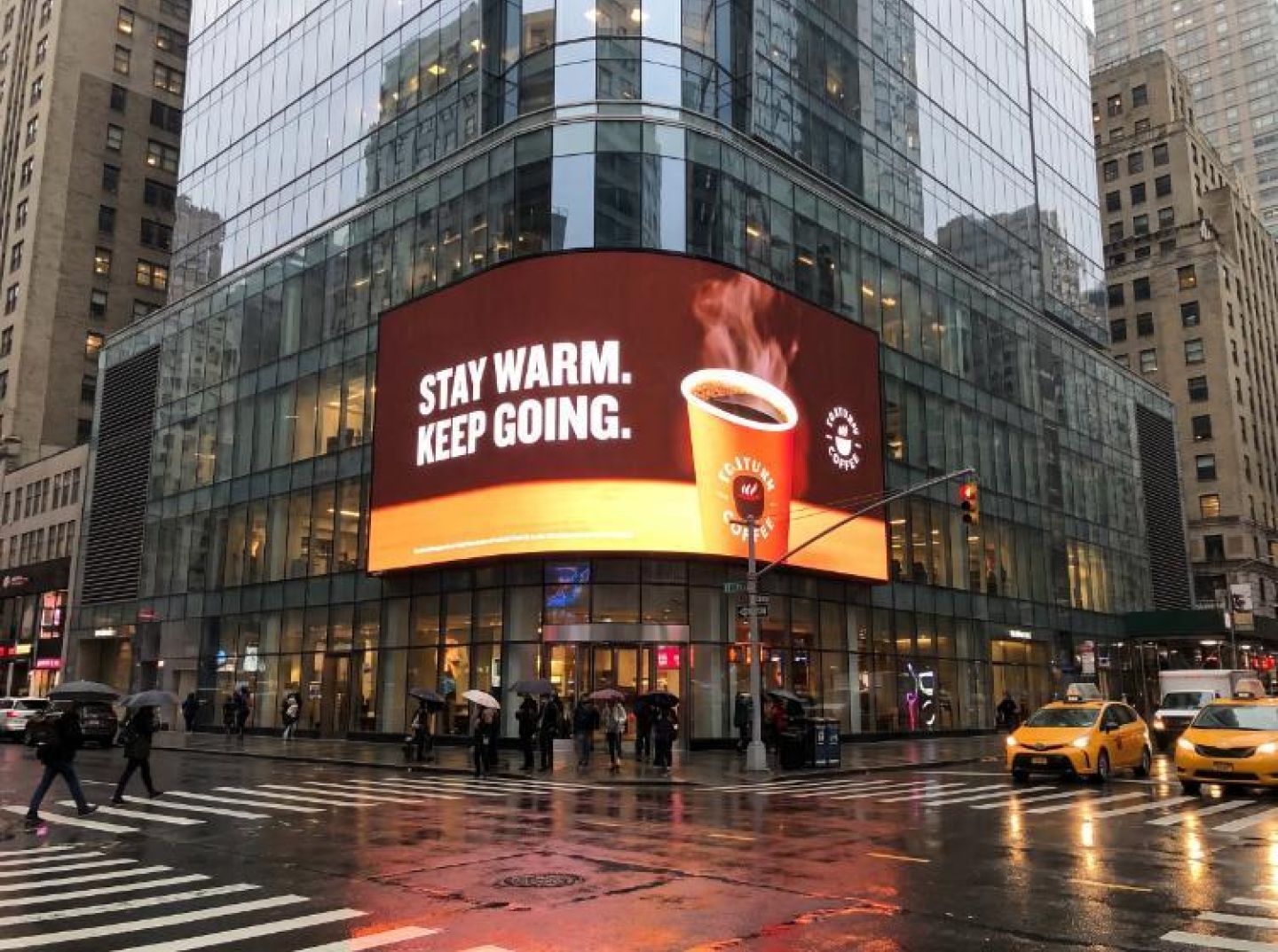
Social feeds are where patterns emerge; streets, stores, and venues are where those patterns get paid. The problem is that most brands still treat social and OOH as separate universes: one run by performance marketers watching dashboards, the other by media buyers negotiating square footage. DOOH is the connective tissue that lets you take proven TikTok patterns and weaponize them across physical space.
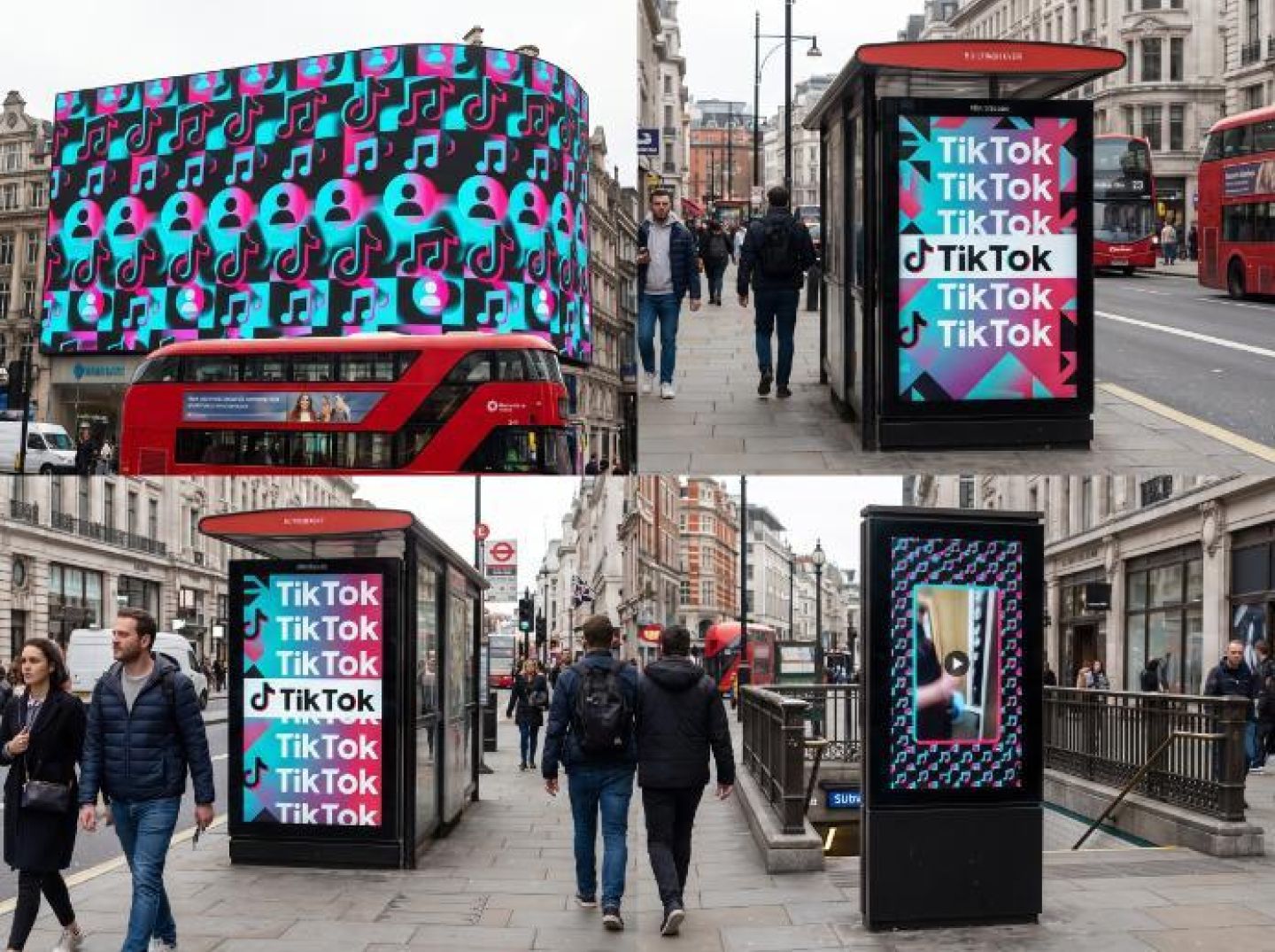
The platforms themselves are already pointing the way. TikTok is literally pushing its content “out of phone,” extending creator videos into gyms, taxis, supermarkets, bars, and shopping centers across Europe via new media partnerships that turn everyday environments into a natural extension of the For You feed, as Social Media Examiner describes. What looks like a distribution play is actually a creative architecture: the same short-form units, the same rhythms, now running on screens you walk past instead of scroll past.
When targeting is handled by algorithms, creative becomes the real lever. Across Google, Meta, and TikTok, broad, AI-driven targeting is making your headlines, visuals, and hooks the primary signal for who should see an ad, a shift that MarTech calls “creative as the new targeting.” DOOH lives in that same universe. A three-second motion loop on a forecourt screen, a five-word truck-side headline, a QR code in a transit shelter — these are no longer just persuasion tools. They’re qualification signals for both people and machines: they tell the algorithm who’s likely to care, and they tell a passerby whether this message is “for me” in a literal instant.
That’s why DOOH is the missing link, not a downstream afterthought. It’s the first physical environment where you can:
Crucially, DOOH lets you bring feed logic into places where feeds barely exist. The truck parked outside a trade show is a retargeting impression for the people who saw your TikTok explainer the night before. The elevator screen running a 6-second visual demo turns a generic “brand awareness” buy into a bottom-funnel nudge for anyone who already engaged with the same creative in-app. TikTok is already experimenting with proving authenticity and provenance across billions of videos using C2PA credentials and watermarking, as Search Engine Journal reports; DOOH is where you mirror that discipline in the physical world by being just as intentional about what runs where, and why.
The deeper shift is psychological: once you see DOOH as an extension of the feed instead of a billboard with a JPG on it, your questions change. You stop asking, “What should our OOH concept be this quarter?” and start asking, “Which TikTok patterns are winning right now, and how do we express them on trucks, in lobbies, and on forecourts this week?”
That’s the missing playbook: not inventing a separate OOH language, but using DOOH to let your best social patterns escape the feed and start earning their keep in the physical world.
Guardrails are where the TikTok playbook stops being portable. There are whole categories of ideas that should never make the jump from “spy library fodder” to “truck-side test” — not because they won’t work, but because they can’t be made safe, truthful, or net-positive once they leave the feed.
The first bright line is high‑risk topics. TikTok itself has had to clamp down on AI‑generated spam around politics, finance, and health — three areas it now explicitly calls out as zones where misleading content can damage public trust or well‑being, and where it has already removed tens of millions of fake accounts in a single quarter, according to reporting on TikTok’s recent enforcement and C2PA work from Search Engine Journal. If TikTok, with full control over context, comments, and distribution, is struggling to keep those narratives clean, you cannot safely rip their patterns and plaster them on a 14‑foot LED wall rolling through downtown.
That “public trust” risk is multiplied in DOOH because context is thinner and scrutiny is lower. A 6‑second drive‑by impression has no comments, captions, or stitches to qualify the message. If your spy library says that “five‑second hacks to lower your cholesterol” hooks like crazy, that is exactly the kind of pattern that dies at the guardrail. In a feed, a user can click through, argue, report, or ignore. On a truck, it’s a unilateral health claim broadcast to everyone — kids, seniors, regulators — with zero opportunity for nuance or correction.
Brand‑safety specialists on short‑form platforms have been blunt that you can’t treat all “high‑attention” topics as fair game. Research summarized by SilverPush shows that TikTok trends peak — and risks spike — in 48–72 hours, and that a single category label (“news,” “challenge,” “wellness”) tells you almost nothing about tone or intent. They argue for content‑level interpretation and layered safeguards because the same hashtag can host wholesome participation and hateful riffs in parallel. That logic should follow you onto the street. If you can’t reliably separate the safe narrative from the unsafe one, you don’t adapt the pattern; you walk away.
The second guardrail is algorithm‑shaped controversy. Part of what makes TikTok such a powerful spy environment is that the recommendation engine is ruthlessly good at surfacing content that provokes. As automated targeting has broadened on TikTok, Meta, and Google, creative itself has become one of the strongest signals for who sees an ad, a shift described as “creative as targeting” by MarTech. On TikTok, that often means the winning pattern is the one that slices deepest into an identity, tension, or wound: “You’re washing your face wrong,” “Your doctor won’t tell you this,” “If you’re over 35, watch this now.”
Those are powerful hooks to study. They are terrible defaults for public space. When creative is used as a targeting signal in a feed, the algorithm can selectively show a provocative message to people most likely to respond. When you put the same mechanic on a truck, you lose that selectivity. Everyone sees the same identity jab, including people for whom it is exclusionary, shaming, or outright dangerous. You’ve taken a pattern designed for micro‑targeted outrage and turned it into mass‑media collateral damage.
A third guardrail: anything that depends on opacity, shock, or misdirection for its payoff. TikTok creative thrives on bait‑and‑switch formats — “wait for it,” fake scandals, mock emergencies, jump cuts that reveal the sponsor in second eight. That’s fine when the user has chosen to be in an entertainment environment and can swipe away. On a highway, an opaque “Don’t look up” headline on the side of a truck isn’t clever; it’s a safety hazard. You don’t get to import engagement hacks that rely on distraction into a medium where the viewer is moving at 50 miles an hour.
The same principle applies to claims that only barely survive in a performance silo. Inside TikTok Ads Manager, you’re (hopefully) tethered to your CRM, conversion events, and first‑party data, so the system can optimize toward real business outcomes, as the TikTok–CRM integrations described by HubSpot’s marketing team make clear. That feedback loop can suppress underperforming or misleading messages quickly. On a DOOH truck, there is no built‑in optimization engine quietly disciplining your worst instincts. If you port over a spy‑library line that only ever “worked” because Smart+ or Advantage+ found the narrow slice of people willing to tolerate it, you’re now forcing that same message onto everyone, with no algorithmic buffer and a much longer tail of unintended effects.
Finally, DOOH’s role in the mix demands longer‑term thinking than your TikTok dashboard encourages. Out‑of‑home’s impact shows up in organic search, direct traffic, and brand recall over weeks, as case studies around OOH‑driven lift and the risk of “measuring it wrong” have shown in analyses of LED truck campaigns cited by OOH Today. If you only chase the sort of patterns that spike clicks in 24 hours, you will systematically over‑import the edgy, polarizing, or borderline‑ethical tricks and under‑import the durable, reputation‑building ideas that make DOOH worth the spend.
The playbook you’re building is powerful precisely because it industrializes attention. Guardrails are how you keep that industrial process from chewing through your brand, your customers, or the communities your trucks drive through. Some TikTok patterns should stay where you found them — in the feed, inside your swipe file, and out of the real world.
Receive top converting landing pages in your inbox every week from us.
Recently Updated
Learn how TikTok spy libraries can become a pre-testing engine for OOH creative, helping marketers identify winning hooks, formats, and messaging before deploying truck-side and DOOH campaigns. This guide presents a hybrid workflow for mining digital ad patterns, testing them digitally, validating them in physical environments, and feeding the results back into a reusable creative intelligence system.
Samantha Reed
7 minSep 23, 2026
Editor’s Pick
Discover how to turn food, sports, and tech trends into structured creative testing hypotheses instead of one-off ad ideas. Learn how to build vertical-specific blueprints, test them across Native, Push, Pops, and TikTok, and use performance data to continuously improve your creative strategy.
Dan Smith
7 minSep 20, 2026
Guide
Award-winning ads can inspire powerful performance creative, but they need to be rebuilt for the way algorithms, feeds, and users behave across Native and TikTok. This guide shows how to reverse-engineer high-profile creative into scalable hooks, angles, formats, and AI-driven testing systems that can improve performance.
Elena Morales
7 minSep 19, 2026