Native Ads, Pop Ads, Push Ads, TikTok Ads
10 minSeptember 20, 2026

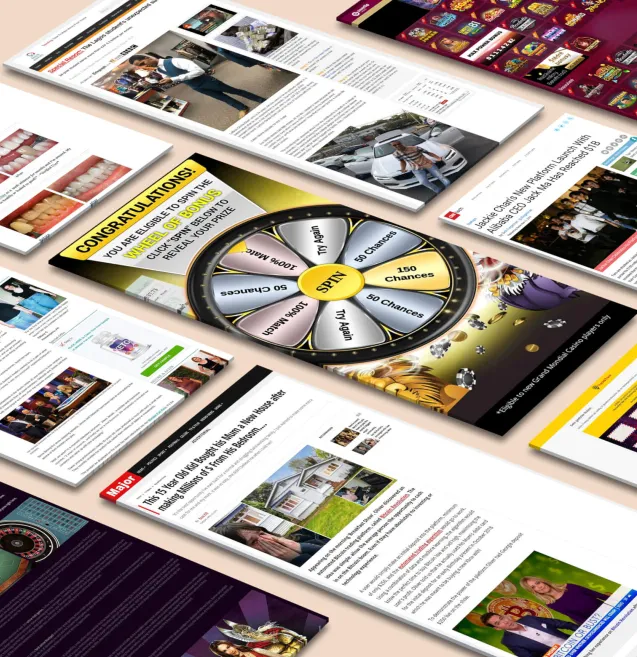
Our spy tools monitor millions of native ads from over 60+ countries and thousands of publishers.
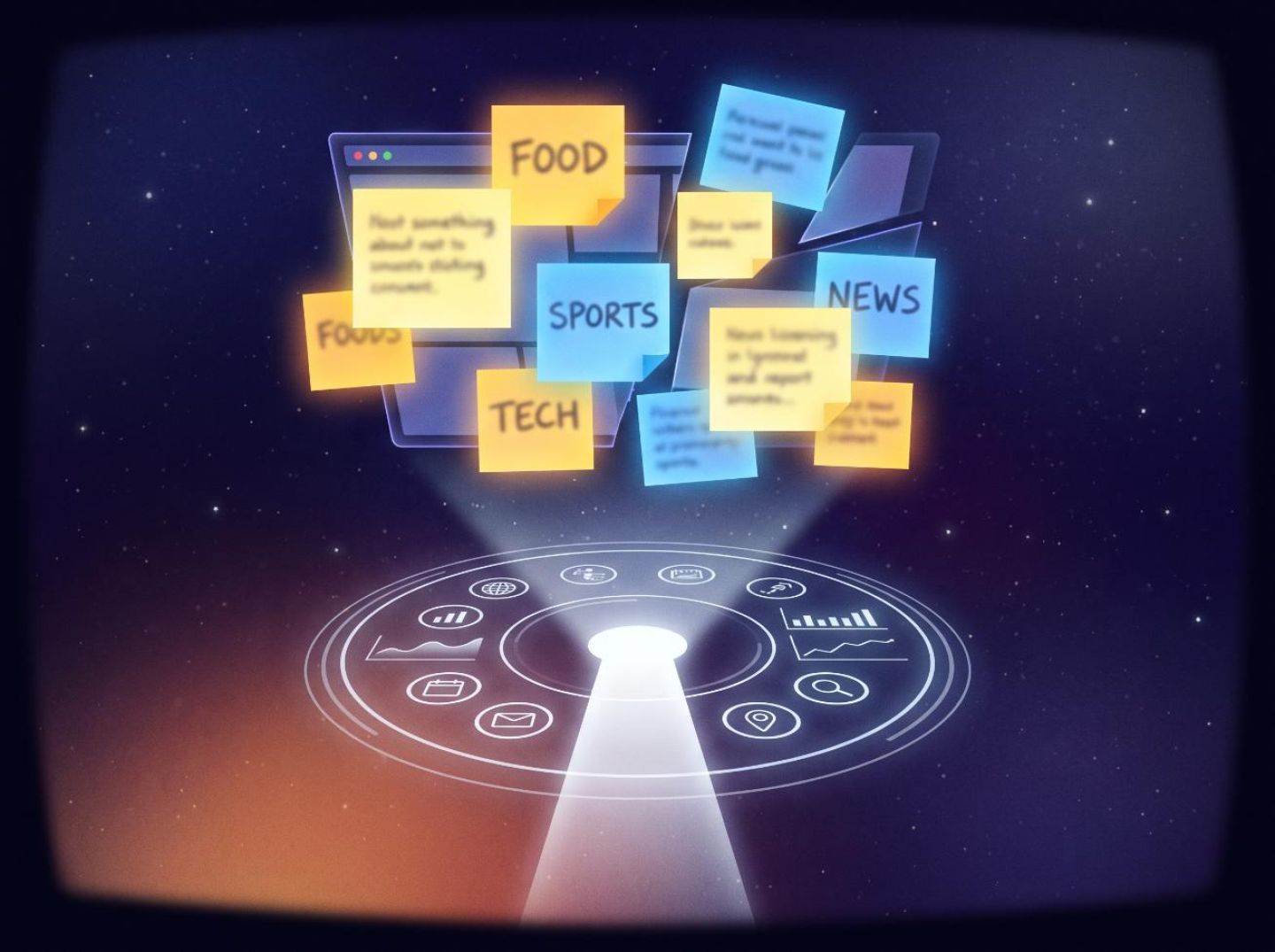
Get StartedMost media buyers treat vertical tags like “Food & Drink,” “Sports,” or “Technology” as nothing more than filters in a dashboard—handy for a QBR screenshot, useless the moment you close the report. You scroll through Anstrex, tag a few spy screenshots “food,” send them to a designer, and hope one of them becomes your next “great ad.”
Meanwhile, the platforms you’re buying on are quietly rewriting the rules.
On Google, Meta, and TikTok, AI-driven products like Performance Max and Advantage+ have pushed targeting away from granular media knobs and toward broad, algorithmic decisioning. As one analysis of this shift puts it, creative has effectively become “the new targeting,” with your headlines, visuals, and videos now acting as core signals that help platforms decide who should see an ad and how aggressively to bid on them, rather than just how to persuade them once they do see it, as.
That’s a problem if your only “system” for creative is:
In a world where algorithms do the audience picking, your vertical isn’t just a label—it’s one of the sharpest lenses you have on what creative signals the machines are learning from. But you only get leverage from that lens if you treat vertical trends as test hypotheses, not as static categories.
TikTok is the clearest example of how this gap shows up in real performance. The platform’s best ads don’t look like ads at all; they blend into the content feed so well that the line between organic and paid almost disappears. That native quality is exactly why TikTok’s engagement rates run up to eight times higher than Instagram and why its ad revenue is growing at more than 40% year over year, according to an analysis of TikTok’s premium ad push on Neil Patel’s blog. When you see a “food” ad winning there—a ramen taste test, a chaotic fridge restock, a creator reacting to a “dupe” recipe—you’re not just looking at a theme. You’re looking at a specific combination of pacing, framing, and emotional payoff that TikTok’s algorithm has already decided is worth aggressively distributing.
The same is happening in search and video, where “creative that moves people” is showing up as measurable demand. When Fox Sports aired its “Miracle” campaign around a major sports tentpole, emotionally charged video spots led to a spike in branded search volume—a real-time signal that the creative was generating intent, not just impressions, as MarTech’s coverage of search–video feedback loops points out. That lift isn’t a nice-to-have vanity metric; it’s a creative brief for what to make more of.
Yet most performance teams never connect those dots. Native buyers see a keto supplement ad dominating “Health & Fitness” on Anstrex and, at best, clone the headline and thumbnail for Taboola. Push buyers notice a “Sports” angle working around game time and increase bids for a few hours. TikTok buyers copy an audio trend and call it a day. No one is building a cross-channel system that:
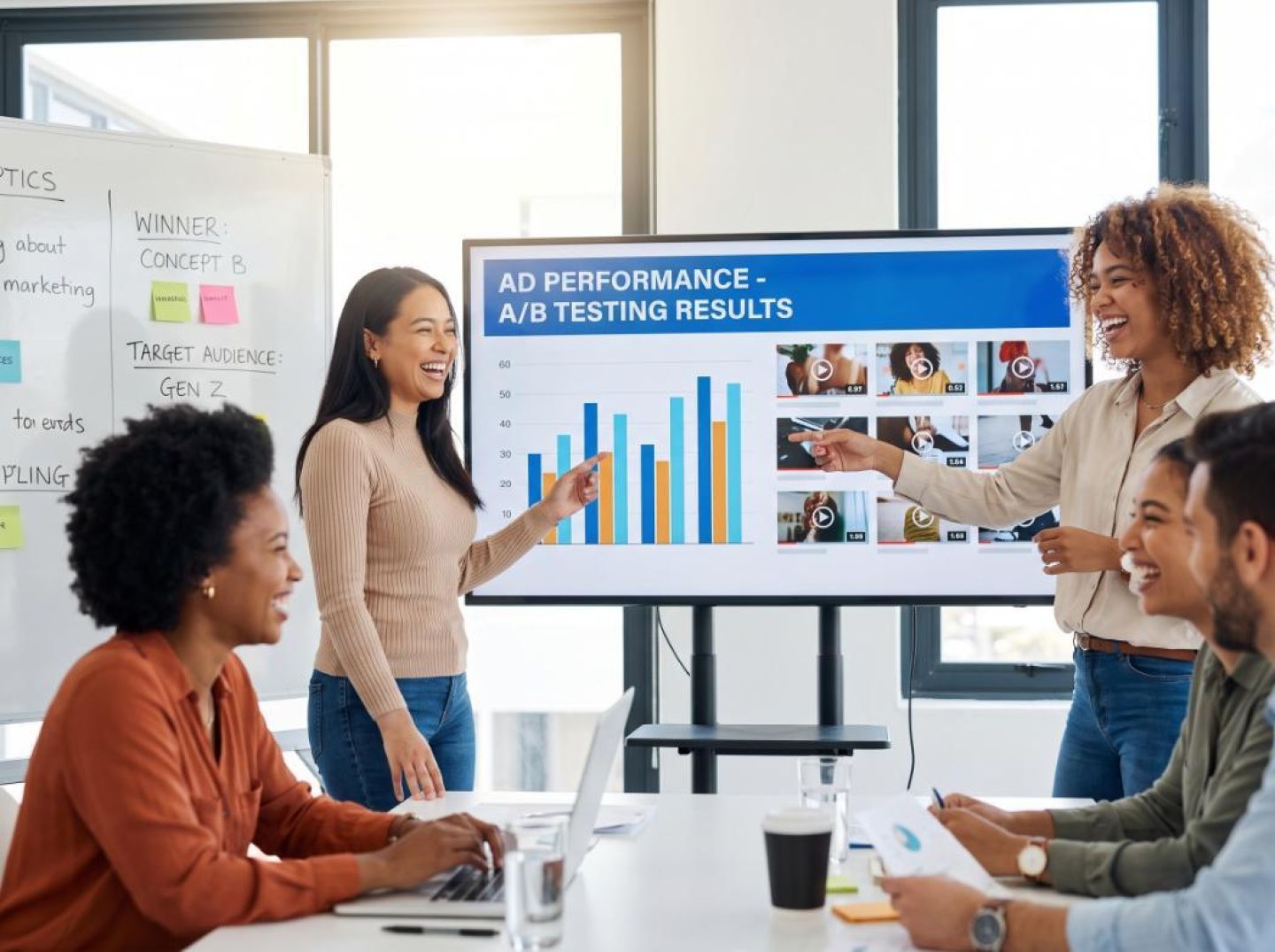
This is where the vertical labels you already use can become a competitive weapon. Benchmarks across industries consistently show that the biggest gains come not from a single “hero” ad, but from relentless, structured variation of creative elements—messages, hooks, offers—tested against actual conversion outcomes, as ongoing experimentation advice from the WordStream benchmarks report underscores.
In other words: the affiliates quietly scaling across native widgets, push, pops, and TikTok aren’t just “good at creative.” They’re good at turning vertical patterns—what food buyers are clicking at 11 p.m., what sports fans search after a big game, what tech headlines drive curiosity—into a testing machine the algorithms can learn from.
This article is about building that machine. Not another gallery of “great ads,” but a practical, vertical-driven creative testing system that turns the messy firehose of trend signals from tools like Anstrex into a repeatable way to lift conversions across every channel you buy.
Most teams still talk about “great ads” the way sports fans talk about highlight reels: you remember the buzzer-beaters and walk-off homers, not the tedious practice that made them possible. But in performance marketing, obsessing over isolated winners is exactly what keeps your account fragile, slow to adapt, and overly dependent on luck.
Platforms have already moved on. Meta, Google, TikTok, and programmatic exchanges are increasingly built around systems that reward continuous variation and rapid learning. Creative is no longer a static file you upload; it’s a stream of signals the algorithm interprets. Dynamic Creative Optimization, for example, behaves like “doing A/B testing simultaneously” across copy, images, layouts, and more, then automatically pushes spend into the best combinations in real time, as the team at MobileAds explains. That’s not a single “great ad”—it’s a creative factory.
If your internal process is still “spy → mock up → launch → hope,” you’re out of sync with how the auctions actually work.
You see this misalignment most clearly when accounts scale. A sports betting brand finds one killer UGC testimonial. A CPG brand in food nails a mouthwatering 6-second vertical. A SaaS tool in tech hits on a clean product demo. Each team crowns its ad a “winner,” duplicates it a few times, tweaks a headline, and calls it a day.
Then performance decays.
CPMs climb as frequency rises. Fatigue sets in. The algorithm runs out of fresh combinations to test. Instead of learning why the ad worked—what angle, what structure, what visual tension—teams keep refreshing the same surface-level idea. That’s the creative equivalent of replaying a single game plan every week in the NFL and being shocked when defenses adjust.
A true creative testing system flips the focus from outcomes (this ad had a 3.8% CTR) to inputs (this hook, this angle, this format produced that result). It treats every impression as a data point in an ongoing experiment, not a referendum on whether your designer is “good at ads.”
This is exactly how the more sophisticated sides of the ecosystem already behave. Dynamic creative setups can auto-test elements like “ad copy, button color, images, text, and headlines” while dynamically aligning creative to context such as placement, device, location, and even weather, as outlined in MobileAds’ breakdown of DCO. Rich media ad serving takes it further: with every in-ad interaction trackable, the unit becomes a “micro-website” that yields granular creative stats you can use to refine messaging, visuals, and interactive elements, according to their guide on rich media ad serving.
On the social side, performance practitioners are quietly converging on the same philosophy. Instead of fighting platform automation, they’re embracing the idea that “your creative is your targeting” and letting Meta optimize against a clear conversion signal, as one strategist put it in WordStream’s latest Facebook benchmarks analysis. That approach only works if you are constantly feeding the machine a structured diet of new variables—different hooks for foodies vs. casual snackers, different framing for die-hard fans vs. fantasy players, different problem-agitate-solve narratives for IT buyers vs. founders in tech.
It’s not enough to occasionally swap in a new visual. The benchmarks data discussed by WordStream stresses that consistent creative testing—across imagery, headlines, messaging, and format—is what actually compounds results over time. Sporadic, one-off tests are like running a single sprint every few weeks and wondering why your marathon time doesn’t improve.
This is where vertical nuance matters. Food, sports, and tech don’t just have different audiences; they have different consumption rhythms and signal density.
A food brand might rely heavily on thumb-stopping visuals and dayparting around mealtimes. A sports brand can piggyback on live events, off-season narratives, and constantly shifting star storylines. A tech brand often needs education, objection handling, and social proof woven into multiple touchpoints. Each of these realities gives you distinct testing surfaces: time-based triggers in food, storyline arcs in sports, feature vs. benefit framing in tech.
But the underlying system is the same. You establish a repeatable way to:
Industry news underscores how rapidly the environment is evolving in favor of systems thinkers. TikTok’s ongoing expansion of ad tools and formats for richer engagement, highlighted in Social Media Examiner’s coverage of new TikTok ad experiences, means that winners will be those who can quickly test and adapt creative to new surfaces—comment polls, carousels, live extensions—rather than those hoping one sparkly video carries their whole quarter.
In other words: you don’t need better taste in “great ads.” You need a repeatable, vertical-aware creative testing system that turns trends in food, sports, and tech into structured experiments. The rest of this article will show you how to build exactly that.
Most advertisers use Anstrex the way they use Instagram: they scroll, they screenshot, they move on. To turn it into a creative testing engine, you need a repeatable way to mine vertical trends—especially in crowded categories like food, sports, and tech—then translate what you find into reusable patterns your team can test on autopilot.
Here’s how to do that without drowning in “inspiration.”
Instead of saving one-off “great ads,” treat Anstrex like a research panel.
Pick a single vertical (say, food delivery) and define a narrow slice of the market:
Then, sample dozens of creatives that meet those filters. Your goal isn’t to copy any single ad; it’s to see what keeps repeating when performance pressure is high. As the team behind Voluum’s tracker points out, the only way to know what works is to “test, track, and analyze” against concrete performance data, and Anstrex is effectively a pre-filtered gallery of what survived that process at scale on native networks, where.
Once you have a batch of food, sports, or tech ads, strip them down to atomic parts:
Do this separately per vertical:
You’re not hunting for magic words. You’re cataloging patterns under real auction pressure—the same patterns that AI‑driven creative systems lean on when they recombine headlines, visuals, and CTAs to find winning pairings, the way modern DCO platforms dynamically test and assemble creative elements.
Now convert what you see in food, sports, and tech into cross‑vertical templates your team can fill in.
For example:
Each template is just a pattern you observed in a winning vertical—now expressed in a way your copywriter can adapt to any offer. This mirrors how AI in AdTech recombines headlines, images, and CTAs to personalize messaging at scale: you’re building the human version of those combinatorial rules.
Your end product from Anstrex research shouldn’t be a pile of images; it should be a living library:
Crucially, you’ll use this library to drive structured tests—not vibes. Teams that win on platforms like Meta are already treating creative as their targeting, constantly iterating visual and message combos to see what resonates with each audience segment, just as performance strategists emphasize ongoing A/B testing of imagery, headlines, and messaging to improve ROAS.
Mining Anstrex this way turns food, sports, and tech into R&D labs for your brand. You’re no longer copying someone else’s “great ad”; you’re stealing the underlying systems that made those ads work—and feeding them into your own creative testing machine.
The whole point of mining verticals is not to copy ads; it’s to turn what you see into reusable “blueprints” your team can test over and over. A blueprint is a structured recipe: the hook, framing, offer, pacing, and social proof you expect to matter, plus how you’ll vary and measure each piece.
Think of it as building your own lightweight version of dynamic creative optimization. Instead of relying on a black-box DCO engine to churn out permutations on the fly, you’re defining modular components at the storyboard level and testing them deliberately—much like how multivariate DCO systems swap headlines, images, and CTAs based on performance.
Here’s how to turn raw vertical insights into those testable blueprints, using food, sports, and tech.
1. Start with a “Pattern Stack,” not a single ad
From Anstrex, you don’t want “the best protein bar ad.” You want a stack of similar winners that share underlying structure. For each vertical:
Group 5–10 top performers that rhyme in structure, not just in product. You’re looking for repeatable motions, not aesthetics.
2. Break each pattern into explicit building blocks
Now reverse-engineer each pattern into modular components you can name and manipulate. For example:
Each block is a lever you can test systematically, the way rich media ad servers track interactions with every element inside a unit to see what truly drives engagement.
3. Translate blocks into specific test variables
A blueprint becomes powerful when each block maps to 2–4 variants you can spin up quickly. For the “Craving Interrupt” food blueprint:
Map this into your naming conventions and ad platform structure so you can actually see which building block is driving lift, similar to how TikTok’s algorithm favors content that feels native to the feed and rewards strong creative quality over sheer account size.
4. Align blueprints with platform-native behavior
Your blueprints should assume platform norms from day one. TikTok and Reels are increasingly leaning into interactive, participatory formats—things like comment carousels and polls that make the ad feel more like content, as recent TikTok product updates show with voice and poll-based comments.
Bake that into your blocks:
The point isn’t to chase every shiny feature; it’s to make your blueprints feel native enough that they blend into what the algorithm already wants to amplify.
5. Turn blueprints into living templates, not static documents
Finally, codify each blueprint in a place your team actually uses—your brief template, storyboard deck, or ad library. For each blueprint, document:
Treat performance data the way DOOH and social platforms are starting to treat real-time signals—as input to continuously refine creative choices, not just budgets. When a specific hook or proof element consistently wins, promote it from “variant” to “default” inside the blueprint and queue up a new challenger.
Over time, you end up with a portfolio of food, sports, and tech blueprints that evolve as fast as the feeds themselves—so your team can ship new, on-trend creative weekly without starting from a blank page, and your testing system becomes as repeatable as any media-buying playbook.
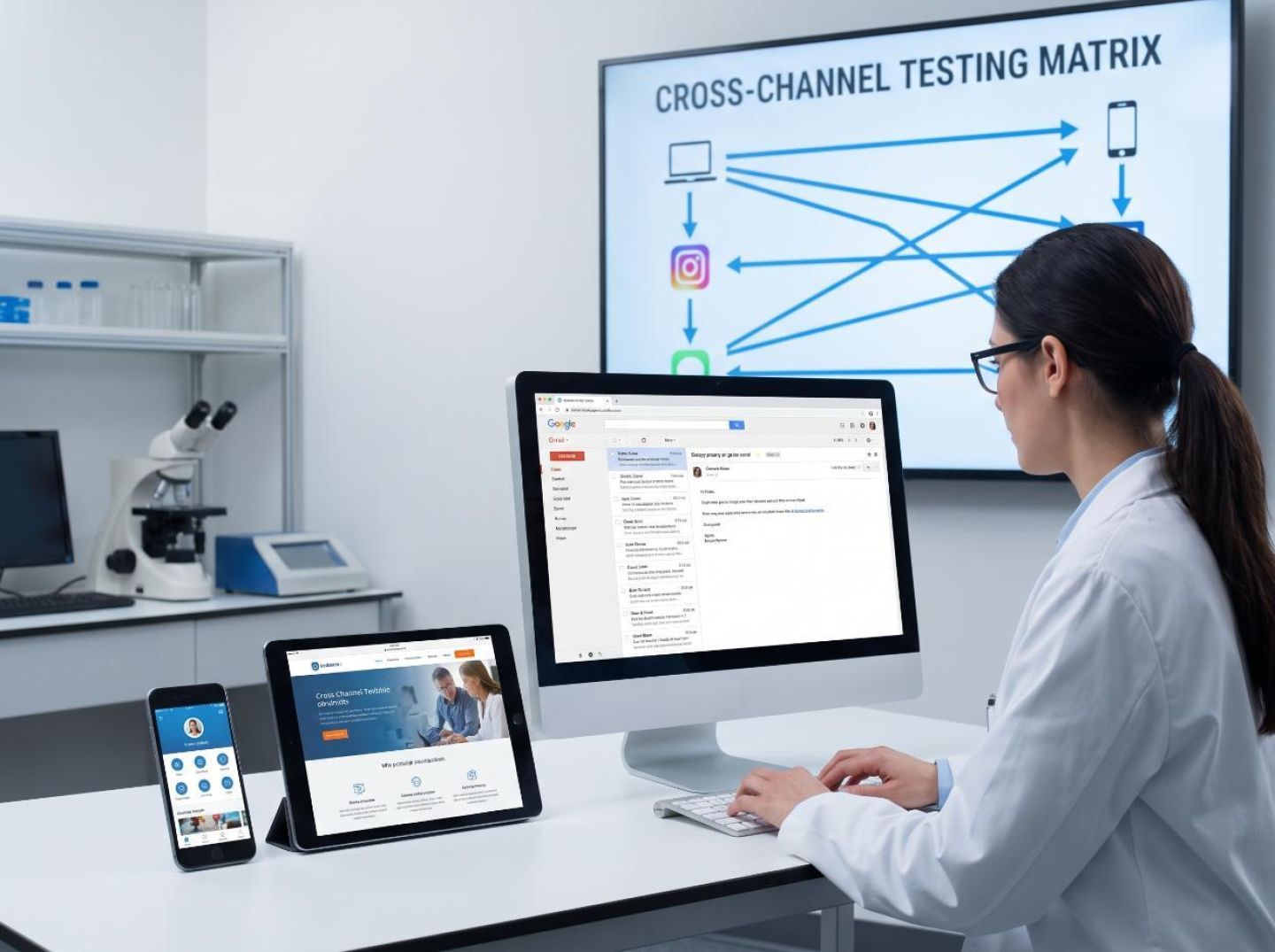
Most teams “test creatives” by swapping thumbnails and calling it a day. A real creative testing system treats each channel—native, push, pops, TikTok—as a different lab bench, with shared hypotheses and channel-specific rules.
The goal is not one ad that works everywhere. It’s a cross-channel framework where insights from a breakout TikTok in the food vertical can inform a native headline for a sports offer, which in turn shapes the push angle for a tech promo.
Here’s how to build that system.
From Section 3, you already have blueprints: structured recipes around hooks, framing, offer, pacing, and proof. Step one is mapping each blueprint to the channels where it can run with minimal translation.
A food “before-and-after” blueprint might become:
You’re testing the same idea across surfaces, not reinventing your creative every time.
Channels are not interchangeable; they reward different behaviors.
On native, ads must blend into the editorial environment. Mobile is now the fastest-growing native channel, and spend is forecast in the hundreds of billions, but a lot of that inventory is still underused, especially on mobile placements, which is a huge opportunity if you shape creatives to feel like real articles rather than banners, as the team at Voluum notes. That means: newsy headlines, organic imagery, and landers that read like content, not catalog pages.
On TikTok, the entire premise is that ads should feel like the content they sit next to. Strong creative can travel far beyond your follower base because the algorithm leans heavily on content performance, not just account size, which is why Neil Patel emphasizes that TikTok ads work best when they look and feel native to the feed. That changes how you test: lo-fi, creator-style videos, quick hooks, and rapid iteration on opening 3–5 seconds matter more than tiny copy tweaks in the description.
Push and pops are interruption formats. You’re trading depth for raw stopping power. You still apply the blueprint (hook, benefit, proof), but compressed:
What you don’t do is port a TikTok script into a push notification or paste a native headline into a pop. The blueprint guides the idea; the execution must speak the channel’s language.
To make cross-channel learning possible, you need consistent testing rules:
Once you’ve defined your blueprints and test units, you can hand a lot of the mechanical work to machines. AI systems can dynamically mix and match headlines, visuals, and CTAs and learn which combinations work best by channel and audience, as described in illumin’s discussion of dynamic creative optimization. That’s especially powerful when you’re testing the same blueprint across native, TikTok, and display: the machine explores micro-variants while you focus on macro-level patterns.
The trick is to keep your variables structured: tag every creative with its blueprint, vertical (food, sports, tech), and channel. Then when a “sports underdog comeback” angle crushes on TikTok, you can immediately spin a native version, a push headline, and a pop variation, and use your framework to test them in days, not quarters.
In other words: you’re not chasing “great ads” anymore. You’re running a cross-channel experiment engine where every new trend you spot in one vertical becomes a reusable hypothesis you can pressure-test everywhere else.
Instrumentation is where “creative testing” stops being vibes and starts being a profit engine. Food, sports, and tech advertisers that consistently win on TikTok, Meta, and native all share the same habit: they measure the same way, every time, and they let benchmarks—not opinions—decide what to scale.
First, you need a clear creative “source of truth.” That means tracking at the asset and blueprint level, not just the campaign. Every ad should carry structured metadata: vertical (food / sports / tech), hook pattern (“we tried X so you don’t have to,” “live breakdown,” “3-ingredient hack”), offer type, format (UGC, highlight reel, explainer), and channel. Treat each ad like a mini experiment: which blueprint is this? Which variable did we change?
This only works if your conversion tracking is ruthless. If you’re just counting leads or add‑to‑carts, you’ll overvalue flashy creatives that attract the wrong buyers. As Katia Hausman points out in recent Google Ads benchmarks, you need to know which of those leads actually turn into customers, and feed that value back into your bidding and reporting. For direct-response trends—like a new food challenge hook or a micro‑niche sports angle—your instrumentation should answer: “Did this give us higher-value customers at a sustainable cost?” not just “Did people click?”
Modern platforms make this easier if you wire them correctly. Conversion value tracking on Google and Meta lets you see not only how many actions a creative drove, but how much those actions were worth. The same logic applies to TikTok’s full‑funnel ecosystem: with TikTok Shop now driving billions in sales and a quarter of buyers discovering items via TikTok ads, you want every creative trend test tagged all the way to purchase value, not just view-through or clicks.
Benchmarks are your sanity check. You need two layers:
From there, build tight feedback loops. On Meta, performance strategists increasingly treat creative as the primary targeting lever, trusting the algorithm to find the right user once the creative angle is clear. That only works if you regularly A/B test your hooks, visuals, and headlines and feed the results back into your blueprint library: “ASMR cooking POV beat polished recipe shots by 30% ROAS in food,” or “live breakdown duets crushed generic tech unboxings in TikTok traffic.”
AI can compress these loops further. Dynamic creative optimization behaves like multivariate testing on autopilot: systems mix and match headlines, images, CTAs, and even contextual elements such as location, device, and time, then automatically allocate traffic to the best combinations, as described in DCO overviews. Newer AI‑driven platforms go further by constantly adapting assets to different channels and audiences, using historical behavior to decide which creative variant to show, as recent analysis of AI-powered DCO explains. For a food brand chasing a trend (“lazy meal prep”), you might let DCO recombine hooks, dish shots, and overlays across TikTok, display, and native, then promote whatever combo produces the best value per order.
The key is discipline: every emerging trend you test—whether a sports meme format, a viral recipe style, or a new tech explainer pattern—must enter the machine the same way: tagged, tracked to revenue, compared against internal and external benchmarks, and summarized into a clear learning. Do that, and your creative testing system stops chasing trends and starts capitalizing on them.
Receive top converting landing pages in your inbox every week from us.
Editor’s Pick
Discover how to turn food, sports, and tech trends into structured creative testing hypotheses instead of one-off ad ideas. Learn how to build vertical-specific blueprints, test them across Native, Push, Pops, and TikTok, and use performance data to continuously improve your creative strategy.
Dan Smith
7 minSep 20, 2026
Guide
Award-winning ads can inspire powerful performance creative, but they need to be rebuilt for the way algorithms, feeds, and users behave across Native and TikTok. This guide shows how to reverse-engineer high-profile creative into scalable hooks, angles, formats, and AI-driven testing systems that can improve performance.
Elena Morales
7 minSep 19, 2026
In-Depth
Discover how city-level ad intelligence can help marketers build campaigns that feel local while scaling globally. Learn how to use Anstrex to uncover geographic, language, creative, and funnel patterns across Native, TikTok, Push, and Pops, then turn those insights into repeatable localized campaigns.
Elena Morales
7 minSep 16, 2026