8 minJuly 12, 2026

Our spy tools monitor millions of TikTok ads from over 55+ countries. Biggest TikTok Ad Library in E-commerce and Mobile Apps!
Try It FREETikTok's 2026 IAB NewFronts presentation wasn't a routine product update. It was a declaration of intent — one that should reshape how every marketer, from brand strategists to competitive intelligence analysts, thinks about where premium advertising dollars are headed and what that migration means for the rest of the ecosystem.
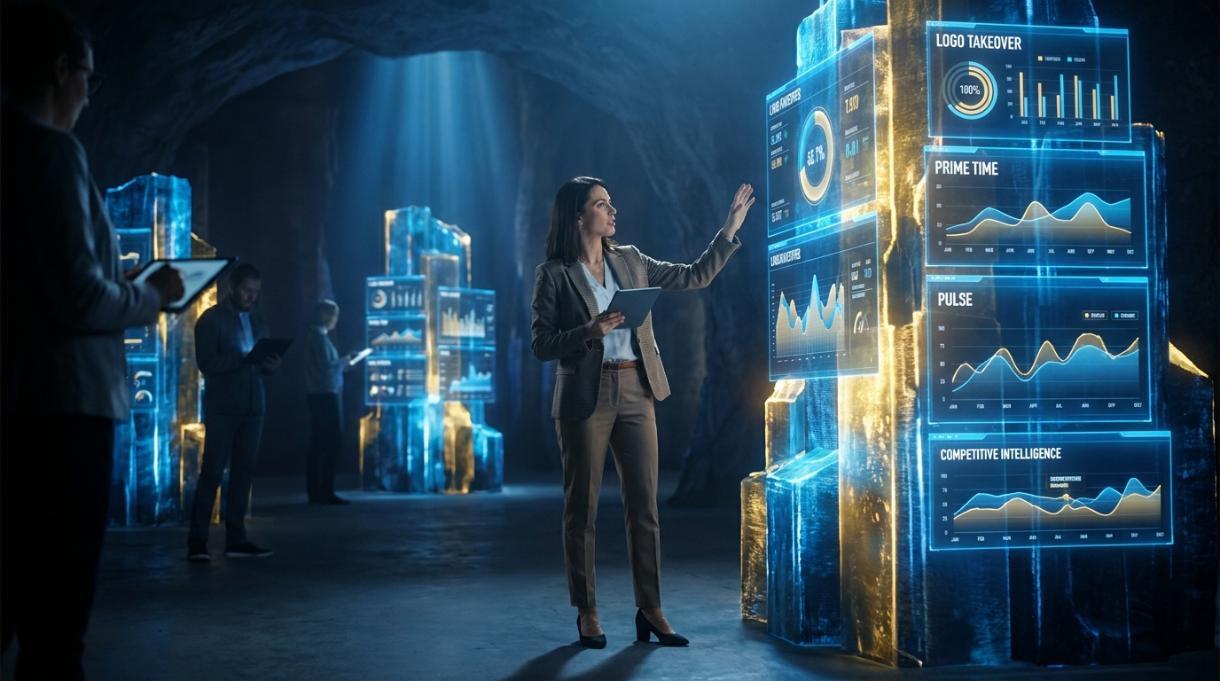
The platform unveiled four new or expanded premium ad formats designed not to compete with your Instagram Reels budget, but to intercept the television and streaming dollars that have historically been off-limits to social platforms. Each format serves a distinct purpose, and understanding the mechanics matters if you want to read the competitive signals they'll generate.
Logo Takeover is the most aggressive play for brand dominance. It places an advertiser's branding at the very moment a user opens TikTok, before any other content loads. The format is co-branded with TikTok itself, lending an implicit credibility signal that mimics the authority of a broadcast sponsorship. Early tests delivered double-digit lifts in both brand awareness and purchase intent, giving CMOs the kind of hard performance benchmarks they need to justify redirecting seven-figure budgets away from upfront TV deals.
Prime Time introduces a sequential storytelling mechanic that has no real equivalent on competing social platforms. It delivers up to three ads from the same brand to the same user within a fifteen-minute window, timed to peak-engagement periods or major cultural moments. Think of it as the social-native version of owning an entire commercial pod during a primetime broadcast — except the audience data is infinitely richer.
TopReach scales the platform's existing top-of-feed placement to guarantee reach thresholds that rival linear television campaigns, while expanded Pulse offerings let advertisers place their creative directly alongside the top-performing organic content in specific categories. Pulse is particularly significant because it tethers brand messaging to cultural relevance algorithmically, something TV buys can only approximate through programming adjacency.
The structural significance here goes beyond the formats themselves. TikTok is explicitly positioning these products against TV and streaming budgets — and the performance data gives it credible ammunition. A platform that reaches more than 200 million Americans and maintains a 3.7 percent engagement rate — nearly eight times higher than Instagram and twenty-five times higher than Facebook — is no longer asking to be a line item in the "experimental social" column of a media plan. It's asking to be the centerpiece.
This timing is not accidental. As Omdia's research projects, social media advertising revenue is on track to reach $640 billion by 2030, with video formats already accounting for 60 percent of that total. Platforms are actively capturing budgets historically directed toward online publisher inventory and broadcasters' digital offerings. TikTok's premium push is designed to accelerate that capture by giving advertisers the brand-safe, high-impact placements they've traditionally reserved for television.
For competitive intelligence purposes, this is the critical shift: when sophisticated, high-budget campaigns from Fortune 500 brands begin flooding a platform, they leave behind an enormous trail of creative strategy, targeting signals, and positioning choices. The brands moving first into Logo Takeover and Prime Time are telegraphing their strategic priorities — which audiences they're chasing, which product lines they're prioritizing, and which competitors they're trying to outflank. That influx of premium spend isn't just a media trend. It's a live, observable dataset, and the marketers who learn to read it now will have a structural advantage over everyone who waits.
To understand why TikTok's premium ad formats matter beyond TikTok itself, you need to zoom out and look at the structural forces reshaping where advertising dollars flow. This isn't a story about one platform making a clever product move. It's a story about a $640 billion wave building offshore, and TikTok positioning itself to catch a disproportionate share of it.
The numbers are staggering in their clarity. According to Omdia's first-ever dedicated social media advertising report, social media ad revenue is projected to reach $640 billion by the end of 2030, growing at a compound annual growth rate of 12%. During that same window, social media's share of total online advertising is expected to jump from 33% to 44% — a ten-percentage-point leap that will make it one of the fastest-growing ad segments alongside retail media. If you're allocating budget today without accounting for that trajectory, you're planning for a market that no longer exists.
The engine driving that growth is video. In full-year 2025, video formats accounted for 60% of total social media advertising revenue — Reels, Shorts, Stories, and TikTok itself functioning as the dominant revenue drivers. More critically, these platforms aren't just growing their own pie. They're actively capturing budgets historically directed toward online publisher inventory and broadcasters' digital offerings. The premium formats TikTok announced at NewFronts are explicitly designed to accelerate that capture — offering brand-safe, high-impact placements that give CMOs a reason to redirect television and publisher budgets into TikTok's ecosystem.
But here's the detail most marketers underestimate: this growth is not distributed evenly. Ninety percent of global social media advertising revenue is generated by just half a dozen apps — Facebook, Instagram, Douyin, YouTube, TikTok, and WeChat. The concentration is extreme, and it's getting worse. As Omdia principal analyst Kia Ling Teoh noted, AI-driven targeting and recommendation algorithms are "turbocharging the advantage of these big players," locking out smaller competitors who lack the data infrastructure to compete.
The flip side of that concentration is what's happening to everyone else. As AdQuick's analysis of the advertising oligopoly put it bluntly, the entire remainder of the advertising industry has spent the last eight years fighting for share of a pie that stopped getting bigger the summer TikTok showed up. When ByteDance merged Musical.ly into TikTok in August 2018, the platform had roughly 55 million users. It now has over 1.7 billion, making it one of the five companies that absorbed every incremental dollar of advertising growth over that period. Platforms outside the top tier haven't just stagnated — some have cratered. The ad revenue of Snapchat, Pinterest, and X combined has been flat at roughly $27 billion for five years and is projected to decline through 2029.
For performance marketers, the implications are unavoidable. The volume and sophistication of campaigns running on TikTok is about to spike as brand dollars — the kind previously reserved for broadcast upfronts and premium publisher deals — begin migrating into TikTok's new premium formats. That migration creates an unprecedented window for competitive research. When Fortune 500 brands start deploying television-grade creative inside TikTok's Pulse and Spotlight placements, the signal quality for anyone monitoring the platform's ad ecosystem jumps dramatically. The question isn't whether the money is coming. The question is whether you'll be watching when it arrives.
Here's the contrarian thesis that most performance marketers miss: you don't need to buy premium ad inventory to profit from it. You need to read it.
When a Fortune 500 brand deploys a Logo Takeover or runs a Prime Time sequence timed to a cultural tentpole, they aren't just buying impressions — they're publishing the output of months of strategic review, creative testing, media planning, and executive sign-off in a completely public arena. Every hook, every call to action, every landing page structure, every offer sequence is visible to anyone paying attention. The real asymmetry in TikTok's premium ad ecosystem isn't access to inventory. It's access to information. And the information is free.
Think about what a Logo Takeover campaign actually represents. A brand like Nike or Samsung doesn't commit to an app-open takeover on a whim. That placement has been through rounds of creative testing, legal review, and strategic alignment with quarterly business objectives. The creative that survives that gauntlet is, by definition, the brand's highest-conviction message — the hook they believe will resonate most broadly, the visual language they've determined works best on TikTok's native canvas. As Neil Patel has emphasized, TikTok-native creative authenticity remains essential even within premium placements, which means these campaigns aren't repurposed TV spots. They're purpose-built for the platform's unique content grammar, making them even more valuable as templates for what works in the TikTok environment specifically.
Ad intelligence tools and TikTok's own ad library make it straightforward to systematically monitor, catalog, and deconstruct these campaigns. You can track which brands are running premium placements, study their creative hooks frame by frame, map their CTA strategies, follow their landing page architectures, and reverse-engineer the offer sequencing they use to move users from awareness to conversion. You don't need a six-figure media budget to do this. You need a spreadsheet, a screen recorder, and discipline.
What makes this intelligence increasingly actionable is TikTok's accelerating investment in lower-funnel capabilities. As Clix Marketing reported, TikTok is already testing website visitor retargeting options — a signal that the platform's tracking sophistication is maturing rapidly beyond awareness plays. This has a direct implication for competitive intelligence: as brands begin building full-funnel sequences on TikTok, their retargeting chains become observable. You can infer funnel architecture from the ad sequencing you encounter — a brand awareness takeover followed by a product-focused mid-funnel Spark Ad followed by a limited-time-offer retargeting creative tells you exactly how that brand thinks about moving users through the purchase journey.
The performance marketer's structural advantage here is speed. A Fortune 500 brand running a Prime Time campaign is locked into a quarterly media plan. Their next creative iteration might be eight weeks away. You can take the strategic signals from their campaign — the hook structure that earned placement, the CTA language, the landing page flow, the audience signals embedded in their targeting — and adapt them into your own in-feed or Spark Ads strategy within days. Neil Patel's advice to treat early spend as learning investment applies doubly when your learning is subsidized by someone else's premium budget. Every dollar a major brand spends on Logo Takeover is, in effect, a dollar spent educating the market about what converts on TikTok right now.
The gold rush isn't in the premium inventory itself. It's in the intelligence that premium inventory makes visible — and in the agility to act on it before the next quarterly planning cycle catches up.
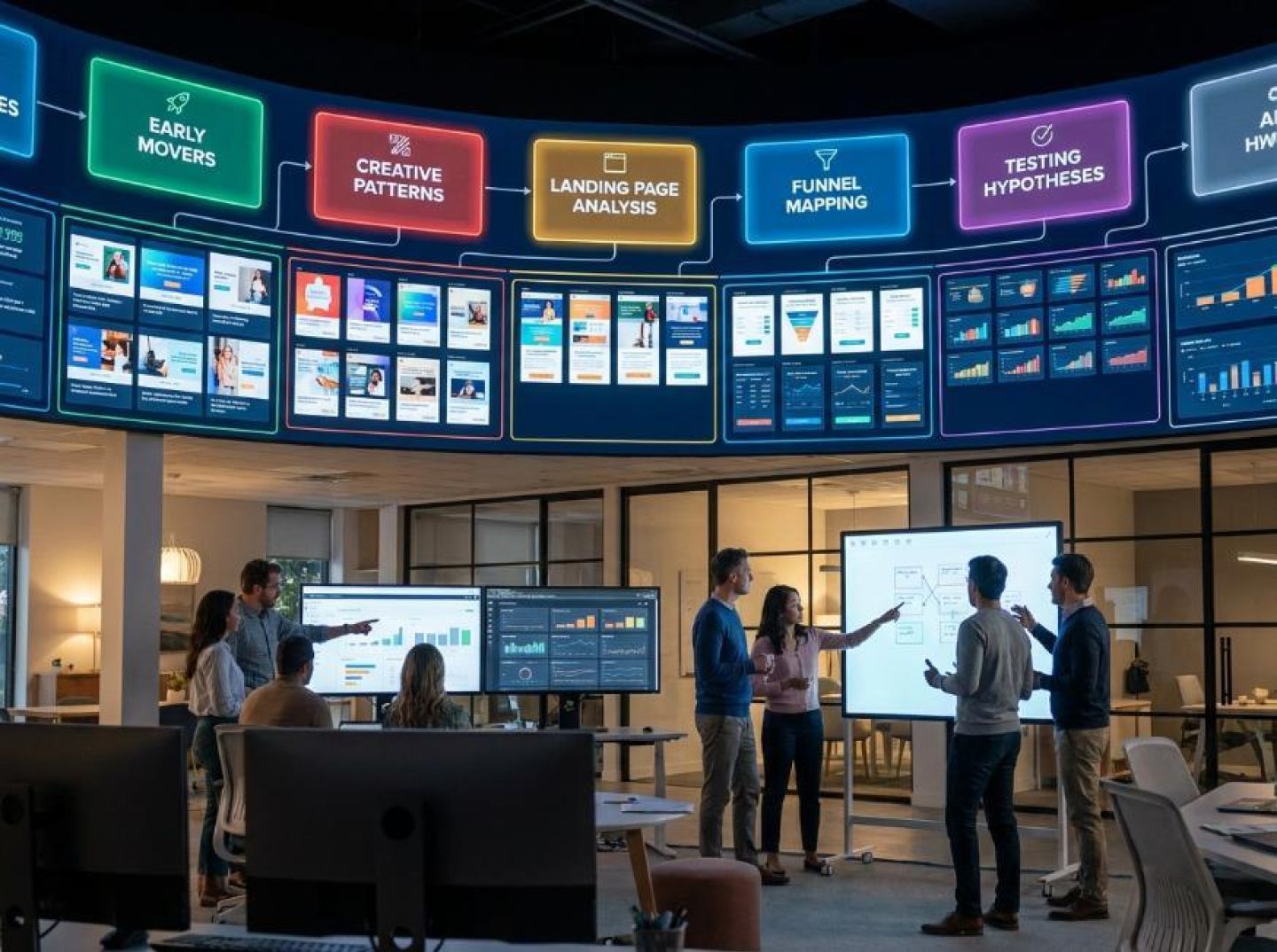
Treat this like a field intelligence operation, not a mood board exercise. The window between when premium formats launch and when every brand's creative starts looking the same is narrow — maybe a quarter, maybe two. What you build in the next 72 hours isn't a Pinterest board of cool ads. It's a hypothesis library that converts someone else's six-figure media investment into testable insights you can validate at standard in-feed CPMs.
Hour 0–12: Identify the Early Movers
Start by mapping which brands and verticals are most likely to be first into premium placements. The answer isn't random. CPG giants, major entertainment studios, QSR chains, and fintech disruptors have the budgets, the agency relationships, and the brand-safety requirements that make them natural early adopters of formats like Logo Takeover and Prime Time. Cross-reference this with what you already know about tentpole moments — movie releases, product launches, seasonal pushes — because premium buys cluster around cultural events. Build a watchlist of 15 to 20 brands across these verticals and set calendar reminders around their known campaign windows.
Hour 12–36: Instrument Your Tracking
Now wire up your surveillance. TikTok's own Creative Center is your first-party source — it surfaces trending ads, lets you filter by industry, and shows engagement metrics that help distinguish high-spend premium placements from standard in-feed buys. Layer on third-party ad spy tools like Minea, BigSpy, or Pipiads to catch what the Creative Center misses and to track historical creative rotation patterns. As the World Branding Forum noted, the growing segmentation between performance-driven and premium formats means premium campaigns will carry distinct creative signatures — higher production value, sequential storytelling, branded audio — that make them identifiable once you know what to look for.
Hour 36–60: Catalog Creative Patterns and Map the Post-Click Experience
This is where the real analytical work happens. For every premium ad you capture, document five variables: hook type (visual disruption, question, pattern interrupt), pacing (cut frequency in the first three seconds versus the last three), text overlay strategy, sound selection (original audio, licensed track, trending sound), and CTA placement timing. Remember that TikTok-native creative authenticity remains essential even within premium placements, and the algorithm rewards content quality over account size — so the patterns you're isolating aren't just stylistic preferences but functional signals about what the platform's distribution engine favors.
Then go deeper. Click through every ad. Document the landing page architecture: is it a direct product page, a lead capture form, a quiz funnel, or a TikTok Shop listing? Screenshot the offer structure, note form field count, identify pixel and retargeting tech using browser extensions, and record any post-submission email or SMS sequences that fire. The post-click experience is where the real strategy lives, and it's the part competitors almost never reverse-engineer.
Hour 60–72: Build the Swipe File That Actually Works
Organize everything into a structured database — not by brand, but by format pattern and funnel stage. Create categories like "sequential storytelling hooks," "urgency-driven CTAs with countdown overlays," or "quiz-to-offer lead capture funnels." Each entry should include the raw creative asset, your annotation of the pattern, and — critically — your hypothesis about why it works and how you'd test a version of it with your own budget. The output isn't inspiration. It's a queue of ranked experiments, each one reverse-engineered from campaigns that already survived a brand's internal approval gauntlet and earned premium placement. That's a dramatically higher starting point than guessing in a brainstorm.
Every premium ad format in digital advertising history has followed the same lifecycle: launch, arbitrage window, saturation, commoditization. The only variable is how fast the cycle spins. With TikTok's latest premium offerings, the cycle is spinning faster than anything we've seen before — and the data makes the case that marketers who aren't moving now will be paying double for half the impact within eighteen months.
Here's why the timeline is compressed. TikTok is no longer an emerging platform where brands experiment with leftover budget. As AdQuick's analysis of the advertising oligopoly makes strikingly clear, TikTok has grown from roughly 55 million global users in 2018 to over 1.7 billion today, cementing its position as one of the five companies that absorbed virtually every incremental dollar of advertising growth over the last eight years. That scale doesn't just attract advertisers — it accelerates the speed at which every new format gets flooded with creative, bid pressure, and diminishing novelty. When a platform has 1.7 billion users and Fortune 100 budgets pouring in, the window between "early adopter advantage" and "everyone's doing it" shrinks from years to quarters.
The macro numbers reinforce the urgency. According to Omdia's research reported by the World Branding Forum, social media advertising revenue is projected to hit $640 billion by 2030, growing at a 12% CAGR, with video formats like TikTok, Reels, and Shorts already accounting for 60% of total social media ad revenue in 2025. That trajectory means more money chasing the same premium placements every single quarter. The clearer segmentation between performance-driven and premium formats that Omdia identifies as a future revenue driver is exactly what TikTok's new ad products are designed to exploit — and it's exactly what will make those placements more expensive as demand compounds.
The platform itself is simultaneously expanding its targeting infrastructure. As Clix Marketing noted, TikTok is already testing website visitor retargeting options that aren't yet live in Ads Manager — a signal that the platform is building the plumbing for more sophisticated campaign execution. When retargeting goes fully live, it won't just improve performance for advertisers already running premium formats. It will lower the barrier for every mid-market brand to run full-funnel campaigns on TikTok, flooding the auction with new demand and driving CPMs upward on the premium inventory that early movers are currently locking in at favorable rates.
So here's the timeline as clearly as it can be stated. The current quarter and the next one represent the arbitrage window — the brief period when creative best practices for these formats haven't calcified, when auction dynamics still favor smaller budgets that punch above their weight, and when the competitive intelligence system you built in the previous 72 hours actually gives you a structural advantage. By Q1 of next year, the playbooks will be published, the agencies will have their templates, and every DTC brand with a Shopify store will be running the same hook-driven Prime Time creative that the category leaders are testing today.
The gold rush metaphor in this article's title isn't decorative. Gold rushes end. The claims get staked, the easy ore gets extracted, and latecomers spend ten times the effort for a fraction of the yield. The difference here is that you can see the timeline in the data — and the data says move now.
Receive top converting landing pages in your inbox every week from us.
How-To
Learn how to turn big brand-building stunts into measurable performance funnels across Native, Push, Pop, and TikTok. This guide breaks down how to repurpose stunt assets, build channel-specific sequences, design story-led landers, and measure their impact on conversions and revenue.
Priya Kapoor
7 minOct 5, 2026
Most Read
Discover how OOH teams can use Native, Push, and TikTok ad intelligence to move beyond location-first planning and build smarter, audience-driven campaigns. This guide shows how to translate digital creative, targeting, and performance signals into OOH ideas, test them in the physical world, and feed the results back into digital campaigns.
David Kim
7 minOct 4, 2026
Most Read
Learn how OOH employers can move beyond selling billboard inventory and start monetizing the full funnel impact of every outdoor impression. This guide shows how to connect OOH with Native and TikTok-style funnels using competitive intelligence, creative research, tracking, retargeting, and performance-focused roles.
Rachel Thompson
7 minSep 28, 2026