12 minSeptember 28, 2026

Our spy tools monitor millions of native ads from over 60+ countries and thousands of publishers.
Get StartedFor decades, most out-of-home org charts were built around a single mandate: “sell more boards.” Titles like Account Executive, Billboard Ad Sales, or Business Development Representative all orbit the same core function—fill locations with paid campaigns and hit a number. Scan the current employment listings in OOH and you’ll see the pattern immediately: roles are framed around territories and inventory, not around customer journeys or revenue outcomes, as the job board on OOH Today makes abundantly clear.
That inventory-first model made sense when campaigns were largely static, attribution was fuzzy by default, and OOH sat at the top of the funnel as a “reach driver” that other channels were expected to monetize. But as outdoor campaigns increasingly trigger what one analysis calls the “OOH Echo Effect”—a chain of follow-up search, social engagement, site visits, and in-store actions—the idea of an OOH salesperson stopping at “board sold” is starting to look outdated.
In this echo-driven world, a billboard is rarely a self-contained event. A commuter sees a striking creative on the way to work, remembers the visual language or tagline later, and then searches the brand or offer on their phone. The same colors and message might appear again in their feed or on a retail display, reinforcing the memory and pushing them further down the funnel, exactly as the MyHoardings Blog describes. That extended path is where the value is actually created—but most OOH roles are scoped only to the first touch.
If OOH employers want to monetize every impression with the rigor of a native or TikTok buy, they have to rewrite their roles around funnel impact, not poster count. That means moving from “selling locations” to “solving for outcomes”: awareness lift, search volume, store traffic, app installs, incremental conversions. Instead of asking, “How many faces can I sell this quarter?” teams should be accountable for questions like, “How many qualified visits or branded searches did our network generate for this client?”
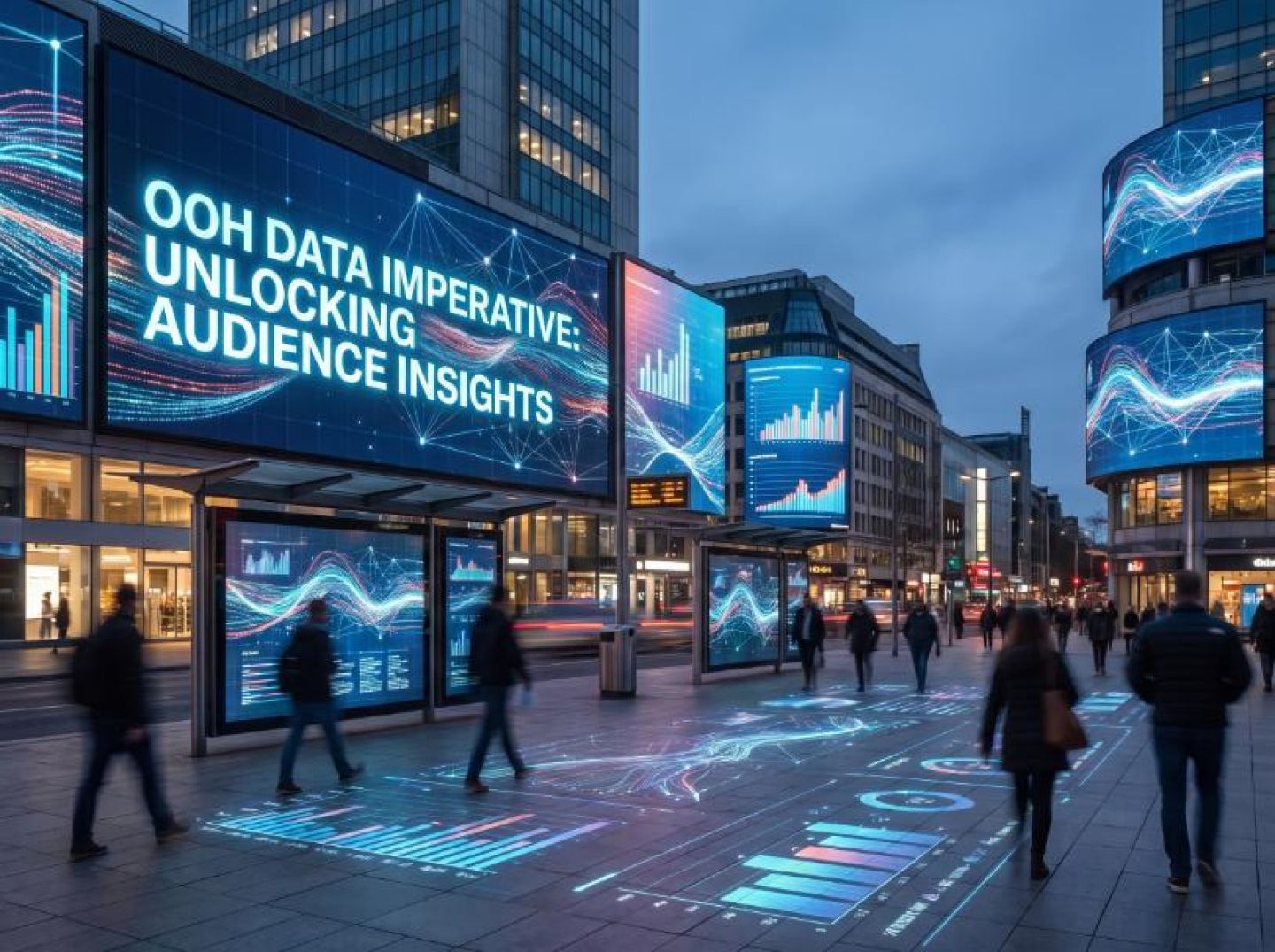
This shift is already visible in how smarter networks think about data and demand. When a software-first operator like Trillboards decides that the constraint on growth is not hardware but “intelligence asymmetry” and integrates a machine learning layer like hellOOH to model demand, it’s acknowledging that out-of-home’s job is no longer just to be present—it’s to be predictively, measurably useful in a broader media mix. By structuring market behavior and campaign history into predictive signals, systems like this make it possible to speak the same performance language that digital buyers expect from programmatic display or social.
Yet internally, many operators still treat roles as if OOH is a siloed medium. The sales rep prospecting agencies in New York, the local account executive pitching restaurant chains in Denver, the operations director managing installs—they are rarely evaluated on whether their work made the brand’s search ads cheaper, its social retargeting more efficient, or its retail conversion higher. Their success metrics end where the contract ends, even though the campaign’s influence often continues across digital and real-world touchpoints over days or weeks, just as the echo framework from MyHoardings suggests.
Rewriting OOH roles means embedding that continuum into job definitions. A modern OOH strategist should be fluent in QR paths, short URLs, and social handles, but also in how those tactics feed attribution models and downstream retargeting. A “sales” title should be responsible for developing funnel hypotheses with clients—what happens after the impression—not just negotiating CPMs. Revenue operations should sit on top of data platforms that behave more like hellOOH than like a static avails spreadsheet.
Most importantly, leadership has to stop defining success as “occupancy” and start defining it as “incremental business outcomes enabled by OOH.” When your product is no longer a board but a journey—an echo that runs from a roadside encounter to a checkout screen—you need people whose roles, incentives, and language are built for solving funnels, not just selling faces.
Most OOH operators already create funnel activity every time a driver glances up at a board—they just don’t track or monetize it like digital natives do.
Think about what actually happens after a strong outdoor impression. Someone spots a clever headline on their commute, tucks that brand name into short-term memory, and later that day types it into Google, clicks a paid search ad, or recognizes the same product in a social feed. As one analysis of the “OOH Echo Effect” describes, a single encounter on a billboard routinely echoes across search behavior, social interactions, website visits, and even in-store decisions. In digital language, your board just fired the first “view-through” impression in a multi-touch funnel—you just let other channels take the credit.
That’s the core blind spot. OOH has trained its workforce to sell space, not to own what happens after the glance. Meanwhile, the rest of the ad ecosystem has been busy wiring offline signals into a performance narrative. Programmatic platforms treat an upper-funnel TikTok view or CTV ad as a probabilistic trigger that will influence the click, the add-to-cart, the store visit. OOH, by contrast, still mostly hands the brand a proof-of-play report and walks away.
Yet the medium is inherently built for echo. When outdoor creative is distinctive enough—through bold visuals, a sticky offer, or a unique tagline—it becomes the mental shortcut that makes later exposures feel instantly familiar. Consumers might see a roadside board in the morning, scroll past a matching Instagram ad at lunch, and then encounter the same brand at a retail display after work. That repetition and recognition across real-world and digital environments is exactly how the OOH echo effect compounds. The “funnel” is not a linear path from billboard to store; it’s a loop of memory triggers you can either orchestrate—or surrender to chance.
The technology stack around OOH is rapidly catching up to this reality. Networks like Trillboards are already positioning themselves as software-first, treating screens as smart surfaces that sit between supply and demand platforms rather than as static inventory. By integrating machine learning–driven intelligence systems like hellOOH, Trillboards is effectively saying: “every impression on our network is a data event in a larger demand model.” According to their own description, hellOOH ingests market behavior, campaign history, and decision-maker relationships and turns them into predictive demand signals. That’s the same philosophy performance marketers use when they treat a TikTok view as training data for smarter targeting.
For employers, this shift should be a wake-up call. If the intelligence layer is moving from “we sold a board here” to “we activated and observed demand here,” then roles that stop at selling locations are already outdated. As one publisher argued in a thought piece asking what would happen if OOH stopped selling billboards, brands don’t actually want a 14′ x 48′ on the interstate; they want momentum, market share, and launch velocity. The echo effect is where that momentum lives.
Here’s the strategic truth OOH employers need to recognize: your billboards are already functioning as native upper-funnel units that boost recall, prime search, and lift conversion on other channels. The industry’s problem is not impact—it’s attribution and ownership. Until your org chart includes people who are explicitly responsible for designing, capturing, and selling that echo, you’ll keep donating free value to Google, Meta, and retail media networks while being paid like a commodity GRP provider.
In other words, the gap between a static “board sale” and a TikTok-style performance funnel is not creative; it’s control. The echoes are happening whether you acknowledge them or not. The next sections of this article will focus on how to instrument, package, and price that echo so every impression on a pole can be monetized like an impression in a feed.
TikTok isn’t “winning” because its videos are more entertaining than a 14’x48’. It’s winning because every single impression is observed, scored, and fed back into a learning loop that improves the next impression. By contrast, most OOH still behaves like a blind medium: you put creative up, infer reach from traffic counts, and hope something good happens downstream.
In digital, that would be unthinkable. TikTok knows who watched three seconds versus 30, who swiped away instantly, who shared, commented, or clicked through. That behavioral exhaust fuels the recommendation engine that makes the next ad smarter and more precisely delivered. The platform doesn’t sell “space on a feed”; it sells outcomes predicted from a river of live data.
Traditional OOH, by comparison, is largely guessing. Operators talk about “impressions,” but those are modeled from volume, not verified behavior. You don’t know which audiences actually noticed the board, what they did afterward, or how the creative performed versus its alternatives. As one forward-looking analysis of the sector warned, if impressions remain unverified and unconnected to real-world behavior, OOH risks becoming “a silent actor performing in a theater where the audience has left the room,” with advertisers eventually asking why they should “pay for impressions no one can verify,” a future scenario outlined in stark terms for static and disconnected inventory.
The irony is that the medium is not actually blind in the real world—operators just aren’t instrumenting what already happens. As the concept of the “OOH Echo Effect” makes clear, a single outdoor encounter often seeds a chain of follow-on behaviors. Someone sees a striking board during their commute, then later types the brand name into a search bar, taps a social ad they now recognize more easily, or walks into a store with the campaign’s imagery already sitting in memory. That initial contact, as one analysis of the “OOH Echo Effect” puts it, becomes the first step in a “wider communication journey” that can echo across social feeds, websites, apps, and physical locations.
The problem is that most OOH employers don’t claim that echo in their data story. Search lift is attributed to Google Ads. Branded keyword clicks are credited to performance agencies. In-store sales spikes are chalked up to “retail seasonality.” The billboard that actually triggered the sequence is invisible in the reporting stack. Compared with a TikTok campaign that can show precise watch-time distributions and conversion lift, a static “we reached 1.2M weekly impressions” PDF looks like a relic.
This is why the industry’s next competitive frontier is not brighter screens or cheaper vinyl—it’s intelligence. Where TikTok uses machine learning to tune content delivery, emerging OOH players are beginning to use similar approaches to tune demand, packaging, and pricing. When one digital signage network recently integrated a machine learning–driven “intelligence layer” to structure market behavior, verify campaign history, and map decision-maker relationships, they weren’t just making sales ops more efficient; they were attacking the core problem of “intelligence asymmetry” in OOH. By turning fragmented activity into predictive demand signals, they gained the ability to “see the market earlier than everyone else,” a shift described as a compounding advantage for operators who adopt data-native tooling.
For employers, this is the line in the sand. As cars get more autonomous, attention shifts further inside the cabin, and digital budgets grow more accountable, the only OOH sellers who will be credible in a TikTok world are those who can close the loop between a roadside impression and the digital behaviors it sparks. That means treating every billboard as a data surface, every campaign as a test, and every “echo” as a measurable, monetizable event—not a vague halo you hope the client gives you credit for.
If TikTok, Meta, and native ad networks all rely on the same basic funnel logic—hook, micro‑commitment, retarget, convert—then OOH’s playbook should look similar. The difference is that your “hook” happens in the real world, and your retargeting engine fires online.
Here’s how to architect that, step by step, so every offline impression behaves more like a tracked native click or TikTok view.
First, treat the billboard as your thumb‑stopping creative, not the entire story. On TikTok, the opening two seconds exist to earn the next three; on a roadside spectacular, you’re earning the next interaction: a search, scan, visit, or share. That means a single, scroll‑proof idea—one benefit, one visual, one next step. Consistent colours, product visuals, and taglines should be designed to echo down‑funnel so that later social or display ads feel like a continuation of the first sighting, not a new campaign. This continuity is exactly what the “OOH Echo Effect” describes: the initial outdoor cue becomes the memory anchor that makes subsequent digital touchpoints instantly recognizable.
Next, swap “board sold” for “funnel launched.” Digital performance teams don’t brag about how many banners they bought; they talk in terms of cost per add‑to‑cart, cost per install, or cost per qualified lead. Outdoor can do the same if operators stop merely selling faces and start packaging outcomes, just as one industry publisher asked when they challenged OOH to “stop selling billboards” and start selling solutions. In practice, that means every proposal includes a mapped journey: billboard → onsite scan or visit → retargeted ad sequence → conversion.
Concretely, your offline native-style funnel might look like this:
For TikTok‑style funnels specifically, lean into what the platform already rewards: real people, real places, and social proof. Capture short UGC clips at the installation, creators reacting to the board, or behind‑the‑scenes footage of how the site went up. Those assets then fuel paid TikTok and Reels campaigns aimed at the zip codes and interests that overlap with your physical placement footprint, turning local OOH reach into hyper‑targeted social frequency.
Finally, align your sales and ops teams so this funnel is baked into how inventory is sold and executed. The same job listings that describe OOH sales roles as “Business Development” and “Account Executive” for companies like Liquid Outdoor Media signal a shift from hawking boards to architecting campaigns; your playbook should equip those sellers with native‑style funnel templates, sample landing flows, and performance KPIs, not just rate cards and coverage maps.
When the creative, tracking, and sales narrative all mirror the logic of winning native and TikTok funnels, each billboard impression stops being an isolated “awareness hit” and starts functioning as the first, measurable step in a modern performance journey.
Before you can make a billboard behave like a TikTok view or a native click, you need to know what “winning” actually looks like inside your client’s vertical. That means stealing shamelessly from the creative R&D machines of performance marketers—then translating those patterns into offline hooks and online follow‑ups.
Start by treating native ad spy tools, TikTok Creative Center, and push ad libraries as your vertical intelligence stack. If you’re helping a health system recruit nurses, for example, plug “RN jobs,” “travel nurse,” and “new grad nurse” into a native spy tool. Then sort by impressions or spend. Ignore the one‑off anomalies; you’re hunting for what keeps resurfacing week after week. You’ll see recurring hooks like “4‑day weeks,” “sign‑on bonus,” and “no mandatory overtime,” plus creative angles like “nurse‑to‑nurse testimonials” and “day in the life” stories. Those are signals of market‑validated desire.
Repeat the same exercise in TikTok Creative Center. Filter by “Jobs & Education” or “Business Services,” then narrow to keywords tied to your client’s specific role—“warehouse jobs,” “SaaS SDR,” “remote customer support.” Look closely at the top ads’ opening three seconds: are they leading with income, lifestyle, schedule freedom, mission, or social proof? TikTok’s own leaderboard shows, in real time, which hooks hold attention long enough to drive swipes and clicks. That’s exactly the kind of hook your offline creative needs to echo in a single, scannable line.
Push ad libraries give you another angle: they reveal how aggressive direct‑response advertisers structure micro‑commitments. For recruiting, winning pushes often promise a very small next step—“Check eligibility,” “See open shifts,” “Answer 3 questions”—instead of “Apply now.” When you see that pattern recurring across multiple advertisers, you’re looking at a proven funnel mechanic you can mirror: your billboard headline becomes the big emotional hook (“Nurses: 3‑Day Weekends, Full‑Time Pay”), and your QR code or short URL becomes the micro‑commitment (“Scan to check eligibility in 30 seconds”).
This kind of vertical research also helps you engineer what the MyHoardings blog describes as the “OOH Echo Effect”: a single offline encounter that keeps resonating across digital and real‑world touchpoints. When you know which phrases, colors, and formats dominate winning TikToks and native ads in your vertical, you can deliberately reuse them on your landing pages, retargeting ads, and even in job postings. The commuter who half‑registers your billboard headline about “weekend‑only shifts” should see the same language and visual motif when they later encounter a TikTok ad or display unit from the same employer. Continuity isn’t a nice‑to‑have; it’s how you turn a blurry memory of a roadside ad into instant recognition when they finally click.
If you specialize in OOH employer branding, you can take this one step further by looking at how your own industry recruits talent. Classified listings for OOH sales and operations roles repeatedly emphasize “fast‑paced,” “competitive,” and “nationwide portfolio” language, as you can see in the employment posts for Liquid Outdoor Media and other firms in the OOH Today classifieds. That consistency tells you two things: first, that these hooks reliably attract candidates in this niche; and second, that your clients’ verticals have similarly stable “magnet phrases” you can mine from their job boards, Indeed ads, and LinkedIn posts. Cross‑reference those with what’s working in TikTok Creative Center and your ad spy tools, and you’ll quickly see the overlap between what people say they want and what they actually click.
The goal is not to copy creative line‑for‑line. It’s to build a swipe file of recurring hooks (what they promise), offers (what’s at stake), and creative structures (how they’re framed) for each vertical you serve. For nurses, it may be flexibility and respect; for warehouse staff, predictable hours and bonuses; for SaaS SDRs, career trajectory and remote freedom. Once you’ve mapped those patterns, you can design OOH that feels uncannily familiar when the prospect later meets your client online—because your offline hook, digital retargeting, and landing experience are all speaking the same, proven language.
Once you’ve done a sweep of native ads, TikTok creatives, and push campaigns for your hiring niche, the goal isn’t to copy any single ad. It’s to reverse‑engineer the patterns that show up over and over—and then bake those into both your billboards and your online follow‑ups.
Think of it as building a “creative genome” for each role or vertical.
Start simple: spreadsheet the ads that keep reappearing in spy tools and TikTok’s top‑performing filters. For each, log:
You’re looking for what performance marketers would call “clusters”—the combinations that show up so often they clearly move the needle.
High‑performing employment creatives rarely ask for “Apply now.” They compress the ask into something that feels low‑commitment and instant:
On TikTok and in native feeds, these CTAs are paired with swipe actions, lead forms, or in‑app chats. Your job as an OOH employer is to translate them into physical triggers:
Because the OOH Echo Effect shows that a single outdoor encounter can seed later search and social behavior, keep the CTA phrasing identical in your retargeting ads. If the board says “Check pay in your area,” the follow‑up Facebook and TikTok ads should use the same words to trigger recognition, not a new idea that forces the brain to re‑process the offer.
Winning employment ads don’t open with the company name; they open with identity and specificity:
In your vertical research, you’ll see that top creatives keep narrowing in on:
This is where OOH has an unfair advantage. With platforms like Trillboards using machine‑modeled demand intelligence to map hyper‑local audiences, you can tailor your headline to exactly who drives past a given board most often. If a west‑side commuter route skews toward service workers, your headline there should mirror the hooks that work on TikTok for retail‑to‑warehouse transitions—not the generic “We’re hiring” that runs citywide.
Your research will surface a simple truth: most winning job ads are visually loud but structurally simple.
Patterns you’ll see:
Online, this helps a creative punch through the feed. Offline, it makes the message legible under harsh light, motion blur, and partial views. As MyHoardings’ analysis of the OOH Echo Effect points out, recognizable colors and visual identities are the glue that ties billboards to later digital impressions; if your TikTok remarketing uses pastel gradients but your boards are dark and industrial, you’re throwing away that echo.
So:
This is where most OOH employment campaigns underperform. They pick one generic frame (“Great pay & benefits”) and staple it everywhere.
In your vertical research, classify each winning creative by its primary emotional frame:
You’ll quickly notice that different roles and cities skew toward different frames. For example, classified employment listings across OOH‑focused job boards lean heavily on prestige (“National Account Executive”) and market (NYC, Miami, Dallas) rather than raw urgency or hourly wage, because senior sales talent responds more to status and opportunity than “Start tomorrow.”
For hourly and blue‑collar roles, though, your spy tools will surface a heavier mix of urgency, stability, and lifestyle: “Weekly pay,” “Consistent hours,” “Be home for dinner.” Map those frames against each audience segment and location, then commit to one primary frame per board—and echo it in the online funnel. If a given route is dominated by warehouse workers switching employers, lead with security and schedule consistency on both the board and the retargeting ads, not with vague “career growth.”
Finally, track how often winning creatives show:
You’ll see a clear pattern: the closer an ad is to blue‑collar, frontline, or entry‑level office work, the more likely it is to put pay and schedule in the first three seconds of attention.
Make those elements billboard‑sized:
Then carry the same structure into your remarketing creatives: same number, same phrasing, same badge. That continuity is what turns the first glance on the highway into a mental shortcut later when they see your ad in‑feed and think, “Oh, that’s the $27/hr gig from my drive yesterday.”
By systematically extracting these patterns
Receive top converting landing pages in your inbox every week from us.
Most Read
Learn how OOH employers can move beyond selling billboard inventory and start monetizing the full funnel impact of every outdoor impression. This guide shows how to connect OOH with Native and TikTok-style funnels using competitive intelligence, creative research, tracking, retargeting, and performance-focused roles.
Rachel Thompson
7 minSep 28, 2026
Must Read
Discover how Pure Leaf’s “Break Conference” can be deconstructed as a full-funnel strategy spanning Native, Push, and Pop advertising. This guide shows how marketers can use creator content, TikTok Instream, Anstrex, search data, and PR signals to turn a feel-good brand stunt into a measurable performance engine.
Priya Kapoor
7 minSep 27, 2026
Must Read
Learn how to transform one powerful brand moment into scalable Native, Push, and Pop funnels instead of relying on a single hero ad. This guide covers modular creative, TikTok funnel thinking, competitive intelligence with Anstrex, cross-channel testing, and a repeatable creative supply chain.
Dan Smith
7 minSep 26, 2026