
8 minAugust 26, 2026

Our tools monitor millions of native, push, pop, and TikTok advertising campaigns.
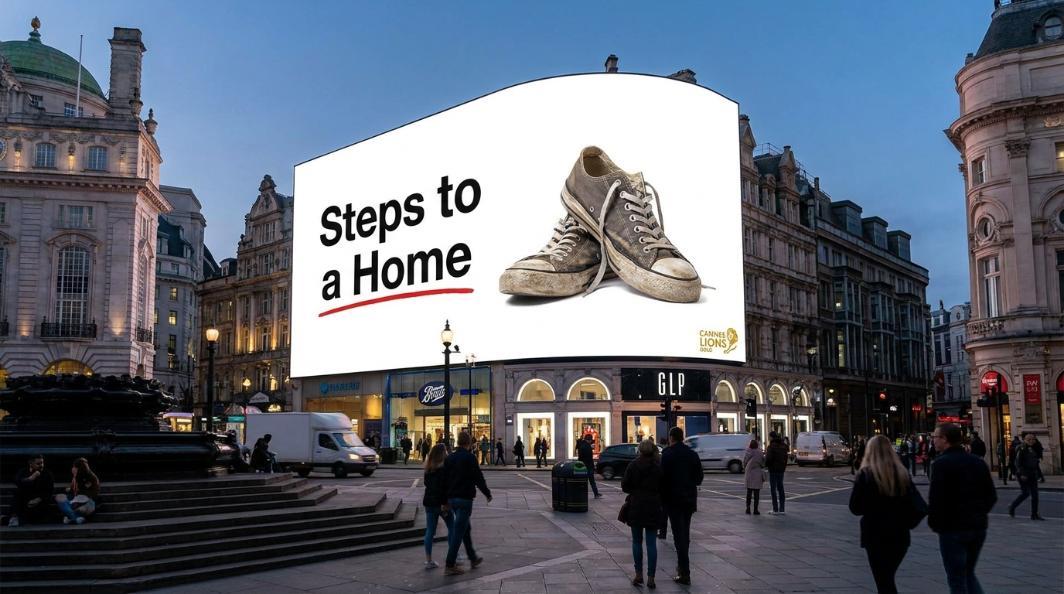
Get StartedEvery June, the advertising industry gathers in Cannes to applaud the work that moved culture. The campaigns that win Lions are, almost by definition, macro-cultural events — shared moments designed to lodge a brand in collective memory across entire populations over long time horizons. They succeed because millions of people experience the same message, internalize the same emotion, and walk away with the same association. That shared understanding is the engine of what researchers call the "fame effect," and it is precisely the quality that makes award-winning work so seductive to performance marketers looking for their next creative breakthrough.
The problem is that the systems those performance marketers actually deploy are engineered to do the opposite. Google's Performance Max and Meta's Advantage+ campaigns are, at their core, black-box demand-harvesting engines built to fragment a single message into thousands of AI-generated permutations and serve each micro-variation to a different sliver of the audience. The feedback loop they optimize for isn't cultural resonance — it's individual behavioral response. A click, a cart addition, a form fill. They are spectacularly good at this narrow task. But the logic that governs them is fundamentally incompatible with the logic that earns a standing ovation at the Palais des Festivals.
This is where the expensive misfires happen. A performance team sees a Cannes-winning spot — say, a beautifully crafted 60-second film with a single, emotionally resonant narrative — and tries to import it wholesale into a PMax or Advantage+ campaign. The platform immediately begins dissecting it: cropping it into square and vertical formats, testing truncated headlines against the original, swapping thumbnail frames, serving different cuts to different cohorts. Within days the award-winning idea isn't one idea anymore; it's a thousand permutations, each optimized for a momentary click. As AdExchanger's analysis of the personalization paradox put it, when you fragment a brand's message into infinite hyper-personalized silos, "you destroy the macro-cultural signal that gives a brand its authority and prestige" and dilute a shared asset into statistical noise.
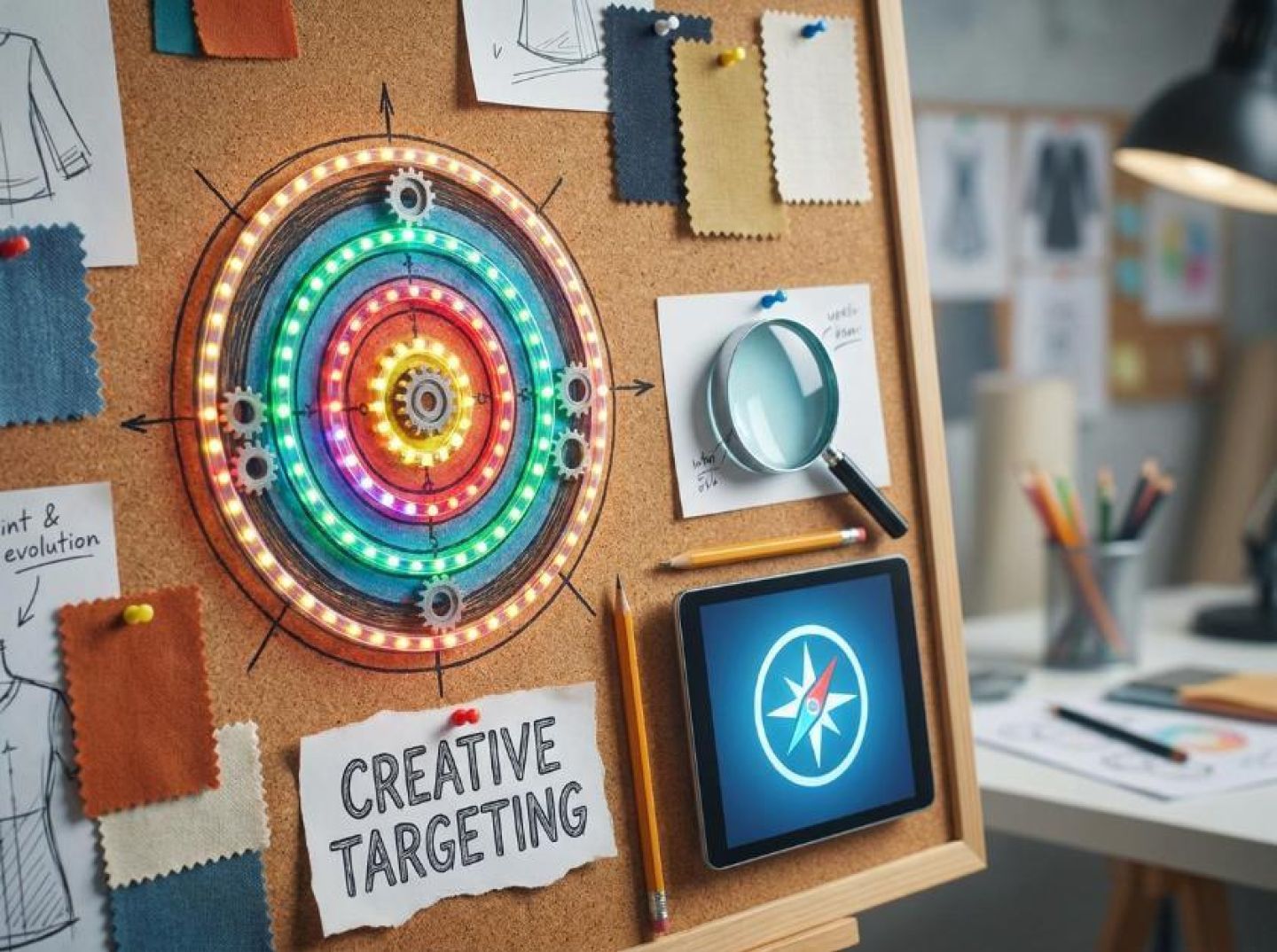
The irony cuts deeper when you consider what's happening on the targeting side. As platforms automate audience selection, creative itself is becoming one of the most important signals algorithms use to determine who sees an ad. Every headline, image, and call to action now functions as a de facto targeting input. That means the creative choices a performance marketer makes aren't just persuasion decisions — they're distribution decisions. Import a brand-building film designed to speak to everyone, and the algorithm will still try to find the narrow cluster of people most likely to click. The universality that made the work award-worthy becomes a liability inside a system that rewards specificity.
None of this means award-winning creative is useless to performance teams. It means the two disciplines operate on different feedback loops with different time horizons, and pretending otherwise is a recipe for wasted spend. Award campaigns aim for the right message for the right population over time. Performance platforms aim for the right micro-variation for the right individual right now. The tension between those two objectives isn't a bug to be patched — it's a structural feature of modern marketing that demands different strategies, different measurement frameworks, and, critically, different expectations for what "working" actually looks like.
The applause fades, but the strategic question remains: if you can't simply copy an award-winning campaign and expect it to perform, what should you extract from one? The answer requires understanding a tectonic shift that has already reshaped how ads reach people — and what that means for the relationship between creative and audience.
For most of TikTok-ads-payment-problems-how-to-add-a-payment-method" target="_blank" rel="noreferrer noopener">digital advertising's history, performance marketers treated targeting as the primary lever for lead quality. Need high-intent insurance shoppers? Layer demographics, life-stage data, and behavioral signals. Need prospective graduate students? Stack education interests on top of remarketing audiences. Creative mattered, of course, but it sat downstream of the audience-selection machinery. You picked the people first, then persuaded them. That hierarchy is collapsing. As MarTech has documented, platforms like Meta's Advantage+, Google's Performance Max, and TikTok's automated audience expansion are steadily pulling control away from manual targeting settings and handing it to machine learning. The algorithm decides who sees what, and it makes that decision based on the signals available — conversion data, yes, but increasingly the creative itself. Every headline, image, video hook, and call to action now provides contextual information about the intended audience and the desired action. Creative is no longer just a persuasion tool; it has become a de facto targeting signal.
This reframes what "learning from great ads" should actually mean for performance marketers. Consider a campaign like Expedia's award-winning Canada tourism push. The aspirational travel framing, the emotional triggers, the specific lifestyle cues embedded in its imagery and copy — these aren't just storytelling choices. They are qualifying language. They filter for a psychographic profile: someone who dreams of wide-open landscapes, values experiential spending over material goods, and responds to a particular emotional register. Inside a broad-targeting campaign, those signals do the work that demographic layering used to do. The algorithm reads engagement patterns against the creative, learns which users respond, and recalibrates delivery accordingly.
The performance marketer's job, then, is not to ask "How do I make ads this cinematic?" but rather "What qualifying signals in this creative could I isolate, test, and deploy as intent filters?" That distinction matters enormously. You're not stealing the story; you're reverse-engineering the positioning clarity and messaging framework underneath it — the inputs, not the production value.
This also explains why the competitive intelligence gap in modern advertising is shifting from media buying mechanics to creative strategy. When a competitor's CPM drops or their efficiency surges, the explanation increasingly lives in what their ads say and show, not just where they run or how much they spend. The creative itself encodes the audience strategy.
Practically, this means performance marketers should build a discipline around creative decomposition. When you encounter an award-winning or high-performing ad, catalog its qualifying elements: Does the headline name a specific pain point that filters out unqualified viewers? Does the imagery signal a price tier, lifestyle aspiration, or identity marker? Does the CTA pre-qualify intent — "Get your custom quote" versus "Learn more"? Each of these elements is a testable hypothesis. Isolate one, drop it into a broad-targeting campaign, measure its effect on lead quality and conversion rate, and iterate.
The strategic value of great advertising hasn't diminished in the age of algorithmic delivery. If anything, it has intensified. But the value lives in a different place than most marketers look. It's not in the polish. It's in the precision of the signal.
So you've identified that creative is the new targeting lever and that award-winning ads contain strategic raw material worth mining. The question becomes operational: how do you actually extract what's useful without falling into the trap of subjective admiration? The answer is a competitive intelligence workflow that treats every celebrated ad not as a template to replicate but as a hypothesis generator to be systematically deconstructed, varied, and tested at speed.
Step one: Strip the ad to its functional signals. Open your ad library of choice — Meta's Ad Library, TikTok's Creative Center, or a dedicated spy tool — and find the campaign or its closest performance-marketing derivatives. Ignore the cinematic craft. Instead, identify the ad's core qualifying language: the specific words and phrases that filter for a buyer rather than a passive viewer. Map the visual hierarchy — what does the eye hit first, second, third? Note the placement of social proof, the framing of the call to action, the contrast ratios that draw attention. These are not aesthetic judgments. They are structural variables you can isolate and test independently.
Step two: Map those elements to decision stages and intent signals. As MarTech has reported, AI-driven targeting is moving beyond demographic segmentation toward real-time intent, analyzing behavioral signals to anticipate what users are trying to accomplish in a given moment. That shift demands that you stop building campaigns around audience cohorts and start mapping messaging to where someone actually is in a decision. An award-winning ad might blend awareness-stage emotion with a conversion-stage CTA — a move that works in a Super Bowl spot but fractures in a feed. Your job is to untangle those layers and assign each element to the stage it serves best.
Step three: Generate variations that isolate individual variables. This is where the spy tool methodology diverges most sharply from traditional creative development. Instead of producing three polished concepts and A/B testing them over weeks, you generate dozens — or hundreds — of variations that each change a single element: headline structure, CTA verb, background color, testimonial placement, hook duration. The goal is not to find the "best" ad. It is to build a map of which individual signals drive performance so you can recombine winners into increasingly effective composites.
Step four: Deploy inside broad-targeting campaigns and let the algorithm surface winners. When execution is automated and targeting relies on intent signals rather than pre-built audience segments, differentiation comes from what MarTech calls stronger inputs — clearer positioning, sharper messaging frameworks, and more distinctive brand narratives. The algorithm does the sorting; your competitive advantage is the quality and volume of what you feed it. Brands that can test and adapt hundreds of variations quickly can respond to cultural moments, seasonal shifts, and competitive moves far faster than those locked into traditional production timelines.
Speed is the throughline. As Adweek has explored, the ability to predict creative performance before impressions are even purchased — and to compound incremental improvements at scale — is becoming a decisive competitive advantage. A three-percent lift in creative efficiency, repeated across hundreds of assets and millions of impressions, compounds into a performance gap that no single brilliant ad can close.
The award-winning campaign, then, is the starting gun, not the finish line. It tells you which emotional territories, narrative structures, and visual conventions are resonating at a cultural level right now. Your job is to take that signal, atomize it into testable components, and run it through a system designed to find what actually converts — not what wins applause.
You've done the hard work. You've identified an award-winning campaign worth studying. You've run it through a competitive intelligence workflow and extracted what looks like a set of promising creative signals — an emotional arc that builds tension before relief, a visual palette that breaks category conventions, a copywriting cadence that feels conversational without sacrificing authority, and a sound design choice that anchors the whole thing. The temptation now is obvious: throw all of it into your next creative sprint, produce dozens of variants that borrow liberally from every dimension, and let an AI-powered testing engine sort out what works.
This is the moment where most performance marketing teams sabotage their own learning. When you dump every variable you admire from a brilliant campaign into an automated optimization system simultaneously, you enter what AdExchanger has called "multivariate hell" — a state where you can observe that certain combinations outperform others but cannot isolate why. If an ad featuring a blue background outperforms one with a green background, was it the color? Or was it because the blue variant happened to reach users experiencing sunny weather that afternoon? If a creative featuring a particular demographic group shows a lift, is it genuine affinity or covariance with an unmeasured algorithmic bias inside the DSP? An automated system can shuffle thousands of variations and double down on whichever gets a quick click, but as AdExchanger's analysis makes clear, it cannot measure what it cannot see — and it remains completely blind to whether those winning variants are building anything durable or just chasing statistical noise.
The disciplined alternative is deceptively simple: extract no more than three or four distinct creative hypotheses from the campaign you're studying and test them in controlled experiments where each variable is genuinely isolated. You might test the emotional arc independently of visual style. You might test the copywriting cadence against your existing tone while holding everything else constant. True experimental design requires limiting variables, not expanding them to infinity — you can run robust tests on a handful of hypotheses in a clean environment, but you cannot scientifically test five thousand.
This is also where predictive creative technology earns its keep, but only under the right conditions. As Adweek's exploration of deep learning in advertising highlighted, the frontier capability isn't just optimizing creative in-flight — it's predicting creative performance before you even buy the impression. Deep learning models can score a creative concept's likely effectiveness against historical patterns, helping you prioritize which of your three hypotheses deserves media dollars first. But that predictive power depends entirely on the quality of the input. Feed the model clean, isolated hypotheses and it surfaces genuine signal. Feed it the output of a multivariate free-for-all and you're training it on noise.
The payoff for this restraint isn't dramatic. It's the kind of result that rarely makes a case study reel: a 3% incremental improvement in efficiency that compounds quietly over quarters until it becomes an unassailable competitive advantage. Those marginal gains — the ones Adweek's conversation with Cognitiv's Jeremy Fain positioned as the real unlock of AI-driven advertising — only materialize when each test cycle produces a genuinely learnable conclusion rather than an ambiguous correlation. The award-winning ad gave you a rich source of inspiration. Scientific isolation is what turns that inspiration into compounding knowledge.
The real problem isn't that brand marketers and performance marketers disagree on tactics — it's that they've built entirely separate epistemologies. Each side has developed its own definition of what counts as evidence, what qualifies as success, and what deserves budget. And each side's blind spot is precisely the thing the other side sees most clearly.
Brand marketers operate under an assumption so deeply held it rarely gets examined: that emotional resonance automatically translates downstream. Build enough awareness, tell a compelling enough story, win enough awards, and the funnel will take care of itself. But as AdExchanger has argued, even the best demand capture will eventually stall without solid demand creation — and the reverse is equally true. Demand creation that never submits itself to measurement isn't strategy; it's faith. Brand teams that resist quantifying the impact of their storytelling aren't protecting creative purity. They're protecting themselves from accountability, and in doing so, they make it easier for CFOs to redirect their budgets toward channels that can demonstrate results in a quarterly earnings call.
Performance marketers, meanwhile, have their own version of willful blindness. The unprecedented ability to track consumer behaviors and measure key outcomes has, paradoxically, created a dangerous blind spot: an over-indexing on what can be reliably measured — clicks, CPA, ROAS — while remaining functionally ignorant of whether their thousands of creative variations are building or slowly eroding the brand equity that makes those conversions possible in the first place. Customer acquisition costs rise, conversion rates fall, and incremental gains become more elusive. The growth ceiling isn't a media problem. It's a meaning problem. Performance teams have optimized the machinery of persuasion while hollowing out the substance of what's being communicated.
The fix isn't choosing a side. It's collapsing the distance between them.
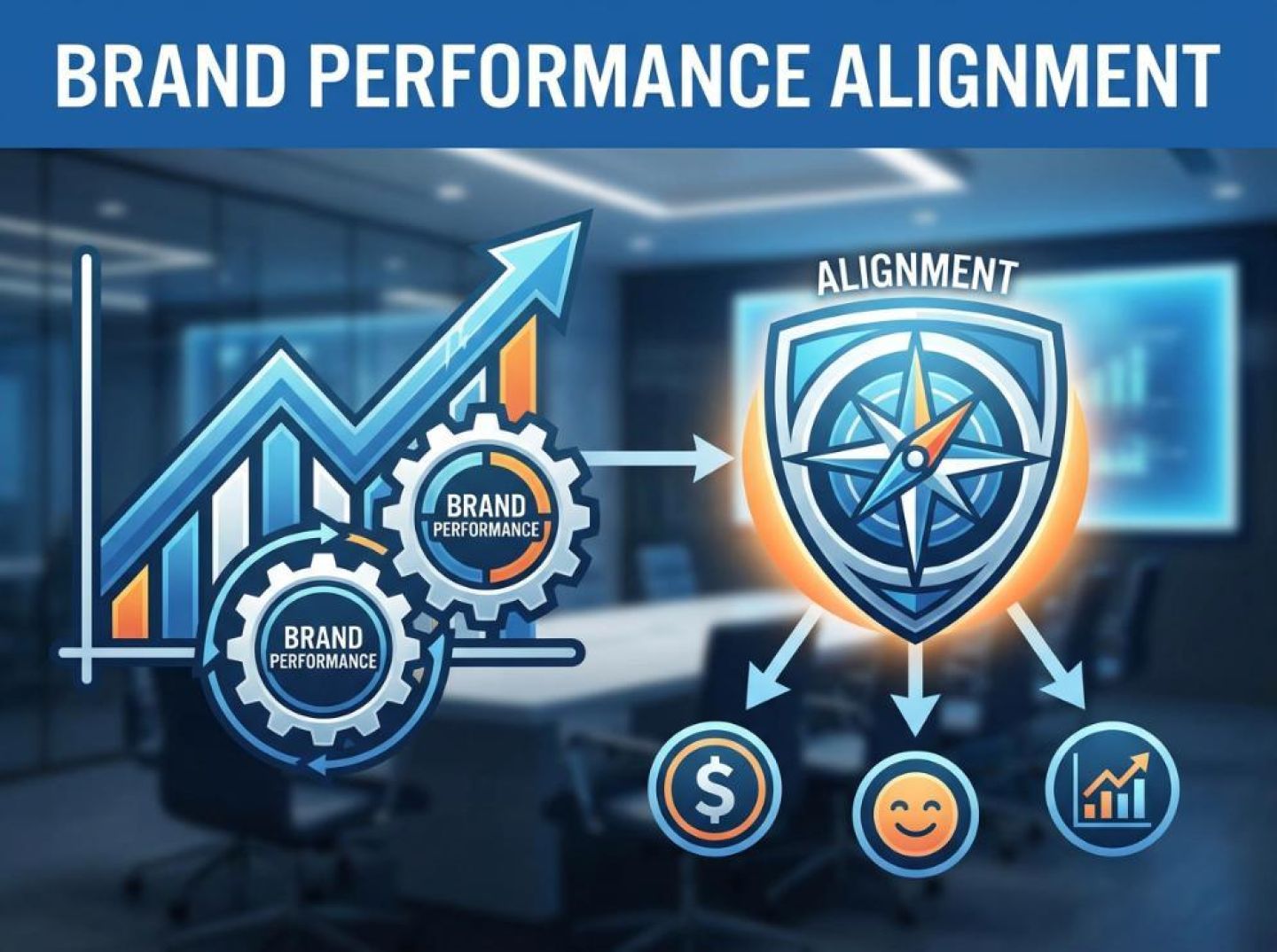
Jeremy Fain, CEO of Cognitiv, offered a useful frame in a recent conversation with Adweek, arguing that marketers should position media as "the middle, not the end" of the marketing process. In this model, continuous learning loops and predictive algorithms don't replace brand intuition — they pressure-test it. Award-winning creative provides the strategic clarity and distinctive brand narrative that should sit upstream of performance testing. It establishes the emotional territory, the visual grammar, the tonal register worth exploring. Performance data then tells brand teams which of those narrative elements actually move people — not in a focus group, not in a jury room, but in the unforgiving context of a real feed, a real inbox, a real search result.
This feedback loop matters more now than it ever has, precisely because the old division of labor is collapsing. As MarTech has reported, platforms like Meta's Advantage+ and Google's Performance Max are automating audience selection to the point where creative itself has become one of the most important signals for who sees an ad. When the algorithm decides targeting and your headline decides qualification, the line between "brand creative" and "performance creative" isn't blurry — it's gone.
The organizations winning right now aren't the ones with the best brand teams or the best growth teams. They're the ones who've built the connective tissue between those functions — where a Cannes-worthy insight can become a testable hypothesis within days, and where performance data flows back upstream to sharpen the next round of strategic thinking. The divide was always artificial. The cost of maintaining it is becoming impossible to ignore.
Receive top converting landing pages in your inbox every week from us.
Guide
Discover why out-of-home (OOH) talent pipelines overlook competitive intelligence and how smart affiliates can capitalize on this gap. Learn how to analyze competitor activity, interpret digital auction signals, build a cost-effective intelligence stack, and turn market insights into profitable advertising opportunities.
David Kim
7 minOct 9, 2026
Guide
Discover how OOH professionals can turn traditional billboard roles into high-ROI performance marketing careers. This guide shows how to reframe OOH work around measurable outcomes, competitor intelligence, landing-page optimization, and data-backed offers.
Liam O’Connor
7 minOct 8, 2026
Guide
Discover why OOH job boards are struggling to keep pace with the rise of data-driven media buying. This guide explores the modern skills OOH partners need, from audience intelligence and programmatic workflows to cross-channel measurement and performance strategy.
Priya Kapoor
7 minOct 8, 2026









)