8 minOctober 8, 2026

Our tools monitor millions of native, push, pop, and TikTok advertising campaigns.
Get StartedWalk into any serious out‑of‑home shop today and the tools look like they’ve been air‑dropped from a different industry. Traders are modeling trillions of possible unit combinations with AI, using platforms like AdQuick to stitch together location, demographic, and behavioral data into precise, performance‑driven plans. Networks such as Trillboards are wiring their inventory into machine‑learning “intelligence layers” like hellOOH, turning fragmented market signals into predictive demand curves.
On paper, this is not the OOH business you grew up with. It’s a software‑mediated, data‑rich, programmatic environment where out‑of‑home sits in the same optimization loop as paid social and CTV. The medium is racing toward what one industry leader described as a “future defined by precision and performance,” where OOH behaves like any other digital performance channel and real‑time data “brings OOH into parity with modern performance channels” inside a DSP‑style workflow, as the.
Yet if you scan the job boards that supposedly feed talent into this ecosystem, you’d think the biggest innovation in the last decade was swapping vinyl for digital faces.
Most OOH sales roles are still written as if the job is to “sell posters” with a rolodex and a smile. Trading and planning positions over‑index on basic “Excel proficiency” and generic “media planning experience,” while barely mentioning the need to operate in real‑time bidding environments, interpret multi‑source mobility data, or reconcile impression models with cross‑channel attribution. The language of the work—“territory management,” “client entertainment,” “rate card negotiation”—belongs to a world of static boards and quarterly avails.
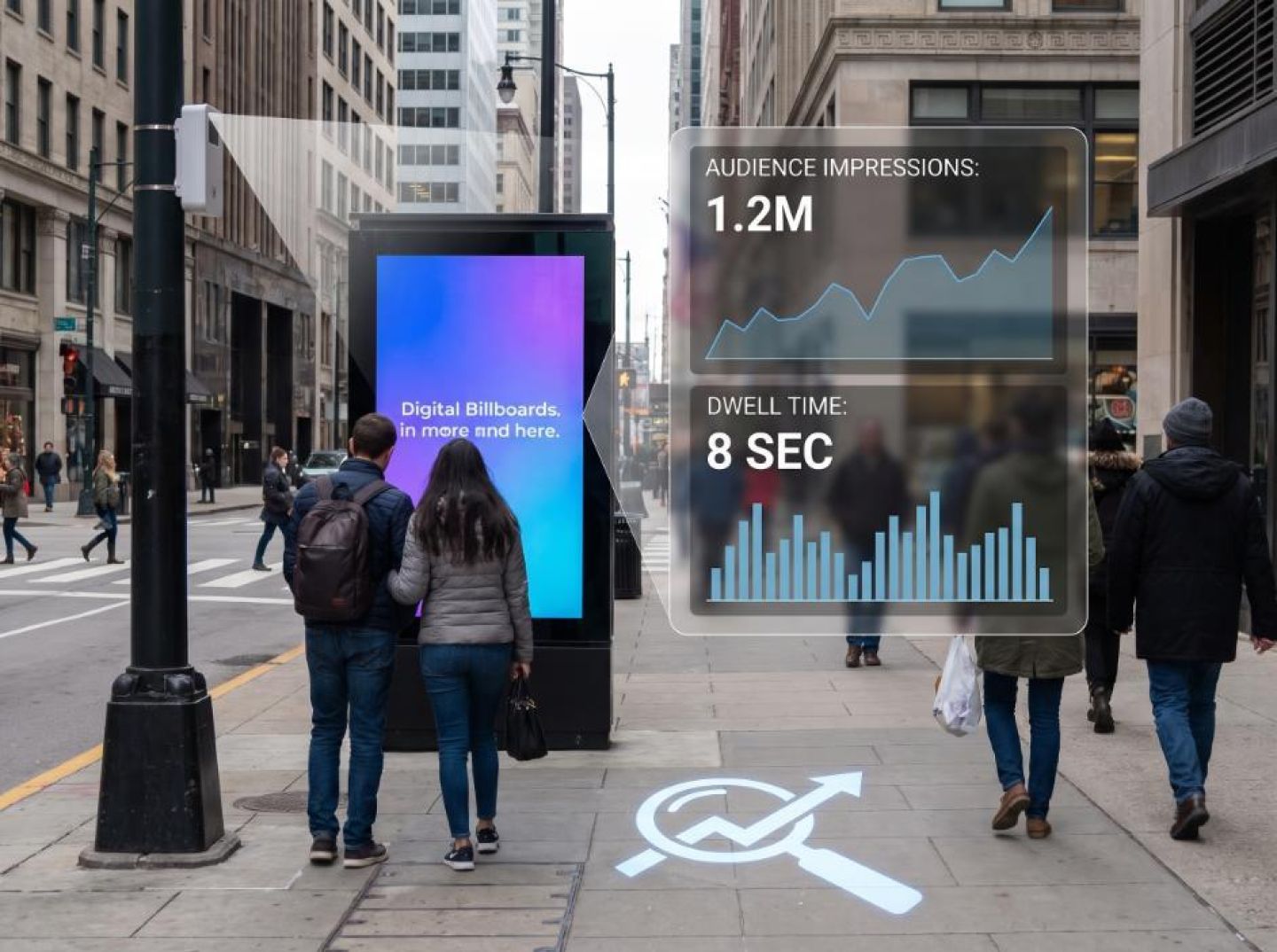
The dissonance becomes obvious when you compare those descriptions to how the channel actually operates. Today’s DOOH buying leans heavily on environmental and mobility data to approximate audience exposure: ticketing feeds, infrared footfall counters, sensor networks, mobile location signals from data brokers, and specialized camera‑based analytics from firms like Quividi. As one explainer on digital out‑of‑home notes, targeting is shifting from individuals toward probabilistic segments “at a certain time based on data collected from the environment,” and attribution is moving from gut feel to impression‑linked outcome analysis across the funnel, especially when DOOH is activated inside the same DSP as display, mobile, and CTV so that “DOOH‑exposed audiences feed retargeting pools” and contribute to multi‑touch models, as Clearcode’s overview emphasizes.
At the same time, the very definition of “performance” in OOH is being rewritten. The growth of digital formats, data integrations, and AI has made the medium “more dynamic and responsive,” far closer to digital media than in any previous era, but measurement frameworks are still fragmented, inconsistent, and grounded in legacy exposure models, as Jawad Hassan observes. That gap between what the channel can deliver and what its metrics can credibly express is now a “strategic constraint on growth,” not a mere technical quirk. In other words: the next generation of OOH talent won’t just push buttons on a DSP; they will help architect how this channel plugs into a unified, cross‑media data ecosystem and advances toward a single source of truth.
Then layer in the intelligence revolution. Trillboards explicitly frames its partnership with hellOOH as a move from “human‑interpreted market understanding to machine‑modeled demand intelligence,” arguing that the constraint is no longer infrastructure execution but “intelligence asymmetry,” where the players with better demand models “see the market earlier than everyone else,” according to their hellOOH announcement. That is not a classic media‑sales problem; it is a data science and market‑design problem wrapped in commercial skin.
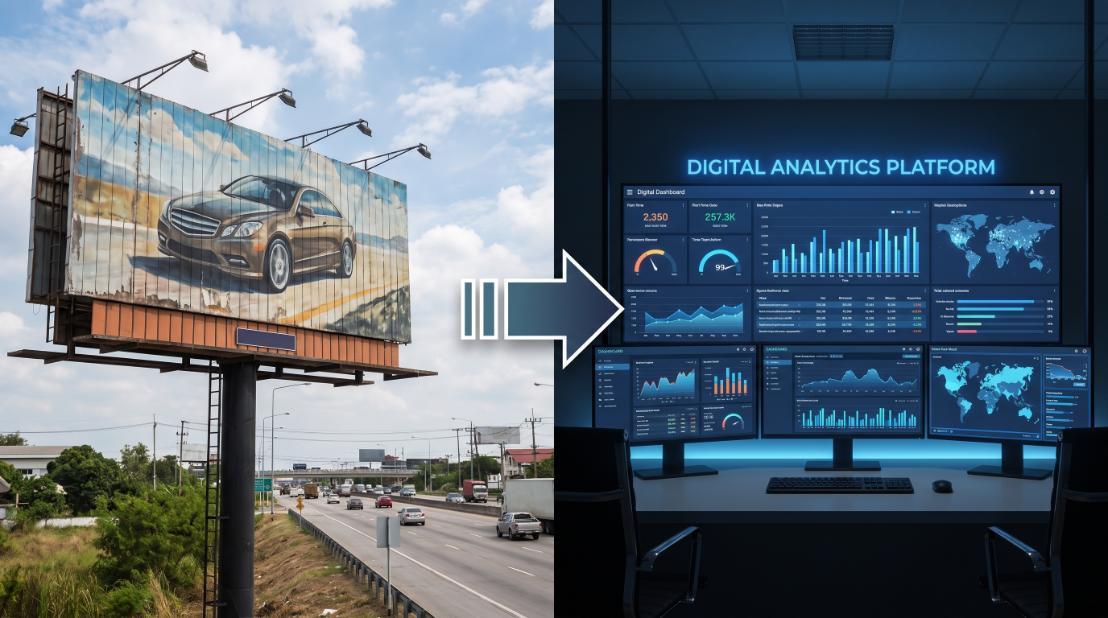
Put bluntly, OOH organizations are quietly becoming analytics and software companies that happen to monetize screens and structures. Their hiring pipelines, however, are still tuned to find relationship sellers, generalist planners, and operations coordinators who can manage permits, proofs of posting, and static avails. The industry is arming itself with dashboards, but job descriptions are still written for people who live on billboards.
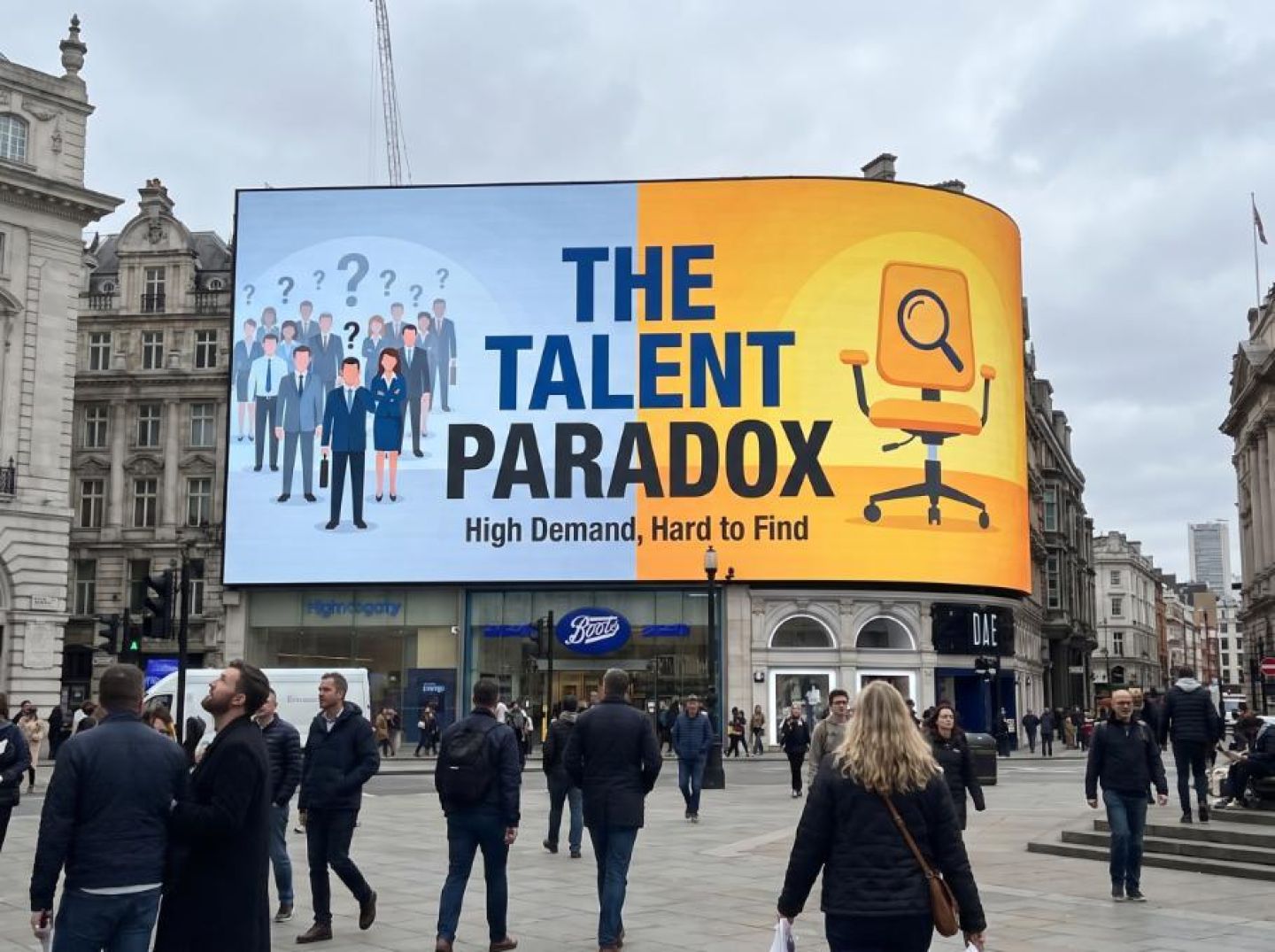
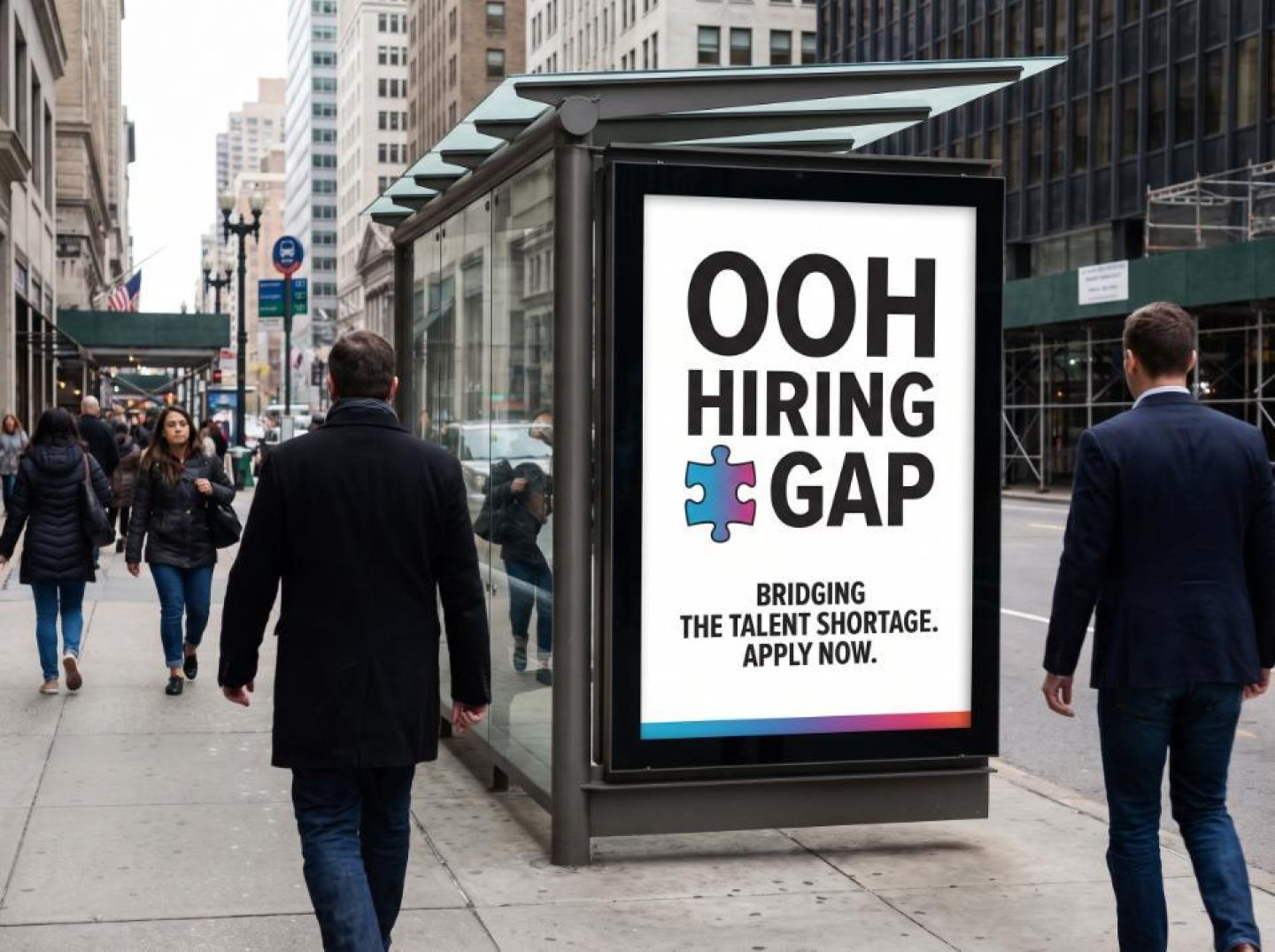
This is the OOH talent paradox: the tools, data, and expectations are unmistakably high‑tech, but the roles tasked with wielding them are framed in low‑tech, legacy terms. As long as that mismatch persists, data‑driven media buyers will keep evolving faster than the job market that’s supposed to serve them—and the smartest candidates will never even recognize themselves in the postings.
The most interesting question in OOH right now isn’t “What does this board cost?” It’s “Who, exactly, is responsible for making it solve a business problem?”
If you listen to the way the industry talks about itself, you’d think this shift had already happened. Thoughtful voices inside OOH are arguing that the category has to stop “selling billboards” and start selling outcomes. As one publisher bluntly put it, clients don’t wake up hoping someone will sell them a 14′ x 48′ on I‑95; they wake up wondering how to gain market share, launch products, and create momentum, and those are the outcomes they’re actually buying, not the steel and vinyl that deliver them, as OOH Today argued. That’s the right philosophical pivot. But philosophy doesn’t decide who’s hired, promoted, and empowered to do the solving.
On the buy side, the problem‑solvers are increasingly data‑driven media strategists, not “OOH specialists” in the old sense. These buyers are used to activating DOOH inside the same DSP as display, mobile, and CTV so exposed audiences can feed into retargeting pools and multichannel attribution, a workflow outlined in Clearcode’s overview of DOOH. They’re comfortable treating OOH as a full‑funnel performance channel, not just an awareness line item. For them, a billboard isn’t a product; it’s one possible node in a measurable system.
On the supply and platform side, the most serious “solving” is happening inside software. Platforms like AdQuick weren’t built to make prettier rate cards; they were built to eliminate gut‑feel planning by piping massive volumes of granular data into planning, buying, and optimization. When a platform can move a brand from ideation to live campaign in 48 hours, standardize workflows across thousands of media owners, and plug OOH performance straight into the rest of a brand’s marketing stack, as AdQuick describes its role, the center of gravity shifts. The value moves away from who “has relationships with plant operators” and toward who can interpret dashboards, define hypotheses, and iterate.
That’s a fundamentally different skill set than traditional OOH sales. The classic AE is trained to sell locations, impressions, and CPMs. The modern buyer, by contrast, wants someone who can take a business question—“Can we lift in‑store revenue 8% in these ten DMAs over eight weeks?”—and translate it into an addressable audience, a DOOH mix, a measurement framework, and a test plan. They expect their partners to understand how signals like ticket sales, IR sensors, mobile location data, and environmental inputs such as weather or time of day can shape DOOH targeting and analytics, just as Clearcode explains. That’s not a pitch deck; that’s a product and analytics role disguised as “media.”
Meanwhile, the definition of “out of home” itself is expanding into environments that behave more like addressable retail media networks than roadside inventory. When retailers turn stores into media properties—using loyalty data, mobile signals, and in‑store screens to reach shoppers along “aisles as avenues” and “end caps as premium inventory,” as one OOH Today analysis of Walmart’s media strategy framed it—the line between OOH and retail media blurs. The core business isn’t selling boards; it’s connecting brands with consumers in physical space, with data and closed‑loop outcomes baked in from the start.
That raises the uncomfortable talent question: in this emerging ecosystem, who is actually architecting the solutions? Retail media networks and marketing‑science teams inside brands are hiring people who think in experiments and incrementality. OOH platforms are hiring data scientists, product managers, and performance strategists. Yet many OOH job boards are still optimized for legacy roles—plant sales reps, static operations, basic account service—precisely the functions least equipped to lead conversations about attribution models, cross‑channel optimization, or how OOH impressions translate to verified store visits and web conversions, capabilities that platforms like.
The industry is saying all the right things about solving business problems instead of selling panels. But as long as the formal roles being advertised orbit inventory rather than outcomes, the real problem‑solvers will keep congregating elsewhere—in DSPs, in retail media, and in cross‑channel performance teams—leaving OOH job boards oddly disconnected from the very future the industry claims to want.
Measurement in OOH isn’t just “catching up” to digital anymore; in many ways, it has already blown past the mental models of the people who are supposed to be using it.
On the supply side, the pipes are there. Screens are dynamic, inventory is liquid, and data is stitched into almost every surface. Modern platforms like AdQuick’s measurement suite can track verified store visits, correlate OOH exposure with web analytics, and surface the halo effect on adjacent digital channels in near real time. DOOH networks are tapping into ticketing data, IR sensors, in‑store cameras, and mobile location data from exchanges and brokers to estimate audiences and optimize creative in response to the environment. You can trigger different messages based on weather, time of day, or even the ebb and flow of foot traffic.
On the demand side, though, a large chunk of the industry is still acting as if “measurement” means a PDF after the campaign with modeled impressions and a couple of photos.
This gap is structural, not just technical. As Jawad Hassan points out in his piece on the push toward a “single source of truth” for OOH, measurement is fragmented across markets, formats, and operators. Each seller leans on its own mix of legacy traffic counts, visibility scores, and proprietary indices. Those frameworks were designed for static boards and scarce data, not for programmatic DOOH stitched into a modern, omnichannel plan. The result: metrics that don’t line up across vendors, don’t map cleanly to the language of digital performance, and don’t plug neatly into a CMO’s media dashboard.
Data‑driven buyers have moved on. They’re not asking, “How many impressions did this board deliver?” They’re asking questions that sound more like: Which combination of units yields the lowest cost per incremental store visit? How does adding DOOH to our mix shift overall ROAS when you include the uplift on search and social? Which placements feed the highest‑value retargeting pools in our DSP?
Those questions are answerable today. According to AdQuick’s description of its API and attribution stack, OOH exposure data can be piped directly into the same models brands already use to evaluate display, mobile, and CTV, with daily performance readouts instead of quarterly recaps. Likewise, DOOH impressions can be activated and analyzed inside the very same platforms used for online media, so that DOOH‑exposed audiences flow into retargeting and cross‑channel attribution rather than getting trapped in a silo.
Yet many OOH job boards and hiring managers are still screening for “relationships with plant operators” and “experience reading traffic counts” instead of literacy in attribution models, experimentation frameworks, and omnichannel planning. The tech stack is ready for Bayesian lift studies; the job descriptions are written for people who are proud of their laminated rate cards.
You can see how off the calibration is when you compare OOH’s self‑image to adjacent categories. Retailers now think like media companies: they’re combining loyalty data, mobile IDs, and in‑store screens so that the aisle becomes an impression stream and the store becomes a media property. Those teams expect dashboards that connect on‑shelf exposure to basket‑level outcomes. They’re building measurement muscle around incrementality and closed‑loop reporting, not counting heads walking past an endcap.
Meanwhile, DOOH sellers still talk about impression multipliers instead of incrementality, reach curves instead of response curves. The language of the tools and the language of the people using them have drifted apart.
This is why the industry’s obsession with “education” misses the point. The limiting factor isn’t that the math is too hard or the models too advanced. It’s that too many roles in OOH are defined as if the job is to defend a rate card, not to interrogate a dataset. When measurement evolves faster than the people using it, the tools don’t magically drag the culture forward. Instead, the culture forces the tools to operate in “reporting theater” mode—flattening rich, real‑time, cross‑channel insights into the comfortingly familiar shape of a post‑buy recap.
The buyers who live in dashboards are already here. The question is whether OOH hiring and talent development will catch up to the way the channel can be measured today—or keep recruiting for a world where the only thing that mattered was how many cars drove by yesterday.
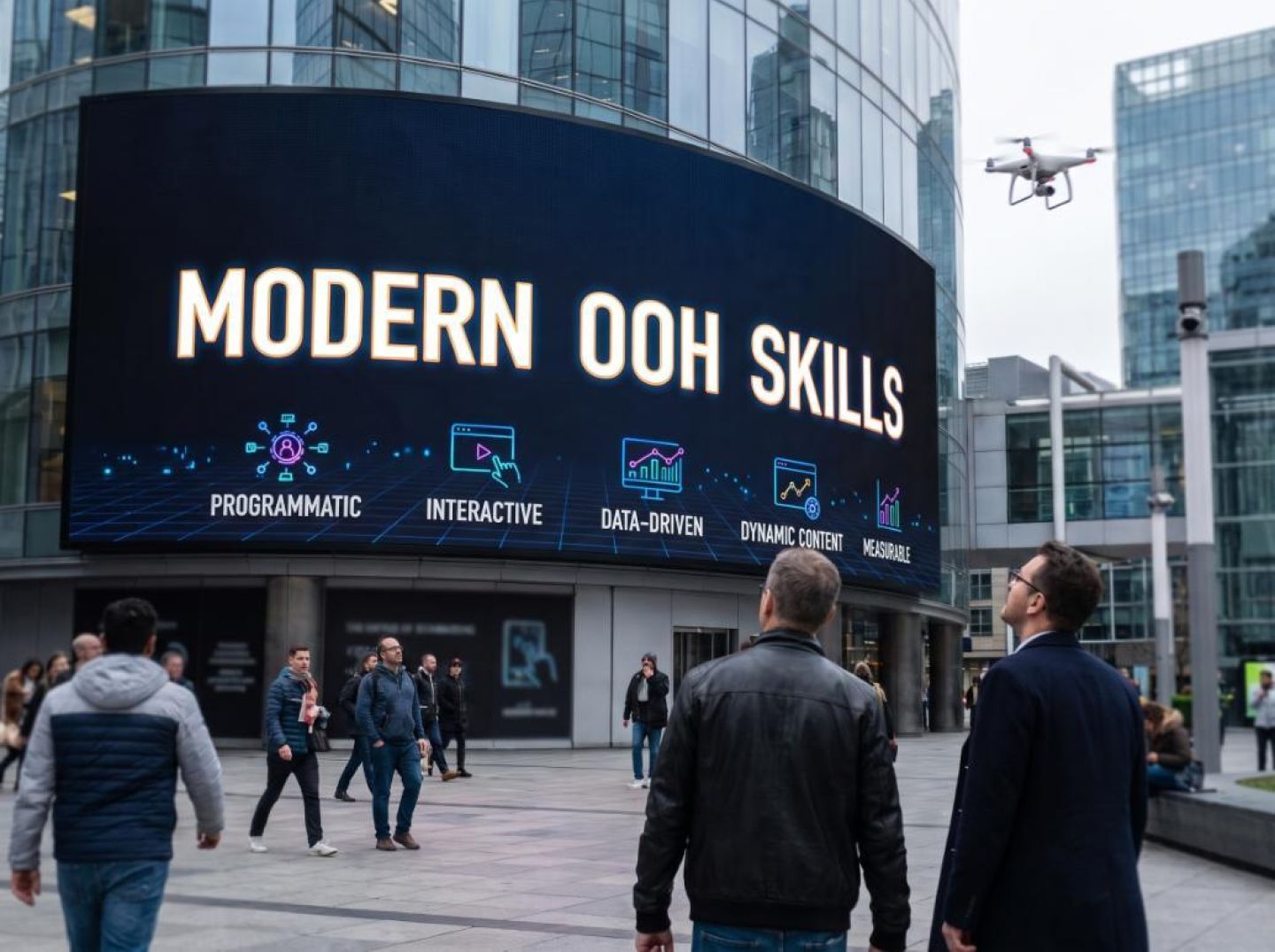
The disconnect between OOH job boards and modern media buyers starts with a basic misunderstanding of what “OOH skills” actually are now.
If you’re a performance marketer, you don’t need someone “who knows billboards.” You need an OOH partner who can operate like an extension of your growth team: fluent in data, accountable to outcomes, and comfortable inside the same tools and models you use for every other channel.
In practice, that means five non‑negotiable capabilities.
First, fluency in audience and demand intelligence. Modern OOH is no longer about guessing which highway exit “feels right.” Platforms like hellOOH are already using machine‑learning models to turn fragmented location, campaign, and relationship data into predictive demand signals. When networks like Trillboards adopt that intelligence layer, they’re not just automating buying; they’re seeing where demand will be before their competitors do. A useful OOH partner understands how those signals are generated, how reliable they are, and how to translate them into media plans that match your business forecast, not just your budget line.
Second, the ability to work inside a unified, digital‑first measurement framework. As Jawad Hassan explains, OOH is quickly gaining digital‑like responsiveness, but its measurement is still fragmented: different geos, different methodologies, and very little interoperability with the rest of the marketing stack. The partners who will matter to modern advertisers are the ones who can normalize OOH exposure and outcome data into the same “single source of truth” your team uses for search, paid social, and CTV—whether that’s a MMM, an MTA setup, or a custom data warehouse. If a candidate’s idea of reporting is a PDF recap with photos and bonus impressions, they’re not ready for where your analytics is going.
Third, real competence in data‑driven targeting and optimization. Today’s DOOH campaigns are increasingly planned on behavioral and environmental signals—ticket sales, IR footfall sensors, third‑party audience panels, mobile location data, even weather and time‑of‑day triggers, as outlined in this overview of DOOH targeting. A modern OOH specialist should be able to answer questions like:
If they can’t describe how they’ve used mobile location data or environmental signals to refine a campaign in real time, they will be a bottleneck, not a strategic asset.
Fourth, comfort with programmatic workflows and performance thinking. Tools like AdQuick’s platform are already treating OOH as a fully integrated performance channel: trillions of unit combinations scored by machine learning, inventory accessed through a DSP, and outcomes measured alongside other digital buys. The OOH people who help you win are the ones who can:
This is less about “knowing the local plant” and more about being able to debug a line item in the same way your paid social manager debugs a broken ad set.
Finally, a bias for cross‑channel strategy, not channel silos. Future‑proof OOH practitioners don’t talk about billboards as an isolated awareness play; they understand OOH as part of a full‑funnel system. When DOOH is activated through the same buying environment as display and mobile, DOOH‑exposed audiences can feed retargeting pools and attribution models can finally account for OOH’s “halo effect” on adjacent campaigns, as AdQuick’s team argues. The right partner knows how to brief your lifecycle team, analytics team, and creative team on OOH at the same time—and how to read OOH’s performance in the context of CAC, LTV, and multi‑touch lift, not “OOH metrics” in a vacuum.
The takeaway for hiring managers and media buyers is simple: if a role description could have been posted in 2013, you’re recruiting for the wrong decade. The skills that matter now live at the intersection of data science literacy, programmatic execution, and cross‑channel growth strategy. The OOH partners who can’t speak that language will increasingly be invisible to the media buyers who do.
If the modern buyer is living in dashboards, why are OOH job boards still hiring for billboards?
Because structurally, the people writing those descriptions are optimized for the last era of OOH, not the next one.
Most OOH hiring is still done by asset‑centric organizations: plant operators, local reps, traditional agencies whose P&L is tied to filling faces, not building full‑funnel performance engines. Their success has historically depended on coverage maps, rate cards, and relationships. When your value is framed as “I can get you the I‑95 board near the stadium,” you don’t feel an urgent need to ask whether a candidate can build a geo‑lift model or wire DOOH into a DSP.
That legacy mindset shows up in how they think about data. In the classic world, “measurement” meant modeled impressions and a PDF recap. Even as OOH has become dramatically more dynamic and data‑rich, measurement frameworks in many markets still rely on “legacy methodologies, estimated audience models, and post‑campaign reporting frameworks” that were built for static posters and limited data rather than real‑time optimization, as Jawad Hassan notes in his analysis of OOH’s “single source of truth” problem. If your internal reporting is rooted in that world, you’re going to recruit for people who can navigate those systems, not people who can stand up incrementality tests or stitch together log‑level feeds.
There’s also a basic education gap about what “data‑driven OOH” now entails. Modern DOOH targeting pulls from a diverse mix of environmental and behavioral signals—ticket sales, IR sensors in malls, mobile location data from exchanges, weather and time‑of‑day triggers, and more. Treating DOOH as a full‑funnel channel means activating it in the same DSPs that run display and CTV so exposed audiences can flow into retargeting and attribution models instead of being measured in isolation. But if your leadership still thinks in terms of “buy the board, send the proof‑of‑posting,” they will default to hiring for permitting know‑how and local traffic patterns rather than SQL literacy or experience with log‑level data from mobile SDKs.
Another reason job boards aren’t asking for these skills: many sellers don’t yet believe they can capture premium pricing for them. Supply has outpaced demand across digital out‑of‑home; as one overview points out, DOOH inventory is often oversupplied and undersold, which encourages a mindset of “move the metal” via underpriced space rather than package advanced targeting, analytics, and guaranteed programmatic deals as distinct value propositions for which you need different talent on staff, as described in this breakdown of DOOH economics. When your margin story is volume‑driven, you hire more sellers and coordinators. When it becomes intelligence‑driven, you start hiring analysts, data engineers, and performance strategists. Most OOH organizations haven’t fully crossed that bridge.
Meanwhile, platforms at the bleeding edge are quietly rewriting the requirements list—but they’re still the exception, not the default. A platform like AdQuick isn’t just digitizing old processes; it is ingesting behavioral and demographic data, applying machine learning to trillions of unit combinations, and pushing OOH into parity with performance channels via programmatic DOOH buying. To deliver that, you need people who understand AI‑driven optimization, cross‑channel attribution, and the “halo effect” OOH has on adjacent digital campaigns. Yet many traditional operators barely reference this reality in public‑facing roles because they’re not building those capabilities in‑house—they’re leaning on partners or simply ignoring the opportunity.
Finally, there’s a cultural lag. Performance marketers read about the 60/40 brand‑to‑performance balance and see OOH as a way to rebalance their mix while still driving measurable outcomes. When an LED truck campaign can build top‑funnel awareness and prime lower‑funnel response at the same time, as argued in modern takes on OOH effectiveness, it stops being a “nice‑to‑have” and becomes a core lever in performance strategy. But most OOH job posts are still written by people who think in awareness‑only terms, so they optimize descriptions for “brand” credentials and overlook the performance skill set entirely.
In other words: job boards aren’t asking for data‑driven OOH skills because the organizations behind them are still wired for a pre‑data marketplace. The buyers have moved to dashboards; much of the supply side is still writing job descriptions for a world of billboards.
Receive top converting landing pages in your inbox every week from us.
Guide
Discover how OOH professionals can turn traditional billboard roles into high-ROI performance marketing careers. This guide shows how to reframe OOH work around measurable outcomes, competitor intelligence, landing-page optimization, and data-backed offers.
Liam O’Connor
7 minOct 8, 2026
Guide
Discover why OOH job boards are struggling to keep pace with the rise of data-driven media buying. This guide explores the modern skills OOH partners need, from audience intelligence and programmatic workflows to cross-channel measurement and performance strategy.
Priya Kapoor
7 minOct 8, 2026
Guide
Discover why high-concept campaigns like “Break Conferences” and “World Menu Heists” can generate outsized attention without requiring massive media budgets. This guide breaks down how to build ownable campaign IP, use familiar cultural formats, and turn a simple idea into a scalable, social-first marketing world.
Samantha Reed
7 minOct 7, 2026