7 minOctober 8, 2026

Our dropship tool integrates with Shopify and Woo-Commerce stores and automates your entire dropshipping business!
Get StartedScroll through any recent batch of out‑of‑home (OOH) classified ads and a pattern jumps off the page—just not the pattern a performance marketer is trained to look for.
Job boards built around OOH roles, like the recurring “employment opportunities” round‑ups from OOH Today, are packed with titles that sound appealing on the surface: General Manager, Sales Manager – Outdoor Advertising, National Account Executive, Local Media Sales Executive. The copy leans hard on geography and growth—Green Bay, Southern Illinois, Miami, Dallas, Los Angeles, Denver—and on the promise of joining “one of the fastest‑growing Out of Home (OOH) media companies in the United States,” as Link Media Outdoor positions itself.
What’s conspicuously absent in almost every listing is any mention of return on investment.
Instead of talking about cost per lead, marketing mix modeling, incrementality, or attribution, the roles emphasize territory, asset footprint, and tenure in the billboard world. General manager candidates are told they’ll “oversee a growing market” and “lead a high‑performing team” for a portfolio that spans Alabama to Wisconsin, but the requirements center on “billboard industry experience” and local market familiarity, not the ability to tie impressions to pipeline or revenue. Ad sales account executives are invited to “take your career to new heights” in cities like Miami or Los Angeles, yet the core responsibilities are framed as selling space, managing accounts, and hitting sales quotas—not designing accountable campaigns.
Across multiple weekly lists of “12 OOH Employment Opportunities,” the structure is the same. The sales section highlights roles from a Sales Manager – Outdoor Advertising in Southern Illinois to a National Account Executive in Los Angeles and a Local Media Sales Executive in Denver, while the real estate and operations section promotes positions like Real Estate VP/Director/Associate and Director of Operations, alongside creative and technical openings such as Graphic Designer/Brand Marketing Specialist – OOH, Sign Installer, and LED Video Screen Service & Installation Tech. In each case, the language is about assets, logistics, and production: billboard faces, mobile units, truck sides, experiential installations, printing, and installation services. Even the “Free Agents (positions wanted)” area in these classifieds round‑ups is framed around availability and category (“Sales,” “Printing,” “Services”) rather than performance expertise.
This isn’t accidental. Traditional OOH has historically been sold as inventory, not as a performance channel. Job descriptions mirror that heritage. They promise “career opportunities in out‑of‑home, including management, printing, mobile billboards, photos, truck sides, and experiential,” but stop short of articulating how those opportunities translate into measurable business outcomes for advertisers or into analytically driven career capital for employees.
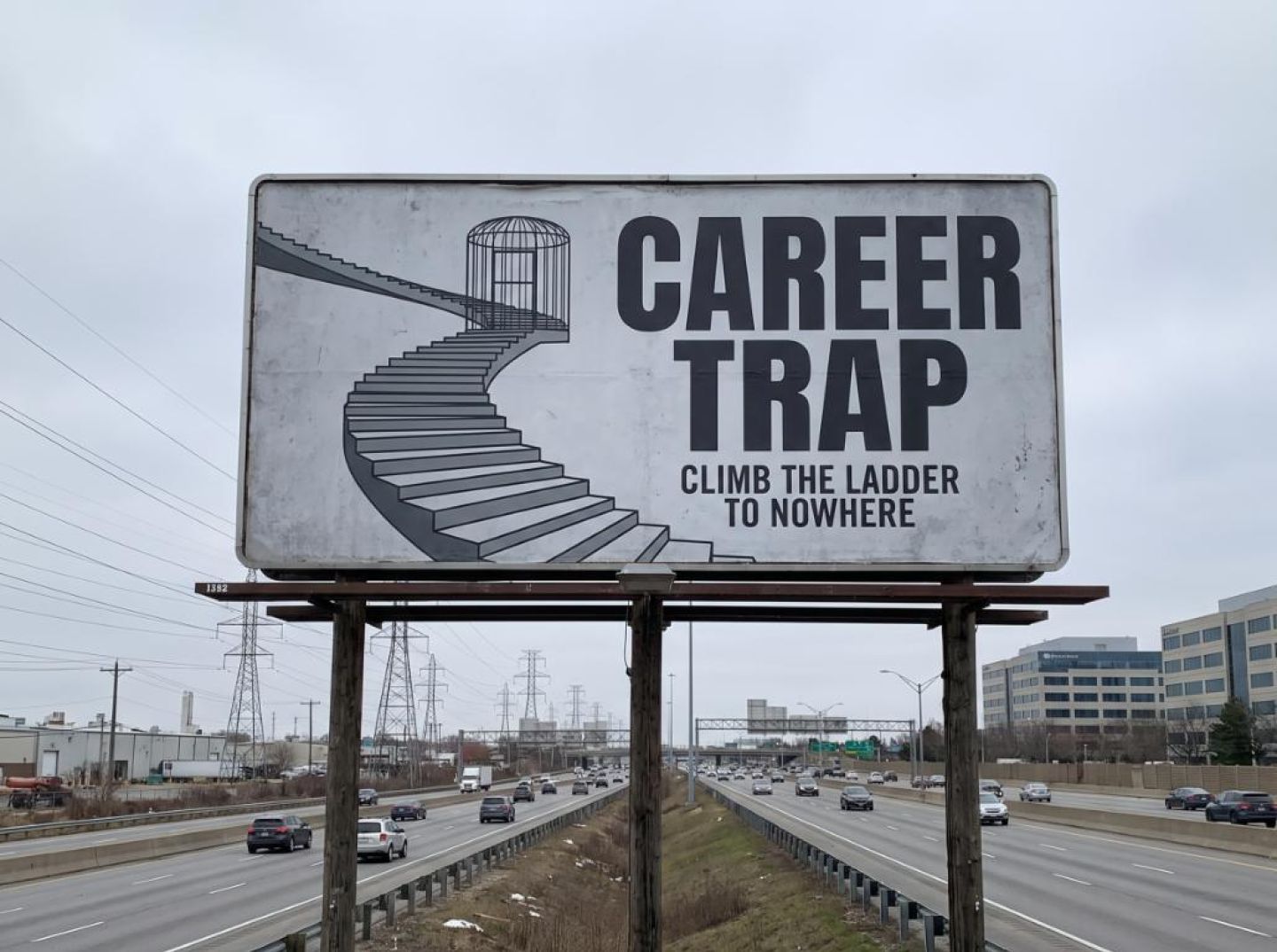
The result is a subtle but powerful “billboard career trap.” Talented people are funneled into roles that sound commercial and results‑oriented—General Manager, Account Executive, Sales Manager—yet are structurally separated from the metrics that define modern marketing success. If your day‑to‑day is framed around “owning a market,” “managing inventory,” and “closing contracts,” you may never be asked, trained, or given the tools to prove whether those boards are actually moving the needle on customer acquisition costs or lifetime value.
For ambitious professionals who sense that OOH should be playing in the same measurement‑rich arena as paid search, social, and programmatic, this disconnect can be frustrating. You’re surrounded by large budgets and visible assets, but the job architecture itself rarely mentions experimentation, optimization, or attribution. The postings celebrate footprint breadth, company growth, and industry pedigree; they barely nod to dashboards, data, or ROI.
That gap between how OOH careers are marketed and how modern marketing value is created is exactly what needs to be bridged. Until the language of performance—tests, lift, efficiency, payback—shows up in the very way these roles are defined, most “opportunities” will keep people orbiting around billboards as physical objects, instead of positioning them as strategic operators in a high‑ROI, cross‑channel performance ecosystem.
If you only read OOH job descriptions, you’d think the highest form of success is “filling faces with smiles” or “owning your local market.” What’s missing almost everywhere is the language that actually runs modern marketing organizations: acquisition cost, conversion rate, marginal lift, payback period.
That’s not because OOH can’t deliver those outcomes. It’s because most roles are framed as inventory‑first, not outcome‑first.
Scroll through a recent OOH Classifieds Today roundup and the pattern is obvious. Titles like “General Manager,” “Sales Manager – Outdoor Advertising,” and “Account Executive – Billboard Ad Sales” all foreground territory, boards, and relationships. The Link Media Outdoor posting, for example, pitches a “results‑oriented leader with billboard industry experience” to “oversee a growing market” and “lead a high‑performing team,” but never once mentions pipeline contribution, lead quality, or revenue attributable to campaigns. The success story is running the market, not compounding the return on ad spend in that market.
This is the impression trap: the jobs are sold around assets and access—how many structures you control, how many advertisers you know, how many installs your team can complete—rather than the impact those assets have on measurable business outcomes. Even creative and operations roles in the same employment listings are framed as “Graphic Designer/Brand Marketing Specialist – OOH” or “LED Video Screen Service & Installation Tech,” with the value proposition focused on production competency, not performance insight.
To bridge into performance marketing, you have to reframe these same responsibilities in ROI terms—without waiting for the job descriptions to catch up.
A “Sales Representative” selling digital boards in Dallas might think their job is to “hit quota.” In a performance lens, that same role is closer to a channel manager for a high‑intent traffic source. Every proposal becomes a miniature media plan where you can push advertisers toward trackable outcomes: using unique URLs, QR codes, dedicated promo codes, or short vanity domains that tie specific locations or flights to concrete results. When you help a local advertiser see that their “brand awareness” board near a stadium drove a 28% lift in direct‑to‑site traffic on game days, you are no longer just selling spots—you are running an attribution experiment.
The same is true up the org chart. A “General Manager” for a cluster like Green Bay isn’t just managing leases, permits, and a sales team; they effectively own a geographic performance channel. They can segment inventory by context (commuter vs. weekend leisure), align pricing to downstream value (premium rates for boards historically correlated with higher conversion), and push their reps to package placements in ways that support A/B testing for national brands. When that GM walks into a performance‑oriented interview later, they can talk not just about “growing the book,” but about increasing advertiser retention by demonstrating incremental lift and improving contract values by tying renewals to measured outcomes.
Even the more “back‑of‑house” roles listed under operations and installation can be reframed as performance levers. A “Director of Operations” for an OOH company like Encompass Media Group, mentioned alongside installers and service techs in the classifieds, can quantify how faster turnaround on creative swaps enables more agile testing. Every day you shave off between creative approval and in‑field execution is one more day of optimized copy, better call‑to‑action language, or more resonant imagery running at scale. That is classic performance optimization—it’s just being hidden under the label of “operations excellence.”
Reframing your role starts with your own vocabulary:
The work you’re doing in OOH already touches audience targeting, creative testing, funnel impact, and incrementality. Once you start describing it that way—and structuring your day‑to‑day decisions around cause and effect instead of just coverage and contracts—you stop looking like “the billboard person” and start looking like what you actually are: a performance marketer whose channel just happens to be made of steel, vinyl, LEDs, and traffic flows.
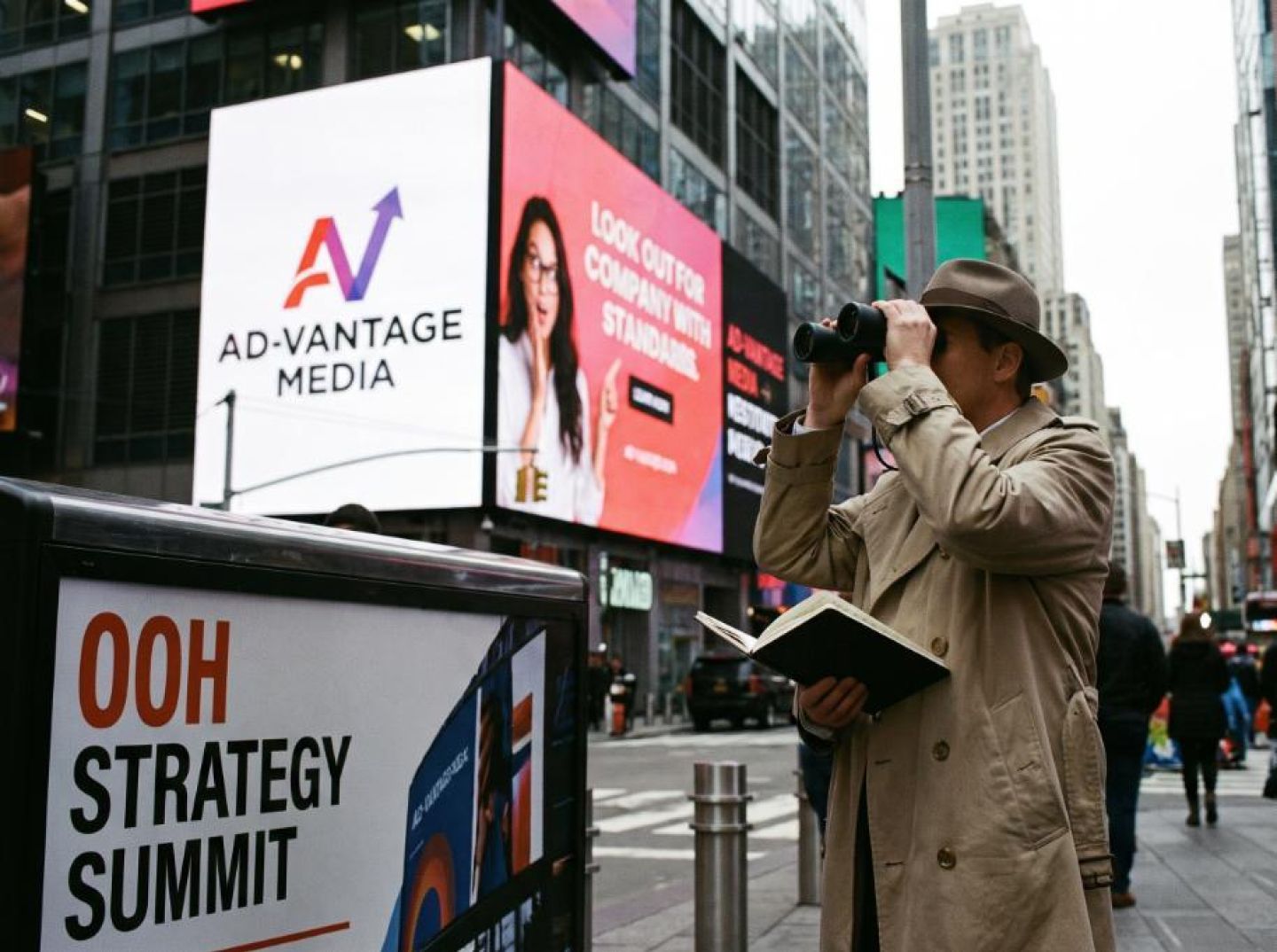
Most OOH people already “spy” on competitors. You notice when a rival snagged that sightline on the highway, or when a national brand quietly replaced your client on a prime wallscape. The difference is that performance marketers turn that ambient awareness into a deliberate, repeatable intelligence workflow.
Here’s how to do the same with tools and habits you can run from your laptop—no DSP log‑ins required.
Start with where the money is moving: hiring. Every time a company posts “OOH” or “billboard” anywhere in a job description, they’re telling you they either:
a) already spend on OOH, or
b) are about to.
Instead of skimming OOH‑specific listings like the recurring “employment opportunities” round‑ups from OOH Today to see who’s hiring, read them like a performance marketer reads a media plan:
Then go beyond OOH‑specific boards. Search LinkedIn, Indeed, and built‑in job search on platforms like Google for phrases such as “out of home media,” “retail media,” “offline acquisition,” or even “TV and OOH” in job ads for growth managers and media buyers. When a DTC brand posts for a “Performance Marketing Manager – Paid Social, Search & OOH,” they’re making a much louder statement than any press release: “OOH is in our performance mix.”
Build a simple spreadsheet or Notion board and log:
This becomes your personal “who cares about OOH as a performance channel” database—gold when you’re pitching or looking to cross over into those teams.
Performance media buyers live inside dashboards; OOH pros live in the real world. You can turn that into structured intelligence.
Pick three priority markets where you have inventory or career ambitions. For each:
Over a month or two, you’ll see patterns: which categories are suddenly over‑represented, which formats are being paired with performance‑oriented CTAs, which brands are testing QR codes versus vanity URLs.
This is exactly how a media buyer thinks: not “nice board,” but “they’re testing three messages across static, transit, and mobile in the same DMA to see what lowers blended CAC.”
A common frustration in OOH: you pitch “marketing” but the budget actually lives with “growth,” “acquisition,” or “media.” This is where competitor job postings are a cheat code.
When you see a billboard operator hiring a “General Manager” or “Sales Manager – Outdoor Advertising” in a specific region—as in the Green Bay or Southern Illinois openings—you’re learning how that company organizes revenue responsibility. Translate that thinking to advertisers:
Catalog these structures. Over time you’ll build intuition about which titles to pursue when you want to frame OOH as a performance lever—not just a line item on an awareness plan.
Collecting data is easy; the media‑buyer move is turning it into hypotheses. Take any one advertiser you’ve logged and ask:
By forcing yourself to answer in performance terms—incremental lift, CAC, payback period—you’re not just spying on competitors. You’re practicing the exact analytical muscles you’ll need to step confidently into a performance marketing role, while staying rooted in the OOH world you already understand better than most media buyers ever will.
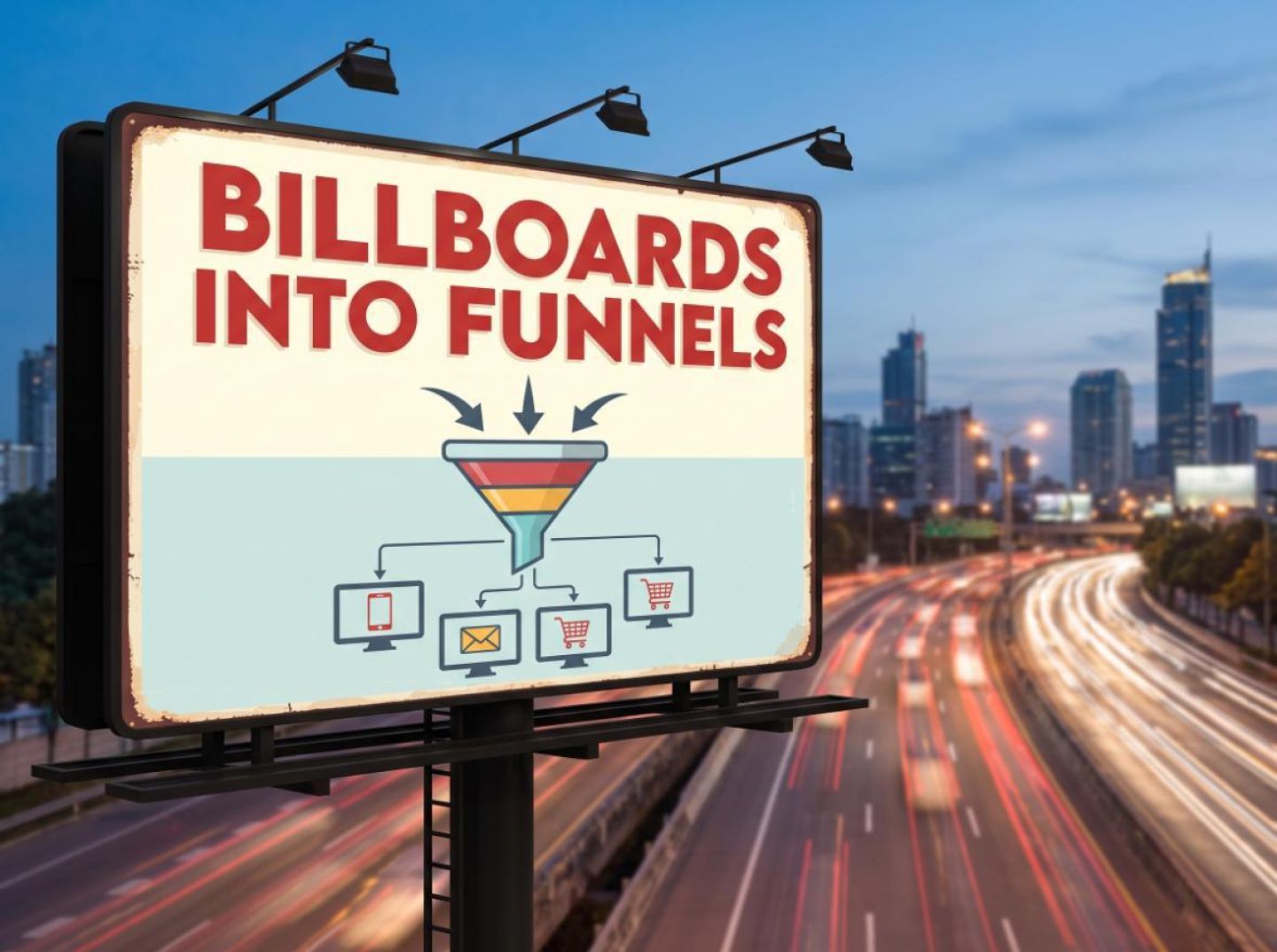
The fastest way for an OOH seller to start speaking “performance” is not to learn Google’s entire ad stack. It’s to turn every billboard into a testable funnel and every landing page into a living, iterated asset you actively manage.
Most of the roles advertised on OOH boards still describe themselves as “media sales,” “account executive,” or “local media sales” jobs focused on relationships and inventory, like the Business Development Representative roles in New York and the ad sales positions in Miami and Denver. The mandate sounds like “fill more faces, close more contracts.” Performance marketers hear something different: “own the post-click experience, lower acquisition costs, and improve conversion rates over time.” You can start doing that without changing your job title—by owning a simple “rip and iterate” process for every campaign’s landing page.
If your billboard sends people to a generic homepage, you’ve already thrown away half the value of the impression. Homepages are built to serve everyone; funnels are built to convert one specific type of visitor.
When a client books boards with a company like Liquid Outdoor Media, they’re buying context: “high profile digital interactive kiosks,” “large format digital spectaculars,” and “open‑air lifestyle centers.” That context shapes intent. Someone scanning a kiosk in a lifestyle center is in a very different mindset than someone driving past a rural rotary. Your landing page should continue that exact context:
Your minimal first win: insist that every OOH campaign you touch has its own dedicated URL or parameterized link, even if it lives on the client’s existing site. That single move makes every future improvement measurable.
You don’t have to invent performance UX from scratch. You just need to steal it intelligently.
Most brands already have high‑performing pages for search, social, or email. Your job is to find them and adapt them to the OOH context. Ask your client or agency contact for:
Then “rip” the structure, not the exact copy:
The job listings for OOH account executives and sales reps emphasize “innovative digital and experiential advertising opportunities.” A ripped, performance‑inspired landing page is exactly that: you’re importing proven digital discipline into an analog‑first buy.
Performance marketers live and die by attribution. You don’t need a full multi‑touch model; you just need a credible proxy you can improve over time.
For every OOH‑driven page you support, set up at least one of:
Then work with whoever manages the site to:
This is where your OOH skill set becomes a performance advantage. A local media seller in Denver or a billboard ad sales rep in Dallas knows traffic patterns, seasonality, and competitive clutter intuitively. When you combine that intuition with even basic funnel data, you can say, “That board on I‑25 generates 40% higher lead volume at the same spend; let’s clone that creative and landing flow elsewhere.”
“Rip and iterate” means you don’t treat the landing page as a one‑time deliverable. You treat it as a living test.
Every two to four weeks, propose one small, measurable change:
Then compare before/after metrics for that specific page. When you see a lift, frame it in performance language: “This tweak improved our OOH conversion rate from 2.3% to 3.1%; at your current spend, that’s 35 additional leads per month with no extra media cost.” That’s the vocabulary modern growth teams use when they evaluate media partners and internal hires.
The job blurbs calling for “motivated, high‑energy self‑starters” in OOH sales are really describing people who already know how to hustle for incremental revenue. Owning a landing page “rip and iterate” workflow lets you redirect that hustle from chasing one‑off bookings to compounding performance. When you can walk into a review and talk confidently about funnels, conversion curves, and incremental lift tied to specific boards, you’re no longer “just” a billboard rep—you’re the person who turns static assets into measurable, improving acquisition machines.
Product intelligence is the missing skill that turns a “billboard rep” into a performance marketer. You already know your markets, your inventory, your commute patterns. What you probably don’t have is a systematic way to ask: “What, specifically, should be sold on this face, to this traffic stream, with what price and offer structure?”
Performance marketers answer that with product data. You can do the same without touching a DSP, simply by mining the “dropship” universe: products that are already being validated, priced, and optimized every hour of the day by ecommerce operators.
In performance marketing, “dropship data” is shorthand for the firehose of near‑real‑time product signals coming from:
You can approximate this with free and low‑cost tools: Amazon category bestsellers, TikTok “Made Me Buy It” feeds, or ad libraries that show which creatives are spending hard and running long.
Now layer that onto what you uniquely know about your inventory:
Every time you see a product type consistently winning in competitive ad channels, treat it as a candidate “offer template” for a board type you control. You’re no longer selling “space”; you’re curating a menu of product archetypes with proven demand.
The gap between a hot dropship product and a high‑ROI billboard is not the SKU; it’s the offer design. Performance marketers obsess over:
You can reverse‑engineer these from the wild. If you see a phone‑mount brand running the same creative for 90 days in Meta’s ad library, click through and study their bundle, price, and guarantee. Then ask, “How do I compress the essence of this offer into seven words at 65 mph?”
For example, instead of a generic “Local gym – Join now,” a dropship‑informed OOH offer might look more like the high‑converting DTC structures you see online:
Lose 8 lbs by Thanksgiving or your first month is free. Text FIT to 555‑1234.
The raw idea—clear outcome, defined timeframe, risk reversal—comes straight from high‑performing online offers; you’re just porting it into a billboard‑friendly format.
Look back at the OOH classifieds: the Miami ad sales account executive role at EyeCatch Media, the Los Angeles national account executive opening at SILVERCAST, the Account Executive – Billboard Ad Sales posting at Lockridge Outdoor. All of them promise advertisers “exposure,” “coverage,” and “reach.” None promise “tested, data‑backed offers designed to convert cold traffic.”
You can be the one person in that stack who leads with product intelligence:
This shifts you from “media line item” to “revenue partner,” which is exactly how high‑ROI performance marketers are evaluated and paid.
Finally, treat your dropship‑informed OOH offer as a test, not a bet. Use:
You don’t need granular attribution to win; you need directional lift. If one product archetype or offer template consistently outperforms on your inventory, you’ve just built a reusable “billboard product” that you can resell, refine, and scale—exactly the way digital performance marketers iterate winning funnels into careers that pay far beyond traditional “local media sales” compensation.
Receive top converting landing pages in your inbox every week from us.
Guide
Discover how OOH professionals can turn traditional billboard roles into high-ROI performance marketing careers. This guide shows how to reframe OOH work around measurable outcomes, competitor intelligence, landing-page optimization, and data-backed offers.
Liam O’Connor
7 minOct 8, 2026
Guide
Discover why OOH job boards are struggling to keep pace with the rise of data-driven media buying. This guide explores the modern skills OOH partners need, from audience intelligence and programmatic workflows to cross-channel measurement and performance strategy.
Priya Kapoor
7 minOct 8, 2026
Guide
Discover why high-concept campaigns like “Break Conferences” and “World Menu Heists” can generate outsized attention without requiring massive media budgets. This guide breaks down how to build ownable campaign IP, use familiar cultural formats, and turn a simple idea into a scalable, social-first marketing world.
Samantha Reed
7 minOct 7, 2026