7 minOctober 9, 2026

Our tools monitor millions of native, push, pop, and TikTok advertising campaigns.
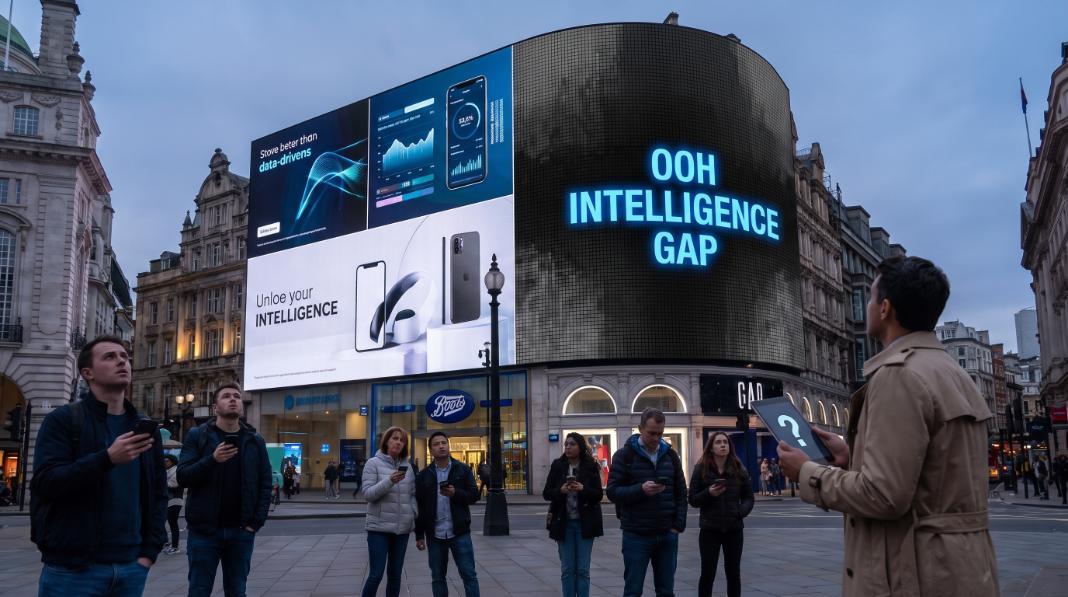
Get StartedOut-of-home loves to talk about data. Audience data. Mobility data. Impression multipliers down to the decimal. But when you look at how most OOH organizations actually hire, train, and promote talent, you see something jarringly out of step with that rhetoric: the pipeline is still optimized for a world where inventory and relationships are the main advantage, not intelligence.
The industry’s own success stories give away how outdated that mindset has become. When Trillboards chose hellOOH as its preferred sales intelligence platform, the rationale wasn’t “we need faster RFP responses” or “we want a better inventory UI.” It was a recognition that campaign execution has largely been standardized and the real constraint has shifted upstream, to market understanding. As Trillboards’ SVP of Publisher Partnerships put it, OOH is drowning in data while “very little of it is structured into usable intelligence” that sales and strategy teams can actually act on. That’s not a technology problem; that’s a talent and training problem.
In digital channels, this gap has already been exposed. Competitive advantage is now found in interpreting the signals hiding inside auctions and allocation decisions, not in who can place a buy the fastest. Platforms like Polaris AI exist because marketers realized the most valuable signals — shifts in CPMs, budget reallocations, emerging geographies — show up first in the auction and need to be contextualized into strategy. As one AdExchanger analysis of competitive signals explained, the power isn’t in knowing who spends the most, but in understanding why they’re winning before the rest of the market notices. That is intelligence work, not sales ops.
Contrast that with how most OOH hiring still works. Job descriptions for account executives and sales leaders are full of familiar requirements: “deep agency relationships,” “strong closing skills,” “knowledge of the local market,” occasional nods to “comfort with programmatic.” What’s missing are the capabilities that actually align with where the ecosystem is going: pattern recognition across fragmented signals, hypothesis-driven analysis, fluency in how AI systems surface and rank opportunities, and the ability to translate noisy data into simple, aggressive moves.
Part of the problem is structural. As marketing leaders have started to recognize, you can hire brilliant people into a system that makes it nearly impossible for them to use their skills. In the 2026 “CMO Survey,” the most frequently cited capability gap wasn’t a missing expertise but a shortage of people, time, and budget to put existing skills to work across silos. In a guest piece on how structure undermines strategy, Edmunds’ SVP of Marketing argued that organizations resource each function — product, brand, performance, sales — but not the work between them, so no one owns the system that ties the pieces together and converts insight into action (Marketing Dive summarized this structural problem). OOH organizations make the same mistake: inventory teams, sales teams, and programmatic teams are funded; the connective tissue of market intelligence is not.
That’s especially dangerous at a moment when OOH is converging with the broader programmatic ecosystem. As one AdQuick deep dive into DSP/SSP convergence noted, standards like the IAB’s emerging agent protocols mean AI-driven buying of DOOH will behave like any other programmatic channel. The consequence is subtle but profound: once buying is automated and interoperable, owning the billboard matters less than understanding how every bidder, in every channel, is valuing that impression in real time. The “OOH button” on a planner’s screen will be commoditized. The intelligence behind that button will not.
And yet, the dominant career archetype inside OOH hasn’t caught up. We still elevate rainmakers whose superpower is getting on the plan, not the people who can reverse-engineer why a brand’s mix is misaligned with the 60/40 effectiveness rule, spot the moment a performance-heavy advertiser hits saturation, and anticipate the demand they’ll need to create next.
The net effect is an industry staffed to win yesterday’s game. Talent pipelines keep optimizing for inventory literacy and relationship management in a world where the limiting factor has clearly shifted to intelligence loops. As partners like hellOOH frame it, the next era of OOH won’t be won by whoever owns the most faces; it will be won by whoever can build the fastest learning system around those faces. Right now, most OOH org charts — and the recruiting machines that feed them — are not built for that reality, which is exactly where a smart affiliate can step in.
For most of advertising, “intelligence” has come to mean something very specific: an always-on system that watches competitors, detects weak signals and translates them into strategy. In OOH, “intelligence” still mostly means, “We have a dashboard and a few nice charts.”
The Trillboards–hellOOH partnership is a revealing example. In announcing hellOOH as its preferred “sales intelligence platform,” Trillboards explicitly framed the constraint in OOH as intelligence, not infrastructure. The goal is to structure fragmented demand data into a machine-learning model that can answer, “What is happening, why, and what is likely to happen next?” across campaigns and categories, at “decision‑maker resolution” in close to real time, as the company explained when it introduced its market intelligence system. That is an important leap forward for OOH. But it’s still largely inward-looking market understanding, not outward-facing competitive intelligence.
In other channels, that distinction is no longer academic. Modern CI tools are built to do two things simultaneously: monitor rivals and synthesize what those moves mean for you. Platforms such as Crayon and Klue, profiled in a recent AI-powered competitive intelligence playbook, don’t just scrape websites and sales decks; they push battlecard updates into Salesforce when a competitor changes packaging, adjust talking points when pricing moves, and flag emerging differentiators before the next quarterly plan is locked. Media-facing products like Polaris AI go even further, watching auctions in real time to decode “hidden” signals in CPMs, geographic concentration and placement shifts, then turning those into hypotheses about why one brand is systematically outbuying another across social and programmatic environments, as one deep dive into auction-based signals described.
Contrast that with how “intelligence” is operationalized inside most OOH organizations that tout new platforms or predictive tools. The questions those systems are wired to answer are almost entirely introspective: Where is demand generally trending? Which of our panels are underpriced? What categories are surfacing most often in RFPs? A machine-learning layer like hellOOH’s is transformative for those questions, turning “fragmented market activity into a system that can actually be learned from and acted on,” in the words of Trillboards’ partnership announcement. But it still doesn’t tell a local affiliate which rival just locked up exclusivity with a key regional QSR, how a national health insurer is rebalancing spend from roadside to urban street furniture, or which competing network quietly started discounting a critical airport package.
Part of the blind spot is structural. Competitive intelligence is inherently cross-functional: it has to feed sales, product, pricing and marketing simultaneously. Yet OOH organizations are notoriously siloed. As one senior marketer writing about modern org design argued, the real capability gap often isn’t skills but the missing “people, time and budget needed to put existing skills to work” across functions, a hole that widens as teams specialize and hand work off linearly from product to marketing to sales without anyone explicitly owning the system in between, according to an analysis of siloed structures. In that kind of environment, it is hard enough to align on a unified “market intelligence” view for your own book of business; funding a separate layer of competitor‑centric analytics, tooling and process rarely makes the cut.
Another part of the problem is that OOH’s late embrace of data has been shaped by measurement and automation, not by adversarial thinking. The industry has poured energy into impression standards, location data, and DSP/SSP convergence so that OOH inventory can sit inside the same pipes as display and CTV. As one analysis of convergence noted, the headline concern is often the asymmetric intelligence enjoyed by entities that operate both buy and sell sides of the auction and, in some cases, even own the inventory, like JCDecaux’s VIOOH stack. Yet the conversation still revolves around fairness to buyers, transparency for publishers, and efficiency of execution. It almost never asks: how can a regional network or independent affiliate see and exploit the strategic patterns hiding in those same auctions?
Outside OOH, competitive intelligence is now treated as an explicit discipline with budgets, tools and workflows. Inside OOH, “intelligence” is still almost entirely synonymous with forecasting your own demand and optimizing your own yield. That late—and partial—pivot has created a very specific gap: even the most sophisticated OOH platforms are building faster internal feedback loops, while leaving the competitive lens almost completely untouched. Smart affiliates are the ones who will notice that asymmetry and start building their own external radar before the rest of the ecosystem realizes it left that flank wide open.
Modern ad auctions are like poker tables where every player’s move is broadcast but nobody’s allowed to say what’s in their hand. The money is visible; the strategy is not. That’s by design.
Across paid social and programmatic, the most valuable competitive clues are no longer in the ad creative itself—they’re embedded in how a brand shows up inside the auction: where they spend, what they’re willing to pay, how fast they shift, and which placements they quietly abandon. Platforms like Polaris AI exist entirely to decode those hidden signals in social auctions, turning fluctuations in CPMs, share of voice, and geo concentration into hypotheses about a rival’s media system and acquisition costs, not just their budget size, as one recent analysis of insurance advertisers made clear by showing how Progressive is “outbuying” rivals rather than simply outspending them through smarter audience precision and diversified placements, and using that auction data to infer a structurally lower cost of acquisition that doesn’t show up in any earnings call or PR quote, but is unmistakable in the bid stream of every campaign once you know what to look for, and that is precisely the kind of competitive edge OOH teams leave on the table when they treat auctions as a compliance step instead of an intelligence surface, especially as their own channels become more programmatic and data-rich in ways that now, finally, resemble the rest of performance marketing.
If you’ve grown up in affiliate or performance media, this logic is second nature: auctions are diagnostic tools, not just buying mechanisms. A sudden rise in a competitor’s impression share at stable CPMs signals that they’ve either unlocked new creative, new audience modeling, or a better conversion path that’s boosting their conversion rate enough to justify higher bids, and you’re trained to treat that as a question to investigate, not a weather pattern you complain about in the weekly pacing call, because the entire discipline of modern competitive intelligence has evolved around reading those weak signals at scale, where AI watches thousands of micro-changes—pricing-page tweaks, new product bundles, creative rotations, channel shifts—and stitches them into a live picture of what rivals are really doing, with dedicated platforms tracking everything from subtle feature edits to sales-call mentions and pushing contextual alerts directly into revenue teams so they respond before the rest of the market even realizes something has shifted.
In OOH, however, the talent system is still optimized around selling and stewarding inventory, not decoding what the auction is whispering about everyone else’s strategy; you see this in how most “intelligence” products are pitched to buyers and sellers as workflow convenience or planning precision, not as competitive radar, even though platforms now claim to bring OOH into “parity with modern performance channels” through real-time data, AI optimization, and programmatic execution that, in theory, exposes the same kinds of structural signals that performance marketers are already mining in social and open-web environments, where a drop in a rival’s CPM or a shift into new formats is treated as the start of an investigation, not a post-campaign anecdote for the case study deck.
The structural problem is that OOH orgs rarely create a role—let alone a career path—for someone whose primary job is to sit between data, sales, and product and ask, “What are we learning from the auction about our competitors that should change how we sell, price, and position?,” because the same siloed structures that keep brand, performance, and product marketing from sharing insights in other industries also keep OOH’s sales ops, inventory, and analytics teams from turning those cross-functional seams into a resourced capability, which is why so many CMOs describe their biggest gap not as missing skills, but as the absence of people, time, and budget to put those skills to work across functions, leaving the “work between teams” unowned and un-incentivized even as discovery fragments across AI answers, social, PR, and product surfaces and the cost of structural blindness rises for everyone who’s still operating like there’s a neat linear funnel and a single “OOH team” that can own the whole truth of what’s happening in the market.
This is exactly where sharp affiliates and performance-minded partners can quietly build advantage: most OOH sellers are now plugged into tools that expose live signals about who is bidding where, what inventory is clearing at which effective CPMs, which verticals suddenly over-index in a specific geography, and which campaigns sustain efficient delivery long after launch—and yet no one is tasked with reading those patterns as competitive stories, which means an affiliate who can speak both languages (auction mechanics and category strategy) can step into the vacuum and say, “Here’s what your rivals’ OOH behavior implies about their customer acquisition model, geo priorities, and creative thesis—and here are the placements and formats that will let you exploit the gaps they’re leaving open,” turning what everyone else treats as operational exhaust into a differentiated consulting product that brands will gladly pay for because, unlike another “OOH dashboard,” it helps them answer the question their boards increasingly ask: “What do we know about how our competitors are actually winning in-market that they didn’t intend for us to see?”
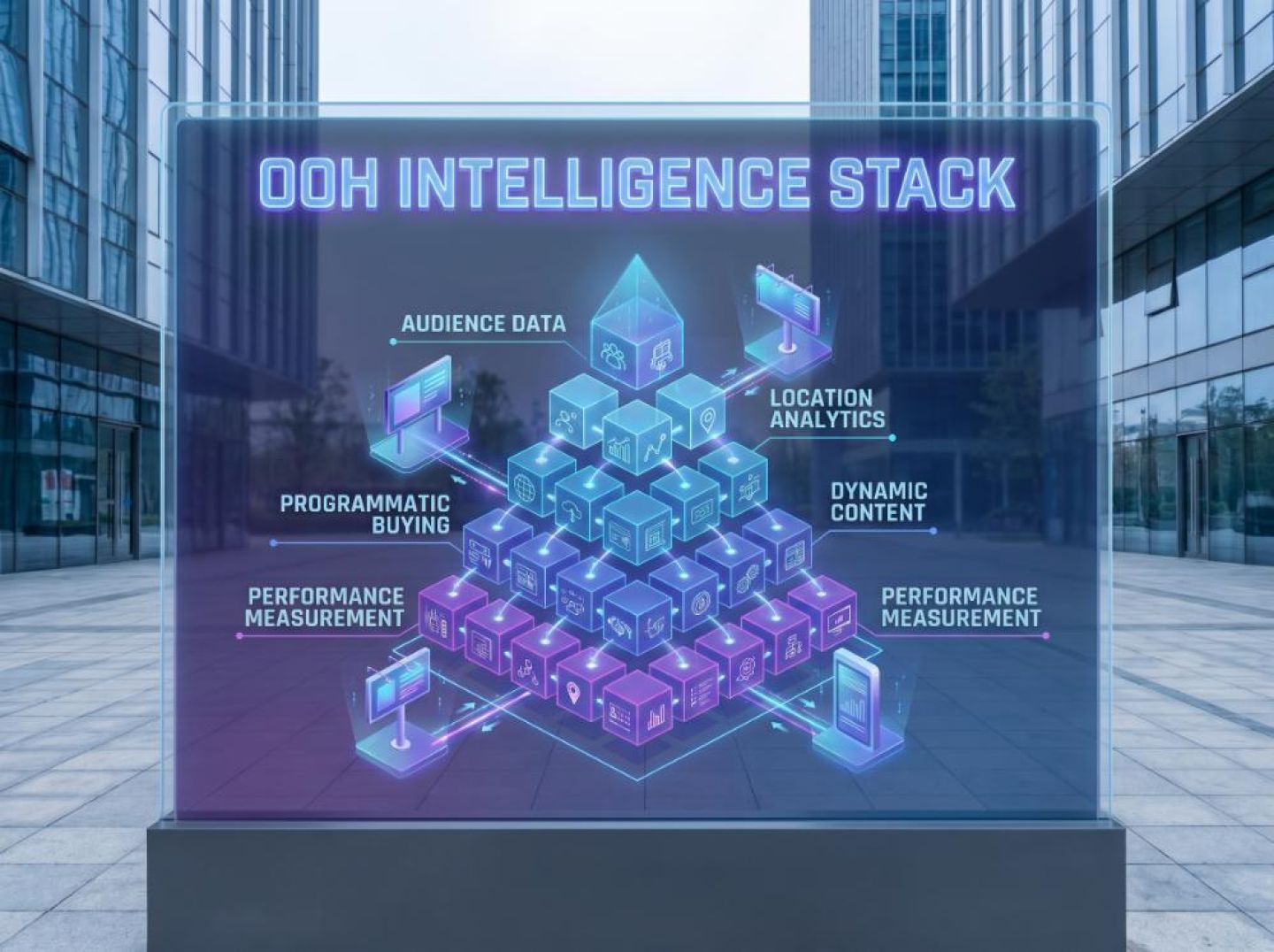
Most affiliates assume “competitive intelligence stack” means six-figure retainers, enterprise licenses, and a war room of analysts. In OOH, that belief is especially destructive—because the real advantage right now isn’t budget, it’s structure and habits.
As Alison Steinlauf Anziska argues in a piece on marketing structure, most organizations aren’t missing skills; they’re missing the people, time, and connective tissue to put those skills to work. The “work between functions” never gets resourced, so insights die in silos rather than making it into campaigns, media plans, or sales pitches. That same blind spot is exactly where a scrappy affiliate can slip in, build a lean OOH intelligence stack, and sell it back to brands as an unfair advantage.
Here’s how to do it without enterprise budgets.
Start with a simple two-layer model: monitor, then interpret.
Layer 1 is monitoring: cheap (or free) ways to watch who is buying OOH, where, and how it changes over time. In digital channels, high-end platforms like Polaris AI track spend, CPMs, and efficiency trends across auctions and then surface those movements as strategic signals. You don’t have Polaris for billboards—but you can steal the playbook.
At minimum, your monitoring layer should:
You can do 80% of this with:
That gives you the OOH equivalent of an auction log: not just “who advertised,” but when and where patterns change.
Layer 2 is interpretation: a lightweight way to turn those observations into hypotheses your clients can act on.
In digital channels, platforms like Polaris AI don’t just say “CPM dropped.” They posit, “This competitor is probably winning through audience precision and diversified placement.” You can do the same with OOH, even without programmatic logs.
For every notable move in your field log—a competitor suddenly dominating EV charger screens, or vacating a popular urban corridor—force yourself to answer three questions:
You can use a general-purpose AI workspace (Notion AI, ChatGPT, Claude) as your “poor person’s analyst.” Paste in a few weeks of logs and ask it to cluster patterns—who leans into transit, who experiments with new formats, who seems to chase competitors’ footprints. You’re not delegating judgment; you’re compressing grunt work.
The real power comes from stitching this OOH-specific view into broader signals that brands already understand.
Programmatic convergence means digital and DOOH are increasingly governed by the same standards and pipes. As AdQuick points out, AI-agent-driven buying for OOH will follow the same interoperability protocols as display and CTV. To your clients, that sameness matters: it means your OOH intelligence can be framed using the same concepts they use for their social, display, and CTV auctions.
So build simple bridges:
Affiliates can go one step further than most brands: they can resource the “work between functions” that big organizations chronically ignore. Where, as Marketing Dive describes, internal teams are stuck inside channel silos, you can be the connective tissue—pulling OOH field logs, digital auction cues, and local market knowledge into a single, narrative deck.
That deck is your product. Not “billboard buys,” but a repeatable intelligence layer:
You don’t need enterprise CI software to do this. You need a simple system, the discipline to maintain it, and the willingness to interpret what others treat as background noise. In a market where most OOH talent pipelines still celebrate pretty dashboards over strategic signals, that alone is enough to look—and perform—like you’re playing an entirely different game.
Most OOH organizations are finally getting serious about data—but almost none are set up to act like true competitive intelligence shops. That mismatch is your edge as an affiliate.
Here are concrete plays that deliberately exploit structural blind spots in OOH talent pipelines and decision-making.
Play 1: Ride the “execution-first” bias of OOH sales orgs
Most OOH operators have already standardized inventory and workflow. The bottleneck, as Trillboards’ partnership with the machine-learning platform hellOOH makes explicit, is upstream: understanding fragmented demand in time to act on it.
Affiliates can arbitrage that lag:
You’re not competing with the operator’s tools; you’re front-running them.
Play 2: Arbitrage siloed org charts inside brands
As Alison Steinlauf Anziska argues in her piece on marketing structure, most companies don’t lack skills; they lack the people, time, and budget to connect those skills across silos—especially in the messy “work between functions” that no team owns (her analysis of structural gaps makes this painfully clear).
That’s exactly where affiliates can insert themselves:
You become the connective tissue the org chart forgot to fund. Internally, nobody has time to do it. Externally, you can make it your product.
Play 3: Exploit transparency asymmetry in converged platforms
As OOH converges with broader programmatic and AI-agent buying, certain players now own both inventory and the pipes. When the same entity operates the SSP, flirts with DSP-like tools, and in some cases owns the physical screens, it holds asymmetric market intelligence—knowing what buyers will pay and what sellers will accept, while running the auction and grading its own homework. This risk is already visible in display and CTV, where unified activation platforms blur the buy–sell divide, and it bites even harder in OOH, where owners like JCDecaux control media and programmatic access through platforms such as.
Affiliates can reframe that opacity as a value prop:
You’re not accusing anyone of bad faith; you’re giving the brand a second opinion in a structurally biased marketplace.
Play 4: Turn auction drift into cheap OOH experiments
Because most competitive intelligence teams still obsess over creative rather than the “hidden” signals inside auctions, they systematically underreact to small but telling shifts. Modern platforms show that the real story is in media allocation, placement shifts, and efficiency trends; for example, when Polaris AI picked up Progressive outbuying rather than just outspending rivals, the insight wasn’t about a clever banner—it was about a superior buying system.
You can build micro-strategies around these drifts:
You’re selling optionality built on signals their in-house team sees—but doesn’t have the mandate or system to act on.
Play 5: Productize intelligence, not just placements
OOH operators are racing to bolt on intelligence layers, as the Trillboards–hellOOH partnership signals, but most are still thinking “better sales dashboards,” not “category war rooms.”
Affiliates can:
Talent pipelines are optimized for buyers, sellers, and campaign ops—not market modelers. By leaning into auction data, structural asymmetries, and cross-silo translation, affiliates can operate like the missing intelligence function in OOH—and get paid at a premium for filling that gap.
Receive top converting landing pages in your inbox every week from us.
Guide
Discover why out-of-home (OOH) talent pipelines overlook competitive intelligence and how smart affiliates can capitalize on this gap. Learn how to analyze competitor activity, interpret digital auction signals, build a cost-effective intelligence stack, and turn market insights into profitable advertising opportunities.
David Kim
7 minOct 9, 2026
Guide
Discover how OOH professionals can turn traditional billboard roles into high-ROI performance marketing careers. This guide shows how to reframe OOH work around measurable outcomes, competitor intelligence, landing-page optimization, and data-backed offers.
Liam O’Connor
7 minOct 8, 2026
Guide
Discover why OOH job boards are struggling to keep pace with the rise of data-driven media buying. This guide explores the modern skills OOH partners need, from audience intelligence and programmatic workflows to cross-channel measurement and performance strategy.
Priya Kapoor
7 minOct 8, 2026