9 minAugust 2, 2026

Our tools monitor millions of native, push, pop, and TikTok advertising campaigns.
Get StartedFor most of advertising history, creative production was a bottleneck. Concepting, shooting, editing, and approving a single campaign could eat weeks or months of calendar time, and the brands with the deepest pockets and biggest agency rosters held a structural advantage. That era is over. The bottleneck has been obliterated so thoroughly that the very concept of "production capacity" as a competitive moat has become almost quaint.
Consider the scale that's now possible at the top of the market. Unilever has assembled a network of 300,000 creators — and 71% of those creators are using AI tools to produce content at speed, distributing it across dozens of platforms in hundreds of markets simultaneously. That's not a campaign. That's an industrial content engine operating at a velocity that would have been unimaginable five years ago. And Unilever isn't an outlier; it's simply the most visible example of a shift happening everywhere.
At the other end of the spectrum, a three-person DTC brand can now accomplish something remarkably similar in miniature. Product images that once required studio shoots costing thousands of dollars can now be generated for a couple of cents, and AI writes roughly 90% of ad copy for teams that have adopted these workflows. Leading advertisers are deploying what MarTech describes as continuous creative optimization loops, in which AI evaluates engagement signals and automatically evolves messaging to improve performance — testing and adapting hundreds of variations in the time it once took to get a single round of stakeholder feedback.
The result is a paradox the industry hasn't fully confronted. We spent years celebrating the democratization of creative production — and rightly so. Lowering the barrier to entry meant more brands could compete, more ideas could be tested, and more markets could be served. But we skipped past the second-order question: what happens when everyone's production capacity scales to near-infinity at the same time?
What happens is saturation. Every feed, every inbox, every pre-roll slot fills with AI-generated material that was engineered to perform. The sheer volume of creative flooding digital channels doesn't just raise the noise floor; it fundamentally changes the competitive dynamics. "Make more ads faster" was a winning strategy when most brands couldn't do it. Now that virtually any brand can spin up hundreds of variations in a single afternoon, speed and volume have been reduced to table stakes.
This is the industry's blind spot. U.S. businesses are expected to spend $57 billion on AI-powered advertising this year, roughly 12% of total ad spending — and much of that investment is still oriented around producing more, faster. But as one practitioner noted in a conversation with Social Media Examiner, testing 100 or 200 creatives a week often yields nothing because teams end up producing the same mediocre-looking ad on a mass scale. AI amplifies whatever you feed it. If the underlying thinking is undifferentiated, all you've done is automate mediocrity at volume.
The production problem is solved. And that's precisely why production is no longer the problem worth solving. The question that matters now — the one most brands are only beginning to ask — is how you determine what's actually working when everyone is generating creative at the same relentless pace.
So production is no longer the bottleneck. But here's what almost nobody in the industry is willing to say plainly: the measurement infrastructure that's supposed to tell us what's working was never designed for this volume, and it's buckling under the weight.
The traditional creative testing framework is elegantly simple. You produce a manageable set of variations, run them against defined audiences, collect enough data to reach statistical significance, and use those insights to inform your next round. That loop works when you're testing five or ten or even fifty creatives in a cycle. It collapses entirely when AI lets you generate hundreds of variations per week, because you're no longer comparing meaningfully distinct ideas — you're comparing noise to noise.
The problem is what Search Engine Journal has described as the signal-to-noise problem that becomes acute when content is produced at this scale. Unilever's approach to AI-driven content generation illustrates the tension perfectly: the same technology that enables unprecedented creative volume simultaneously makes it harder to extract reliable insights from any individual asset's performance. When every variation is a slight permutation of the same underlying concept — different headline, tweaked color palette, repositioned call to action — the performance deltas between them shrink to the point where they're indistinguishable from algorithmic randomness. You're not learning what resonates with your audience. You're learning what happened to catch a favorable delivery window.
Nick Shackelford, a well-known performance marketer, has been pushing back on the assumption that more creative volume automatically leads to better outcomes. His observation is blunt: testing 100 to 200 creatives per week often yields nothing actionable because advertisers end up producing the same mediocre-looking ad on a mass scale. The variations aren't truly variable. They're cosmetic permutations that trick teams into believing they're running rigorous experiments when they're actually just feeding the algorithm more of the same material dressed in slightly different clothes.
This creates a compounding problem. When platforms like Meta and Google's AI-powered buying tools ingest hundreds of similar creatives, they optimize for micro-signals — a fractional lift in click-through rate here, a marginal improvement in hold rate there — that may reflect delivery mechanics more than genuine audience preference. As MarTech has reported, leading advertisers are deploying continuous creative optimization loops in which AI evaluates engagement signals and automatically evolves messaging to improve performance. But when the inputs are all variations on a theme rather than genuinely distinct creative hypotheses, those optimization loops are refining toward a local maximum that may have nothing to do with breakthrough performance.
The measurement crisis cuts deeper than most marketers realize. Individual ad-level metrics — cost per acquisition, return on ad spend, click-through rate — become less reliable as decision-making inputs when testing windows are compressed to accommodate volume, when sample sizes per variation are diluted across hundreds of assets, and when the creative differences being tested are too subtle for audiences to consciously register. You end up with dashboards full of data and almost no signal.
The uncomfortable truth is that AI hasn't just created a production glut. It has quietly rendered the feedback mechanism most performance teams depend on — the creative test — functionally unreliable at the scale AI itself enables. And if you can't trust your measurement, it doesn't matter how many ads you can produce.
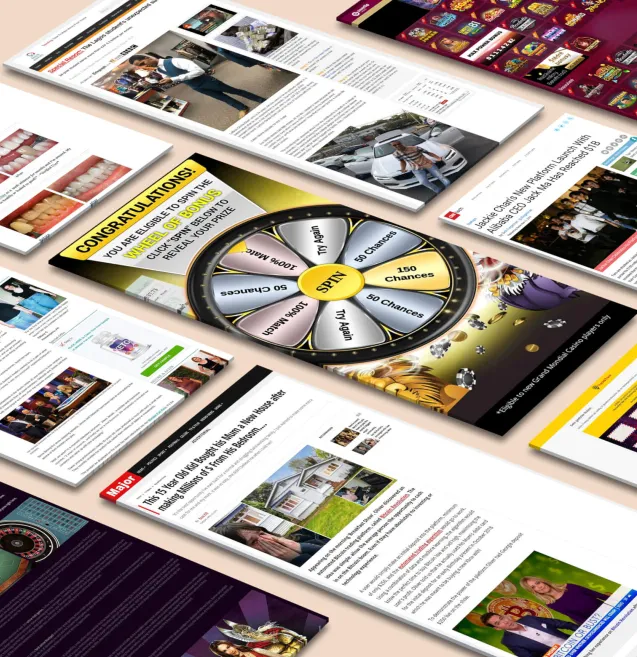
There's a deeper problem lurking beneath the measurement crisis, and it's one that no amount of better analytics can solve on its own: the ads themselves are starting to look, sound, and feel the same. When every brand in a category reaches for the same generative AI tools, trained on the same data, optimizing toward the same engagement signals, the output converges toward a recognizable median. And audiences are noticing.
The numbers are stark. Research from MarTech reveals that 70% of consumers say they can spot AI-generated advertising because it's "missing its soul" — a damning phrase that should unsettle any creative director who's outsourced ideation to a prompt. That same research found that 69% of consumers fear a future dominated by "AI-generated slop," and perhaps most consequentially, 74% say they're more likely to purchase from ads they believe were made by humans. This isn't a fringe sentiment from technophobes. It's a mainstream consumer response to a flood of content that feels algorithmically generated because it is.
The creative convergence problem compounds itself. AI models learn from existing high-performing content, so they naturally reproduce patterns that already saturate the market. The result is a sea of polished but interchangeable assets — the same warm color palettes, the same aspirational copy cadences, the same frictionless stock-photo aesthetics. As B2B marketing experts told TopRank Blog, audiences were already growing tired of clickbait and obvious advertisements before generative AI arrived; now, with AI usage accelerating, "authenticity is becoming more and more important" and "people are craving authenticity, vulnerability, humanity, and transparency in the content they consume."
What breaks through this sameness isn't more volume — it's genuinely surprising human ideas that no model would generate on its own. Lisa Marcyes, Global Head of Social Media at Cohesity, described this vividly on TopRank Blog when she explained how her team created a drone show over Las Vegas so convincing people thought it was real, and put a fainting goat in a ransomware video because "sometimes a little chaos lands a serious message better than another corporate explainer ever could." AI didn't produce either concept. A creative team that deeply understood its audience did. "The content people actually remember makes them feel something," Marcyes said. "It surprises them. Makes them laugh. Makes them uncomfortable. Makes them feel seen. We still need humans for that."
This insight aligns with what practitioners on the paid media side are discovering independently. As Social Media Examiner reported, advertisers who test fewer ads but with genuine creative intention consistently outperform those producing hundreds of variations at scale, because mass-producing "the same mediocre-looking ad" yields nothing but expensive noise.
But here's the argument that rarely gets made: this sameness isn't just a branding problem — it's an intelligence problem. When most ads in a category are aesthetically and tonally interchangeable, studying any single one tells you almost nothing. You can't reverse-engineer a competitor's strategy by examining creative that looks identical to yours and everyone else's. The useful insight no longer lives at the level of "what does this ad say?" It migrates to a far more demanding question: across hundreds of similar-looking ads, which subtle patterns — in sequencing, in placement, in audience response over time — are correlated with survival in the market? That question requires an analytical framework most teams haven't built yet, and it changes the nature of competitive intelligence entirely.
For years, the brands that won the creative arms race were the ones that could produce the most polished assets the fastest — the ones with the biggest studios, the deepest agency rosters, the most efficient production pipelines. AI has effectively neutralized that advantage. When every competitor can generate hundreds of ad variations in an afternoon, speed of production is no longer a differentiator. It's table stakes. The competitive edge has migrated somewhere less obvious but far more valuable: the ability to read the market and recognize which creative approaches are actually surviving contact with real audiences at scale.
This shift is already visible in how the industry talks about AI's role. As MarTech has noted, competitive advantage is emerging not from whether organizations use AI, but from how they use it — the strategic layer on top of the production capability. The implication is clear: generating creative is now commodity work. The scarce skill is interpretation. It's understanding why certain hooks keep resurfacing in top-performing campaigns, why specific formats scale on one network but die on another, and why a particular angle sustains spend for months while visually similar variations flame out in days.
The infrastructure to support this kind of intelligence is beginning to emerge, though it remains mostly internally focused. The partnership between DAIVID and ADIN.AI represents one of the more ambitious attempts — integrating creative effectiveness models that predict performance before launch by analyzing patterns across millions of human emotional responses, then linking those predictions to live media outcomes. As DAIVID CEO Ian Forrester put it, creative has been "measured in isolation, disconnected from media results" for too long. Their system aims to close that loop, scoring creative at scale and surfacing signal from noise in real time.
But here's the limitation: even the most sophisticated predictive model is still looking inward. It's telling you how your ads are likely to perform based on your historical data and general emotional response patterns. What it can't tell you is what's working across the entire competitive landscape — which angles your competitors are scaling, which hooks keep getting renewed week after week, which formats are commanding sustained spend across multiple advertisers in your category.
This is where external pattern recognition becomes the decisive advantage. In an AI-saturated environment where every brand is producing creative at volume, the market itself becomes the most reliable testing ground. An ad that a competitor continues to run for six weeks, eight weeks, twelve weeks represents something no internal A/B test can replicate: genuine market validation backed by sustained budget allocation. That longevity is a signal. An ad that appeared once and vanished is noise. The ability to systematically distinguish between the two — to monitor which creatives have durability, which messaging angles keep recurring across top spenders, and which visual formats are scaling across networks — creates an information asymmetry that compounds over time.
The advertiser who can map these external patterns isn't just reacting to their own performance data; they're reading the collective intelligence of every competitor's spend. They can identify emerging creative trends before they saturate, spot angles that are proven to sustain audience engagement across multiple brands, and avoid investing in approaches that the market has already rejected. No amount of faster AI production can substitute for that kind of market-level pattern recognition. Production gives you the ability to act. Pattern recognition tells you what's worth acting on.
So if production speed is neutralized and pattern recognition is the new edge, the practical question becomes: where does the signal come from? In an ecosystem where every brand has access to the same generative tools, the same optimization algorithms, and the same platform feedback loops, creative intuition alone isn't enough to cut through. There's simply too much noise. This is where competitive intelligence tools and ad spy platforms quietly become the most important input in the creative process — not as a shortcut for copying what's working, but as the raw material for informed creative direction.
Consider the framework Nick Shackelford describes. As he explained to Social Media Examiner, his team wins by testing fewer creatives but with far more intention, focusing on making something "genuinely new and different" rather than churning out hundreds of mediocre variations. That intentionality is the whole game — but it has to be grounded in something. In a market saturated with AI-generated sameness, the question isn't just "what do we want to say?" It's "what is the market actually rewarding right now, and where is the whitespace we can exploit?"
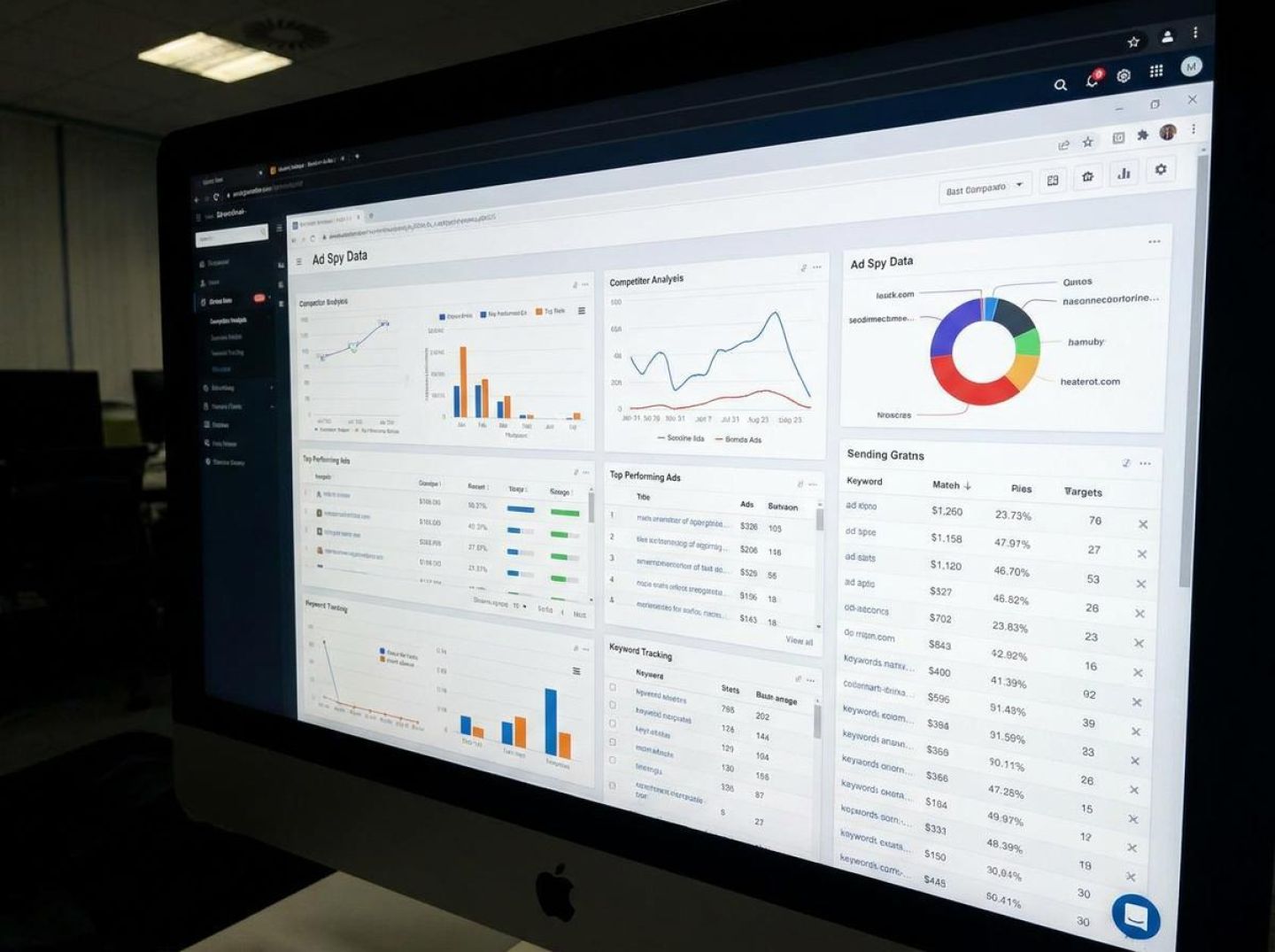
Ad spy data answers that question with a kind of clarity that no internal brainstorm can replicate. The ads that keep running across weeks and months represent real capital allocation decisions by advertisers who are paying to keep them live. Like a trader reading order flow to understand where institutional money is moving, a creative strategist can read sustained ad spend to understand which messages, formats, angles, and hooks the market is validating with actual dollars. An ad that survives four weeks of optimization pressure isn't a fluke — it's a signal. A creative pattern that appears across multiple competitors in a category isn't a trend to follow blindly — it's a baseline to understand before you can meaningfully deviate from it.
This is the critical distinction. Using competitive intelligence to replicate what's already running is the fastest way to contribute to the convergence problem. But using it to map the landscape — to see where every competitor is clustering — gives you the negative space. It shows you what isn't being said, which formats aren't being used, which emotional registers aren't being hit. That negative space is where Shackelford's "genuinely new and different" creative lives.
The data also serves as a corrective against one of AI's most persistent failure modes. As MarTech has reported, consumers increasingly want AI-driven personalization that adds genuine value rather than producing the uncanny, slightly hollow feeling that characterizes so much algorithmically generated advertising. Ad spy platforms help identify which executions are actually clearing that bar — not through engagement metrics alone, but through the proxy of sustained investment. Brands don't keep spending on creatives that trigger consumer resistance.
In practice, this means the creative brief itself is evolving. Rather than starting with a positioning statement and a mood board, the most sophisticated teams now begin with a competitive landscape audit: what's running, for how long, across which placements, with what hooks. They feed that market-validated pattern data into their ideation process — sometimes directly into the AI tools themselves as contextual input — and use it to define the boundaries they intend to break. The ad spy platform doesn't replace the creative strategist. It gives the strategist something more valuable than a hunch: a map of the territory everyone else has already claimed, and a clear view of the territory that remains unclaimed.
Receive top converting landing pages in your inbox every week from us.
Must Read
AI-powered ad platforms can optimize campaigns efficiently while quietly steering budgets toward narrow, platform-defined outcomes. Learn how to use Anstrex as an outside-in audit layer to uncover machine bias, compare real market behavior, and build AI media plans with stronger guardrails, audit loops, and human overrides.
Liam O’Connor
7 minSep 16, 2026
Recently Updated
Agentic AI is changing how performance marketers manage bids, budgets, creative, and emerging ad surfaces such as ChatGPT and AI-native media. This guide shows how to use competitive intelligence, sandbox testing, and Anstrex-style research to study these systems without putting today’s media budget at unnecessary risk.
Marcus Chen
7 minSep 15, 2026
Most Read
Mass reach can generate impressive numbers without delivering meaningful revenue. This guide shows how competitor intelligence can uncover high-intent micro-audiences and help marketers build focused campaigns that prioritize conversion, relevance, and ROI over vanity metrics.
Samantha Reed
7 minSep 12, 2026