7 minMay 19, 2026

Our spy tools monitor millions of native ads from over 60+ countries and thousands of publishers.
Get StartedEvery June, the advertising world descends on the French Riviera and collectively agrees to pretend that the work it celebrates there has anything to do with the work it ships the other fifty-one weeks of the year. It doesn't — and that's not an accident. It's the entire point.
Dave Billing of Fold 7 put it perfectly when he compared Cannes to a medieval carnival — "essentially licensed periods of rule-breaking" where "the normal social order got turned upside down, hierarchies dissolved, and things that couldn't be said or done the rest of the year were suddenly not only permitted but celebrated." It's a beautifully precise metaphor, and it explains something that most industry commentary dances around: Cannes doesn't just happen to reward disruptive work. It structurally requires it. The festival's entire judging logic is built on norm violation. The brands and agencies that win Lions are, as Billing argues, the ones "willing to be genuinely disruptive rather than merely cheeky." The rules are there to be broken. The norms exist to be interrogated. The more transgressive the work, the louder the applause.
Now hold that thought and walk across the hall — metaphorically — to the performance marketing floor, where a completely opposite value system governs every decision.
In performance marketing, rules aren't provocations to be subverted. They're hard-won discoveries to be scaled. The proven hook. The tested thumbnail. The familiar format that already cleared a statistically significant confidence interval. When Deutsche Bahn's programmatic campaign generated close to 10,000 unique personalized assets and sold two million tickets — achieving the best ROI of any summer campaign in the brand's history and an 850% lift in click-through rate — it didn't do so by treating "traditional advertising narrative with something approaching contempt," to borrow Billing's description of the Instacart Super Bowl spot. It did it through algorithmic precision, relentless targeting, and the kind of repeatable, templatized creative that would bore a Cannes jury into a coma. The campaign was celebrated as a data-driven success, but its power came from compliance with what the data said worked, not from defiance of convention.
These aren't just different preferences or aesthetic quirks. They are fundamentally incompatible reward systems operating under the same industry umbrella. One system says: find the pattern that converts and replicate it mercilessly. The other says: find the pattern everyone follows and shatter it spectacularly. One optimizes for predictability; the other optimizes for surprise. One treats familiarity as an asset; the other treats it as a liability.
And yet every June, marketers who spend eleven months obsessing over cost-per-acquisition suddenly post Lions shortlists to LinkedIn with captions like "this is the future of our industry." It's the equivalent of a tax accountant attending Burning Man and announcing that fire dancing is the future of Q3 compliance. The carnival is real. The feelings it produces are real. But the carnival ends, the spreadsheets reopen, and the reward system that actually governs most marketing budgets reasserts itself without apology.
The honest conversation isn't about which system is "better." It's about acknowledging that they are playing entirely different games — and that most of the confusion, frustration, and misallocated budgets in modern marketing come from pretending otherwise.
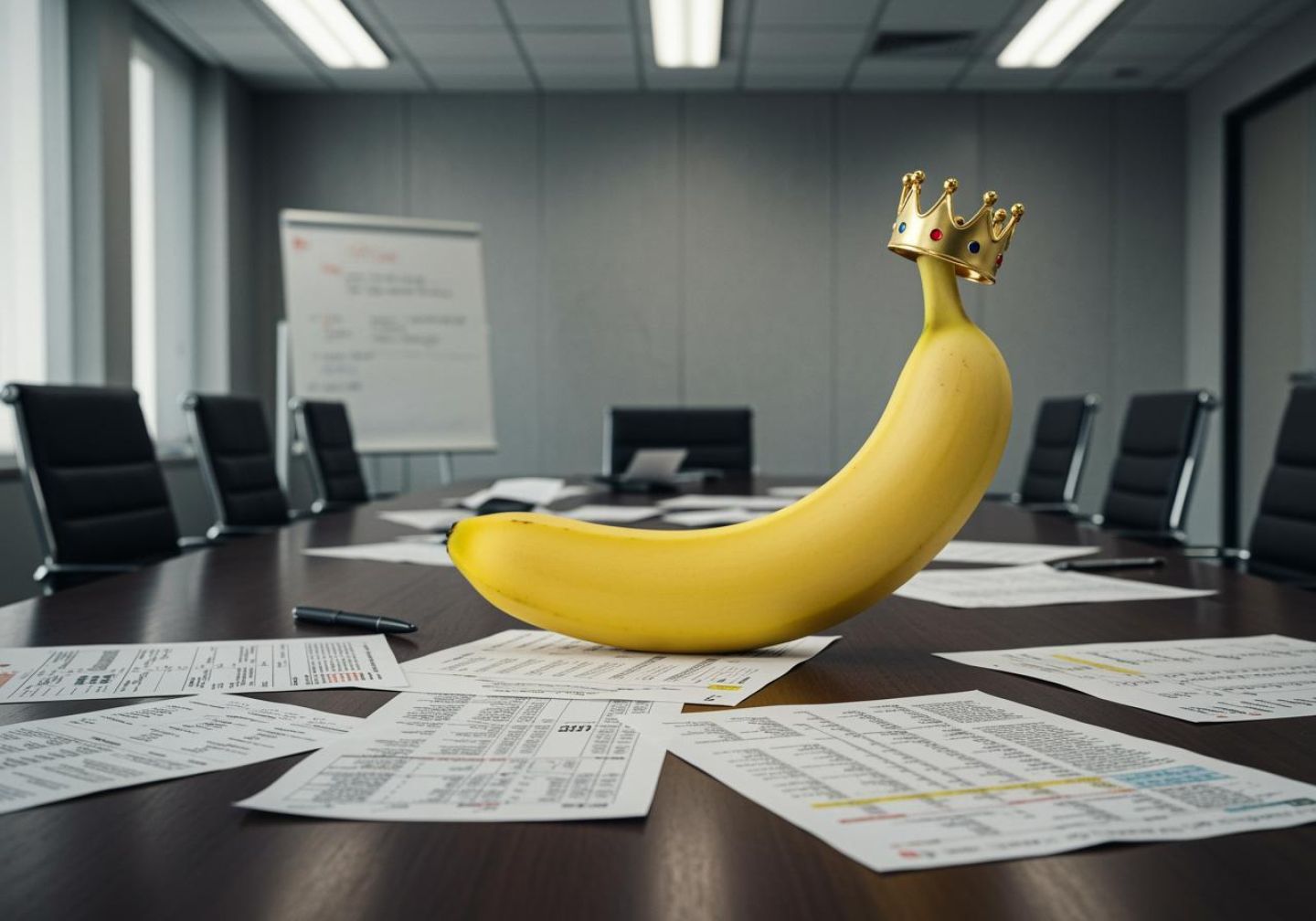
Consider the Instacart "Bananas" Super Bowl spot — a piece of advertising so aggressively committed to its own weirdness that its own champion described it as something that "shouldn't work at all." Starring Ben Stiller and Benson Boone, the ad was a lo-fi, barely-held-together piece of musical chaos that treated traditional advertising narrative with something approaching contempt. Dave Billing compared the experience to watching the Safdie Brothers direct Eurovision 1986 while on mushrooms. It was weird. It was uncomfortable. And within the context of a Super Bowl broadcast — where 100 million captive viewers have already committed to watching — it was hilarious, memorable, and genuinely disruptive. The confusion was the feature. The discomfort was the hook.
Now try to imagine that same creative brief landing on the desk of someone running native ads at $0.03 per click.
The person scrolling a feed doesn't have thirty seconds of captive attention to give you. They have maybe one and a half. There is no lean-back posture, no communal viewing event, no cultural agreement that this is the moment to be entertained. There's a thumb, moving fast, and a brain doing triage on whether your headline and thumbnail are worth even a momentary pause. In that environment, "delightful confusion" isn't a creative strategy — it's a bounce.
This is the fundamental mismatch that the awards circuit never has to confront. Award-winning creative often derives its power from withholding clarity: subverting expectations, delaying the payoff, embracing ambiguity long enough for the audience to lean in and wonder what's happening. But native and push campaigns operate under an entirely different physics. Every element — headline, thumbnail, opening frame — must earn its survival through measurable click-through. The ad that doesn't immediately communicate relevance doesn't get a second chance to be clever. It gets outbid by the one that does.
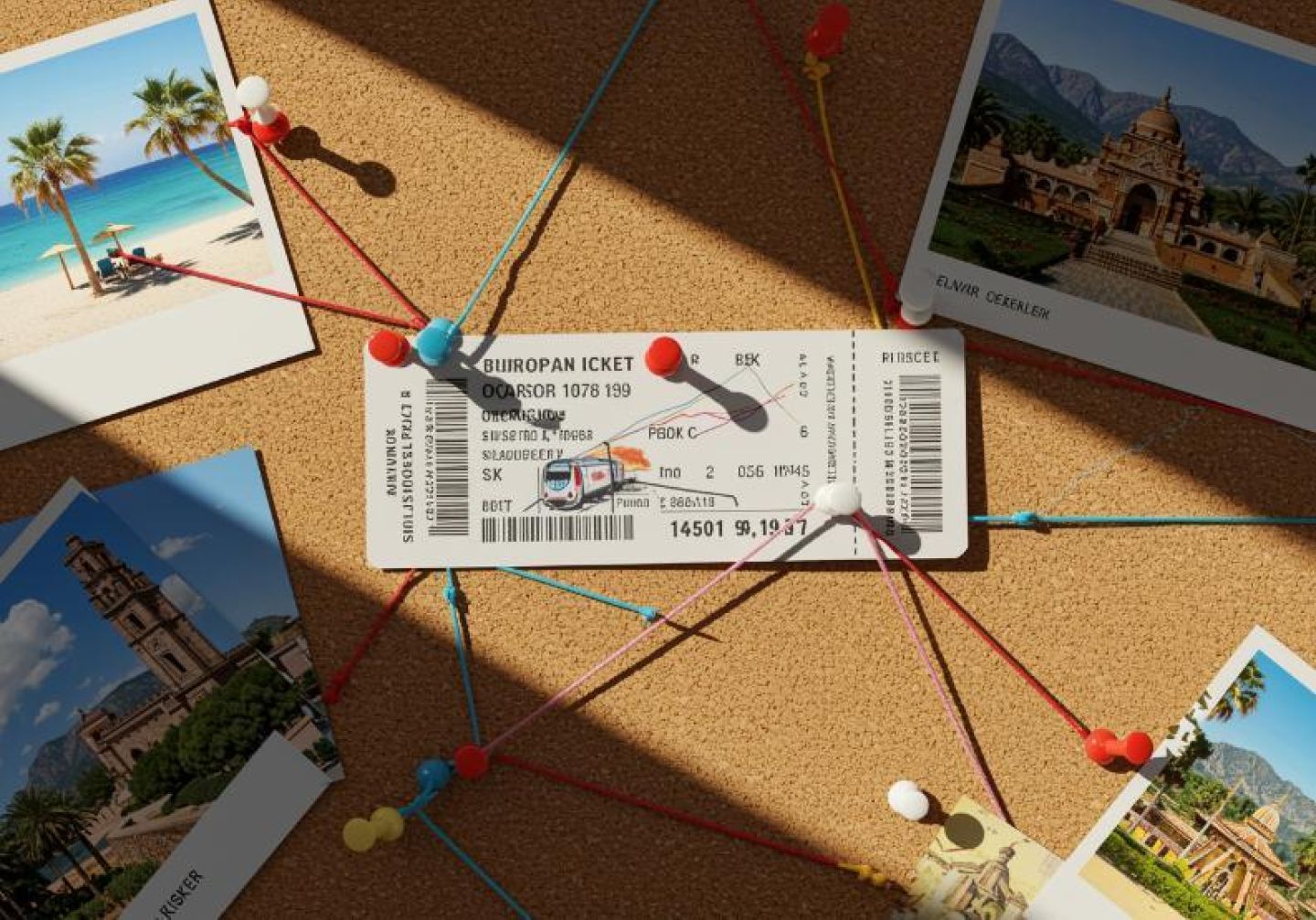
The Deutsche Bahn "No Need to Fly" campaign is an instructive counterpoint. As Basis detailed in their breakdown of compelling native ads, the German railway's programmatic native campaign used an algorithm to juxtapose the real-time cost of flying to international landmarks against the cheap 19-euro fare to visit a lookalike spot in Germany. There was nothing ambiguous about it. The value proposition was immediate, the comparison was visceral, and the targeting was surgically precise. The result was an 850% lift in click-through rate year-over-year and the sale of two million special-price tickets in two-thirds of the normal timeframe — a campaign so effective that Sheryl Sandberg called it "the future of advertising" at Cannes. Notice, though, that the thing Sandberg praised at the festival looked nothing like the thing the festival tends to award. Deutsche Bahn won on clarity, relevance, and speed of comprehension — the exact qualities that a spot like "Bananas" gleefully incinerates.
This isn't a knock on Instacart's creative. Within its native habitat — a high-profile broadcast slot where the audience has already opted in to being advertised to — the deliberate strangeness was brilliant. But creative brilliance is contextual, not universal. The rules that make a Super Bowl spot sing are the same rules that would flatline a native campaign. "It shouldn't work" is a feature when a Cannes jury is watching. It's a death sentence inside your ad manager, where the algorithm doesn't reward confusion — it just stops serving your ad.
For every rule about Cannes and performance living in separate universes, there's one case study that refuses to cooperate — and it's worth understanding exactly why.
Deutsche Bahn, Germany's national railway, faced a straightforward commercial problem: convince German travelers dreaming of exotic international destinations that equally beautiful locations existed right at home, reachable for a fraction of the cost. The creative conceit was elegant — an algorithm identified locations within Germany that visually resembled iconic international landmarks people were actively researching online, then juxtaposed the real-time cost of flying to, say, Vancouver or Santos against a cheap 19-euro fare to visit a German lookalike spot. Simple. Almost banal, when you describe it on paper. Certainly nothing that would make a Cannes jury weep into their rosé.
But here's where it gets interesting. The campaign didn't produce one brilliant hero asset. It produced close to 10,000. Each one was algorithmically generated, programmatically served, and personalized to the specific traveler seeing it based on their browsing behavior and the destinations they'd been researching. The creative wasn't conceived in a brainstorm and polished in post-production; it was assembled in real time by machines reading intent signals and matching them with price comparisons. Over two weeks, those hyper-targeted assets sold two million special-price tickets in two-thirds of the time it traditionally took, drove an 850% lift in click-through rate year-over-year, and delivered a 24% increase in revenue — making it the best-performing summer campaign in the company's history.
And then it went to Cannes anyway. Sheryl Sandberg, speaking at the festival about data-driven creativity, called the Deutsche Bahn campaign "the future of advertising" — a ringing endorsement that carried extra weight precisely because it came from someone whose empire was built on algorithmic ad delivery, not auteur theory.
So what made Deutsche Bahn the exception? Not some mystical fusion of art and commerce. The campaign succeeded because it inverted the Cannes-first model entirely. It didn't start with a provocative creative vision and then figure out where to place it. It started with data — real-time behavioral signals about what specific people wanted at specific moments — and layered a clean, compelling creative framework on top. The ads were personalized, contextually relevant, and price-anchored. They didn't ask the viewer to decode a metaphor or appreciate a tonal choice. They said: you're looking at flights to Brazil for €800; here's something that looks exactly the same for €19. The creativity was structural, not aesthetic.
This is precisely why it's the template performance marketers should study — and precisely why most Cannes winners aren't. The festival tends to celebrate work that, as Dave Billing of Fold 7 observed, breaks rules and interrogates norms, work whose entire value proposition is that it "shouldn't work at all." Deutsche Bahn's campaign did the opposite. It worked because it was supposed to work. Every element was engineered to convert — not to surprise, not to provoke, not to win a standing ovation in an auditorium on the Croisette.
The uncomfortable implication is this: creative excellence and performance aren't inherently opposed, but when they do converge, it almost always looks like Deutsche Bahn — data-first, user-intent-driven, and visually unremarkable — rather than the other way around. The campaign that Sandberg called the future of advertising looked nothing like a Grand Prix reel. It looked like 10,000 ugly, hyper-targeted ads that each spoke to one person's desire at one moment. That's not the exception that proves the two worlds can merge. It's the exception that proves which world should lead.
Picture a dozen life-sized figures hunched over a fountain on London's Southbank, vomiting jets of simulated sewage into a basin while a bloated executive sculpture sits enthroned above them, pocketing cash. That's "Fountain of Filth," the installation created by 4Creative and Glue Society to protest British water companies that have been pumping raw sewage into rivers and seas while paying their CEOs eye-watering bonuses and, as Dave Billing put it, "more or less getting away with it." Over 100,000 people saw it in person. Millions more encountered it through social media shares, news coverage, and the kind of earned-media firestorm that most brand managers would trade a kidney for. By any measure of cultural impact, it was a triumph.
Now ask the uncomfortable question: what was the conversion event?
This isn't cynicism — it's the question every performance marketer is contractually obligated to ask. "Fountain of Filth" didn't link to a petition page with a tracked URL. It didn't drive app downloads. It didn't push viewers toward a subscription, a donation form, or even a clearly defined next step. It existed as moral spectacle — visceral, unforgettable, shareable — and its primary KPI was exactly what Billing celebrated: that people saw it, felt something, and talked about it. The norm being broken, he noted, wasn't an advertising norm but a moral one. That's a beautiful ambition. It is also, from the vantage point of a conversion funnel, completely unmeasurable.
Compare that to the Deutsche Bahn campaign discussed in the previous section, where creativity and data infrastructure were inseparable. That campaign generated close to 10,000 personalized ad assets and, as Basis detailed in its breakdown, sold two million special-price tickets while lifting click-through rates by 850 percent year over year. Every impression had a pathway: see the ad, click the fare comparison, buy the ticket, board the train. The funnel was the creative. "Fountain of Filth," by contrast, is all top-of-funnel with no funnel beneath it — a magnificent megaphone pointed at the sky.
Brand-prestige advertising has always optimized for talk value and press coverage rather than downstream action, and there's a legitimate strategic argument for that approach. Awareness lifts matter. Cultural relevance compounds. But the discomfort arises when these campaigns are held up as the pinnacle of what advertising should be, while the work that actually moves product — the unglamorous landing-page variant, the retargeting sequence, the personalized native ad — is dismissed as craft-free plumbing.
Performance marketers aren't philistines for asking "but did it sell anything?" They're doing the job that funds the agency payroll, keeps the client relationship alive, and — ironically — bankrolls the discretionary budget that lets a creative team build the next Cannes-worthy installation. The P&L doesn't care how many people gasped on the Southbank. It cares about the pathway from impression to action, from outrage to revenue, from spectacle to spreadsheet.
"Fountain of Filth" is brilliant activism and brilliant art direction. It deserves every award and every column inch. What it doesn't deserve is to be used as proof that performance-minded marketers are thinking too small. They're thinking about the part of the business that makes thinking big possible in the first place.
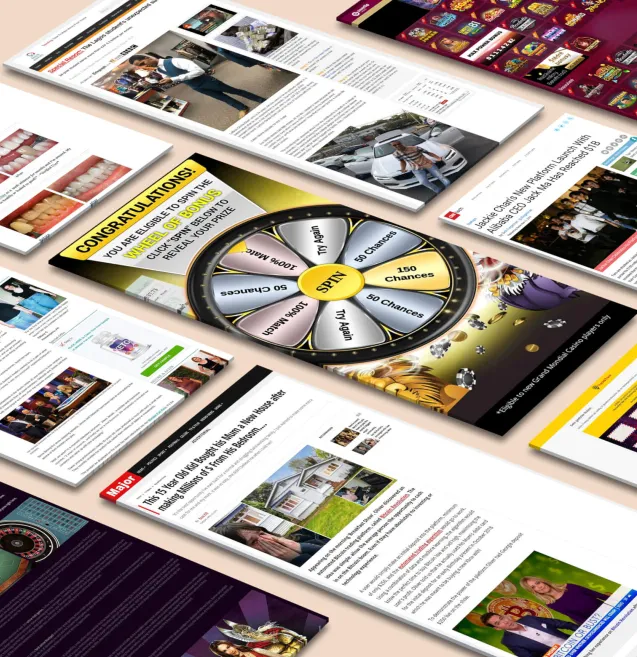
Open any spy tool — Anstrex, AdPlexity, SpyPush, take your pick — and sort by longest-running creatives. What surfaces looks nothing like a Cannes sizzle reel. There are no cinematic tracking shots, no brand manifestos, no deliberate ambiguity designed to provoke post-viewing discussion. Instead, you'll find a parade of creatives that most art directors would dismiss on sight: grainy product photos, headlines stuffed with dollar amounts, editorial-style layouts deliberately engineered to look like the news articles surrounding them. They're ugly. They're direct. And they survive in the feed for months, sometimes years, because they convert at a rate that justifies every penny of media spend behind them.
The structural patterns are remarkably consistent, and each one stands in direct opposition to the Cannes aesthetic.
Specificity over abstraction. The ads that dominate performance leaderboards deal in concrete numbers, not poetic gestures. Think "Solar Panels: $0 Down for Homeowners in [Your County]" rather than a slow-motion montage of sunlight dappling across a child's face. Deutsche Bahn's programmatic native campaign understood this instinctively — as Basis documented, the brand juxtaposed real-time flight costs to destinations like Vancouver against a specific €19 fare to a German lookalike, generating close to 10,000 unique personalized assets and an 850% lift in click-through rate year-over-year. The number did the selling. The specificity made it impossible to scroll past.
Price anchoring and clear payoff promises. Cannes entries routinely withhold the product until the final frame, trusting viewers to stay for the emotional arc. Performance creatives flip this entirely. The offer leads. The payoff is stated in the headline, not implied in a denouement. When New York City's Mayor's Office needed to change real behavior around social distancing, their native partnership with T Brand Studio didn't rely on cinematic provocation — it used a playful, editorially styled approach that blended into readers' existing content experience and delivered immediately useful, concrete guidance.
Editorial-style headlines that blend into the feed. The highest-performing native creatives are the ones users mistake for content, not the ones that announce themselves as advertising. This is the polar opposite of the Cannes philosophy, which, as Dave Billing of Fold 7 articulated, celebrates work that is "genuinely disruptive," that breaks norms and interrogates conventions. Disruption earns Lions. Blending in earns clicks.
Curiosity gaps with immediate relevance. "Doctors in [City] Are Stunned by This Joint Relief Method" is a cliché precisely because the structure works. It creates an information gap while simultaneously answering the only question a scrolling user asks: Is this relevant to me right now? Cannes winners answer a fundamentally different question — Is this remarkable enough to discuss? — which is why the work that Billing compares to getting the Safdie Brothers to direct Eurovision on mushrooms generates industry conversation but not necessarily next-day revenue.
Real-time contextual relevance over timeless brand storytelling. Performance creatives are disposable by design — swapped out with the weather, the news cycle, the user's zip code. Cannes entries aspire to permanence, to cultural artifact status. Both ambitions are legitimate. But when your KPI is cost-per-acquisition rather than industry prestige, the ugly, hyper-specific, user-centric ad that answers "What's in it for me, today, in my zip code?" will outperform the beautifully provocative brand statement every single time. One wins trophies. The other pays the media bill that funds next quarter's trophy attempt.
The industry's favorite reconciliation narrative goes something like this: "The best work is work that is both creatively brilliant and commercially effective." It's a lovely sentiment. It gets standing ovations at conferences. It also papers over a fundamental misunderstanding about what these two systems are actually optimizing for.
Award shows and split tests are not two points on the same spectrum. They are different games with different rules, different judges, different time horizons, and different definitions of winning. Trying to reconcile them is like insisting that a Michelin-starred tasting menu and a gas station hot dog are just two expressions of the same craft because they both involve food. Technically true. Practically useless.
Consider the mechanics. A split test rewards the creative that converts the highest percentage of a targeted audience segment within hours or days. It is ruthlessly Darwinian, indifferent to originality, and blind to cultural resonance. The winning variant might be a slightly different shade of orange on a call-to-action button. A Cannes jury, on the other hand, rewards work that interrogates norms, shifts culture, or redefines what advertising can be. As Fold 7's Dave Billing argues, the best work at Cannes understands that "the rules are there to be broken, that norms exist to be interrogated" — a principle that is almost exactly the opposite of what performance marketing demands, where proven patterns are reinforced, not subverted.
When someone trots out a unicorn example — a campaign that won both Lions and delivered killer ROAS — what they're usually describing is a campaign that happened to satisfy both systems by accident of context, not by design. Deutsche Bahn's programmatic travel campaign is frequently cited as proof that creativity and data can coexist. And it's true: by colliding creativity with programmatic targeting, the campaign generated close to 10,000 unique personalized assets, boosted revenue by 24%, and earned an 850% lift in click-through rate. But notice what made that campaign work commercially: automated personalization, algorithmic audience matching, real-time price comparisons. The creative idea was clever, but the commercial engine was pure performance infrastructure. The Lion and the ROI weren't produced by the same mechanism; they just happened to live in the same campaign.
The real lesson is simpler and more liberating than the reconciliation fantasy: stop trying to make one thing do two jobs. Build your brand campaigns for cultural impact, emotional resonance, and long-term memory structures. Build your performance campaigns for clicks, conversions, and immediate behavioral response. Let each be excellent at what it is actually designed to do.
This doesn't mean the two functions should never talk to each other. Brand work creates the demand that performance work harvests. Performance data reveals what real people actually respond to, which can inform — not dictate — creative direction. But the moment you try to score a brand film by its click-through rate or judge a direct-response ad by its artistic ambition, you've confused the scoreboard with the game.
The discomfort this creates is understandable. Marketers want a unified theory. Agencies want to sell integrated solutions. Award shows want to claim commercial relevance. But the honest position is that these are two different disciplines with overlapping vocabularies and divergent objectives — and pretending otherwise doesn't elevate either one. It just guarantees mediocrity in both.
Receive top converting landing pages in your inbox every week from us.
Guide
Explore why traditional OOH sales experience is no longer enough as buyers become increasingly data-driven and equipped with AI, attribution, and competitive intelligence tools. This guide outlines the new OOH competency stack, from funnel intelligence and data literacy to outcome-based selling and strategic judgment.
David Kim
7 minOct 1, 2026
Quick Read
Discover how OOH professionals can transition into performance marketing by applying their existing strengths in audience targeting, site selection, creative strategy, negotiation, and media measurement. This guide shows how OOH talent can use ad spy tools and performance data to turn traditional media expertise into measurable digital growth.
Priya Kapoor
7 minSep 30, 2026
Most Read
Discover why competitive intelligence is becoming a critical function in modern OOH advertising teams. This guide explores how an Ad Intelligence Strategist can turn competitor monitoring into actionable insights for creative, targeting, pricing, sales enablement, and inventory strategy.
Samantha Reed
7 minSep 29, 2026