10 minJune 3, 2026

Our spy tools monitor millions of native ads from over 60+ countries and thousands of publishers.
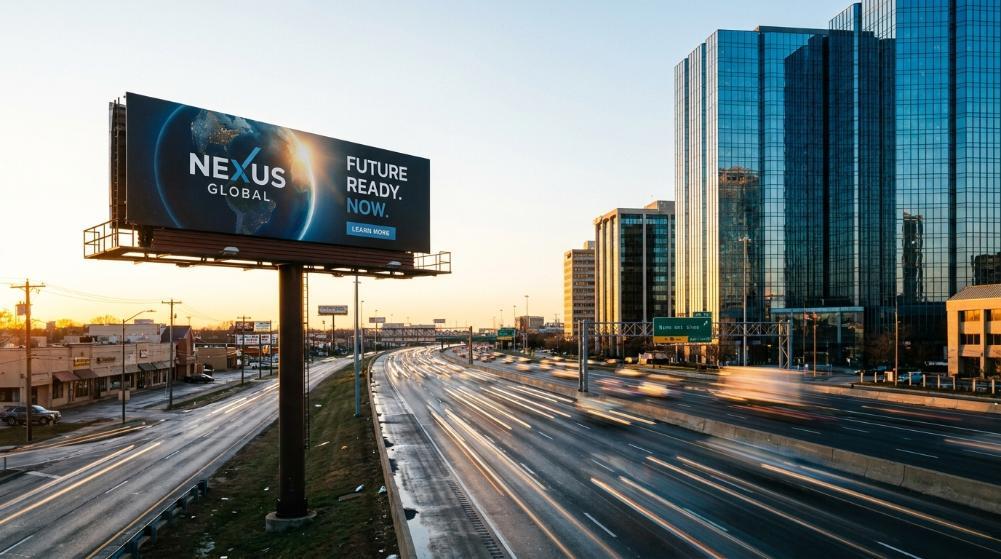
Get StartedEvery billboard you've ever admired from a car window — the one with the devastatingly simple headline, the perfectly chosen image, the emotional gut-punch compressed into six words — didn't start its life on a highway. It started as a hypothesis inside a native ad campaign, running quietly on a content recommendation widget beneath an article you probably scrolled past. The billboard is never the beginning of the creative process. It's the conclusion.
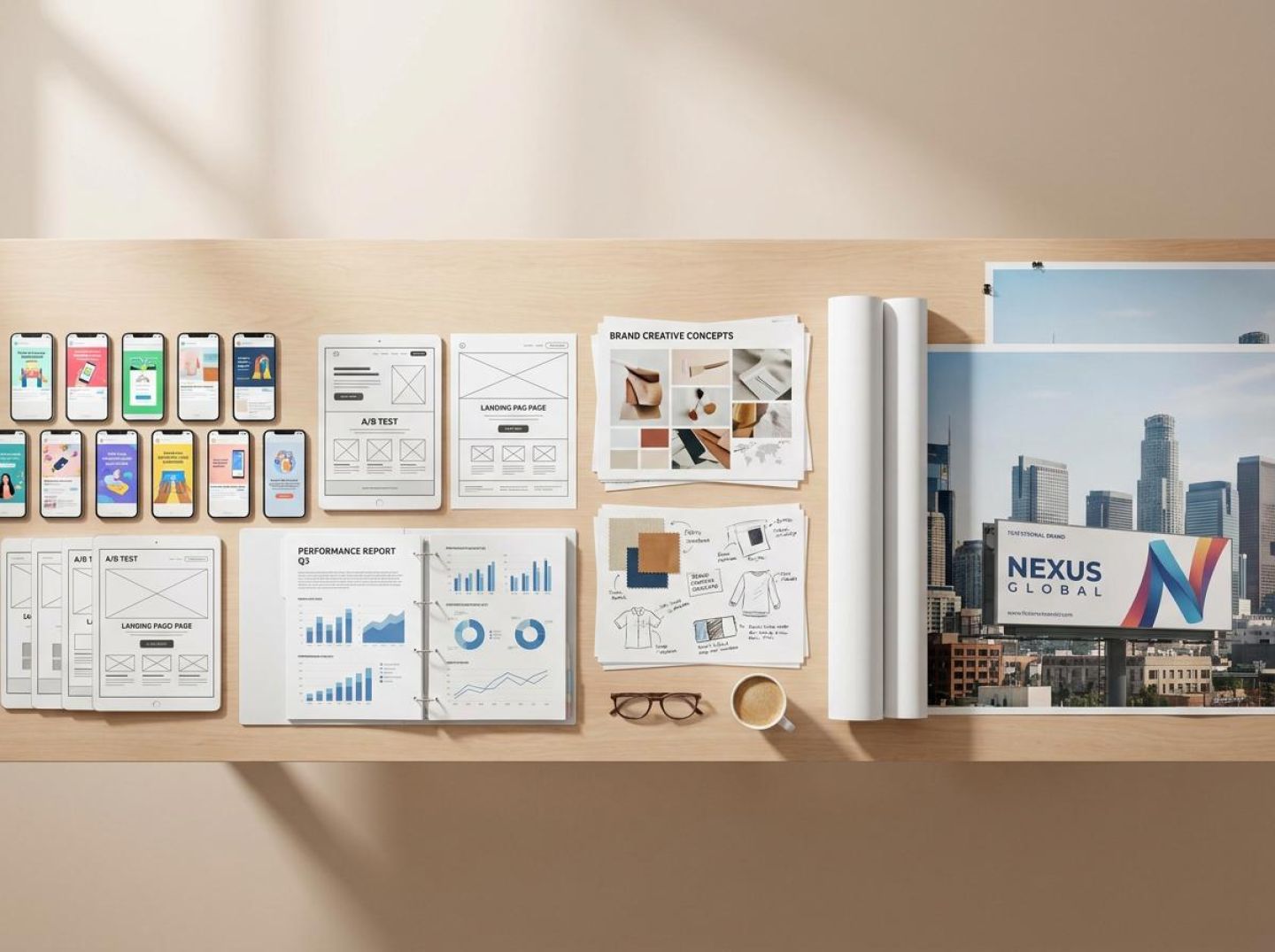
Sophisticated brands have understood this for years. They treat native advertising and programmatic push channels as low-cost, high-data laboratories where creative messaging can be validated before anyone signs a six-figure out-of-home contract. The logic is elegant: why risk hundreds of thousands of dollars on a single headline when you can test multiple image and headline variations across native platforms for a fraction of the cost, gathering real engagement data daily, especially in those critical early days when the signal is freshest? A native campaign running on Taboola or Outbrain might cost $500 to $1,000 to generate statistically meaningful results on which emotional hooks resonate, which value propositions drive clicks, and which audience segments lean in hardest. That data doesn't just inform the next native campaign — it feeds every downstream channel, including the one bolted to a steel frame above the interstate.
This is the invisible pipeline that separates brands with measurement-first workflows from brands still gambling on gut instinct. The creative team drafts ten headline variations. The media buyer pushes them into native placements across dozens of publisher sites. Within days, the data reveals a clear hierarchy: one angle outperforms the rest by a wide margin. That angle gets refined, retested, and then — and only then — graduated to higher-commitment, lower-flexibility formats like billboards, transit wraps, and LED truck campaigns where every impression is expensive and every word is permanent.
The research backs this up at the macro level. As OOH Today reported, findings drawn from Binet and Field's two decades of effectiveness data establish that when a brand's share of voice exceeds its share of market, market share grows — and when it falls short, the brand shrinks. Out-of-home is one of the most efficient channels for building real-world share of voice at scale, but only when the creative deployed through it has already been pressure-tested. The brands winning in their categories today "stopped guessing" and built measurement architectures that connect digital testing to physical execution. They don't treat OOH as a creative sandbox; they treat it as a megaphone for messages that have already proven themselves in cheaper, more forgiving environments.
Meanwhile, the convergence of native and programmatic buying is accelerating. As AdPushup has noted, the shift from manually implemented native placements to programmatic automation is being driven not just by agile startups but by established industry players, making it easier than ever for brands to scale their testing operations and feed validated creative into broader media plans.
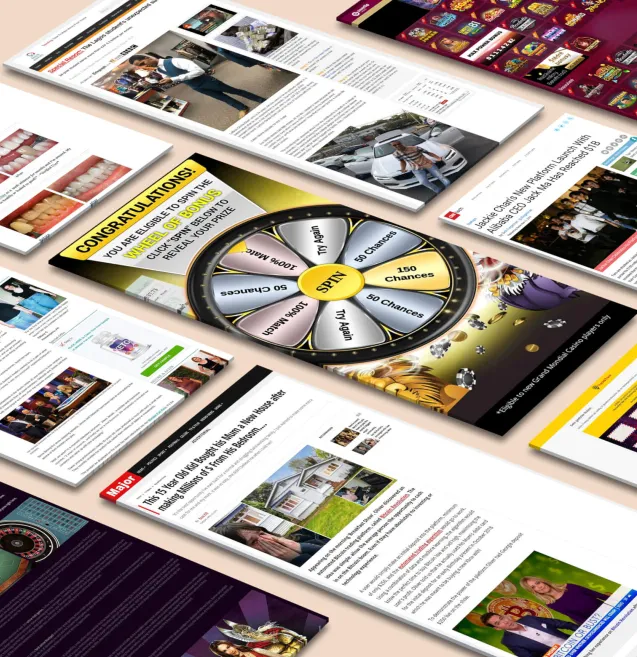
Here's what makes this pipeline both powerful and exploitable: the testing phase is visible. Those native ads running on content recommendation networks aren't hidden behind private dashboards. They're public. They appear on publisher pages. They can be captured, cataloged, and reverse-engineered by anyone paying attention — including you, with nothing more than an ad spy tool and a spreadsheet. The creative that a major brand will plaster across a billboard next quarter is running right now as a native ad, and the data trail it leaves behind is your competitive intelligence for free.
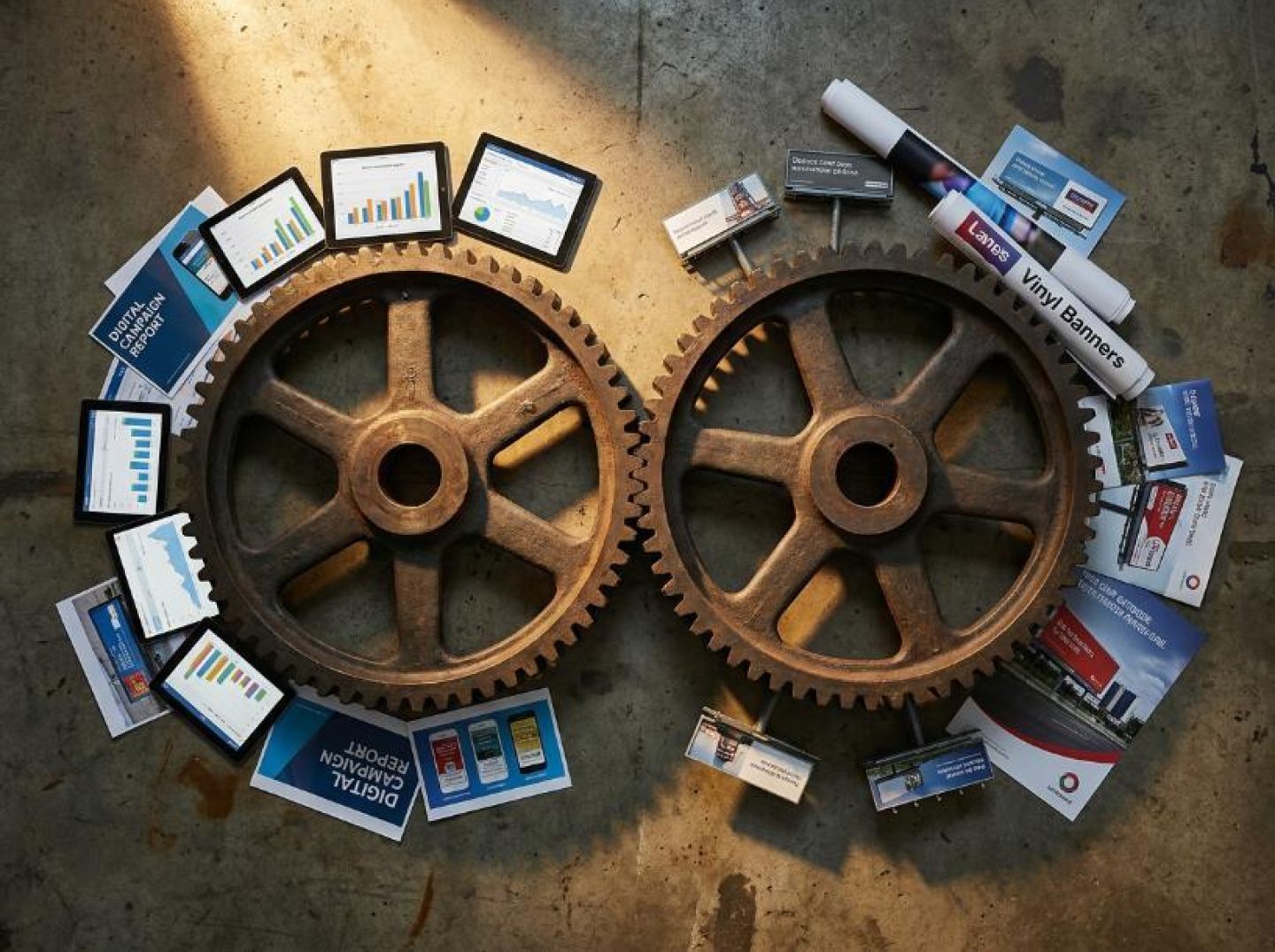
The old mental model — test in digital, prove the concept, then scale to outdoor — assumes campaigns move in a straight line. But the brands actually winning at both native and OOH aren't running a sequence. They're running a loop. The billboard doesn't hand off to digital like a baton in a relay race; it feeds digital in real time, and digital feeds back into the next iteration of the billboard creative. Understanding this flywheel is the single most important insight a smaller advertiser can extract from watching their larger competitors.
The mechanism that makes this possible has a name most marketers haven't encountered yet: the shadowfence. As OOH Today details, shadowfencing technology deploys a real-time mobile ad to every device in proximity to a physical OOH unit at the moment of exposure — a geofence that travels with the medium, updating block by block. Device ID passback then captures first-party audience data from everyone exposed, delivering it directly into a brand's stack for paid social retargeting, programmatic display, lookalike modeling, and CRM inputs. The physical impression doesn't evaporate after someone drives past. It gets digitized, tagged, and folded back into every performance channel the brand already operates. The billboard, in other words, becomes a top-of-funnel input to every channel the brand is already running.
This is where native advertising enters the flywheel — not as a separate campaign running in a separate silo, but as the capture mechanism for the demand OOH generates. Someone sees a billboard for Saatva while sitting in traffic. Thirty minutes later, they're scrolling an article and a native content recommendation unit serves them a Saatva advertorial about mattress materials. The touchpoints feel unrelated. They are, in fact, orchestrated. And the reason this orchestration now works at scale is the convergence that AdPushup identified between native advertising and programmatic buying — a shift that moves native formats like in-feed, content recommendation, and promoted listings from manually negotiated publisher deals into automated, audience-targeted buys triggered by real-time signals. When those signals include device IDs captured by a shadowfence, the flywheel closes completely: physical impression generates a digital identity, digital identity triggers a native ad, native ad drives a click, click produces behavioral data, behavioral data refines the next round of OOH targeting.
For brands like Saatva, which figured this system out as early as 2017, the compounding effect is enormous. Each channel lifts the other. OOH drives unaided awareness that increases click-through rates on native placements. Native engagement data reveals which headlines and value propositions resonate, informing the next round of billboard copy. Retargeting pools grow with every truck route and every digital billboard rotation.
Now here's what matters if you're a smaller advertiser without a billboard budget: your competitor's native ad footprint is not a standalone campaign. It's the digital exhaust of this entire integrated system. Every headline they test in a Taboola widget, every image they rotate in an Outbrain placement, every landing page they drive traffic to — these are artifacts of messaging priorities shaped by their full-funnel strategy. You can see what they're saying, infer who they're targeting, and reverse-engineer the creative direction their OOH exposure validated. You don't need to buy the billboard to read its output. You just need to know where to look — and that starts with understanding that the native ads you're competing against were never meant to stand alone.
Most advertisers open a spy tool the way they'd open a competitor's Instagram — scanning for inspiration, screenshotting a few headlines, maybe borrowing an image angle. That's the equivalent of walking through a rival's store and only noticing the paint color. The real intelligence isn't in what the ad looks like. It's in what the ad's persistence tells you about the economics behind it.
Here's the framework that separates casual browsing from genuine competitive intelligence: when you spot a native ad that has been running for eight weeks or longer, across multiple geolocations, with consistent creative elements, you're not looking at a guess. You're looking at a survivor. As Voluum's native advertising guide emphasizes, the testing cadence required to sustain a native campaign is relentless — advertisers should be checking data daily, split testing placements, and refreshing creative every few days just to stay competitive. An ad that endures that gauntlet for two months didn't get lucky. It earned its slot through validated unit economics. Someone has already spent thousands — sometimes tens of thousands — proving that specific combination of elements converts at scale. Your spy tool just handed you the conclusion of their research project for free.
But the real unlock comes when you understand what you're actually looking at structurally. Native ads aren't monolithic display banners. They're modular assemblies — headline, thumbnail image, description text, and call-to-action functioning as discrete, separately optimizable components that can each be tested independently. This modularity is precisely what makes spy tool analysis so powerful for a small advertiser willing to do the interpretive work. When you track a competitor's campaign over time and notice the headline has stayed identical across twelve variations while the image keeps rotating, you've just identified which element they've locked in as a validated winner and which they're still iterating on. That headline survived their testing matrix. The image didn't — yet.
This distinction matters enormously for budget allocation. Instead of testing every variable from scratch, you can anchor your own campaigns around the elements a well-funded competitor has already validated. Lock their proven headline structure — not the exact words, but the pattern, the emotional register, the specificity level — and spend your limited budget testing the variables they're still experimenting with. You're essentially running your R&D on top of theirs.
The geo-targeting patterns are equally revealing. When a campaign appears exclusively in two or three metros, it's likely in early testing — the advertiser is isolating variables before scaling. When that same campaign suddenly appears in fifteen markets with the creative unchanged, it's been greenlit. That expansion signal tells you the funnel behind it is working: the landing page converts, the offer economics hold, the audience targeting is dialed. For a small advertiser, that's a stronger signal than any case study.
Pay particular attention to landing page structures behind long-running ads. The ad itself is just the entrance. If five competitors in your vertical all converge on the same page architecture — say, a long-form advertorial with embedded testimonials before a mid-page CTA — that convergence is market research you didn't have to commission. Combined with the correlation between creative refresh frequency and sustained performance that experienced media buyers track obsessively, these patterns give you a layered picture of what the market has already validated.
The point isn't to copy. It's to read the strategic signals hiding in plain sight — and to start your own testing where your competitors' testing already ended.
Let's be honest about the math. As the Voluum Blog warns, "a smaller budget decreases the chances of succeeding," and "a small budget combined with a lack of experience can even lead to a complete disaster." That's not fearmongering — it's a statistical reality. When you're testing blind with $500, you're essentially buying lottery tickets: random headline variations, untested image styles, emotional hooks you think might resonate but have zero evidence for. You burn through your budget generating data that a bigger advertiser would consider a rounding error in their learning phase.
But here's what that warning assumes: that you're starting from zero. That every creative hypothesis you test is original, unproven, born from guesswork. Competitor intelligence fundamentally changes that equation. When you can see what a brand spending half a million dollars has already validated — which angles they're running for months, which emotional frameworks they keep returning to — you're not guessing anymore. You're starting your testing on second base.
Here's the concrete workflow that turns $500 from a coin flip into a calculated bet.
Step one: Identify three to five competitors running coordinated native and OOH. These are the brands most likely to have sophisticated creative operations, because as we've explored in earlier sections, the companies investing in billboards alongside native are typically operating from a unified messaging architecture. Use spy tools to confirm they're running native at scale, and check OOH databases or simply watch for their presence in your market.
Step two: Catalog their longest-running native creatives. Duration is your proxy for performance. Any native ad that's been live for sixty or ninety days has survived optimization rounds, budget reviews, and performance benchmarks. These are the survivors — the creatives that proved their economics. Screenshot them. Log the headlines, images, CTAs, and landing page structures.
Step three: Extract the underlying messaging framework. You're not looking at the surface. You're looking at the skeleton. Does every winning headline follow a curiosity-gap pattern? A social-proof pattern? Are the images lifestyle-driven or product-focused? Is the emotional register aspirational, fear-based, or utilitarian? Map the patterns across all five competitors. The overlap is your signal.
Step four: Adapt the framework to your brand voice and value proposition. This is where the line between intelligence and plagiarism lives. You're not copying their ads. You're borrowing the hypothesis they already spent six figures validating — that curiosity-gap headlines outperform direct claims in your category, for instance — and expressing it through your own language, your own imagery, your own offer. As Jonathan Kim noted in his conversation with Basis, not all native formats perform equally, and the aesthetic, user experience, and pricing vary dramatically by placement type. So match the framework to the specific format you're buying, not just the message you're borrowing.
Step five: Launch with the recommended minimum budget against those pre-validated angles. Allocate your $500 across no more than three to four creative variations, each built on a different validated framework from your competitive research. You're not testing whether the angle works — the competitor already answered that. You're testing whether your execution of that angle works for your audience at your price point. That's a dramatically narrower question, and narrower questions require dramatically less data to answer.
The result isn't a guarantee. But it's the difference between walking into a casino and walking into a card game where you've already seen half the deck. The budget didn't change. The information environment did.
Let's name the elephant in the room: everything outlined in the previous sections sounds a lot like copying. And if all you're doing is cloning a competitor's headline, swapping in your logo, and running the same angle to the same audience — it is copying. Worse, it's copying that won't work, because you've stripped away the one thing that made the original effective: the brand behind it.
The distinction matters, and it's not just semantic. There's a meaningful difference between strategic intelligence gathering — understanding what messaging resonates with a shared audience, which pain points are durable enough to sustain months of paid promotion, which emotional registers earn clicks in a noisy feed — and creative theft, which is grabbing someone else's ad, filing off the serial numbers, and hoping nobody notices. The first is how every sophisticated media buyer on the planet operates. The second is how you train an algorithm to see your brand as a commodity.
Consider the competitive intelligence process we've been building. You're studying persistence patterns. You're reverse-engineering audience targeting through landing page analysis. You're reading budget signals from media mix choices. None of that tells you to write the same headline. It tells you why a certain category of headline keeps getting funded, which is a completely different — and far more valuable — insight. When Voluum's native advertising guide reminds advertisers that "you and your competitor get the same amount of pixels for an ad" and that "what differentiates you from others is your creativity," it's making precisely this point. The canvas is identical for everyone. The competitive advantage doesn't come from mimicking the painting; it comes from understanding why the gallery keeps hanging that particular style of work, and then producing something original within the same frame.
This is especially critical in native, where audience fatigue is merciless. A duplicated angle doesn't just underperform — it actively erodes trust. Readers who've already seen the original will pattern-match your version as derivative. The algorithm, meanwhile, will see lower engagement signals and throttle your reach accordingly. You've spent money to make yourself less visible.
The real advantage of competitor-informed strategy is structural, not cosmetic. You're compressing your learning curve. You're eliminating dead-end hypotheses before you spend a dollar testing them. And you're entering the market with a sharper understanding of which value propositions the audience has already validated — so you can position against them rather than beside them.
That positioning layer is where differentiation becomes non-negotiable. The brands running billboards alongside native campaigns understand this intuitively. As OOH Today has documented, when a brand's share of voice exceeds its share of market, market share grows — but share of voice built on borrowed creative isn't share of voice at all. It's noise attributed to someone else's signal. The brands winning across channels aren't echoing their competitors; they're using competitive intelligence to identify the white space those competitors have left open, then filling it with a point of view only they can own.
So study the billboard. Decode the native campaign. Map the funnel. But when you sit down to write your headline, close the spy tools and open the one document your competitor can never access: your own brand's reason for existing. That's not where the research ends. That's where the strategy actually begins.
Receive top converting landing pages in your inbox every week from us.
Must Read
Discover how AI-powered media buying can expose advertisers to budget overruns, brand safety issues, and legal risks when autonomous systems operate without clear controls. Learn how to build safer advertising workflows with standardized prompts, mandatory checklists, human oversight, and contractual safeguards that keep AI-driven campaigns accountable.
Dan Smith
7 minOct 15, 2026
How-To
Discover how to reverse-engineer competitors’ ChatGPT advertising strategies by analyzing sponsored cards, conversational entry points, landing pages, and retargeting funnels. Learn how to use native ad and TikTok intelligence to uncover competitor offers, identify cross-channel opportunities, and build higher-converting performance marketing campaigns.
David Kim
7 minOct 14, 2026
Must Read
Discover how native advertisers can transform everyday moments into memorable, high-performing campaigns through eventization. Learn to use scarcity, time-sensitive offers, contextual targeting, and always-on micro-events to engage audiences, improve campaign relevance, and uncover winning competitor strategies with Anstrex.
Priya Kapoor
7 minOct 11, 2026