10 minJuly 13, 2026

Our spy tools monitor millions of native ads from over 60+ countries and thousands of publishers.
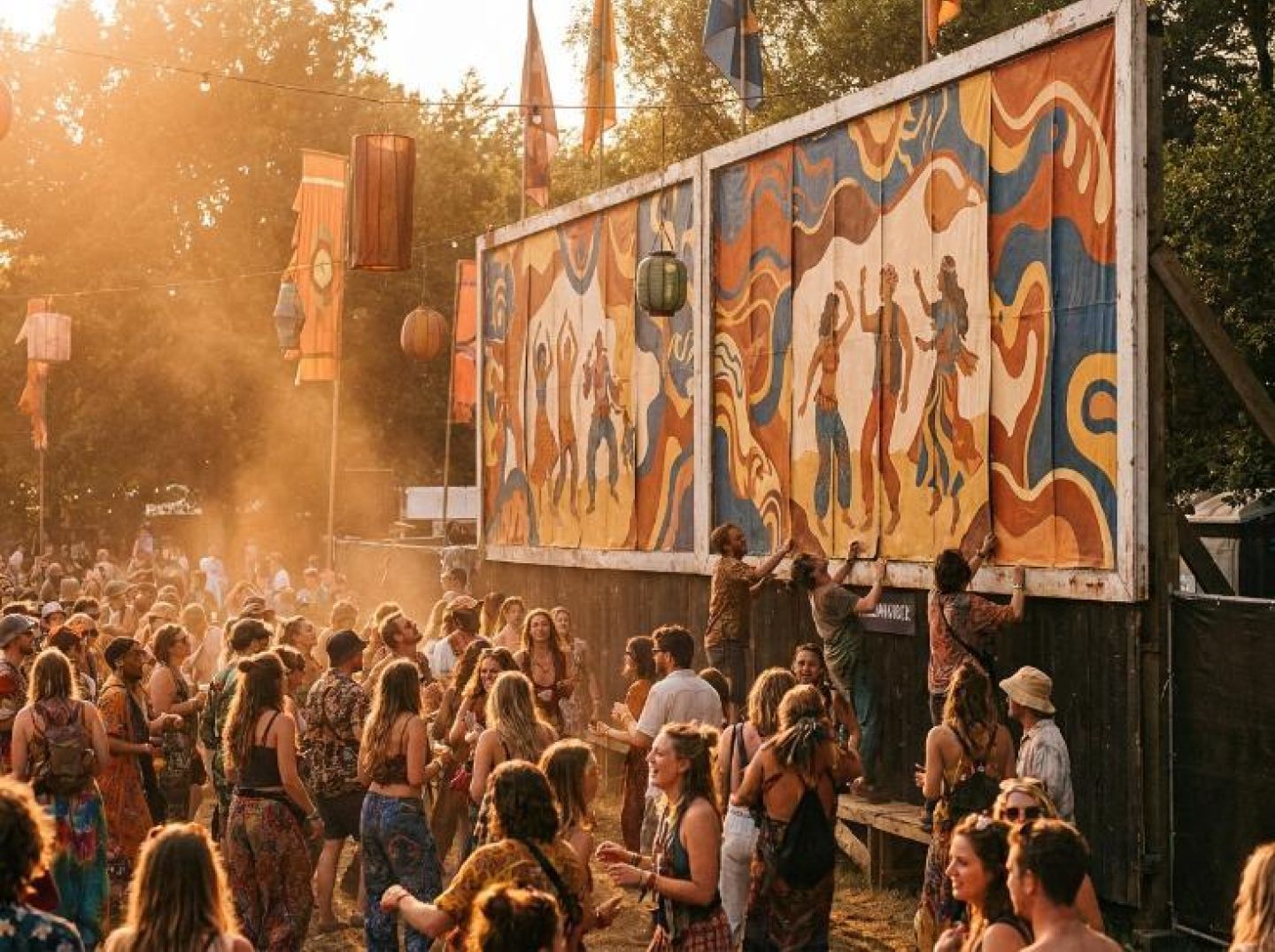
Get StartedDuring CMA Fest in Nashville, Wrangler didn't buy a billboard that pointed at the festival from a distance. It placed one that felt like part of the festival itself — a visual extension of the boots, the dust, the music, the crowd. The creative didn't pitch jeans to passersby who happened to be walking toward the stage. It spoke the same language as the event, used the same imagery, channeled the same energy. If you were a fan moving through the streets of downtown Nashville during that weekend, the billboard wasn't an interruption wedged between you and the thing you came for. It was the thing you came for, or at least an indistinguishable piece of it.
This is what it looks like when advertising stops watching the event and starts joining it — a distinction that OOH Today has articulated as the dividing line between out-of-home work that merely occupies space and work that earns cultural participation. Wrangler's billboard didn't ask concert-goers to pause their experience and consider a brand message. It embedded itself inside their experience so seamlessly that engaging with the ad and engaging with the festival became the same act. There was no cognitive tax, no moment of friction where the audience had to decide whether to pay attention to the brand or return to what they were actually doing. The brand dissolved into context.
The principle at work here extends well beyond a single billboard on Broadway. Writing about the 2026 FIFA World Cup, Nicole Greene of Gartner observed in Marketing Dive that the campaigns which genuinely stand out "contribute to the experience itself, whether through fan engagement, cultural participation or locally relevant activations." The ones that don't? They default to what Greene calls a "visibility play" — logo placement, reach metrics, raw exposure — and disappear into a sea of brands all showing up in exactly the same way. Visibility, she argues, "becomes the baseline rather than the differentiator." The real separation happens when a brand stops surrounding an experience with messaging and starts participating in it.
That insight deserves to travel far beyond the world of sports sponsorships and country music festivals. It is, in fact, a universal advertising principle: the best advertising doesn't compete with the surrounding context; it becomes indistinguishable from it. When a billboard at CMA Fest looks like the festival, it gains the festival's emotional momentum for free. When a World Cup sponsor builds something fans actually want to interact with, it borrows the tournament's concentrated attention rather than fighting against it.
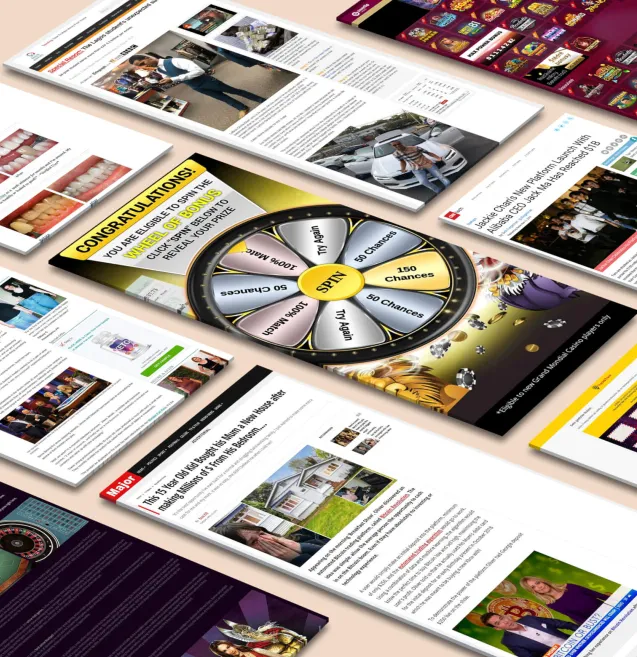
And yet this is precisely the principle that most TikTok-ads-payment-problems-how-to-add-a-payment-method" target="_blank" rel="noreferrer noopener">digital advertising has abandoned. The trade-off happened gradually, then all at once. As Greene notes, the industry leaned so heavily into digital channels and personalization that it mistook targeting precision for relevance. Better data was supposed to produce better outcomes. Instead, it produced messaging that often feels, in her words, "repetitive or disconnected from context" — eroding trust rather than building it. Digital advertising got extraordinarily good at finding the right person. It got proportionally worse at showing up in the right way.
The Wrangler billboard didn't know who was walking past it. It didn't need to. It knew where it was, when it was there, and what was happening around it — and it shaped every creative decision around that knowledge. That is contextual fusion: not the absence of strategy, but a fundamentally different theory of what strategy should optimize for. Not the individual. The moment.
For the better part of two decades, digital advertising staked its entire value proposition on a single promise: we will find the right person. The machinery built to deliver on that promise was extraordinary. Cookies, device graphs, lookalike models, retargeting pools, AI-driven bid optimization — an entire infrastructure designed to answer one question with increasing specificity: who should see this ad? The industry got remarkably good at answering it. What it never bothered to ask was whether the person, once found, would actually want to hear from the brand at that moment.
The assumption, as Nicole Greene of Gartner wrote for Marketing Dive, was straightforward: "better targeting would lead to better outcomes." It seemed logical. If you could identify a consumer who had browsed hiking boots last Tuesday and serve them a hiking boot ad on Thursday, the relevance would be self-evident. The click would follow. The conversion would follow the click. Scale the machine, and revenue scales with it. But that premise, Greene argues, is starting to weaken. Marketing budgets remain overwhelmingly digital, "even as consumers become more adept at avoiding ads, skipping them, blocking them or ignoring them entirely." The targeting got better. The outcomes did not keep pace.
The reason is not that precision is worthless. It's that precision without contextual fit produces a specific kind of failure — one that feels worse than irrelevance. When a brand follows you across websites, apps, and social feeds with the same message about the same product you already bought or decided against, the experience doesn't feel personalized. It feels surveilled. As Greene puts it, AI-fueled personalization often makes the experience worse because "messaging feels repetitive or disconnected from context," eroding trust rather than building it. "Precision has improved, but impact has not kept pace."
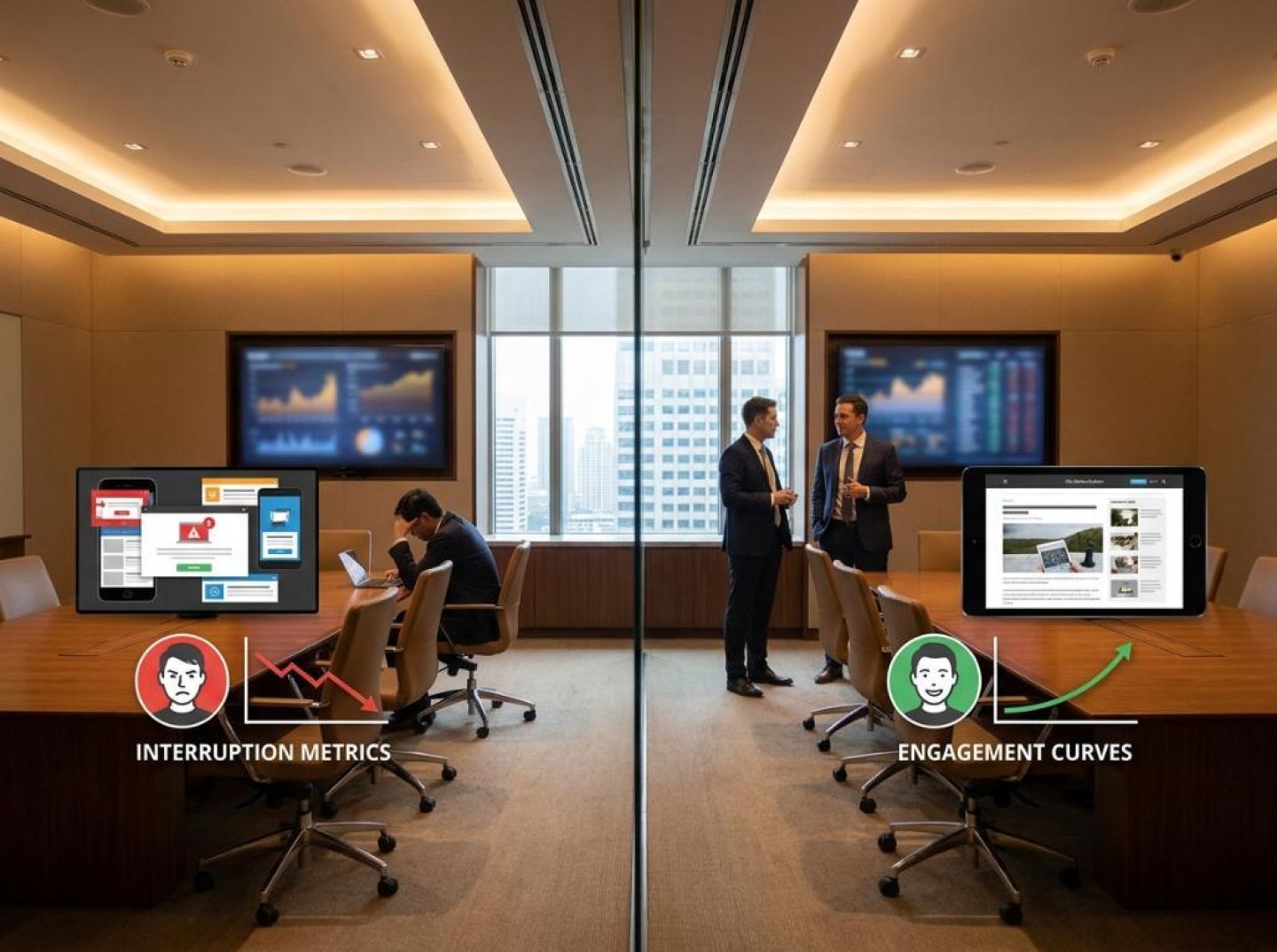
That erosion has a mechanism, and it's not subtle. Digital advertising operates on what might be called a forced binary: you either engage with the ad or you dismiss it. There is no passive middle ground. As the AdQuick blog detailed in its analysis of the Kochava cross-media study, digital ads demand that consumers either accept or refuse them, "and refusing it requires effort." A skip button still requires a click. A close icon still requires a tap. A pre-roll still steals five seconds before you earn the right to watch what you came for. Each individual refusal is trivial. But the cumulative weight of thousands of these micro-refusals produces something corrosive. After enough of them, the AdQuick analysis notes, "the consumer's effort calcifies into resentment."
This is the precision trap. The industry invested nearly everything in identifying who to reach and almost nothing in understanding whether the environment would make them receptive. Targeting answers the question of identity. Context answers the question of welcome. A perfectly targeted ad served inside a moment of irritation — mid-article, mid-video, mid-task — doesn't benefit from its accuracy. It suffers from its timing. The consumer doesn't think, "How relevant." They think, "Not now."
The result is an industry that can find anyone, anywhere, at any time, and still manage to alienate them. The gap that opened up wasn't technological. It was philosophical. The entire optimization framework was built around the audience and ignored the atmosphere. What follows in the rest of this article is the corrective — a principle that out-of-home advertisers have understood intuitively for decades and that digital is only now beginning to rediscover.
Every media planner alive has internalized the same frequency doctrine: show someone an ad too many times and performance degrades. Cap impressions, rotate creative, refresh the asset before fatigue sets in. This is not wrong. For interruptive formats — pre-rolls, pop-ups, mid-roll video — it is exactly right. But it is also a doctrine born from a specific mechanical reality, and the industry made the catastrophic error of assuming it was universal.
It isn't. The data now proves it.
The Kochava cross-media study tracked OOH conversion rates across exposure levels and found something that should rewrite frequency planning for any format that achieves genuine contextual fit. From one exposure to ten, OOH digital conversion rates climbed from 0.24% to 1.28% — a sixfold increase, producing the cleanest upward curve of any media type in the study. Broadcast television, by comparison, plateaued at 0.22% and flatlined. Connected TV climbed gently but nothing close to the sustained trajectory of out-of-home. OOH just kept going up.
That curve is not a quirk. It is a consequence of how context-embedded advertising interacts with human psychology versus how interruptive advertising does. The distinction matters enormously, and it comes down to one question: does repetition reinforce a feeling the audience already has, or does it compound an annoyance the audience is trying to escape?
When a billboard sits in the landscape of your commute, each exposure lands in the periphery of an experience you're already having. It doesn't demand attention. It doesn't require you to click "skip" or wait five seconds. As the AdQuick analysis of the Kochava data put it, OOH lives in the periphery of your attention rather than at the center — the difference between someone whispering a fact during your morning coffee and someone emailing you that same fact ten times. Both deliver the message. Only one generates resentment. Interruptive digital advertising forces a binary choice: accept the interruption or actively refuse it. Refusing requires effort, and after enough refusals, that effort calcifies into hostility toward the brand. Each additional impression doesn't build equity. It burns it.
This is why frequency capping exists. It is a defensive mechanism designed to limit the damage that repetition causes in interruptive environments. The problem is that the entire digital planning apparatus treats frequency capping as a universal best practice rather than a format-specific one.
Now translate this to digital formats that actually achieve contextual embedding. A native ad inside a travel article that matches the surrounding editorial intent. An in-feed recommendation that aligns with what the user is already browsing. A contextually placed YouTube ad that, as SilverPush has documented, appears inside cultural moments people are actually watching rather than moments they're trying to get past. These formats don't behave like pre-rolls. They behave like billboards. They sit inside the experience rather than interrupting it. And if they behave like billboards, their frequency curve should look like OOH's frequency curve — which means the instinct to cap and rotate is precisely backward.
If your digital campaign achieves true contextual fit, you should be extending flight durations, not shortening them. Increasing saturation in the environments where the fit holds, not pulling back at the first sign of high frequency. Sustaining presence rather than cycling through clever creative refreshes that sacrifice the compounding effect of recognition. The exact things that digital media has been optimizing against for fifteen years — long flights, high frequency, sustained creative — are the exact things that contextually embedded advertising has been rewarded for the entire time. Digital just never had the frequency data to see it, because it was measuring all formats on the same curve and assuming the curve was the same for all of them.
It wasn't. And now the numbers have caught up with the intuition.
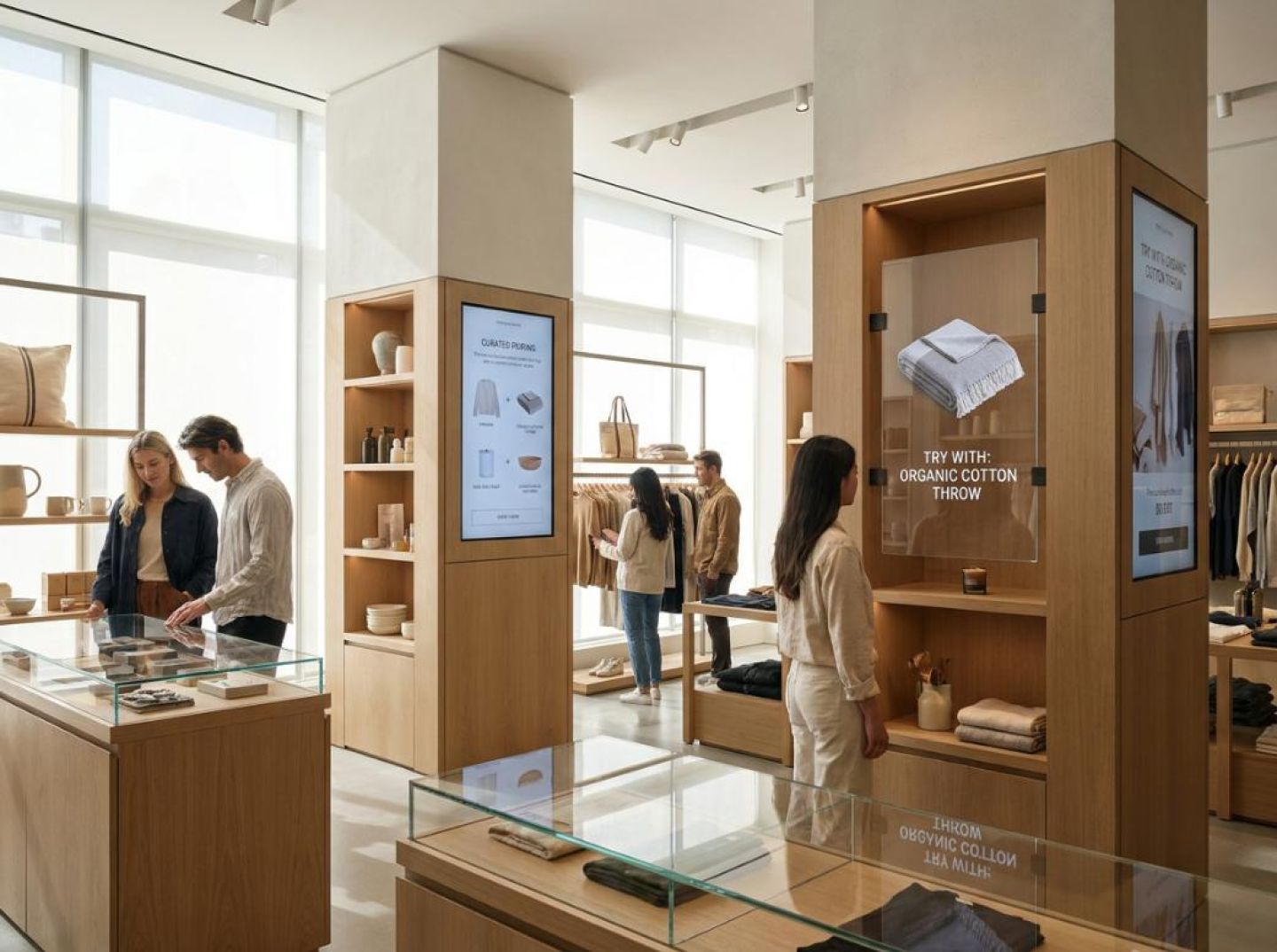
Walk into a Walmart today and count the screens. They line the self-checkout bays, glow from endcaps, hang above the deli counter. Each one serves a product suggestion tuned to the department you are standing in, the time of day, and the purchase patterns of shoppers who look statistically like you. It does not feel like advertising. It feels like information that belongs in the environment — a helpful nudge arriving at exactly the moment your hand is reaching for the shelf. As one OOH industry commentator put it, the aisles have become avenues, the checkout lane has become Main Street, and the store has become a media property in its own right. The endcap is premium inventory now, and the brands buying it are not thinking about impressions. They are thinking about inevitability — the sensation that this message could not have appeared anywhere else.
This is the indoor equivalent of a Wrangler billboard towering over CMA Fest. Both placements derive their power from the same mechanic: the context does the persuasion before the creative even registers. A digital screen recommending a marinade kit in the meat aisle is not interrupting a shopping trip; it is joining one. And unlike a banner ad chasing someone across the internet three days after they searched for "grill accessories," the in-store placement meets the consumer inside a live decision. The gap between suggestion and action collapses to a few feet of linoleum.
Retail media's explosive growth — Walmart Connect, Kroger Precision Marketing, Instacart Ads — has led some in the industry to ask whether it competes with traditional out-of-home. The more honest answer is that it validates OOH's founding premise. The real business has always been connecting brands with consumers in physical space, and a digital screen inside a grocery store shares more DNA with a highway billboard than with a programmatic display ad. Both depend on location, moment, and physical proximity. Both succeed when they feel native to the world around them.
Now extend the principle forward. In a self-driving future, the car itself becomes a screen-rich environment, and the passengers inside it become an audience with a new luxury: attention freed from the task of driving. Intelligent billboards that detect an approaching autonomous vehicle could trigger synchronized offers on the in-car display — a coffee brand's roadside placement initiating a coupon on the passenger's screen as the vehicle passes a drive-through exit. The ad does not interrupt a digital experience; it initiates one, using physical space as the catalyst rather than the afterthought.
This convergence matters because it reveals a trajectory. Digital advertising spent two decades perfecting audience targeting only to discover, as one Gartner analyst recently argued, that precision has improved but impact has not kept pace. The challenge now is less about finding the right person and more about showing up in environments where people are already engaged. Retail media understood this instinctively. Self-driving car platforms will understand it structurally. And OOH has understood it for a century.
The lesson for any advertiser — native, push, programmatic, or otherwise — is disarmingly simple. Stop thinking of your placement as a slot in a feed and start thinking of it as a physical space with its own mood, intent, and energy. Design creative that belongs in that space the way a product recommendation belongs on a grocery store screen: not as a clever interruption, but as an answer to a question the environment has already asked. Digital, retail media, and every emerging channel are slowly discovering what out-of-home knew all along: reality matters, and the consumer never stopped living there.
Most competitive analysis starts with volume: who is spending the most, who has the most creatives in rotation, who dominates share of voice. This is useful for benchmarking budgets. It is nearly useless for understanding contextual fit. If you want to find the campaigns that have actually joined the event rather than interrupted it, you need a different methodology — one that treats longevity as the primary signal and works backward from there.
Step one: Filter by flight duration, not spend. Open whatever spy tool or competitive intelligence platform you use — Meta Ad Library, AdMobiSpy, Pathmatics, any of them — and sort competitor creatives not by impressions or estimated budget but by how long each ad has been running without significant alteration. A creative that has survived eight weeks in market without rotation is telling you something important. The Kochava data on OOH frequency curves demonstrated that sustained presence beats rapid creative refreshes when the format is not generating active resentment, and digital conversion rates climbed sixfold between one and ten exposures for formats that avoided interruptive mechanics. The same logic applies when you are reading a competitor's media plan from the outside: if a creative is surviving without burnout, it has likely achieved contextual fit with its placement.
Step two: Map each surviving ad to its landing context. Do not just screenshot the creative. Go find it in the wild. Scroll the feed where it appears and document what surrounds it — the content above and below, the emotional register of the platform at that moment, the user behavior the platform is designed to encourage. A TikTok ad lives inside a stream of entertainment. A Pinterest ad lives inside an aspirational planning session. A Google Shopping ad lives inside a purchase-intent corridor. Each of these is a different event, and the creative that survives longest is the one that matches the event's texture rather than fighting against it.
Step three: Name the event explicitly. Every content feed cultivates an implicit event — entertainment, problem-solving, social comparison, deal-hunting, identity construction. Write it down in plain language. This is not a targeting parameter; it is a design brief. The distinction matters because, as Marketing Dive noted in its analysis of World Cup sponsorships, the campaigns that stand out are the ones that contribute to the experience itself rather than simply surrounding it with messaging. The same principle holds in a feed. If the event is entertainment, your ad must entertain. If the event is deal-hunting, your ad must deliver a deal. Anything else is interruption wearing contextual clothing.
Step four: Redesign creative so it contributes rather than extracts. This is where most teams fail. They identify the right context, then produce a brand-first asset that demands the viewer leave the event to engage with a landing page. The fix is structural: the ad itself must deliver value that makes sense inside the event. A recipe completion inside a cooking content feed. A styling tip inside a fashion discovery session. A contextual adjacency play that borrows the credibility the surrounding content has already earned, rather than asking the viewer to abandon their current task for a brand's separate agenda.
Step five: Test with extended frequency rather than rapid rotation. Once you have a creative built to join the event, give it room to compound. Extend your flight windows. Resist the instinct to swap in new variations every two weeks. The campaigns you identified in step one survived precisely because they were not rotated — their contextual fit meant that repetition deepened recognition instead of triggering fatigue. Measure accordingly: watch for conversion-rate trends across exposure counts, not just click-through on first impression. The winning curve climbs. If it flattens or drops, you have not yet achieved fit. Go back to step three and rename the event you are actually joining.
Receive top converting landing pages in your inbox every week from us.
Must Read
Discover how native advertisers can transform everyday moments into memorable, high-performing campaigns through eventization. Learn to use scarcity, time-sensitive offers, contextual targeting, and always-on micro-events to engage audiences, improve campaign relevance, and uncover winning competitor strategies with Anstrex.
Priya Kapoor
7 minOct 11, 2026
Featured
Discover how to turn brand-led stunts and viral marketing campaigns into high-ROI performance campaigns. Learn how to build hidden funnels with retargeting, landing pages, native ads, push ads, pop ads, and TikTok campaigns that transform brand awareness into measurable conversions and revenue.
Samantha Reed
7 minOct 10, 2026
Guide
Discover why celebrity endorsements and global intellectual property don’t automatically translate into advertising success. This guide uses ad spy intelligence to explore how audience relevance, placement context, creative testing, and post-click performance help advertisers build high-ROI campaigns without expensive celebrity partnerships.
Elena Morales
7 minOct 9, 2026