10 minMay 17, 2026

Our spy tools monitor millions of native ads from over 60+ countries and thousands of publishers.
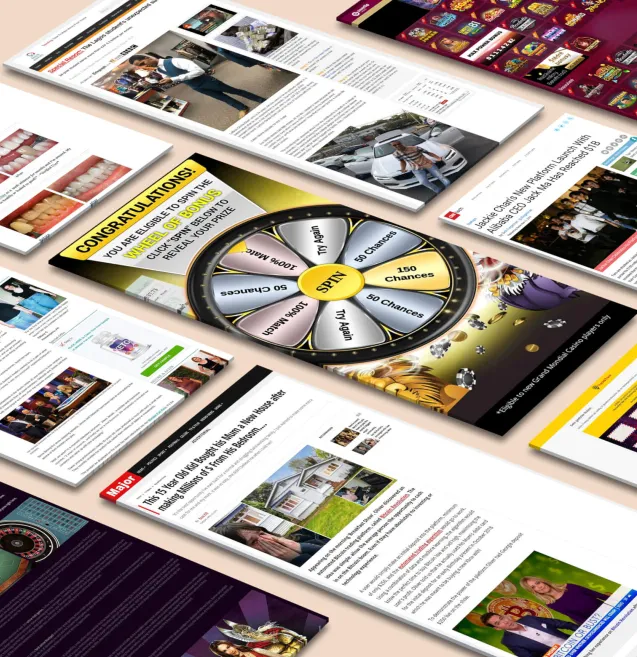
Get StartedIf you've spent any time studying how social media platforms were built to be irresistible, the mechanics are familiar by now: variable reward schedules that keep you scrolling, social validation loops that make every notification a tiny dopamine hit, and an ambient fear that everyone else is experiencing something you're not. These were the techniques that prompted congressional hearings, Netflix documentaries, and a wave of "time well spent" soul-searching across Silicon Valley. What's received far less scrutiny is the fact that the same psychological playbook — sometimes using identical language — has quietly become the gold standard for high-performing ad creative.
Open any guide on native advertising optimization and you'll find the family resemblance immediately. As the Brax Blog explains, urgency and FOMO are not incidental tactics but foundational ones: "When time seems short, we tend to act more quickly," the publication notes, advising advertisers to make audiences "feel like they're about to miss out on something fantastic." The recommended headlines could have been pulled straight from a push notification playbook — "This video will soon be banned. Watch before it's deleted" — engineered to trigger the same compulsive, loss-averse click that a disappearing Instagram Story exploits. The mechanism is identical; only the context has changed.
This isn't a case of advertisers cynically copying platform designers, nor is it a conspiracy hatched in some growth-hacking Slack channel. It's convergent evolution. Platform engineers and top-performing media buyers arrived at the same behavioral science independently because the underlying psychology is universal. Humans are loss-averse. We crave social proof. We respond to emotional arousal faster than we respond to rational argument. The research on this predates both Facebook's News Feed and the first programmatic ad exchange by decades.
What makes the parallel worth examining is the lopsided scrutiny. Platforms were hauled before regulators; advertisers have been flying under the radar, quietly benefiting from the same cognitive biases without anything close to the same public reckoning. And the advice circulating in the industry leans into this advantage explicitly. Stream Companies argues that conversion "is often misunderstood as a purely transactional outcome" when it is actually "the result of a series of emotional triggers that guide users toward action" — trust, excitement, urgency, belonging, and relief, each one a lever that shapes behavior before the rational mind even engages. The publication makes the point plainly: human decision-making is deeply influenced by emotion, and consumers who believe they are making logical choices are often driven by how something makes them feel.
Meanwhile, the performance data reinforces the loop. Ads built on these emotional triggers earn more clicks, and as Brax notes, when more people click, the cost per click decreases — a self-reinforcing cycle that rewards emotionally provocative creative with cheaper distribution. The algorithm doesn't care whether your ad is manipulative or meaningful; it only sees engagement velocity.
This is the landscape every modern advertiser operates in, whether they acknowledge it or not. The triggers aren't exotic secrets; they're embedded in every top-performing campaign your competitors are already running. Understanding them isn't a moral failing — it's a literacy requirement. The real question, and the one the rest of this guide will answer, is where the line falls between leveraging universal human psychology and exploiting it.
Most advertisers stumble into psychological triggers the way someone stumbles into a good restaurant — they know it worked, but they couldn't tell you exactly why. Top performers operate differently. They treat these triggers as a deliberate creative framework, selecting specific mechanisms based on where a prospect sits in the funnel and what emotional state will move them forward. Here are the five triggers that show up most consistently in high-performing ad creatives, whether the people who wrote them realized what they were doing or not.
1. Urgency and Scarcity
When time feels short, people act faster — that's the foundational logic behind every countdown timer and limited-stock warning you've ever seen. As the Brax Blog illustrates, a headline like "Only 24 hours left! Get the ultimate guide to growing your own veggies!" isn't just slapping a deadline on a promotion. It's compressing the decision window so the rational mind doesn't have time to talk the emotional mind out of clicking. The corresponding conversion mechanism, as Stream Companies explains, is that urgency motivates users to act quickly rather than delay — reducing the gap between interest and action. The theory and the practice are describing the same phenomenon: manufactured time pressure lowers the threshold for commitment.
2. FOMO and Social Proof
FOMO operates on a subtler frequency than urgency. It's not about a clock running out; it's about the gnawing sense that everyone else is already benefiting from something you haven't discovered yet. A headline like "This video will soon be banned. Watch before it's deleted" doesn't mention other people at all, yet it implies a crowd of insiders who already know the secret. On the emotional-conversion side, this maps directly to what Stream Companies categorizes as belonging — helping audiences see themselves as aligned with a community or movement rather than standing outside it. FOMO is the negative space of belonging: the fear of not being part of something triggers the same neural circuits as the desire to be part of it.
3. Curiosity Gaps
The curiosity gap is the white space between what a headline reveals and what it withholds. Headlines like "She quit her six-figure job for this — and her accountant couldn't believe what happened next" work because they open a loop the brain desperately wants to close. This trigger is most potent at the top of the funnel, where the goal is capturing attention in a crowded marketplace rather than driving an immediate purchase. Curiosity doesn't ask for commitment; it asks only for one more click — which is exactly why it dominates native advertising.
4. Emotional Resonance
Emotional resonance goes deeper than a clever hook. It's the moment an ad makes someone feel seen — a parent recognizing the chaos of school mornings, a freelancer confronting the anxiety of an empty pipeline. This is where trust and relief converge: trust reduces hesitation, while relief positions a product as a solution to a felt problem. The most effective emotionally resonant ads don't sell features; they narrate the tension a prospect already lives with, then offer a credible resolution.
5. Belonging and Identity Alignment
Belonging is the trigger most often overlooked — and the one with the longest half-life. When an ad signals "this is for people like you," it bypasses product evaluation entirely and speaks directly to identity. Stream Companies frames this as creatives that help audiences feel connected to the brand on a personal level, transforming a transactional relationship into an affiliative one. Think of campaigns that say "built for founders," "made for night owls," or "designed by runners, for runners." The product becomes secondary to the tribe.
The critical insight here is that these five triggers are not interchangeable levers you pull at random. Each one corresponds to a different emotional state and a different stage of the buyer's journey. Urgency closes deals. Curiosity opens doors. Belonging builds loyalty. The advertisers who outperform their competitors are the ones who match the right trigger to the right moment — deliberately, consistently, and with full awareness of why it works.
Every day, thousands of advertisers are running what amounts to a massive, distributed behavioral experiment — and the results are sitting in plain sight. Ad spy tools like Anstrex index millions of native ad creatives across networks, geographies, and verticals, creating a living database that most marketers treat as a swipe file. That's a mistake. When you understand what's actually happening beneath the surface, these platforms become something far more powerful: a behavioral-science audit with the results already tabulated.
Here's the underlying logic. Native advertising platforms operate on algorithmic pressure. Creatives that earn clicks get rewarded with more impressions; creatives that don't get buried. As the Brax Blog explains, ads that drive the most clicks are the ones not only catching the user's eye but also compelling them to take action — and tracking this metric across all your ads allows you to identify trends and patterns in which headlines, visuals, and calls to action are most effective. When a native ad has survived this algorithmic gauntlet for months, running across multiple geos with sustained spend, it hasn't just been "tested." It has been validated by millions of real human decisions. Each click is a vote, and the creatives that accumulate the most votes over time are, by definition, the ones whose psychological trigger combinations resonate most deeply.
This reframing changes how you should approach competitive intelligence. Instead of asking "What are my competitors' ads saying?" you should be asking "Which emotional mechanisms are consistently winning in my vertical, and where are the gaps?"
Here's a practical methodology to make that shift. First, pull the top-performing creatives from Anstrex in your vertical, filtering for longevity and breadth of network placement — these are the signals that separate genuinely effective ads from lucky flukes. Second, categorize each creative by its primary and secondary psychological trigger using the framework from the previous section. Is the headline leading with curiosity? Is the image anchored in social proof? Is the combination pairing urgency with a fear of missing out? As the Brax Blog details in its ad arbitrage framework, FOMO and urgency are powerful motivators that compel people to click to avoid feeling left out — and when more people click, the cost per click decreases, creating a compounding advantage for advertisers who deploy these triggers effectively.
Third, map trigger frequency by vertical and funnel stage. You'll likely discover patterns: health verticals might skew heavily toward curiosity gaps and fear-based appeals, while finance verticals lean on authority and social proof. These patterns aren't random. They reflect the dominant emotional states of buyers in those categories.
Finally — and this is where the real strategic value lives — identify whitespace. If every competitor in your space is hammering urgency and curiosity, but almost no one is deploying belonging or trust-based creative, you've found an underutilized trigger that could differentiate your campaigns. As Stream Companies emphasizes, trust reduces hesitation and builds confidence in the decision-making process, while belonging helps audiences see themselves as aligned with the brand — both emotional drivers that create momentum toward conversion when competitors are ignoring them.
The goal isn't to replicate what's already running. It's to decode why it's running, map the psychological terrain of your competitive landscape, and then find the emotional frequencies no one else is broadcasting on. That's the difference between an advertiser who copies ads and one who understands human behavior at scale.
The advertising industry has a habit of treating ethics like a compliance checkbox — a vague "don't be evil" directive that lives in a company handbook nobody reads. That's not good enough anymore. When psychological triggers work as intended, they're extraordinarily effective at driving action. But the difference between persuasion and manipulation isn't abstract philosophy; it's a concrete business variable that affects your bounce rates, your algorithmic standing, and your long-term return on ad spend.
So let's define the line in terms that actually matter to a media buyer staring at a campaign dashboard. Persuasion uses psychological triggers to help people take actions aligned with their own interests — clicking through to content they genuinely want, buying a product that solves a real problem, signing up for a service that delivers real value. Manipulation exploits those same triggers to drive actions that serve only the advertiser, engineering a click through false pretenses and leaving the user worse off for having engaged. The distinction sounds simple, but it collapses the moment you try to apply it without a framework.
Here's a two-part ethical filter that makes the distinction enforceable in practice.
First: Truthfulness. Does the trigger reflect reality? Real scarcity — a product with limited inventory, a genuinely time-bound offer — is a legitimate reason to create urgency. A fake countdown timer that resets every time someone refreshes the page is not. Genuine social proof, like an actual reader count or verified reviews, earns trust. Fabricated consensus — inflated numbers, invented testimonials — borrows trust it can never repay. The question isn't whether you're using a psychological mechanism. It's whether the mechanism is anchored to something true.
Second: Alignment. Does the post-click experience deliver on the psychological promise the trigger created? This is where most ethical violations actually live, and where the business consequences hit hardest.
Consider a case study that illustrates the problem perfectly. The Brax blog highlights an ad example — "This video will soon be banned. Watch before it's deleted" — as a demonstration of urgency and implied censorship working together to generate clicks. The creative is undeniably effective at triggering action. But examine what happens after the click: the landing page delivers a generic finance article. No banned video. No censorship. No urgency whatsoever. The trigger manufactured a psychological state — alarm, curiosity, time pressure — that the destination completely fails to resolve. That's not persuasion. That's a bait-and-switch, and it carries measurable costs.
Users who feel deceived bounce immediately, inflating your bounce rate and signaling to ad network algorithms that your content doesn't satisfy intent. Over time, those signals train the algorithm against you, raising your cost per click and shrinking your reach — the exact opposite of the efficiency gains you were chasing. The short-term click volume masks a long-term degradation in campaign economics.
This is precisely why Stream Companies frames genuine emotional connection not as a moral aspiration but as a performance strategy. When creative taps into authentic emotional drivers — trust that reduces hesitation, excitement that encourages interaction, urgency rooted in real conditions — it creates momentum that carries through the entire funnel. Conversion, as they argue, isn't a purely transactional outcome; it's the result of emotional triggers that guide users toward action at every step. When those triggers are honest, each step reinforces the next. When they're fabricated, each step erodes the one before it.
The advertisers who treat ethical trigger use as a constraint are thinking about it backwards. Truthful triggers and aligned post-click experiences don't limit your creative options — they compound your results over time by building the trust and algorithmic credibility that make every subsequent campaign cheaper and more effective. Manipulation is a withdrawal from a bank account you never funded. Persuasion is a deposit that earns interest.
Most creative processes follow a predictable sequence: brief, headline, visual, CTA. The psychological trigger — if it's considered at all — gets reverse-engineered after the fact, bolted onto copy that was already written. That's like choosing the foundation after you've framed the walls. With regulators in the EU, UK, and United States increasingly scrutinizing dark patterns and manipulative design, the cost of an ad hoc approach to persuasion isn't just inefficiency — it's legal exposure. The smarter move is to flip the workflow entirely, starting every campaign with a deliberate trigger selection process and building copy, imagery, and calls to action outward from that core.
Here's what a trigger-first creative workflow looks like in practice.
Step 1: Map the Trigger to the Funnel Stage and Objective. Not every psychological lever is appropriate at every point in the customer journey. As Stream Companies outlines in its framework on emotional creative, different triggers serve different conversion functions: trust reduces hesitation and builds confidence during the decision-making process, urgency motivates users to act quickly rather than delay, and belonging helps audiences see themselves as aligned with the brand's identity. A top-of-funnel awareness campaign probably needs curiosity or excitement to earn attention. A retargeting ad aimed at cart abandoners needs trust or relief — something that resolves the friction that caused the drop-off. Define the trigger before you write a single word.
Step 2: Validate Against Competitive Intelligence. Pull data from ad spy tools and review what triggers your competitors are leaning on at the same funnel stage. If every competitor in your vertical is hammering urgency, you have two choices: out-execute them with sharper urgency creative, or differentiate by choosing a less saturated trigger like belonging or relief. The competitive landscape should inform your trigger selection, not dictate it.
Step 3: Write the Creative Around the Trigger, Not the Other Way Around. Once the trigger is locked, headline construction becomes dramatically more focused. The copy, imagery, and CTA all serve a single emotional through-line. This isn't just a creative discipline — it's a performance lever. Brax's analysis of native ad mechanics illustrates why: every click functions as a vote, and those votes lower your cost per click, which means trigger-driven ads that generate genuine emotional resonance don't just convert better — they become cheaper to distribute at scale. Higher engagement rates signal relevance to ad platforms, which reward you with better placements and lower costs.
Step 4: Apply the Ethics Filter Before Launch. This is where the workflow earns its regulatory resilience. Before any creative goes live, stress-test it against a simple question: does the trigger align with what the user will actually experience after clicking? If your ad uses urgency but the landing page has no time-sensitive offer, you've crossed from persuasion into deception. If your belonging cue implies community membership that doesn't exist, you're manufacturing false social proof. This isn't hypothetical risk. The FTC's enforcement actions around deceptive advertising and the EU's Digital Services Act are both moving toward stricter scrutiny of exactly these mismatches.
Step 5: Document and Iterate. Record which trigger was selected, why it was chosen for that funnel stage, and how the creative performed. Over time, this builds an institutional playbook — a defensible record showing that your team makes deliberate, evidence-based choices about psychological persuasion rather than stumbling into manipulative patterns by accident.
The regulatory landscape is not slowing down. Building a workflow that treats trigger selection as a strategic discipline — rather than a copywriter's gut instinct — doesn't just produce better ads. It produces ads you can defend.
Tags
Receive top converting landing pages in your inbox every week from us.
Most Read
Learn how OOH employers can move beyond selling billboard inventory and start monetizing the full funnel impact of every outdoor impression. This guide shows how to connect OOH with Native and TikTok-style funnels using competitive intelligence, creative research, tracking, retargeting, and performance-focused roles.
Rachel Thompson
7 minSep 28, 2026
Must Read
Discover how Pure Leaf’s “Break Conference” can be deconstructed as a full-funnel strategy spanning Native, Push, and Pop advertising. This guide shows how marketers can use creator content, TikTok Instream, Anstrex, search data, and PR signals to turn a feel-good brand stunt into a measurable performance engine.
Priya Kapoor
7 minSep 27, 2026
Must Read
Learn how to transform one powerful brand moment into scalable Native, Push, and Pop funnels instead of relying on a single hero ad. This guide covers modular creative, TikTok funnel thinking, competitive intelligence with Anstrex, cross-channel testing, and a repeatable creative supply chain.
Dan Smith
7 minSep 26, 2026