7 minAugust 28, 2026

Our spy tools monitor millions of native ads from over 60+ countries and thousands of publishers.
Get StartedFor years, the major anstrex.com/blog/fixing-tiktok-ads-payment-problems-how-to-add-a-payment-method" target="_blank" rel="noreferrer noopener">digital advertising channels have been hiding in plain sight. You could pull up Meta's Ad Library, browse Google's Ads Transparency Center, and reverse-engineer nearly any competitor's paid strategy within an afternoon. That era of easy competitive visibility is ending — and the shift happened faster than most marketing teams realize.
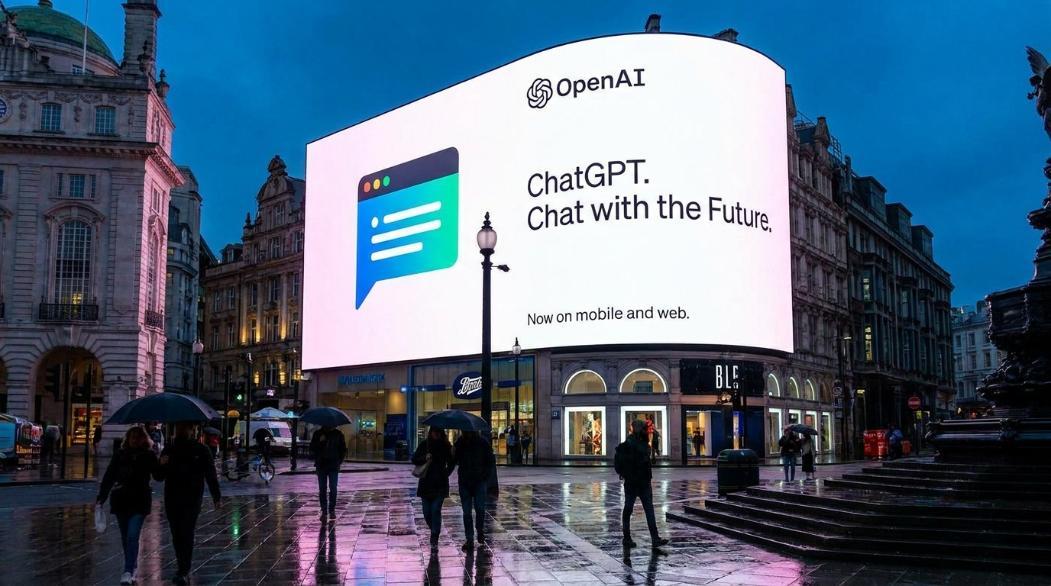
In June 2026, OpenAI removed the gatekeepers. Where ChatGPT advertising was once reserved for a handful of marquee brands working through agency partners like Dentsu, Omnicom, and WPP, any U.S. business can now sign up, set their own budget, and launch campaigns without going through a partner agency. The platform now supports CPC and CPM bidding alongside conversion tracking, pixel-based measurement, and attribution — the exact infrastructure that transforms an experimental channel into a scalable performance engine. OpenAI is targeting $2.5 billion in ad revenue this year alone, with longer-horizon projections reaching $100 billion by 2030. This isn't a beta test. It's a land grab.
And then there's Google, which has been even quieter about its own AI ad expansion. As Search Engine Journal reported in its survey of 300 enterprise marketing executives, Google deliberately blurs the distinction between traditional search results, AI Overviews, and AI Mode — and it has every commercial reason to do so. If you search for a product in AI Mode, you may be served a sponsored post that, when clicked, reveals a standard paid search UTM tracking link indistinguishable from a conventional search ad. The implication is stark: advertisers are starting to show up in AI search results, and many don't even know it's happening. If you're already running Google Search Ads, Google has likely already opted you into Gemini placements. Your competitors may be there too — benefiting from conversational placements they never explicitly chose.
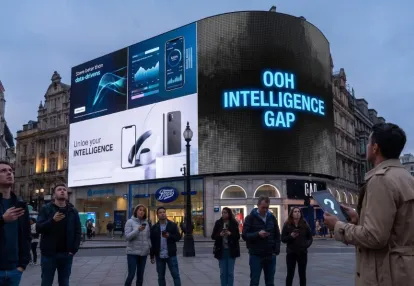
Here's the intelligence gap that should concern you: neither channel offers the transparency marketers have come to expect. OpenAI does not currently publish an ad library equivalent to Meta's or Google's. No central, searchable database of active ChatGPT ads exists. The only way to see who's running ads is to manually run prompts in eligible U.S. sessions and capture what appears — a tedious process that most teams aren't doing. Meanwhile, Google's reuse of identical UTM parameters across traditional and AI-served results means your analytics can't reliably distinguish between a click from a classic blue link and one from a conversational AI summary.
The result is a competitive blind spot unlike anything the industry has faced since the early days of programmatic. Your competitors could be winning high-intent conversational queries — the kind where a user has already spent multiple turns narrowing their problem and is ready for a specific solution — and your dashboard would show nothing. No impression share alerts. No auction insights. No transparency reports. The only signal might be a slow, unexplained dip in pipeline that's notoriously difficult to diagnose.
This matters because conversational AI traffic behaves differently. Users arriving from ChatGPT ads have already had the educational and comparison conversation with the AI; as Neil Patel's analysis notes, they carry deeper intent than most paid traffic sources. Losing these users to a competitor you can't even see in the auction isn't just a missed click — it's a missed close. And right now, the window for low-competition early adoption is open. It will not stay that way.
The competitive intelligence playbook that marketers have relied on for the past decade was engineered for a fundamentally different internet. Tools like SEMrush, SpyFu, and SimilarWeb were built to crawl indexable, archivable ad formats — display banners served through programmatic exchanges, sponsored listings in Google's search results, promoted posts in social feeds. Every one of those formats leaves a digital footprint: a cached creative, a bid keyword, a placement record. Conversational AI ads leave almost none of that behind, and the reasons are structural, not temporary.
Start with the most basic problem: there is no searchable archive. OpenAI does not currently publish an ad library equivalent to Meta's or Google's, and no central database of active ChatGPT ads exists. The only way to see what competitors are running is to manually fire prompts in eligible U.S. sessions and screenshot what appears. That's not a workaround — it's the entire methodology. Each ad impression is generated dynamically, matched to the real-time conversational context of that specific session, which means two users asking similar questions may see entirely different sponsored cards. The ad that appeared beneath your ChatGPT response this morning may never render again in exactly the same form, for anyone.
This ephemerality breaks every assumption baked into traditional competitive intelligence workflows. Conventional ad spy tools depend on repeatability — the ability to re-crawl a placement, verify a creative, and track it over time. But ChatGPT ads are contextually generated through what Dash Two describes as "context hints" rather than fixed keyword matching, meaning advertisers define scenarios and intents rather than bidding on specific query strings. The platform's algorithm then pairs those hints with the live conversation's real-time meaning to serve a relevant sponsored card via auction. There is no static ad unit to index. There is no keyword-to-creative mapping to reverse-engineer. The entire delivery mechanism is probabilistic and session-bound.
Then there's the Google problem. As Google expands AI Overviews across more searches — now appearing in roughly 25% of queries — the boundary between traditional paid search and AI-generated results is becoming deliberately opaque. Google has every incentive to blur AI versus traditional search attribution because maintaining that ambiguity protects its existing measurement infrastructure and keeps advertiser budgets flowing through familiar channels. As Mary Gabrielyan of AI Digital noted on AdExchanger, the tracing and attribution capabilities that make Google's traditional search measurable simply don't exist yet for ChatGPT ads — and Google is unlikely to volunteer transparency that would make a rival platform easier to evaluate.
The result is a double blind spot. On one side, ChatGPT ads exist in a format that no existing crawling or monitoring tool was designed to capture. On the other, Google is actively incentivized to make its own AI ad placements look indistinguishable from the search ads marketers already understand, discouraging the kind of scrutiny that would reveal how differently AI-served impressions actually perform.
This isn't a gap that will close with a software update or a new feature release from your favorite intelligence platform. The intelligence infrastructure the industry spent a decade building was designed for a web of pages, links, and pixels. Conversational AI ads exist outside that architecture entirely — rendered in closed sessions, matched to ephemeral context, and visible only to the user who triggered them. The blind spot isn't a bug in the system. It's the system encountering a format it was never built to see.
The visibility picture may be grim, but it's not a total blackout. Despite the collapse of traditional ad intelligence tools in conversational AI environments, four specific data points remain extractable from ChatGPT ad monitoring — and each one, read correctly, functions as a strategic signal far richer than a simple impression count.
As Search Engine Journal has documented, the signals available to anyone willing to systematically monitor competitor ad placements in ChatGPT responses include ad title, ad description, final URL, and impression share. These might sound like the same metadata you'd pull from any Google Ads transparency report, but in a conversational context, they carry fundamentally different strategic weight.
Ad title and description reveal positioning choices that competitors have made specifically for an AI-native audience. Because ChatGPT users arrive at ads after multi-turn conversations that have already narrowed their problem — as Neil Patel has argued, users encountering ads in ChatGPT "have already spent time in a specific, multi-turn conversation that has narrowed their problem" — the copy a competitor chooses signals exactly how they expect to meet a buyer who's further along the decision process than typical search traffic. A competitor running benefit-driven, solution-specific copy is targeting late-stage intent. One running broad awareness messaging is likely still testing the channel.
Final URL is arguably the most revealing signal of all. A competitor sending ChatGPT traffic to their homepage is in exploratory mode — allocating budget to learn, not to convert. A category page destination suggests they've moved past testing and are scaling spend against a proven product line. But when a competitor directs ChatGPT ad clicks to a comparison page or a "versus" landing page, they're playing defense — intercepting users who may already be considering alternatives, including you. Tracking these URL patterns over weeks and months gives you a real-time map of a competitor's funnel strategy as it evolves.
Impression share on specific prompts is perhaps the most strategically consequential data point. It tells you which conversational territories a competitor has decided to own. If a rival brand consistently shows ads against prompts like "best project management tool for remote teams" but never appears on "enterprise project management software," that absence is as informative as the presence. It reveals budget allocation decisions, audience prioritization, and the specific use cases they believe they can win.
An emerging category of tools is being purpose-built for exactly this monitoring workflow. Trendos' Ad Radar, for instance, is designed to systematically track competitor ad placements inside AI-generated responses, filling the gap that traditional platforms like SEMrush and SpyFu structurally cannot. HubSpot's framework for AI search analytics organizes this work into four core workflows — content planning, brand monitoring, competitive intelligence, and performance measurement — providing the operational structure teams need to move from ad hoc observation to systematic intelligence gathering.
The urgency is real but underappreciated. Only 22% of marketers currently track AI visibility at all, according to HubSpot's analysis, which means the competitive window for building this intelligence muscle is wide open. Teams that begin systematic prompt-monitoring now will accumulate months of baseline data — trend lines on competitor bid aggression, seasonal positioning shifts, funnel strategy pivots — that latecomers simply cannot backfill. Historical competitive data in AI environments doesn't exist in any public archive. If you're not collecting it today, it's gone tomorrow.
Here's the strategic insight most competitive intelligence teams are missing: you don't need to see a competitor's ChatGPT ads to know they're running them. The evidence leaks into every other channel they operate on, and if you know what to look for, their native, push, and display campaigns become a decoder ring for their entire AI advertising strategy.
The logic begins with a fundamental behavioral difference that reshapes everything downstream. As Neil Patel explains, when someone encounters an ad inside ChatGPT, they have already spent time in a multi-turn conversation that has narrowed their problem — the AI has done the educational and comparison work, and the user arrives further along the decision process than most other paid traffic. That single reality forces advertisers to rebuild their landing pages, their offer angles, and their creative messaging from the ground up. And those changes don't stay siloed in one channel. They ripple outward.
Think about what happens when a competitor who has been running standard top-of-funnel native ads — listicles, curiosity-driven headlines, broad awareness content — suddenly pivots to bottom-of-funnel comparison content with landing pages structured for visitors who already understand the product category and are ready to choose. That shift is visible in tools like SimilarWeb and Adbeat. You can see the destination URLs change, the ad copy tighten around decision-stage language, and the landing page architecture flatten from multi-step educational funnels into streamlined, assumption-rich conversion pages. That pattern is one of the strongest circumstantial signals that a competitor is simultaneously investing in ChatGPT ads, because the landing page structure required to convert high-intent, post-comparison ChatGPT traffic is fundamentally incompatible with the broad awareness pages that top-of-funnel campaigns typically use.
The creative archetype itself is another tell. Dash Two's analysis of ChatGPT advertising warns that ads resembling traditional sales pitch banners perform poorly on the platform, and that successful ads must look like a resource link or a helpful next step within the conversational flow. That creative philosophy — helpful, editorial, resource-oriented — doesn't emerge in a vacuum and then stay confined to a single platform. Brands that develop this archetype for ChatGPT inevitably deploy variations of it across their native advertising and content syndication campaigns, because the underlying creative asset — the helpful guide, the comparison resource, the decision-support tool — is too expensive to produce for a single channel. Watch a competitor's Taboola or Outbrain placements shift from clickbait-style engagement hooks to informational, almost editorial ad units, and you're likely watching ChatGPT creative strategy bleeding into their broader media mix.
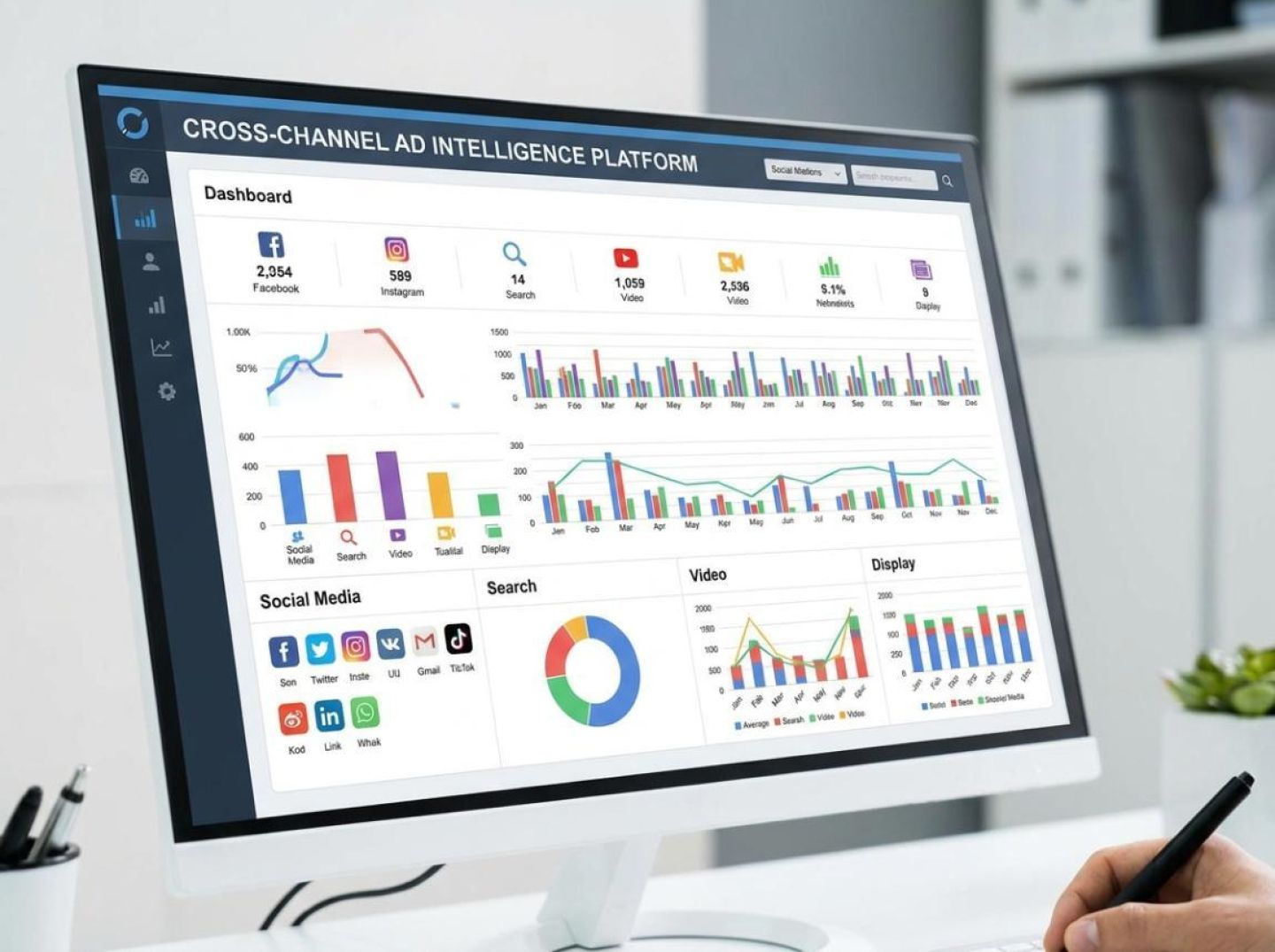
Cross-channel ad intelligence becomes the Rosetta Stone for decoding AI ad strategies you cannot observe directly. You can't crawl a competitor's ChatGPT ads, but you can track their landing page evolution across every channel where spy tools still function. You can monitor whether their display retargeting suddenly starts segmenting audiences into "already educated" and "needs nurturing" cohorts — a segmentation pattern that only makes sense when one traffic source delivers visitors who have already had an AI-assisted comparison conversation. You can flag when their social ads begin mirroring the contextual, intent-matched tone that ChatGPT's targeting model rewards rather than the demographic-driven creative that platforms like Meta optimize for.
The competitors who are already running AI-assisted ads aren't hiding their strategy. They're broadcasting it across every visible channel — in the language of their creatives, the structure of their landing pages, and the funnel logic embedded in their destination URLs. The intelligence gap isn't that the data doesn't exist. It's that most teams aren't yet reading these cross-channel signals as a unified narrative about where their competitors are placing their AI advertising bets.
Attribution has always been messy, but the current fog surrounding AI-driven advertising isn't just an inconvenience — it's an asymmetry that your savviest competitors are actively weaponizing. While you're waiting for clean data before committing budget, they're moving fast precisely because the data is murky, knowing that opacity favors the first mover who's willing to operate inside it.
The core problem is structural. As AdExchanger reported in a conversation with AI Digital's Chief Strategy Officer, ChatGPT ads currently lack the clear measurement, attribution, and transparency that marketers rely on to justify spend. On a platform like Google, you can trace a click through to a conversion and back-attribute it across your marketing mix. "We don't have that answer for ChatGPT ads yet," Mary Gabrielyan told the publication, underscoring the gap between what marketers can prove and what they suspect is working. That uncertainty creates a two-tier market: brands with the risk tolerance to operate in ambiguity, and brands paralyzed by the absence of a clean ROAS number. Your competitors sitting in that first tier aren't waiting for perfect attribution — they're building prompt-level impression share and brand recall while you deliberate.
The fog thickens further when you consider how the major platforms are engineering it. Google deliberately blurs the lines between traditional search, AI Overviews, and AI Mode, and as Search Engine Journal found in its survey of 300 enterprise marketing executives, advertisers are starting to show up in AI search results without even knowing it's happening. Click on a sponsored result inside AI Mode and you'll see a paid search campaign UTM tracking link — not an AI-specific one. That means your competitor's AI-placed ad is being silently credited to their existing search campaigns, making their Google Ads look more efficient than they actually are in isolation. If you're benchmarking against their apparent search performance without understanding this dynamic, you're chasing a phantom.
On the ChatGPT side, the obfuscation works differently but is equally exploitable. OpenAI currently passes only a single UTM source referral with its traffic, so marketers know a visitor came from ChatGPT but have no context for the specific prompt, conversation thread, or ad interaction that generated the click. The result, as that same enterprise study documented, is that marketers see dramatically higher-intent traffic but are left combing through search logs to reverse-engineer what happened upstream. Competitors who have built internal systems to correlate that ChatGPT referral data with on-site behavior — even imperfectly — gain a feedback loop that everyone else lacks.
This is the intelligence gap in its purest form. While only 22% of marketers currently track AI visibility according to HubSpot's analysis, the competitors who do are making allocation decisions based on signal you can't see, optimizing against prompts you're not monitoring, and compounding their advantage with every week you spend waiting for a dashboard that may never arrive in its idealized form. Attribution fog doesn't punish everyone equally. It punishes the cautious and rewards the aggressive — and the brands exploiting that asymmetry right now are building moats in conversational AI that will be extraordinarily expensive to challenge once the measurement infrastructure finally catches up.
Receive top converting landing pages in your inbox every week from us.
Guide
Discover why out-of-home (OOH) talent pipelines overlook competitive intelligence and how smart affiliates can capitalize on this gap. Learn how to analyze competitor activity, interpret digital auction signals, build a cost-effective intelligence stack, and turn market insights into profitable advertising opportunities.
David Kim
7 minOct 9, 2026
Guide
Discover how OOH professionals can turn traditional billboard roles into high-ROI performance marketing careers. This guide shows how to reframe OOH work around measurable outcomes, competitor intelligence, landing-page optimization, and data-backed offers.
Liam O’Connor
7 minOct 8, 2026
Guide
Discover why OOH job boards are struggling to keep pace with the rise of data-driven media buying. This guide explores the modern skills OOH partners need, from audience intelligence and programmatic workflows to cross-channel measurement and performance strategy.
Priya Kapoor
7 minOct 8, 2026